
Improving Supply Chain Visibility: The Power of BlockchainBased Tracking Systems


Welcome to Blockchain Trends, your compass navigating the ever-evolving landscape of blockchain technology. Forget just cryptocurrencies; we're diving deep into the real-world impact of this revolutionary technology.
Have you ever wondered how blockchain can revolutionize industries beyond finance? Our featured article, "Improving Supply Chain Visibility: The Power of Blockchain supply chain tracking systems," unveils how this technology is transforming logistics and building trust. Discover how this innovative approach is ushering in a new era of transparency and efficiency. Intrigued? Read on to unlock the potential!
Enhancing Pharmaceutical Supply Chain Security: Leveraging Blockchain Technology
- Introduction: The Critical Need for Transparency in Pharmaceutical Supply Chains
- Blockchain in Pharmaceutical Supply Chains: A Detailed Examination
-
Advantages of Blockchain Implementation in Pharmaceutical Supply Chains
- Increased Transparency and Traceability: Tracking Drugs from Manufacturing to Dispensing
- Improved Efficiency and Reduced Costs: Streamlining Processes and Eliminating Waste
- Enhanced Security and Fraud Prevention: Combating Counterfeit Drugs and Diversion
- Regulatory Compliance and Data Integrity: Meeting Stringent Industry Standards
- Strengthened Patient Safety and Trust: Ensuring Authentic Medications
-
Use Cases: Practical Applications of Blockchain in Pharmaceutical Supply Chains
- Tracking Vaccines and Temperature-Sensitive Medications: Maintaining Cold Chain Integrity
- Managing Controlled Substances and Preventing Opioid Diversion: Enhancing Security
- Verifying Drug Authenticity and Preventing Counterfeiting: Protecting Patients
- Enabling Secure Data Sharing and Collaboration Among Stakeholders: Improving Efficiency
-
Implementing Blockchain for Pharmaceutical Supply Chain Tracking: A Phased Approach
- Defining Objectives and Identifying Key Tracking Requirements for Pharmaceuticals
- Selecting a Suitable Blockchain Platform: [Permissioned vs. Public Networks, Consensus Mechanisms]
- Integrating Blockchain with Existing Pharmaceutical Systems: [ERP, WMS, and Track-and-Trace Systems]
- Pilot Programs and Proof-of-Concept Implementations: Validating the Solution's Effectiveness
- Scaling Blockchain Solutions for Widespread Adoption Across the Pharmaceutical Supply Chain
-
Challenges and Considerations for Blockchain Adoption in Pharmaceuticals
- Data Privacy and Confidentiality Concerns: Protecting Patient and Proprietary Information
- Scalability and Performance Requirements: Handling High Transaction Volumes
- Interoperability and Data Standardization: Ensuring Seamless Data Exchange
- Regulatory Landscape and Compliance: Adhering to FDA and Other Regulations
- Collaboration and Data Sharing: Building Trust Among Pharmaceutical Stakeholders
- The Future of Blockchain and Pharmaceutical Supply Chain Security
- Conclusion: Embracing Blockchain for a More Secure and Transparent Pharmaceutical Supply Chain
-
Frequently Asked Questions
- What are the main benefits of using blockchain for supply chain tracking?
- How does a blockchain-based tracking system improve supply chain visibility?
- What are some key challenges in implementing blockchain supply chain tracking systems?
- How does blockchain help prevent counterfeiting in the supply chain?
- What is the future of blockchain in supply chain management?
- Final Reflection: Embracing Transparency in a Connected World
- Unlock Your Supply Chain Potential: Start Tracking with Blockchain Today!
Introduction: The Critical Need for Transparency in Pharmaceutical Supply Chains
The pharmaceutical supply chain is arguably one of the most complex and critical global networks. It involves manufacturers, distributors, wholesalers, pharmacies, and healthcare providers, all working to deliver essential medicines to patients. However, this intricate system is plagued by significant vulnerabilities, including the pervasive threat of counterfeit drugs, diversion of legitimate medications, and a general lack of end-to-end visibility. These issues not only erode trust but also pose severe risks to patient health and safety, making the need for robust, transparent, and secure tracking systems paramount.
Traditional tracking methods often rely on siloed databases and paper trails, which are susceptible to errors, tampering, and delays. This fragmentation makes it exceedingly difficult to trace a drug's journey from its origin to the patient's hand with certainty. The opaqueness in the system creates fertile ground for illicit activities, highlighting a desperate need for innovative solutions that can provide verifiable, tamper-proof records and enhance accountability across the entire chain.
Addressing Challenges of Counterfeit Drugs and Diversion in the Pharmaceutical Industry
Counterfeit drugs represent a multi-billion dollar global problem, estimated by some reports to be worth hundreds of billions annually. These fake medications, which may contain incorrect ingredients, improper dosages, or harmful substances, infiltrate legitimate supply chains and directly endanger lives. The World Health Organization (WHO) suggests that up to 10% of medical products in low- and middle-income countries are substandard or falsified. The complexity and global nature of pharmaceutical distribution make it challenging to identify and remove these dangerous products before they reach consumers.
Beyond counterfeiting, drug diversion—the illegal transfer of prescription drugs from their lawful owner to another—is another major challenge. This includes the theft of medications, the resale of drugs obtained through fraudulent means, and the misuse of controlled substances. Diversion contributes to the opioid crisis, fuels illegal markets, and results in significant financial losses for manufacturers and healthcare systems. Effective blockchain supply chain tracking systems are needed to create an indisputable record of ownership and handling at each step, making it significantly harder for drugs to be diverted or replaced with counterfeits undetected.
Exploring Blockchain's Potential for Revolutionizing Pharmaceutical Supply Chain Management
Blockchain technology offers a transformative approach to addressing these deep-seated issues by providing a decentralized, immutable, and transparent ledger. Its core principles—cryptographic security, distributed consensus, and append-only data structures—are ideally suited to building secure and trustworthy tracking systems. By recording every transaction and transfer of ownership on a shared ledger, blockchain creates an unalterable history of a drug's journey, accessible to authorized parties across the supply chain.
The implementation of blockchain supply chain tracking systems in pharmaceuticals can revolutionize management practices. It moves beyond simple track-and-trace to enable verifiable proof of authenticity, monitor storage conditions (like temperature for vaccines), and streamline recalls. This level of transparency and data integrity can fundamentally change how stakeholders collaborate, regulators enforce compliance, and patients trust the medications they receive, paving the way for a safer and more efficient global pharmaceutical ecosystem.
Blockchain in Pharmaceutical Supply Chains: A Detailed Examination
Defining Blockchain-Based Tracking Systems for Pharmaceuticals
Blockchain supply chain tracking systems for pharmaceuticals are digital platforms built on distributed ledger technology designed to record and verify the movement and status of drug products throughout their lifecycle. Unlike traditional centralized databases, the data is stored across a network of participants, making it extremely difficult to alter or delete past records without the consensus of the network. Each transaction, representing a step in the supply chain (e.g., manufacturing, packaging, shipping, dispensing), is recorded as a block and cryptographically linked to the previous block, forming a chain.
These systems typically involve assigning unique identifiers, such as serial numbers or QR codes, to individual drug packages. As the package moves from one entity to the next (manufacturer to distributor, distributor to pharmacy), the transfer of ownership and physical custody is recorded on the blockchain. This creates a chronological, tamper-evident audit trail that provides detailed information about the drug's origin, handling history, and current location, accessible to authorized participants in real-time or near real-time.
How Blockchain Ensures Traceability and Prevents Counterfeiting
Traceability in a blockchain system is achieved through the inherent nature of the distributed ledger. Every event related to a specific drug product—from the initial serialization at the manufacturing plant to its final dispensing—is logged as a transaction on the blockchain. Each transaction contains relevant data (e.g., location, timestamp, handler ID) and is cryptographically signed, linking it to the unique identifier of the drug package. This creates a complete, verifiable history that can be queried by any authorized participant, allowing for granular tracking of a product's journey.
Counterfeiting is significantly hindered because the blockchain provides an immutable record of legitimate products. When a drug package reaches a point of verification (e.g., a pharmacy or hospital), its unique identifier can be scanned. The system then checks the blockchain to verify the product's history against the expected supply chain path.
If the history is inconsistent, or if multiple products claim the same unique identifier with conflicting histories, it flags the product as suspicious. Since the historical data on the blockchain cannot be tampered with by a single party, it becomes nearly impossible for counterfeit products, which lack a legitimate blockchain history, to pass this verification step undetected.
Core Attributes: Immutable Ledger, Secure Data Sharing, Decentralized Verification
The power of blockchain supply chain tracking systems stems from their foundational attributes:
- Immutable Ledger: Once data is recorded on the blockchain and confirmed by the network's consensus mechanism, it is practically impossible to alter or delete it. This immutability guarantees the integrity and reliability of the tracking data, providing a trustworthy historical record of every transaction involving a drug product. This is critical for audits, compliance, and forensic investigations into suspicious activities.
- Secure Data Sharing: Blockchain employs advanced cryptography to secure transactions and control access to data. While the ledger itself might be shared, the content of transactions can be encrypted, and access permissions managed, ensuring that sensitive information is shared only with authorized parties. This addresses privacy concerns while still enabling necessary collaboration and transparency among stakeholders. Participants can share relevant data points without exposing their entire proprietary databases.
- Decentralized Verification: Unlike traditional centralized systems where a single authority controls verification, blockchain verification is distributed across multiple nodes in the network. Transactions are validated by participants based on predefined rules (consensus mechanism) before being added to the ledger. This decentralization eliminates single points of failure, reduces reliance on intermediaries, and makes the system more resilient to fraud and manipulation by any one entity.
Advantages of Blockchain Implementation in Pharmaceutical Supply Chains
Increased Transparency and Traceability: Tracking Drugs from Manufacturing to Dispensing
Implementing blockchain supply chain tracking systems provides unprecedented transparency throughout the pharmaceutical journey. Every handoff, storage location change, and status update (e.g., packaged, shipped, received) for an individual drug product can be recorded on the blockchain. This creates an end-to-end, shared view of the supply chain for all authorized participants, from the raw material supplier (potentially) and manufacturer down to the dispensing pharmacy or hospital.
This enhanced traceability allows stakeholders to pinpoint the exact location and history of any specific drug package at any given time. For instance, during a product recall, authorities can quickly identify affected batches, their current locations, and who has received them, significantly accelerating the recall process. Manufacturers gain insights into distribution bottlenecks, and pharmacies can verify the provenance of the drugs they receive, assuring patients that the medicine in their hand has followed a legitimate path through the supply chain.
Improved Efficiency and Reduced Costs: Streamlining Processes and Eliminating Waste
The automation and data integrity offered by blockchain can lead to significant operational efficiencies and cost reductions in the pharmaceutical supply chain. By providing a single source of truth, blockchain minimizes the need for time-consuming manual checks, data reconciliation across disparate systems, and dispute resolution related to shipments or product authenticity. Smart contracts, self-executing agreements coded onto the blockchain, can automate processes like payments upon verified delivery or triggering alerts based on predefined conditions (e.g., temperature deviations).
Streamlined verification processes at receiving docks can reduce labor costs and speed up throughput. Reduced instances of fraud and counterfeiting directly translate to fewer financial losses associated with those issues. Furthermore, improved inventory management, enabled by precise tracking, can help reduce waste from expired or overstocked medications. While initial implementation costs exist, the long-term gains in efficiency and reduced losses present a compelling economic case for blockchain supply chain tracking systems.
Enhanced Security and Fraud Prevention: Combating Counterfeit Drugs and Diversion
One of the most significant benefits of blockchain in pharmaceuticals is its robust capability for enhancing security and preventing fraud. The immutable nature of the ledger makes it virtually impossible for malicious actors to insert fake transaction records or alter legitimate ones to mask illicit activities. Each drug package's unique identifier is tied to its verifiable history on the blockchain, creating a digital fingerprint that is extremely difficult for counterfeiters to replicate or forge.
When a drug is scanned, its blockchain history provides immediate verification of its authenticity and legitimate path. This acts as a powerful deterrent against introducing counterfeit products into the supply chain. Similarly, diversion becomes harder as every transfer of custody is recorded. Any unauthorized movement or disappearance of a drug product would be immediately visible as a break in the recorded chain of custody, enabling quicker identification of the point of diversion and facilitating investigations.
Regulatory Compliance and Data Integrity: Meeting Stringent Industry Standards
The pharmaceutical industry is subject to rigorous regulatory requirements, such as the U.S. Drug Supply Chain Security Act (DSCSA) and similar mandates in other regions, which require enhanced traceability and verification capabilities. Blockchain supply chain tracking systems are inherently designed to meet and exceed many of these requirements by providing an unalterable, comprehensive audit trail. Regulators can potentially gain authorized access to the blockchain data, allowing for more efficient oversight and enforcement.
The data integrity ensured by blockchain is critical for compliance. Regulators need to trust the data provided by supply chain participants. Blockchain's distributed and cryptographic nature provides a higher level of assurance that the data recorded is accurate, complete, and has not been tampered with. This reduces the burden on companies to prove data validity and simplifies the auditing process, fostering a more collaborative and transparent relationship between the industry and regulatory bodies.
Strengthened Patient Safety and Trust: Ensuring Authentic Medications
Ultimately, the primary goal of improving the pharmaceutical supply chain is to protect patient safety. Counterfeit and diverted drugs pose direct threats to health outcomes, potentially leading to treatment failure, adverse reactions, or even death. By making it significantly harder for these illicit products to enter and move within the supply chain, blockchain directly contributes to ensuring that patients receive safe, authentic, and effective medications.
When pharmacies and healthcare providers can easily and reliably verify the authenticity and history of the drugs they dispense using blockchain supply chain tracking systems, it builds trust in the healthcare system. Patients can have greater confidence that the medication prescribed to them is genuine and has been handled appropriately throughout its journey. This enhanced trust is invaluable, particularly in an era where concerns about drug quality and origin are increasingly prevalent.
Use Cases: Practical Applications of Blockchain in Pharmaceutical Supply Chains
Tracking Vaccines and Temperature-Sensitive Medications: Maintaining Cold Chain Integrity
Maintaining the cold chain for vaccines and other temperature-sensitive pharmaceutical products is critical for their efficacy and safety. Failure to store or transport these products within specific temperature ranges can render them ineffective or even harmful. Integrating IoT (Internet of Things) sensors that monitor temperature with blockchain supply chain tracking systems allows for real-time, verifiable recording of temperature data onto the immutable ledger.
As a vaccine shipment moves through the supply chain, sensors can continuously log temperature readings. If a temperature excursion occurs, this event is recorded on the blockchain along with the time and location. This provides an undeniable record of cold chain integrity, allowing stakeholders to quickly identify compromised shipments before they reach patients and enabling investigations into where the excursion happened. This level of verifiable monitoring is far superior to manual checks or siloed data logs.
Managing Controlled Substances and Preventing Opioid Diversion: Enhancing Security
Controlled substances, particularly opioids, are highly susceptible to diversion due to their street value and potential for abuse. Tracking these medications securely is a major challenge for regulators and law enforcement. Blockchain supply chain tracking systems offer a robust solution by creating an unbreakable chain of custody for every pill, patch, or dose from manufacturing to dispensing.
Each transfer of a controlled substance between licensed entities (manufacturer to distributor, distributor to pharmacy/hospital) is recorded as a transaction on the blockchain, requiring cryptographic signatures from both parties. This creates a transparent and auditable record of who possessed the substance at any given time. Any discrepancy between the physical inventory and the blockchain record would immediately trigger alerts, making it significantly harder for controlled substances to be diverted undetected and aiding efforts to combat the opioid crisis.
Verifying Drug Authenticity and Preventing Counterfeiting: Protecting Patients
A primary use case for blockchain in pharmaceuticals is the direct verification of drug authenticity at the point of dispensing or administration. Pharmacies, hospitals, or even patients (via mobile apps, if designed for it) can scan a unique identifier on the drug packaging. This query goes to the blockchain network, which verifies the product's identity and traces its history back to the manufacturer.
If the product's history on the blockchain does not match the expected path, or if the identifier is linked to a product already dispensed or flagged as suspicious, an alert is generated. This real-time verification mechanism, enabled by blockchain supply chain tracking systems, provides a powerful final layer of defense against counterfeit drugs reaching patients, bolstering confidence in the legitimacy of the medication being provided.
Enabling Secure Data Sharing and Collaboration Among Stakeholders: Improving Efficiency
The pharmaceutical supply chain involves numerous independent entities that traditionally operate with limited data sharing due to competitive concerns, trust issues, and technological incompatibilities. Blockchain facilitates secure and selective data sharing by providing a neutral, shared platform where relevant transaction data can be recorded. Participants can agree on what information is shared on the public or permissioned ledger and what remains private.
This shared, trusted source of truth improves collaboration. For example, manufacturers and distributors can have a clearer view of inventory levels downstream, improving forecasting. Regulators can access necessary compliance data more easily. Recalls can be coordinated more effectively. The shared, verifiable ledger reduces information asymmetry and fosters a more collaborative environment among supply chain partners, leading to overall improved efficiency and responsiveness across the network powered by blockchain supply chain tracking systems.
Implementing Blockchain for Pharmaceutical Supply Chain Tracking: A Phased Approach
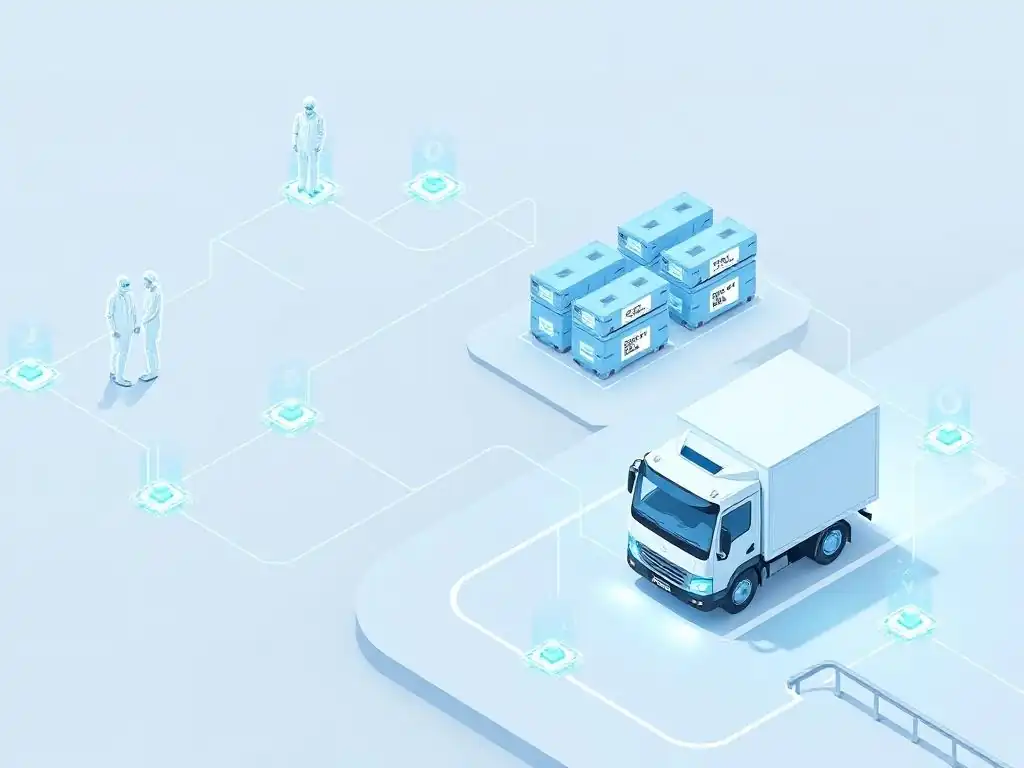
Implementing blockchain supply chain tracking systems in the complex pharmaceutical industry requires a structured, phased approach to manage the technological, organizational, and regulatory hurdles. Jumping straight into a full-scale deployment without proper planning and testing is likely to lead to significant challenges. A typical implementation journey involves several key stages, starting with careful planning and moving through pilot programs before scaling up.
The process begins with defining clear objectives and understanding the specific pain points the blockchain solution is intended to address, whether it's primarily anti-counterfeiting, cold chain monitoring, or regulatory compliance. This initial phase also involves assessing the existing infrastructure and identifying the key stakeholders who need to be involved. Successful implementation relies heavily on collaboration and buy-in from participants across the supply chain, making stakeholder engagement crucial from the outset.
Defining Objectives and Identifying Key Tracking Requirements for Pharmaceuticals
The first critical step is to clearly define the specific goals for implementing blockchain supply chain tracking systems. Are the primary objectives to meet regulatory mandates like DSCSA, combat the influx of counterfeit drugs, enhance cold chain monitoring for sensitive products, or improve overall supply chain visibility and efficiency? Defining these objectives upfront helps scope the project and determine the necessary functionalities of the blockchain solution.
Simultaneously, it's essential to identify the key tracking requirements specific to pharmaceutical products. This involves determining what data points need to be recorded on the blockchain for each product unit (e.g., serial number, lot number, expiration date, manufacturing date, origin, destination, temperature data, timestamps, handler IDs). Understanding the granularity of tracking required (unit-level vs. batch-level) and the specific events that trigger a blockchain transaction (e.g., packaging, shipping, receiving, dispensing) is fundamental to designing an effective system.
Selecting a Suitable Blockchain Platform: [Permissioned vs. Public Networks, Consensus Mechanisms]
Choosing the right blockchain platform is a pivotal decision that impacts the system's performance, security, scalability, and governance. For enterprise-level applications like pharmaceutical supply chains, permissioned blockchains are generally preferred over public networks.
- Permissioned vs. Public Networks: Public blockchains (like Bitcoin or Ethereum) are open to anyone and typically rely on proof-of-work or proof-of-stake consensus, which can be slow and energy-intensive. Permissioned blockchains (like Hyperledger Fabric or R3 Corda) restrict participation to known and authorized entities. This allows for better control over data privacy, higher transaction speeds, and the ability to assign roles and permissions, which is essential for regulatory compliance and managing confidential information in pharmaceuticals. A permissioned network ensures that only validated participants can join the network and access specific data.
- Consensus Mechanisms: The consensus mechanism determines how transactions are validated and added to the ledger. In permissioned networks, consensus is often achieved through mechanisms like Practical Byzantine Fault Tolerance (PBFT) or variations of Proof of Authority (PoA), which are faster and more efficient than those used in public networks, making them suitable for high-volume enterprise transactions. The choice depends on the required level of decentralization, trust among participants, and transaction throughput needs for the specific blockchain supply chain tracking systems implementation.
Integrating Blockchain with Existing Pharmaceutical Systems: [ERP, WMS, and Track-and-Trace Systems]
A significant technical challenge is integrating the new blockchain platform with the pharmaceutical industry's existing legacy systems. Companies already rely heavily on Enterprise Resource Planning (ERP) systems for managing finances and operations, Warehouse Management Systems (WMS) for inventory and logistics, and existing track-and-trace systems (often siloed or less secure than blockchain).
Successful integration requires developing APIs (Application Programming Interfaces) or middleware that can securely transfer data between these systems and the blockchain ledger. For example, when products are serialized in the ERP or WMS, this event needs to be recorded on the blockchain. When a shipment is scanned upon receipt, the WMS needs to communicate with the blockchain to verify authenticity and record the transfer of custody.
Seamless data flow is crucial for the blockchain supply chain tracking systems to function correctly without disrupting current operations. This integration phase often requires significant development effort and careful testing to ensure data consistency and system interoperability.
Pilot Programs and Proof-of-Concept Implementations: Validating the Solution's Effectiveness
Before a full-scale rollout, it is imperative to conduct pilot programs and proof-of-concept (PoC) implementations. These smaller-scale deployments involve a limited number of participants and focus on tracking specific types of drugs or routes within the supply chain (e.g., tracking a single high-value drug from one manufacturing site to a few distribution centers).
Pilot programs allow stakeholders to test the functionality of the blockchain supply chain tracking systems in a real-world environment, identify technical glitches, evaluate the user experience, and measure the actual benefits (e.g., time saved in verification, number of potential counterfeits flagged). This phase provides valuable feedback for refining the system, adjusting processes, and demonstrating the value proposition to internal teams and potential external partners, building confidence for a wider deployment.
Scaling Blockchain Solutions for Widespread Adoption Across the Pharmaceutical Supply Chain
Scaling a successful pilot program to cover an entire pharmaceutical supply chain, involving numerous manufacturers, distributors, pharmacies, and potentially hospitals and regulators, is a complex undertaking. It requires onboarding a large number of diverse stakeholders, ensuring interoperability between different companies' internal systems, and managing a potentially massive volume of transactions.
Scaling involves expanding the network of participants, increasing the transaction throughput capacity of the blockchain platform, and ensuring robust governance structures are in place for managing the shared network. It also requires ongoing training and support for new participants. Successful widespread adoption of blockchain supply chain tracking systems across the pharmaceutical industry will likely require industry-wide collaboration and potentially regulatory encouragement to establish common standards and network participation frameworks.
Challenges and Considerations for Blockchain Adoption in Pharmaceuticals
While the benefits are substantial, implementing blockchain supply chain tracking systems in the pharmaceutical sector faces significant challenges. These hurdles range from technical complexities and data management issues to overcoming resistance to change and navigating the regulatory landscape. Addressing these considerations proactively is crucial for successful adoption and realizing the full potential of the technology.
The highly regulated nature of the pharmaceutical industry adds layers of complexity not present in other sectors. Concerns around data privacy, competition, and the need for broad industry consensus on standards and platforms are particularly pronounced. Overcoming these challenges requires careful planning, robust technical solutions, and collaborative efforts among all stakeholders involved in the pharmaceutical supply chain.
Data Privacy and Confidentiality Concerns: Protecting Patient and Proprietary Information
Data privacy and confidentiality are paramount in the pharmaceutical industry. Information related to drug shipments might reveal sensitive business strategies, manufacturing volumes, or customer lists that companies are reluctant to share with competitors, even within a permissioned network. Furthermore, data related to dispensing could potentially be linked to patient information, raising significant HIPAA and GDPR compliance concerns.
While blockchain offers secure data sharing, designing blockchain supply chain tracking systems requires careful consideration of what data is stored on-chain versus off-chain, and how access is controlled. Techniques like zero-knowledge proofs or private data channels within permissioned blockchains can allow participants to verify information without revealing the underlying sensitive data. Striking the right balance between transparency for tracking and privacy for competitive and patient data is a critical design challenge that must be addressed through robust architecture and clear data governance policies.
Scalability and Performance Requirements: Handling High Transaction Volumes
The pharmaceutical supply chain generates an enormous volume of transactions daily, involving millions of individual drug packages moving through various stages. A blockchain network designed for pharmaceutical tracking must be capable of handling this high throughput efficiently and with low latency. Public blockchains typically struggle with the transaction volume and speed required for enterprise supply chains.
Permissioned blockchains offer better scalability and performance compared to public ones, with some platforms claiming thousands of transactions per second. However, ensuring that the chosen platform can sustain the required transaction volume as the network scales to include more participants and products is a significant technical consideration. Performance testing and optimization are essential to ensure that the blockchain supply chain tracking systems can keep pace with the dynamic demands of the global drug distribution network without becoming a bottleneck.
Interoperability and Data Standardization: Ensuring Seamless Data Exchange
The pharmaceutical supply chain involves a heterogeneous ecosystem of companies using different internal systems (ERP, WMS, etc.) and potentially different existing track-and-trace solutions. For a blockchain network to be effective, these disparate systems must be able to communicate and exchange data seamlessly with the blockchain and with each other via the blockchain.
Achieving true interoperability requires establishing common data standards for recording information on the blockchain. This includes standardizing product identifiers (like GS1 standards), location codes, transaction types, and data formats. Without agreed-upon standards, integrating different participants onto the same blockchain supply chain tracking systems becomes extremely difficult, leading to data silos even within the blockchain environment. Industry-wide initiatives and collaboration are needed to define and adopt these necessary data standards.
Regulatory Landscape and Compliance: Adhering to FDA and Other Regulations
The pharmaceutical industry is heavily regulated by bodies like the FDA in the U.S., the EMA in Europe, and similar agencies globally. Any new technology implementation, including blockchain supply chain tracking systems, must comply with existing regulations regarding data integrity (e.g., 21 CFR Part 11), serialization, track-and-trace requirements (like DSCSA), and reporting.
While blockchain aligns well with the spirit of these regulations by promoting data integrity and traceability, the technology itself is relatively new, and regulatory frameworks are still evolving to specifically address blockchain applications. Companies must ensure that their blockchain solution meets all current compliance requirements and be prepared to adapt as regulations potentially evolve to explicitly incorporate or mandate blockchain use. Engaging with regulatory bodies early in the design process can help ensure compliance readiness.
Collaboration and Data Sharing: Building Trust Among Pharmaceutical Stakeholders
Perhaps the most significant non-technical challenge is fostering collaboration and building trust among traditionally competitive stakeholders in the pharmaceutical supply chain. Sharing data, even on a permissioned and privacy-preserving network, requires a fundamental shift in mindset from operating in silos to participating in a shared ecosystem.
Establishing a collaborative governance model for the blockchain network is crucial. This involves defining rules for participation, data ownership, dispute resolution, and network upgrades. All participants need to agree on the platform, standards, and governance framework. Building consensus and demonstrating the mutual benefits of enhanced transparency and security through blockchain supply chain tracking systems is essential to encourage widespread adoption and participation across the industry.
The Future of Blockchain and Pharmaceutical Supply Chain Security
The trajectory for blockchain supply chain tracking systems in pharmaceuticals is one of increasing integration and sophistication. As the technology matures and pilot programs demonstrate clear value, adoption is expected to grow, moving from tracking high-value or sensitive products to potentially encompassing the vast majority of prescription drugs. The focus will shift from simply tracking location to leveraging the immutable data for advanced analytics and automation.
Future developments will likely see blockchain becoming a foundational layer integrated with other cutting-edge technologies. This synergy will further enhance visibility, security, and efficiency, creating a more resilient and trustworthy pharmaceutical supply chain ecosystem. The potential impact on patient safety and public health is immense, promising a future where counterfeit and diverted drugs are significantly marginalized.
Emerging Technologies: [AI-Driven Analytics, IoT Integration for Real-Time Monitoring]
The future of blockchain supply chain tracking systems in pharmaceuticals lies in their convergence with other emerging technologies. Integrating with IoT devices, such as smart sensors monitoring temperature, humidity, or shock during transit, will provide real-time, verifiable condition monitoring recorded directly onto the blockchain. This ensures product quality and safety throughout the journey, especially for sensitive medications.
Furthermore, the vast amount of immutable tracking data collected on the blockchain is a goldmine for AI-driven analytics. AI algorithms can analyze this data to identify patterns indicative of potential fraud, diversion attempts, or supply chain inefficiencies that might not be obvious through traditional analysis. AI can also be used for predictive analytics, forecasting demand, optimizing routes, and identifying potential risks before they impact the supply chain, turning raw tracking data into actionable intelligence for all participants.
Enhancing Supply Chain Resilience and Patient Safety: Building a Secure Ecosystem
By providing unparalleled transparency, traceability, and data integrity, blockchain supply chain tracking systems are poised to significantly enhance the overall resilience of the pharmaceutical supply chain. In times of disruption (like pandemics or natural disasters), the ability to quickly and accurately locate essential medicines and verify their authenticity becomes critically important.
A secure, transparent, and interconnected supply chain ecosystem built on blockchain fosters greater trust among stakeholders. This trust facilitates better collaboration, enabling quicker responses to issues like potential shortages or quality concerns. Ultimately, this enhanced resilience and collaboration directly contribute to improved patient safety by ensuring that legitimate, high-quality medications are available when and where they are needed, minimizing the risks associated with supply chain vulnerabilities.
Predictions for Blockchain Adoption in the Pharmaceutical Industry
While widespread adoption is still some years away, predictions suggest a significant increase in the use of blockchain supply chain tracking systems within the pharmaceutical sector over the next decade. Initial adoption will likely continue focusing on high-value drugs, controlled substances, and products requiring strict cold chain management, where the ROI on preventing losses and ensuring safety is clearest.
As regulatory frameworks evolve to potentially endorse or even mandate blockchain use for traceability, adoption rates are expected to accelerate. Collaborative industry initiatives focused on developing shared standards and platforms will also play a crucial role in overcoming current barriers. While challenges remain, the compelling case for improved security, efficiency, and patient safety suggests that blockchain will become an indispensable technology for the future of pharmaceutical supply chain management.
Conclusion: Embracing Blockchain for a More Secure and Transparent Pharmaceutical Supply Chain
The pharmaceutical industry stands at a critical juncture, facing persistent threats from counterfeiting, diversion, and a lack of comprehensive visibility in its complex supply chains. Traditional methods are proving insufficient to safeguard patient safety and ensure the integrity of life-saving medications. The urgent need for a more secure, transparent, and efficient system is undeniable, and blockchain technology offers a powerful solution to these fundamental challenges.
By leveraging the core attributes of an immutable ledger, secure data sharing, and decentralized verification, blockchain supply chain tracking systems can revolutionize how pharmaceuticals are tracked, verified, and managed. They provide end-to-end traceability, significantly hinder fraudulent activities, improve operational efficiencies, ensure regulatory compliance, and, most importantly, enhance patient safety and trust.
While challenges related to data privacy, scalability, interoperability, and collaboration exist, they are being actively addressed through technological advancements and industry initiatives. Embracing blockchain is not merely an option but an essential step towards building a more resilient, secure, and transparent pharmaceutical supply chain ecosystem for the benefit of all stakeholders, particularly the patients who rely on its integrity.
Frequently Asked Questions
What are the main benefits of using blockchain for supply chain tracking?
Blockchain offers enhanced transparency and improved security in supply chain operations. It enables real-time tracking of goods, reducing fraud and inefficiencies.
How does a blockchain-based tracking system improve supply chain visibility?
By creating an immutable record of each transaction, blockchain provides a single source of truth. This allows all stakeholders to track products from origin to consumer, increasing visibility.
What are some key challenges in implementing blockchain supply chain tracking systems?
Challenges include scalability issues, the need for interoperability between different blockchain networks, and data privacy concerns related to sensitive information.
How does blockchain help prevent counterfeiting in the supply chain?
Blockchain's tamper-proof nature makes it difficult to introduce counterfeit products. Each item's history is recorded on the blockchain, providing verifiable proof of authenticity.
What is the future of blockchain in supply chain management?
The future involves wider adoption across various industries, improved interoperability standards, and integration with other technologies like IoT for enhanced tracking and automation.
Final Reflection: Embracing Transparency in a Connected World
The journey through the intricacies of blockchain supply chain tracking systems reveals a profound truth: transparency is no longer a luxury, but a necessity for resilient and ethical global commerce. As we've explored the transformative potential of blockchain, it's clear that its impact extends far beyond mere efficiency gains; it fundamentally reshapes the relationship between producers, consumers, and the planet.
The adoption of blockchain technology in supply chains has not only improved traceability but also fostered a deeper sense of accountability. This shift towards verifiable origins and ethical sourcing resonates deeply with the growing consumer demand for transparency. The future of supply chains is not just about moving goods faster; it's about moving them with integrity.
This quote encapsulates the essence of what blockchain enables: a supply chain where every step is visible, verifiable, and ultimately, trustworthy.
Now, as you reflect on the potential of blockchain supply chain tracking systems, consider how you can contribute to this revolution. Embrace the power of informed choices, demand transparency from the brands you support, and advocate for the adoption of these technologies within your own sphere of influence. Let us collectively build a future where supply chains are not shrouded in mystery, but illuminated by the light of blockchain, fostering a more equitable and sustainable world for all.
Unlock Your Supply Chain Potential: Start Tracking with Blockchain Today!
Thank you for exploring the transformative possibilities of blockchain in enhancing supply chain visibility. We hope this article has provided valuable insights into how this technology can boost efficiency and foster trust. Ready to take the next step?
Here are some actions you can take now:
- Begin with a Pilot Project: Start by selecting a specific product line and implementing a blockchain-based tracking system to observe its benefits firsthand. This focused approach allows you to test and refine your strategy without significant upfront investment.
- Explore Open-Source Platforms: Get acquainted with open-source blockchain frameworks like Hyperledger Fabric or Corda. Experimenting with these tools will deepen your understanding of their features and possible applications.
- Share Your Vision: Engage your team and stakeholders in discussions about how blockchain can transform your supply chain. Initiate conversations to foster collaboration and drive innovation.
Which product line will you choose to trace with blockchain, and what improvements are you aiming to achieve? Share your thoughts in the comments below!
Leave a Reply