
Contributing to OpenSource Smart Contract Language Projects: Get Involved


Welcome to Blockchain Trends, your guide to navigating the evolving world of decentralized technology. Beyond the hype, we delve into the real-world applications of blockchain, from DeFi innovations to enterprise solutions. Ever wondered how you can directly shape the future of this technology? In our latest article, we explore the exciting world of open source smart contract contribution, revealing how you can get involved and build the decentralized future. Discover the pathways to contribute and see how your skills can make a real impact. Dive in to learn more and start building!
Contributing to Open Source Smart Contract Language Projects: Get Involved
Contributing to open source smart contract language projects is a powerful way to influence the future of decentralized applications and blockchain technology. It's not just about writing code; it encompasses everything from fixing bugs and improving documentation to proposing new features and participating in community governance. Engaging with these projects offers unique opportunities for skill development, networking, and directly shaping the tools that power the next generation of digital systems.
This guide explores the landscape of open source smart contract contribution, outlining why it's important, how to get started, the types of contributions you can make, and the workflow involved. Whether you're a seasoned blockchain developer or new to the space, there's a role for you in the vibrant ecosystem of open source smart contract development.
- Why Contribute to Open Source Smart Contract Languages?
- Understanding Open Source Smart Contract Language Projects
- How to Get Started with Open Source Smart Contract Contribution
- Types of Contributions You Can Make
- The Open Source Smart Contract Contribution Workflow
- Best Practices for Open Source Smart Contract Language Contributions
- Tools and Resources for Open Source Smart Contract Development
- Overcoming Challenges in Open Source Smart Contract Contribution
- Advanced Open Source Smart Contract Contribution Techniques
- The Future of Open Source Smart Contract Languages
-
Frequently Asked Questions
- How can I find open-source smart contract projects to contribute to?
- What skills are most valuable when contributing to open-source smart contract projects?
- What are some common ways to contribute to these projects besides writing code?
- What is the best way to approach a project maintainer before making a contribution?
- How can contributing to open-source smart contract projects benefit my career?
- Final Reflection: The Power of Collaborative Code
- Unlock Your Smart Contract Potential: Start Contributing Today!
Why Contribute to Open Source Smart Contract Languages?
Engaging with open source smart contract language projects goes beyond altruism; it's a strategic move for developers and businesses alike. The foundational languages that define how smart contracts are written and executed are critical infrastructure for the entire blockchain ecosystem. By contributing, individuals and organizations help strengthen this infrastructure, making it more robust, secure, and accessible.
The Importance of Open Source in Smart Contract Development
Open source is fundamental to the principles of decentralization and transparency that underpin blockchain technology. Smart contract languages developed in the open allow for public scrutiny of the codebase, enabling a global community of developers and security researchers to identify vulnerabilities and propose improvements. This collaborative approach is vital for building trust in smart contracts, which often handle significant value and execute immutable logic.
For instance, a bug discovered in a widely used smart contract language could have cascading effects across numerous decentralized applications. The open nature of projects like the Solidity compiler or the Vyper language specification means that potential issues can be identified and addressed much faster than in proprietary systems. This transparency fosters a more secure and reliable environment for deploying decentralized applications, directly benefiting everyone who uses or builds on blockchain networks. The collective effort inherent in open source smart contract contribution significantly enhances the overall security posture of the ecosystem.
Benefits of Contributing: Skill Enhancement and Community Impact
Contributing to open source smart contract projects provides unparalleled opportunities for professional growth. Developers gain hands-on experience with complex language design, compiler development, and blockchain-specific challenges like gas optimization and security patterns. Working alongside experienced core developers exposes contributors to best practices, advanced techniques, and different architectural approaches, accelerating learning far beyond what typical coursework or solo projects can offer.
Beyond personal skill enhancement, your contributions have a tangible impact on the wider community. Fixing a critical bug in a compiler could prevent vulnerabilities in thousands of deployed contracts. Improving documentation makes it easier for new developers to learn and use the language, lowering the barrier to entry for smart contract development. Adding a new language feature can unlock novel use cases and improve the efficiency of decentralized applications. This direct impact on the tools used by a global community is a deeply rewarding aspect of open source smart contract contribution.
Open Source Smart Contract Contribution: Shaping the Future of Blockchain
The landscape of smart contract languages is constantly evolving, driven by the need for greater security, efficiency, and expressiveness. Contributing to these projects means you are actively participating in shaping this evolution. Whether it's proposing new syntax features, improving performance optimizations, or developing new formal verification tools, your input can directly influence the direction of smart contract development.
Consider the ongoing efforts to improve the security guarantees of smart contract languages or make them more suitable for specific blockchain architectures, like zero-knowledge rollups. By engaging in discussions, submitting code, or writing proposals, contributors help steer the development priorities. This collaborative process ensures that smart contract languages remain relevant and capable of supporting the increasingly complex demands of decentralized applications and blockchain systems, making open source smart contract contribution a key driver of innovation.
Understanding Open Source Smart Contract Language Projects
To effectively contribute, it's essential to understand the nature of open source smart contract language projects. These projects often involve complex compilers, interpreters, virtual machine integrations, and extensive documentation. They are typically managed by core teams but rely heavily on community contributions for ongoing development and maintenance.
Popular Open Source Smart Contract Languages: Solidity, Vyper, Cairo
Several open source smart contract languages dominate the blockchain space, each with its own design philosophy and target platforms. Solidity is arguably the most widely used language, primarily associated with Ethereum and EVM-compatible chains like Polygon, Binance Smart Chain, and Avalanche. Developed by the Ethereum team, its compiler and related tools are entirely open source, making it a prime candidate for contributions ranging from compiler optimizations to new syntax features. Estimates suggest that over 90% of smart contracts deployed on Ethereum are written in Solidity.
Vyper is another significant open source smart contract language for the EVM, known for its focus on simplicity, security, and auditability. Designed to be auditable and minimize security risks, Vyper deliberately omits certain features present in Solidity (like modifiers or inheritance) to make contracts easier to reason about. Projects like Curve Finance, a major DeFi protocol, utilize Vyper for their core contracts.
Contributing to Vyper often involves focusing on language safety features or formal verification tooling. Cairo, developed by StarkWare, is an open source language specifically designed for writing provable programs, particularly for STARK-based scaling solutions like StarkNet. It's a relatively newer language compared to Solidity and Vyper, offering unique opportunities for contributing to a rapidly evolving ecosystem focused on ZK-rollups.
Key Aspects of Open Source Smart Contract Language Architecture
Understanding the architecture of a smart contract language project is crucial for effective contribution. Typically, these projects include several core components: the parser (which turns code into an Abstract Syntax Tree or AST), the compiler (which translates the AST into bytecode for the target blockchain's Virtual Machine, like the EVM or Cairo VM), and potentially an optimizer (to reduce gas costs or improve execution efficiency).
Beyond the core compiler pipeline, projects also involve standard libraries or built-in functions, testing frameworks, formal verification tools, and documentation. For example, contributing to the Solidity project might involve working on the Yul intermediate language, improving the EVM code generator, or adding support for new opcodes. A significant aspect of open source smart contract contribution also involves improving the tooling around the language, such as linters, formatters, and debugging aids.
Finding Suitable Open Source Smart Contract Projects for Contribution
Identifying the right project for your open source smart contract contribution depends on your skills, interests, and the blockchain ecosystems you want to engage with. A good starting point is to look at the official repositories of major languages like Solidity (typically hosted on GitHub), Vyper (also on GitHub), and Cairo (often on GitHub as well).
These repositories usually have a "CONTRIBUTING.md" file that outlines how to get involved, contribution guidelines, and often labels for issues suitable for newcomers, such as "good first issue" or "help wanted". Exploring projects built on top of these languages, such as specific DeFi protocols that use Vyper or Cairo, can also reveal opportunities to contribute to the language itself if you identify issues or needed features while working with their codebase.
Attending developer calls or joining community forums for these languages can also provide insights into current development priorities and areas where help is needed for open source smart contract contribution.
How to Get Started with Open Source Smart Contract Contribution
Taking the first step into open source smart contract contribution can seem daunting, but a structured approach makes it manageable. It begins with setting up your local environment, understanding the project's tools and workflow, and familiarizing yourself with their contribution guidelines.
Setting Up Your Development Environment for Smart Contract Languages
The specific setup varies depending on the language. For Solidity, you'll typically need Node.js and npm/yarn to install development tools like Hardhat or Foundry, which include Solidity compilers. You might also need Python for tools interacting with Ethereum nodes or specific contract analysis libraries. For Vyper, Python and pip are the primary requirements, as the Vyper compiler is written in Python. Cairo development often involves installing the Cairo compiler and toolchain, which might require specific system dependencies.
- Install Prerequisites: Ensure you have the necessary language runtime (Node.js, Python, etc.) and package managers (npm, pip).
- Clone the Repository: Use Git to clone the open source smart contract project's repository you wish to contribute to.
- Install Project Dependencies: Follow the project's instructions (usually in a
README.mdorCONTRIBUTING.md) to install its specific dependencies, which might involve running commands likenpm installorpip install -e .. - Verify Setup: Run the project's test suite or build process to ensure everything is correctly configured and working on your local machine before you attempt any open source smart contract contribution.
Most open source smart contract language projects are hosted on platforms like GitHub, GitLab, or occasionally SourceHut. These platforms are central to the contribution workflow. Start by exploring the main branches (e.g., master, main, develop) to understand the current state of the codebase. Look for the following key files:
README.md: Provides a general overview, installation instructions, and basic usage.CONTRIBUTING.md:Crucially, details how to contribute, including guidelines on coding style, commit messages, testing, and the pull request process. Read this thoroughly.CODE_OF_CONDUCT.md: Outlines expected behavior and community standards.docs/ordocumentation/: Contains the project's documentation, another area ripe for open source smart contract contribution.tests/ortesting/: Contains the test suite, essential for understanding how different parts of the code are validated.
Familiarize yourself with the project's issue tracker to see what bugs are reported, what features are being requested, and which tasks are available for contributors.
Understanding Contribution Guidelines and Code of Conduct
Before making any changes, it is paramount to read and understand the project's contribution guidelines and code of conduct. These documents ensure consistency, maintain code quality, and foster a positive community environment. Ignoring these guidelines can lead to your contributions being rejected, requiring significant rework, and can be frustrating for both you and the project maintainers.
Contribution guidelines typically cover:
- Coding Style: Specific rules for formatting code (indentation, naming conventions, line length).
- Commit Message Format: How your Git commit messages should be structured.
- Branching Strategy: How to name your branches and base them off the correct upstream branch.
- Testing Requirements: What kind of tests you need to write for your changes.
- Pull Request Process: How to submit your changes for review.
Adhering strictly to these rules is a sign of respect for the project and its maintainers and streamlines the process for your open source smart contract contribution to be accepted. The code of conduct ensures that interactions within the community are respectful and inclusive.
Types of Contributions You Can Make
Open source smart contract contribution isn't limited to just writing complex compiler code. There are many ways to get involved, catering to different skill sets and levels of experience. Identifying where you can best apply your talents will make your contributions more impactful and enjoyable.
Code Contributions: Bug Fixes, Feature Development, Optimization
This is often what people think of first when considering open source contribution. Code contributions can range from fixing minor bugs to implementing significant new features or optimizing existing code for performance or gas efficiency. For example, you might find and fix a bug in the Solidity parser that misinterprets a specific syntax edge case, or contribute a new built-in function to the Vyper language.
Consider a specific example: identifying an inefficiency in how the Cairo compiler handles array operations that results in higher proof generation time. Contributing a more optimized algorithm for this operation could significantly benefit all projects building on StarkNet. Even tackling smaller issues labeled "good first issue" in a project's issue tracker, like fixing a typo in a code comment or adding a missing error check, is a valuable form of open source smart contract contribution and a great way to learn the codebase.
Documentation Contributions: Improving Clarity and Completeness
High-quality documentation is essential for any software project, especially for complex topics like smart contract languages. Improving documentation is a highly valuable form of open source smart contract contribution, often requiring less deep technical knowledge of the compiler internals but strong communication skills. This can involve clarifying confusing explanations, adding examples for specific features, translating documentation into other languages, or ensuring the documentation is up-to-date with the latest version of the language.
For instance, many developers struggle with understanding specific aspects of the EVM's behavior or complex compiler output. Adding detailed explanations, diagrams, or troubleshooting guides to the documentation for Solidity or Vyper can significantly improve the developer experience. A contribution might involve writing a new section on gas optimization techniques for a specific language version or creating tutorials for common smart contract patterns using the language. Clear and comprehensive documentation lowers the barrier to entry for new developers and helps experienced ones utilize the language more effectively.
Testing and Quality Assurance: Ensuring Code Reliability
Ensuring the reliability and security of smart contract languages is paramount. Contributions in testing and quality assurance are critical. This can involve writing new unit tests, integration tests, or end-to-end tests to cover more code paths and potential edge cases. It also includes performing manual testing, reporting bugs with clear steps to reproduce, and verifying bug fixes.
For example, a contributor might identify a specific sequence of language features that, when combined, results in incorrect bytecode generation by the compiler. Creating a minimal test case that demonstrates this bug is an invaluable contribution. Developing fuzzing strategies or property-based tests for compiler components can uncover subtle bugs that might be missed by traditional testing methods. Contributions to testing frameworks specifically designed for smart contracts also fall under this category of open source smart contract contribution, enhancing the entire ecosystem's ability to write secure code.
Community Support: Helping Other Developers and Users
Supporting other members of the community is another vital, often overlooked, form of open source smart contract contribution. This involves participating in forums, chat channels (like Discord or Telegram), or Q&A sites (like Stack Overflow or Ethereum Stack Exchange) to answer questions, help users troubleshoot issues, and provide guidance on using the language or contributing to the project.
Sharing your knowledge by writing blog posts, creating tutorials, or giving presentations about the language or contributing to it also strengthens the community and encourages adoption. Helping newcomers navigate the codebase or understand complex concepts reduces the burden on core maintainers and fosters a welcoming environment. This type of contribution, while not directly changing the code, is fundamental to the health and growth of any open source project focused on smart contract development.
The Open Source Smart Contract Contribution Workflow
Contributing to open source smart contract projects follows a standard workflow common to many open source projects, typically centered around Git and platforms like GitHub. Understanding this process is key to making successful contributions that are likely to be accepted by the project maintainers.
Identifying Issues and Feature Requests
The first step is usually to find something to work on. This involves exploring the project's issue tracker. Issues are typically categorized by type (bug, feature request, documentation, etc.) and severity. Look for issues that match your skills and interests. Many projects use labels like "good first issue" to mark tasks suitable for newcomers.
Alternatively, you might identify a bug or a missing feature yourself while using the language or exploring the codebase. Before starting work on a new feature or a significant change, it's best to open an issue or discuss it on the project's communication channels to ensure it aligns with the project's goals and to avoid duplicating work. This initial step of finding or proposing a task is fundamental to any open source smart contract contribution.
Forking the Repository and Creating a Branch
Once you've identified an issue or decided on a feature to implement, the standard procedure is to fork the project's repository on the hosting platform (e.g., GitHub). Forking creates a copy of the repository under your own account. You then clone your fork to your local machine.
git clone https://github.com/your-username/project-name.git
cd project-name
Next, create a new branch for your specific contribution. Give the branch a descriptive name related to the issue or feature you are working on (e.g., fix/issue-123-parser-bug, feat/add-new-opcode). This keeps your work organized and separate from the main codebase.
git checkout -b your-branch-name
This ensures your open source smart contract contribution is isolated and easy to manage.
Writing Code and Implementing Changes
Now you can start making your changes. This involves writing code, improving documentation, adding tests, or whatever is required for your specific contribution. As you work, make frequent, small commits with clear and concise commit messages. This makes it easier for reviewers to understand your changes and track your progress.
git add .
git commit -m "feat: Add basic support for new opcode XYZ"
Remember to frequently pull changes from the original project's main branch into your local branch to stay up-to-date and minimize merge conflicts later. This step requires careful attention to the project's coding standards and architecture, applying the skills you've developed in smart contract development.
Submitting a Pull Request: Best Practices
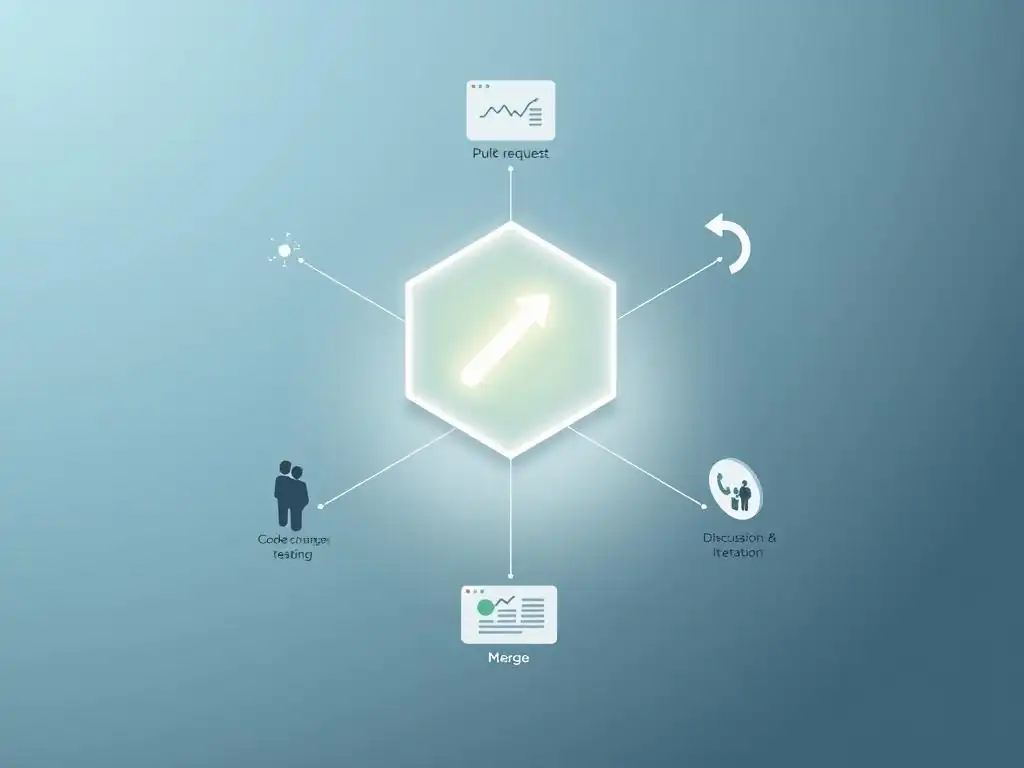
Once your changes are complete and you've tested them thoroughly, you push your branch to your forked repository and open a pull request (PR) on the original project's repository. The PR is your formal proposal to merge your changes into the project.
When submitting a PR, follow best practices:
- Write a clear and detailed description: Explain what problem your contribution solves or what feature it adds. Reference the issue number if applicable.
- Explain your changes: Briefly describe how you implemented the solution.
- Provide testing details: Explain how you tested your changes and confirm that all tests pass.
- Link related issues: Use keywords (e.g.,
Fixes #123,Closes #456) in your description to automatically link the PR to the relevant issue.
A well-written PR makes the review process smoother and increases the likelihood of your open source smart contract contribution being accepted.
Code Review Process and Collaboration
After submitting your PR, it will be reviewed by project maintainers and potentially other community members. The code review process is crucial for maintaining code quality, identifying potential bugs or security issues, and ensuring consistency with project standards. Be prepared to receive feedback and make changes based on the review.
Respond promptly and professionally to comments. If you disagree with a suggestion, explain your reasoning clearly. Code review is a collaborative process aimed at improving the project and your contribution. Be patient, as reviews can sometimes take time, especially for complex changes in active projects. This iterative process of review and revision is a core part of open source smart contract contribution.
Best Practices for Open Source Smart Contract Language Contributions
Adhering to certain best practices significantly increases the chances of your contributions being accepted and makes you a valued member of the community. These practices revolve around code quality, testing, and effective communication.
Writing Clean, Well-Documented Code
Write code that is easy for others to read and understand. This involves using meaningful variable names, breaking down complex logic into smaller functions, and avoiding unnecessary complexity. Equally important is documenting your code. Add comments to explain non-obvious logic, the purpose of functions, and the reasoning behind specific implementation choices.
/// @notice Calculates the square of a number, preventing overflow.
/// @param x The number to square.
/// @return The square of x.
function safeSquare(uint256 x) internal pure returns (uint256) {
    uint256 squared = x * x;
    require(squared / x == x, "Integer overflow"); // Check for overflow
    return squared;
}
While this is a Solidity example, the principle applies to the language the compiler or tooling is written in (e.g., Python for Vyper, Rust or C++ for parts of Solidity). Clear code and comprehensive documentation reduce the burden on reviewers and make your open source smart contract contribution easier to integrate.
Following Coding Style Guides and Conventions
Most open source projects have specific coding style guides (e.g., PEP 8 for Python, or custom guides for Solidity projects). These guides dictate formatting, naming conventions, and other stylistic elements. Adhering to them ensures consistency across the codebase, making it easier for everyone to read and maintain.
Many projects use automated linters and formatters (like prettier for Solidity or black for Python) to enforce these styles. Run these tools on your code before submitting a PR. Consistency in style, even on minor points like indentation or brace placement, shows attention to detail and respect for the project's standards. This is a fundamental aspect of effective open source smart contract contribution.
Testing Your Code Thoroughly
Any code contribution should be accompanied by tests. For bug fixes, write a test that reproduces the bug before you fix it, and ensure it passes after your fix. For new features, write tests that cover the intended functionality and various edge cases. Aim for high test coverage, but focus on testing the logic correctly rather than just maximizing a percentage.
Smart contract languages and compilers are complex systems, and subtle changes can have unintended consequences. Thorough testing provides confidence that your changes work as expected and haven't introduced regressions. Use the project's existing testing framework and add your tests to the appropriate test suite. This commitment to quality through testing is paramount in open source smart contract contribution.
Communicating Effectively with the Project Team
Clear and respectful communication is key to successful open source smart contract contribution. When discussing issues, proposing features, or responding to code reviews, be clear, concise, and polite. Explain your reasoning, ask questions when you don't understand something, and be open to feedback and constructive criticism.
Participate in project discussions on chat platforms or forums if you can. Being active in the community helps you understand the project's direction and build relationships with other contributors and maintainers. Good communication skills are just as important as technical skills in the collaborative environment of open source smart contract development.
Tools and Resources for Open Source Smart Contract Development
A variety of tools and resources can aid your journey in open source smart contract contribution, making the process more efficient and effective. Leveraging the right tools can help with coding, testing, debugging, and staying connected with the community.
Integrated Development Environments (IDEs) for Smart Contracts
Using a good IDE can significantly improve your productivity when working on smart contract languages or projects utilizing them. IDEs like Visual Studio Code (VS Code) with relevant extensions (e.g., Solidity, Python, Rust) provide features like syntax highlighting, code completion, debugging capabilities, and integration with testing frameworks.
Specific IDEs or plugins exist for smart contract development. For example, the Solidity extension for VS Code offers powerful features for working with Solidity code, including compiler integration and debugging support. While you might be contributing to the compiler itself, understanding the developer experience using these tools is valuable. For languages like Cairo, dedicated VS Code extensions are also available. Using an IDE tailored to the language you're working with can streamline the process of writing and testing your open source smart contract contribution.
Smart Contract Testing Frameworks and Libraries
Testing frameworks are indispensable for writing robust tests for smart contracts and related tooling. For EVM languages like Solidity and Vyper, popular frameworks include Hardhat and Foundry (JavaScript/TypeScript and Rust-based, respectively) for testing contracts, and potentially language-specific testing utilities within the compiler projects themselves. Python's pytest is commonly used for testing Vyper's compiler and related tools.
These frameworks provide tools for deploying contracts to local development networks, interacting with them programmatically, and asserting expected behavior. When contributing to the language or compiler, you'll likely be using the project's internal testing infrastructure, but familiarity with external frameworks is helpful for understanding how the language is used and tested in practice. Contributions to these testing frameworks themselves are also a form of open source smart contract contribution.
Online Communities and Forums for Open Source Developers
Engaging with online communities is crucial for learning, getting help, and staying informed about the projects you contribute to. Platforms like Discord, Telegram, and Discourse forums are commonly used by smart contract language projects for developer discussions, support, and announcements.
Examples include the official Ethereum R&D Discord (which has channels for Solidity and Vyper), the StarkNet Discord (for Cairo), and various project-specific forums. Stack Overflow and Ethereum Stack Exchange are great resources for asking and answering technical questions related to smart contracts and their languages. Actively participating in these communities allows you to learn from others, help newcomers, and discover opportunities for open source smart contract contribution.
Overcoming Challenges in Open Source Smart Contract Contribution
Contributing to complex open source projects, especially those involving core infrastructure like programming languages, comes with its own set of challenges. Recognizing and preparing for these challenges can make the experience more rewarding and less frustrating.
Dealing with Complex Codebases
Smart contract language compilers and runtimes are often large and intricate codebases developed over many years by multiple contributors. Understanding how different components interact can be challenging, especially when you're new to the project. The Solidity compiler, for example, involves multiple stages and intermediate representations, written in languages like C++ and Yul.
- Start Small: Begin with smaller issues labeled for newcomers to familiarize yourself with the codebase structure and contribution workflow.
- Focus on a Specific Area: Instead of trying to understand everything at once, focus on a particular component (e.g., the parser, a specific optimization pass) relevant to your contribution.
- Ask Questions: Don't hesitate to ask for guidance from maintainers or experienced contributors. They can provide context and point you to relevant parts of the code.
Patience and persistence are key when navigating complex codebases in open source smart contract contribution.
Handling Code Review Feedback
Code reviews are a critical part of the open source process, but receiving criticism on your work can sometimes be difficult. It's important to view feedback as constructive and aimed at improving the project and your skills, rather than a personal attack.
- Be Open-Minded: Approach feedback with a willingness to learn and improve.
- Ask for Clarification: If you don't understand a comment, ask the reviewer to explain it further.
- Respond Professionally: Address each comment respectfully, even if you disagree. Explain your perspective or justify your implementation choices.
- Iterate: Be prepared to make multiple revisions based on feedback. This is a normal part of the open source smart contract contribution process.
Remember that reviewers are volunteering their time to help you integrate your work into the project. A positive and collaborative attitude goes a long way.
Staying Motivated and Persistent
Open source contribution, especially to foundational projects, can be a marathon, not a sprint. Issues can be complex, reviews might take time, and your initial contributions might require significant revisions. Maintaining motivation over the long term is crucial.
- Set Realistic Goals: Don't expect your first contribution to be a major new feature. Start with smaller tasks.
- Celebrate Small Wins: Acknowledging the successful completion of a task or the acceptance of a small change can boost morale.
- Connect with the Community: Engaging with other contributors provides support, encouragement, and a sense of shared purpose.
- Remember Your Impact: Keep in mind that your open source smart contract contribution is helping build essential infrastructure for a decentralized future.
Persistence is key. Even seemingly small contributions add up and are valuable to the project and the wider blockchain ecosystem.
Advanced Open Source Smart Contract Contribution Techniques
Once you've become comfortable with the basic contribution workflow, you can explore more advanced ways to contribute that have a deeper impact on the smart contract language itself and its ecosystem.
Contributing to Language Design and Evolution
For experienced contributors who have developed a deep understanding of a smart contract language and its use cases, contributing to its design and evolution is a significant step. This involves participating in discussions about future language features, proposing changes to the language specification, and helping to evaluate the technical feasibility and potential impact of proposed changes.
Many projects have formal processes for proposing and discussing language improvements (e.g., Ethereum Improvement Proposals or EIPs, some of which relate to the EVM or Solidity). Engaging in these processes, writing detailed proposals, and participating in design meetings requires a strong technical background and a good understanding of the language's philosophy and constraints. This level of open source smart contract contribution directly shapes the tools developers will use for years to come.
Participating in Governance and Decision-Making
Some larger open source smart contract projects have formal or informal governance structures where core contributors and community members participate in decision-making regarding project priorities, roadmaps, and even funding allocation. Becoming an active and trusted contributor can open doors to participating in these discussions.
This might involve joining core developer calls, participating in votes on proposals, or even becoming a project maintainer yourself. Contributing to governance requires not just technical expertise but also good communication, collaboration, and the ability to build consensus within the community. This form of open source smart contract contribution has a broad impact on the project's future direction.
Mentoring New Contributors
As you gain experience, mentoring newcomers is a valuable way to contribute to the health and growth of the project community. This involves helping new contributors get started, answering their questions, guiding them through the contribution process, and providing constructive feedback on their first pull requests.
Mentoring helps onboard new talent, reduces the workload on core maintainers, and fosters a welcoming and sustainable community. Sharing your knowledge and experience is a significant form of open source smart contract contribution that strengthens the entire ecosystem.
The Future of Open Source Smart Contract Languages
The field of smart contract languages is dynamic, driven by innovation in blockchain technology and the increasing demands of decentralized applications. Open source development will continue to play a crucial role in shaping this future.
Emerging Trends and Technologies
Future developments in open source smart contract languages are likely to be influenced by trends like:
- Layer 2 Scaling Solutions: Languages and tools optimized for specific Layer 2 architectures (like rollups) will become more important. Cairo for StarkNet is a prime example.
- Interoperability: Features and standards that facilitate communication and interaction between contracts on different blockchains.
- Formal Verification: Increased integration of formal verification tools and techniques into language design and development workflows to enhance security guarantees.
- New Cryptography: Support for new cryptographic primitives required by advanced applications, such as zero-knowledge proofs within smart contracts.
Contributing to projects exploring these areas offers exciting opportunities to be at the forefront of blockchain innovation. Your open source smart contract contribution can help define the standards and capabilities of future decentralized systems.
The Role of Open Source in Smart Contract Security
Security remains paramount in smart contract development. Open source is inherently linked to security through transparency and community review. The future will likely see even greater emphasis on security-focused language features, robust testing frameworks, and integrated formal verification tools within open source smart contract projects.
Contributions related to security, such as developing static analysis tools, improving compiler warnings for potential vulnerabilities, or creating secure coding patterns documented for a specific language, will be highly valued. The collaborative nature of open source smart contract contribution is a powerful defense mechanism against vulnerabilities.
Contributing to a More Decentralized and Trustless Future
Ultimately, contributing to open source smart contract languages is about building the foundational tools for a more decentralized, transparent, and trustless future. Every line of code, every documentation improvement, every bug fix helps to create more reliable and accessible infrastructure for decentralized applications.
By participating in open source smart contract contribution, you are not just developing technical skills; you are actively contributing to a global movement aimed at reshaping digital interactions and creating systems that are more resilient and equitable. Your involvement, no matter how small, makes a difference in the collective effort to build the future of the decentralized web.
Frequently Asked Questions
How can I find open-source smart contract projects to contribute to?
You can find projects on platforms like GitHub, GitLab, and Bitbucket. Look for repositories with labels like "smart-contracts", "blockchain", or "Solidity" that are marked as open to contributions.
What skills are most valuable when contributing to open-source smart contract projects?
Strong programming skills in languages like Solidity, Vyper, or Rust are essential. Familiarity with blockchain concepts, testing frameworks, and security best practices is also highly beneficial.
What are some common ways to contribute to these projects besides writing code?
You can contribute by writing documentation, reporting bugs, creating test cases, or reviewing code. Even helping with community management or translating documentation can be valuable.
What is the best way to approach a project maintainer before making a contribution?
Start by reviewing the project's contribution guidelines. Then, open an issue to discuss your proposed changes or improvements before submitting a pull request.
How can contributing to open-source smart contract projects benefit my career?
Contributing helps you build your portfolio, gain experience, and network with other developers. It also demonstrates your skills and commitment to the blockchain community, making you a more attractive candidate for future roles.
Final Reflection: The Power of Collaborative Code
The journey into open-source smart contract language projects, as we've explored, is not merely about writing code; it's about building the future of decentralized technology together. The impact of these contributions resonates far beyond individual lines of code, shaping the very foundation upon which decentralized applications and economies are built.
This exploration has underscored the profound influence open-source development has on the evolution of smart contract languages. It's a reminder that innovation thrives in collaborative environments, where diverse perspectives converge to solve complex challenges. The strength of the web is in its universality. Access by everyone regardless of disability is an essential aspect.
- Tim Berners-Lee. This quote, while about the web, perfectly encapsulates the spirit of open-source: inclusivity and accessibility driving progress.
As you consider the potential for open source smart contract contribution in your own life, remember that every contribution, no matter how small, plays a vital role. Embrace the opportunity to learn, collaborate, and shape the future of decentralized technology. The world of smart contracts awaits your unique perspective and skills. What will you build?
Unlock Your Smart Contract Potential: Start Contributing Today!
Thank you for exploring the world of open-source smart contract language projects. You've gained valuable insights into how you can make a meaningful impact on the future of blockchain technology. Now, it's time to take action!
Here are some ways you can contribute and enhance your skills:
- Find an open-source smart contract language project that interests you and make your first contribution—whether it's fixing a bug, improving documentation, or adding a new feature.
- Dive into the documentation and examples of different smart contract languages. You might discover a tool or approach that sparks new ideas or areas for improvement.
- Share your learning experience and inspire others! Write a blog post about your contributions to open-source projects and share it on social media, tagging relevant communities.
What aspects of the smart contract language ecosystem are you most excited to work on? What challenges do you expect to face as you begin your contributions? Let us know in the comments below!
Leave a Reply