
NextGen Supply Chain Finance: Blockchain & AI for Improved Access and Efficiency


Welcome to Blockchain Trends, your compass in the rapidly evolving world of decentralized technologies. Beyond the buzzwords, we delve into the real-world applications shaping our future. Ever wondered how blockchain can revolutionize supply chain finance to grant unprecedented access and efficiency? Dive in to explore how blockchain and AI are converging to unlock new possibilities in this critical area. The future of finance is being rewritten, and it starts here.
- Understanding the Challenges in Traditional Supply Chain Finance
- Blockchain and AI: A Synergistic Solution for Supply Chain Finance
- Blockchain-Based Supply Chain Finance: Democratizing Access to Capital
- AI's Role in Optimizing Supply Chain Finance
- Use Cases: Blockchain and AI Transforming Supply Chain Finance
- The Future of Supply Chain Finance: Enhanced Accessibility and Efficiency
- Overcoming the Challenges of Implementing Blockchain and AI
- Conclusion: Blockchain and AI as Enablers of a More Inclusive and Efficient Supply Chain Finance Ecosystem
-
Frequently Asked Questions
- How can blockchain improve access to supply chain finance?
- What role does AI play in enhancing blockchain-based supply chain finance?
- Are there any regulatory hurdles to the widespread adoption of blockchain in supply chain finance?
- How does blockchain help in improving the efficiency of supply chain finance processes?
- Beyond access and efficiency, what other benefits does blockchain offer to supply chain finance?
- Final Reflection: Empowering Access Through Innovation
- Unleash the Future of Supply Chain Finance!
Understanding the Challenges in Traditional Supply Chain Finance
Limited Access to Supply Chain Finance for SMEs
Small and Medium-sized Enterprises (SMEs) often face significant hurdles in accessing traditional supply chain finance solutions. Banks and financial institutions typically require extensive credit histories, substantial collateral, and complex application processes, which can be particularly challenging for SMEs. According to the World Bank, the financing gap for SMEs in developing economies is estimated to be around \$5.2 trillion annually, highlighting a massive unmet need.
This lack of access restricts SMEs' ability to manage cash flow effectively, expand operations, and participate in global supply chains on equal footing with larger corporations. The consequences are far-reaching, impacting not only individual businesses but also broader economic growth and innovation within the supply chain ecosystem.
The traditional supply chain finance landscape is often dominated by solutions tailored for large multinational corporations, leaving SMEs underserved. Many SMEs operate with limited resources and may lack the dedicated financial teams to navigate the intricacies of conventional financing options like factoring or invoice discounting. Furthermore, the risk assessment models used by traditional financial institutions often penalize SMEs due to perceived higher default risks and shorter operating histories. This creates a systemic disadvantage, hindering the growth potential of SMEs and limiting their role in contributing to a robust and dynamic supply chain network.
Inefficiencies and Lack of Transparency in Existing Systems
Traditional supply chain finance systems are often characterized by operational inefficiencies and a lack of transparency, leading to increased costs and complexities for all stakeholders. Paper-based processes, manual data entry, and fragmented communication channels contribute to delays in invoice processing, payment settlements, and dispute resolution. For instance, a study by McKinsey estimated that manual invoice processing can cost businesses between \$4 and \$15 per invoice, compared to less than \$1 for automated processing. This inefficiency not only adds to operational expenses but also ties up working capital unnecessarily, impacting the financial health of businesses involved.
The opacity inherent in many traditional supply chain finance systems further exacerbates these problems. Limited visibility into the status of transactions, the movement of goods, and the financial health of trading partners creates uncertainty and increases risks. Buyers and suppliers often lack a single, unified view of the supply chain finance process, making it difficult to track payments, manage inventory effectively, and proactively address potential disruptions. This lack of transparency can erode trust between trading partners and hinder the development of strong, collaborative relationships essential for a resilient and efficient supply chain.
The Need for Innovation in Supply Chain Funding
The limitations of traditional supply chain finance models underscore a critical need for innovation in how businesses, especially SMEs, access funding. The globalized and increasingly complex nature of modern supply chains demands solutions that are more accessible, efficient, and transparent. Innovation in this space is not just about streamlining processes; it's about fostering greater financial inclusion, enabling SMEs to thrive, and building more resilient and responsive supply chains overall. The emergence of new technologies like blockchain and Artificial Intelligence (AI) presents a significant opportunity to address these challenges and revolutionize supply chain finance for the better.
The demand for innovative supply chain funding solutions is further driven by evolving business models and the increasing emphasis on sustainability and ethical sourcing. Businesses are seeking financing options that align with their values and support responsible supply chain practices. Traditional systems often struggle to incorporate these considerations effectively. Therefore, innovation in supply chain finance must not only focus on efficiency and access but also on creating solutions that are adaptable, sustainable, and capable of supporting the evolving needs of businesses in the 21st century.
Blockchain and AI: A Synergistic Solution for Supply Chain Finance
How Blockchain Enhances Transparency and Security
Blockchain technology offers a powerful solution to enhance transparency and security in supply chain finance. Its decentralized and immutable nature provides a shared, verifiable record of transactions accessible to authorized participants. Every transaction recorded on a blockchain is cryptographically secured and time-stamped, creating an auditable trail that is virtually tamper-proof. This inherent security significantly reduces the risk of fraud and manipulation, fostering greater trust and confidence among stakeholders.
The transparency afforded by blockchain extends beyond just financial transactions. It can also be used to track the movement of goods, verify product provenance, and ensure ethical sourcing throughout the supply chain. For example, Provenance, a UK-based company, utilizes blockchain to track the journey of food products, allowing consumers to verify the origin and authenticity of their purchases.
This level of transparency is crucial for building trust with consumers and for complying with increasingly stringent regulatory requirements regarding supply chain due diligence. In the context of supply chain finance, blockchain's transparency can provide lenders with greater visibility into the underlying transactions, reducing perceived risk and potentially improving access to finance for suppliers.
AI-Powered Risk Assessment and Credit Scoring
Artificial Intelligence (AI) brings sophisticated capabilities for risk assessment and credit scoring to supply chain finance. Traditional credit scoring models often rely heavily on historical financial data and static ratios, which may not accurately reflect the dynamic nature of supply chain risks. AI, particularly machine learning algorithms, can analyze vast datasets from diverse sources, including real-time transaction data, supply chain performance metrics, and even external factors like macroeconomic indicators and social media sentiment, to develop more nuanced and predictive risk assessments.
AI-powered credit scoring can move beyond traditional financial metrics to incorporate alternative data points, such as supplier performance history, payment behavior, and even qualitative data extracted from news articles and industry reports. This holistic approach allows for a more comprehensive and accurate assessment of creditworthiness, particularly for SMEs that may lack extensive credit histories.
For instance, companies like CreditVidya are using AI to develop credit scoring models for underserved populations in emerging markets, demonstrating the potential of AI to democratize access to financial services. In supply chain finance, this can translate to more inclusive lending practices and better risk management for financial institutions.
Combining Blockchain and AI for Optimal Supply Chain Finance
The true power of blockchain and AI in supply chain finance emerges when these technologies are combined synergistically. Blockchain provides the secure and transparent infrastructure for recording and verifying transactions, while AI provides the intelligent analytics and decision-making capabilities to optimize processes and mitigate risks. This combination creates a powerful platform for next-generation supply chain finance solutions that are more efficient, accessible, and resilient.
Imagine a supply chain finance platform where blockchain is used to record and track invoices, payments, and shipment information in a transparent and immutable manner. Simultaneously, AI algorithms analyze this data in real-time to assess credit risk, predict potential disruptions, and automate invoice processing and reconciliation. This integrated approach can significantly reduce operational costs, improve cash flow visibility, and enhance risk management for all participants in the supply chain. For example, TradeLens, a blockchain-based platform for supply chain information sharing, is leveraging AI to provide predictive insights and optimize logistics operations, showcasing the benefits of this technological synergy.
Blockchain-Based Supply Chain Finance: Democratizing Access to Capital
Lowering Barriers to Entry for Small and Medium-Sized Enterprises (SMEs)
Blockchain technology has the potential to significantly lower the barriers to entry for SMEs seeking supply chain finance. By automating processes, reducing reliance on intermediaries, and enhancing transparency, blockchain-based platforms can make supply chain finance more accessible and affordable for smaller businesses. The decentralized nature of blockchain can also facilitate peer-to-peer financing models, connecting SMEs directly with investors and alternative lenders, bypassing traditional financial institutions and their stringent requirements.
Smart contracts, self-executing agreements encoded on the blockchain, automate many of the manual and time-consuming tasks associated with traditional supply chain finance, such as invoice verification and payment processing. This automation reduces administrative overhead and transaction costs, making it economically viable for financial service providers to serve SMEs, a segment often considered too costly to serve with traditional models.
Furthermore, the enhanced transparency and security of blockchain can reduce perceived risk for lenders, making them more willing to extend credit to SMEs that may have been previously deemed too risky. This democratization of access to capital is crucial for fostering SME growth and promoting inclusive economic development.
Increased Transparency and Trust in Financial Transactions
Blockchain inherently increases transparency and trust in supply chain finance transactions. The immutable record of transactions on the blockchain provides a single source of truth, accessible to all authorized participants, eliminating information asymmetry and reducing the potential for disputes. This enhanced transparency builds trust between buyers, suppliers, and financiers, fostering stronger and more collaborative relationships within the supply chain ecosystem.
The ability to track the provenance of goods and the history of financial transactions on a blockchain provides greater assurance to all parties involved. For suppliers, increased transparency means faster and more reliable payments, reducing cash flow uncertainties. For buyers, it offers better visibility into their supply chain and reduces the risk of fraud and unethical practices. For financiers, blockchain provides a more transparent and auditable record of transactions, facilitating better risk assessment and potentially reducing the cost of capital. This increased trust and transparency are essential for building a more efficient and resilient supply chain finance ecosystem.
Streamlining Processes and Reducing Operational Costs
Blockchain-based supply chain finance solutions streamline processes and significantly reduce operational costs compared to traditional systems. The automation capabilities of smart contracts eliminate manual paperwork, reduce data entry errors, and accelerate transaction processing times. This increased efficiency translates to lower administrative costs, faster payment cycles, and improved cash flow management for all participants in the supply chain.
By digitizing and automating processes, blockchain can eliminate many of the intermediaries involved in traditional supply chain finance, such as correspondent banks and clearinghouses. This disintermediation reduces transaction fees and processing times, making supply chain finance more cost-effective and efficient. For example, a report by Deloitte estimated that blockchain could reduce transaction costs in cross-border payments by up to 50%. In the context of supply chain finance, these cost savings can be substantial, particularly for businesses operating in complex global supply chains.
AI's Role in Optimizing Supply Chain Finance
AI-Driven Predictive Analytics for Improved Forecasting
AI-driven predictive analytics plays a crucial role in optimizing supply chain finance by improving forecasting accuracy and enabling proactive risk management. By analyzing historical data, market trends, and external factors, AI algorithms can generate more accurate demand forecasts, predict potential supply chain disruptions, and optimize inventory levels. This improved forecasting capability allows businesses to better manage their working capital, reduce inventory holding costs, and improve their overall financial performance.
Predictive analytics can also be used to forecast potential payment delays or defaults, allowing financiers to proactively manage credit risk and adjust financing terms accordingly. For example, AI can analyze supplier performance data, payment history, and macroeconomic indicators to identify early warning signs of financial distress and trigger alerts. This proactive risk management approach can help mitigate potential losses and ensure the smooth flow of funds within the supply chain finance ecosystem. Companies like Prewave are utilizing AI to predict supply chain disruptions by monitoring social media and news sources, demonstrating the power of AI for proactive risk management.
Automated Invoice Processing and Reconciliation with AI
AI-powered automation is revolutionizing invoice processing and reconciliation in supply chain finance. Traditional invoice processing is often a manual, time-consuming, and error-prone process. AI, particularly Optical Character Recognition (OCR) and Natural Language Processing (NLP) technologies, can automate the extraction of data from invoices, regardless of format, and automatically match invoices with purchase orders and receipts. This automation significantly reduces manual effort, accelerates processing times, and minimizes errors.
Automated invoice processing not only reduces operational costs but also improves data accuracy and auditability. AI-powered systems can flag discrepancies and potential errors, ensuring that invoices are accurate and compliant before payment. This enhanced accuracy reduces the risk of disputes and delays, improving relationships between buyers and suppliers. Furthermore, the digitized invoice data can be easily integrated with other financial systems, providing a seamless and efficient workflow for supply chain finance operations. Companies like Esker and Basware offer AI-powered solutions for automating invoice processing, showcasing the widespread adoption of this technology.
Enhancing Risk Management with AI-Powered Fraud Detection
AI significantly enhances risk management in supply chain finance through advanced fraud detection capabilities. Traditional fraud detection methods often rely on rule-based systems that are easily circumvented by sophisticated fraudsters. AI, particularly machine learning algorithms, can analyze vast amounts of transaction data in real-time to identify anomalous patterns and flag potentially fraudulent activities that would be missed by traditional methods.
AI-powered fraud detection systems can analyze various data points, including transaction amounts, payment patterns, supplier locations, and even network connections, to identify suspicious transactions and prevent fraudulent activities before they occur. This proactive fraud prevention is crucial for protecting financial institutions and businesses from financial losses and reputational damage. Furthermore, AI can continuously learn and adapt to evolving fraud patterns, making it a more effective and resilient fraud detection tool than traditional rule-based systems. Companies like NICE Actimize and SAS offer AI-powered fraud detection solutions used by financial institutions globally, highlighting the importance of AI in combating financial crime.
Use Cases: Blockchain and AI Transforming Supply Chain Finance
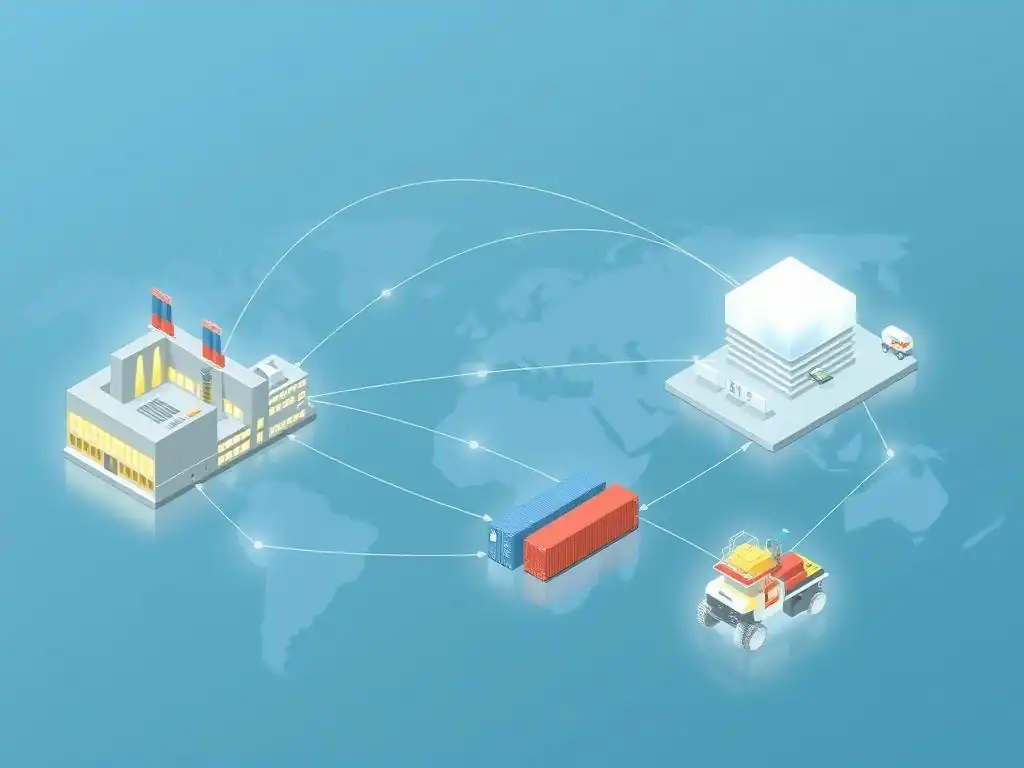
Case Study: Tradeshift Improves SME Access to Funding Through Blockchain
Tradeshift, a leading supply chain payments and marketplace platform, has implemented blockchain technology to improve SME access to funding. Their platform, Tradeshift Pay, leverages blockchain to provide faster and more secure invoice financing solutions for SMEs. By using blockchain to verify invoice authenticity and track payment status, Tradeshift reduces the risk for financiers and enables them to offer more competitive financing rates to SMEs.
In a pilot program, Tradeshift partnered with HSBC to provide invoice financing to SMEs in Hong Kong using blockchain. The platform streamlined the invoice financing process, reducing processing times from days to hours and significantly lowering transaction costs. This case study demonstrates the practical application of blockchain in democratizing access to supply chain finance for SMEs, enabling them to improve their cash flow and grow their businesses. Tradeshift's initiative highlights the potential of blockchain to transform traditional supply chain finance models and create a more inclusive financial ecosystem.
Case Study: Coupa Reduces Fraud with AI-Enhanced Supply Chain Monitoring
Coupa, a business spend management platform, utilizes AI to enhance supply chain monitoring and reduce fraud. Their platform, Coupa Source-to-Pay, incorporates AI-powered analytics to monitor supplier performance, detect anomalies in procurement processes, and identify potential fraudulent activities. By analyzing vast amounts of spend data, AI algorithms can flag suspicious transactions, such as duplicate invoices, inflated pricing, and unauthorized purchases, enabling businesses to proactively mitigate fraud risks.
One example of Coupa's AI-powered fraud detection capabilities is their anomaly detection feature, which uses machine learning to identify unusual spending patterns that may indicate fraudulent activity. This feature has helped Coupa's customers significantly reduce procurement fraud and improve compliance. For instance, a case study by Coupa highlighted how one customer used their platform to identify and prevent over \$1 million in potential fraudulent payments. This example illustrates the tangible benefits of AI in enhancing supply chain security and reducing financial losses due to fraud.
Real-World Examples of Blockchain & AI Synergy in Supply Chain
Beyond specific case studies, numerous real-world examples showcase the growing synergy of blockchain and AI in transforming supply chain finance. Several major financial institutions and technology companies are actively developing and deploying solutions that combine these technologies. For instance, JP Morgan Chase has been exploring the use of blockchain for trade finance and payments, while also investing in AI-powered analytics for risk management and fraud detection.
Platforms like Marco Polo and Contour are consortiums of banks and technology providers leveraging blockchain for trade finance, aiming to digitize and streamline trade finance processes. These platforms are increasingly incorporating AI capabilities to enhance data analysis, automate decision-making, and provide value-added services to their users. The ongoing development and adoption of these solutions demonstrate the increasing recognition of the combined power of blockchain and AI to revolutionize supply chain finance and create a more efficient, transparent, and secure global trade ecosystem.
The Future of Supply Chain Finance: Enhanced Accessibility and Efficiency
Blockchain and AI Driving Innovation in Supply Chain Management
Blockchain and AI are at the forefront of driving innovation across the entire spectrum of supply chain management, and their impact on supply chain finance is particularly transformative. These technologies are not only streamlining financial processes but also enabling new business models and fostering greater collaboration and efficiency throughout the supply chain ecosystem. As adoption rates increase and technology matures, blockchain and AI are poised to become integral components of next-generation supply chain management systems.
The convergence of blockchain and AI is leading to the development of more intelligent and autonomous supply chains. AI-powered analytics can optimize logistics operations, predict demand fluctuations, and personalize customer experiences, while blockchain provides the secure and transparent infrastructure for data sharing and collaboration across the supply chain network. This combination is creating a foundation for more resilient, responsive, and efficient supply chains that are better equipped to adapt to the challenges of a rapidly changing global landscape.
Predictions for the Evolution of Supply Chain Finance Platforms
The future of supply chain finance platforms is likely to be characterized by increased automation, enhanced data analytics, and greater integration with other supply chain systems. Blockchain and AI will continue to play a central role in this evolution, driving the development of platforms that are more user-friendly, accessible, and efficient. We can expect to see platforms that offer more personalized financing solutions, tailored to the specific needs of individual businesses and industries.
Furthermore, the integration of IoT (Internet of Things) devices and sensor data with blockchain and AI platforms will provide even richer real-time data for supply chain finance decision-making. This data can be used to track goods in transit, monitor environmental conditions, and verify product quality, providing greater transparency and assurance throughout the supply chain. The evolution of these platforms will ultimately lead to a more seamless and interconnected supply chain finance ecosystem that benefits all participants.
The Impact of Decentralized Finance (DeFi) on Supply Chains
Decentralized Finance (DeFi) has the potential to significantly disrupt and reshape supply chain finance by offering alternative financing mechanisms that bypass traditional financial intermediaries. DeFi platforms leverage blockchain technology to provide peer-to-peer lending, decentralized exchanges, and other financial services without the need for banks or other centralized institutions. This could democratize access to supply chain finance even further, particularly for SMEs in underserved markets.
While DeFi in supply chain finance is still in its early stages, its potential impact is substantial. DeFi platforms could offer faster and cheaper financing options, reduce reliance on traditional banking systems, and create new opportunities for investors to participate in supply chain finance. However, challenges such as regulatory uncertainty and volatility risks need to be addressed for DeFi to achieve widespread adoption in supply chain finance. Despite these challenges, the emergence of DeFi represents a significant trend that could fundamentally alter the landscape of supply chain finance in the years to come.
Overcoming the Challenges of Implementing Blockchain and AI
Data Privacy and Security Concerns in Blockchain and AI Implementations
While blockchain and AI offer significant benefits, their implementation in supply chain finance also presents challenges, particularly concerning data privacy and security. Blockchain's transparency, while beneficial for traceability, can also raise concerns about the confidentiality of sensitive business data. Similarly, AI systems often rely on large datasets, and ensuring the privacy and security of this data is paramount.
Addressing data privacy concerns requires careful consideration of data governance policies, data anonymization techniques, and the use of privacy-preserving technologies such as zero-knowledge proofs and homomorphic encryption. Robust security measures are also essential to protect blockchain and AI systems from cyber threats and ensure the integrity and confidentiality of sensitive data. Implementing blockchain and AI in a responsible and ethical manner requires a proactive approach to data privacy and security.
Regulatory Considerations and Compliance Requirements
The regulatory landscape for blockchain and AI is still evolving, and businesses implementing these technologies in supply chain finance must navigate a complex web of regulations and compliance requirements. Regulations related to data privacy, financial transactions, and cross-border payments can vary significantly across jurisdictions, creating challenges for businesses operating globally. Furthermore, the lack of clear regulatory frameworks for DeFi adds another layer of complexity.
Businesses need to stay informed about evolving regulations and ensure compliance with relevant laws and standards. This may involve working closely with legal and compliance experts to develop appropriate policies and procedures. Collaboration between industry stakeholders, regulators, and technology providers is crucial to establishing clear and consistent regulatory frameworks that foster innovation while mitigating risks and protecting consumers.
The Importance of Collaboration and Standardization
Successful implementation of blockchain and AI in supply chain finance requires collaboration and standardization across the industry. Fragmented and siloed systems can hinder interoperability and limit the benefits of these technologies. Collaboration among businesses, technology providers, financial institutions, and industry associations is essential to develop common standards, protocols, and best practices for blockchain and AI in supply chain finance.
Standardization efforts can focus on areas such as data formats, API interfaces, and security protocols, ensuring that different systems can communicate and interact seamlessly. Industry consortia and open-source initiatives play a crucial role in driving standardization and fostering collaboration. By working together, stakeholders can overcome the challenges of implementing blockchain and AI and unlock their full potential to transform supply chain finance for the better.
Conclusion: Blockchain and AI as Enablers of a More Inclusive and Efficient Supply Chain Finance Ecosystem
Key Takeaways: Blockchain for Enhanced Supply Chain Finance Access
Blockchain and AI are not just incremental improvements but transformative technologies that are reshaping supply chain finance. Blockchain enhances transparency, security, and efficiency by providing a shared, immutable ledger for transactions and data. This increased transparency builds trust, reduces risk, and streamlines processes, ultimately lowering barriers to access supply chain finance, especially for SMEs. Blockchain's decentralized nature and smart contract capabilities automate processes and reduce reliance on intermediaries, making supply chain finance more cost-effective and accessible.
AI complements blockchain by providing intelligent analytics, risk assessment, and automation capabilities. AI-powered systems can analyze vast datasets to improve forecasting accuracy, detect fraud, and automate invoice processing. The synergy of blockchain and AI creates a powerful platform for next-generation supply chain finance solutions that are more efficient, transparent, and inclusive. These technologies are democratizing access to capital and empowering SMEs to participate more fully in global supply chains.
The Potential for Widespread Adoption of Blockchain and AI in Supply Chain Funding
The potential for widespread adoption of blockchain and AI in supply chain funding is significant. As businesses increasingly recognize the benefits of these technologies and overcome implementation challenges, we can expect to see a growing adoption rate across industries and geographies. The increasing availability of user-friendly platforms and solutions, coupled with growing regulatory clarity, will further accelerate adoption.
The transformative potential of blockchain and AI extends beyond just improving efficiency and access. These technologies can also contribute to building more sustainable and ethical supply chains by enhancing traceability, transparency, and accountability. As businesses prioritize sustainability and responsible sourcing, blockchain and AI will become even more critical tools for achieving these goals. The future of supply chain finance is undoubtedly intertwined with the continued evolution and adoption of blockchain and AI, paving the way for a more inclusive, efficient, and resilient global trade ecosystem.
Frequently Asked Questions
How can blockchain improve access to supply chain finance?
Blockchain provides a transparent and immutable record of transactions, making it easier for lenders to assess risk and offer financing to a wider range of businesses, especially SMEs. This improved visibility builds trust and reduces fraud.
What role does AI play in enhancing blockchain-based supply chain finance?
AI algorithms can analyze vast datasets stored on the blockchain to predict payment defaults, optimize financing terms, and automate various processes, ultimately leading to more efficient and data-driven supply chain finance solutions.
Are there any regulatory hurdles to the widespread adoption of blockchain in supply chain finance?
Yes, regulatory uncertainty surrounding digital assets and cross-border transactions remains a significant challenge. Clearer legal frameworks are needed to foster trust and encourage wider adoption.
How does blockchain help in improving the efficiency of supply chain finance processes?
By automating processes like invoice verification and payment settlement, blockchain eliminates intermediaries and reduces paperwork, leading to faster transaction times and lower costs for both suppliers and buyers. This creates a more streamlined and efficient ecosystem.
Beyond access and efficiency, what other benefits does blockchain offer to supply chain finance?
Blockchain enhances transparency and traceability throughout the supply chain, allowing for better tracking of goods and materials. This helps ensure product authenticity, combat counterfeiting, and promote ethical and sustainable practices.
Final Reflection: Empowering Access Through Innovation
The exploration of Blockchain and AI in Supply Chain Finance reveals a powerful potential to democratize access to capital and streamline global trade. What began as theoretical possibilities are now tangible solutions, poised to reshape how businesses, particularly smaller enterprises, navigate the complexities of financing their operations. The promise of increased transparency, efficiency, and security offered by these technologies is not just a futuristic vision; it's a present-day imperative for fostering a more equitable and robust global economy.
This shift towards technologically driven supply chain finance is profoundly impacting the cultural and social landscape of international trade. It represents a move away from traditional, often opaque, systems towards a more inclusive and transparent model, potentially leveling the playing field for businesses in developing economies. The future of supply chain finance is not just about technology; it's about creating a more equitable and sustainable global trade ecosystem.
This sentiment underscores the transformative power of these innovations to not only improve efficiency but also to foster greater financial inclusion and resilience.
As we stand on the cusp of this technological revolution, I invite you to consider the role you can play in shaping its trajectory. How can you advocate for the adoption of these technologies within your own sphere of influence? How can you contribute to ensuring that the benefits of Blockchain and AI in supply chain finance are accessible to all, regardless of size or location? Let us embrace this opportunity to build a more connected, efficient, and equitable future for global trade, one transaction at a time.
Unleash the Future of Supply Chain Finance!
Thank you for exploring how blockchain and AI are transforming supply chain finance. You've gained valuable insights into how these technologies are making access more equitable and enhancing operational efficiency. Now, it's time to take action and be part of this exciting evolution.
Here’s how you can move forward:
- Engage with your organization's finance team to explore opportunities for implementing blockchain or AI solutions in your supply chain. This is the most important step!
- Share your insights! Discuss the advantages of blockchain and AI with colleagues and your professional network on LinkedIn or Twitter.
- Discover related innovations! Visit industry news sites to learn about emerging blockchain applications across various sectors.
Are you ready to lead the way in adopting blockchain and AI for supply chain improvement? What is one small step you can take today to promote its integration within your organization?
Leave a Reply