
Is Blockchain Just for Cryptocurrency? Unveiling the Broader Applications


Welcome to Blockchain Trends, your guide to understanding the real impact of blockchain technology. Is blockchain just about Bitcoin and Ethereum? Prepare to be surprised! We're diving deep into blockchain beyond cryptocurrency applications, exploring its transformative potential in DeFi, enterprise solutions, regulatory landscapes, and the exciting future of decentralized systems. Intrigued? Let's unravel the possibilities...
-
Blockchain Beyond Cryptocurrency: Expanding Horizons
- Introduction: Beyond Cryptocurrency - Unveiling Blockchain's True Potential
- Core Principles of Blockchain Technology
- Blockchain Applications Across Industries
- The Future of Blockchain: Emerging Trends
- Challenges and Considerations for Blockchain Implementation
- Conclusion: The Expanding Universe of Blockchain Technology
-
Frequently Asked Questions
- What are some blockchain beyond cryptocurrency applications?
- How does blockchain benefit businesses beyond its use in cryptocurrencies?
- What is DeFi and how does it relate to blockchain beyond cryptocurrency applications?
- What are the major regulatory challenges facing blockchain beyond cryptocurrency applications?
- What does the future hold for blockchain beyond cryptocurrency applications and decentralized systems?
- Final Reflection: Blockchain's Unfolding Potential
- Ignite Your Blockchain Journey!
Blockchain Beyond Cryptocurrency: Expanding Horizons
Introduction: Beyond Cryptocurrency - Unveiling Blockchain's True Potential
Often, the term "blockchain" conjures images of volatile cryptocurrency markets and digital gold rushes. While cryptocurrencies like Bitcoin and Ethereum brought blockchain technology into the mainstream, they represent just the tip of the iceberg in terms of its potential applications. The underlying technology, blockchain, offers a revolutionary framework for data management and secure transactions that extends far beyond the realm of digital currencies. This article aims to explore the vast landscape of blockchain applications, demonstrating its transformative power across diverse industries and shedding light on its potential to reshape our digital and physical worlds.
Beyond the speculative buzz surrounding crypto assets, blockchain's core value proposition lies in its ability to create transparent, secure, and decentralized systems. From revolutionizing supply chains and healthcare to transforming financial services and digital identity management, blockchain is emerging as a foundational technology for the next generation of the internet and beyond. This exploration will delve into real-world examples and use cases, showcasing how blockchain technology is being implemented to solve tangible problems and create new opportunities across various sectors, proving its utility extends far beyond the fluctuations of the cryptocurrency market.
Core Principles of Blockchain Technology
What is Blockchain? A Detailed Explanation
At its core, a blockchain is a distributed, immutable ledger that records transactions in blocks, linked together chronologically and cryptographically secured. Imagine a digital record book that is not stored in a single location but is distributed across a network of computers. Each block in this chain contains a set of validated transactions, and once a block is added to the chain, it becomes extremely difficult to alter or tamper with it. This inherent characteristic of immutability stems from the cryptographic hashing and consensus mechanisms that underpin blockchain technology.
This distributed nature is crucial as it eliminates the need for a central authority to oversee and validate transactions. Instead, a network of participants, known as nodes, collectively verifies and confirms each transaction before it is added to the blockchain.
This decentralized approach enhances security, reduces the risk of single points of failure, and promotes transparency as all participants typically have access to the ledger. The combination of distribution, immutability, and cryptographic security makes blockchain a uniquely robust and trustworthy platform for managing data and facilitating transactions in a wide array of applications, far exceeding its initial association with cryptocurrency.
Key Attributes: Immutability, Transparency, and Decentralization
Immutability is a cornerstone of blockchain technology. Once a transaction is recorded in a block and added to the chain, it cannot be altered or deleted. This is achieved through cryptographic hashing, where each block contains a unique hash of the previous block, creating a chain of interconnected blocks. Tampering with any block would require altering all subsequent blocks and recomputing their hashes, a computationally infeasible task in a properly functioning blockchain network. This immutability ensures data integrity and builds trust in the recorded information.
Transparency in blockchain refers to the accessibility of transaction data to network participants. While the level of transparency can vary between different types of blockchains (public, private, permissioned), many blockchain systems allow participants to view transaction histories and verify the legitimacy of records. For instance, on a public blockchain like Bitcoin, anyone can view all transactions ever made.
This transparency fosters accountability and reduces the potential for fraud and manipulation. Decentralization, as previously mentioned, is the distribution of control and data across a network, removing reliance on central intermediaries. This distributed architecture enhances security, resilience, and reduces censorship risks, making blockchain a powerful tool for building trust and efficiency in various systems.
Blockchain Mechanics: A Step-by-Step Breakdown
The process of how a blockchain operates can be broken down into several key steps. First, a transaction is initiated. This could be anything from a cryptocurrency transfer to a record update in a supply chain system. Next, this transaction is broadcast to the network of nodes. These nodes are computers participating in the blockchain network, and they are responsible for verifying and validating transactions.
Upon receiving a transaction, nodes begin the verification process. This involves checking the transaction's validity based on the rules of the blockchain protocol, which might include verifying digital signatures, ensuring sufficient funds, or confirming compliance with smart contract conditions. Once a transaction is verified by a sufficient number of nodes, it becomes part of a block of transactions.
This block is then proposed to be added to the existing blockchain. To add a block, a consensus mechanism is employed, such as Proof-of-Work (used by Bitcoin) or Proof-of-Stake (used by many newer blockchains). This mechanism ensures that nodes agree on the next block to be added and prevents malicious actors from manipulating the blockchain.
Once consensus is reached, the new block is appended to the chain, becoming permanently and immutably recorded. This entire process, from transaction initiation to block addition, typically occurs within minutes, or even seconds in some advanced blockchains, creating a continuous and secure record of transactions.
Blockchain Applications Across Industries
Decentralized Finance (DeFi): Transforming the Financial Landscape
Decentralized Finance, or DeFi, represents a paradigm shift in the financial industry, leveraging blockchain technology to build open, permissionless, and transparent financial services. Unlike traditional finance (TradFi) which relies on centralized intermediaries like banks and exchanges, DeFi aims to recreate and improve upon traditional financial instruments using smart contracts on blockchains, primarily Ethereum. This results in a system that is accessible to anyone with an internet connection, reduces reliance on intermediaries, and potentially offers greater efficiency and lower costs.
DeFi applications span a wide range of financial services, including lending and borrowing, decentralized exchanges, stablecoins, and asset management. The total value locked (TVL) in DeFi protocols has fluctuated but remains substantial, indicating significant adoption. For instance, as of late 2023, the DeFi market had billions of dollars locked in various protocols, showcasing its growing influence. This burgeoning sector is constantly innovating, with new protocols and financial instruments emerging regularly, pushing the boundaries of what's possible in finance and challenging the traditional financial infrastructure.
Algorithmic Lending Platforms: Aave and Compound
Algorithmic lending platforms like Aave and Compound exemplify the power of DeFi in transforming lending and borrowing. These platforms operate using smart contracts that automatically match borrowers and lenders, set interest rates based on supply and demand algorithms, and manage collateral. Unlike traditional lending, which often involves lengthy application processes and credit checks, DeFi lending is typically faster, more accessible, and requires less paperwork. Users can deposit cryptocurrency assets into lending pools to earn interest or borrow assets by providing collateral, all managed transparently and automatically by smart contracts.
For example, Aave, as one of the leading DeFi lending platforms, has seen billions of dollars in total value locked. Interest rates on these platforms are dynamic and fluctuate based on the utilization rate of each asset pool.
During periods of high borrowing demand, interest rates for lenders can be significantly higher than traditional savings accounts, while borrowers can access capital quickly and efficiently, albeit often at variable rates and with the need to over-collateralize their loans to mitigate risk for lenders. Compound, another prominent platform, operates similarly, contributing significantly to the growth of decentralized lending and borrowing within the DeFi ecosystem.
Decentralized Exchanges (DEXs): Uniswap and SushiSwap
Decentralized Exchanges (DEXs) like Uniswap and SushiSwap are revolutionizing cryptocurrency trading by enabling peer-to-peer trading directly from user wallets, eliminating the need for centralized intermediaries like Coinbase or Binance. DEXs operate using automated market makers (AMMs), which are smart contracts that use algorithms to determine the prices of assets based on the supply and demand within liquidity pools.
Users provide liquidity to these pools by depositing pairs of tokens, earning a portion of the trading fees generated by the exchange. This model democratizes market making and allows for the trading of a wider range of tokens, especially long-tail assets not typically listed on centralized exchanges.
Uniswap, a pioneer in the DEX space, has consistently ranked among the top cryptocurrency exchanges in terms of trading volume, sometimes processing billions of dollars in trades daily. SushiSwap, initially forked from Uniswap, introduced additional features and tokenomics, further innovating the DEX model. These platforms offer users greater control over their funds, reduced counterparty risk, and access to a broader range of tokens, contributing to a more decentralized and open cryptocurrency trading ecosystem. The rise of DEXs underscores the shift towards disintermediation and user empowerment within the financial sector enabled by blockchain technology.
Stablecoins: Tether (USDT) and USD Coin (USDC)
Stablecoins are cryptocurrencies designed to maintain a stable value, typically pegged to a fiat currency like the US dollar. They address the volatility inherent in many cryptocurrencies, making them suitable for use in everyday transactions, as a store of value, and within DeFi protocols. Stablecoins achieve price stability through various mechanisms, including fiat-backing (reserves of fiat currency held in custody), crypto-backing (collateralized by other cryptocurrencies), and algorithmic mechanisms (using algorithms to adjust supply and demand).
Tether (USDT) and USD Coin (USDC) are two of the most prominent stablecoins in the cryptocurrency market. USDT, issued by Tether Limited, is the most widely used stablecoin and claims to be pegged 1:1 to the US dollar, backed by reserves. USDC, issued by Circle and Coinbase through the Centre consortium, is another leading stablecoin, also pegged to the US dollar and emphasizing regulatory compliance and transparency.
Both USDT and USDC have achieved massive market capitalizations, with billions of dollars in circulation, demonstrating the significant demand for stable digital currencies. They are crucial components of the DeFi ecosystem, facilitating trading, lending, and borrowing, and also serve as a bridge between the traditional financial world and the crypto space.
Enterprise Blockchain: Revolutionizing Business Operations
Beyond finance, blockchain is rapidly transforming enterprise operations across various industries. Enterprise blockchain solutions, often utilizing private or permissioned blockchains, offer businesses enhanced security, transparency, and efficiency in their processes. These solutions are tailored to address specific business challenges, ranging from supply chain optimization and improved data management to enhanced security and new business models. The focus shifts from public, permissionless networks to controlled environments where specific organizations or consortia manage the blockchain infrastructure and access.
The adoption of enterprise blockchain is growing as businesses recognize its potential to streamline operations, reduce costs, and build trust with partners and customers. While public blockchains like Ethereum are open to anyone, enterprise blockchains are designed for specific business use cases, often prioritizing privacy and scalability for enterprise-level applications. This section will explore examples of how major corporations are leveraging blockchain technology to revolutionize their operations and gain a competitive edge in the market.
Supply Chain Management: Walmart's Food Traceability Initiative
Supply chain management is one of the most promising areas for enterprise blockchain adoption. The complexity and global nature of modern supply chains often lead to inefficiencies, lack of transparency, and difficulties in tracking products from origin to consumer. Blockchain technology offers a solution by providing a shared, immutable ledger to record every step in the supply chain, enhancing traceability, accountability, and efficiency.
Walmart, a global retail giant, has been a pioneer in using blockchain for food traceability. In collaboration with IBM Food Trust, Walmart implemented a blockchain-based system to track the origin and movement of various food products, including mangoes and pork. This initiative significantly reduced the time it took to trace the origin of food items from days or weeks to just seconds.
For example, in the case of a foodborne illness outbreak, Walmart can quickly identify the source of contamination and remove affected products from shelves with unprecedented speed and accuracy. This enhanced traceability not only improves food safety but also builds consumer trust and optimizes supply chain operations, demonstrating the tangible benefits of blockchain in enterprise settings.
Healthcare: Guardtime's Data Security Solutions
The healthcare industry is highly sensitive to data security and privacy, making blockchain an attractive technology for securing patient records, managing clinical trial data, and improving supply chain transparency for pharmaceuticals. Blockchain's inherent security features, including cryptography and immutability, offer a robust framework for protecting sensitive healthcare information and ensuring data integrity.
Guardtime, a cybersecurity company, has been at the forefront of applying blockchain technology to healthcare. They have developed KSI Blockchain, a keyless signature infrastructure that provides verifiable data provenance and integrity without relying on traditional cryptographic keys. Guardtime's technology has been used in various healthcare applications, including securing electronic health records, verifying pharmaceutical supply chains, and ensuring the integrity of genomic data.
For instance, in Estonia's e-Health system, Guardtime's blockchain technology is used to ensure the integrity of health records, providing a secure and transparent system for managing sensitive patient information across the country's healthcare infrastructure. This demonstrates blockchain's capability to enhance data security and trust in the healthcare sector.
Voting Systems: Voatz's Mobile Voting Platform
The integrity and security of voting systems are critical for democratic processes. Blockchain technology offers potential solutions to enhance the security, transparency, and accessibility of voting systems, potentially mitigating issues like voter fraud and low voter turnout. While the application of blockchain in voting is still evolving and faces challenges, several initiatives are exploring its potential to modernize elections.
Voatz, a mobile voting platform, has utilized blockchain technology to enable secure mobile voting, particularly for overseas military personnel and voters with disabilities. Voatz uses blockchain to record and verify votes, aiming to provide a more transparent and auditable voting process.
While Voatz has been used in some smaller-scale elections and pilot programs, it has also faced scrutiny and debates regarding its security and suitability for large-scale public elections. Despite the ongoing discussions and development, Voatz represents an example of how blockchain technology is being explored to potentially enhance voting systems, addressing concerns about security and accessibility in modern elections, although further development and rigorous security audits are essential for widespread adoption in public voting systems.
Non-Fungible Tokens (NFTs): Empowering Digital Ownership
Non-Fungible Tokens, or NFTs, have emerged as a revolutionary application of blockchain, particularly in the realm of digital ownership and unique digital assets. Unlike cryptocurrencies like Bitcoin, which are fungible (interchangeable), NFTs are unique digital tokens representing ownership of a specific item, whether it's a digital artwork, a collectible, a virtual real estate plot, or even a physical asset tokenized on the blockchain. This non-fungibility and verifiable ownership are made possible by blockchain technology.
NFTs are recorded on a blockchain, typically Ethereum, and their uniqueness and ownership are cryptographically secured and transparently verifiable. This has opened up new possibilities for creators, artists, and collectors to monetize and trade digital assets in a way that was not previously possible. The NFT market has experienced significant growth, with millions of dollars in sales volume, showcasing the demand for digital ownership and the potential for NFTs to disrupt various industries beyond just digital art and collectibles.
NFTs: Uniqueness and Scarcity on the Blockchain
The core value proposition of NFTs lies in their ability to represent uniqueness and scarcity in the digital world. Each NFT is distinct and cannot be replicated, similar to a unique piece of art or a rare collectible in the physical world. This digital scarcity is enforced by the blockchain, ensuring that ownership and authenticity can be verifiably tracked and cannot be easily counterfeited. The metadata associated with an NFT, which describes the asset it represents, is also immutably stored on the blockchain or linked to off-chain storage in a verifiable way.
This inherent uniqueness and scarcity create digital property rights and enable new forms of digital ownership. For example, a digital artwork minted as an NFT can be verifiably owned by a collector, and the artist can receive royalties on secondary sales, something that was difficult to achieve with digital art before NFTs. The ability to create and trade unique digital assets with verifiable ownership has significant implications for various industries, from art and collectibles to gaming, entertainment, and beyond.
NFT Use Cases: Digital Art, Music Royalties, Virtual Real Estate
NFTs have found diverse use cases across various industries, extending far beyond the initial hype around digital art. Digital art has been a prominent early use case, with artists like Beeple selling NFTs of their digital creations for millions of dollars, demonstrating the potential for NFTs to empower digital artists and create new revenue streams.
Music royalties are another promising area, with NFTs enabling musicians to tokenize their music and directly sell to fans, bypassing traditional intermediaries and potentially earning a larger share of their revenue. Platforms are emerging that allow musicians to release music as NFTs and manage royalties transparently on the blockchain.
Virtual real estate in metaverse platforms like Decentraland and The Sandbox is another significant NFT use case. Users can purchase virtual land parcels represented as NFTs and build virtual experiences, games, or businesses on them. These virtual land NFTs have traded for substantial amounts, reflecting the growing interest in virtual worlds and digital ownership within metaverses. Beyond these examples, NFTs are also being explored for ticketing, collectibles, gaming assets, and even tokenizing real-world assets, showcasing the broad and evolving range of applications for non-fungible tokens and their potential to reshape digital ownership and the digital economy.
Blockchain Identity Management: Secure Digital Identities
Digital identity management is becoming increasingly crucial in our interconnected world. Traditional identity systems often rely on centralized authorities and are vulnerable to data breaches and privacy concerns. Blockchain technology offers a decentralized and self-sovereign approach to digital identity, empowering individuals with greater control over their personal data and enhancing security and privacy. Blockchain-based identity solutions aim to create secure, portable, and verifiable digital identities that individuals can control and use across various online and offline interactions.
This approach, often referred to as self-sovereign identity (SSI), leverages blockchain's security and decentralization to create digital identities that are not controlled by any single entity. Individuals can manage their own identity data, selectively disclose information, and verify credentials without relying on intermediaries, enhancing privacy and reducing the risk of identity theft and data breaches. Blockchain-based identity solutions are gaining traction as concerns about data privacy and security grow, offering a more user-centric and secure approach to digital identity management.
Decentralized Identifiers (DIDs) and Verifiable Credentials
Decentralized Identifiers (DIDs) and Verifiable Credentials are key components of blockchain-based identity systems. DIDs are globally unique identifiers that individuals can own and control, independent of any central authority. They serve as the foundation for self-sovereign identity, allowing individuals to create and manage their digital identities without relying on traditional identity providers. DIDs are typically anchored on a blockchain or distributed ledger, ensuring their immutability and verifiability.
Verifiable Credentials are digital credentials issued by trusted organizations or entities and cryptographically signed to ensure their authenticity and integrity. These credentials can represent various attributes or qualifications, such as educational degrees, professional licenses, or membership certificates. Individuals can store these verifiable credentials in their digital wallets and selectively share them with relying parties for verification purposes, without disclosing unnecessary personal information. The combination of DIDs and Verifiable Credentials enables a secure, privacy-preserving, and interoperable framework for digital identity management.
Blockchain-Based Identity: Civic and uPort
Several projects are actively developing and deploying blockchain-based identity solutions. Civic is a platform that provides tools for individuals and businesses to manage and verify digital identities using blockchain technology. Civic offers a secure identity wallet that allows users to control their personal information and selectively share verified credentials. Businesses can use Civic to verify user identities for KYC/AML compliance and streamline onboarding processes, enhancing security and reducing fraud.
uPort, developed by ConsenSys, is another blockchain-based identity platform focused on self-sovereign identity. uPort allows users to create and control their own digital identities on the Ethereum blockchain. Users can manage their identity data, issue and verify credentials, and interact with decentralized applications (dApps) using their uPort identity. Both Civic and uPort exemplify the practical application of blockchain technology in creating more secure, user-centric, and privacy-preserving digital identity systems, moving away from centralized and vulnerable traditional identity models.
The Future of Blockchain: Emerging Trends
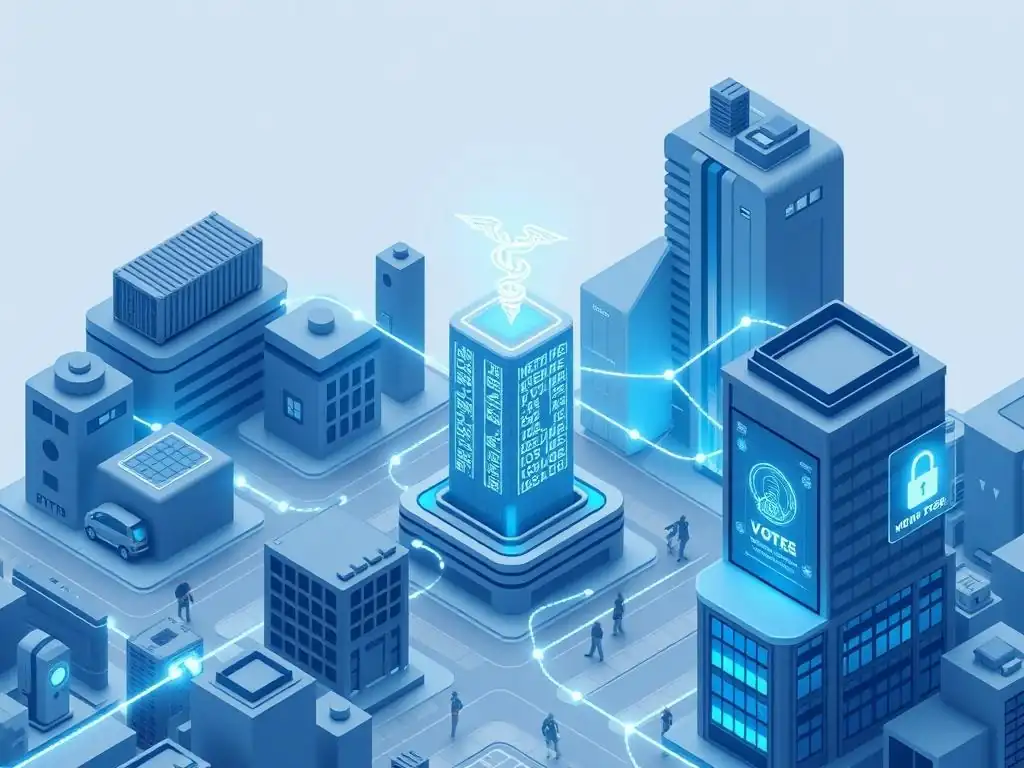
Blockchain Interoperability: Polkadot and Cosmos
Blockchain interoperability is a critical challenge for the future of blockchain technology. Currently, many blockchains operate in silos, making it difficult for them to communicate and interact with each other. This lack of interoperability limits the potential for broader adoption and innovation. Blockchain interoperability solutions aim to bridge these gaps, enabling seamless communication and data exchange between different blockchains, fostering a more interconnected and collaborative blockchain ecosystem.
Projects like Polkadot and Cosmos are leading the way in developing interoperable blockchain networks. Polkadot is a multi-chain platform that allows different blockchains, called parachains, to connect and interoperate within a unified network. Cosmos is another interoperability platform that provides tools and frameworks for building interconnected blockchains, known as zones, within the Cosmos network. These platforms enable the transfer of assets and data between different blockchains, unlocking new possibilities for cross-chain applications and services. Blockchain interoperability is crucial for realizing the full potential of blockchain technology and creating a more integrated and efficient decentralized web.
Scalability Solutions: Layer-2 Scaling and Sharding
Scalability is a major challenge for many blockchains, particularly public blockchains like Bitcoin and Ethereum. As transaction volume increases, these blockchains can experience congestion, slow transaction processing times, and high transaction fees. Scalability solutions are essential to enable blockchains to handle a large number of transactions efficiently and cost-effectively, making them suitable for mainstream adoption and high-throughput applications.
Layer-2 scaling solutions and sharding are two prominent approaches to address blockchain scalability. Layer-2 solutions are built on top of an existing blockchain (Layer-1) and process transactions off-chain, reducing the load on the main chain. Examples of Layer-2 solutions include payment channels, state channels, and rollups.
Sharding is a technique that divides a blockchain into multiple shards, or partitions, each processing a subset of transactions in parallel, increasing the overall transaction throughput of the network. These scalability solutions are crucial for enabling blockchains to scale to meet the demands of a growing user base and diverse applications, paving the way for wider adoption and more complex blockchain-based systems.
Blockchain Integration in the Metaverse: Virtual Worlds and Digital Assets
The metaverse, a persistent, shared virtual world, is emerging as a significant area for blockchain integration. Blockchain technology provides the foundation for digital ownership, decentralized governance, and secure digital asset management within metaverse environments. NFTs, as discussed earlier, are already playing a key role in representing digital assets like virtual land, avatars, and in-game items in metaverses. Blockchain can also enable decentralized economies within metaverses, empowering users to own and control their digital assets and participate in virtual economies.
Blockchain integration in the metaverse is still in its early stages, but its potential is vast. Metaverse platforms are increasingly incorporating blockchain-based solutions for digital ownership, identity management, and decentralized governance. The combination of metaverse and blockchain technologies is creating new opportunities for virtual experiences, digital commerce, and user-owned virtual worlds, shaping the future of digital interaction and online communities. As metaverses evolve, blockchain is expected to play an increasingly central role in defining ownership, security, and economic models within these immersive digital environments.
Challenges and Considerations for Blockchain Implementation
Regulatory Landscape: Evolving Legal Frameworks
The regulatory landscape for blockchain technology and cryptocurrencies is still evolving globally. Governments and regulatory bodies are grappling with how to classify and regulate blockchain-based assets and activities. The lack of clear and consistent regulations poses challenges for businesses operating in the blockchain space, creating uncertainty and potential compliance risks. Different jurisdictions are taking varying approaches to blockchain regulation, ranging from supportive and innovation-friendly to cautious and restrictive.
Navigating this evolving regulatory landscape is crucial for blockchain projects and businesses. Understanding and complying with relevant regulations, such as securities laws, anti-money laundering (AML) regulations, and data privacy laws, is essential for responsible blockchain implementation. The development of clear and harmonized regulatory frameworks globally is needed to foster innovation, protect consumers, and provide legal certainty for the blockchain industry to thrive. Ongoing dialogue between regulators, industry stakeholders, and policymakers is critical to shaping a regulatory environment that supports the responsible growth of blockchain technology.
Scalability Limitations: Transaction Throughput and Cost
Despite advancements in scalability solutions, transaction throughput and cost remain significant challenges for some blockchain networks, particularly for high-volume applications. Public blockchains like Bitcoin and Ethereum, while secure and decentralized, can experience limitations in the number of transactions they can process per second, leading to network congestion and increased transaction fees during peak periods. These scalability limitations can hinder the widespread adoption of blockchain for applications requiring high transaction volumes and low costs, such as micropayments or high-frequency trading.
Addressing scalability limitations is an ongoing area of research and development within the blockchain community. Layer-2 scaling solutions, sharding, and the development of more scalable Layer-1 blockchains are all aimed at improving transaction throughput and reducing costs. Choosing the appropriate blockchain platform and scalability solutions is crucial for businesses considering blockchain implementation, depending on the specific application requirements and scalability needs. Continued innovation in scalability is essential for blockchain to reach its full potential and support a wide range of real-world applications.
Security Vulnerabilities: Smart Contract Audits and Best Practices
While blockchain technology itself is inherently secure, smart contracts, which are self-executing contracts on blockchains, can be vulnerable to security flaws and exploits if not properly developed and audited. Smart contract vulnerabilities can lead to significant financial losses and damage to the reputation of blockchain projects. Ensuring the security of smart contracts is paramount for the safe and reliable deployment of blockchain-based applications.
Smart contract audits and best practices are crucial for mitigating security risks. Smart contract audits involve independent security experts reviewing the code of smart contracts to identify potential vulnerabilities and security flaws. Following secure coding practices, rigorous testing, and formal verification methods are also essential for developing robust and secure smart contracts.
The blockchain community is continuously developing and sharing best practices and tools for smart contract security to minimize vulnerabilities and promote the safe development of blockchain applications. Prioritizing security throughout the smart contract development lifecycle is critical for building trust and ensuring the long-term viability of blockchain-based systems.
Conclusion: The Expanding Universe of Blockchain Technology
Embracing Blockchain's Diverse Applications
Blockchain technology extends far beyond the realm of cryptocurrency. Its inherent characteristics of decentralization, immutability, and transparency are driving innovation and transformation across diverse industries. From revolutionizing financial services with DeFi to enhancing supply chain traceability, securing healthcare data, and empowering digital ownership with NFTs, blockchain's applications are vast and continue to expand. The examples discussed in this article showcase the tangible benefits and real-world impact of blockchain technology in various sectors, proving its utility and potential to reshape our digital and physical worlds.
As blockchain technology matures and adoption grows, we can expect to see even more innovative applications emerge. The future of blockchain is not just about cryptocurrencies; it's about building more secure, transparent, and efficient systems across various aspects of our lives. Embracing the diverse applications of blockchain and understanding its underlying principles are essential for businesses, individuals, and policymakers to harness its transformative power and shape the future of technology and innovation.
Explore the Potential: Dive Deeper into Blockchain Development and Innovation
The journey into the world of blockchain beyond cryptocurrency is just beginning. There is immense potential to explore and innovate further in this rapidly evolving field. For developers, entrepreneurs, and researchers, blockchain offers a wealth of opportunities to build new applications, solve real-world problems, and contribute to the development of a more decentralized and transparent future. Diving deeper into blockchain development, exploring new use cases, and contributing to the open-source community are crucial steps in realizing the full potential of this transformative technology.
Whether you are interested in building decentralized applications, exploring blockchain-based business models, or simply understanding the impact of blockchain on various industries, continuous learning and engagement are key. The blockchain space is dynamic and constantly evolving, making it an exciting and rewarding field to explore and contribute to. By embracing the diverse applications of blockchain and fostering innovation, we can unlock its full potential and create a more decentralized, transparent, and efficient future for all.
Frequently Asked Questions
What are some blockchain beyond cryptocurrency applications?
Blockchain is being used in various industries, including supply chain management for tracking goods, healthcare for secure data storage, and voting systems for increased transparency.
How does blockchain benefit businesses beyond its use in cryptocurrencies?
Businesses can leverage blockchain to improve supply chain efficiency, enhance data security, and establish trustless environments for transactions.
What is DeFi and how does it relate to blockchain beyond cryptocurrency applications?
DeFi (Decentralized Finance) uses blockchain to offer financial services like lending and borrowing without traditional intermediaries, expanding financial inclusion and automation.
What are the major regulatory challenges facing blockchain beyond cryptocurrency applications?
Regulatory challenges include lack of clear guidelines, concerns about data privacy, and the need for compliance frameworks that adapt to evolving technology.
What does the future hold for blockchain beyond cryptocurrency applications and decentralized systems?
The future envisions increased adoption across industries, further decentralization of processes, and the development of innovative solutions leveraging blockchain's unique properties.
Final Reflection: Blockchain's Unfolding Potential
The exploration of blockchain technology beyond its association with cryptocurrency reveals a landscape ripe with innovation and transformative possibilities. The true power of blockchain lies not just in digital currencies, but in its ability to revolutionize industries by enhancing transparency, security, and efficiency. From supply chain management to healthcare record keeping, the applications we've discussed demonstrate a paradigm shift towards decentralized and trustworthy systems, impacting our lives in ways we are only beginning to understand.
The ongoing evolution of blockchain is profoundly shaping the cultural and social landscape, moving us towards a future where trust is algorithmically enforced rather than solely reliant on intermediaries. Witnessing this shift firsthand underscores the importance of understanding and engaging with this technology, not just as consumers but as active participants in its development. Blockchain is the tech. Bitcoin is merely one manifestation of that tech.
- Marc Andreessen. This quote encapsulates the essence of our exploration, highlighting the vast potential that extends far beyond the realm of digital finance.
As we conclude this journey into the broader applications of blockchain, I invite you to reflect on the possibilities that lie ahead. Consider how this technology can be applied to solve problems in your own field, community, or even personal life. Embrace the challenge of understanding and contributing to this revolutionary technology, and together, let's unlock the full potential of blockchain to build a more transparent, secure, and equitable future for all.
Ignite Your Blockchain Journey!
Thank you for exploring the diverse applications of blockchain technology with us. We hope you've discovered exciting new possibilities beyond cryptocurrency! Now, let's turn that knowledge into action.
Here are a few ways to dive deeper:
- Identify one area where blockchain could significantly impact your industry. Think about potential use cases, challenges, and opportunities.
- Follow blockchain developers and enthusiasts on social media to discover new project ideas and connect with collaborators.
- Share this article with a colleague or friend who might be surprised and inspired by the broader applications of blockchain. Start a conversation!
What is one unexpected way blockchain could be applied that you're eager to explore? Let us know in the comments!
Leave a Reply