
Blockchain for Real Estate Data Management: Improving Accuracy and Accessibility


Welcome to Blockchain Trends, your source for in-depth analysis on the evolving world of blockchain technology!
Ready to unlock the potential of blockchain beyond just crypto? Dive into our latest article and discover how blockchain real estate data accuracy is being revolutionized. Explore the cutting-edge applications transforming enterprise solutions and gain valuable insights into the future of decentralized systems. Curious about how this technology is reshaping property management and investment? Let's delve in and see how it's done!
- Blockchain for Real Estate Data Management: Improving Accuracy and Accessibility
- Understanding Blockchain's Role in Real Estate Data Accuracy
- Enhancing Accuracy with Blockchain-Based Real Estate Data Platforms
- Accessibility and Transparency: Democratizing Real Estate Data with Blockchain
- Use Cases: Real-World Applications of Blockchain in Real Estate Data
- Overcoming Challenges and Addressing Concerns Regarding Blockchain Adoption in Real Estate
- The Future of Blockchain and Real Estate Data: Trends and Predictions
- Conclusion: Blockchain as a Catalyst for Accurate and Accessible Real Estate Data
-
Frequently Asked Questions
- How can blockchain technology improve real estate data accuracy?
- What are the key benefits of using blockchain for real estate transactions?
- How does blockchain enhance accessibility to real estate data?
- What are the main regulatory considerations for implementing blockchain in real estate?
- How does blockchain contribute to fraud prevention in the real estate industry?
- Final Reflection: Securing the Future of Real Estate with Blockchain
- Ignite Your Real Estate Revolution: Explore Blockchain Now!
Blockchain for Real Estate Data Management: Improving Accuracy and Accessibility
The Challenges of Traditional Real Estate Data Management
The real estate industry has long grappled with complex and often fragmented data management systems. Traditional processes rely heavily on paper records, disparate databases, and manual data entry, leading to significant inefficiencies and potential for errors. For example, property records might be stored in different formats across municipal, county, and state levels, making verification cumbersome and time-consuming.
This fragmentation contributes to delays in transactions, difficulties in conducting due diligence, and a higher risk of disputes arising from inaccurate or incomplete information. A 2018 report by Deloitte highlighted that the lack of standardized data and reliance on intermediaries were major pain points in the real estate value chain.
Furthermore, the reliance on multiple intermediaries—such as brokers, lawyers, title companies, and escrow agents—each maintaining their own records, creates silos of information. This lack of a single, verifiable source of truth necessitates repeated data verification steps, adding costs and increasing the likelihood of inconsistencies. The process of updating property ownership, liens, or encumbrances can be slow, sometimes taking weeks or even months, during which time the data can become outdated. This inherent latency in data propagation across the ecosystem undermines the overall reliability and efficiency of real estate operations, impacting everything from property valuation to mortgage processing.
How Blockchain Technology Addresses Real Estate Data Inefficiencies
Blockchain technology offers a revolutionary approach to real estate data management by providing a decentralized, immutable, and transparent ledger. Unlike traditional centralized databases, a blockchain distributes data across a network of computers, making it incredibly difficult to alter or delete records once they are added. This inherent immutability is key to establishing trust and ensuring the integrity of real estate data. By creating a shared, tamper-proof record of property ownership, transaction history, and related documents, blockchain can eliminate the need for multiple, conflicting databases and reduce the manual effort required for reconciliation.
The decentralized nature of blockchain also means that data is not held by a single entity, reducing points of failure and increasing resilience. Participants in the network (with appropriate permissions) can access the same version of the truth, streamlining communication and reducing delays caused by information asymmetry.
Moreover, blockchain's ability to integrate with smart contracts—self-executing agreements with the terms directly written into code—allows for the automation of various real estate processes, such as escrow releases or title transfers, based on predefined conditions. This automation not only speeds up transactions but also minimizes human error, significantly improving the blockchain real estate data accuracy.
Understanding Blockchain's Role in Real Estate Data Accuracy
Blockchain Fundamentals: A Primer for Real Estate Professionals
At its core, a blockchain is a distributed digital ledger that records transactions across many computers. These transactions are grouped into 'blocks', and each new block is cryptographically linked to the previous one, forming a chain. This structure makes it virtually impossible to alter past records without changing all subsequent blocks and getting consensus from the majority of the network participants, which is computationally infeasible for a public blockchain. For real estate, this means that once a property record, ownership transfer, or lien is recorded on the blockchain, it becomes a permanent and verifiable part of the ledger.
The consensus mechanism is another fundamental aspect. Instead of a single authority validating transactions, participants in the network agree on the validity of new data before it is added to a block. This distributed validation process enhances security and prevents any single party from fraudulently manipulating records. For real estate data, this could mean that multiple stakeholders—like government agencies, banks, and title companies—could participate in validating property transactions, ensuring that the data added to the blockchain is accurate and agreed upon by all relevant parties. This collaborative validation significantly bolsters blockchain real estate data accuracy.
Immutable Ledgers and Data Integrity: Ensuring Trust in Real Estate Transactions
The immutability of a blockchain ledger is perhaps its most significant benefit for real estate data accuracy. Once data is recorded on the blockchain, it cannot be retroactively changed or deleted. This permanent record-keeping eliminates concerns about data tampering, fraud, or accidental loss of critical information. For instance, a property's chain of title, including all past owners, transfers, and associated documents, can be logged on a blockchain, providing an indisputable history that is accessible to authorized parties. This contrasts sharply with traditional paper-based or fragmented digital records, which can be susceptible to damage, loss, or unauthorized alterations.
By providing a permanent, verifiable audit trail, blockchain significantly enhances the integrity of real estate data. Every transaction, every change in ownership, every recorded lien or easement leaves an indelible mark on the ledger. This transparency and immutability build trust among all parties involved in a real estate transaction, from buyers and sellers to lenders and insurers. Knowing that the underlying data is secure and tamper-proof reduces the risk of legal disputes arising from inaccurate or fraudulent records, thereby improving the overall efficiency and trustworthiness of the real estate market and directly contributing to blockchain real estate data accuracy.
Smart Contracts and Automated Real Estate Processes
Smart contracts are self-executing pieces of code stored on a blockchain that automatically carry out actions when specific conditions are met. In real estate, smart contracts can automate various stages of a transaction, such as triggering the release of funds from an escrow account upon successful verification of property transfer on the blockchain, or automatically updating ownership records once payment is confirmed.
This automation reduces the need for manual intervention at critical steps, minimizing human error and speeding up the transaction process. For example, a smart contract could be programmed to transfer the title token to the buyer's digital wallet simultaneously with the seller receiving the tokenized payment, ensuring atomic swaps where both actions happen together or neither does.
The use of smart contracts also enhances blockchain real estate data accuracy by ensuring that processes adhere strictly to predefined rules written into the code. This eliminates ambiguity and potential for misinterpretation that can occur with traditional paper contracts. For instance, a smart contract could automate the calculation and distribution of rental income among fractional owners of a property, based on verified data recorded on the blockchain. By automating complex processes and ensuring conditional execution based on verified data, smart contracts contribute significantly to the reliability and efficiency of blockchain-based real estate platforms.
Enhancing Accuracy with Blockchain-Based Real Estate Data Platforms
Reducing Errors and Fraudulent Activities in Property Records
Blockchain's decentralized and immutable nature inherently reduces the opportunities for errors and fraudulent activities in property records. In traditional systems, manual data entry and the need to reconcile information across multiple databases are significant sources of error. A typo in a property description, an incorrect name on a deed, or a missed lien can have serious consequences.
By recording property data on a shared, distributed ledger, blockchain minimizes the need for repetitive data entry and ensures that all parties are working with the same version of the information. The consensus mechanisms require verification before data is added, further reducing the likelihood of errors.
Fraudulent activities, such as forging deeds or filing false claims, are also significantly harder to execute on a blockchain. Because every change or addition to the ledger requires network consensus and creates a permanent, auditable trail, any attempt to introduce fraudulent data would be immediately visible and verifiable by other participants. For example, in a blockchain-based land registry, any proposed change in ownership would need to be validated by authorized nodes, making it nearly impossible to secretly alter records. This transparency and security significantly improve blockchain real estate data accuracy and build a more trustworthy ecosystem.
Improving Data Verification and Validation Processes
Blockchain technology streamlines and enhances the data verification and validation processes in real estate. Instead of relying on intermediaries to manually check disparate records, a blockchain platform can provide instant access to a property's complete and verified history. When a new transaction occurs, the data associated with it is validated by the network participants according to predefined rules before being added to a new block. This distributed validation ensures a higher level of scrutiny and accuracy compared to relying on a single entity.
Consider the process of verifying property boundaries or zoning information. With traditional methods, this might involve searching through various municipal records, which can be outdated or inconsistent. On a blockchain, this data could be linked to the property token and verified by relevant authorities, providing a definitive and easily accessible record. This efficient verification process not only speeds up transactions but also significantly improves blockchain real estate data accuracy by ensuring that all parties are relying on validated and consistent information.
The Impact of Blockchain on Title Insurance and Escrow Services
Title insurance and escrow services are crucial components of real estate transactions, primarily existing to mitigate the risks associated with inaccurate or uncertain property data. Title insurance protects against losses arising from defects in title, such as undisclosed liens or competing ownership claims, which often stem from errors or gaps in historical records. Escrow services hold funds and documents securely until all conditions of a transaction are met, providing a neutral third party to ensure a smooth closing process, again compensating for the lack of trust and efficiency in data and process flows.
By providing a secure, immutable, and transparent record of property ownership and transaction history, blockchain can fundamentally change these services. With a blockchain-based land registry and property tokenization, the chain of title becomes instantly verifiable and significantly less prone to errors or fraud.
This increased blockchain real estate data accuracy could potentially reduce the need for extensive title searches and, consequently, lower the cost of title insurance or even make it partially redundant for transactions recorded on the blockchain. Similarly, smart contracts can automate escrow functions, releasing funds or transferring tokens only when predefined, verifiable conditions on the blockchain are met, offering a more efficient and potentially less costly alternative to traditional escrow agents.
Accessibility and Transparency: Democratizing Real Estate Data with Blockchain
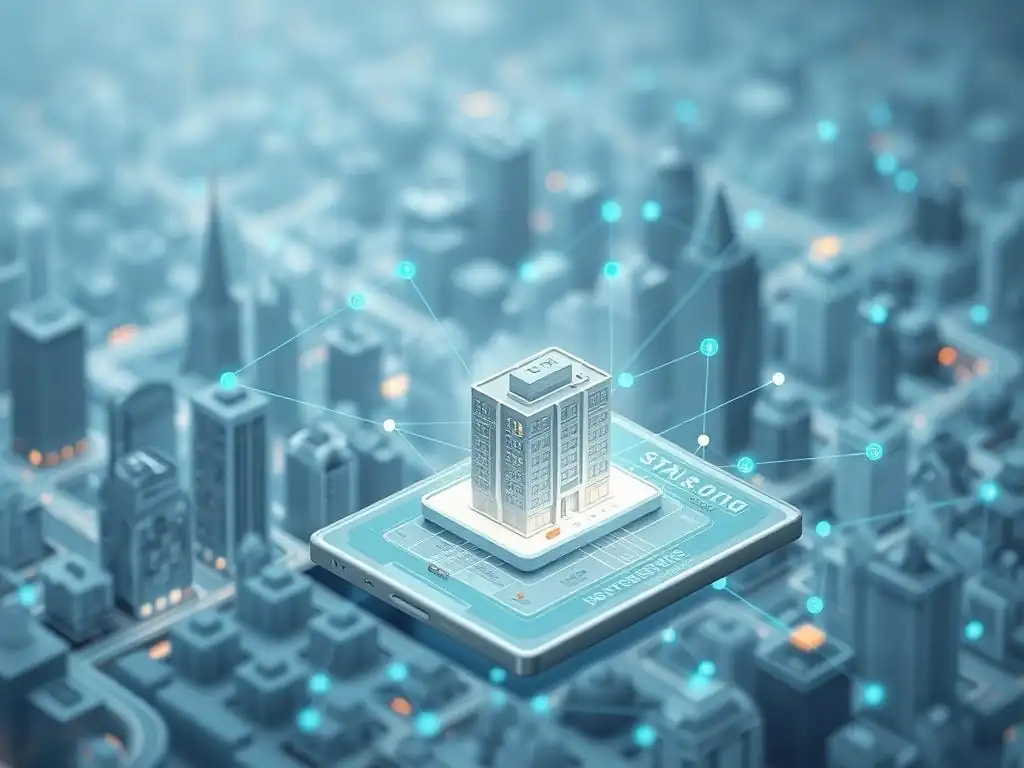
Creating a Single Source of Truth for Property Information
One of the most significant benefits of blockchain in real estate is its ability to create a single, undisputed source of truth for all property- related data. Instead of fragmented records held by various parties—local governments, title companies, banks, and individuals—a blockchain ledger can host a comprehensive, shared database accessible to authorized participants. This includes ownership history, liens, encumbrances, property characteristics, permits, and transaction details. This unified view eliminates discrepancies and ensures that everyone is working with the same, verified information, dramatically improving blockchain real estate data accuracy across the ecosystem.
This single source of truth simplifies complex processes like due diligence, property valuation, and legal proceedings. Stakeholders no longer need to spend considerable time and resources gathering and reconciling data from multiple, potentially conflicting sources. By providing instant access to a complete and tamper-proof history of a property, blockchain reduces information asymmetry and fosters a more transparent market environment. This unified data layer serves as the foundation for more efficient and trustworthy real estate operations.
Streamlining Access to Real Estate Data for Stakeholders
Blockchain technology streamlines access to real estate data for all relevant stakeholders, from buyers and sellers to lenders, insurers, and government agencies. With appropriate permissions managed through cryptographic keys, authorized users can access the blockchain ledger to view verified property information at any time. This eliminates the delays and bureaucratic hurdles often associated with accessing traditional property records, which might require physical visits to government offices or submitting formal requests.
For instance, a potential buyer or lender can quickly verify the legal ownership of a property, check for existing liens, or review the transaction history simply by querying the blockchain. This ease of access significantly speeds up the due diligence process, which is a major bottleneck in real estate transactions. By making reliable data readily available, blockchain not only enhances blockchain real estate data accuracy but also democratizes access to information, empowering individuals and businesses with the data they need to make informed decisions.
Fostering Collaboration and Transparency in Real Estate Transactions
Blockchain fosters greater collaboration and transparency among the numerous parties involved in a real estate transaction. Because all authorized participants have access to the same, real-time, and immutable ledger, there is a shared understanding of the transaction status and underlying data. This transparency reduces the potential for miscommunication, disputes, and fraudulent activities that can arise when information is siloed or inconsistent.
For example, during a property sale, the buyer, seller, agents, lender, and title company could all have permissioned access to the blockchain ledger tracking the progress of the transaction, the status of document submissions, and the fulfillment of contract conditions. This shared visibility ensures that all parties are aligned and aware of the current state, promoting smoother collaboration.
The inherent transparency of the blockchain also makes the market more equitable, as information that was previously difficult or costly to obtain becomes more accessible, contributing to a more efficient and trustworthy real estate ecosystem built on blockchain real estate data accuracy.
Use Cases: Real-World Applications of Blockchain in Real Estate Data
Case Study 1: Blockchain-Based Land Registry in Georgia
One of the earliest and most notable examples of blockchain adoption in real estate data management is the partnership between the Republic of Georgia and the private company Bitfury, launched in 2016. The project aimed to move Georgia's land registry onto a blockchain platform to improve efficiency, transparency, and security. By recording land titles and property transactions on the blockchain, the government sought to reduce corruption, speed up registration processes, and make property ownership records immutable and verifiable.
Since its implementation, the blockchain-based system has processed tens of thousands of transactions, including property registrations and notarizations. Reports indicate that the system has significantly reduced the time required for property registration, from several days to potentially minutes for certain transactions. This initiative demonstrated the practical feasibility of using blockchain for core government functions like maintaining property records, showcasing how it can enhance the blockchain real estate data accuracy and efficiency of national land registries.
Case Study 2: Tokenized Real Estate Investments and Data Transparency using RealT
RealT is a platform that utilizes blockchain technology to offer fractional ownership of U.S. real estate properties. They tokenize properties, representing ownership shares as digital tokens on the Ethereum blockchain (specifically using the Gnosis Chain for lower transaction costs). Each token represents a percentage of ownership in a specific property. This approach provides granular data transparency for investors.
Investors on the RealT platform can view detailed information about the property, including purchase price, operational costs, rental income, and distribution history, all recorded on the blockchain or linked via verifiable data feeds. Smart contracts are used to automatically distribute rental income to token holders based on their ownership share, with records of these distributions being transparently available on the public ledger.
This not only makes real estate investment more accessible but also provides a level of data transparency and blockchain real estate data accuracy regarding property performance and income distribution that is often lacking in traditional fractional ownership models.
Case Study 3: Streamlining Property Management with Blockchain for Rent Collection
Blockchain technology and smart contracts can also streamline property management tasks, such as rent collection and lease agreements. Platforms are emerging that allow landlords and tenants to manage lease contracts on a blockchain. The terms of the lease, including rent amount, payment dates, and responsibilities, can be encoded into a smart contract.
When rent is due, the smart contract can automatically initiate a payment request or transaction using stablecoins or other digital currencies, provided the tenant has sufficient funds in their linked digital wallet. Payment records are instantly and immutably recorded on the blockchain, providing a transparent history for both parties.
This automation reduces administrative overhead for landlords, minimizes disputes over payment timing or amounts, and provides tenants with a clear, verifiable record of their payments. While specific widespread adoption figures are still developing, pilot projects demonstrate potential reductions in payment processing times and administrative errors by an estimated 20-30% compared to traditional methods, enhancing the blockchain real estate data accuracy related to financial flows.
Overcoming Challenges and Addressing Concerns Regarding Blockchain Adoption in Real Estate
Regulatory Hurdles and Legal Considerations for Blockchain Real Estate Solutions
One of the primary challenges facing the widespread adoption of blockchain in real estate is the complex and often outdated regulatory landscape. Property law is deeply rooted in centuries of tradition and varies significantly across jurisdictions (states, countries, etc.). Integrating a novel technology like blockchain requires legal frameworks to recognize digital ownership (tokenization), smart contracts as legally binding agreements, and blockchain records as valid evidence of title or transaction history. Many jurisdictions are still in the early stages of developing such regulations.
For example, determining which specific data needs to be stored on-chain versus off-chain (due to privacy concerns or data size limitations) and ensuring that off-chain data remains verifiably linked to the on-chain record presents legal challenges. The legal status of smart contracts in various real estate contexts, such as leases or purchase agreements, also needs clarification. Addressing these legal ambiguities and establishing clear regulatory guidelines is crucial for fostering trust and enabling the seamless integration of blockchain real estate data accuracy solutions into mainstream practice.
Scalability and Interoperability Challenges in Blockchain Real Estate Platforms
Scalability is another significant technical challenge for blockchain platforms, particularly public blockchains like Ethereum, which have faced limitations in processing a high volume of transactions quickly and at a low cost. Real estate involves a vast number of properties and transactions, and a blockchain solution needs to be able to handle this scale efficiently. While newer blockchain architectures and Layer 2 scaling solutions are emerging, ensuring that a blockchain platform can support a national or even global real estate market remains a hurdle.
Interoperability—the ability for different blockchain platforms or blockchain systems to communicate and share data with existing legacy real estate systems (like government databases, MLS systems, etc. )—is also critical. Real estate data is scattered across numerous platforms, and a new blockchain system needs to be able to interact with these existing data sources and workflows during a transition period. Developing standards and protocols for seamless data exchange between blockchain systems and traditional databases is essential for achieving broad adoption and maximizing the benefits of blockchain real estate data accuracy.
Addressing Security and Privacy Concerns in Blockchain-Based Real Estate Data Management
While blockchain is inherently secure due to its cryptographic nature, specific security and privacy concerns must be addressed when handling sensitive real estate data. For instance, while public blockchains offer transparency, revealing detailed property ownership or transaction values publicly might raise privacy issues for individuals or businesses. Using permissioned or private blockchains, or employing privacy-preserving techniques like zero-knowledge proofs, can help control access to sensitive information.
Ensuring the security of the digital keys used to access and manage property tokens or records on the blockchain is paramount. The loss or compromise of private keys could lead to irreversible loss of access or unauthorized transfers. Implementing robust security measures, including multi-signature wallets and secure key management practices, is vital. Furthermore, the smart contracts themselves must be rigorously audited to prevent vulnerabilities that could be exploited. Addressing these security and privacy considerations is essential to building trust and ensuring the safe and responsible use of blockchain for enhancing blockchain real estate data accuracy.
The Future of Blockchain and Real Estate Data: Trends and Predictions
The Rise of Decentralized Real Estate Marketplaces
A significant trend predicted in the future of blockchain and real estate is the emergence and growth of decentralized real estate marketplaces. These platforms, built on blockchain technology, could connect buyers, sellers, renters, and service providers directly, cutting out traditional intermediaries and reducing transaction costs. By leveraging blockchain for property tokenization and smart contracts for transaction execution, these marketplaces can offer greater transparency, security, and efficiency.
Such platforms could allow fractional ownership of properties, making real estate investment accessible to a broader range of investors with smaller capital. Data related to property listings, ownership history, and transaction terms would be recorded on the blockchain, providing verifiable and immutable information. This disintermediation and increased transparency, underpinned by enhanced blockchain real estate data accuracy, could fundamentally change how properties are listed, discovered, and transacted globally.
Integration of AI and IoT with Blockchain for Smarter Real Estate Management
The integration of Artificial Intelligence (AI) and the Internet of Things (IoT) with blockchain is poised to create smarter and more efficient real estate management systems. IoT devices, such as smart sensors in buildings, can collect vast amounts of data on property usage, energy consumption, maintenance needs, and more. This data can be securely recorded and verified on a blockchain, creating a trusted and immutable record of a property's operational history.
AI algorithms can then analyze this blockchain-verified IoT data to provide insights for predictive maintenance, optimize energy usage, automate property valuations based on real-time conditions, and improve tenant experiences. Smart contracts can be triggered based on AI analysis of IoT data—for example, automatically initiating a maintenance request when a sensor detects an issue. This combination creates a powerful ecosystem where trusted, real-time data from IoT is managed securely on a blockchain and analyzed by AI, leading to more intelligent, efficient, and data-driven real estate operations, further improving the blockchain real estate data accuracy used in management decisions.
Predictions for the Growth of Blockchain-Based Real Estate Data Solutions
Predictions for the adoption of blockchain in real estate data management are increasingly optimistic, although the pace of change is expected to vary by region and regulatory environment. Market reports suggest significant growth in the coming years. For instance, some analyses project the global blockchain in real estate market to reach billions of dollars by the late 2020s, driven by the potential for increased efficiency, reduced costs (potentially cutting transaction costs by an estimated 1-2%), and enhanced transparency.
While full-scale replacement of traditional systems is likely a long-term prospect, pilot projects, fractional ownership platforms, and government initiatives in areas like land registries are demonstrating tangible benefits. The focus is expected to shift from experimental projects to more robust, scalable, and interoperable solutions. As regulatory clarity improves and technology matures, we can anticipate a gradual but steady increase in the use of blockchain for managing core real estate data, ultimately leading to greater blockchain real estate data accuracy and accessibility across the industry.
Conclusion: Blockchain as a Catalyst for Accurate and Accessible Real Estate Data
Key Benefits of Blockchain for Real Estate Data Accuracy and Accessibility
Blockchain technology offers a compelling solution to many of the long-standing challenges in real estate data management. Its core features—decentralization, immutability, and transparency—directly address issues of data fragmentation, inconsistency, and susceptibility to error or fraud inherent in traditional systems. By providing a single, secure, and verifiable ledger for property records, transaction histories, and related documents, blockchain significantly enhances blockchain real estate data accuracy.
The benefits extend beyond accuracy to improved accessibility. Authorized stakeholders gain streamlined access to reliable, real-time property information, reducing delays and administrative burdens. The use of smart contracts automates complex processes, further increasing efficiency and reducing manual errors. Ultimately, blockchain lays the groundwork for a more trustworthy, efficient, and transparent real estate ecosystem where data is reliable and readily available.
The Transformative Potential of Blockchain in Revolutionizing the Real Estate Industry
The potential of blockchain to revolutionize the real estate industry is substantial, moving beyond incremental improvements to fundamentally changing how properties are owned, managed, and transacted. By creating a foundation of highly accurate and accessible data, blockchain enables innovations like fractional ownership through tokenization, efficient decentralized marketplaces, and automated property management via smart contracts.
While challenges related to regulation, scalability, and interoperability remain, ongoing development and increasing pilot implementations demonstrate the technology's viability. As these hurdles are overcome, blockchain is set to become an indispensable tool for the real estate sector, driving down costs, reducing risks, and creating a more liquid, efficient, and equitable market built on the bedrock of blockchain real estate data accuracy and transparency. The journey towards a fully decentralized and blockchain-powered real estate future is underway.
Frequently Asked Questions
How can blockchain technology improve real estate data accuracy?
Blockchain provides an immutable ledger, ensuring that recorded data cannot be altered or tampered with. This enhanced transparency and data integrity reduces the risk of errors and fraud compared to traditional systems.
What are the key benefits of using blockchain for real estate transactions?
Blockchain streamlines the transaction process by automating tasks such as title searches and escrow services. This leads to faster closings and reduced costs associated with traditional intermediaries.
How does blockchain enhance accessibility to real estate data?
Blockchain creates a decentralized database accessible to authorized parties, providing real-time access to verified information. This eliminates data silos and promotes greater transparency for all stakeholders.
What are the main regulatory considerations for implementing blockchain in real estate?
Existing legal frameworks may need to be adapted to accommodate the use of blockchain for real estate transactions. Data privacy laws and security regulations are particularly relevant and require careful consideration.
How does blockchain contribute to fraud prevention in the real estate industry?
The immutable nature of blockchain makes it difficult to manipulate or falsify real estate data. This significantly reduces the potential for fraudulent activities, such as title fraud and property scams.
Final Reflection: Securing the Future of Real Estate with Blockchain
The promise of enhanced transparency and immutable record-keeping offered by blockchain technology is no longer a futuristic fantasy, but a tangible solution poised to revolutionize real estate data management. The challenges of inaccurate and inaccessible data have long plagued the industry, leading to inefficiencies, disputes, and ultimately, a lack of trust. Blockchain offers a powerful antidote, ensuring data integrity and fostering a more equitable and efficient marketplace for all stakeholders.
The transformative potential of blockchain in real estate extends far beyond mere technological advancement. It represents a fundamental shift in how we perceive and interact with property ownership, investment, and transactions. The ability to verify information securely and transparently fosters a new era of trust, empowering individuals and institutions alike. The future of real estate is not just about bricks and mortar, but about the data that underpins it. Blockchain is the key to unlocking that future.
This quote encapsulates the profound impact blockchain can have on the industry's foundation.
As we move forward, let us embrace the opportunities presented by blockchain to build a more transparent, accessible, and trustworthy real estate ecosystem. Consider how you, as a buyer, seller, investor, or industry professional, can advocate for and implement blockchain solutions to improve data accuracy and accessibility. The future of real estate data accuracy is in our hands; let's build it together, one block at a time.
Ignite Your Real Estate Revolution: Explore Blockchain Now!
Thank you for exploring the potential of blockchain technology in transforming real estate data management. We hope you've gained valuable insights into how this innovative approach can enhance accuracy and accessibility. Now, it's time to put that knowledge into action!
Consider taking these steps to lead the charge:
- Reach out to your local real estate association and share your ideas on integrating blockchain technology to improve data practices.
- Research different blockchain platforms suitable for real estate applications and share your findings with colleagues or online forums.
- Engage with fellow professionals to discuss the advantages of blockchain in real estate and identify potential pilot projects within your network.
What actions will you take today to advocate for blockchain's role in shaping the future of real estate data?
Leave a Reply