
Banking the Unbanked: A Deep Dive into Blockchain Solutions for Financial Access


Welcome to Blockchain Trends, your go-to source for understanding the revolutionary power of blockchain beyond the hype. Curious about how this technology can truly change lives?
Dive in as we explore the burgeoning field of blockchain financial inclusion solutions. Discover how decentralized systems are empowering the unbanked and reshaping the landscape of global finance, opening up a world of possibilities you won't want to miss.
Banking the Unbanked: A Deep Dive into Blockchain Solutions for Financial Access
- The Unbanked Population: A Global Challenge
- Blockchain Technology: A Catalyst for Financial Inclusion
-
Blockchain Financial Inclusion Solutions: Use Cases and Examples
- Blockchain-Based Microfinance Platforms: Empowering Small Businesses
- Digital Identity Solutions on Blockchain: Enabling Access to Financial Services
- Cross-Border Payments with Blockchain: Reducing Costs and Increasing Efficiency
- Blockchain for Remittances: A Cost-Effective Alternative
- Celo: Mobile-First Blockchain for Financial Inclusion
- Addressing Challenges and Risks in Blockchain-Based Financial Inclusion
- The Future of Blockchain Financial Inclusion Solutions
- Conclusion: Blockchain's Potential to Transform Financial Access
-
Frequently Asked Questions
- How can blockchain technology improve financial inclusion?
- What are some examples of blockchain-based financial inclusion solutions?
- What are the key challenges in implementing blockchain financial inclusion solutions?
- How does DeFi contribute to blockchain financial inclusion solutions?
- What is the role of regulation in the development of blockchain financial inclusion solutions?
- Final Reflection: Empowering Futures Through Decentralized Finance
- Unlock Financial Freedom: Start Building a More Inclusive Future!
The Unbanked Population: A Global Challenge
Understanding Financial Exclusion: Scope and Impact
Financial exclusion, the lack of access to basic financial services like savings accounts, credit, and insurance, is a pervasive global issue affecting billions. The World Bank estimates that approximately 1.7 billion adults worldwide remain unbanked, representing a significant portion of the global population, particularly in developing economies. This exclusion disproportionately affects women, low-income households, and marginalized communities, hindering their economic participation and overall well-being.
The impact of financial exclusion extends beyond the individual level, affecting national economies by limiting economic growth, reducing consumption, and impeding poverty reduction efforts. For example, studies have shown a direct correlation between financial inclusion and GDP growth in emerging markets, indicating that enabling access to financial tools can unlock significant economic potential.
The consequences of being unbanked are far-reaching. Individuals without access to formal financial systems often rely on informal and often predatory financial services, such as loan sharks, which can trap them in cycles of debt. They lack the ability to save securely, build credit history, or access affordable credit for education, healthcare, or starting a small business.
Furthermore, they are often excluded from participating in the digital economy, as many online services and transactions require bank accounts or digital payment methods. This financial marginalization perpetuates inequality and limits opportunities for social and economic mobility. The lack of access to insurance also makes vulnerable populations more susceptible to financial shocks caused by unexpected events like illness or natural disasters, further deepening their financial insecurity.
Barriers to Traditional Banking for the Unbanked
Traditional banking systems, while essential for many, often present significant barriers to access for a large segment of the population. One of the primary obstacles is the stringent Know Your Customer (KYC) and Anti-Money Laundering (AML) regulations that banks must adhere to. These regulations, while crucial for preventing illicit activities, often require extensive documentation and proof of identity, which many unbanked individuals in developing countries lack.
For instance, many people in rural areas may not possess government-issued IDs or have a formal address, making it impossible to open a traditional bank account. A study by the Center for Global Development found that KYC requirements are a major impediment to financial inclusion efforts in several African countries.
Furthermore, the cost of maintaining a traditional banking infrastructure, including physical branches and staff, makes it economically unviable for banks to serve remote or low-income populations. The operational costs associated with small accounts and low transaction volumes often outweigh the potential profits, leading banks to focus on more affluent customer segments. Geographical inaccessibility is another significant barrier, particularly in rural and remote areas where bank branches are scarce or non-existent.
Even when branches are available, the distance and transportation costs can be prohibitive for individuals living in poverty. Cultural and language barriers can also deter people from accessing formal banking services. Lack of financial literacy and trust in formal institutions further contribute to the reluctance to engage with traditional banks.
Blockchain Technology: A Catalyst for Financial Inclusion
How Blockchain Can Bridge the Financial Gap
Blockchain technology, with its decentralized, transparent, and secure nature, offers a compelling alternative to traditional financial systems, holding immense potential to bridge the financial gap and empower the unbanked. Its core characteristics directly address many of the barriers that exclude individuals from traditional banking. Decentralization eliminates the need for intermediaries and centralized authorities, reducing operational costs and enabling peer-to-peer transactions.
This can significantly lower the cost of providing financial services, making them more accessible to low-income populations. Transparency, inherent in blockchain's distributed ledger system, builds trust and accountability, which is crucial for fostering financial inclusion, especially in regions where trust in traditional institutions is low.
Moreover, blockchain's cryptographic security ensures the integrity and immutability of transactions, reducing the risk of fraud and enhancing user confidence. This secure environment is particularly important for vulnerable populations who are often targets of financial scams. Blockchain-based systems can operate with minimal infrastructure, leveraging mobile technology and internet connectivity, which are increasingly prevalent even in remote areas.
This mobile-first approach bypasses the need for physical bank branches, significantly expanding financial access in underserved regions. By streamlining KYC processes through decentralized digital identity solutions and enabling lower transaction fees through cryptocurrencies and stablecoins, blockchain can effectively dismantle many of the economic and logistical obstacles that prevent financial inclusion through traditional means.
Decentralized Finance (DeFi) and the Unbanked: Opportunities and Challenges
Decentralized Finance (DeFi), built upon blockchain technology, presents a revolutionary paradigm for financial inclusion by offering a suite of financial services without intermediaries like banks. DeFi platforms provide access to lending, borrowing, savings, and investment opportunities directly through smart contracts, making these services potentially available to anyone with an internet connection, regardless of their banking status.
This disintermediation can dramatically reduce costs and increase efficiency, making financial services more accessible and affordable for the unbanked. For instance, DeFi lending platforms can offer microloans to small businesses in developing countries without the need for traditional credit checks, using alternative data points and collateral mechanisms.
However, DeFi for the unbanked also presents significant challenges. The complexity of DeFi protocols and the inherent risks associated with cryptocurrency volatility can be daunting for individuals with limited financial literacy. The lack of regulatory frameworks and consumer protection in the DeFi space poses risks of scams and losses, particularly for vulnerable populations.
Furthermore, access to DeFi services requires internet connectivity and digital literacy, which may still be lacking in some unbanked communities. Gas fees on some blockchains, like Ethereum, can also be prohibitively expensive for small transactions, impacting the affordability of DeFi services for low-income users. Addressing these challenges through user-friendly interfaces, educational initiatives, robust security measures, and appropriate regulatory frameworks is crucial to realize the full potential of DeFi for financial inclusion.
Key Benefits of Blockchain for Financial Access
Blockchain technology offers a multitude of key benefits that make it a powerful tool for expanding financial access and promoting financial inclusion globally. Reduced transaction costs are a primary advantage. By eliminating intermediaries and streamlining processes, blockchain can significantly lower the fees associated with financial transactions, particularly cross-border payments and remittances, which disproportionately impact low-income individuals. Increased speed and efficiency are also notable benefits. Blockchain transactions can be processed much faster than traditional banking transactions, especially for international transfers, enabling quicker access to funds for those who rely on remittances or need urgent financial assistance.
Enhanced security and transparency are further crucial advantages. Blockchain's cryptographic security protects against fraud and cyber threats, while its transparent ledger provides an auditable record of transactions, fostering trust and accountability. Greater accessibility is another key benefit, as blockchain-based financial services can be accessed via mobile devices and internet connections, bypassing the need for physical bank branches and enabling financial inclusion in remote and underserved areas.
Finally, blockchain facilitates the creation of innovative financial products and services tailored to the needs of the unbanked, such as microfinance platforms, digital identity solutions, and decentralized insurance, offering customized solutions that traditional banking often fails to provide. These combined benefits position blockchain as a transformative technology for achieving widespread financial inclusion.
Blockchain Financial Inclusion Solutions: Use Cases and Examples
Blockchain-Based Microfinance Platforms: Empowering Small Businesses
Blockchain technology is revolutionizing microfinance by creating more efficient, transparent, and accessible platforms for lending to small businesses and entrepreneurs in developing economies. Traditional microfinance institutions (MFIs) often face high operational costs due to manual processes and geographical limitations, which can translate to higher interest rates for borrowers. Blockchain-based microfinance platforms leverage smart contracts to automate loan disbursement, repayment tracking, and credit scoring, significantly reducing administrative overhead and operational costs. This efficiency allows for lower interest rates and more favorable loan terms for borrowers, empowering small businesses and fostering economic growth at the grassroots level.
For example, projects like Kiva Protocol are exploring the use of blockchain to create a decentralized and transparent system for managing microloans. By using blockchain to record loan agreements and repayment history, these platforms enhance transparency and accountability, building trust between lenders and borrowers. Furthermore, blockchain can facilitate peer-to-peer lending, connecting lenders directly with borrowers, bypassing traditional MFIs and reducing intermediary fees.
This direct connection can also enable more personalized and tailored loan products that better meet the specific needs of small businesses in different regions. By streamlining operations and increasing transparency, blockchain-based microfinance platforms are making microloans more accessible and impactful, driving financial inclusion and economic empowerment.
Digital Identity Solutions on Blockchain: Enabling Access to Financial Services
A significant barrier to financial inclusion is the lack of verifiable identity documentation for a large portion of the unbanked population. Without a formal identity, individuals are often unable to open bank accounts, access credit, or participate in formal financial systems. Blockchain-based digital identity solutions offer a secure, self-sovereign, and universally accessible way to establish and manage digital identities, empowering individuals to control their personal data and access essential financial services. These solutions utilize blockchain's immutability and cryptographic security to create tamper-proof digital identities that can be verified and recognized across different platforms and institutions.
For instance, projects like Civic and uPort are developing blockchain-based identity platforms that allow users to create and manage their digital identities securely on their mobile devices. These platforms enable individuals to selectively share verified identity attributes with financial institutions, streamlining KYC processes and reducing the need for extensive paperwork.
In countries where traditional identity systems are weak or unreliable, blockchain-based digital identities can provide a robust and trustworthy alternative, enabling access to financial services for millions who were previously excluded. Furthermore, self-sovereign identity solutions empower individuals with greater control over their personal data, enhancing privacy and security in the digital age and facilitating broader financial inclusion.
Cross-Border Payments with Blockchain: Reducing Costs and Increasing Efficiency
Cross-border payments are often slow, expensive, and inefficient, particularly for remittances sent by migrant workers to their families in developing countries. Traditional cross-border payment systems involve multiple intermediaries, each adding fees and delays to the process. Blockchain technology offers a more direct and efficient alternative, enabling faster, cheaper, and more transparent cross-border transactions. Cryptocurrencies and stablecoins, underpinned by blockchain, can be used to transfer value across borders with significantly lower fees compared to traditional wire transfers or money transfer operators.
Companies like Ripple and Stellar are leveraging blockchain to streamline cross-border payments for financial institutions and individuals. These platforms use blockchain to facilitate near real-time settlement of international transactions, bypassing the need for correspondent banking networks and reducing intermediary fees. For example, remittances sent through blockchain-based platforms can reach recipients in minutes or seconds, compared to days with traditional methods, and at a fraction of the cost.
This increased efficiency and cost-effectiveness of cross-border payments through blockchain directly benefits individuals and families who rely on remittances, increasing their disposable income and improving their financial well-being. The transparency of blockchain also provides greater visibility into transaction status and fees, enhancing trust and reliability in cross-border financial flows.
Blockchain for Remittances: A Cost-Effective Alternative
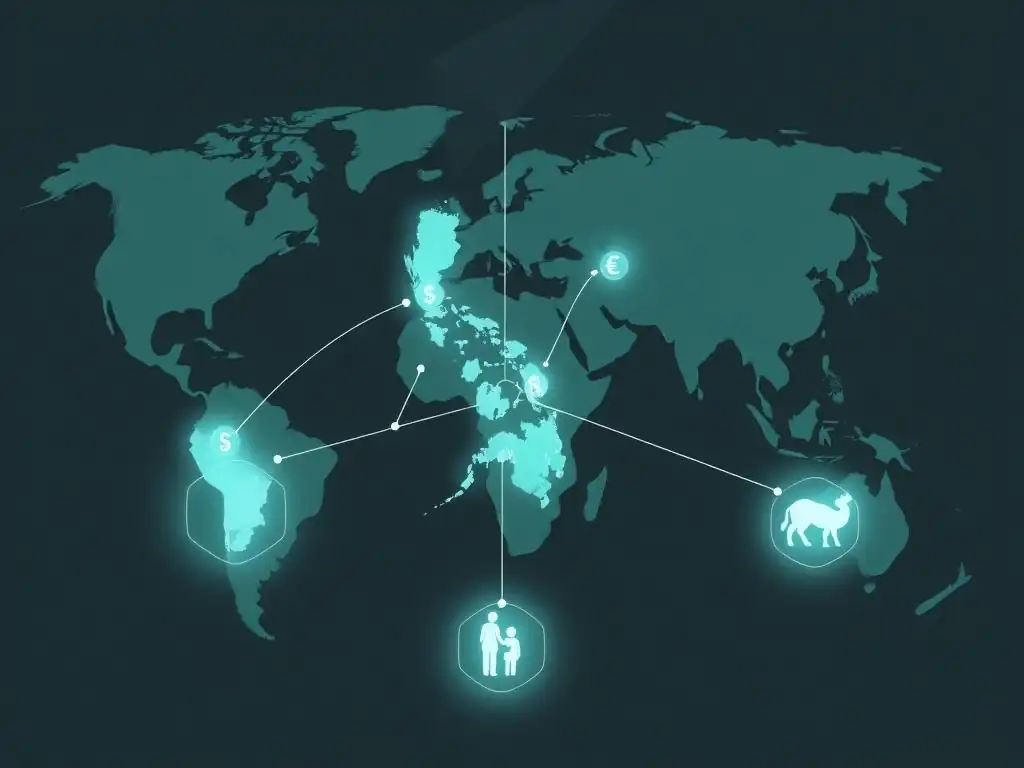
Remittances are a crucial source of income for many families in developing countries, often exceeding foreign aid and investment. However, the high cost of sending remittances through traditional channels, such as money transfer operators, significantly reduces the amount of money that reaches recipients. Blockchain technology offers a compelling alternative by providing a cost-effective and efficient infrastructure for remittance payments. Cryptocurrencies and stablecoins can be used to transfer remittances across borders with significantly lower fees compared to traditional methods, maximizing the value received by families in need.
Several blockchain-based remittance platforms are emerging, aiming to disrupt the traditional remittance market and offer more affordable and accessible services. These platforms leverage blockchain to bypass intermediaries, reduce transaction fees, and speed up payment processing. For instance, some platforms allow migrant workers to send remittances directly to mobile wallets in their home countries using cryptocurrencies, eliminating the need for bank accounts or physical cash pickup locations.
This mobile-first approach is particularly beneficial in developing countries where mobile phone penetration is high but access to traditional banking is limited. By reducing remittance costs and increasing efficiency, blockchain is empowering migrant workers to send more money home to their families, contributing to poverty reduction and economic development in remittance-receiving countries.
Celo: Mobile-First Blockchain for Financial Inclusion
Celo is a blockchain platform specifically designed to address the challenges of financial inclusion by focusing on mobile-first solutions and ease of use for smartphone users globally. Unlike many other blockchain platforms, Celo is built with the explicit goal of making decentralized financial tools and services accessible to the billions of people who primarily access the internet through their mobile phones, particularly in developing economies.
Celo's architecture is optimized for mobile devices, enabling fast and low-cost transactions even on low-bandwidth networks. It also utilizes phone numbers as public keys, simplifying user onboarding and making it easier for people to send and receive cryptocurrency without needing to understand complex blockchain addresses.
Celo's ecosystem includes stablecoins pegged to various fiat currencies, making it easier for users to transact in familiar units of value and mitigate the volatility associated with other cryptocurrencies. The platform also supports a range of decentralized applications (dApps) focused on financial inclusion, such as microfinance platforms, mobile wallets, and remittance services.
Celo's commitment to mobile-first design and user-friendliness, combined with its focus on stablecoins and financial inclusion applications, makes it a leading example of how blockchain technology can be tailored to address the specific needs of the unbanked and promote broader financial access globally. Through initiatives like the Celo Foundation Grants program, Celo actively supports developers and entrepreneurs building solutions that leverage the platform to advance financial inclusion in underserved communities around the world.
Addressing Challenges and Risks in Blockchain-Based Financial Inclusion
The regulatory landscape for blockchain-based financial inclusion solutions is still evolving and presents significant complexities and uncertainties. Governments and regulatory bodies worldwide are grappling with how to regulate cryptocurrencies, DeFi, and other blockchain-based financial services while fostering innovation and protecting consumers. The lack of clear and consistent regulations across jurisdictions creates challenges for blockchain companies operating in the financial inclusion space, as they must navigate a patchwork of legal requirements and interpretations. Regulatory uncertainty can also stifle investment and innovation, hindering the widespread adoption of blockchain financial inclusion solutions.
Different countries are taking varying approaches to regulating blockchain and cryptocurrencies, ranging from outright bans to more permissive frameworks. Some jurisdictions are focusing on AML and KYC compliance for cryptocurrency exchanges and service providers, while others are exploring the regulation of DeFi protocols and stablecoins. The challenge lies in striking a balance between fostering innovation and mitigating risks, such as money laundering, terrorist financing, and consumer protection.
Clear and well-defined regulations are crucial to provide legal certainty for blockchain companies, build trust with consumers, and encourage responsible innovation in the blockchain financial inclusion sector. Engaging in proactive dialogue with regulators and participating in industry initiatives to shape regulatory frameworks are essential for the sustainable growth and adoption of blockchain financial inclusion solutions.
Security Concerns and Risk Mitigation Strategies
While blockchain technology itself is inherently secure, blockchain-based financial inclusion solutions are not immune to security risks. Smart contract vulnerabilities, private key management, and phishing attacks are among the key security concerns that need to be addressed to ensure the safety and reliability of these solutions, especially for vulnerable populations. Smart contracts, which automate financial transactions on blockchain, can contain coding errors or vulnerabilities that can be exploited by malicious actors, leading to loss of funds. Rigorous smart contract audits and security testing are crucial to identify and mitigate these vulnerabilities before deployment.
Private key management is another critical security aspect. Users must securely store and manage their private keys, which provide access to their cryptocurrency wallets and funds. Loss or theft of private keys can result in permanent loss of assets. User education and user-friendly wallet solutions with robust security features are essential to address this risk.
Phishing attacks and social engineering tactics can also target users of blockchain-based financial services, tricking them into revealing their private keys or login credentials. Raising user awareness about these threats and implementing strong security protocols, such as two-factor authentication, are vital to protect users from scams and fraud. A multi-layered security approach, combining technological safeguards, user education, and industry best practices, is necessary to mitigate security risks and build trust in blockchain financial inclusion solutions.
Scalability and Interoperability Challenges for Blockchain Solutions
Scalability and interoperability are critical challenges that need to be addressed for blockchain financial inclusion solutions to achieve widespread adoption and impact. Scalability refers to the ability of a blockchain network to handle a large volume of transactions without compromising speed or increasing transaction costs. Many existing blockchain platforms face scalability limitations, which can hinder their ability to support the massive transaction volumes required for serving billions of unbanked individuals. Layer-2 scaling solutions, such as payment channels and rollups, are being developed to address scalability challenges and increase transaction throughput on blockchain networks.
Interoperability refers to the ability of different blockchain networks and systems to communicate and interact with each other seamlessly. Lack of interoperability can create silos and fragmentation in the blockchain ecosystem, limiting the usability and reach of financial inclusion solutions.
Efforts are underway to develop interoperability protocols and standards that enable different blockchains to exchange data and assets, facilitating cross-chain transactions and enhancing the overall efficiency of the blockchain ecosystem. Addressing scalability and interoperability challenges through technological innovation and industry collaboration is crucial to unlock the full potential of blockchain for financial inclusion and enable its widespread adoption in serving the unbanked globally.
Smart Contract Vulnerabilities and Audit Importance
Smart contracts are the backbone of many blockchain-based financial inclusion solutions, automating financial agreements and processes without intermediaries. However, smart contracts are essentially code, and like any software, they can contain vulnerabilities or bugs that can be exploited by malicious actors. These vulnerabilities can lead to unintended consequences, including loss of funds, data breaches, or manipulation of contract terms. The immutability of smart contracts on blockchain means that once deployed, vulnerabilities are often difficult or impossible to fix, making it crucial to identify and address them proactively.
Rigorous smart contract audits are essential to ensure the security and reliability of blockchain-based financial inclusion solutions. Smart contract audits involve independent security experts reviewing the code to identify potential vulnerabilities, logic errors, and security flaws. These audits help to identify and mitigate risks before smart contracts are deployed on the blockchain, protecting users and preventing potential exploits.
The complexity of smart contract code and the evolving threat landscape necessitate ongoing security audits and monitoring throughout the lifecycle of blockchain-based financial inclusion solutions. Investing in thorough smart contract audits and prioritizing security best practices are critical for building trust and ensuring the long-term success of blockchain in promoting financial inclusion.
The Future of Blockchain Financial Inclusion Solutions
Emerging Trends in Blockchain for the Unbanked
Several emerging trends are shaping the future of blockchain financial inclusion solutions, pointing towards even greater accessibility and impact for the unbanked. Mobile-first blockchain solutions are becoming increasingly prevalent, recognizing the mobile phone as the primary internet access point for billions in developing economies.
Platforms like Celo and others are focusing on building user-friendly mobile wallets and applications that simplify access to blockchain-based financial services for smartphone users. Stablecoins are gaining traction as a crucial tool for financial inclusion, providing a less volatile and more predictable medium of exchange for transactions and savings, especially in regions with high currency volatility.
The integration of decentralized identity solutions with financial services is another significant trend. Blockchain-based digital identities empower individuals with greater control over their personal data and streamline KYC processes, making it easier for the unbanked to access financial services. Furthermore, the development of more user-friendly interfaces and educational resources is crucial for bridging the digital literacy gap and making blockchain technology more accessible to non-technical users.
The focus is shifting towards creating intuitive and user-centric solutions that can be easily adopted and utilized by individuals with limited prior experience with blockchain or cryptocurrencies. These emerging trends suggest a future where blockchain technology becomes increasingly integrated into the daily lives of the unbanked, empowering them with greater financial access and control.
The Role of Central Bank Digital Currencies (CBDCs) in Financial Inclusion
Central Bank Digital Currencies (CBDCs), digital forms of fiat currency issued and regulated by central banks, have the potential to play a significant role in advancing financial inclusion. CBDCs can leverage blockchain or similar technologies to create a more efficient and accessible payment infrastructure, particularly in countries with large unbanked populations.
By providing a digital alternative to cash, CBDCs can reduce reliance on physical cash, which can be costly and inefficient to manage, and expand access to digital payments for those who lack bank accounts. CBDCs can also be designed to be interoperable with existing payment systems, facilitating seamless integration and wider adoption.
Several countries are actively exploring or piloting CBDCs, with financial inclusion being a key driver in many cases. For example, in countries with remote or underserved populations, CBDCs could be distributed and accessed through mobile devices, bypassing the need for physical bank branches and expanding financial access to remote areas. CBDCs can also potentially reduce transaction costs and increase the speed of payments, making financial services more affordable and efficient for low-income individuals.
However, the design and implementation of CBDCs for financial inclusion need to carefully consider privacy concerns, cybersecurity risks, and the potential impact on existing financial institutions. If implemented thoughtfully, CBDCs have the potential to be a powerful tool for promoting financial inclusion and modernizing payment systems globally.
Increased Adoption of Layer-2 Scaling Solutions
The increased adoption of Layer-2 scaling solutions is crucial for the long-term viability and scalability of blockchain financial inclusion solutions. Layer-2 solutions, such as payment channels, rollups, and sidechains, are designed to increase the transaction throughput and reduce transaction costs on blockchain networks without compromising security. These solutions offload a significant portion of transaction processing from the main blockchain layer, enabling faster and cheaper transactions, which are essential for serving the large transaction volumes required for widespread financial inclusion.
For example, payment channels allow for multiple transactions to be conducted off-chain, with only the final settlement recorded on the main blockchain, significantly reducing transaction fees and increasing speed. Rollups bundle multiple transactions together and process them off-chain before submitting a summary of the transactions to the main blockchain, improving scalability and efficiency.
The wider adoption of Layer-2 scaling solutions will enable blockchain platforms to handle a much larger number of users and transactions, making blockchain-based financial services more accessible and affordable for the unbanked. Continued innovation and development in Layer-2 scaling technologies are critical for realizing the full potential of blockchain for financial inclusion and enabling its widespread adoption at scale.
Collaboration and Partnerships: Driving Widespread Adoption of Blockchain Financial Inclusion Solutions
Collaboration and partnerships are essential for driving the widespread adoption of blockchain financial inclusion solutions. No single organization or technology can solve the complex challenge of financial exclusion alone. Collaboration between blockchain companies, financial institutions, NGOs, governments, and international organizations is crucial to leverage diverse expertise, resources, and networks to effectively address the barriers to financial inclusion and scale impactful solutions. Partnerships can facilitate knowledge sharing, technology transfer, and the development of interoperable and standardized solutions.
For example, collaborations between blockchain companies and traditional financial institutions can help bridge the gap between traditional finance and decentralized finance, enabling the integration of blockchain technology into existing financial systems and reaching a wider audience. Partnerships with NGOs and community organizations can ensure that blockchain financial inclusion solutions are tailored to the specific needs and contexts of local communities and that vulnerable populations are effectively reached and supported.
Government support and regulatory clarity are also crucial for creating an enabling environment for blockchain innovation and fostering responsible adoption. By fostering collaboration and partnerships across different sectors, stakeholders can collectively accelerate the adoption of blockchain financial inclusion solutions and create a more financially inclusive world.
Conclusion: Blockchain's Potential to Transform Financial Access
Blockchain technology possesses a transformative potential to revolutionize financial access and bank the unbanked. By addressing the key barriers of cost, accessibility, and trust that hinder traditional financial systems, blockchain offers innovative solutions for providing secure, efficient, and affordable financial services to billions of underserved individuals worldwide. From blockchain-based microfinance platforms and digital identity solutions to cost-effective cross-border payments and mobile-first financial applications, the use cases are diverse and impactful.
While challenges related to regulation, security, scalability, and user education remain, ongoing innovation, increasing adoption of Layer-2 solutions, and growing collaboration across sectors are paving the way for a future where blockchain plays a central role in achieving global financial inclusion. As the technology matures and adoption expands, blockchain's potential to empower individuals, foster economic growth, and create a more equitable financial system for all becomes increasingly undeniable.
Frequently Asked Questions
How can blockchain technology improve financial inclusion?
Blockchain offers immutable records and reduced transaction costs, making financial services more accessible to underserved populations. It can bypass traditional banking infrastructure and lower barriers to entry.
What are some examples of blockchain-based financial inclusion solutions?
Examples include decentralized lending platforms, microfinance initiatives using stablecoins, and digital identity solutions that allow individuals without traditional documentation to access financial services.
What are the key challenges in implementing blockchain financial inclusion solutions?
Challenges include regulatory uncertainty, scalability issues within blockchain networks, and the need for user education and digital literacy among target populations.
How does DeFi contribute to blockchain financial inclusion solutions?
DeFi, or Decentralized Finance, provides alternative financial products like yield farming and crypto-backed loans that are accessible to anyone with an internet connection, potentially bypassing traditional financial gatekeepers.
What is the role of regulation in the development of blockchain financial inclusion solutions?
Regulation needs to be balanced to foster innovation while protecting consumers from risks associated with unregulated blockchain applications. Clear guidelines can encourage wider adoption and build trust.
Final Reflection: Empowering Futures Through Decentralized Finance
The exploration of blockchain solutions for financial inclusion reveals a powerful truth: technology, when ethically applied, can dismantle systemic barriers and create opportunities for those historically excluded from the traditional banking system. The promise of "Banking the Unbanked" is not just a technological advancement; it's a fundamental shift towards a more equitable and accessible financial landscape for all.
This journey into blockchain's potential has underscored its profound influence on the social fabric. The ability to provide secure, transparent, and low-cost financial services to underserved communities is not merely a convenience; it's a catalyst for economic empowerment and social mobility. As we've seen, blockchain can foster trust where traditional institutions have failed. Financial inclusion is not just about access to banking services; it's about empowering individuals to participate fully in the economy and improve their lives.
This quote encapsulates the core mission driving the development and implementation of blockchain financial inclusion solutions.
Now, consider the implications of this transformative technology in your own life. How can you support and advocate for the ethical development and deployment of blockchain solutions that prioritize financial inclusion? Let us all strive to be active participants in building a future where financial access is a right, not a privilege, and where technology serves as a bridge to a more just and prosperous world for everyone.
Unlock Financial Freedom: Start Building a More Inclusive Future!
Thank you for exploring the potential of blockchain to empower the unbanked! You've now seen how this technology can break down barriers and bring financial services to underserved communities. Now, let's translate this knowledge into action!
Here's how you can contribute to a more equitable financial landscape:
- Champion decentralized finance (DeFi) by researching and testing platforms that offer accessible financial tools for the unbanked. Discover firsthand how these solutions can empower individuals and communities. This is your primary action.
- Share this article and its insights with your network! Start conversations about blockchain's role in financial inclusion and spread awareness of the challenges faced by the unbanked.
- Explore open-source blockchain projects focused on microfinance and consider contributing your skills to development efforts. Even small contributions can make a big difference!
What's one innovative application of blockchain technology that you think could most significantly improve financial access for the unbanked, and how can we accelerate its adoption?
Leave a Reply