
Developers' Guide to Blockchain Interoperability in the Metaverse


Welcome to Blockchain Trends, your compass in the rapidly evolving world of decentralized technology. Are you ready to unlock the true potential of blockchain beyond its crypto origins? Dive into our latest article, a comprehensive Developers' Guide to Blockchain Interoperability in the Metaverse, and discover how to bridge the gap between virtual worlds. This guide explores the crucial role of blockchain interoperability in shaping the metaverse. Learn how different blockchains can seamlessly communicate and collaborate within these immersive digital environments. Intrigued? The future of decentralized systems is here, and it's more interconnected than you might think...
Developers' Guide to Blockchain Interoperability in the Metaverse
- Introduction: The Need for Blockchain Interoperability in Metaverse Development
-
Frequently Asked Questions
- What is blockchain interoperability and why is it important for the metaverse?
- How does blockchain interoperability benefit metaverse developers?
- What are some common approaches to achieving blockchain interoperability in the metaverse?
- What are the regulatory challenges surrounding blockchain interoperability in the metaverse?
- How can developers ensure the security of interoperable blockchain applications in the metaverse?
- Final Reflection: Bridging Worlds, Building Futures
- Unlock the Metaverse: Your Interoperability Adventure Starts Now!
Introduction: The Need for Blockchain Interoperability in Metaverse Development
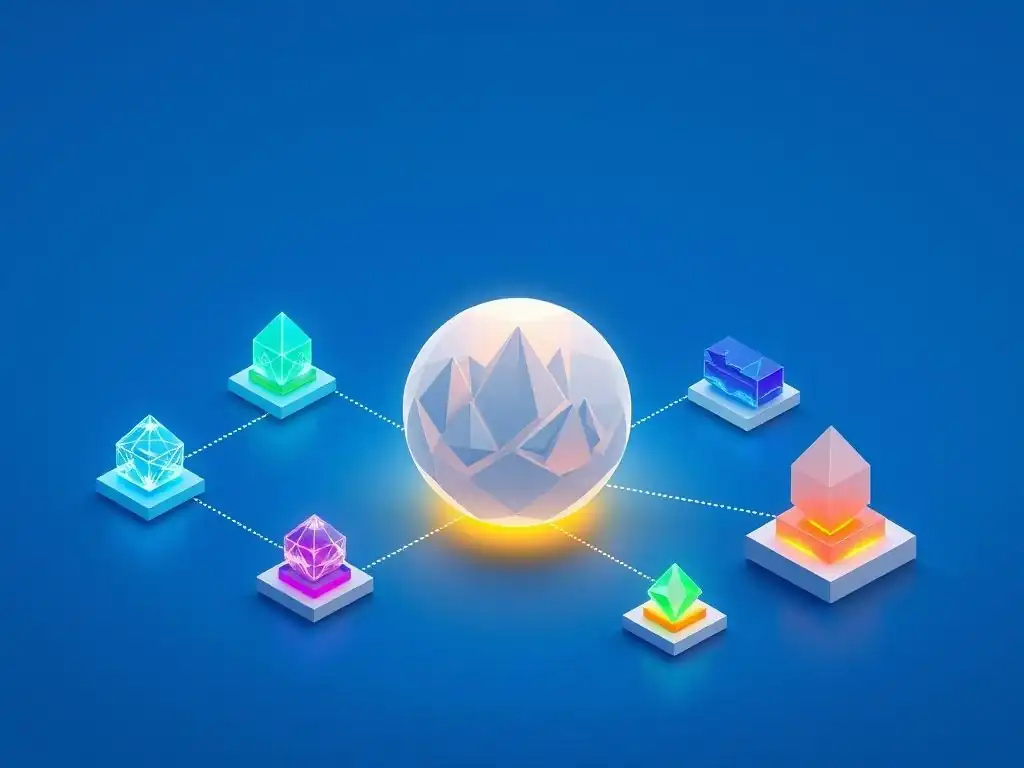
Understanding the Metaverse and its Reliance on Blockchain Technology
The metaverse, envisioned as a persistent, shared, 3D virtual world, represents the next evolution of the internet. It promises immersive experiences, social interactions, and economic opportunities that blur the lines between the physical and digital realms. At its core, the metaverse's functionality and potential are deeply intertwined with blockchain technology. Blockchain provides the foundational infrastructure necessary to establish key metaverse components like digital ownership, verifiable scarcity, and decentralized governance. Without blockchain, the metaverse would likely be a collection of centralized platforms, mirroring the existing Web2 paradigm, rather than the open, user-centric space proponents envision.
Blockchain's role in the metaverse is multifaceted. Firstly, it provides the mechanism for digital asset ownership through NFTs (Non-Fungible Tokens). These tokens represent unique digital items, from virtual land and avatars to in-game assets and collectibles, ensuring users can truly own and control their digital possessions within the metaverse.
Secondly, blockchain facilitates secure and transparent transactions, enabling a robust digital economy within these virtual worlds. Cryptocurrencies, built on blockchain, act as the native currencies of many metaverse platforms, allowing for seamless value exchange. Finally, blockchain's decentralized nature is crucial for establishing trust and governance within the metaverse, moving away from centralized control points and empowering users with greater agency over their digital experiences.
The Interoperability Challenge: Why Seamless Integration Matters for Metaverse Growth
The current metaverse landscape is characterized by a proliferation of independent platforms, each operating in silos. Imagine a metaverse user owning a unique digital avatar and valuable virtual land in one platform, but being unable to utilize these assets in another metaverse environment. This fragmentation severely hinders the potential of the metaverse to become a truly interconnected and expansive digital realm. The lack of interoperability creates walled gardens, limiting user experience, innovation, and the overall growth of the metaverse ecosystem. For the metaverse to reach its full potential, seamless integration and communication between different platforms are paramount.
Interoperability addresses this challenge by enabling different blockchain networks and metaverse platforms to communicate and share data, assets, and functionalities. Without interoperability, users are confined to individual metaverse islands, unable to leverage their digital identities, assets, and social connections across the broader virtual landscape. This lack of seamlessness not only diminishes the user experience but also stifles innovation.
Developers are forced to rebuild functionalities and assets for each platform, hindering the creation of truly universal and interconnected metaverse experiences. A truly thriving metaverse requires interoperability to foster a fluid and unified digital world where users can seamlessly navigate and interact across different platforms, carrying their digital identities and assets with them.
Defining Blockchain Interoperability in the Context of Metaverse Environments
Blockchain interoperability, in its essence, refers to the ability of different blockchain networks to communicate, share data, and transact with each other. In the context of metaverse environments, this concept takes on a crucial dimension. It means enabling seamless interaction and exchange of assets and information between various metaverse platforms built on potentially different blockchain infrastructures. This goes beyond simple data sharing; it encompasses the ability for users to move their digital identities, virtual assets (like avatars, NFTs, and virtual currencies), and even applications across different metaverse worlds without friction or loss of functionality.
For metaverse developers, blockchain interoperability translates into the technical capacity to build applications and experiences that can function across multiple metaverse platforms, regardless of the underlying blockchain they are built upon. This involves establishing protocols and mechanisms for cross-chain communication, asset transfers, and identity management.
Achieving true blockchain interoperability in the metaverse means creating a user experience where the underlying blockchain infrastructure becomes transparent, allowing users to navigate a unified metaverse experience without being constrained by platform boundaries. It is about breaking down the silos and building bridges between different virtual worlds to create a more cohesive and accessible metaverse for everyone.
Frequently Asked Questions
What is blockchain interoperability and why is it important for the metaverse?
Blockchain interoperability refers to the ability of different blockchains to communicate and share data with each other. It's crucial for the metaverse because it allows for seamless transfer of assets and experiences across different virtual worlds built on different blockchains, avoiding fragmented ecosystems.
How does blockchain interoperability benefit metaverse developers?
Interoperability allows developers to build more expansive and interconnected metaverse experiences. They can leverage functionalities from various blockchains, creating richer and more versatile applications without being confined to a single platform.
What are some common approaches to achieving blockchain interoperability in the metaverse?
Common approaches include cross-chain bridges, which facilitate asset transfers between blockchains, and interoperability protocols, like LayerZero, that enable communication between smart contracts on different chains. These solutions allow for data and value exchange.
What are the regulatory challenges surrounding blockchain interoperability in the metaverse?
Regulatory challenges include varying legal frameworks across jurisdictions, concerns about data privacy and security, and the need for standardized regulations to govern cross-chain transactions and digital asset transfers within the metaverse.
How can developers ensure the security of interoperable blockchain applications in the metaverse?
Developers should prioritize robust security audits, implement secure cross-chain communication protocols, and employ multi-signature wallets for asset management to mitigate risks associated with vulnerabilities in interoperable systems.
Final Reflection: Bridging Worlds, Building Futures
The journey through the intricacies of blockchain interoperability in the metaverse reveals more than just technical challenges; it highlights the fundamental need for collaboration and connection in a rapidly evolving digital landscape. The metaverse, envisioned as a seamless tapestry of interconnected worlds, hinges on the ability of different blockchains to communicate and share value. Without this interoperability, the metaverse risks becoming a fragmented archipelago, hindering its potential for true innovation and widespread adoption.
This exploration has underscored the profound impact of interoperability on the cultural and social fabric of the metaverse. The ability to seamlessly transfer assets, identities, and experiences across different virtual realms is not just a technical feat; it's a cornerstone of a truly decentralized and democratized digital future. The future of the metaverse is not about building walled gardens, but about creating bridges that connect them.
This sentiment encapsulates the essence of our discussion, emphasizing the importance of open standards and collaborative development in shaping a metaverse that benefits all participants.
As you navigate the exciting frontier of metaverse development, remember that the true power lies not just in creating individual experiences, but in fostering a connected ecosystem. Embrace the principles of interoperability, champion open standards, and contribute to building a metaverse where value flows freely and innovation knows no bounds. The future of the metaverse is in your hands; build it with connection, collaboration, and a vision for a truly interconnected digital world.
Unlock the Metaverse: Your Interoperability Adventure Starts Now!
Thanks for exploring the world of blockchain interoperability within the Metaverse! We hope you've gained valuable insights into creating seamless and connected experiences. Now, it's time to put that knowledge into action and help shape the future of this exciting digital realm.
Here’s how you can get started:
- Experiment with building a simple cross-platform application that connects different virtual environments. Hands-on practice is the fastest way to understand the challenges and unlock opportunities.
- Share your experiences! Start a discussion within your developer community, write a blog post about your interoperability experiments, or present your findings at a local tech meetup.
- Explore emerging standards and governance models for metaverse interoperability. Staying informed about the evolving landscape will help you develop more future-proof solutions.
What cross-platform interactions are you most excited to see in the Metaverse? Share your ideas in the comments below!
Leave a Reply