
Web3 and the Future of Entertainment: Immersive Experiences and User Participation

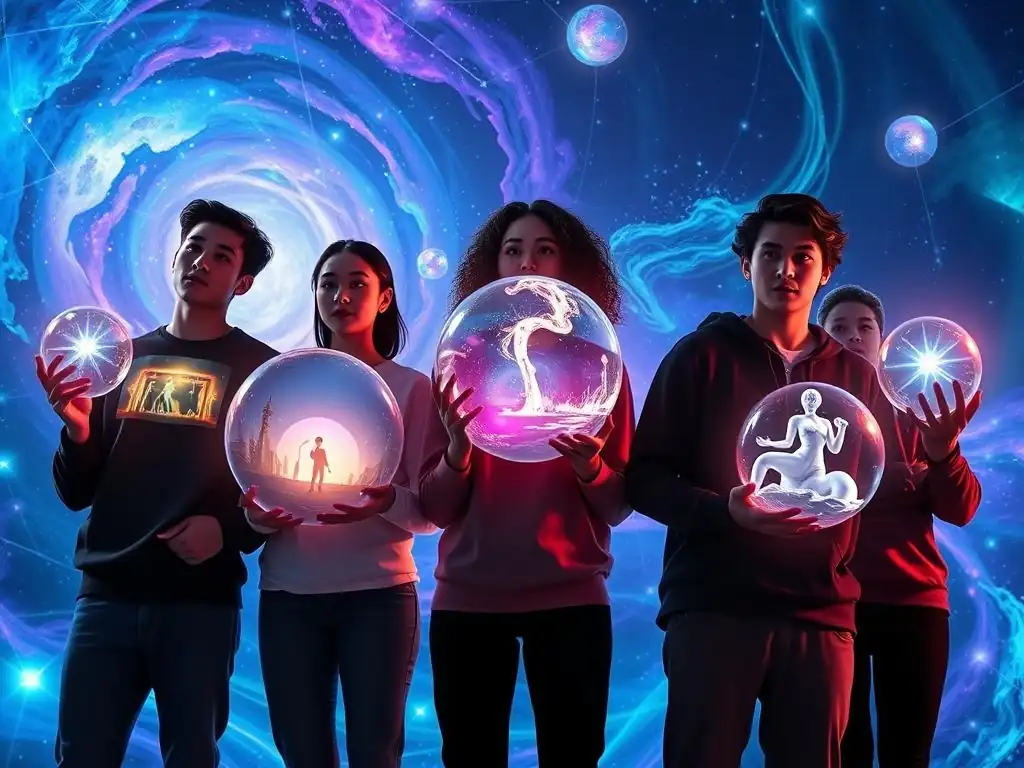
Welcome to Blockchain Trends, your guide to navigating the revolutionary world of blockchain technology. Forget just cryptocurrencies – we delve into the transformative potential of this technology across industries. Intrigued by how blockchain is changing the entertainment landscape? This week, we're diving deep into the blockchain entertainment user experience, exploring how Web3 is forging immersive experiences and empowering user participation. What does the future hold for entertainment in a decentralized world? Let's explore together and unravel the possibilities!
Web3 and the Future of Entertainment: Immersive Experiences and User Participation
- Introduction: Revolutionizing Entertainment with Blockchain Technology
- Immersive Entertainment Experiences Powered by Web3
- Blockchain Entertainment User Experience: Putting Users in Control
- Transforming Entertainment Sectors with Web3
- Addressing the Challenges of Web3 Entertainment Adoption
- The Future of Blockchain Entertainment: Predictions and Opportunities
- Conclusion: Embracing the Decentralized Future of Entertainment
-
Frequently Asked Questions
- How is Web3 changing the entertainment user experience?
- What role do NFTs play in improving the blockchain entertainment user experience?
- What are some examples of decentralized entertainment applications that enhance user experience?
- How does blockchain technology address the issue of piracy and copyright in the entertainment industry, improving user experience?
- What are the potential challenges to mass adoption of blockchain entertainment for the average user?
- Final Reflection: Embracing the Decentralized Stage
- Reimagine Entertainment: Your Web3 Adventure Starts Now!
Introduction: Revolutionizing Entertainment with Blockchain Technology
The Convergence of Web3 and Entertainment: A New Paradigm
The entertainment industry stands on the cusp of a profound transformation, driven by the disruptive potential of Web3 technologies. This convergence is not merely an incremental update but a fundamental shift in how content is created, distributed, consumed, and monetized. By leveraging principles like decentralization, user ownership, and transparent transactions, Web3 is poised to redefine the relationship between creators, platforms, and audiences, moving away from centralized control towards a more equitable and interactive ecosystem. This shift is particularly relevant for improving the Blockchain entertainment user experience, making it more engaging and rewarding.
This new paradigm promises to unlock novel forms of creativity and interaction, enabling experiences previously unimaginable within the constraints of traditional Web2 models. From fully immersive virtual worlds and decentralized gaming economies to tokenized music distribution and fan-owned media projects, Web3 is laying the groundwork for an entertainment landscape where users are not just passive consumers but active participants and stakeholders. The focus is increasingly on enhancing the Blockchain entertainment user experience by giving individuals more control and agency over their digital interactions and assets.
Understanding the Core Principles of Web3: Decentralization, Ownership, and Transparency
At its heart, Web3 is built upon a few core tenets that distinguish it from its predecessors. Decentralization is paramount, shifting power away from large corporations and central authorities towards peer-to-peer networks. This means applications and platforms can operate without a single point of control, making them more resilient and resistant to censorship. This architectural change directly impacts the Blockchain entertainment user experience by removing intermediaries and potentially fostering more direct connections between creators and fans.
Ownership is another critical principle. Through technologies like NFTs (Non-Fungible Tokens) and tokenization, Web3 enables verifiable digital ownership of assets, whether they are in-game items, digital art, music rights, or virtual real estate. This contrasts sharply with Web2, where users typically only have licenses to use digital content. Transparency, facilitated by public blockchains, ensures that transactions and ownership records are immutable and auditable by anyone, fostering trust and accountability within the ecosystem. These principles combine to fundamentally reshape the Blockchain entertainment user experience, granting users true digital property rights and visibility into platform operations.
Blockchain's Impact on the Entertainment Industry: Beyond Traditional Models
Blockchain technology's influence on entertainment extends far beyond its initial association with cryptocurrencies. It provides a robust infrastructure for managing digital rights, verifying authenticity, and enabling micro-transactions in a trustless environment. This capability is disrupting traditional gatekeepers in industries like music, film, and gaming, allowing creators to connect more directly with their audience and retain a larger share of revenue.
Consider the music industry: artists often receive a tiny fraction of streaming revenue (estimates range from $0.003 to $0.005 per stream on major platforms). Blockchain offers alternatives like direct-to-fan token sales, fractional ownership of music rights, and automated royalty distribution via smart contracts, potentially increasing artist income significantly. Similarly, in gaming, blockchain enables true ownership of in-game assets, creating player-driven economies. The overarching goal is to improve the Blockchain entertainment user experience by making it more fair, transparent, and economically empowering for both creators and consumers.
Immersive Entertainment Experiences Powered by Web3
Exploring New Realities: Metaverse and Virtual Worlds in Web3 Entertainment
The concept of the metaverse, a persistent, interconnected set of virtual worlds, is intrinsically linked with Web3. Blockchain technology provides the necessary infrastructure for these digital realities, enabling verifiable ownership of virtual land, assets, and identities (avatars). Platforms like Decentraland and The Sandbox are early examples, allowing users to buy, build upon, and monetize virtual property using cryptocurrencies and NFTs.
Within these virtual worlds, entertainment takes on new dimensions. Users can attend virtual concerts, participate in decentralized games, build interactive experiences, and socialize in ways that blur the lines between the physical and digital. For instance, a virtual concert in a metaverse platform might sell NFT tickets that grant unique access or digital collectibles. This level of integration between digital ownership, identity, and interactive experiences is central to the evolving Blockchain entertainment user experience within immersive environments. Reports suggest the metaverse market could reach billions in value within years, highlighting the scale of this potential shift.
Enhancing User Engagement: Interactive Storytelling and Personalized Content
Web3 facilitates deeper user engagement through interactive storytelling and personalized content experiences. Smart contracts can enable dynamic narratives that evolve based on user actions or community votes. For example, a decentralized film project might allow token holders to vote on plot points or character development, directly influencing the story's outcome.
Furthermore, blockchain's ability to track user preferences and ownership of digital assets can inform highly personalized content delivery. Imagine a streaming platform where owning specific NFTs unlocks exclusive content or interactive features tailored to your interests. This moves beyond simple recommendation algorithms towards a model where user identity and digital property directly shape their entertainment journey, significantly impacting the Blockchain entertainment user experience by making it more unique and responsive to individual choices and assets.
NFTs and Digital Collectibles: Transforming Fan Engagement and Ownership
Non-Fungible Tokens (NFTs) have emerged as a cornerstone of Web3 entertainment, revolutionizing how fans engage with and own digital content. NFTs represent unique digital assets, ranging from digital art and music tracks to video clips, virtual items, and even moments in sports history. They provide verifiable proof of ownership and authenticity on the blockchain.
For fans, NFTs offer a new way to support creators directly and own a piece of their work or brand. A music artist might release an album as a limited series of NFTs, offering exclusive content or future perks to owners.
A sports league might tokenize iconic moments, allowing fans to collect and trade digital video clips (e.g., NBA Top Shot saw over $700 million in sales in its first year). This shift from merely consuming content to potentially owning and trading it fundamentally alters the Blockchain entertainment user experience, adding layers of investment, community, and personal connection to fandom.
Blockchain Entertainment User Experience: Putting Users in Control
User-Generated Content (UGC) and Collaborative Creation in Web3
Web3 empowers users to become creators and collaborators on an unprecedented scale. Decentralized platforms can provide tools and incentives for users to generate content, whether it's building virtual worlds, designing game assets, writing stories, or producing music. Unlike traditional platforms where UGC creators often receive minimal compensation and lack ownership, Web3 allows creators to retain ownership rights via NFTs and earn revenue directly from their creations, often facilitated by smart contracts.
Platforms like The Sandbox allow users to create and monetize voxel assets and game experiences using their tools. Decentralized video platforms could enable creators to upload content and receive tokenized rewards based on viewership or community engagement. This shift towards user empowerment is a core aspect of enhancing the Blockchain entertainment user experience, transforming passive consumption into active participation and creation, fostering vibrant, community-driven ecosystems.
Decentralized Autonomous Organizations (DAOs) and Community Governance in Entertainment
Decentralized Autonomous Organizations (DAOs) offer a new model for governing entertainment projects and platforms, putting decision-making power into the hands of the community. In a DAO, token holders can vote on proposals related to content direction, platform development, funding allocation, or even moderation policies. This contrasts with traditional corporate structures where decisions are made by a central team or board.
For entertainment, DAOs can govern everything from funding independent films (e.g., Decentralized Pictures) to managing virtual worlds or esports leagues. This allows fans and participants to have a real stake and voice in the direction of projects they care about. By enabling collective decision-making and shared ownership, DAOs significantly enhance the Blockchain entertainment user experience, fostering a sense of belonging, influence, and shared responsibility among the community members.
Rewarding User Participation: Tokenized Incentives and Ownership Models
One of the most compelling aspects of Web3 entertainment is the ability to directly reward users for their engagement and participation. This is often achieved through tokenized incentive models. Users can earn cryptocurrency or platform tokens for activities like playing games (play-to-earn), creating content, curating content, providing liquidity, or participating in governance.
These tokens can often be traded on exchanges, used within the platform ecosystem (e.g., to buy items or access features), or staked to earn passive income. This economic alignment between platforms and users creates powerful network effects and encourages active involvement. For instance, Axie Infinity, a play-to-earn game, allowed players in certain economies to earn income exceeding local minimum wages during its peak. This direct financial incentive, coupled with true digital ownership, represents a radical improvement in the Blockchain entertainment user experience, turning time spent on entertainment into potentially valuable activity.
Transforming Entertainment Sectors with Web3
Web3 Gaming: Play-to-Earn Models and True Digital Ownership
Gaming is arguably the most advanced sector in adopting Web3 technologies, particularly through the rise of play-to-earn (P2E) models. In P2E games, players can earn tangible value, typically in the form of cryptocurrency or NFTs, by playing the game, completing tasks, winning battles, or trading in-game assets. This contrasts with traditional free-to-play or pay-to-play games where in-game purchases often don't grant true ownership and earned value is confined to the game's ecosystem.
True digital ownership, enabled by NFTs, means players own their in-game items – characters, weapons, land, skins – as verifiable assets on the blockchain. They can freely trade, sell, or even lend these assets outside the game's marketplace. Games like Axie Infinity demonstrated massive user adoption and economic activity, with players earning significant income. While the P2E model is still evolving, the core promise of rewarding players for their time and skill while granting true ownership is fundamentally reshaping the Blockchain entertainment user experience in gaming.
Blockchain Music: Empowering Artists and Revolutionizing Music Distribution
Blockchain technology offers artists a path to greater autonomy and fairer compensation in the music industry. By issuing music or albums as NFTs, artists can sell directly to fans, bypassing traditional intermediaries like record labels and streaming platforms. This allows artists to keep a much larger percentage of revenue – potentially 80-95% compared to fractions of a cent per stream.
Platforms like Royal allow fans to buy fractional ownership (tokens) in songs, earning a share of future streaming royalties. This creates a direct financial link between artists and their most dedicated fans. Additionally, blockchain can automate royalty distribution to all rights holders (artists, songwriters, producers) via smart contracts, ensuring transparency and efficiency. This empowerment of artists and the creation of new fan investment models are key components of the improved Blockchain entertainment user experience in music.
Decentralized Film and Video: Funding, Production, and Distribution on the Blockchain
The film and video industry can leverage blockchain for various stages, from funding to distribution. Decentralized funding platforms allow filmmakers to raise capital by selling tokens that represent a stake in the film's profits or ownership of exclusive content related to the project. This provides an alternative to traditional studio funding and gives audiences a chance to invest in projects they believe in.
For production, blockchain can be used for transparent rights management and royalty distribution among cast, crew, and rights holders. Distribution can also be decentralized; platforms could allow creators to upload videos and earn tokens based on viewership, similar to how artists earn from NFT music sales. Decentralized streaming protocols could potentially reduce distribution costs and censorship risks. This application of blockchain across the film lifecycle aims to create a more equitable and transparent ecosystem, enhancing the Blockchain entertainment user experience for both creators and viewers by offering new ways to participate and earn.
Addressing the Challenges of Web3 Entertainment Adoption
Scalability Issues in Blockchain Entertainment Platforms
Despite its promise, Web3 entertainment faces significant technical hurdles, primarily scalability. Current blockchain networks can struggle to handle the high volume of transactions required for mass-market entertainment applications, such as thousands of concurrent players interacting in a game or millions of users accessing content simultaneously. High transaction fees (gas fees) on some networks, like Ethereum during peak times, can also make micro-transactions or frequent in-game actions prohibitively expensive for users.
While Layer 2 scaling solutions (e.g., rollups, sidechains) and alternative blockchain protocols built for speed and lower costs (e.g., Polygon, Flow, Solana) are emerging, they are not yet universally adopted or fully mature. Addressing these scalability issues is crucial for ensuring a smooth and responsive Blockchain entertainment user experience that can compete with traditional entertainment platforms which handle immense traffic seamlessly.
Regulatory Uncertainty and Legal Considerations for Web3 Entertainment
The regulatory landscape for blockchain and Web3 is still evolving and varies significantly across jurisdictions. This creates uncertainty for companies and creators operating in the Web3 entertainment space. Issues such as whether NFTs are securities, how tokenized assets should be taxed, and who is liable in a decentralized autonomous organization remain points of ambiguity.
Furthermore, legal questions around intellectual property rights in decentralized content creation, content moderation on decentralized platforms, and consumer protection in tokenized economies need clearer frameworks. Navigating this complex and uncertain legal environment is a major challenge that impacts investment, development, and ultimately, the widespread adoption and comfort level users have with the Blockchain entertainment user experience. Clearer regulations are needed to foster growth and provide legal certainty.
User Education and Accessibility in the Decentralized Entertainment Ecosystem
One of the biggest barriers to mainstream adoption of Web3 entertainment is the complexity and lack of familiarity for the average user. Setting up a digital wallet, understanding blockchain concepts, managing private keys, and navigating decentralized applications can be daunting for individuals accustomed to the simplicity of Web2 platforms. The Blockchain entertainment user experience often requires a steeper learning curve compared to downloading an app from an app store and signing up with an email address.
Improving accessibility involves developing more intuitive user interfaces, simplifying onboarding processes, and providing robust educational resources. Abstracting away some of the underlying blockchain complexity through user-friendly wallets, integrated marketplaces, and clear explanations of ownership and token utility is essential. Bridging this knowledge gap and making Web3 entertainment as easy to access and use as traditional entertainment is vital for expanding the Blockchain entertainment user experience to a broader audience.
The Future of Blockchain Entertainment: Predictions and Opportunities
The Evolution of Immersive Experiences in Web3
Looking ahead, immersive experiences within Web3 are expected to become significantly more sophisticated and interconnected. The metaverse will likely evolve from disparate virtual worlds into more interoperable environments where digital assets and identities can seamlessly transition between platforms. Advances in rendering technology, VR/AR hardware, and blockchain scalability will combine to create highly realistic and deeply engaging digital realities.
Future developments might include decentralized identity protocols that allow users to carry their reputation and achievements across different virtual worlds, and more complex economies driven by user interaction and creation. The integration of haptic feedback technology and advanced AI avatars could further blur the lines between the physical and digital, pushing the boundaries of the Blockchain entertainment user experience towards hyper-realistic and truly immersive interactions.
Mainstream Adoption of Blockchain-Based Entertainment
While challenges remain, the trajectory points towards increasing mainstream adoption of blockchain-based entertainment. As the underlying technology matures, scalability improves, and user interfaces become more intuitive, the barriers to entry will lower. Large entertainment companies are already exploring or implementing Web3 strategies, from launching NFT collections to developing blockchain games.
The appeal of true ownership, potential earnings, and greater control over digital interactions will continue to attract users, especially younger generations already comfortable with digital economies. As major gaming titles, streaming platforms, or social media giants integrate Web3 features, the Blockchain entertainment user experience will become accessible to hundreds of millions of users, driving widespread adoption beyond the early crypto enthusiasts. Analyst firm DappRadar reported over 1.1 million daily unique active wallets interacting with blockchain games in early 2022, indicating significant, albeit still niche, adoption.
The Role of AI and Machine Learning in Enhancing Web3 Entertainment
Artificial intelligence (AI) and machine learning (ML) are poised to play a crucial role in enhancing the Blockchain entertainment user experience in the future. AI can be used to create more dynamic and responsive non-player characters (NPCs) in games, generate personalized content streams, and even help design complex virtual worlds. ML algorithms can analyze user behavior on decentralized platforms to improve content recommendations or identify fraudulent activity.
Furthermore, AI could be integrated with blockchain for decentralized content creation tools, allowing users with limited technical skills to generate high-quality assets or experiences. Smart contracts could potentially be enhanced with AI capabilities to execute more complex logic based on real-world data or user sentiment. The synergy between AI, ML, and blockchain will likely lead to entertainment experiences that are not only decentralized and user-owned but also highly intelligent, adaptive, and personalized.
Conclusion: Embracing the Decentralized Future of Entertainment
The Transformative Potential of Web3 for Creators and Consumers
Web3 holds immense transformative potential for both creators and consumers in the entertainment industry. For creators – artists, musicians, filmmakers, game developers – it offers new avenues for funding, direct connection with their audience, greater control over their work, and fairer compensation models. By removing traditional gatekeepers and leveraging tokenization, creators can build independent careers and foster dedicated communities around their art.
For consumers, Web3 unlocks true digital ownership, enabling them to own, trade, and potentially earn from the digital content they consume and the virtual worlds they inhabit. It offers opportunities for active participation, influence through governance (DAOs), and a more transparent relationship with platforms and creators. The fundamental promise is a more equitable, interactive, and rewarding Blockchain entertainment user experience.
The Importance of User Participation in Shaping the Future of Entertainment
The future of blockchain entertainment is inherently tied to user participation. Unlike traditional models where platforms dictate terms, Web3 empowers users to be active stakeholders. Through mechanisms like DAOs, user-generated content tools, and tokenized incentives, users are not just consumers but contributors, curators, and decision-makers.
This active role means that the direction and evolution of Web3 entertainment platforms will increasingly be shaped by the communities that use them. Feedback loops are shorter, and incentives are aligned for users to help improve the ecosystem. The success of projects will depend heavily on their ability to foster engaged communities and leverage user input, highlighting that a positive Blockchain entertainment user experience built on participation is paramount.
Long-Term Impact of Blockchain on the Democratization of Content Creation
Ultimately, the long-term impact of blockchain on entertainment is likely to be a significant democratization of content creation and access. By lowering the barriers to entry for distribution, enabling direct monetization, and providing tools for collaborative creation, blockchain empowers a wider range of voices and talents. Independent creators can bypass traditional funding and distribution bottlenecks, reaching global audiences directly.
This democratization extends beyond just creators; it also democratizes ownership and participation for consumers. Anyone can potentially own a piece of digital culture, contribute to a project's governance, or earn value from their engagement. This shift towards a more open, participatory, and equitable entertainment ecosystem, underpinned by a robust and rewarding Blockchain entertainment user experience, represents a fundamental evolution from the centralized models of the past.
Frequently Asked Questions
How is Web3 changing the entertainment user experience?
Web3 is revolutionizing entertainment by offering more immersive and interactive experiences, powered by blockchain. It allows for greater user participation and control through technologies like NFTs and DAOs.
What role do NFTs play in improving the blockchain entertainment user experience?
NFTs enable digital ownership and unique experiences within entertainment platforms. This translates to exclusive content, in-game assets, and verifiable tickets, improving user engagement.
What are some examples of decentralized entertainment applications that enhance user experience?
Decentralized Autonomous Organizations (DAOs) are enabling community-driven content creation and governance. Platforms that allow users to directly influence the direction of entertainment projects are growing in popularity.
How does blockchain technology address the issue of piracy and copyright in the entertainment industry, improving user experience?
Blockchain provides a transparent and secure system for tracking content ownership. This helps combat piracy and ensures that creators are properly compensated, leading to higher quality content and a better user experience.
What are the potential challenges to mass adoption of blockchain entertainment for the average user?
Challenges include complexity of blockchain technology, the need for user-friendly interfaces, and regulatory uncertainty. Overcoming these will be crucial for widespread adoption and a positive user experience.
Final Reflection: Embracing the Decentralized Stage
The exploration of Web3's potential to revolutionize entertainment, particularly through immersive experiences and enhanced user participation, culminates in a crucial realization: the future of entertainment is undeniably decentralized. This shift, powered by blockchain technology, is not merely a technological upgrade; it represents a fundamental power shift, placing creators and consumers at the heart of the entertainment ecosystem.
The impact of this paradigm shift is already rippling through the cultural landscape. We are witnessing the birth of entirely new forms of artistic expression and community engagement, driven by the principles of ownership and transparency. This is more than just a trend; it's a movement towards a more equitable and engaging entertainment experience. The future of entertainment is not about passive consumption, but active participation and co-creation.
This quote encapsulates the essence of Web3's promise, highlighting the transformative potential of blockchain entertainment user experience.
As we stand on the cusp of this decentralized revolution, I invite you to consider your own role in shaping the future of entertainment. How can you leverage the power of Web3 to support creators, build communities, and experience entertainment in entirely new ways? The possibilities are limitless, and the time to embrace this transformative technology is now. Let us collectively build a future where entertainment is not just consumed, but truly experienced and owned by all.
Reimagine Entertainment: Your Web3 Adventure Starts Now!
Thank you for exploring the exciting world of Web3 entertainment! We hope you've gained valuable insights into how blockchain is transforming immersive experiences and empowering users to participate actively. Are you ready to take the next step and become part of this innovative future?
Here's how you can get involved:
- Explore a Web3 Entertainment Platform: Find a project that interests you—whether it's gaming, music, or art—and experience its features firsthand. This is the best way to understand its true potential.
- Share Your Vision: Contribute to a Web3 entertainment project by providing feedback, engaging in community governance, or suggesting new features. Your input can make a difference!
- Discover New Opportunities: Check out lesser-known NFT collections or decentralized autonomous organizations dedicated to entertainment. You might unearth the next big innovation!
What kind of groundbreaking entertainment experiences do you envision creating or participating in within the Web3 space? Let’s discuss in the comments!
Leave a Reply