
Blockchain vs. Traditional Systems: A SidebySide Comparison

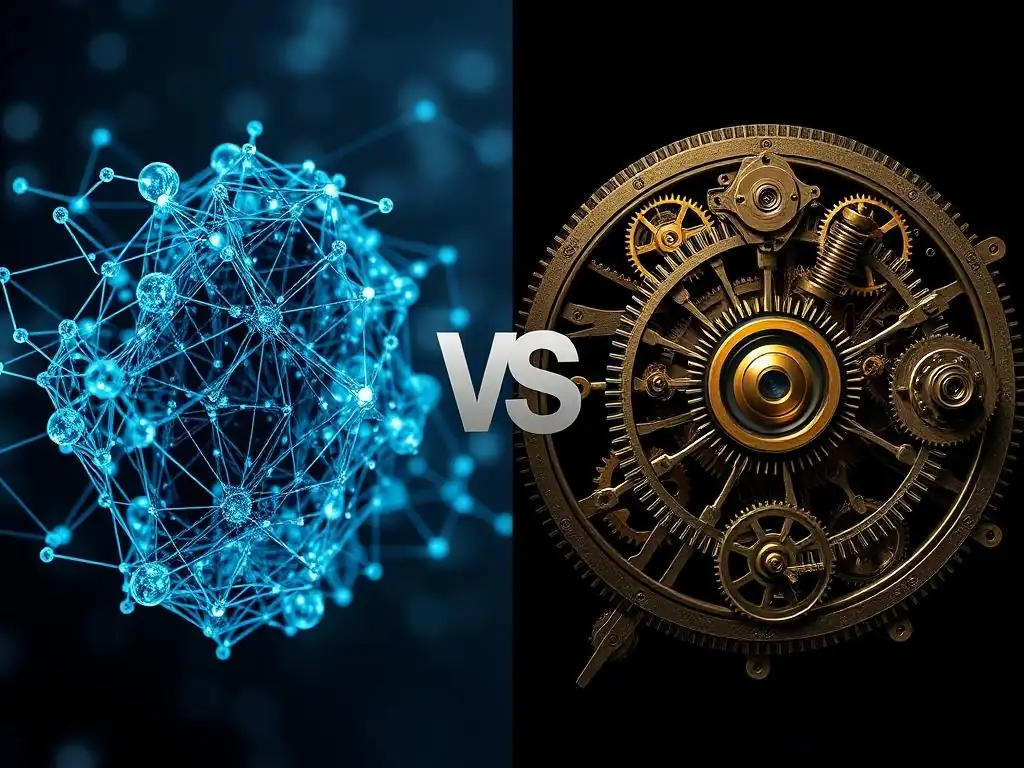
Welcome to Blockchain Trends, your guide to understanding the real impact of blockchain technology. Forget just cryptocurrencies – we're diving deep into DeFi, enterprise solutions, and the future of decentralized systems. Ready to see how blockchain is reshaping industries? Let's start with a fundamental question: How does blockchain vs. traditional systems truly stack up? Explore the side-by-side comparison to unlock the power of this transformative technology and discover where the future lies.
- Blockchain vs. Traditional Systems: A Side-by-Side Comparison
- Key Differences Between Blockchain and Traditional Systems
- Use Cases: Blockchain vs. Traditional Systems in Action
- Advantages and Disadvantages: Blockchain vs. Traditional Systems
- The Future: Hybrid Solutions and the Coexistence of Blockchain and Traditional Systems
-
Frequently Asked Questions
- ### What are the key differences between blockchain and traditional systems?
- ### How does blockchain enhance security compared to traditional databases?
- ### In what specific business applications can blockchain offer advantages over traditional systems?
- ### What are the primary regulatory challenges facing blockchain technology?
- ### What is the long-term vision for blockchain's role in shaping the future of decentralized systems?
- Final Reflection: Embracing the Decentralized Future
- Unlock the Future: Dive Deeper into Blockchain!
Blockchain vs. Traditional Systems: A Side-by-Side Comparison
Introduction: Understanding the Shift from Traditional to Blockchain
The digital age has seen various technological paradigms emerge, each promising to revolutionize how data is managed, transactions are conducted, and trust is established. For decades, centralized systems built upon traditional databases have formed the bedrock of global commerce, finance, and administration. These systems, while robust and widely adopted, inherently rely on intermediaries and centralized control points, leading to potential vulnerabilities and inefficiencies.
The advent of blockchain technology introduced a fundamentally different approach. Born from the principles of distributed ledgers and cryptography, blockchain offers a decentralized framework for recording and verifying transactions. This shift represents a significant departure from the centralized models we've grown accustomed to, presenting a compelling alternative in numerous applications. Understanding the core differences between blockchain vs. traditional systems is crucial for assessing their respective strengths, weaknesses, and potential futures.
Key Differences Between Blockchain and Traditional Systems
Data Management: Decentralization vs. Centralization
Blockchain's Distributed Ledger Technology (DLT)
Blockchain operates on a distributed ledger technology (DLT), where data is not stored in a single location but replicated and synchronized across a network of computers or nodes. In a public blockchain like Bitcoin, thousands of nodes around the world hold identical copies of the ledger. When a new transaction occurs, it is broadcast to the network, validated by multiple nodes based on predefined rules (consensus mechanisms like Proof-of-Work or Proof-of-Stake), and then added as a new block to the chain, which is immutably linked to the previous block.
This decentralized data model eliminates single points of failure. If one node goes offline, the network continues to function seamlessly because the data is replicated across many others. Furthermore, altering past data requires the consensus of the majority of the network's participants, making unauthorized changes extremely difficult and computationally expensive. This inherent structure fundamentally changes the paradigm of data ownership and control compared to traditional systems.
Traditional Systems' Centralized Database Management
Traditional systems primarily rely on centralized databases, typically managed by a single entity or organization. Data is stored on servers controlled by that entity, often utilizing relational database management systems (RDBMS) like Oracle, SQL Server, or MySQL. Access, modification, and control of the data are managed through a central authority, which dictates permissions and oversees database integrity.
While highly efficient for specific tasks and offering granular control, this centralized model presents inherent risks. A single point of failure exists; if the central server is compromised, damaged, or goes offline, the entire system can become unavailable. Security relies heavily on the central entity's infrastructure and protocols. For example, a large bank might manage billions of customer records in a centralized database, requiring significant investment in physical and cybersecurity measures to protect it from external threats or internal misuse.
Security: Immutable Records vs. Vulnerable Systems
Blockchain's Cryptographic Security and Hash Functions
Blockchain's security architecture is built upon sophisticated cryptography, primarily using hash functions and digital signatures. Each block in the chain contains a cryptographic hash of the previous block, creating a secure and tamper-evident link. If any data within a block is altered, its hash changes, which in turn changes the hash of the subsequent block, and so on. This structure makes it immediately apparent if tampering has occurred anywhere along the chain.
Furthermore, transactions are secured using public and private key cryptography. Users sign transactions with their private key, which can be verified by anyone using their public key. This ensures the authenticity and integrity of each transaction recorded on the ledger. The combination of linked hashes and cryptographic signatures makes the historical record on a blockchain practically immutable, providing a high level of security against unauthorized modifications.
Security Risks in Traditional Centralized Systems: SQL Injection, DDoS Attacks
Traditional centralized systems face a wider array of security vulnerabilities stemming from their architecture. Since data is stored in a single location and accessed via defined interfaces (like web applications or APIs), they are susceptible to targeted cyberattacks. Common threats include SQL injection attacks, where malicious code is inserted into database queries to gain unauthorized access or manipulate data.
Distributed Denial of Service (DDoS) attacks can overwhelm central servers or network infrastructure, rendering the system unavailable to legitimate users. Data breaches, often resulting from successful hacking attempts, insider threats, or configuration errors, are a significant risk. For instance, the 2017 Equifax data breach compromised the personal information of approximately 147 million people, highlighting the scale of potential damage in centralized systems. These vulnerabilities underscore the fundamental difference in security postures between blockchain vs. traditional systems.
Transparency and Trust: Blockchain's Verifiable Transactions
The Role of Transparency in Blockchain Networks
Transparency is a core feature of many blockchain networks, particularly public ones. While the identity of participants might be pseudonymous (represented by a public address), the transactions themselves are often publicly visible and verifiable on the distributed ledger. Anyone can inspect the history of transactions, the balances associated with addresses, and the overall state of the network using block explorers.
This inherent transparency fosters trust not in a single authority, but in the network's rules and the collective validation process. Participants can independently verify the integrity of the ledger without needing to trust an intermediary. Even in permissioned or private blockchains, where participation is restricted, the ledger is shared among approved participants, allowing for greater transparency and auditability within that defined group compared to traditional systems where data access is tightly controlled by one entity.
Trust Models in Traditional Systems: Banks, Credit Card Companies
Traditional systems fundamentally rely on a centralized trust model. Users place their trust in intermediaries like banks, credit card companies, governments, or large corporations to manage their data, execute transactions, and maintain security. When you make a payment with a credit card, you trust the credit card company and the bank to process the transaction correctly, securely, and according to regulations.
This trust is based on reputation, legal frameworks, and regulatory oversight. While this model has facilitated global commerce for centuries, it introduces friction and potential points of failure. Disputes or errors require intervention from the central authority. The transparency is often limited; individuals typically only see their own account activity, not the broader network's operations. The difference in trust mechanisms is a defining characteristic when comparing blockchain vs. traditional systems.
Efficiency and Speed: Streamlining Processes with Blockchain
Blockchain's Automation Capabilities and Smart Contracts
Blockchain technology, particularly platforms supporting smart contracts, offers significant potential for process automation and increased efficiency. Smart contracts are self-executing contracts with the terms of the agreement directly written into code. They automatically execute actions (like releasing funds) when predefined conditions are met, without the need for intermediaries.
This automation can streamline complex processes across various industries. In supply chain, a smart contract could automatically release payment to a supplier once a shipment is verified upon arrival. In finance, smart contracts power Decentralized Finance (DeFi) applications, enabling automated lending, borrowing, and trading without traditional banks. This eliminates manual steps, reduces paperwork, minimizes delays, and lowers transaction costs compared to many traditional systems that rely on manual verification and processing.
Bottlenecks and Inefficiencies in Traditional Processes
Traditional systems often suffer from bottlenecks and inefficiencies due to their reliance on multiple intermediaries, manual processes, and siloed databases. Cross-border payments, for example, typically involve multiple banks and clearinghouses, leading to transaction times that can range from hours to several days and incurring significant fees (often 1-5% or more).
Supply chain visibility can be poor, with data fragmented across different companies' systems, leading to delays in tracking goods, identifying issues, and resolving disputes. Legal contracts require manual drafting, negotiation, and execution, often involving lawyers and significant time. These examples illustrate areas where the linear, often paper-based or manually-managed workflows of traditional systems can be significantly less efficient and slower than potential blockchain-based alternatives.
Scalability: Addressing the Challenges of Blockchain Scalability
Scalability Limitations in Early Blockchain Implementations
Early blockchain implementations, such as Bitcoin and Ethereum (before its transition to Proof-of-Stake), faced significant scalability challenges. Bitcoin's design limits its transaction processing capacity to roughly 7 transactions per second globally. Ethereum's initial limit was around 15-30 transactions per second. While sufficient for their early use cases, these throughput rates are vastly lower than traditional payment processors like Visa, which can handle tens of thousands of transactions per second.
This limitation led to network congestion, higher transaction fees (especially during peak demand), and slower confirmation times, hindering widespread adoption for high-volume applications. The decentralized nature and the requirement for consensus among numerous nodes added overhead that impacted speed and capacity, posing a significant challenge for blockchain vs. traditional systems in terms of raw transaction volume.
Scalability Solutions for Blockchain: Layer-2 Solutions, Sharding
Significant research and development have focused on overcoming blockchain's scalability limitations. Layer-2 solutions, such as Lightning Network for Bitcoin or Optimistic Rollups and ZK-Rollups for Ethereum, process transactions off the main chain and periodically settle them on the base layer, drastically increasing throughput (potentially thousands or even tens of thousands of transactions per second) and reducing costs.
Sharding, implemented or planned for various blockchains (like Ethereum 2.0), involves splitting the network into smaller, interconnected segments (shards), allowing parallel processing of transactions. Other approaches include using different consensus mechanisms (like Proof-of-Stake or delegated Proof-of-Stake) and developing entirely new blockchain architectures designed for higher throughput. These innovations aim to make blockchain technology viable for high-volume, real-world applications, closing the gap in scalability when comparing blockchain vs. traditional systems.
Scalability of Traditional Systems: Vertical Scaling, Horizontal Scaling
Traditional centralized systems generally have well-established methods for scaling. Vertical scaling involves increasing the resources (CPU, RAM, storage) of a single server or database instance. This is often simpler but has practical limits on how powerful a single machine can be.
Horizontal scaling, more common for large-scale applications, involves adding more servers or database instances and distributing the load across them. Techniques like load balancing and database clustering allow traditional systems to handle massive volumes of transactions and data. Large enterprises and cloud providers routinely scale traditional databases and applications to support millions of users and billions of transactions daily, often achieving very high throughput rates through extensive infrastructure investment.
Use Cases: Blockchain vs. Traditional Systems in Action

Finance: Revolutionizing Banking and Payments
Blockchain in Finance: Decentralized Finance (DeFi), Cross-Border Payments
Blockchain technology is profoundly impacting the finance sector, giving rise to Decentralized Finance (DeFi). DeFi platforms built on blockchains like Ethereum enable users to lend, borrow, trade assets, and earn interest without relying on traditional banks or brokers. For example, platforms like Aave and Compound hold billions of dollars in crypto assets, facilitating peer-to-peer lending through smart contracts.
Cross-border payments are another area seeing significant blockchain adoption. Companies like Ripple have developed payment networks utilizing blockchain or DLT to facilitate faster and cheaper international money transfers compared to traditional correspondent banking networks. While facing regulatory scrutiny, these systems aim to reduce transaction times from days to minutes or seconds and lower fees, demonstrating a clear advantage of blockchain vs. traditional systems in this specific financial application.
Traditional Financial Systems: High Fees, Slow Transaction Times
Traditional financial systems, while robust and regulated, are often characterized by high fees and slow processing times, particularly for international transactions. The correspondent banking system, which underpins global transfers, involves a chain of intermediary banks, each potentially adding fees and delays. A typical international wire transfer can cost anywhere from $25 to $50+ and take 1-5 business days to complete.
Lending, borrowing, and trading in traditional finance involve numerous intermediaries, extensive paperwork, and operational overhead, contributing to costs and inefficiencies. While domestic payments via systems like ACH or credit card networks are often faster, they still involve central clearinghouses and transaction fees (e.g., merchant processing fees often range from 1.5% to 3.5% + a fixed fee). These established costs and speeds highlight the areas where blockchain offers a competitive alternative.
Supply Chain Management: Enhancing Traceability and Transparency
Blockchain's Application in Supply Chain Tracking
Blockchain is proving highly effective in improving supply chain transparency and traceability. By recording each step of a product's journey – from raw materials to manufacturing, shipping, and delivery – on an immutable distributed ledger, companies can create a verifiable history. This allows all authorized participants in the supply chain (suppliers, manufacturers, distributors, retailers, and even consumers) to access the same, accurate information.
IBM Food Trust, for instance, uses blockchain to track food items. Walmart has piloted this system to trace mangoes and other produce, reducing the time it takes to trace a product from a store back to its farm from days or weeks to just seconds. This enhanced visibility helps in quickly identifying sources of contamination during recalls, reducing waste, verifying authenticity, and combating counterfeiting, providing a significant upgrade over traditional siloed systems.
Traditional Supply Chain Challenges: Counterfeiting, Lack of Transparency
Traditional supply chain management often suffers from a lack of end-to-end transparency. Data is typically stored in disparate systems belonging to different companies along the chain, making it difficult to share information seamlessly and verify product origins or authenticity. This opacity contributes to significant problems like counterfeiting, estimated to cost the global economy hundreds of billions of dollars annually across various industries (luxury goods, pharmaceuticals, electronics).
Tracing products back to their source in traditional systems can be a time-consuming and manual process, relying on paper records or incompatible databases. This makes it challenging to respond quickly to issues like product recalls or quality control problems. The inherent fragmentation and lack of a shared, trusted record are major drawbacks of traditional supply chain systems when compared to the potential offered by blockchain vs. traditional systems.
Healthcare: Securing Patient Data and Improving Interoperability
Blockchain for Secure Healthcare Data Management
Blockchain holds promise for addressing critical challenges in healthcare data management, particularly regarding security and patient privacy. Patient health records (PHR) are highly sensitive and fragmented across different providers (hospitals, clinics, labs), often stored in incompatible electronic health record (EHR) systems. Blockchain can provide a secure, immutable layer for storing pointers or hashes of patient data, along with a transparent log of who has accessed it.
This approach can enhance data security by reducing the risk of single points of failure inherent in traditional, centralized health databases, which are frequent targets of cyberattacks. Major healthcare data breaches have exposed millions of patient records in recent years. Blockchain could allow patients to control access to their own data via private keys, granting permission to healthcare providers as needed, thereby improving privacy and security compared to traditional systems.
Challenges in Traditional Healthcare Data Systems: Data Breaches, Interoperability Issues
Traditional healthcare data systems face persistent challenges. Data breaches in the healthcare sector are common and costly, often resulting from sophisticated cyberattacks or insider threats targeting large, centralized databases. The average cost of a healthcare data breach is significantly higher than in other industries, estimated at over $10 million per incident globally in 2023, according to some reports.
Interoperability is another major hurdle. Different hospitals and clinics often use different EHR systems that cannot easily share information, leading to fragmented patient histories, redundant tests, and potential errors in care. While efforts like health information exchanges (HIEs) exist, creating a seamless, secure, and universally accessible system for patient data remains a significant challenge for traditional healthcare IT infrastructure.
Voting Systems: Increasing Security and Transparency in Elections
Blockchain's Potential to Secure and Verify Votes
Blockchain technology offers a compelling framework for potentially enhancing the security and transparency of voting systems. By recording each vote as a transaction on an immutable, transparent ledger, blockchain could provide a verifiable audit trail that is resistant to tampering. Each vote, once cast and recorded, could theoretically be confirmed by the voter and verified by any authorized party on the network.
This system could reduce concerns about voter fraud, ballot tampering, or errors in counting. Pilot projects exploring blockchain for voting have been conducted in various places, including some municipal elections. The goal is to leverage the distributed nature and cryptographic security of blockchain vs. traditional systems to build a more robust and trustworthy electoral process, although significant technical and societal hurdles remain.
Vulnerabilities of Traditional Voting Systems: Voter Fraud, Tampering
Traditional voting systems, whether paper-based, mechanical, or electronic, face various vulnerabilities. Paper ballots can be lost, damaged, or miscounted. Mechanical and older electronic voting machines can be susceptible to malfunction or tampering, and auditing their results can be challenging. Centralized electronic voting systems can be targets for hacking attempts, potentially altering vote counts without detection.
Concerns about voter fraud (e.g., double voting) and the security of ballot transportation and counting processes are persistent issues in many regions. While traditional systems have established procedures and safeguards, the lack of a fully transparent, end-to-end verifiable process accessible to the public can sometimes lead to doubts about the integrity of election results.
Advantages and Disadvantages: Blockchain vs. Traditional Systems
Blockchain Advantages: Enhanced Security, Transparency, and Efficiency
Reduced Costs and Increased Automation with Blockchain
One significant advantage of blockchain is the potential for reduced costs and increased automation. By eliminating intermediaries in transactions (like banks or brokers) and automating processes through smart contracts, operational overhead and associated fees can be substantially lowered. For example, a traditional international remittance might cost 5% or more, while a blockchain-based transfer could cost a fraction of a percent.
Automation via smart contracts minimizes manual intervention, reducing the risk of human error and speeding up execution. This is particularly beneficial in complex multi-party transactions or supply chain logistics, where automated triggers based on verified data inputs can streamline operations and cut costs associated with manual verification and processing.
Improved Data Integrity and Auditability
Blockchain's immutable and transparent nature significantly improves data integrity and auditability. Once data is recorded on the blockchain and validated through consensus, it is extremely difficult to alter. This creates a reliable and tamper-evident record of all transactions and activities.
For industries requiring rigorous auditing and compliance, such as finance or healthcare, blockchain offers a built-in audit trail. Regulators and auditors can access the shared ledger (especially in permissioned networks) to verify transactions and ensure compliance with regulations more efficiently than sifting through disparate databases and paper records in traditional systems.
Blockchain Disadvantages: Scalability, Regulation, and Complexity
Regulatory Uncertainty Surrounding Blockchain Technology
A major challenge for wider blockchain adoption is the evolving and often uncertain regulatory landscape. Governments and regulatory bodies worldwide are still grappling with how to classify and oversee blockchain applications, cryptocurrencies, and smart contracts. This lack of clear, consistent regulation creates legal and operational uncertainty for businesses looking to implement blockchain solutions.
Different jurisdictions have vastly different approaches, ranging from outright bans to supportive frameworks. This fragmentation makes it difficult for global enterprises to deploy blockchain solutions consistently. The decentralized nature of many blockchain networks also poses challenges for traditional regulatory models designed for centralized entities.
Technical Challenges and Implementation Costs
Despite advancements, blockchain technology can still present technical challenges and significant implementation costs. Developing and deploying blockchain solutions requires specialized expertise, which can be scarce and expensive. Integrating blockchain with existing legacy systems in large organizations can be complex and require substantial investment.
While public blockchains like Bitcoin and Ethereum have high transaction fees and slower speeds during peak times, building and maintaining private or consortium blockchains also incurs infrastructure costs and requires ongoing technical management. The complexity of understanding and managing cryptographic keys and decentralized identities can also be a barrier for users and organizations alike.
Traditional Systems Advantages: Established Infrastructure, Familiarity
Widespread Adoption and Existing Infrastructure
One of the most significant advantages of traditional systems is their pervasive adoption and the existence of established global infrastructure. Decades of development have resulted in highly refined, widely understood, and globally connected networks and systems for everything from banking and payments to communication and logistics.
Businesses and individuals are intimately familiar with how traditional systems work, and the necessary hardware, software, and expertise are readily available. Integrating with existing traditional systems is often simpler than implementing entirely new blockchain-based solutions, leveraging established protocols and APIs. This familiarity and existing network effect provide a considerable advantage in terms of immediate usability and accessibility.
Easier Implementation and Maintenance (in some cases)
For many standard business processes, implementing and maintaining traditional centralized systems can be simpler and more cost-effective, especially for small to medium-sized enterprises. Off-the-shelf software solutions for accounting, customer relationship management (CRM), or enterprise resource planning (ERP) are widely available, relatively easy to deploy, and come with established support structures.
Managing a centralized database and server infrastructure, while requiring expertise, is a well-understood discipline with a large pool of IT professionals. Updates, backups, and security patches follow standard procedures. Compared to the nascent and rapidly evolving field of blockchain development and decentralized system management, traditional systems often offer a more straightforward path for typical business needs.
Traditional Systems Disadvantages: Centralization, Security Risks, Lack of Transparency
Vulnerability to Single Points of Failure
The fundamental disadvantage of traditional centralized systems is their vulnerability to single points of failure. If the central server, database, or controlling entity is compromised or fails, the entire system can be disrupted. This makes them attractive targets for cyberattacks (like hacking or ransomware) and susceptible to internal issues or natural disasters impacting the central infrastructure.
Unlike a distributed blockchain network where data is replicated across many nodes, the failure of one critical component in a traditional system can lead to significant downtime, data loss, or complete system collapse, impacting millions of users or critical operations.
Limited Transparency and Auditability
Traditional systems often lack the inherent transparency found in many blockchain networks. Data access is typically restricted to authorized personnel within the controlling organization. While internal audits are standard, external verification of transactions or data integrity by participants or the public is usually not possible.
This limited transparency can create information asymmetry and makes it harder for external parties to independently verify the accuracy or fairness of operations. Auditing processes can be complex, requiring access to disparate internal databases and relying on the integrity of the central authority's record-keeping. This contrasts sharply with the public auditability offered by transparent blockchains.
The Future: Hybrid Solutions and the Coexistence of Blockchain and Traditional Systems
Integrating Blockchain into Existing Infrastructure: Private Blockchains, Consortium Blockchains
The future likely involves a blend of blockchain vs. traditional systems, rather than a complete replacement of one by the other. Hybrid solutions, where blockchain layers are integrated into existing traditional infrastructure, are gaining traction. Private blockchains, controlled by a single entity, and consortium blockchains, managed by a group of organizations, offer the benefits of blockchain (immutability, transparency among participants) while allowing for more control and often higher transaction speeds than public blockchains.
These permissioned ledgers can be used within enterprises or across supply chains to improve specific processes like data sharing, asset tracking, or inter-company reconciliation, while still interfacing with traditional databases and applications for other functions. This approach allows organizations to leverage the specific advantages of blockchain without overhauling their entire IT landscape.
The Role of Regulation in Shaping the Future of Blockchain
Regulation will play a crucial role in determining the extent and nature of blockchain adoption. Clear and thoughtful regulatory frameworks can provide the necessary legal certainty for businesses and investors to engage with blockchain technology confidently. Regulations around digital assets, smart contracts, data privacy (like GDPR, which has implications for immutable data on public blockchains), and anti-money laundering (AML) are evolving rapidly.
As regulators gain a better understanding of blockchain's capabilities and risks, they can develop frameworks that protect consumers and maintain financial stability without stifling innovation. The interaction between regulatory developments and technological advancements will significantly shape how blockchain integrates with, or diverges from, traditional systems in the coming years.
Conclusion: Choosing the Right System for Your Needs
Evaluating Your Specific Requirements and Constraints
Deciding between blockchain vs. traditional systems, or opting for a hybrid approach, depends heavily on the specific requirements and constraints of the problem you are trying to solve. For applications requiring high transaction throughput, low latency, and where a central authority is trusted and efficient, traditional systems often remain the optimal choice.
However, for use cases demanding high levels of transparency, immutability, security against single points of failure, disintermediation, or automated trust through smart contracts, blockchain technology offers compelling advantages. Factors to consider include the need for decentralization, the importance of data integrity, regulatory considerations, technical expertise available, and the costs associated with implementation and maintenance for both types of systems.
Blockchain Trends and the Evolution of Decentralized Systems
The landscape of blockchain vs. traditional systems is continuously evolving. Blockchain technology is maturing, with ongoing developments in scalability solutions, interoperability between different networks, and increased regulatory clarity in some regions. We are seeing a trend towards more specialized blockchains designed for specific industries or use cases, as well as increased exploration of how blockchain can complement, rather than just compete with, traditional infrastructure. The future will likely feature a complex ecosystem where decentralized and centralized technologies coexist and potentially interoperate, leveraging the strengths of each to build more efficient, secure, and transparent systems.
Frequently Asked Questions
### What are the key differences between blockchain and traditional systems?
Blockchain systems are decentralized, transparent, and immutable, while traditional systems are typically centralized, opaque, and mutable. This fundamental difference impacts security, trust, and control.
### How does blockchain enhance security compared to traditional databases?
Blockchain employs cryptographic hashing and distributed consensus mechanisms to ensure data integrity and prevent unauthorized alterations. Traditional databases are more vulnerable to single points of failure and internal manipulation.
### In what specific business applications can blockchain offer advantages over traditional systems?
Blockchain excels in areas requiring supply chain transparency, secure identity management, and efficient cross-border payments. Traditional systems often struggle with these use cases due to siloed data and lack of interoperability.
### What are the primary regulatory challenges facing blockchain technology?
Regulatory uncertainty surrounding smart contracts, digital assets, and data privacy poses significant hurdles. Regulators are grappling with how to apply existing laws to this new technology paradigm.
### What is the long-term vision for blockchain's role in shaping the future of decentralized systems?
The vision includes a future where blockchain empowers greater user control over data, fosters trustless transactions, and enables novel business models that are not possible with traditional systems.
Okay, here's a final reflection you can use for your "Blockchain vs. Traditional Systems: A Side-by-Side Comparison" article, optimized for the keyword "Blockchain vs. traditional systems" and following the requested structure:
Final Reflection: Embracing the Decentralized Future
The exploration of Blockchain vs. traditional systems reveals more than just a technological comparison; it highlights a fundamental shift in how we perceive trust, transparency, and control in the digital age. The stark contrasts we've examined underscore the potential for blockchain to revolutionize industries, offering enhanced security and efficiency that traditional systems often struggle to provide. This isn't merely about replacing old with new, but about strategically integrating blockchain where it can truly make a difference.
The ongoing debate surrounding blockchain's adoption has profoundly influenced the cultural and social landscape, forcing us to re-evaluate our reliance on centralized authorities and consider the benefits of decentralized networks. This shift towards decentralization resonates deeply with a growing desire for greater autonomy and control over our data and interactions. The blockchain is not only a disruptive technology, but a disruptive idea.
This quote encapsulates the transformative power of blockchain, suggesting a future where trust is built on cryptographic proof rather than institutional authority.
As we stand at the cusp of this technological evolution, let us not simply observe, but actively engage in shaping the future. Consider how the principles of decentralization, transparency, and security, inherent in blockchain technology, can be applied to your own life and work. Embrace the opportunity to learn, experiment, and contribute to a world where trust is verifiable, and power is distributed. The future is decentralized, and it's up to us to build it.
Unlock the Future: Dive Deeper into Blockchain!
Thanks for exploring the world of blockchain with us! We hope this comparison has illuminated the exciting possibilities this technology offers. Now, let's put that knowledge into action and shape the future.
Here's how you can get involved:
- Take the plunge and explore a decentralized application (dApp) today! Experiment with the future of finance, social media, or gaming.
- Share this article with your network to spark conversations and educate others about the power of blockchain.
- Participate in our upcoming webinar where we'll be discussing the real-world impact of blockchain on global supply chains.
What's the first dApp you're excited to try and why? Share your thoughts in the comments below!
Leave a Reply