
Synergies Between DeFi and Asset Tokenization: A Powerful Combination for Growth


Welcome to Blockchain Trends, your compass in the rapidly evolving world of decentralized technologies. Are you ready to unlock the true potential of blockchain beyond the hype? This week, we delve deep into the synergies between DeFi and asset tokenization, exploring how this powerful combination is reshaping finance. Discover the groundbreaking DeFi asset tokenization benefits that are poised to revolutionize investment and liquidity. Intrigued? Let's explore the future, one block at a time.
Synergies Between DeFi and Asset Tokenization: A Powerful Combination for Growth
- Introduction: Unlocking Growth with DeFi and Asset Tokenization
- DeFi Asset Tokenization Benefits: A Deep Dive
- Exploring the Synergies: Use Cases and Examples
- Addressing the Challenges and Risks
- The Future of DeFi and Asset Tokenization: A Vision for Growth
- Conclusion: Harnessing the Power of Synergy for a Decentralized Future
-
Frequently Asked Questions
- What are the main benefits of DeFi asset tokenization, as discussed in the article?
- How does asset tokenization contribute to the growth of the DeFi sector?
- Beyond cryptocurrencies, what are some examples of assets that can be tokenized and integrated into DeFi?
- What are the key regulatory challenges associated with the intersection of DeFi and asset tokenization?
- What is the future outlook for the combination of DeFi and asset tokenization, according to Blockchain Trends?
- Final Reflection: Unlocking the Future of Finance
- Unleash the Power of Tokenization!
Introduction: Unlocking Growth with DeFi and Asset Tokenization
The Rise of Decentralized Finance (DeFi) and its Core Principles
Decentralized Finance, or DeFi, represents a paradigm shift in financial services, moving away from traditional intermediaries like banks and brokerages towards peer-to-peer interactions facilitated by blockchain technology. At its core, DeFi relies on programmable smart contracts deployed on public blockchains, primarily Ethereum, to automate financial operations such as lending, borrowing, trading, and asset management.
Key principles driving DeFi include transparency, accessibility, and censorship resistance, allowing anyone with an internet connection to participate without requiring permission or passing through gatekeepers. The rapid growth of DeFi is evident in its Total Value Locked (TVL), which has surged from under $1 billion in early 2020 to figures often exceeding $50 billion or even $100 billion during peak market conditions, demonstrating significant user adoption and capital inflow.
This burgeoning ecosystem comprises various protocols and applications, including decentralized exchanges (DEXs) like Uniswap, lending platforms such as Aave and Compound, stablecoins like USDC and DAI, and yield farming protocols. These components interoperate seamlessly, creating complex financial products and strategies previously only accessible through traditional financial institutions.
The open-source nature of DeFi protocols fosters innovation, allowing developers worldwide to build upon existing frameworks and create novel financial instruments. This interconnectedness and composability, often referred to as "money legos," are fundamental to the power and potential of the DeFi space, setting the stage for profound synergies when combined with other blockchain innovations like asset tokenization.
Understanding Asset Tokenization: Bridging the Gap Between Real-World Assets and Blockchain
Asset tokenization is the process of issuing a digital token on a blockchain that represents ownership or rights to an underlying asset. This asset can be tangible, such as real estate, fine art, or commodities, or intangible, like company shares, intellectual property, or investment fund units.
By creating a digital representation, tokenization transforms illiquid or indivisible assets into programmable, transferable digital units, opening up new possibilities for management, trading, and investment. Standardized token protocols, such as ERC-20 for fungible tokens or ERC-721 and ERC-1155 for non-fungible tokens (NFTs) on Ethereum, provide the technical framework for creating and managing these digital assets on a blockchain.
The primary goal of asset tokenization is to enhance liquidity, improve transparency, and reduce the costs and inefficiencies associated with traditional asset transfers and management. For instance, transferring ownership of a piece of real estate or private company shares typically involves lengthy legal processes, paperwork, and multiple intermediaries, incurring significant costs and delays. Tokenization digitizes this process, allowing ownership transfers to occur on a blockchain ledger, potentially settling in minutes or hours rather than days or weeks.
While the legal frameworks for ownership transfer still need to interface with the blockchain layer, the digital representation significantly streamlines the process and creates a single, immutable source of truth for ownership records. Estimates suggest the tokenization market for real-world assets could reach trillions of dollars in the coming years, highlighting the immense potential of bridging traditional finance with blockchain technology.
Why the Combination of DeFi and Asset Tokenization is a Game Changer
The confluence of Decentralized Finance and asset tokenization creates a powerful synergy that unlocks unprecedented opportunities for growth and innovation in the financial landscape. While tokenization provides the digital representation of assets on the blockchain, DeFi provides the decentralized financial infrastructure – the markets, lending protocols, and financial services – necessary to make these tokenized assets liquid and useful within a digital ecosystem. Without DeFi, tokenized assets would largely sit idly on a blockchain, perhaps offering fractional ownership but lacking robust avenues for trading, borrowing against, or utilizing in complex financial strategies.
Conversely, DeFi protocols, while powerful, have largely operated within the realm of native digital assets (like cryptocurrencies and stablecoins). Integrating real-world tokenized assets expands the potential Total Value Locked and the range of financial activities possible within DeFi, connecting the vast value held in traditional assets to the dynamic and efficient decentralized ecosystem.
This combination promises to democratize access to investment opportunities, enhance market efficiency, and create entirely new business models centered around digitally represented assets and decentralized financial services. The potential DeFi asset tokenization benefits are transformative, promising to reshape how we own, manage, and transact with a wide array of assets.
DeFi Asset Tokenization Benefits: A Deep Dive
Enhanced Liquidity for Tokenized Assets Through DeFi Integration
One of the most significant DeFi asset tokenization benefits is the dramatic increase in liquidity for otherwise illiquid assets. Traditionally, selling a fraction of a commercial property or finding a buyer for private company stock is a complex, time-consuming, and often costly process. Tokenization breaks these assets into smaller, more manageable digital units, but it is the integration with DeFi protocols that truly unlocks their potential liquidity by providing accessible marketplaces and financial services.
How DeFi Protocols Facilitate Trading and Lending of Tokenized Assets
DeFi protocols, particularly decentralized exchanges (DEXs) and lending platforms, provide the infrastructure for tokenized assets to be actively traded and utilized. DEXs, such as Uniswap or Balancer, allow for the creation of liquidity pools where tokenized assets can be traded permissionlessly against other cryptocurrencies or stablecoins. Liquidity providers earn fees for facilitating these trades.
Lending protocols like Aave and Compound enable holders of tokenized assets to use them as collateral to borrow other digital assets, such as stablecoins, without needing to sell their underlying position. For example, a token representing a share in a real estate property could be deposited into a lending pool to instantly access capital, a process far faster and simpler than securing a traditional loan against physical property.
The ability to trade tokenized assets 24/7 on global decentralized markets significantly reduces the friction and time required for transactions. Unlike traditional markets with fixed hours and geographical limitations, DeFi markets operate continuously. Furthermore, the transparency of blockchain transactions allows participants to verify trading volumes and prices more easily. This increased trading activity and the availability of lending options mean that investors in tokenized assets have more avenues to enter or exit positions or leverage their holdings, fundamentally improving the liquidity profile compared to their non-tokenized counterparts.
Reducing Illiquidity Premiums with DeFi Marketplaces
Illiquid assets typically trade at a discount compared to similar liquid assets – this discount is known as an illiquidity premium. This premium compensates investors for the difficulty and uncertainty involved in selling the asset quickly and at a fair price. By enhancing the liquidity of tokenized assets, DeFi integration helps to reduce or potentially eliminate this illiquidity premium. When an asset token can be easily traded on a DEX or used as collateral on a lending platform, its holder is no longer subject to the same level of "lock-up" risk as with a traditional, illiquid holding.
Consider a tokenized share of a fine art piece versus a fractional ownership stake documented only via traditional legal agreements. The tokenized asset, tradable on a DeFi platform, offers a clear exit strategy and the potential for price discovery based on continuous market activity.
This inherent tradability reduces the risk associated with holding the asset, thus decreasing the need for a significant illiquidity discount. While the market for tokenized real-world assets is still developing, the infrastructure provided by DeFi is laying the groundwork for these assets to trade closer to their intrinsic value, unlocking significant value for asset owners and creating more attractive investment opportunities for potential buyers.
Increased Accessibility and Democratization of Investment Opportunities
Another major benefit among the DeFi asset tokenization benefits is the democratization of access to investment opportunities that were previously limited to accredited investors, large institutions, or geographically specific individuals. Tokenization lowers the barrier to entry by allowing assets to be fractionalized, while DeFi provides the accessible platforms for participation.
Tokenization Enables Fractional Ownership of High-Value Assets
Many valuable assets, such as commercial real estate, private equity funds, rare collectibles, or even expensive machinery, are prohibitively expensive for individual investors to purchase outright. Tokenization solves this by dividing the ownership rights into numerous digital tokens. For example, a $10 million property could be represented by 10 million tokens, each priced at $1. This fractional ownership allows investors to buy into a portion of the asset with a much smaller capital outlay, perhaps as little as the cost of a few tokens.
This capability opens up investments in potentially lucrative asset classes to a much broader audience. An individual investor might not be able to afford a full apartment building, but they could potentially acquire tokens representing a small percentage of multiple properties across different locations, diversifying their portfolio in a way that was previously impossible. This fractionalization is a key enabler of increased accessibility, breaking down the large minimum investment requirements that characterize many traditional asset markets.
DeFi Platforms Provide Access to a Wider Range of Investors
While tokenization creates the fractional units, DeFi platforms provide the global, permissionless marketplaces where these tokens can be bought and sold. Unlike traditional securities markets that require brokerage accounts, identity verification processes (KYC/AML), and are often restricted by geography or investor accreditation status, many DeFi platforms are designed to be accessible to anyone with a blockchain wallet. This dramatically expands the pool of potential investors for tokenized assets.
An investor in Southeast Asia could potentially purchase tokens representing a fraction of a property in Europe or a stake in a startup based in the Americas, provided the legal wrappers and token standards are met. This global reach and reduced reliance on intermediaries lower transaction costs and remove geographical barriers. The combination of fractionalization through tokenization and global accessibility through DeFi platforms fundamentally democratizes investment, allowing individuals to participate in markets previously exclusive to a select few, fostering greater financial inclusion.
Improved Transparency and Efficiency in Asset Management
The inherent properties of blockchain technology, leveraged by both tokenization and DeFi, bring significant improvements in transparency and efficiency compared to traditional asset management processes.
Blockchain-Based Tracking and Auditing of Tokenized Assets
When an asset is tokenized and its ownership is recorded on a public blockchain, the history of transactions – including issuance, transfers, and potentially any distributions or dividends – is immutably recorded and publicly verifiable (while still respecting privacy where necessary, e.g., through zero-knowledge proofs or permissioned layers for sensitive data). This provides an unprecedented level of transparency in tracking ownership and the movement of the asset's representation.
Auditing asset ownership and transaction history becomes significantly simpler and less prone to errors or manipulation. Instead of sifting through potentially disparate databases, paper trails, and legal documents, auditors can query the blockchain ledger to verify who owns which tokens and when transfers occurred. This inherent auditability reduces the potential for fraud and increases trust among participants. For regulated assets, this on-chain record can significantly streamline compliance reporting and oversight processes for both issuers and regulators.
Smart Contracts Automate Processes and Reduce Intermediaries
Smart contracts are self-executing contracts with the terms of the agreement directly written into code on the blockchain. In the context of DeFi and asset tokenization, smart contracts can automate various aspects of asset management that traditionally require manual processes and intermediaries. For example, dividend or rental income distribution for a tokenized asset can be programmed into a smart contract to automatically disburse funds to token holders' wallets based on their token balance at a specific time.
Similarly, smart contracts can automate voting rights for tokenized shares, manage escrow for transactions, or enforce conditions for transferring restricted tokens. This automation reduces the need for financial administrators, legal clerks, and other intermediaries, thereby lowering operational costs and minimizing the potential for human error. By replacing manual, trust-based processes with transparent, automated code, the combination of DeFi and tokenization creates a more efficient and cost-effective ecosystem for managing and interacting with a wide range of assets.
Exploring the Synergies: Use Cases and Examples
Real Estate Tokenization and DeFi Lending Protocols
Real estate is a prime candidate for tokenization due to its high value, illiquidity, and the complexities of traditional transactions. Tokenizing real estate involves representing ownership or equity in properties as digital tokens on a blockchain. Once tokenized, these assets can then be leveraged within the DeFi ecosystem.
Using RealT Tokens as Collateral on Aave for Stablecoin Loans
A concrete example of DeFi asset tokenization benefits in action is the integration of tokenized real estate with DeFi lending platforms. RealT, a platform that tokenizes U.S. real estate properties, issues ERC-20 tokens representing fractional ownership of specific rental properties. Each token provides the holder with a share of the rental income and potential appreciation. These tokens are typically issued on the Gnosis Chain (formerly xDai) for lower transaction costs but can be bridged to Ethereum.
Holders of certain RealT tokens have been able to deposit them as collateral into specific pools on DeFi lending protocols like Aave. This allows RealT token holders to borrow stablecoins (like DAI or USDC) against the value of their real estate tokens without having to sell their fractional property ownership.
This provides immediate liquidity to the asset holder, enabling them to access capital for other investments or expenses while still retaining ownership of the underlying real estate and continuing to receive rental income distributions. This use case perfectly illustrates how tokenization provides the digital asset and DeFi provides the financial utility (lending/borrowing) for that asset.
Tokenized Commodities and Decentralized Derivatives
Commodities like gold, silver, or oil can also be tokenized, with each token representing a specific quantity of the underlying commodity, often backed by physical reserves held in secure vaults. These tokenized commodities bring the benefits of blockchain to commodity trading and ownership.
Tokenizing Gold and Creating Synthetic Assets on Synthetix
Platforms exist that issue tokens backed by physical gold, such as PAX Gold ( PAXG), where each token represents one fine troy ounce of London Good Delivery gold stored in secure vaults. Holders of PAXG technically own the underlying physical gold and can redeem their tokens for physical gold under certain conditions. This tokenization makes gold ownership more accessible, divisible, and transferable than owning physical bars.
These tokenized commodities can then be used within DeFi protocols. On platforms like Synthetix, a decentralized synthetic asset protocol, users can stake collateral (often the protocol's native token SNX) to mint "synths" – tokens that track the price of various assets, including commodities like gold ( sXAU). While sXAU on Synthetix is a synthetic asset derived from price feeds rather than directly backed by tokenized physical gold like PAXG, the broader concept involves using tokenized commodities or their price feeds within DeFi to create derivatives markets. This allows traders to gain exposure to commodity price movements in a decentralized manner, facilitating activities like hedging or speculation without needing to directly hold or trade the physical or tokenized commodity itself, showcasing how DeFi can build complex financial layers on top of tokenized real-world values.
Private Equity Tokenization and DeFi Investment Platforms
Investing in private equity has historically been restricted to large institutional investors and the ultra-wealthy due to high minimum investment thresholds, illiquidity, and complex legal structures. Tokenization offers a path to democratize access to this asset class.
Securitize Enabling Access to Private Equity Through Tokenized Funds on DeFi Platforms
Companies like Securitize specialize in tokenizing private securities, including equity in private companies, venture capital funds, and private equity funds. They create digital tokens that represent shares or limited partnership interests, managing the complex compliance requirements associated with securities law. These tokenized private equity interests can represent ownership in a fund that invests in multiple private companies or direct equity in a single private company.
While liquidity for private equity tokens is still nascent compared to public markets, the vision is for these tokens to eventually trade on regulated digital asset marketplaces or potentially be integrated into specific, compliant DeFi-like platforms. The synergy lies in using decentralized or semi-decentralized platforms to manage the cap table, facilitate compliant transfers, and potentially enable peer-to-peer trading or access to investment pools that aggregate capital from smaller investors.
Although full integration into permissionless DeFi lending/borrowing protocols is challenging due to regulatory restrictions on securities, the core DeFi principles of disintermediation and programmable finance can be applied within compliant frameworks to make private equity more accessible and manageable for a wider range of investors. For example, a tokenized private fund might use smart contracts to automate capital calls or distributions among token holders, increasing efficiency.
Addressing the Challenges and Risks
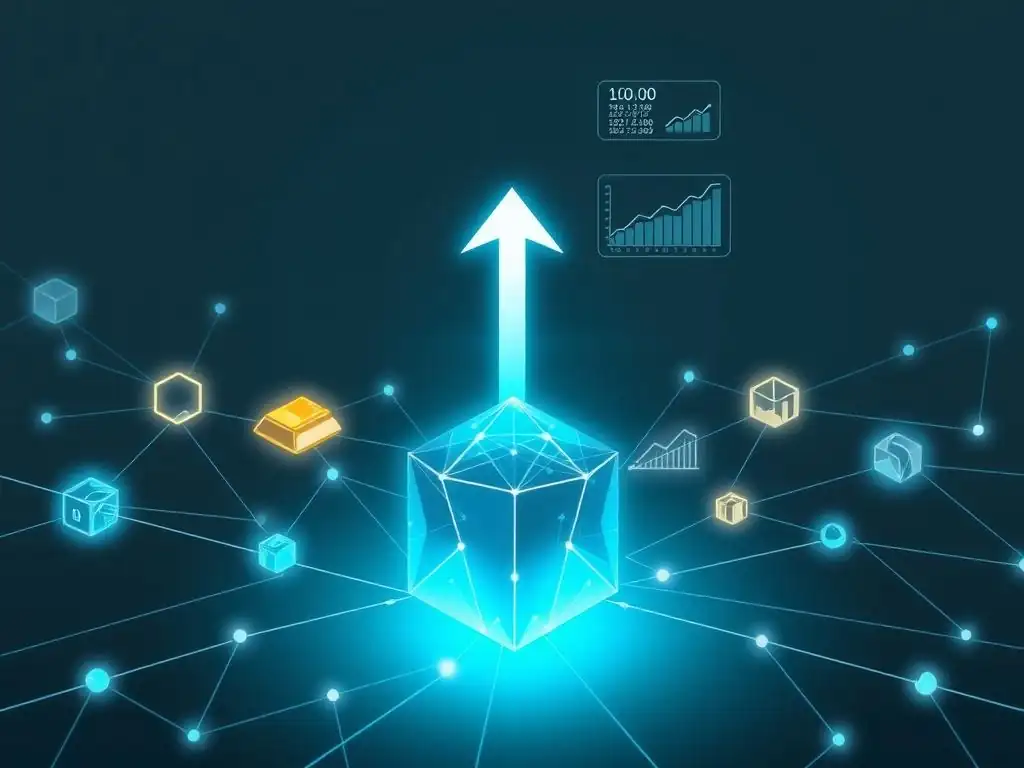
Regulatory Uncertainty and Compliance Issues
The intersection of DeFi and asset tokenization operates in a complex and rapidly evolving regulatory environment. Traditional assets like real estate, securities, and commodities are already subject to extensive regulations, and bringing them onto a decentralized, global blockchain platform raises significant legal questions.
Navigating the Legal Landscape of DeFi and Tokenized Assets
One major challenge is determining how existing regulations apply to tokenized assets and the DeFi protocols that interact with them. Are tokenized shares of a company securities, and if so, how do securities laws (like those from the SEC in the US or MiFID II in the EU) apply to decentralized exchanges or lending protocols handling them? The lack of clear regulatory frameworks creates uncertainty for issuers, platforms, and investors.
For instance, the legal status of many tokens, whether they are commodities, securities, or something else, is still being debated globally. Regulatory bodies are actively studying and proposing rules, but a harmonized global approach is far from established.
Compliance requirements, such as Know Your Customer (KYC) and Anti-Money Laundering (AML) rules, are mandatory for handling regulated assets. Integrating these into the permissionless and pseudonymous nature of many DeFi protocols is technically and legally challenging. Solutions range from building permissioned layers on public blockchains to using zero-knowledge proofs for privacy-preserving compliance checks. Navigating these complexities requires careful legal structuring of tokenization projects and potential adaptations of DeFi protocols to interact compliantly with certain types of tokenized assets, particularly securities.
Security Risks and Smart Contract Vulnerabilities
While blockchain technology offers inherent security features like immutability and cryptographic security, the implementation of tokenization and DeFi protocols relies heavily on smart contracts, which can contain vulnerabilities.
Best Practices for Securing Tokenized Assets on DeFi Platforms
Smart contract exploits have resulted in significant financial losses in the DeFi space, with billions of dollars lost to hacks over the years (e.g., the $600 million Poly Network hack or various exploits on lending protocols). When valuable tokenized real-world assets are managed by these contracts, the stakes are even higher. Vulnerabilities can arise from coding errors, design flaws, or external attack vectors like oracle manipulation (feeding incorrect price data to the contract).
Mitigating these risks requires rigorous security practices. This includes comprehensive auditing of smart contracts by reputable third parties before deployment, formal verification methods to mathematically prove contract correctness, and ongoing monitoring. For platforms handling tokenized assets, additional security layers might be needed, such as multi-signature wallets for critical operations, circuit breakers to pause activity in case of suspicious behavior, and robust insurance mechanisms to cover potential losses. Users interacting with these platforms also bear responsibility for practicing good security hygiene, such as using hardware wallets and being wary of phishing attempts.
Scalability and Interoperability Challenges
Public blockchains, particularly Ethereum's mainnet, have faced scalability issues, characterized by high transaction fees (gas costs) and slow processing times during periods of high network congestion. Interoperability between different blockchains also remains a challenge.
Solutions for Scaling DeFi Infrastructure and Connecting Different Blockchains
High gas fees on Ethereum can make interacting with tokenized assets on DeFi protocols prohibitively expensive, especially for smaller transactions or for assets with frequent income distributions. This counteracts the goal of democratizing access. Furthermore, tokenized assets might be issued on different blockchains (e.g., Ethereum, Polygon, Solana, permissioned blockchains), and seamless interaction between these ecosystems is crucial for maximizing liquidity and utility.
Solutions are actively being developed and implemented. Layer 2 scaling solutions for Ethereum, such as rollups (Optimistic and ZK-Rollups), significantly increase transaction throughput and reduce costs by processing transactions off-chain before settling them on the mainnet. Sidechains and alternative Layer 1 blockchains also offer higher scalability at lower costs, although they may present different security or decentralization trade-offs.
For interoperability, cross-chain bridges allow assets to be moved between different blockchains, while standards like the Interchain Communication protocol (IBC) aim to enable seamless data and asset transfer between compatible chains. Addressing these scalability and interoperability challenges is vital for the widespread adoption and growth of DeFi asset tokenization.
The Future of DeFi and Asset Tokenization: A Vision for Growth
The Continued Convergence of Traditional Finance and Decentralized Finance
The future of DeFi and asset tokenization points towards an increasing convergence between the traditional financial system (TradFi) and the decentralized ecosystem. This isn't necessarily about replacing TradFi entirely, but rather integrating the efficiencies, transparency, and accessibility of blockchain and DeFi into existing financial processes and markets. Financial institutions are exploring tokenizing a wide range of assets, from bonds and equities to supply chain finance receivables and carbon credits. Simultaneously, DeFi protocols are becoming more sophisticated and, in some cases, exploring compliant pathways to interact with regulated tokenized assets.
This convergence could manifest in various ways: banks issuing tokenized versions of traditional financial products, regulated entities operating DeFi-like platforms for institutional use, or hybrid models that combine elements of both systems. For example, a major bank could issue a tokenized bond on a blockchain, which could then potentially be used as collateral in a permissioned DeFi lending pool accessible only to verified institutional participants. This blending of architectures leverages the strengths of both worlds – the regulatory compliance and stability of TradFi with the efficiency and programmability of DeFi.
The Impact of Institutional Adoption on the DeFi and Tokenization Ecosystem
Institutional participation is widely seen as a major catalyst for the growth and maturation of both DeFi and asset tokenization. Large financial institutions, asset managers, and corporations possess significant capital and influence. Their entry into the space, even in a limited or experimental capacity, can bring increased liquidity, legitimacy, and regulatory clarity.
Institutions are beginning to explore use cases like tokenized funds for easier management and transfer, using blockchain for interbank settlements (e.g., JP Morgan's Onyx), or participating in compliant DeFi pools. As institutions become more comfortable with the technology and regulatory frameworks evolve, their increased adoption of tokenized assets and interaction with DeFi protocols could significantly increase the Total Value Locked in the ecosystem and drive the development of more robust, secure, and compliant platforms. This institutional inflow could dramatically accelerate the realization of the full DeFi asset tokenization benefits, expanding the market size and scope exponentially.
Emerging Trends and Innovations in DeFi Asset Tokenization
The landscape of DeFi and asset tokenization is constantly evolving, driven by technological advancements and market demand. Several emerging trends promise to further enhance the capabilities and unlock new opportunities.
- Increased Use of Layer 2 Solutions and Alternative Chains: As mentioned, scaling solutions are crucial. Expect more tokenization projects and DeFi protocols to launch or migrate to Layer 2 networks or more scalable Layer 1 chains to reduce costs and improve user experience.
- Privacy-Preserving Technologies: For certain sensitive assets (like private equity or personal data-linked assets), integrating privacy solutions like Zero-Knowledge Proofs will be essential to allow on-chain verification and interaction within DeFi without revealing confidential information.
- Standardization and Interoperability: Efforts are underway to create better standards for tokenizing different asset classes (e.g., ERC-3643 for security tokens) and improving cross-chain communication to enable seamless movement and interaction of tokenized assets across various networks.
- New Asset Classes: Beyond real estate and equities, expect the tokenization of a wider range of assets, including intellectual property, luxury goods, carbon credits, and even human capital or future income streams.
- Hybrid Models: The development of hybrid protocols that combine decentralized features with centralized or permissioned components to meet regulatory requirements for specific asset classes will likely increase.
Conclusion: Harnessing the Power of Synergy for a Decentralized Future
The synergy between Decentralized Finance and asset tokenization represents one of the most compelling narratives in the evolution of blockchain technology. Tokenization provides the crucial step of bringing the vast value of real-world assets onto the blockchain, while DeFi provides the dynamic, efficient, and accessible financial infrastructure needed to unlock their potential. The combined DeFi asset tokenization benefits – including enhanced liquidity, increased accessibility, and improved transparency and efficiency – are poised to reshape global finance.
While significant challenges remain, particularly concerning regulation, security, and scalability, ongoing innovation and increasing institutional interest are paving the way for overcoming these hurdles. As the technology matures and frameworks become clearer, the convergence of TradFi and DeFi, fueled by the tokenization of diverse asset classes, promises a future where financial services are more open, efficient, and accessible to everyone. Harnessing this powerful synergy is key to building a truly decentralized and inclusive financial future.
Frequently Asked Questions
What are the main benefits of DeFi asset tokenization, as discussed in the article?
The article highlights several benefits, including increased liquidity, enhanced accessibility for investors, and improved efficiency in asset management due to blockchain technology.
How does asset tokenization contribute to the growth of the DeFi sector?
Tokenization brings real-world assets onto the blockchain, creating new opportunities for DeFi protocols and attracting a wider range of investors seeking diverse investment options.
Beyond cryptocurrencies, what are some examples of assets that can be tokenized and integrated into DeFi?
Examples include real estate, commodities (like gold or oil), art, and even intellectual property. Tokenizing these assets allows for fractional ownership and easier trading within DeFi platforms.
What are the key regulatory challenges associated with the intersection of DeFi and asset tokenization?
The regulatory landscape is still evolving, with concerns around securities laws, KYC/AML compliance, and the need for clear legal frameworks to govern tokenized assets within DeFi.
What is the future outlook for the combination of DeFi and asset tokenization, according to Blockchain Trends?
The future looks promising, with expectations for increased adoption, innovation, and the potential to revolutionize traditional finance by democratizing access to investment opportunities and creating more efficient markets.
Final Reflection: Unlocking the Future of Finance
The exploration of DeFi and asset tokenization reveals a powerful synergy poised to reshape the financial landscape. The convergence of these two innovative forces promises to democratize access to capital, enhance liquidity, and unlock unprecedented growth opportunities for individuals and institutions alike. This isn't just a theoretical exercise; it's a glimpse into a future where financial systems are more efficient, transparent, and inclusive.
The impact of DeFi asset tokenization extends far beyond mere technological advancement. It's fundamentally altering how we perceive and interact with value, creating new avenues for investment and participation in the global economy. This shift towards a more decentralized and accessible financial ecosystem is profoundly significant, offering the potential to empower individuals and communities previously excluded from traditional financial structures. The future of finance is decentralized, and tokenization is the key to unlocking its full potential.
This quote encapsulates the transformative power of this combination, highlighting its ability to bridge the gap between traditional assets and the innovative world of DeFi.
As we stand on the cusp of this financial revolution, it's crucial to consider the implications of DeFi asset tokenization and its potential to shape our future. Let us embrace the possibilities that this synergy offers, fostering innovation and collaboration to build a more equitable and prosperous financial future for all. Consider how you can leverage these emerging technologies to unlock new opportunities, contribute to a more inclusive financial system, and ultimately, shape the future of finance.
Unleash the Power of Tokenization!
Thank you for diving into the world of DeFi and asset tokenization! We hope you've gained valuable insights into how these two forces are reshaping finance. Now, it's time to put that knowledge into action.
Here's how you can further explore this exciting frontier:
- Dive Deeper: Research a specific real-world asset that you believe would benefit from tokenization and outline a potential implementation strategy. This is your chance to apply your understanding and think creatively about the future of finance.
- Join the conversation: Share this article with your network and discuss the potential benefits and challenges of DeFi and asset tokenization. Let's learn from each other's perspectives.
- Follow industry leaders: Keep an eye on key players and projects driving innovation in the tokenization space. This will help you stay informed about the latest trends and opportunities.
Ready to explore the possibilities of asset tokenization and DeFi – what real-world asset excites you the most and why? Share your thoughts in the comments below!
Leave a Reply