
The Oracle Dilemma: Connecting RealWorld Data to Your DApp Smart Contracts

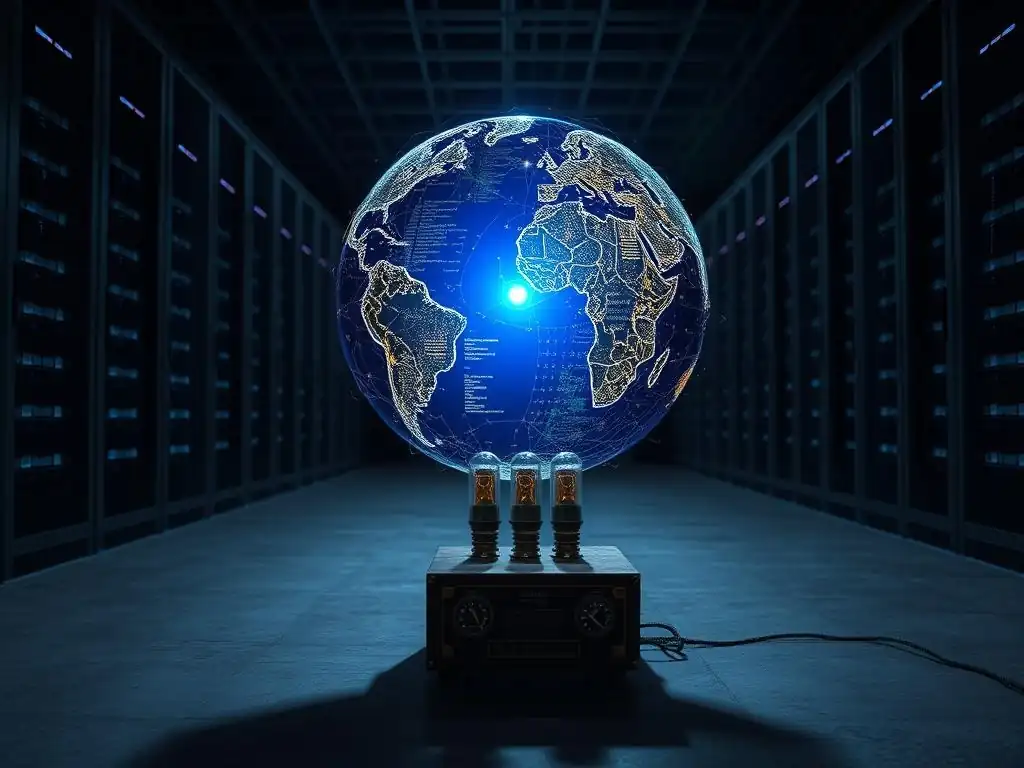
Welcome to Blockchain Trends, your go-to source for understanding the revolutionary impact of blockchain technology!
Are you ready to dive deeper than just cryptocurrencies and explore the real-world applications of blockchain? In this article, we tackle a critical challenge for DApps – the often underestimated problem of connecting to reliable, real-world data. Uncover the complexities and potential pitfalls surrounding blockchain oracle data challenges, and discover how these vital bridges between the digital and physical realms are shaping the future of decentralized systems. What crucial vulnerabilities are you unknowingly exposing in your DApp? Read on to find out!
- Blockchain Oracle Data Challenges: The Core Issues
-
Frequently Asked Questions
- How do blockchain oracles address the challenge of connecting off-chain data to on-chain smart contracts?
- What are the main "Blockchain oracle data challenges" that developers face when integrating oracles into their DApps?
- How can developers mitigate the risk of data manipulation or inaccuracies when using blockchain oracles?
- Beyond price feeds, what other types of real-world data can blockchain oracles bring to smart contracts?
- What impact might regulatory developments have on the use of blockchain oracles and their role in the future of decentralized systems?
- Final Reflection: Bridging the Trust Gap in Decentralized Systems
- Unleash Your DApp's Potential: Take the Oracle Leap!
Blockchain Oracle Data Challenges: The Core Issues

Integrating off-chain data into decentralized applications introduces a unique set of obstacles often referred to collectively as the blockchain oracle data challenges. While smart contracts excel at executing logic based on immutable on-chain data, their inability to directly access information from the external world creates a critical dependency on oracles. This dependency, however, exposes DApps to significant risks that undermine the very principles of decentralization and trustlessness that blockchain aims to uphold. Addressing these fundamental issues is paramount for the widespread adoption and reliability of decentralized systems that interact with real-world events or data.
These challenges are not merely theoretical; they have practical implications for the security, functionality, and user adoption of DApps across various sectors, from decentralized finance (DeFi) to supply chain management and insurance. Understanding the nuances of these blockchain oracle data challenges is the first step towards building robust and resilient decentralized applications that can reliably respond to external conditions. The integrity of the entire system often hinges on the quality and trustworthiness of the data fed into the smart contract by the oracle mechanism.
The Oracle Problem: Trust and Security in Decentralized Systems
At the heart of the blockchain oracle data challenges lies the "Oracle Problem." This refers to the fundamental difficulty of trusting data that originates from outside the blockchain's consensus mechanism.
When a smart contract relies on an oracle to provide information, it essentially places trust in an external entity or system that is not secured by the blockchain itself. If the oracle is compromised, malicious, or simply inaccurate, it can feed incorrect data to the smart contract, leading to unintended or harmful outcomes, such as incorrect payouts in insurance contracts or liquidations in DeFi protocols based on manipulated price feeds.
Consider a decentralized insurance product that pays out if a specific weather event occurs. The smart contract needs data on rainfall or temperature from an external source. If the oracle providing this data is faulty or manipulated, it could trigger false payouts or deny legitimate claims. This highlights the central dilemma: how can we ensure the data provided by an oracle is accurate and trustworthy when the oracle itself is a potential single point of failure, contradicting the distributed nature of the blockchain? Mitigating this vulnerability is a significant aspect of overcoming blockchain oracle data challenges.
Data Integrity and Accuracy: Ensuring Reliable Off-Chain Information
Beyond the trust issue of the oracle itself, ensuring the integrity and accuracy of the data it retrieves presents another layer of blockchain oracle data challenges. Oracles often source data from various APIs, databases, or other external systems. The quality and reliability of these source systems can vary significantly. An API might be unreliable, provide outdated information, be subject to manipulation by the data provider, or even cease to exist, leaving the oracle unable to fetch the required data.
For example, a DeFi lending protocol might rely on an oracle to provide the current market price of various cryptocurrencies. If the oracle fetches data from an exchange API that is experiencing downtime or reporting an anomalous price due to low liquidity or a flash crash, the smart contract could execute liquidations based on faulty data.
This directly impacts users, potentially causing significant financial loss. Ensuring data integrity often requires sophisticated mechanisms like data aggregation from multiple sources, reputation systems for data providers, and validation checks to filter out erroneous or malicious data points, all contributing to the complexity of addressing blockchain oracle data challenges effectively.
Latency and Scalability: Addressing Performance Bottlenecks in Oracle Networks
Another critical area of blockchain oracle data challenges relates to performance, specifically latency and scalability. Getting real-world data onto the blockchain takes time. The oracle needs to fetch data from an external source, potentially perform aggregation or validation, and then submit a transaction to the blockchain to make the data available on-chain. This process introduces latency, which can be problematic for DApps requiring near real-time information, such as high-frequency trading platforms or dynamic pricing models in DeFi.
Furthermore, scaling oracle solutions to serve a growing number of DApps, each potentially requiring data for different assets, events, or conditions, presents significant technical hurdles. A centralized oracle could become a performance bottleneck, while decentralized oracle networks need efficient mechanisms for coordinating data requests, aggregating responses, and managing incentives for oracle node operators.
As the demand for reliable off-chain data grows with the proliferation of DApps, addressing these latency and scalability issues becomes increasingly important in overcoming blockchain oracle data challenges. The infrastructure supporting the data feeds must be robust enough to handle fluctuating demand and provide timely updates without overwhelming the underlying blockchain network or becoming prohibitively expensive due to transaction fees.
Frequently Asked Questions
How do blockchain oracles address the challenge of connecting off-chain data to on-chain smart contracts?
Blockchain oracles act as bridges between the real world and the blockchain. They retrieve external data and translate it into a format that can be used by smart contracts, enabling data-driven decisions on the blockchain. This is crucial for many decentralized applications (DApps).
What are the main "Blockchain oracle data challenges" that developers face when integrating oracles into their DApps?
The key challenges include trust and security, ensuring data accuracy, dealing with the oracle problem (potential for manipulation), and managing the cost and complexity of oracle implementation.
How can developers mitigate the risk of data manipulation or inaccuracies when using blockchain oracles?
Strategies include using multiple oracles for data verification, implementing reputation systems to assess oracle reliability, and employing cryptographic techniques to ensure data integrity and provenance.
Beyond price feeds, what other types of real-world data can blockchain oracles bring to smart contracts?
Oracles can provide a vast array of data, including weather information, sports scores, supply chain tracking, election results, identity verification, and any verifiable real-world events.
What impact might regulatory developments have on the use of blockchain oracles and their role in the future of decentralized systems?
Regulatory frameworks could impact oracle usage by introducing compliance requirements, mandating data privacy standards, and potentially restricting access to certain data sources, ultimately influencing the trust and legality of oracle-driven DApps.
Final Reflection: Bridging the Trust Gap in Decentralized Systems
The journey of connecting real-world data to decentralized applications, as explored throughout this article, highlights the critical role of blockchain oracles in shaping the future of Web3. The challenges we've discussed, from data integrity to centralization risks, are not merely theoretical hurdles; they are active impediments to the widespread adoption and trust in blockchain technology. Overcoming these "Blockchain oracle data challenges" is paramount to unlocking the true potential of smart contracts and decentralized finance.
The ongoing evolution of oracle solutions profoundly influences the cultural and social landscape of trust and transparency. The ability to verify and rely on external data within a decentralized environment is not just a technical advancement; it's a fundamental shift in how we interact with information and conduct transactions. Data is the new oil, but only if it's verifiable.
This quote encapsulates the essence of the oracle dilemma: the value of data is inextricably linked to its trustworthiness, and oracles are the key to unlocking that value in the blockchain space.
As we conclude this exploration, I invite you to reflect on your own role in shaping the future of decentralized systems. Consider how you can contribute to the development and adoption of more robust, secure, and decentralized oracle solutions. The future of Web3 hinges on our collective ability to bridge the trust gap between the real world and the blockchain. Let us strive to build a future where data is not just abundant, but also reliable, verifiable, and accessible to all.
Unleash Your DApp's Potential: Take the Oracle Leap!
Thank you for exploring the fascinating world of oracles and how they connect real-world data to decentralized applications. Now that you understand their significance, it's time to take action.
Start by researching different oracle solutions from reputable providers to understand their features and integration methods. Engage with the community through forums and discussions to gain insights and share ideas. Additionally, consider building a small, experimental DApp to practice connecting to an oracle and processing external data.
Which real-world data source are you most excited to incorporate into your DApp, and what challenges do you hope it will help you overcome? Share your thoughts in the comments below!
Leave a Reply