
Understanding Solana's Network Architecture: Turbine and Gulf Stream Innovations


Welcome to Blockchain Trends, your gateway to understanding the revolutionary world of blockchain technology beyond just cryptocurrencies. Dive into the transformative potential of decentralized finance, enterprise applications, and the evolving regulatory landscape.
Curious about what makes certain blockchain platforms tick? Then you're in the right place! This week, we're exploring the inner workings of a high-performance blockchain and we'll begin to unravel its structure with "Understanding Solana's Network Architecture: Turbine and Gulf Stream Innovations." Discover how Solana's innovative Turbine and Gulf Stream technologies are revolutionizing transaction speeds and scalability, and see how it stacks up against other platforms. Ready to delve deeper into the future of decentralized systems?
- Introduction to Solana's High-Performance Blockchain
- Solana Network Architecture Explained: Key Components
- Deep Dive into Turbine: Enhancing Block Propagation Speed
- Exploring Gulf Stream: Optimizing Transaction Confirmation
- Solana Network Architecture: Performance Benchmarks and Comparisons
- Security Considerations within Solana's Network Design
- The Future of Solana's Network: Innovations and Developments
- Conclusion: Solana's Innovative Approach to Blockchain Scalability
-
Frequently Asked Questions
- What are the key innovations in Solana's network architecture?
- How does Turbine contribute to Solana's scalability?
- What is Gulf Stream and how does it optimize transaction processing?
- How does Proof of History (PoH) work within Solana's architecture?
- What are the implications of Solana's architecture for decentralized applications (dApps)?
- Final Reflection: The Enduring Promise of Decentralized Speed
- Unleash Your Solana Potential!
Introduction to Solana's High-Performance Blockchain
Solana: A Solution to Blockchain Scalability Challenges
The blockchain landscape has long grappled with the "scalability trilemma," the inherent difficulty in achieving decentralization, security, and scalability simultaneously. Many early blockchain platforms, while prioritizing decentralization and security, have faced limitations in transaction throughput and speed. This has hindered their ability to support applications demanding high transaction volumes and low latency, such as decentralized finance (DeFi), high-frequency trading, and large-scale online games. Solana emerged as a direct response to these scalability bottlenecks, aiming to create a blockchain capable of handling thousands of transactions per second without compromising on security or decentralization.
Solana's inception was driven by the vision of a blockchain that could rival traditional payment processors in terms of speed and capacity, while retaining the core benefits of blockchain technology. Existing blockchains like Bitcoin and Ethereum, while revolutionary, demonstrated significant limitations in scaling to meet the demands of a global financial system or high-throughput applications.
Solana's developers recognized the need for a fundamentally different approach to blockchain architecture, one that could overcome these limitations and unlock the full potential of decentralized technologies for a wider range of use cases. This recognition spurred the development of innovative solutions like Proof of History (PoH), Turbine, and Gulf Stream, which are central to Solana's high-performance capabilities.
The Importance of Network Architecture in Solana's Design
Network architecture plays a pivotal role in determining the performance and efficiency of any blockchain. It governs how transactions and blocks are propagated across the network, influencing transaction processing speed, confirmation times, and overall network capacity. In traditional blockchains, network bottlenecks often arise from inefficiencies in block propagation and transaction forwarding. These bottlenecks directly impact scalability, leading to slower transaction speeds and higher fees during periods of network congestion. Solana's design places network architecture at the forefront, recognizing it as a critical factor in achieving its ambitious scalability goals.
Solana's network architecture is deliberately engineered to minimize bottlenecks and maximize throughput. Unlike some blockchains that rely on more traditional network protocols, Solana incorporates novel innovations like Turbine and Gulf Stream to optimize data distribution and transaction processing. These components are not merely incremental improvements; they represent a fundamental rethinking of how blockchain networks can be designed to achieve unparalleled speed and efficiency. By focusing on architectural innovations, Solana aims to provide a foundation for decentralized applications that demand performance comparable to centralized systems, pushing the boundaries of what's possible in the blockchain space.
Solana Network Architecture Explained: Key Components
Solana's Proof of History (PoH) Consensus Mechanism: A Foundation for Speed
At the heart of Solana's high-performance architecture lies its innovative Proof of History (PoH) consensus mechanism. While Solana still utilizes Proof of Stake (PoS) for block production and network security, PoH operates as a cryptographic clock, providing a verifiable record of the order and passage of time within the blockchain. This is achieved through a high-frequency Verifiable Delay Function (VDF) that allows nodes to cryptographically prove the passage of time between events without needing to consult other nodes. PoH essentially timestamps transactions before they are even added to a block, drastically streamlining the consensus process.
The significance of PoH for Solana's speed cannot be overstated. In traditional blockchains, nodes must communicate extensively to agree on the order of transactions, leading to significant overhead and latency. PoH eliminates much of this communication overhead by establishing a historical record of events that all nodes can independently verify.
This pre-ordering of transactions allows for significantly faster block times and reduced consensus latency, paving the way for Solana's high transaction throughput. PoH is not a consensus mechanism in itself, but rather a foundational technology that dramatically enhances the efficiency of Solana's overall consensus process, working in tandem with PoS.
Turbine: Solana's Block Propagation Protocol for Efficient Data Distribution
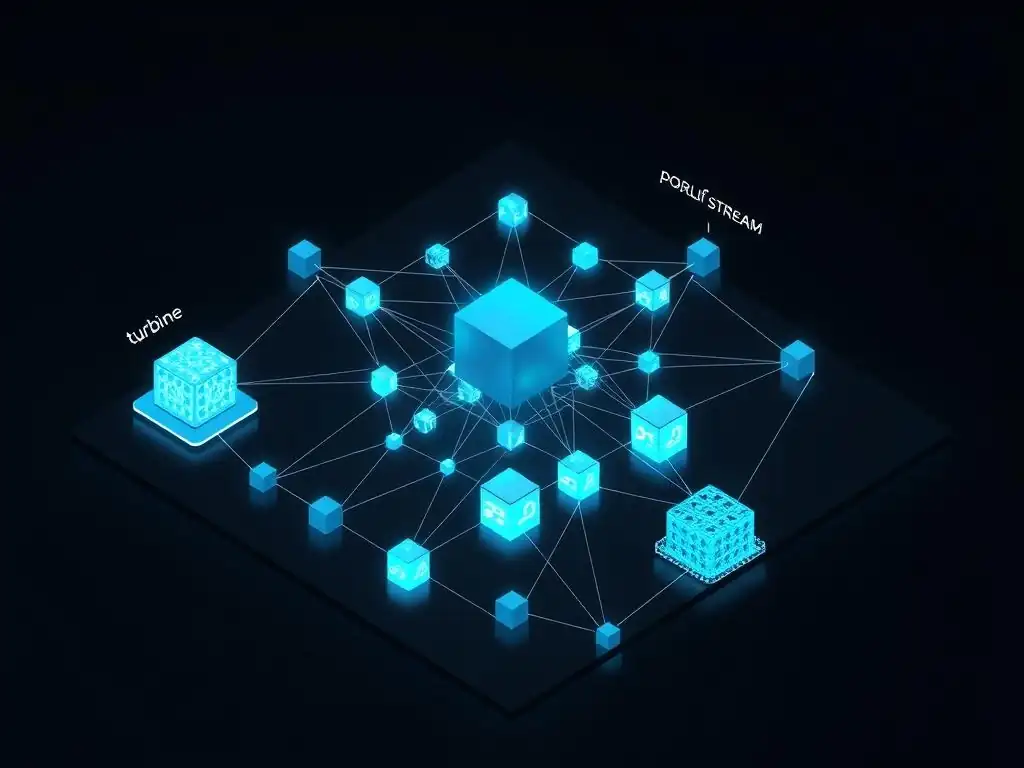
Turbine is Solana's custom block propagation protocol, designed to efficiently distribute blocks across the network. Traditional block propagation methods often rely on nodes broadcasting entire blocks to all peers, which can become inefficient and slow down network performance as block size and network size increase. Turbine addresses this challenge by employing a technique similar to BitTorrent, breaking down blocks into smaller packets and distributing them in layers to different sets of nodes. This significantly reduces the bandwidth requirements for each node and accelerates the overall block propagation process.
The innovation of Turbine lies in its layered distribution approach. Instead of a single node sending the entire block to every peer, the leader node divides the block into packets, and each node in the first layer receives only a subset of these packets. These nodes then propagate their received packets to another layer of nodes, and so on. This hierarchical structure allows for parallel data distribution, ensuring that blocks are rapidly disseminated across the network. By optimizing block propagation, Turbine plays a crucial role in minimizing block times and maximizing transaction throughput on the Solana network.
How Turbine Optimizes Block Propagation
Turbine optimizes block propagation through several key mechanisms. Firstly, packetization of blocks is central to its efficiency. By breaking down large blocks into smaller, manageable packets, Turbine reduces the burden on individual nodes, allowing them to process and forward data more quickly. This is particularly beneficial in large networks where broadcasting entire blocks can lead to network congestion. Secondly, the layered distribution architecture ensures parallel propagation. Multiple nodes are simultaneously involved in forwarding block packets, significantly accelerating the overall dissemination speed compared to sequential broadcasting methods.
Furthermore, Turbine incorporates erasure coding techniques to enhance data redundancy and reliability during propagation. Erasure coding allows for the reconstruction of the original block even if some packets are lost or corrupted during transmission. This adds robustness to the block propagation process, ensuring that blocks are reliably delivered across the network, even in less-than-ideal network conditions. By combining packetization, layered distribution, and erasure coding, Turbine creates a highly optimized and resilient block propagation protocol that is fundamental to Solana's high-performance capabilities.
Turbine vs. Traditional Block Propagation Methods
Traditional block propagation methods, often employed by earlier blockchains, typically involve broadcasting entire blocks to all connected peers. While simple to implement, this approach becomes increasingly inefficient as network size and block size grow. In congested networks or with large blocks, broadcasting can lead to significant delays and network bottlenecks, impacting transaction confirmation times and overall network throughput. Protocols like gossip protocols, while improvements over simple broadcasting, still involve significant redundancy and can be less efficient in large-scale, high-throughput environments.
Turbine offers a stark contrast to these traditional methods. Its packetized and layered approach dramatically reduces redundancy and optimizes bandwidth utilization. By distributing block data in parallel and employing erasure coding for resilience, Turbine achieves significantly faster block propagation times compared to broadcasting or gossip-based protocols. This speed advantage is crucial for Solana's ability to achieve high transaction throughput and low latency. While traditional methods may suffice for blockchains with lower performance requirements, Turbine's innovative design is essential for Solana's ambition to operate at speeds comparable to centralized systems, handling thousands of transactions per second.
Gulf Stream: Solana's Mempool-less Transaction Forwarding Protocol
Gulf Stream is Solana's innovative mempool-less transaction forwarding protocol, designed to accelerate transaction processing and reduce confirmation times. Traditional blockchains typically utilize a mempool (memory pool) where pending transactions are stored before being included in a block. This mempool can become a bottleneck, especially during periods of high network activity, as transactions wait to be processed and included in blocks. Gulf Stream bypasses the traditional mempool by forwarding transactions directly to validators even before they become leader, allowing for parallel transaction processing and faster confirmation.
The core concept behind Gulf Stream is proactive transaction forwarding. Instead of waiting for a leader to be elected and then submitting transactions, nodes in Solana's network forward transactions to a set of upcoming validators in anticipation of them becoming leader. This allows validators to begin processing transactions before they are officially designated as block producers, significantly reducing the time it takes to include transactions in a block and achieve finality. By eliminating the traditional mempool bottleneck, Gulf Stream contributes significantly to Solana's low latency and high transaction throughput.
How Gulf Stream Accelerates Transaction Processing
Gulf Stream accelerates transaction processing by enabling parallel processing and eliminating mempool congestion. By forwarding transactions to upcoming validators, Gulf Stream allows these validators to pre-process transactions, verify signatures, and prepare them for inclusion in blocks before they are even elected as leader. This proactive approach contrasts sharply with traditional mempool-based systems where transactions typically wait in a queue until a leader is chosen and begins block production. The pre-processing capability of Gulf Stream dramatically reduces the time from transaction submission to inclusion in a block.
Furthermore, Gulf Stream inherently mitigates mempool congestion, a common issue in blockchains during periods of high demand. By bypassing the mempool entirely, Gulf Stream avoids the delays and bottlenecks associated with managing and prioritizing transactions within a centralized queue. Transactions are streamed directly to validators, enabling a more efficient and streamlined processing pipeline. This mempool-less design is a key differentiator for Solana, allowing it to maintain high transaction throughput and low latency even under heavy network load.
Gulf Stream's Role in Minimizing Transaction Confirmation Times
Gulf Stream plays a crucial role in minimizing transaction confirmation times on the Solana network. Transaction confirmation time, the time it takes for a transaction to be included in a block and considered finalized, is a critical metric for user experience, especially in applications requiring fast and reliable transactions. By accelerating transaction processing and eliminating mempool delays, Gulf Stream directly reduces the time users have to wait for their transactions to be confirmed. This faster confirmation time is a significant advantage for Solana, making it suitable for applications demanding near-instantaneous transactions.
The combination of Gulf Stream's proactive transaction forwarding and Solana's rapid block times, enabled by Proof of History and Turbine, results in exceptionally low transaction confirmation times. While confirmation times can vary depending on network conditions, Solana consistently achieves significantly faster finality compared to many other blockchains. This speed advantage is a key factor in Solana's appeal for use cases such as DeFi, where rapid transaction execution is essential for trading, lending, and other financial operations. Gulf Stream is thus instrumental in delivering the fast and responsive user experience that defines Solana's high-performance blockchain.
Deep Dive into Turbine: Enhancing Block Propagation Speed
Turbine's Data Encoding and Erasure Coding Techniques
Turbine's efficiency is significantly enhanced by its use of data encoding and erasure coding techniques. Data encoding refers to the process of converting block data into a more efficient format for transmission, while erasure coding adds redundancy to the data, allowing for reconstruction even if some data packets are lost during propagation. Turbine employs specific encoding and erasure coding schemes optimized for blockchain block propagation to maximize speed and resilience. These techniques are crucial for ensuring reliable and fast block dissemination across the Solana network, even in challenging network environments.
Specifically, Turbine leverages Reed-Solomon erasure coding. This technique allows the original block to be reconstructed from a subset of the transmitted data packets. For example, a block can be divided into 'n' data packets, and then 'k' redundant packets are added, resulting in a total of 'n+k' packets. With Reed-Solomon coding, the original block can be recovered even if up to 'k' packets are lost during transmission. This redundancy significantly improves the reliability of block propagation, especially in networks with potential packet loss or unreliable connections, ensuring that blocks are successfully delivered to all nodes despite potential network issues.
Turbine's Leader Selection and Block Distribution Process
Turbine's block distribution process is closely integrated with Solana's leader selection mechanism. In Solana, a leader is elected for each slot (a short time interval) to produce blocks. Once a leader is elected, it is responsible for creating a new block and propagating it across the network using Turbine. The leader node initiates the Turbine propagation process, dividing the block into packets and distributing them to the first layer of nodes according to a predefined distribution scheme. This leader-driven propagation process ensures an organized and efficient dissemination of blocks.
The leader selection in Solana is deterministic and based on Proof of Stake, ensuring that the leader for each slot is known in advance. This predictability allows Turbine to be optimized for efficient distribution as the leader node can proactively prepare and begin propagating the block as soon as it is produced. The distribution scheme in Turbine is designed to ensure even and rapid coverage of the network, minimizing propagation delays. The combination of deterministic leader selection and Turbine's optimized distribution process results in a highly efficient and rapid block dissemination system, contributing significantly to Solana's fast block times.
Benefits of Turbine for Network Efficiency and Scalability
Turbine offers several key benefits that directly contribute to Solana's network efficiency and scalability. Firstly, it dramatically reduces bandwidth consumption for individual nodes. By packetizing blocks and using layered distribution, Turbine ensures that no single node is burdened with transmitting or receiving the entire block. This reduced bandwidth requirement is crucial for supporting a large number of nodes and maintaining network performance as the network scales. Lower bandwidth consumption also translates to lower operational costs for validators, promoting decentralization.
Secondly, Turbine significantly accelerates block propagation speed. The parallel and layered distribution mechanism ensures that blocks are disseminated across the network much faster than with traditional broadcasting methods. This faster block propagation directly translates to lower block times and higher transaction throughput.
The speed advantage of Turbine is a critical factor in Solana's ability to achieve thousands of transactions per second. Finally, Turbine's use of erasure coding enhances network resilience. The redundancy provided by erasure coding ensures that blocks are reliably propagated even in the presence of network issues or packet loss, contributing to the overall robustness and stability of the Solana network.
Exploring Gulf Stream: Optimizing Transaction Confirmation
Gulf Stream's Predictive Transaction Forwarding Mechanism
Gulf Stream's core innovation lies in its predictive transaction forwarding mechanism. Unlike traditional blockchains that rely on mempools and leader-based transaction processing, Gulf Stream anticipates future block producers and proactively forwards transactions to them. This prediction is possible due to Solana's Proof of History and deterministic leader schedule. Nodes in the Solana network are aware of the upcoming leaders, allowing them to forward transactions to these validators before they officially become block producers. This predictive forwarding is the key to Gulf Stream's ability to accelerate transaction processing.
The predictive aspect of Gulf Stream is crucial for its efficiency. By forwarding transactions in advance, Gulf Stream enables validators to start processing and validating transactions even before they are selected as leaders. This pre-processing significantly reduces the time required to include transactions in a block once a validator becomes leader. Traditional mempool-based systems introduce delays as transactions must first be submitted to the mempool, then selected by the leader, and only then processed. Gulf Stream eliminates this delay by initiating processing before leader selection, streamlining the transaction pipeline and minimizing confirmation times.
How Gulf Stream Eliminates Mempool Congestion
Gulf Stream effectively eliminates mempool congestion, a common bottleneck in many blockchains, by bypassing the traditional mempool entirely. In mempool-based systems, all pending transactions are stored in a central memory pool, waiting to be included in a block. During periods of high network activity, this mempool can become congested, leading to delays in transaction processing and increased transaction fees as users compete to have their transactions prioritized. Gulf Stream's mempool-less design avoids these congestion issues, leading to more consistent and predictable transaction processing times.
By forwarding transactions directly to validators, Gulf Stream creates a distributed and parallel transaction processing system instead of a centralized queue. Transactions are streamed directly to the validators who will ultimately include them in blocks, eliminating the need for a shared mempool. This distributed approach not only avoids congestion but also enhances network scalability and resilience. The absence of a central mempool removes a single point of failure and ensures that transaction processing remains efficient even under high network load, contributing to Solana's consistent high performance.
Advantages of Gulf Stream for Transaction Throughput and Finality
Gulf Stream offers significant advantages in terms of transaction throughput and finality on the Solana network. By accelerating transaction processing and eliminating mempool bottlenecks, Gulf Stream directly contributes to higher transaction throughput. The ability to pre-process transactions allows Solana to handle a larger volume of transactions per second compared to mempool-based systems. This enhanced throughput is a key factor in Solana's suitability for applications requiring high transaction rates, such as DeFi platforms and high-frequency trading.
Furthermore, Gulf Stream improves transaction finality, the point at which a transaction is considered irreversible and permanently recorded on the blockchain. Faster transaction processing, enabled by Gulf Stream, translates to quicker block times and faster confirmation of transactions. Solana achieves significantly faster finality compared to many other blockchains, making it attractive for applications where rapid and certain transaction confirmation is crucial. The combination of high throughput and fast finality, facilitated by Gulf Stream, positions Solana as a leading platform for high-performance decentralized applications.
Solana Network Architecture: Performance Benchmarks and Comparisons
Solana's Transactions Per Second (TPS) Compared to Other Blockchains
Solana's network architecture, with innovations like Turbine and Gulf Stream, enables it to achieve significantly higher Transactions Per Second (TPS) compared to many other blockchains. While theoretical maximums are often debated and vary depending on testing methodologies and network conditions, Solana has demonstrated the capability to process thousands of transactions per second in practice. This contrasts sharply with older blockchains like Bitcoin, which typically handles around 7 TPS, and Ethereum, which before its major upgrades, hovered around 15-30 TPS. Even with Layer-2 solutions, these older blockchains still generally fall significantly short of Solana's demonstrated throughput.
For example, in controlled test environments, Solana has showcased peaks exceeding 50,000 TPS. While real-world network conditions and transaction complexity can influence actual throughput, Solana consistently outperforms many other Layer-1 blockchains in terms of TPS. Blockchains like Visa, a traditional payment processor, are often cited as benchmarks for high transaction volume, handling thousands of transactions per second.
Solana aims to bridge the performance gap between traditional centralized systems and decentralized blockchains, and its TPS capabilities, driven by its unique architecture, are a key factor in this ambition. It's important to note that TPS figures can be influenced by various factors, but Solana's architectural design inherently supports a significantly higher throughput ceiling than many of its predecessors.
Latency and Confirmation Time Analysis on the Solana Network
Latency and confirmation time are critical performance metrics for blockchain networks, directly impacting user experience and application responsiveness. Solana's network architecture is designed to minimize both latency and confirmation times. Latency refers to the delay between submitting a transaction and it being processed by the network, while confirmation time is the duration until a transaction is considered finalized and irreversible. Due to innovations like Proof of History, Turbine, and Gulf Stream, Solana achieves significantly lower latency and faster confirmation times compared to many other blockchains.
On average, Solana boasts block times of around 400 milliseconds, leading to transaction confirmation times often measured in seconds. This rapid confirmation is a stark contrast to blockchains like Bitcoin, where confirmation times can range from minutes to hours, and Ethereum, where confirmations typically take tens of seconds to minutes, depending on network congestion. The low latency and fast confirmation times on Solana are particularly advantageous for applications requiring real-time interactions, such as decentralized exchanges (DEXs), gaming platforms, and payment systems. This speed advantage is a direct result of the architectural optimizations embedded within Solana's network design.
Real-World Performance of Solana's Turbine and Gulf Stream
The real-world performance of Solana's Turbine and Gulf Stream protocols is evident in the network's operational metrics and the experiences of applications built on Solana. Turbine's efficient block propagation ensures rapid dissemination of blocks across the network, contributing to consistently low block times and preventing network congestion even during periods of high transaction volume. This efficient propagation is crucial for maintaining network stability and responsiveness as the network scales and handles increasing transaction loads.
Gulf Stream's mempool-less transaction forwarding translates directly into faster transaction processing and lower confirmation times observed by users. Applications on Solana benefit from rapid transaction finality, enabling smoother user experiences and more efficient operations. For instance, DeFi platforms on Solana can offer faster trading execution and quicker settlement times compared to platforms on slower blockchains. The practical impact of Turbine and Gulf Stream is reflected in Solana's ability to maintain high throughput and low latency in real-world scenarios, demonstrating the effectiveness of these architectural innovations in delivering on Solana's performance promises.
Security Considerations within Solana's Network Design
Addressing Potential Vulnerabilities in Turbine and Gulf Stream
While Turbine and Gulf Stream offer significant performance advantages, it's crucial to consider potential security vulnerabilities inherent in any network architecture, including Solana's. Turbine's reliance on packetization and layered distribution, while efficient, could potentially introduce vulnerabilities if not properly secured. For instance, malicious nodes could attempt to disrupt block propagation by selectively dropping or corrupting packets. Similarly, Gulf Stream's predictive transaction forwarding, while accelerating processing, requires careful security measures to prevent denial-of-service attacks or transaction manipulation by malicious actors targeting upcoming validators.
To mitigate potential vulnerabilities in Turbine, Solana implements robust security measures including cryptographic verification of packets and redundancy through erasure coding. These measures ensure data integrity and resilience against packet loss or manipulation during propagation. For Gulf Stream, Solana employs mechanisms to prevent malicious nodes from spamming upcoming validators with invalid transactions or attempting to exploit the predictive forwarding system. Security audits and ongoing monitoring are essential to identify and address any emerging vulnerabilities in Turbine and Gulf Stream, ensuring the continued security and reliability of Solana's network.
Solana's Security Measures and Defense Mechanisms
Solana employs a multi-layered security approach to protect its network, encompassing not only Turbine and Gulf Stream but also the broader consensus mechanism and network infrastructure. Proof of Stake (PoS) provides the foundational security for block production and network integrity, incentivizing validators to act honestly and penalizing malicious behavior. Beyond PoS, Solana incorporates various defense mechanisms to safeguard against attacks, including sophisticated network monitoring, rate limiting, and denial-of-service (DoS) protection.
Solana's security model is continuously evolving, with ongoing research and development focused on strengthening defenses against emerging threats. Regular security audits conducted by independent firms are crucial for identifying and addressing potential vulnerabilities. The Solana Foundation and core development team prioritize security as a paramount concern, actively working to enhance the network's resilience and ensure the safety of user funds and applications. This proactive approach to security is essential for maintaining trust and fostering the long-term growth of the Solana ecosystem.
The Future of Security Enhancements in Solana's Network Architecture
The future of Solana's network architecture includes ongoing efforts to enhance security alongside performance. As blockchain technology evolves and new attack vectors emerge, Solana is committed to proactively strengthening its security defenses. This includes exploring advancements in cryptography, network security protocols, and consensus mechanisms to further fortify the network against potential threats. Research into more robust and resilient block propagation and transaction forwarding techniques is also likely to be a focus of future development.
Potential security enhancements could involve exploring advanced encryption methods, improved intrusion detection systems, and more sophisticated mechanisms for preventing malicious activity within the network. Collaboration with security experts and the broader blockchain community is vital for identifying and implementing best practices in security. Solana's commitment to continuous improvement extends to security, recognizing it as an ongoing and critical aspect of maintaining a high-performance and trustworthy blockchain platform.
The Future of Solana's Network: Innovations and Developments
Potential Upgrades and Improvements to Turbine and Gulf Stream
The development of Solana's network architecture is an ongoing process, and potential upgrades and improvements to Turbine and Gulf Stream are continuously being explored. While these protocols already represent significant advancements, there is always room for further optimization and refinement. Potential upgrades to Turbine could focus on even more efficient packetization strategies, adaptive erasure coding techniques, or enhanced leader selection integration to further accelerate block propagation and reduce latency.
For Gulf Stream, future improvements could explore more sophisticated predictive transaction forwarding algorithms, enhanced mechanisms for handling transaction prioritization, or integration with privacy-preserving technologies. The Solana development community is actively researching and experimenting with potential enhancements to these core protocols, aiming to push the boundaries of blockchain performance even further. These ongoing efforts reflect a commitment to continuous innovation and optimization within Solana's network architecture.
Solana's Roadmap for Enhanced Scalability and Performance
Solana's roadmap includes a continued focus on enhancing scalability and performance, building upon the foundation laid by Turbine and Gulf Stream. Future developments are likely to explore further optimizations to the core consensus mechanism, network protocols, and transaction processing pipelines. This may involve investigating sharding techniques, layer-2 solutions, or other advanced scalability strategies to further increase transaction throughput and network capacity as demand grows.
The roadmap also likely includes advancements in storage solutions, data compression, and network infrastructure to support the increasing data volume and computational demands of a high-performance blockchain. Solana's commitment to scalability extends beyond just transaction throughput, encompassing all aspects of network performance and resource efficiency. The long-term vision is to create a blockchain platform capable of supporting truly global-scale applications and services, and ongoing development efforts are geared towards achieving this ambitious goal.
The Impact of Solana's Network Architecture on the Broader Blockchain Ecosystem
Solana's innovative network architecture, particularly Turbine and Gulf Stream, has had a significant impact on the broader blockchain ecosystem. By demonstrating the feasibility of achieving high transaction throughput and low latency without compromising security or decentralization, Solana has pushed the boundaries of what's considered possible in blockchain performance. Its architectural innovations have inspired other blockchain projects to explore new approaches to scalability and network design.
Solana's success has also driven increased interest and investment in high-performance blockchain platforms and applications. The emergence of Solana has broadened the range of use cases for blockchain technology, making it viable for applications previously considered unsuitable due to scalability limitations. By showcasing the potential of a truly high-performance blockchain, Solana is contributing to the wider adoption and evolution of decentralized technologies, paving the way for a future where blockchain can power a wider range of real-world applications and services.
Conclusion: Solana's Innovative Approach to Blockchain Scalability
Solana's network architecture stands as a testament to innovative engineering in the blockchain space. Through groundbreaking technologies like Proof of History, Turbine, and Gulf Stream, Solana has effectively addressed the long-standing challenge of blockchain scalability. Turbine revolutionizes block propagation, ensuring efficient data distribution, while Gulf Stream optimizes transaction processing by bypassing traditional mempools and accelerating confirmation times. These innovations, working in concert, enable Solana to achieve transaction speeds and throughput that were previously unattainable on decentralized platforms.
The "Solana network architecture explained" reveals a deliberate and sophisticated design focused on performance without sacrificing security or decentralization. While continuous development and security vigilance remain paramount, Solana's architectural advancements have demonstrably pushed the boundaries of blockchain technology. By offering a high-performance foundation, Solana empowers developers to build a new generation of decentralized applications capable of meeting the demands of a global user base, contributing significantly to the evolution and wider adoption of blockchain technology.
Frequently Asked Questions
What are the key innovations in Solana's network architecture?
Solana's architecture hinges on several innovations, most notably Proof of History (PoH), Turbine, and Gulf Stream. These components work together to achieve high throughput and low latency, differentiating it from other blockchains.
How does Turbine contribute to Solana's scalability?
Turbine is a block propagation protocol that fragments data, allowing validators to quickly transmit information across the network. This reduces bandwidth requirements and improves Solana's ability to handle a large volume of transactions.
What is Gulf Stream and how does it optimize transaction processing?
Gulf Stream is a mempool-less forwarding protocol that pushes transaction forwarding and execution out to the edges of the network. This allows validators to execute transactions ahead of consensus, drastically reducing confirmation times.
How does Proof of History (PoH) work within Solana's architecture?
PoH is a cryptographic clock that allows validators to agree on the order and timing of transactions without constant communication. This independent timing mechanism greatly reduces latency and improves overall efficiency.
What are the implications of Solana's architecture for decentralized applications (dApps)?
Solana's architecture enables dApps to offer near real-time performance and handle a large number of users simultaneously. This makes it suitable for high-frequency applications like decentralized exchanges (DEXs) and gaming platforms.
Final Reflection: The Enduring Promise of Decentralized Speed
The exploration of Solana's innovative network architecture, particularly its Turbine and Gulf Stream protocols, reveals more than just technical intricacies; it highlights the urgent need for scalable and efficient blockchain solutions in a world increasingly reliant on decentralized technologies. The challenges of transaction speed and network congestion, once crippling obstacles to widespread blockchain adoption, are being actively addressed by projects like Solana, paving the way for a future where decentralized applications can truly compete with their centralized counterparts.
This journey into Solana's architecture underscores the profound impact that technological innovation has on shaping the future of finance, governance, and beyond. Witnessing the evolution of blockchain technology from its nascent stages to the sophisticated systems we see today is a testament to human ingenuity and the relentless pursuit of a more equitable and transparent world. The best way to predict the future is to create it.
- Peter Drucker. This quote resonates deeply when considering the proactive approach Solana has taken in designing a network capable of handling the demands of a rapidly evolving digital landscape.
As we conclude this exploration of Solana's network architecture, I invite you to consider its implications for your own understanding of the digital world. How can we leverage these advancements to build more inclusive and efficient systems? How can we contribute to the ongoing evolution of decentralized technologies? The future of blockchain is not predetermined; it is being actively shaped by the choices we make today. Let us embrace the challenge and work together to build a future where decentralized technologies empower individuals and foster a more connected and equitable world.
Unleash Your Solana Potential!
Thank you for exploring Solana's innovative architecture with Blockchain Trends! You've now gained valuable insights into Turbine and Gulf Stream and how they drive Solana's impressive speed and efficiency. Now, let's put that knowledge into action!
- Dive deeper: Start experimenting with Solana's testnet!: Experience firsthand the speed and efficiency you just learned about and begin building your own decentralized applications.
- Share your newfound knowledge:Discuss Solana's advantages with fellow blockchain enthusiasts in online forums or local meetups.
- Follow Blockchain Trends on social media: Stay updated on the latest Solana developments and other cutting-edge blockchain technologies.
What exciting applications or innovations do you envision leveraging Solana's unique architecture for? Share your thoughts below!
Leave a Reply