
The Role of Cryptography in Blockchain for Healthcare Data Security


Welcome to Blockchain Trends, your go-to source for understanding the revolutionary impact of blockchain technology!
Intrigued by how blockchain can secure sensitive healthcare data? Dive into our analysis of " Blockchain cryptography healthcare data" to uncover how cutting-edge cryptographic techniques are being leveraged to safeguard patient information and revolutionize healthcare data management. Discover the secrets behind secure, decentralized systems and explore the exciting possibilities for the future of healthcare. What are the implications of this technology for patient privacy and data integrity? Keep reading to find out!
The Role of Cryptography in Blockchain for Healthcare Data Security
- Introduction: Blockchain Technology and Healthcare Data Protection
- Understanding Blockchain Cryptography for Healthcare
- Blockchain's Impact on Healthcare Data Security
- Use Cases of Blockchain Cryptography in Healthcare
- Challenges and Considerations for Implementing Blockchain Cryptography in Healthcare
- Future Trends in Blockchain Cryptography for Healthcare Data Security
- Conclusion: The Future of Secure Healthcare Data with Blockchain
-
Frequently Asked Questions
- How does blockchain cryptography enhance the security of healthcare data?
- What are some specific cryptographic techniques used in blockchain for healthcare?
- How does blockchain address the challenge of data privacy in healthcare, considering regulations like HIPAA?
- What role does cryptography play in ensuring the immutability of healthcare records on a blockchain?
- Beyond security, how does blockchain cryptography contribute to the overall efficiency of healthcare data management?
- Final Reflection: Securing Healthcare's Future with Cryptography
- Unlock the Future of Secure Healthcare: Start Today!
Introduction: Blockchain Technology and Healthcare Data Protection
The Growing Need for Enhanced Healthcare Data Security
The healthcare industry faces an escalating crisis concerning data security. Sensitive patient information, including electronic health records (EHRs), genomic data, and billing details, is a prime target for cybercriminals. In recent years, the volume and sophistication of attacks have surged dramatically. For instance, reports indicate that healthcare data breaches exposed tens of millions of patient records in single years, with the average cost of a healthcare data breach consistently ranking among the highest across all industries, often exceeding \$10 million per incident in the United States. This highlights a critical need for robust security measures beyond traditional systems.
Beyond financial implications, data breaches in healthcare erode patient trust, disrupt care delivery, and can even jeopardize patient safety if critical information is compromised or altered. Regulatory bodies worldwide, such as those enforcing HIPAA in the U.S. or GDPR in Europe, impose stringent requirements for protecting personal health information (PHI). Non-compliance can result in significant fines, further pressuring healthcare organizations to adopt more secure and resilient data management systems. The inherent vulnerabilities in fragmented, centralized databases necessitate exploring innovative technologies like blockchain to bolster defenses against unauthorized access, modification, and data loss.
How Blockchain Technology Addresses Healthcare Data Challenges
Blockchain technology, fundamentally a decentralized, distributed ledger, offers unique properties that can address many of the persistent data challenges in healthcare. Its immutable and transparent nature makes it difficult for malicious actors to tamper with records without detection. Unlike traditional databases where a single point of failure exists, a blockchain distributes data across multiple nodes, enhancing resilience against attacks and ensuring data availability. This distributed architecture, combined with cryptographic principles, provides a foundation for a more secure and trustworthy system for managing sensitive healthcare information.
Furthermore, blockchain can facilitate secure and controlled data sharing among authorized parties, such as patients, providers, and researchers, while maintaining privacy. Smart contracts, self-executing contracts with the terms of the agreement directly written into code, can automate access control and data usage permissions, ensuring that patient data is only accessed and used according to predefined rules. This capability is particularly valuable for promoting interoperability between disparate healthcare systems and enabling collaborative research while upholding patient consent and data sovereignty. Leveraging blockchain cryptography healthcare data security is becoming a key focus for innovation in this sector.
Understanding Blockchain Cryptography for Healthcare
What is Cryptography and Why is it Essential for Blockchain?
Cryptography is the practice and study of techniques for secure communication in the presence of third parties called adversaries. At its core, cryptography involves transforming information (plaintext) into an unreadable format (ciphertext) using algorithms and keys, and then reversing that process to recover the original information. It provides fundamental security properties such as confidentiality (keeping data secret), integrity (ensuring data has not been altered), authentication (verifying the identity of parties), and non-repudiation (preventing denial of participation in a transaction). These properties are crucial for any system dealing with sensitive data, especially in a high-stakes environment like healthcare.
For blockchain technology, cryptography is not merely an add-on; it is the bedrock upon which the entire system is built. Cryptographic algorithms are used to link blocks together securely (hashing), verify transactions and participants (digital signatures), and protect the data within the blocks (encryption). Without robust cryptography, a blockchain would be easily manipulated, transactions could be forged, and the trustless nature of the distributed ledger would collapse. Therefore, understanding the specific cryptographic techniques employed is essential to appreciating how blockchain provides enhanced security for sensitive healthcare data.
Key Cryptographic Techniques Used in Blockchain
Hashing Algorithms for Data Integrity in Healthcare Records
Hashing algorithms are mathematical functions that take an input (like a healthcare record or a block of data) and produce a fixed-size string of bytes, known as a hash or digest. A key property of cryptographic hash functions is that even a tiny change in the input data will result in a drastically different hash output. Additionally, it is computationally infeasible to reverse the process (find the input from the hash) or find two different inputs that produce the same hash (collision resistance). Algorithms like SHA-256 are commonly used in blockchains.
In the context of blockchain cryptography healthcare data, hashing ensures the integrity of patient records stored or referenced on the chain. When a block containing healthcare data (or hashes of the data) is created, its contents are hashed. This hash is included in the next block's header, creating a cryptographic link.
If any data within a block is tampered with, the hash of that block will change, invalidating the link to the subsequent block and immediately alerting the network to the attempted alteration. This makes it practically impossible to modify historical healthcare data on the blockchain undetected, providing an immutable audit trail.
Digital Signatures for Authentication and Non-Repudiation in Healthcare Transactions
Digital signatures use asymmetric cryptography (public and private key pairs) to verify the authenticity and integrity of a digital message or transaction. When a user (e.g., a doctor or patient) initiates a transaction on the blockchain, they use their private key to create a unique digital signature for that specific transaction. This signature is then attached to the transaction.
Other participants on the network can use the user's corresponding public key to verify that the signature is valid and that the transaction data has not been altered since it was signed. In healthcare, this is vital for ensuring that a transaction, such as updating an EHR or requesting access to data, was genuinely initiated by an authorized party. Digital signatures provide strong authentication (proving the sender's identity) and non-repudiation (the sender cannot later deny having sent the transaction), which are critical for accountability and trust in managing sensitive patient information via blockchain cryptography healthcare data systems.
Encryption Methods for Protecting Patient Data on the Blockchain
While blockchain ensures data integrity and transaction security through hashing and digital signatures, the data itself, especially sensitive patient information, often needs to be kept confidential. Storing raw, identifiable patient data directly on a public or even permissioned blockchain might raise privacy concerns and violate regulations like HIPAA. This is where encryption plays a crucial role. Data can be encrypted before being placed on the blockchain, or only hashes or pointers to off-chain encrypted data can be stored on the chain.
Various encryption methods can be employed, from symmetric encryption (using the same key for encryption and decryption) to asymmetric encryption (using different keys, like in public-key infrastructure). More advanced techniques, such as homomorphic encryption, which allows computations to be performed on encrypted data without decrypting it, are also being explored for healthcare applications. Implementing robust encryption ensures that even if the blockchain data is accessed, the sensitive patient information remains unreadable to unauthorized parties, thereby enhancing the overall privacy and security provided by blockchain cryptography healthcare data solutions.
Blockchain's Impact on Healthcare Data Security
Enhanced Data Integrity and Auditability in Healthcare
One of the most significant impacts of blockchain on healthcare data security is the dramatic enhancement of data integrity and auditability. The chain of cryptographic hashes linking blocks ensures that any modification to a record stored on the blockchain is immediately detectable. This immutability is a stark contrast to traditional centralized databases, where it can be challenging to detect unauthorized alterations or track changes reliably. Every transaction or update recorded on the blockchain is timestamped and forms part of an append-only ledger, creating a transparent and verifiable history.
This inherent auditability is invaluable for healthcare organizations. Regulators, auditors, and even patients can potentially verify the history of their data, tracing every access, modification, or sharing event. This transparent log reduces the risk of fraud, errors, and data manipulation, which are major concerns in areas like clinical trials, insurance claims processing, and patient record management. The application of blockchain cryptography healthcare data systems fundamentally changes the paradigm from reactive security measures to proactive, verifiable integrity.
Improved Data Access Control and Patient Privacy
Blockchain technology, when combined with smart contracts and appropriate access control mechanisms, can significantly improve how access to sensitive patient data is managed and patient privacy is protected. Instead of relying on potentially vulnerable centralized access control lists, permissions can be coded into smart contracts on the blockchain. These contracts can define who can access what data, under what conditions, and for how long, based on cryptographic identities.
Patients can potentially gain more control over their data, granting or revoking access permissions directly through a user interface interacting with the blockchain. This empowers individuals, moving towards a model of patient-centric data management.
By storing encrypted data or hashes of data on the blockchain and managing access keys or permissions via the distributed ledger, healthcare providers can share necessary information with authorized parties (like specialists or emergency responders) while ensuring that only those with the correct cryptographic keys and permissions can decrypt and view the sensitive details. This granular and auditable access control is a major step forward for blockchain cryptography healthcare data privacy.
Streamlined Data Sharing and Interoperability in Healthcare Systems
The lack of interoperability among disparate healthcare systems is a major bottleneck, hindering coordinated care and research. Traditional methods of data sharing often involve cumbersome, insecure processes like faxing, mailing CDs, or setting up complex point-to-point integrations, which are prone to errors and delays. Blockchain offers a potential solution by providing a secure, standardized platform for exchanging data pointers or encrypted data across different organizations and systems.
By leveraging blockchain as a shared layer for managing data access permissions and verifying data integrity, healthcare providers, labs, pharmacies, and other stakeholders can potentially share patient information more efficiently and securely. Instead of sending copies of records, parties can be granted temporary, auditable access to encrypted data stored off-chain, with the access controlled and logged on the blockchain. This streamlined approach, underpinned by strong blockchain cryptography healthcare data principles, can improve care coordination, reduce administrative overhead, and accelerate medical research by making aggregated, privacy-preserving datasets more accessible.
Use Cases of Blockchain Cryptography in Healthcare
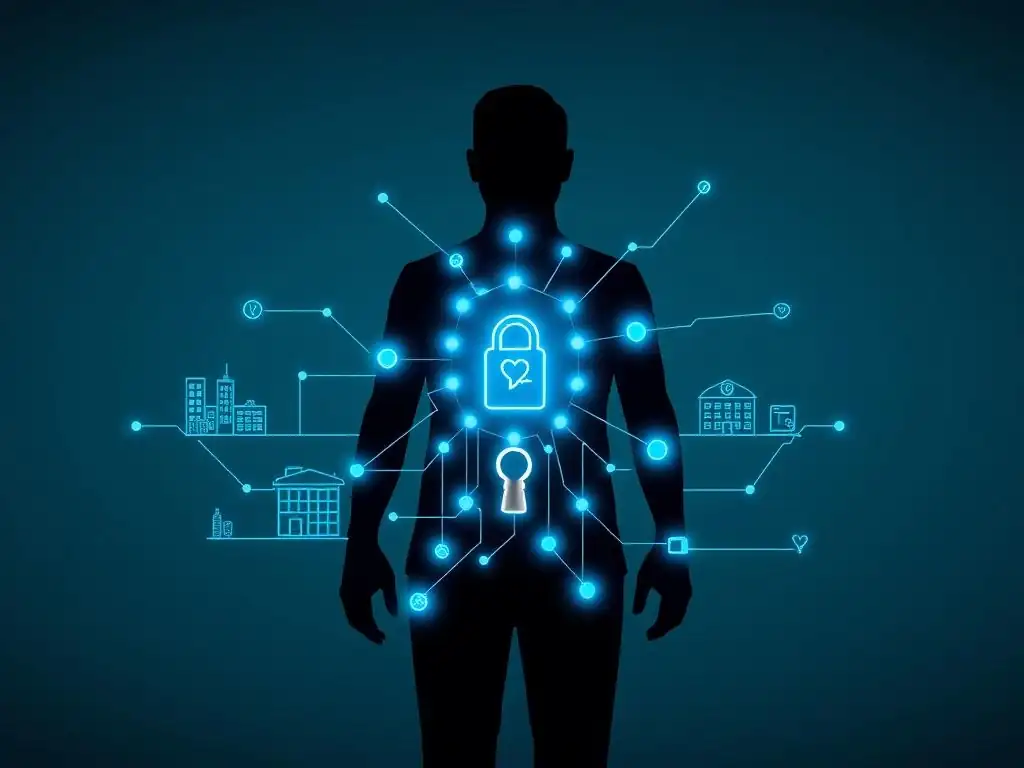
Secure Storage and Sharing of Electronic Health Records (EHRs)
One of the most prominent use cases for blockchain cryptography healthcare data is the secure management of Electronic Health Records (EHRs). Currently, EHRs are typically stored in centralized databases managed by individual healthcare providers or systems. This leads to data silos, security vulnerabilities, and difficulties in sharing information between different providers involved in a patient's care. A blockchain-based system could store encrypted patient records or, more likely, cryptographic hashes and metadata pointing to encrypted records stored off-chain.
In such a system, the blockchain acts as an index and an access control layer. Patients could control who accesses their data via private keys and smart contracts. For example, a patient could grant temporary access to a new specialist, and this permission would be recorded and managed on the blockchain. The integrity of the record history is guaranteed by the blockchain's immutable ledger, and the confidentiality is maintained through strong encryption. This approach enhances security, gives patients control, and facilitates seamless, yet secure, data sharing across different healthcare entities.
Supply Chain Management for Pharmaceuticals and Medical Devices
Ensuring the integrity and authenticity of pharmaceuticals and medical devices is critical for patient safety. Counterfeit drugs and devices are a significant global problem, estimated by some reports to be a multi-billion dollar illicit industry. Tracking products through a complex supply chain, from manufacturer to distributor to pharmacy or hospital, is challenging with traditional, siloed systems.
Blockchain, combined with cryptographic techniques like digital signatures and hashing, can create a transparent, immutable ledger of a product's journey. Each step in the supply chain (manufacturing, packaging, shipping, receiving) can be recorded as a transaction on the blockchain, cryptographically signed by the participating entities. This creates a verifiable history that can help identify counterfeit products, track recalls more effectively, and ensure the integrity of the supply chain. Using blockchain cryptography healthcare data principles for product tracking enhances trust and safety from production to patient.
Identity Management and Patient Authentication on Blockchain Networks
Accurate patient identification and secure authentication are fundamental to healthcare, impacting everything from preventing medical errors to ensuring data privacy. Traditional methods often rely on vulnerable identifiers or centralized databases. Blockchain can provide a decentralized, secure framework for managing digital identities for patients, providers, and even medical devices.
Using cryptographic key pairs, individuals can control their digital identity and prove their authenticity when interacting with healthcare systems on the blockchain. For instance, a patient could use their private key to authenticate themselves when accessing their EHR or authorizing data sharing. Providers could use their keys to sign prescriptions or verify their credentials. This approach reduces reliance on easily compromised passwords or identifiers and provides a higher level of assurance regarding the identity of participants in healthcare transactions recorded on the blockchain, underpinned by robust blockchain cryptography healthcare data security.
Protecting Genomic Data with Blockchain-Based Encryption
Genomic data is incredibly sensitive and valuable, containing deeply personal information about an individual's health predispositions and identity. As genomic sequencing becomes more common, securely storing, sharing, and analyzing this data is a major challenge. Centralized genomic databases are attractive targets for attackers, and sharing data for research raises significant privacy concerns.
Blockchain offers a promising solution by allowing individuals to store encrypted genomic data (or hashes/pointers to it) on a decentralized network and control access permissions cryptographically. Using advanced encryption techniques, researchers could potentially perform analyses on encrypted genomic data without ever needing to decrypt the raw information, preserving privacy while enabling valuable studies. Smart contracts on the blockchain could manage consent and payment for data usage. This application of blockchain cryptography healthcare data protection could unlock the potential of genomic research while safeguarding individual privacy.
Challenges and Considerations for Implementing Blockchain Cryptography in Healthcare
Scalability Issues with Blockchain in Healthcare
One of the significant challenges facing the widespread adoption of blockchain in healthcare is scalability. Public blockchains like Bitcoin or Ethereum, while highly secure due to decentralization, can process a limited number of transactions per second compared to the massive volume of data and transactions generated by healthcare systems globally. Even permissioned blockchains, often considered more suitable for enterprise use, can face performance bottlenecks as the network grows and the complexity of operations increases.
Handling millions of patient records, daily appointments, lab results, and billing transactions requires a system capable of high throughput and low latency. Current blockchain architectures may struggle to meet these demands efficiently without significant advancements or the use of layer-2 scaling solutions. While blockchain cryptography healthcare data offers robust security, ensuring the system can handle the sheer volume of healthcare operations remains a key technical hurdle requiring ongoing research and development.
Regulatory Compliance and Data Privacy Regulations (HIPAA)
Implementing blockchain solutions in healthcare must navigate a complex landscape of regulatory requirements, particularly concerning data privacy. In the United States, the Health Insurance Portability and Accountability Act (HIPAA) sets strict standards for protecting Protected Health Information (PHI). HIPAA requires that covered entities ensure the confidentiality, integrity, and availability of all e-PHI and protect against reasonably anticipated threats and impermissible uses or disclosures.
While blockchain's immutability can aid in data integrity and auditability, storing PHI directly on an immutable ledger, even encrypted, raises questions about the "right to be forgotten" or the ability to amend records, which are provisions in regulations like GDPR and, to some extent, HIPAA. Healthcare organizations must carefully design blockchain solutions to comply with these regulations, potentially by storing only hashes or pointers to encrypted data off-chain, managed through cryptographic keys and access controls on the blockchain. Navigating these legal and compliance issues is paramount for successful blockchain cryptography healthcare data implementation.
Interoperability with Existing Healthcare Systems
The healthcare industry relies on a vast and often outdated ecosystem of legacy IT systems, including various EHR platforms, laboratory information systems, and billing software. Integrating a new blockchain-based system with these existing, often proprietary, systems presents a significant technical and logistical challenge. Data formats, communication protocols, and data models vary widely, making seamless exchange difficult.
Building interfaces and middleware to connect blockchain networks with these traditional systems requires substantial effort and investment. Furthermore, ensuring that the security benefits of blockchain cryptography healthcare data are not compromised by vulnerabilities in the integration layers is critical. Achieving true interoperability will require industry-wide standards and collaborative efforts to build bridges between the decentralized ledger and the established healthcare IT infrastructure.
Quantum Computing Threats to Blockchain-Based Healthcare Systems
A long-term, but significant, challenge to current blockchain implementations lies in the potential advent of powerful quantum computers. Many of the cryptographic algorithms widely used today, including those for digital signatures (like ECDSA, used in Bitcoin and Ethereum) and certain encryption methods, are theoretically vulnerable to attacks by large-scale quantum computers (specifically, Shor's algorithm for breaking public-key cryptography and Grover's algorithm for potentially weakening hashing).
If quantum computers become powerful enough, they could potentially forge digital signatures, allowing malicious actors to impersonate users or tamper with transactions on a blockchain, or even break the encryption protecting sensitive data. While the timeline for such a threat is uncertain, healthcare systems planning long-term blockchain adoption must consider migrating to post-quantum cryptographic algorithms. Research into "quantum-resistant" or "post-quantum" cryptography is ongoing, and future blockchain cryptography healthcare data solutions will need to incorporate these new standards to maintain long-term security.
Future Trends in Blockchain Cryptography for Healthcare Data Security
Emerging Cryptographic Techniques for Enhanced Privacy
The future of blockchain cryptography healthcare data security will likely see the increased adoption of advanced cryptographic techniques focused on enhancing privacy while still enabling data utility. Beyond standard encryption, techniques like Homomorphic Encryption (HE) are gaining traction. HE allows computations to be performed directly on encrypted data without requiring decryption, meaning sensitive patient information could be analyzed for research or AI training while remaining encrypted throughout the process.
Another promising area is Secure Multi-Party Computation (MPC), which enables multiple parties to jointly compute a function over their inputs while keeping those inputs private. In healthcare, MPC could allow different hospitals to collaboratively analyze aggregated patient data for epidemiological studies or drug efficacy research without any single party, or the computing entity, seeing the raw data from others. These techniques represent a significant leap forward in balancing data sharing for public good with stringent individual privacy requirements.
The Role of Zero-Knowledge Proofs in Healthcare Data Sharing
Zero-Knowledge Proofs (ZKPs) are cryptographic protocols that allow one party (the prover) to prove to another party (the verifier) that a statement is true, without revealing any information beyond the validity of the statement itself. For instance, a ZKP could prove that a patient meets the criteria for a clinical trial (e.g., is within a certain age range, has a specific condition) without revealing the patient's exact age or detailed medical history.
In healthcare, ZKPs could revolutionize how data is shared and verified while preserving privacy. They could be used to verify patient eligibility for services, prove insurance coverage, or authenticate credentials without exposing underlying sensitive information. Integrating ZKPs into blockchain cryptography healthcare data solutions would enable more sophisticated and privacy-preserving interactions and data exchanges, significantly reducing the risk of exposing sensitive PHI during verification processes.
Advancements in Federated Learning on Blockchain for Healthcare Research
Federated Learning (FL) is a machine learning approach that trains an algorithm across multiple decentralized edge devices or servers holding local data samples, without exchanging data samples themselves. Blockchain can complement FL by providing a decentralized, transparent, and secure platform to coordinate the training process, manage model updates, and incentivize participation while maintaining data locality and privacy.
In healthcare, FL on blockchain could enable researchers to train powerful AI models on vast amounts of patient data residing in different hospitals or clinics without the data ever leaving those institutions. The blockchain could record and verify the aggregation of model updates, ensuring transparency and integrity of the training process. This combination of FL and blockchain cryptography healthcare data management offers a path towards leveraging distributed patient data for medical breakthroughs while upholding the highest standards of privacy and security, addressing a major barrier to collaborative healthcare research.
Conclusion: The Future of Secure Healthcare Data with Blockchain
Key Takeaways: Blockchain Cryptography for Healthcare Transformation
Blockchain technology, underpinned by robust cryptography, offers a transformative approach to securing sensitive healthcare data. The core cryptographic principles – hashing, digital signatures, and encryption – provide the foundation for enhanced data integrity, authenticity, and confidentiality. These elements collectively address critical vulnerabilities inherent in traditional, centralized healthcare IT systems, which have proven increasingly susceptible to breaches and manipulation.
Key takeaways include the immutable audit trail provided by cryptographic hashing, ensuring verifiable data history; the strong authentication and non-repudiation enabled by digital signatures for secure transactions; and the vital role of encryption in maintaining patient data confidentiality, whether data is stored on or referenced by the chain. While challenges like scalability, regulatory compliance, and integration with legacy systems remain, ongoing advancements in blockchain cryptography healthcare data solutions are actively addressing these hurdles.
Blockchain's Potential to Revolutionize Data Security and Patient Empowerment in Healthcare
The potential of blockchain to revolutionize data security and empower patients in healthcare is significant. By shifting from siloed, vulnerable databases to a decentralized, cryptographically secured ledger, healthcare organizations can build more resilient and trustworthy systems. This paradigm shift not only strengthens defenses against cyber threats but also creates opportunities for more efficient and secure data sharing among authorized parties.
Crucially, blockchain's ability to support granular, auditable access control, potentially managed directly by patients through cryptographic keys, moves towards a future where individuals have greater sovereignty over their health information. As cryptographic techniques continue to evolve, particularly with advancements in privacy-preserving methods like ZKPs and HE, and integration challenges are overcome, blockchain cryptography healthcare data management is poised to play a pivotal role in building a more secure, interoperable, and patient-centric healthcare ecosystem.
Frequently Asked Questions
How does blockchain cryptography enhance the security of healthcare data?
Blockchain cryptography utilizes hash functions and digital signatures to ensure data integrity and authenticity. This makes healthcare data stored on a blockchain tamper-proof and verifiable.
What are some specific cryptographic techniques used in blockchain for healthcare?
Common techniques include symmetric and asymmetric encryption, hashing algorithms (like SHA-256), and Merkle trees for efficient data verification. These methods protect data at rest and in transit.
How does blockchain address the challenge of data privacy in healthcare, considering regulations like HIPAA?
Blockchain can employ zero-knowledge proofs and homomorphic encryption to allow data analysis without revealing the underlying patient information, helping to meet HIPAA compliance.
What role does cryptography play in ensuring the immutability of healthcare records on a blockchain?
Cryptography, specifically cryptographic hashing, creates a unique "fingerprint" of each data block. Any alteration to a block changes its hash, instantly revealing data tampering.
Beyond security, how does blockchain cryptography contribute to the overall efficiency of healthcare data management?
By enabling secure and verifiable data sharing, blockchain cryptography streamlines processes like patient consent management and interoperability between different healthcare providers, reducing administrative overhead.
Final Reflection: Securing Healthcare's Future with Cryptography
The intricate dance between cryptography and blockchain, as explored in this article, is not merely a theoretical exercise; it is a critical imperative for safeguarding the future of healthcare data. The vulnerabilities inherent in traditional systems demand robust, decentralized solutions, and the synergy between these technologies offers a powerful pathway towards achieving that security. The stakes are high, and the need for innovation in this space is more pressing than ever.
This exploration has underscored how deeply the security of our personal health information is intertwined with technological advancements. The potential for misuse and exploitation of sensitive data is a constant threat, and the promise of blockchain cryptography offers a beacon of hope. Data is the new oil, and healthcare data is the most valuable resource of all.
This quote, though often used in a commercial context, highlights the profound responsibility we have to protect this precious commodity.
As we conclude, I urge you to consider the implications of this technology in your own life. How can you advocate for the adoption of secure, privacy-preserving solutions in healthcare? How can you become a more informed and empowered patient, demanding greater transparency and control over your own data? The future of healthcare data security is not just a technological challenge; it is a collective responsibility. Let us embrace the potential of blockchain cryptography to build a more secure and trustworthy healthcare ecosystem for all.
Unlock the Future of Secure Healthcare: Start Today!
Thank you for exploring how cryptography is transforming healthcare data security through blockchain technology. You've gained valuable insights into protecting sensitive patient information. Now, it's time to put that knowledge into practice.
- Explore Further: Investigate the cryptographic algorithms commonly used in healthcare blockchain solutions to understand their strengths and limitations.
- Share Your Insights: Discuss this article with colleagues and peers to promote collaborative learning and raise awareness about secure data management.
- Get Involved: Consider contributing to open-source healthcare blockchain projects that emphasize data security and patient privacy.
Which cryptographic technique discussed in this article do you believe has the greatest potential for securing healthcare data in the future? Share your thoughts below!
Leave a Reply