
The Most Innovative PlaytoEarn Games to Watch This Year

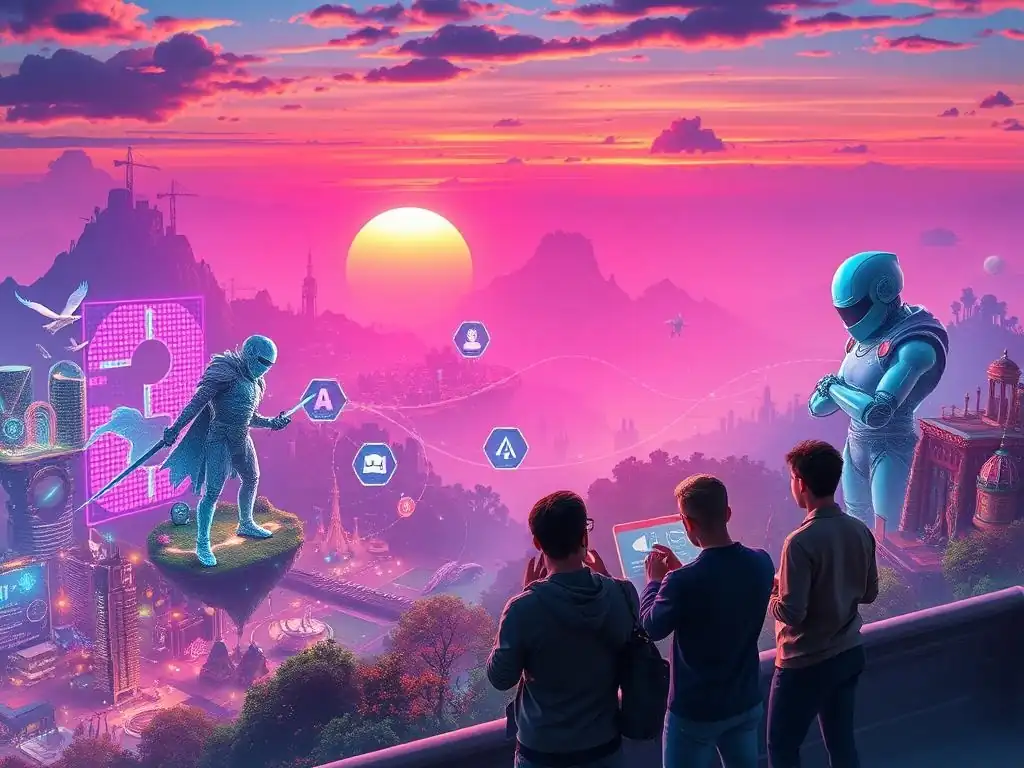
Welcome to Blockchain Trends, your guide to understanding the revolution beyond Bitcoin. Are you ready to explore how blockchain is reshaping industries, from finance to gaming?
Delve into the exciting world of PlaytoEarn blockchain gaming trends in our latest article, where we uncover the most innovative games set to redefine the future of play. What makes these games so groundbreaking, and how are they impacting the broader blockchain ecosystem? Let's find out...
- Innovative Play-to-Earn Games: Blockchain Gaming Trends in 2024
- Top Play-to-Earn Games Redefining Blockchain Gaming in 2024
- Analyzing the Innovation Driving These Play-to-Earn Games
- The Future of Play-to-Earn and Blockchain Gaming Trends
- Investing in Play-to-Earn: Risks and Opportunities
- Conclusion: Embracing the Future of Gaming with Play-to-Earn Blockchain Gaming Trends
-
Frequently Asked Questions
- What are some key benefits of PlaytoEarn blockchain gaming?
- How is blockchain technology essential to PlaytoEarn gaming?
- What are some emerging trends in PlaytoEarn blockchain gaming beyond simple earning mechanics?
- What are some of the biggest challenges currently facing the PlaytoEarn blockchain gaming industry?
- How might regulation impact the future of PlaytoEarn blockchain games?
- Final Reflection: Embracing the Evolution of Play
- Unleash Your Inner Gamer: Dive Deeper into PlayToEarn!
Innovative Play-to-Earn Games: Blockchain Gaming Trends in 2024
What is Play-to-Earn and How Does it Work?
Play-to-Earn (P2E) gaming represents a paradigm shift in the gaming industry, transitioning from a traditional pay-to-play model to one where players can earn cryptocurrency and NFTs (Non-Fungible Tokens) through gameplay. This innovative model leverages blockchain technology to empower players with true ownership of in-game assets. Unlike conventional games where virtual items are confined to the game's ecosystem and controlled by the developers, P2E games allow players to own, trade, and even sell their digital assets on open marketplaces. This fundamental difference creates real economic value for players' time and effort invested in the game.
The core mechanism of P2E revolves around rewarding players for their contributions to the game's ecosystem. These contributions can take various forms, including winning battles, completing quests, participating in in-game economies, or creating and trading digital items. Rewards are typically distributed in the form of cryptocurrencies or NFTs, which players can then exchange for fiat currency or other cryptocurrencies, effectively turning gameplay into a potential source of income. This concept has resonated strongly, particularly in regions where traditional income opportunities are limited, driving significant growth in the PlaytoEarn blockchain gaming trends.
The Evolution of Gaming: From Pay-to-Play to P2E
The gaming industry has undergone a significant evolution, moving from arcade-style pay-per-play models to subscription-based services and, more recently, the free-to-play (F2P) model with in-app purchases. While F2P games democratized access to gaming, they often operate under a 'whale' economy, where a small percentage of players contribute the majority of revenue through microtransactions. This model, while profitable for developers, often leaves the vast majority of players with limited economic benefit, despite their time and engagement.
Play-to-Earn represents the next stage in this evolution, directly addressing the limitations of previous models by rewarding player participation with tangible economic value. It shifts the power dynamic, distributing ownership and potential profits more equitably among players. Early iterations of blockchain gaming, while demonstrating the potential of P2E, often faced criticism for focusing more on financial incentives than engaging gameplay. However, the PlaytoEarn blockchain gaming trends in 2024 are showcasing a maturation of the sector, with developers increasingly prioritizing both fun and rewarding gameplay experiences, leading to more sustainable and engaging P2E ecosystems.
Key Play-to-Earn Blockchain Gaming Trends Shaping the Industry in 2024
Several key trends are defining the PlaytoEarn blockchain gaming landscape in 2024. Firstly, we are seeing a significant improvement in game quality. Early P2E games were often rudimentary in terms of graphics and gameplay mechanics. However, newer titles are incorporating higher fidelity graphics, more complex game mechanics, and engaging narratives, making them more appealing to a wider audience beyond just crypto enthusiasts. This focus on quality is crucial for attracting and retaining players, driving the long-term success of PlaytoEarn blockchain gaming trends.
Secondly, interoperability and cross-chain functionality are becoming increasingly important. Players are no longer confined to single blockchain ecosystems. Games are being developed to operate across multiple blockchains, allowing for greater asset portability and liquidity. This trend fosters larger player communities and more robust in-game economies. Finally, the integration of Decentralized Autonomous Organizations (DAOs) into game governance is emerging. This allows players to have a direct say in the development and direction of the game, further decentralizing power and aligning incentives between developers and the player base, shaping the future of PlaytoEarn blockchain gaming trends.
Top Play-to-Earn Games Redefining Blockchain Gaming in 2024
Axie Infinity: A Pioneering Creature Battler in Play-to-Earn Mechanics
Axie Infinity, developed by Sky Mavis, stands as a pioneering example of a successful Play-to-Earn game. Inspired by Pokémon, Axie Infinity is a creature battling game built on the Ronin blockchain, an Ethereum sidechain designed for scalability and low transaction fees. Players collect, breed, battle, and trade digital creatures called Axies, which are represented as NFTs. Axie Infinity gained significant traction, particularly in regions like Southeast Asia, demonstrating the real-world economic impact of PlaytoEarn blockchain gaming trends.
Unique Play-to-Earn Features of Axie Infinity
Axie Infinity's unique P2E features are deeply integrated into its gameplay. Players earn Smooth Love Potion (SLP) tokens by winning battles in Adventure mode and the Arena. SLP is then used to breed new Axies, creating a closed-loop economy. Furthermore, players can earn AXS, Axie Infinity's governance token, by participating in tournaments and ranking high on leaderboards. Land ownership in Lunacia, the Axie Infinity metaverse, also presents earning opportunities through resource management and potential rent from other players. These diverse earning mechanisms contribute to Axie Infinity's position as a leader in PlaytoEarn blockchain gaming trends.
Axie Infinity's Tokenomics and Earning Potential
Axie Infinity operates with a dual-token system: SLP and AXS. SLP is the in-game utility token earned through gameplay and used for breeding Axies. Its price is influenced by supply and demand dynamics within the game's economy, and it can be traded on cryptocurrency exchanges.
AXS, the governance token, grants holders voting rights in the Axie DAO and can be staked for rewards. While the earning potential in Axie Infinity has fluctuated alongside the crypto market, during its peak in 2021, players in some regions were reportedly earning more than the average minimum wage through gameplay, highlighting the transformative potential of PlaytoEarn blockchain gaming trends. However, it’s important to note that earning potential can be volatile and depends on various factors including Axie prices, SLP values, and player skill.
Decentraland: Revolutionizing Virtual Worlds with Blockchain Integration
Decentraland is a decentralized virtual world built on the Ethereum blockchain, offering users unparalleled ownership and control over their digital experiences. Within Decentraland, users can purchase, develop, and monetize virtual land represented as NFTs. This metaverse platform distinguishes itself by its fully decentralized governance, allowing LAND owners to vote on policy updates and shape the future of the virtual world. Decentraland represents a significant step in the evolution of virtual worlds, integrating PlaytoEarn blockchain gaming trends within a broader metaverse context.
Exploring Decentraland's Innovative NFT Land Implementation
Decentraland's core innovation lies in its NFT-based land ownership system. Parcels of LAND are finite and represented as unique NFTs, ensuring verifiable scarcity and ownership. Users can purchase LAND and build upon it, creating diverse experiences ranging from virtual stores and art galleries to games and social hubs. The value of LAND is determined by factors such as location, proximity to popular districts, and the experiences built upon it. This NFT implementation has created a thriving digital real estate market within Decentraland, driving innovation within PlaytoEarn blockchain gaming trends and metaverse development.
How to Earn Crypto in Decentraland: A Gameplay Overview
Earning crypto in Decentraland is multifaceted. The primary method is through LAND ownership and monetization. LAND owners can rent out their parcels, host events and charge admission fees, create and sell virtual items on their LAND, or develop interactive experiences that generate revenue through various mechanisms.
Furthermore, users can participate in Decentraland's DAO governance and potentially earn rewards for their contributions. While direct "gameplay" in the traditional sense is not the primary focus, Decentraland offers a rich ecosystem of earning opportunities centered around creativity, community engagement, and digital asset ownership, aligning with the broader PlaytoEarn blockchain gaming trends in metaverse environments.
The Sandbox: A Metaverse Play-to-Earn Experience
The Sandbox is another leading metaverse platform leveraging blockchain technology to empower creators and players with true digital asset ownership. Built on the Ethereum blockchain, The Sandbox provides a voxel-based world where users can create, own, and monetize their gaming experiences and assets using NFTs and its utility token, SAND. The Sandbox emphasizes user-generated content and a community-driven economy, solidifying its place within the PlaytoEarn blockchain gaming trends.
Immersive Gameplay and Digital Asset Ownership in The Sandbox
The Sandbox offers a suite of tools that empower users to create voxel-based assets (ASSETS), game experiences, and even entire games within its metaverse. These creations can be minted as NFTs and traded on The Sandbox marketplace. Players can purchase LAND parcels, similar to Decentraland, and populate them with their ASSETS and experiences. The gameplay is centered around exploration, creation, and social interaction within this user-generated metaverse, with digital asset ownership at its core, reflecting key PlaytoEarn blockchain gaming trends.
The Community-Driven Economy of The Sandbox
The Sandbox's economy is heavily community-driven. Creators earn SAND by selling their ASSETS and experiences on the marketplace. LAND owners can monetize their parcels by hosting games, renting them out, or creating attractions. Players can earn SAND by participating in games and contests within the metaverse. The Sandbox Foundation also supports creators through grants and initiatives, fostering a vibrant and self-sustaining ecosystem. This emphasis on community and creator empowerment is a defining feature of The Sandbox and a significant trend within PlaytoEarn blockchain gaming.
Alien Worlds: A Space Exploration Play-to-Earn Blockchain Game
Alien Worlds distinguishes itself with its focus on decentralized exploration and resource gathering within a vast space-themed metaverse. Built on the WAX blockchain, known for its speed and low transaction fees, Alien Worlds allows players to explore planets, mine resources, and participate in decentralized governance through Planet DAOs. Alien Worlds’ accessibility and scalability have contributed to its popularity within PlaytoEarn blockchain gaming trends.
Accessibility and Scalability of Alien Worlds
Alien Worlds stands out for its accessibility. It offers a low barrier to entry, allowing players to start playing with minimal upfront investment. The WAX blockchain's scalability enables a high volume of transactions and players without compromising performance. This accessibility has contributed to Alien Worlds attracting a large player base globally, demonstrating the potential for mass adoption within PlaytoEarn blockchain gaming trends. Furthermore, the game's browser-based nature eliminates the need for high-end hardware, further enhancing its accessibility.
Earning Opportunities and Reward Systems in Alien Worlds
Earning in Alien Worlds primarily revolves around mining Trilium (TLM), the game's native token. Players use NFT tools to mine TLM on different planets. Each planet operates as a decentralized autonomous organization (DAO), and players can participate in planet governance by staking TLM. Planets reward active participants with TLM, creating a decentralized reward system. Players can also earn by renting out land, participating in missions, and trading NFTs. Alien Worlds' diverse earning mechanisms and decentralized governance model showcase innovative approaches within PlaytoEarn blockchain gaming trends.
Analyzing the Innovation Driving These Play-to-Earn Games
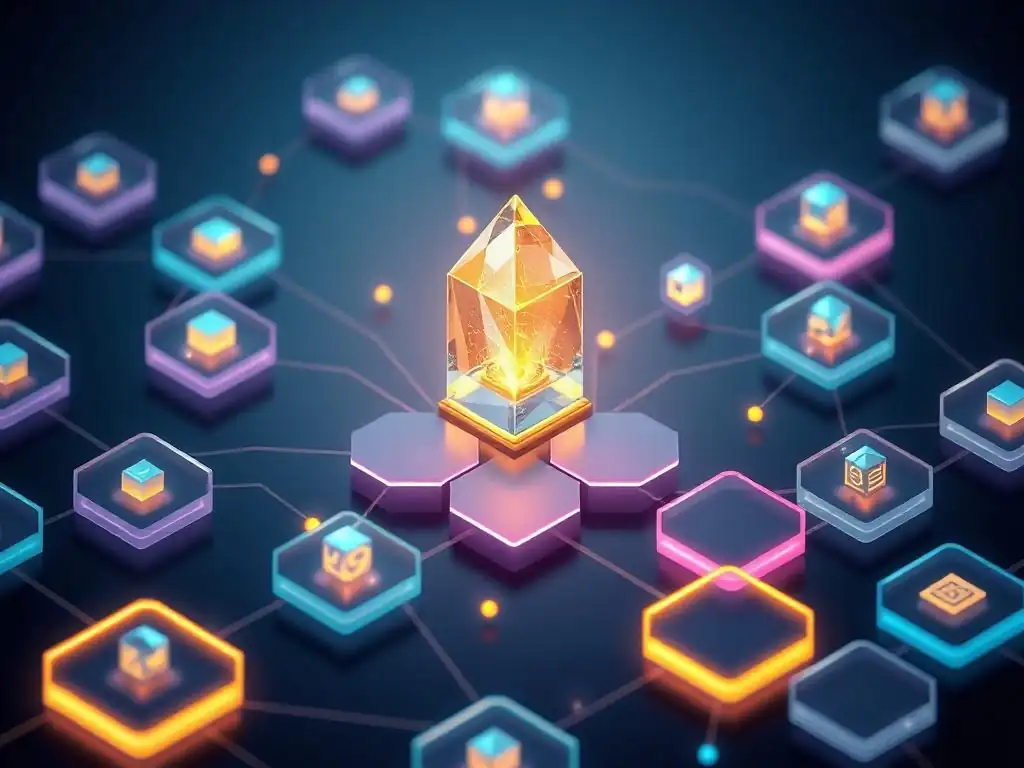
Blockchain Technology Empowering Player Ownership
The fundamental innovation driving PlaytoEarn games is blockchain technology's ability to empower players with true digital asset ownership. Unlike traditional games where in-game items are centralized and controlled by game developers, blockchain allows for the creation of NFTs that represent unique digital assets owned by players. This ownership extends beyond the game itself, as NFTs can be traded on open marketplaces, granting players real economic agency and control over their in-game investments. This shift in ownership is a core tenet of PlaytoEarn blockchain gaming trends.
This player ownership model fosters a more engaged and invested player base. Players are incentivized to contribute to the game's ecosystem, as their efforts can translate into tangible economic rewards. Furthermore, the transparency and immutability of blockchain technology ensure verifiable scarcity and provenance of digital assets, enhancing their value and trust within the game's economy. This paradigm shift in ownership is revolutionizing the relationship between players and game developers, driving the evolution of PlaytoEarn blockchain gaming trends.
Emerging Trends in NFT Integration within P2E Games
NFT integration within P2E games is becoming increasingly sophisticated. Beyond simple digital collectibles, NFTs are evolving to represent functional in-game assets with utility and dynamic properties. We are seeing NFTs with evolving attributes based on gameplay, NFTs that grant access to exclusive content or features, and even fractionalized NFTs allowing shared ownership of high-value assets. These advancements are pushing the boundaries of NFT utility and creating more engaging and dynamic PlaytoEarn blockchain gaming trends.
Furthermore, interoperable NFTs are emerging as a key trend. NFTs are no longer confined to single game ecosystems. Projects are exploring ways to enable NFTs to be used across multiple games and metaverse platforms, enhancing their utility and value. This interoperability fosters a more interconnected and open metaverse, where players can carry their digital identities and assets across different virtual worlds, a significant evolution within PlaytoEarn blockchain gaming trends.
Decentralized Finance (DeFi) Elements in Play-to-Earn Ecosystems
Decentralized Finance (DeFi) principles are increasingly being integrated into PlaytoEarn ecosystems, adding another layer of innovation. Staking mechanisms, yield farming opportunities, and decentralized exchanges (DEXs) are becoming more prevalent within P2E games. These DeFi elements allow players to earn passive income on their in-game assets, participate in decentralized governance through token staking, and seamlessly trade in-game tokens on DEXs. This integration of DeFi is enhancing the economic depth and complexity of PlaytoEarn blockchain gaming trends.
Moreover, DeFi is enabling new forms of player-owned economies within games. Decentralized autonomous organizations (DAOs) are being used to govern game economies, distribute rewards, and manage in-game resources. This decentralization of economic control empowers players and aligns incentives, fostering more sustainable and equitable PlaytoEarn ecosystems. The synergy between P2E gaming and DeFi is creating exciting new possibilities for player empowerment and economic participation in virtual worlds, shaping the future of PlaytoEarn blockchain gaming trends.
The Future of Play-to-Earn and Blockchain Gaming Trends
Scalability Solutions for Mass Adoption of P2E Games
Scalability remains a critical challenge for the mass adoption of PlaytoEarn games. Early blockchain networks, like Ethereum, faced limitations in transaction throughput and high gas fees, hindering the seamless gameplay experience required for mainstream adoption. However, significant advancements in scalability solutions are paving the way for the future of PlaytoEarn blockchain gaming trends.
Layer-2 scaling solutions, such as sidechains (like Ronin used by Axie Infinity) and rollups, are addressing these limitations by processing transactions off the main Ethereum chain, significantly reducing gas fees and increasing transaction speeds. Furthermore, alternative blockchains designed for gaming, like WAX and Solana, are offering higher throughput and lower fees, making them attractive platforms for P2E game development. These scalability solutions are crucial for enabling PlaytoEarn games to handle millions of players and transactions, paving the way for mass adoption and the continued growth of PlaytoEarn blockchain gaming trends.
Regulatory Landscape and the Future of Blockchain Gaming
The regulatory landscape surrounding blockchain gaming and PlaytoEarn models is still evolving and presents both challenges and opportunities. Governments worldwide are grappling with how to classify and regulate cryptocurrencies and NFTs, and these regulations will directly impact the PlaytoEarn blockchain gaming trends. Clarity and favorable regulatory frameworks are essential for fostering innovation and attracting mainstream adoption.
Some jurisdictions are taking a proactive approach, recognizing the potential of blockchain gaming and creating regulatory sandboxes to encourage innovation. However, other regions are taking a more cautious stance, raising concerns about taxation, securities regulations, and consumer protection. The future of PlaytoEarn blockchain gaming trends will be significantly shaped by how regulators navigate these complex issues and strike a balance between fostering innovation and mitigating potential risks.
The Long-Term Sustainability of Play-to-Earn Models
The long-term sustainability of PlaytoEarn models is a crucial consideration for the future of blockchain gaming. Early P2E games sometimes faced challenges related to tokenomics and economic imbalances, leading to inflationary pressures or unsustainable reward systems. However, developers are learning from these early experiences and implementing more sophisticated economic models to ensure the long-term viability of PlaytoEarn blockchain gaming trends.
Sustainable P2E models are focusing on balancing player rewards with economic sinks, such as token burning mechanisms, deflationary tokenomics, and robust in-game economies that create intrinsic value beyond just financial incentives. Furthermore, games that prioritize engaging gameplay and community building, alongside P2E mechanics, are more likely to foster long-term player retention and a thriving ecosystem. The evolution towards more sustainable and balanced P2E models is crucial for the continued growth and maturity of PlaytoEarn blockchain gaming trends.
Investing in Play-to-Earn: Risks and Opportunities
Due Diligence for Play-to-Earn Game Investments
Investing in Play-to-Earn games presents both exciting opportunities and inherent risks. Due diligence is paramount before investing in any P2E game project. This includes thoroughly researching the game's development team, its whitepaper, tokenomics, gameplay mechanics, and community sentiment. Understanding the game's underlying blockchain technology and its scalability is also crucial. Analyzing the game's player base growth, transaction volume, and overall ecosystem health can provide valuable insights into its potential and risks associated with PlaytoEarn blockchain gaming trends.
Furthermore, it is important to assess the game's competitors and its unique value proposition within the crowded P2E gaming market. Evaluating the game's social media presence, community forums, and developer engagement can provide a sense of the project's transparency and long-term commitment. Thorough due diligence is essential for making informed investment decisions in the dynamic and evolving landscape of PlaytoEarn blockchain gaming trends.
Understanding Tokenomics and Game Economics
A deep understanding of tokenomics and game economics is crucial for navigating the investment landscape of PlaytoEarn games. Tokenomics refers to the economic model of the game's tokens, including token supply, distribution, utility, and mechanisms for token burning or deflation. Game economics encompasses the in-game economy, reward systems, and mechanisms for value creation and distribution within the game ecosystem. Analyzing these aspects is essential for assessing the long-term sustainability and potential profitability of PlaytoEarn blockchain gaming trends.
Understanding the token distribution model, whether it's fair launch, pre-sale, or investor allocation, can provide insights into potential risks and opportunities. Analyzing the token utility within the game, such as its use for in-game purchases, breeding, governance, or staking, helps determine its demand drivers. Assessing the game's economic sinks and inflation control mechanisms is crucial for evaluating its long-term economic health and the sustainability of PlaytoEarn blockchain gaming trends.
Play-to-Earn assets, including in-game tokens and NFTs, are subject to market volatility, similar to the broader cryptocurrency market. Their prices can fluctuate significantly based on market sentiment, game popularity, and overall crypto market trends. Investors need to be aware of this volatility and manage their risk accordingly when investing in PlaytoEarn blockchain gaming trends.
Diversification is a key strategy for mitigating risk in P2E game investments. Spreading investments across multiple games and asset classes can help reduce exposure to the volatility of any single game or asset. Furthermore, understanding the game's community sentiment and monitoring key metrics, such as player activity and transaction volume, can provide early indicators of potential shifts in asset values. Navigating the volatility of P2E assets requires a balanced approach of risk management, due diligence, and staying informed about PlaytoEarn blockchain gaming trends and market dynamics.
Conclusion: Embracing the Future of Gaming with Play-to-Earn Blockchain Gaming Trends
Play-to-Earn blockchain gaming is not just a fleeting trend; it represents a fundamental shift in the gaming industry, empowering players with ownership, economic opportunities, and a more engaging gaming experience. The innovative games discussed, from Axie Infinity's creature battling to Decentraland and The Sandbox's metaverse experiences, are just the tip of the iceberg. As blockchain technology continues to evolve and mature, we can expect even more sophisticated and immersive PlaytoEarn games to emerge, further solidifying PlaytoEarn blockchain gaming trends.
The future of gaming is increasingly decentralized, player-centric, and economically rewarding. While challenges related to scalability, regulation, and sustainability remain, the potential of Play-to-Earn to revolutionize the gaming industry and create new economic opportunities is undeniable. Embracing these PlaytoEarn blockchain gaming trends and understanding their underlying principles is crucial for both gamers and investors looking to participate in the next evolution of interactive entertainment.
Frequently Asked Questions
What are some key benefits of PlaytoEarn blockchain gaming?
PlaytoEarn (P2E) games allow players to earn rewards, often in the form of cryptocurrency or NFTs, for their in-game activities. This ownership and potential for profit is a major draw.
How is blockchain technology essential to PlaytoEarn gaming?
Blockchain provides transparency and security for in-game assets. It enables true ownership of items and allows for verifiable scarcity, unlike traditional gaming.
What are some emerging trends in PlaytoEarn blockchain gaming beyond simple earning mechanics?
Innovative P2E games are incorporating decentralized finance (DeFi) elements like staking and yield farming. They also emphasize player governance and community building.
What are some of the biggest challenges currently facing the PlaytoEarn blockchain gaming industry?
Sustainability of the economic models is a major concern. Also, attracting a wider audience beyond crypto enthusiasts requires improved gameplay quality and accessibility.
How might regulation impact the future of PlaytoEarn blockchain games?
Increased regulation could bring legitimacy to the space, but excessive restrictions could stifle innovation and limit player earnings in certain regions.
Final Reflection: Embracing the Evolution of Play
The landscape of gaming is undergoing a seismic shift, and PlaytoEarn blockchain gaming trends are no longer a distant promise but a tangible reality shaping the future of entertainment. The games discussed in this article represent more than just digital diversions; they are pioneering a new economic model where players are active participants in value creation, blurring the lines between leisure and opportunity.
The rise of PlaytoEarn has profoundly impacted the cultural perception of gaming, moving it from a purely consumptive activity to one with the potential for tangible rewards. This shift is particularly significant for communities in developing nations, where PlaytoEarn offers a pathway to economic empowerment. The future of work is play, and the future of play is work.
This quote encapsulates the transformative potential of blockchain gaming, suggesting a future where our passions can directly contribute to our livelihoods.
As we stand on the cusp of this new era, let us not simply be passive observers. Let us actively explore the possibilities that PlaytoEarn offers, engage with these innovative games, and contribute to the evolution of a more equitable and rewarding gaming ecosystem. The future of play is being written now, and your participation can help shape a world where passion and prosperity go hand in hand.
Unleash Your Inner Gamer: Dive Deeper into PlayToEarn!
Thanks for exploring the cutting edge of PlayToEarn gaming with us! We hope you're now equipped with some exciting new titles to watch and perhaps even jump into. Ready to take your exploration further?
- Choose one of the games highlighted and create an account to start playing! It's the best way to truly experience the innovation firsthand.
- Join the Blockchain Trends community forums and share your thoughts on your favorite PlayToEarn games. Let's discuss the future of gaming together!
- Explore other articles on Blockchain Trends related to NFT gaming and crypto investing to broaden your understanding of the PlayToEarn ecosystem.
Which PlayToEarn game from the list are you most excited to try, and what makes it stand out from the rest? Share your first impressions in the comments below!
Leave a Reply