
Smart Contracts for Real Estate Financing: Innovative Lending Solutions

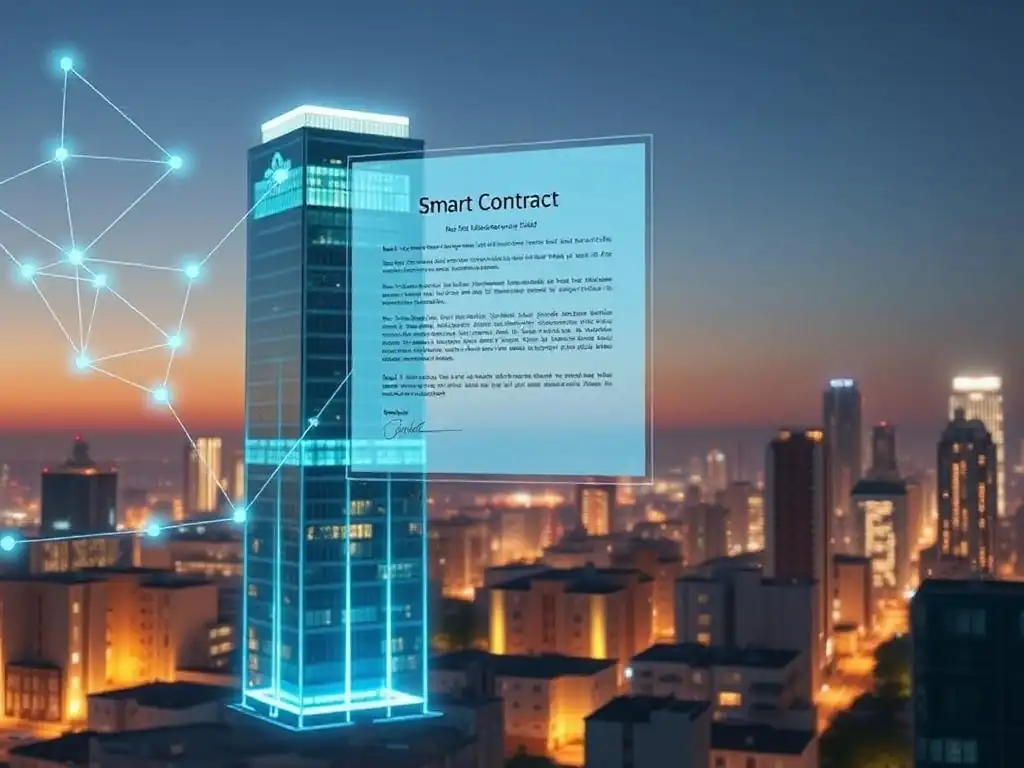
Welcome to Blockchain Trends, your guide to understanding the revolutionary power of blockchain technology beyond the hype. Are you ready to explore how blockchain is reshaping industries?
Dive into our latest article where we unravel the intricacies of Blockchain real estate financing contracts, examining how smart contracts are paving the way for innovative and more efficient lending solutions. Discover how this technology is transforming the real estate landscape and unlock the potential of decentralized finance. Intrigued? Read on to learn more and see what the future holds!
Smart Contracts for Real Estate Financing: Innovative Lending Solutions
- Introduction: Revolutionizing Real Estate Lending with Smart Contracts
- The Problem: Inefficiencies in Traditional Real Estate Financing
- Smart Contracts as a Solution: Streamlining Real Estate Financing
- Key Benefits of Blockchain Real Estate Financing Contracts
- How Blockchain Real Estate Financing Contracts Work: A Step-by-Step Explanation
- Use Cases: Smart Contracts in Action for Real Estate Lending
- Challenges and Considerations for Smart Contract Adoption in Real Estate Financing
- The Future of Real Estate Financing: A Blockchain-Powered Ecosystem
- Conclusion: Embracing Innovation in Real Estate Finance through Smart Contracts
-
Frequently Asked Questions
- What are smart contracts in the context of real estate financing?
- How can blockchain enhance transparency in real estate financing contracts?
- What are the potential benefits of using blockchain real estate financing contracts for lenders?
- What regulatory challenges exist for smart contracts in real estate financing?
- How do decentralized finance (DeFi) platforms integrate with blockchain real estate financing contracts?
- Final Reflection: Embracing the Future of Real Estate Finance
- Revolutionize Your Real Estate Lending Journey!
Introduction: Revolutionizing Real Estate Lending with Smart Contracts
The Rise of Blockchain in Real Estate Financing
The traditional real estate financing landscape, long characterized by intricate processes and numerous intermediaries, is on the cusp of significant transformation thanks to blockchain technology. While blockchain is most commonly associated with cryptocurrencies like Bitcoin, its underlying distributed ledger technology offers profound potential for enhancing transparency, efficiency, and security across various industries, including real estate.
The application of blockchain in real estate financing is moving beyond theoretical discussions into practical implementation, promising to reshape how properties are financed, loans are managed, and investments are made. This shift is particularly evident in the growing interest and development surrounding blockchain real estate financing contracts.
This burgeoning adoption is driven by the inherent inefficiencies within existing systems. Real estate transactions, especially those involving financing, are notoriously slow, expensive, and opaque. From lengthy appraisal and underwriting processes to the multitude of fees charged by intermediaries like banks, brokers, and title companies, the current model presents significant friction.
Blockchain technology, with its ability to create immutable, transparent, and secure records and automate processes through smart contracts, offers a compelling alternative. Early estimates and pilot programs suggest potential cost reductions of 1-3% of transaction value and time savings measured in weeks, highlighting the tangible benefits that blockchain real estate financing contracts can deliver.
Understanding Smart Contracts: A Foundation for Lending Innovation
At the heart of blockchain's disruptive potential for real estate financing lies the concept of smart contracts. Simply put, smart contracts are self-executing contracts with the terms of the agreement directly written into lines of code. This code resides on a blockchain network, meaning the agreement is decentralized, transparent to relevant parties, and immutable once deployed. Unlike traditional contracts that rely on legal systems and third parties for enforcement, smart contracts automatically execute predefined actions when specified conditions are met. This automation eliminates the need for intermediaries to oversee or facilitate certain steps of a process.
In the context of blockchain real estate financing contracts, this means complex lending agreements can be codified. For example, a smart contract could be programmed to automatically disburse loan funds to a seller's digital wallet once specific conditions, such as the digital transfer of a tokenized property title, are verified on the blockchain.
Similarly, loan repayments could be automated, with the smart contract tracking payment schedules and automatically initiating actions (like transferring payments or triggering notifications) based on whether payments are received or missed. This foundational technology provides the mechanism for building more efficient, secure, and transparent lending solutions in the real estate sector.
The Problem: Inefficiencies in Traditional Real Estate Financing
Lengthy and Complex Loan Approval Processes
The process of securing a mortgage or real estate loan in traditional finance is often a protracted and arduous journey. Applicants typically face timelines ranging from 30 to 60 days, or even longer, from initial application to final closing. This complexity stems from the numerous steps involved, each requiring verification and approval from different parties. These steps include application submission, credit checks, income verification, property appraisal, title search and insurance, underwriting review, and legal documentation. Each stage adds time and introduces potential points of delay.
Moreover, the process involves a multitude of intermediaries, including loan officers, underwriters, appraisers, title companies, lawyers, and notaries. Coordinating these disparate entities, each with their own procedures and requirements, adds layers of administrative burden and communication overhead. For instance, an appraisal report might take one to two weeks to complete, and the title search another week, before underwriting can even begin its detailed review. This multi-party, multi-step process is inherently inefficient and creates frustration for both borrowers and lenders, highlighting a critical area where blockchain real estate financing contracts could offer significant improvements.
High Transaction Costs and Intermediary Fees
Traditional real estate financing is burdened by substantial transaction costs, often amounting to thousands or even tens of thousands of dollars per transaction. These costs are largely attributable to the fees charged by the various intermediaries involved.
Closing costs for a mortgage can typically range from 2% to 5% of the loan amount, sometimes even higher depending on the location and specific services required. These fees encompass a wide array of services, such as loan origination fees (which can be 0.5% to 1% of the loan), appraisal fees (ranging from $300 to $500+), title insurance fees (potentially hundreds or thousands of dollars), legal fees, recording fees, and various administrative charges.
The necessity of these intermediaries in the traditional model directly contributes to the high cost structure. Each party provides a service deemed essential for validating the transaction, assessing risk, and ensuring legal compliance. However, their involvement introduces friction and expense that could potentially be mitigated or eliminated through automation and disintermediation offered by blockchain technology and blockchain real estate financing contracts. Reducing these costs could make real estate investment and homeownership more accessible and affordable for a wider range of individuals and investors.
Lack of Transparency and Security Risks
The traditional real estate financing process often suffers from a lack of transparency, making it difficult for parties to track progress and understand the intricacies of the transaction. Information is often siloed within different organizations, and communication between parties can be fragmented. Borrowers may find it challenging to ascertain the exact status of their application, predict timelines accurately, or fully comprehend all the fees and terms involved until late in the process. This opacity can lead to confusion, delays, and a lack of trust among participants.
Furthermore, relying on centralized databases and paper-based processes introduces security risks. Sensitive personal and financial information is exchanged and stored across multiple systems, increasing the vulnerability to data breaches and fraud. Cases of mortgage fraud, title fraud, and document forgery, while not everyday occurrences, represent significant risks within the traditional system. The potential for errors in manual data entry or document handling also exists. A decentralized, immutable ledger provided by blockchain, coupled with the automated, transparent execution of blockchain real estate financing contracts, offers a robust solution to enhance both transparency and security, reducing these risks.
Smart Contracts as a Solution: Streamlining Real Estate Financing
Automated Loan Origination and Underwriting Using Smart Contracts
Smart contracts offer a powerful mechanism to automate and streamline significant portions of the loan origination and underwriting processes in real estate financing. By encoding the rules and conditions for loan eligibility and approval directly into the smart contract code, many manual review steps can be replaced by automated checks. For instance, a smart contract could be programmed to automatically pull a borrower's credit score via a secure oracle service, verify income details through authenticated digital records, and cross-reference property data with publicly accessible blockchain-based registries (if available).
This automation drastically reduces the time and human effort required to assess a loan application. Instead of loan officers and underwriters manually reviewing stacks of documents, the smart contract can perform initial eligibility checks almost instantaneously. While complex decisions requiring human judgment (e.g., evaluating unique property characteristics or complex income structures) may still necessitate human oversight, the bulk of routine data verification and rule-based decisions can be automated. This leads to significantly faster initial approvals or rejections, reducing the typical weeks-long waiting period for borrowers and improving operational efficiency for lenders utilizing blockchain real estate financing contracts.
Reduced Transaction Costs Through Decentralization
One of the most compelling advantages of implementing blockchain real estate financing contracts is the potential for significant cost reduction through disintermediation and automation. As discussed, traditional financing involves numerous parties, each adding fees for their services. By automating processes like identity verification, credit checks, document handling, and fund disbursement via smart contracts, the reliance on some of these intermediaries can be reduced or even eliminated.
For example, a smart contract can manage the escrow process, automatically releasing funds upon verification of title transfer on the blockchain, potentially reducing or eliminating the need for a traditional escrow company's services and associated fees. Similarly, the need for manual legal review of standard contract clauses can be minimized if the core agreement is represented by a verified and audited smart contract template.
While legal expertise will still be necessary for contract creation and handling exceptions, the routine processing costs can be substantially lowered. Analysts estimate that leveraging blockchain and smart contracts could cut transaction costs by 20-50% in some real estate processes, a considerable saving for both borrowers and lenders involved in blockchain real estate financing contracts.
Enhanced Transparency and Security in Lending Agreements
Blockchain technology inherently provides a high level of transparency and security, which directly benefits real estate lending agreements managed via smart contracts. Once a smart contract is deployed on a public or permissioned blockchain, its code and the transactions it executes are typically visible to all authorized participants on the network. This means all parties involved in the lending agreement—borrower, lender, and potentially regulators or secondary market participants—can view the terms of the contract and track the status of payments and other conditions in real-time on an immutable ledger.
This enhanced transparency reduces the likelihood of disputes arising from misunderstandings of contract terms or payment histories. Every transaction, every payment made or missed, is recorded on the blockchain and cannot be altered retroactively. This immutability significantly increases the security and integrity of the lending agreement, mitigating risks associated with fraud, errors, or tampering with records. The decentralized nature of the blockchain also means there is no single point of failure or central database that can be compromised, further bolstering security for all parties engaging with blockchain real estate financing contracts.
Key Benefits of Blockchain Real Estate Financing Contracts
Faster Loan Processing and Disbursement
A primary benefit of leveraging blockchain real estate financing contracts is the dramatic acceleration of the loan processing and disbursement cycle. Traditional timelines, often stretching over a month or two, can potentially be compressed significantly. Automation through smart contracts allows for near-instantaneous verification of certain data points, such as credit scores via oracles or identity checks against secure digital IDs on a blockchain. Steps that previously took days or weeks, like manual document review and coordination between multiple parties, can be completed in hours or even minutes.
This speed is crucial in competitive real estate markets and provides a better experience for borrowers. Imagine applying for a mortgage and receiving a preliminary approval within hours, rather than days. Furthermore, the final disbursement of funds, which traditionally involves coordinating wire transfers and ensuring all closing documents are physically signed and recorded, can be automated via smart contracts.
Once the conditions for closing are met on the blockchain (e.g., tokenized title transferred), the smart contract can automatically release the loan amount to the seller's designated digital wallet. This efficiency is a major draw for adopting blockchain real estate financing contracts.
Increased Accessibility to Real Estate Investment Opportunities
Blockchain real estate financing contracts, particularly when combined with asset tokenization, can significantly lower the barriers to entry for real estate investment. Tokenization involves representing ownership or debt related to a property as digital tokens on a blockchain. These tokens can represent fractional ownership of a property or a share in a real estate loan. This breaks down large, illiquid assets into smaller, more manageable units that can be bought and sold more easily.
For instance, instead of needing hundreds of thousands of dollars to buy an entire property or a significant stake in a traditional real estate fund, an investor could purchase tokens representing a small percentage of a high-value commercial property for a much lower initial investment (perhaps as low as $100-$1000). This fractional ownership model, facilitated by smart contracts that manage the ownership rights and potential income distribution, opens up real estate investment to a wider pool of investors who were previously priced out of the market. This increased accessibility is a transformative aspect of blockchain real estate financing contracts.
Improved Security and Fraud Prevention
Blockchain technology's inherent security features provide a robust defense against fraud and enhance the overall security of real estate financing transactions. The decentralized and cryptographic nature of the blockchain makes it extremely difficult for malicious actors to alter transaction records or tamper with smart contract code once deployed. Every transaction is verified by multiple nodes on the network and added to an immutable ledger, creating a permanent and verifiable audit trail.
Smart contracts can also be designed with built-in security protocols that trigger alerts or halt execution if suspicious activity is detected or if predefined security conditions are not met. For example, a smart contract could require multi-signature approval for large fund transfers or verify the digital identity of all parties involved before proceeding with a transaction. By automating these security checks and recording all actions on a transparent, immutable ledger, blockchain real estate financing contracts significantly reduce the risk of common real estate frauds, such as title fraud, loan application fraud, or fraudulent transfers of funds.
Enhanced Data Management and Traceability
Managing the vast amounts of data associated with real estate financing—including borrower information, property details, loan terms, payment history, and title records—is a complex task in traditional systems. Data is often stored in disparate databases belonging to different entities, leading to inconsistencies, difficulties in reconciliation, and challenges in accessing a single, comprehensive view of a transaction. Blockchain offers a solution by providing a single, shared, and continuously updated ledger for all relevant data.
When real estate data, loan terms, and transaction histories are recorded on a blockchain via smart contracts, they become easily traceable and auditable. Every step of the financing process, from initial application data points to final loan payoff, can be recorded as a transaction on the chain. This creates a complete and immutable history that can be accessed by authorized parties, simplifying compliance, reporting, and dispute resolution. This enhanced data management and traceability provided by blockchain real estate financing contracts improves efficiency and trust across the entire financing lifecycle.
How Blockchain Real Estate Financing Contracts Work: A Step-by-Step Explanation

Smart Contract Creation and Deployment for Loan Agreements
The process begins with the creation of the smart contract that will govern the real estate loan agreement. This contract is written in a programming language compatible with the chosen blockchain platform (e.g., Solidity for Ethereum, Rust for Solana). The code encapsulates the specific terms and conditions of the loan, including:
- Loan amount and interest rate
- Repayment schedule and terms
- Conditions for fund disbursement (e.g., proof of title transfer)
- Conditions for default and subsequent actions
- Mechanisms for handling payments (e.g., triggering payments from a digital wallet)
- Identification of the parties involved (borrower, lender) via their blockchain addresses.
Once the code is written and thoroughly audited for security and accuracy, it is compiled and deployed onto the blockchain network. At this point, the smart contract has a unique address on the blockchain and becomes immutable and publicly viewable (or viewable by authorized parties on a permissioned chain). This deployed code is the digital representation of the blockchain real estate financing contract, ready to execute its programmed functions.
Tokenization of Real Estate Assets for Fractional Ownership
For certain types of blockchain real estate financing contracts, particularly those enabling fractional investment or streamlined collateral management, the underlying real estate asset is tokenized. This process involves creating digital tokens on the blockchain that represent ownership or a security interest in the property. The total value of the property is divided into a specific number of tokens, similar to how shares represent ownership in a company.
The legal framework linking the digital token on the blockchain to the physical property asset is crucial here, often involving a legal entity that holds the property title and issues the tokens. Once tokens are created, they can be transferred between parties on the blockchain. For financing, these tokens can serve multiple purposes:
- Allowing investors to buy fractional equity in a property being financed.
- Representing a lien on the property as collateral for a loan.
- Enabling easier transfer of ownership upon loan payoff or default resolution as defined by the smart contract.
This tokenization step facilitates liquidity and enables innovative financing models like fractional lending and investment using blockchain real estate financing contracts.
Decentralized Loan Management and Repayment Systems
Once the smart contract is deployed and the loan is originated (funds disbursed), the smart contract takes over the management of the loan lifecycle. The smart contract is programmed to track the repayment schedule. On the due date for a payment, the smart contract can be triggered (either automatically or by an external service checking the date) to attempt to pull the required payment amount from the borrower's linked digital wallet or account.
If the payment is successful, the smart contract records the payment on the blockchain, updating the loan balance. If the payment is missed, the smart contract can automatically execute predefined actions as per the loan terms, such as applying a late fee, sending automated notifications to the borrower and lender, or initiating default procedures.
All these actions and payment histories are immutably recorded on the blockchain, providing a transparent and tamper-proof record of the loan's status. This decentralized management reduces the need for manual tracking and intervention by loan servicers, making the process more efficient and transparent for all parties involved in blockchain real estate financing contracts.
Use Cases: Smart Contracts in Action for Real Estate Lending
Mortgage Lending Platforms Powered by Blockchain
Several platforms are exploring or actively developing blockchain-powered solutions for traditional mortgage lending. These platforms aim to streamline the entire mortgage origination and servicing process using smart contracts. For example, a platform might use smart contracts to automate the collection and verification of borrower data, integrate with oracles to pull credit scores and property data, and manage the multi-party workflow involving appraisers, inspectors, and legal entities.
One conceptual example involves a smart contract that holds the disbursed loan funds in escrow and is programmed to release them only upon receiving cryptographic proof on the blockchain that the property title has been transferred to the borrower's digital identity or wallet. Servicing aspects, such as automated monthly payment collection and interest calculation, can also be managed by smart contracts.
While full end-to-end blockchain mortgages are still nascent due to regulatory and integration challenges, pilots are demonstrating potential reductions in processing times by 10-20 days and cost savings up to 1% of the loan value in specific parts of the process, showcasing the potential of blockchain real estate financing contracts in this sector.
Peer-to-Peer Real Estate Financing with Smart Contracts
Smart contracts are enabling decentralized, peer-to-peer (P2P) real estate financing models, bypassing traditional financial institutions. In a P2P model, individual investors can directly provide capital for real estate loans, often pooled together to finance larger projects or mortgages. Smart contracts facilitate these arrangements by defining the terms of the loan agreement between the borrower and multiple lenders (investors).
The smart contract manages the collection of funds from investors, the disbursement of the loan to the borrower, the collection of interest and principal payments from the borrower, and the distribution of these payments back to the individual investors based on their share of the loan. The contract also includes clauses for handling late payments or defaults, potentially automating the process of initiating foreclosure proceedings or transferring ownership of tokenized collateral according to predefined rules.
Platforms like MakerDAO (though primarily for crypto-backed loans) provide a model for how decentralized lending protocols using smart contracts can function, which is being adapted for real estate assets, demonstrating a powerful application of blockchain real estate financing contracts.
Decentralized Autonomous Organizations (DAOs) for Real Estate Investment
Decentralized Autonomous Organizations (DAOs) represent another innovative use case for smart contracts in real estate financing and investment. A DAO is an organization whose rules and operations are encoded as computer programs (smart contracts) on a blockchain, making them transparent and autonomous. In the real estate context, a DAO can be formed by a group of investors pooling their capital (often in cryptocurrency or stablecoins) to collectively invest in real estate assets.
Smart contracts govern how the DAO operates: how investment decisions are made (e.g., via token-based voting), how funds are managed, and how rental income or sale proceeds are distributed among DAO members. For financing purposes, a DAO could collectively fund a real estate project or acquire properties using pooled capital, potentially bypassing traditional lenders entirely.
The smart contracts ensure that all transactions and distributions are executed automatically and transparently according to the DAO's predefined rules. This model allows for democratized collective ownership and management of real estate assets, presenting a novel structure for leveraging blockchain real estate financing contracts for shared investment.
Challenges and Considerations for Smart Contract Adoption in Real Estate Financing
Regulatory Uncertainty and Legal Compliance
One of the most significant hurdles facing the widespread adoption of blockchain real estate financing contracts is the current regulatory landscape and the need for legal clarity. Real estate transactions and financing are heavily regulated, with established laws governing property ownership, contracts, lending practices, and consumer protection. Integrating blockchain and smart contracts into this framework raises complex legal questions.
For instance, the legal status and enforceability of a smart contract as a binding legal agreement vary across jurisdictions. While some regions are beginning to recognize electronic contracts, the specific nuances of code-based smart contracts and their interaction with existing property laws and contract law are still being debated and defined.
Issues related to digital signatures, identity verification, and the legal standing of tokenized assets also require clarification. Ensuring that blockchain real estate financing contracts comply with existing anti-money laundering (AML) and know-your-customer (KYC) regulations, as well as consumer protection laws, is paramount and requires ongoing collaboration between legal experts, regulators, and technology developers.
Scalability and Performance Limitations of Blockchain Networks
While blockchain technology offers numerous advantages, some current blockchain networks face challenges related to scalability and transaction throughput, which could impact the efficiency of high-volume real estate financing operations. Public blockchains like Ethereum (prior to full Eth2 upgrades) have historically had limitations on the number of transactions they can process per second compared to traditional payment systems (e.g., Visa processes thousands of transactions per second, while early blockchain versions were significantly slower).
While newer blockchain platforms and Layer 2 scaling solutions are addressing these issues, large-scale real estate financing, involving potentially millions of transactions globally, requires robust and highly scalable infrastructure.
Transaction costs (gas fees) on some networks can also become prohibitively high during periods of peak network congestion, making the execution of smart contracts expensive. For blockchain real estate financing contracts to be economically viable for widespread use, the underlying blockchain infrastructure must be able to handle a large volume of transactions quickly, reliably, and at a reasonable cost. Continuous improvements in blockchain technology are necessary to overcome these performance limitations and support enterprise-grade real estate financing applications.
Smart Contract Security Audits and Vulnerability Mitigation
Smart contracts, while offering automation and security benefits, are not immune to vulnerabilities. Errors or bugs in the smart contract code can lead to unintended consequences, including loss of funds or exploitation by malicious actors. Unlike traditional contracts that can often be amended or interpreted by courts, a deployed smart contract on an immutable blockchain is difficult or impossible to alter once active. Famous incidents, such as the DAO hack on Ethereum in 2016 which resulted in the loss of millions of dollars due to a smart contract vulnerability, highlight these risks.
Therefore, rigorous security audits are absolutely essential before deploying blockchain real estate financing contracts. Expert auditors must review the code meticulously to identify potential bugs, vulnerabilities, and logical errors. Formal verification methods can also be used to mathematically prove that the smart contract code behaves as intended under all possible conditions. Despite best efforts, the risk of unforeseen vulnerabilities remains, emphasizing the need for ongoing monitoring, bug bounty programs, and robust incident response plans for platforms relying on smart contracts for real estate financing.
Addressing Data Privacy Concerns in Decentralized Lending
While transparency is a key feature of blockchain, the public nature of some networks raises concerns about data privacy, particularly when dealing with sensitive personal and financial information inherent in real estate financing. On a public blockchain, transaction details, including the amount transferred and the participants' public addresses, are typically visible to anyone. While public addresses don't directly reveal identity, linking them to real-world identities is often possible, raising privacy issues for borrowers and lenders.
For blockchain real estate financing contracts to gain broader acceptance, solutions must address these privacy concerns. Permissioned blockchains, where network access and data visibility are restricted to authorized participants, offer one approach. Zero-knowledge proofs and other cryptographic techniques can also allow verification of data (like creditworthiness) without revealing the underlying sensitive information itself. Finding the right balance between the transparency needed for security and trust, and the privacy required for personal data, is a critical challenge in developing and deploying blockchain real estate financing contracts.
The Future of Real Estate Financing: A Blockchain-Powered Ecosystem
Integration of Smart Contracts with Other Real Estate Technologies
The future of real estate financing lies not just in isolated blockchain solutions but in the seamless integration of smart contracts with other emerging real estate technologies. PropTech (Property Technology) is a rapidly evolving field encompassing everything from digital property management platforms to virtual reality tours and AI-powered market analytics. Integrating blockchain real estate financing contracts with these technologies can create a more connected and efficient ecosystem.
For example, smart contracts could interact with digital property management platforms to automatically distribute rental income to token holders or service loan payments. They could integrate with AI-driven valuation tools to automate collateral assessment updates. Furthermore, linking smart contracts to digital identity solutions based on blockchain would streamline KYC/AML compliance. This synergy will create end-to-end digital processes, from property search and financing to management and eventual sale, all underpinned by secure and automated blockchain real estate financing contracts.
The Potential for Decentralized Real Estate Investment Funds
Building on the concept of tokenization and DAOs, the future holds significant potential for the rise of decentralized real estate investment funds powered by blockchain and smart contracts. These funds could operate autonomously, allowing investors from around the globe to pool capital and invest in a diversified portfolio of real estate assets without the need for traditional fund managers or complex legal structures.
Smart contracts would manage the fund's operations, including accepting investments (in various cryptocurrencies or stablecoins), executing property acquisitions (potentially involving tokenized real estate), managing assets (e.g., collecting and distributing rental income), and handling the sale of assets and distribution of profits. Investment decisions could be governed by smart contract-enabled voting mechanisms among token holders. This model offers greater transparency, lower management fees, and increased liquidity compared to traditional real estate funds, representing a significant future application for blockchain real estate financing contracts in democratizing real estate investment.
The Evolution of Real Estate Lending in a Blockchain-Based World
In a blockchain-based future, real estate lending is likely to evolve into a more dynamic, accessible, and efficient process. Traditional lenders may adopt blockchain technology internally to streamline their operations and reduce costs, while new decentralized lending protocols and platforms will emerge, offering alternative financing options. Borrowers could potentially access financing faster and at lower costs due to reduced overhead and increased competition.
The ability to easily tokenize and trade fractions of real estate assets will create new secondary markets for real estate debt and equity, increasing liquidity for investors and providing more flexible financing options for property owners. Regulatory frameworks will adapt to accommodate these innovations, providing legal certainty for blockchain real estate financing contracts and tokenized assets. This evolution promises a real estate financing landscape that is more transparent, secure, and efficient, ultimately benefiting all participants in the market.
Conclusion: Embracing Innovation in Real Estate Finance through Smart Contracts
The Transformative Potential of Blockchain Real Estate Financing Contracts
Blockchain real estate financing contracts possess immense transformative potential for the real estate industry. By automating complex processes, increasing transparency, reducing reliance on intermediaries, and enhancing security, smart contracts can fundamentally reshape how real estate transactions are financed. They offer a path towards faster loan approvals, lower transaction costs, and increased accessibility to real estate investment opportunities for a wider range of individuals and institutions.
While challenges related to regulation, scalability, and security must be addressed, ongoing technological advancements and increasing industry adoption indicate a clear trajectory towards a blockchain-integrated future for real estate finance. The shift from traditional paper-based, manual processes to automated, code-based smart contracts is not merely an incremental improvement but a foundational change that can unlock significant value and efficiency within the market.
Moving Towards a More Efficient, Transparent, and Accessible Real Estate Lending Market
The adoption of blockchain real estate financing contracts is a key step towards creating a real estate lending market that is significantly more efficient, transparent, and accessible than the traditional model. Borrowers will benefit from streamlined applications and faster access to funds. Lenders will gain from reduced operational costs and enhanced security. Investors will find new avenues for participation through fractional ownership and decentralized funds.
As the technology matures and regulatory clarity increases, the use of smart contracts in real estate financing is expected to grow significantly. This evolution will foster greater trust among participants, lower the barriers to entry for both financing and investment, and ultimately contribute to a more dynamic and liquid global real estate market. Embracing blockchain and smart contracts is essential for stakeholders looking to remain competitive and thrive in the future of real estate finance.
Frequently Asked Questions
What are smart contracts in the context of real estate financing?
Smart contracts are self-executing agreements written in code and stored on a blockchain. They automatically enforce the terms of a real estate financing contract, eliminating the need for traditional intermediaries.
How can blockchain enhance transparency in real estate financing contracts?
Blockchain provides an immutable and transparent ledger of all transactions related to the financing. This allows all parties to easily verify ownership and payment histories, reducing the risk of fraud.
What are the potential benefits of using blockchain real estate financing contracts for lenders?
Lenders can benefit from reduced operational costs through automation and streamlined processes. They also gain access to a wider pool of investors and increased security due to blockchain's inherent features.
What regulatory challenges exist for smart contracts in real estate financing?
The regulatory landscape surrounding blockchain and smart contracts is still evolving. Clarity is needed on issues like legal enforceability, data privacy, and consumer protection in the context of real estate.
How do decentralized finance (DeFi) platforms integrate with blockchain real estate financing contracts?
DeFi platforms can provide liquidity and accessibility to real estate financing through tokenization and fractional ownership. This allows investors to participate in real estate deals with lower capital requirements.
Final Reflection: Embracing the Future of Real Estate Finance
The exploration of blockchain real estate financing contracts reveals a landscape ripe with potential, yet also demanding careful consideration. The promise of streamlined transactions, enhanced security, and increased accessibility in real estate financing is no longer a distant dream, but a tangible possibility being shaped by smart contracts. This shift represents a fundamental reimagining of how we approach property investment and ownership, impacting both individual investors and the broader financial ecosystem.
The integration of blockchain technology into real estate is not merely a technological upgrade; it's a cultural and societal evolution. Witnessing the potential for democratized access to real estate investment, particularly for those traditionally excluded, underscores the profound impact of this innovation. The future of finance is decentralized, and real estate is poised to be one of the biggest beneficiaries.
This sentiment captures the transformative power of blockchain to reshape established industries and empower individuals through transparent and efficient systems.
As we stand at the cusp of this new era in real estate finance, I invite you to consider the implications of these advancements. How can you leverage the power of blockchain and smart contracts to navigate the evolving landscape of property investment? Embrace the opportunity to learn, adapt, and contribute to a future where real estate financing is more equitable, efficient, and accessible for all. The future is being built, one smart contract at a time – will you be a part of it?
Revolutionize Your Real Estate Lending Journey!
Thank you for exploring how smart contracts can transform real estate finance. Now that you see the potential of blockchain technology in lending, take the next step and become part of this exciting innovation!
Here’s how you can deepen your understanding of blockchain-powered real estate:
- Explore decentralized lending platforms: Find platforms that leverage smart contracts for real estate financing and learn how they operate.
- Share this article with your network: Help spread awareness about the transformative role of smart contracts in real estate.
- Join the Blockchain Trends community: Share your insights and participate in discussions about blockchain’s impact on the industry.
What innovative real estate financing solution using smart contracts are you most eager to see implemented? Share your thoughts in the comments below!
Leave a Reply