
Exploring the Environmental Impact of CBDCs, Stablecoins, and Cryptocurrencies


Welcome to Blockchain Trends, your go-to source for understanding the revolutionary power of blockchain beyond the hype. Dive into the world of decentralized finance, enterprise solutions, regulatory landscapes, and the exciting future they hold. In this article, we delve into a critical, often overlooked aspect of digital currencies: the CBDC environmental impact analysis. Are Central Bank Digital Currencies truly a greener alternative, or are they just shifting the environmental burden? Join us as we unpack the data and explore the surprising realities.
Exploring the Environmental Impact of CBDCs, Stablecoins, and Cryptocurrencies
- Introduction: Assessing the Carbon Footprint of Digital Currencies
- CBDC Environmental Impact Analysis: A Detailed Look
- Stablecoins: Examining the Environmental Implications
- Cryptocurrency Energy Consumption: A Deep Dive
- Comparing the Environmental Footprint: CBDCs vs. Stablecoins vs. Cryptocurrencies
- Mitigating the Environmental Impact of Digital Currencies
- Case Studies: Environmental Initiatives in the Digital Currency Space
- Conclusion: Towards a Sustainable Future for Digital Currencies
-
Frequently Asked Questions
- How does the environmental impact of CBDCs differ from that of cryptocurrencies like Bitcoin?
- What specific environmental concerns are raised by the operation of various stablecoins?
- What is a "CBDC environmental impact analysis" and why is it important?
- What regulatory measures are being considered to mitigate the environmental impact of digital currencies?
- Can decentralized finance (DeFi) be made more environmentally friendly, and if so, how?
- Final Reflection: Navigating the Green Frontier of Digital Finance
Introduction: Assessing the Carbon Footprint of Digital Currencies
The Growing Concern Over Cryptocurrency Environmental Impact
The rapid proliferation of digital currencies has brought forth numerous advantages, including enhanced financial inclusion, faster transaction speeds, and reduced operational costs. However, this technological advancement has also ignited a significant debate concerning its environmental implications, particularly the carbon footprint associated with cryptocurrency operations.
Initial estimations of Bitcoin's energy consumption, for example, were already alarming, with some studies suggesting that its annual energy usage rivaled that of entire countries like Argentina. As the digital currency ecosystem expands to encompass Central Bank Digital Currencies (CBDCs) and stablecoins, understanding the environmental consequences becomes even more crucial for responsible innovation and sustainable adoption.
The environmental concerns stem primarily from the energy-intensive processes required for transaction validation and network security in certain types of digital currencies. The Proof-of-Work (PoW) consensus mechanism, famously used by Bitcoin, necessitates substantial computational power, leading to high electricity consumption and consequently, a considerable carbon footprint if powered by non-renewable energy sources. This has spurred intense scrutiny from environmental organizations, policymakers, and the public, prompting calls for more sustainable alternatives and a deeper examination of the environmental impact across the spectrum of digital currencies.
CBDCs, Stablecoins, and Cryptocurrencies: A Comparative Overview
Central Bank Digital Currencies (CBDCs), stablecoins, and cryptocurrencies represent distinct categories within the digital currency landscape, each with unique operational mechanisms and potential environmental footprints. CBDCs are digital forms of fiat currency issued and regulated by a nation's central bank. Their infrastructure and energy consumption are often tied to the existing financial systems and the specific technological choices made by the issuing central bank.
Stablecoins, on the other hand, are cryptocurrencies designed to maintain a stable value relative to a reference asset, such as the US dollar. Their environmental impact is influenced by the mechanisms used to maintain stability, which can involve holding fiat reserves, cryptocurrency collateralization, or algorithmic approaches.
Cryptocurrencies, in their broader sense, encompass decentralized digital assets that operate independently of central banks and often rely on blockchain technology. This category includes Bitcoin, Ethereum, and numerous altcoins, each with varying consensus mechanisms and energy consumption profiles. While some cryptocurrencies like Bitcoin utilize energy-intensive PoW, others are adopting more energy-efficient alternatives like Proof-of-Stake (PoS). Understanding the distinct characteristics and operational models of CBDCs, stablecoins, and cryptocurrencies is essential for a nuanced environmental impact analysis and for developing targeted strategies for mitigation.
CBDC Environmental Impact Analysis: A Detailed Look
Understanding Central Bank Digital Currencies (CBDCs) and Energy Consumption
Central Bank Digital Currencies (CBDCs), as digital representations of national fiat currencies, are designed to leverage technology to enhance payment systems, improve financial inclusion, and potentially streamline monetary policy implementation. The environmental impact of CBDCs is intrinsically linked to their underlying technological infrastructure and operational design choices made by central banks. Unlike permissionless cryptocurrencies like Bitcoin, CBDCs are typically implemented on permissioned or private blockchain networks, allowing for greater control over network participants and consensus mechanisms. This distinction is crucial because it offers central banks the opportunity to prioritize energy efficiency in the design and deployment of CBDC systems.
The energy consumption of a CBDC system will depend heavily on factors such as the chosen consensus mechanism, the network architecture, and the transaction processing volume. Early explorations of CBDCs by institutions like the Bank of Canada and the Monetary Authority of Singapore have emphasized scalability and efficiency, suggesting a move towards consensus mechanisms that are significantly less energy-intensive than Proof-of-Work.
For instance, permissioned ledgers can operate efficiently with consensus mechanisms like Raft or Delegated Proof-of-Stake (DPoS), which require substantially less computational power compared to PoW. Therefore, the environmental footprint of CBDCs is not predetermined but rather a variable that can be optimized through thoughtful technological design.
Energy Efficiency of CBDC Infrastructure: Layered Architectures, Permissioned Ledgers, and Hybrid Consensus Mechanisms
To maximize energy efficiency, CBDC infrastructure often employs layered architectures and permissioned ledger technologies. Layered architectures can separate transaction processing and settlement layers, optimizing each for speed and efficiency. For example, a CBDC might utilize a high-throughput layer for handling a large volume of transactions and a separate, more secure layer for final settlement. Permissioned ledgers, in contrast to the open and permissionless blockchains of many cryptocurrencies, restrict network participation to authorized entities, typically financial institutions and central banks. This controlled environment allows for the implementation of more efficient consensus mechanisms, reducing the need for energy-intensive computations.
Hybrid consensus mechanisms, combining elements of different consensus algorithms, are also being explored for CBDCs to achieve a balance between security, speed, and energy efficiency. For instance, a hybrid approach might incorporate a Byzantine Fault Tolerance (BFT) algorithm for transaction validation among a trusted set of participants, minimizing energy consumption while maintaining a high level of security.
Furthermore, the centralized or semi-centralized nature of CBDC issuance and operation allows for direct control over the energy sources powering the infrastructure. Central banks can mandate or incentivize the use of renewable energy sources for CBDC operations, further minimizing their environmental impact and promoting sustainable digital finance.
CBDC vs. Traditional Banking: A Comparative Environmental Footprint
Comparing the environmental footprint of CBDCs to traditional banking systems requires a holistic perspective, considering not only direct energy consumption but also broader environmental impacts related to physical infrastructure, transportation, and resource utilization. Traditional banking relies heavily on physical branches, ATMs, and paper-based processes, all of which contribute to a significant environmental footprint through building energy consumption, manufacturing, transportation of physical currency, and paper waste. Studies comparing the carbon footprint of cash versus digital payments in various countries suggest that digital payments, in general, can be more environmentally friendly, particularly when leveraging efficient electronic infrastructure.
While CBDCs introduce new energy consumption related to their digital infrastructure, they also have the potential to significantly reduce the environmental impact associated with traditional banking operations. By decreasing reliance on physical branches and cash transactions, CBDCs can contribute to lower energy consumption in buildings, reduced transportation emissions, and less paper usage.
Moreover, the centralized and potentially optimized infrastructure of CBDCs could lead to greater energy efficiency compared to the distributed and often redundant systems within the traditional banking network. A comprehensive life cycle assessment, considering all aspects of both CBDCs and traditional banking, is needed to accurately quantify and compare their overall environmental footprints.
Stablecoins: Examining the Environmental Implications
How Stablecoins Operate and Their Reliance on Underlying Assets
Stablecoins are a class of cryptocurrencies designed to minimize price volatility by pegging their value to a stable reserve asset. This stability is crucial for facilitating wider adoption in payments and financial applications. The environmental impact of stablecoins is not solely determined by their blockchain operations but is significantly influenced by the nature and management of these underlying reserve assets. Different types of stablecoins employ varying mechanisms to maintain their peg, each with its own environmental implications. Fiat-backed stablecoins, the most common type, hold reserves of fiat currency, like the US dollar, in traditional financial institutions.
Other stablecoin models include cryptocurrency-collateralized stablecoins, which use cryptocurrencies as collateral to back their value, and algorithmic stablecoins, which rely on algorithms and smart contracts to manage supply and demand in order to maintain stability. The environmental footprint of fiat-backed stablecoins is largely tied to the environmental practices of the traditional financial system holding the reserves.
Cryptocurrency-collateralized stablecoins inherit the environmental impact of the underlying cryptocurrencies used as collateral, which can vary significantly depending on the consensus mechanisms and energy sources used by those cryptocurrencies. Algorithmic stablecoins, while not directly backed by reserves, may still indirectly influence energy consumption through their impact on broader cryptocurrency markets and trading activities.
The Environmental Impact of Stablecoin Backing: Fiat Reserves, Cryptocurrency Collateralization, and Commodity Storage
The environmental impact of stablecoin backing mechanisms varies considerably. Fiat reserves, typically held in traditional banking institutions, indirectly contribute to the environmental footprint of the conventional financial sector, including building energy consumption and operational overhead. However, this impact is generally considered less direct and potentially smaller compared to the energy consumption associated with certain cryptocurrency operations. Cryptocurrency collateralization, on the other hand, directly links the stablecoin's environmental impact to the energy consumption of the collateral cryptocurrency. If a stablecoin is collateralized by Bitcoin, for instance, its environmental footprint is directly tied to Bitcoin's energy-intensive Proof-of-Work mechanism.
Commodity-backed stablecoins, although less common, introduce a different set of environmental considerations. Stablecoins backed by physical commodities like gold or oil incur environmental impacts associated with the extraction, storage, and transportation of these commodities. Gold mining, for example, is a highly energy-intensive and environmentally disruptive process. Therefore, the choice of backing mechanism for a stablecoin is a critical determinant of its overall environmental impact. Stablecoin issuers need to consider not only the stability and security of their backing but also the environmental consequences associated with their chosen reserve assets and operational practices.
Stablecoin Energy Consumption vs. Traditional Financial Systems
Comparing the energy consumption of stablecoins to traditional financial systems requires a nuanced approach, considering the specific type of stablecoin and the activities it facilitates. Fiat-backed stablecoins, relying on traditional banking for reserve management, may have a similar or slightly lower energy footprint for comparable transaction volumes compared to traditional digital payment systems, depending on the efficiency of the underlying blockchain network they utilize for transfers. However, if stablecoins facilitate increased transaction volumes or new types of financial activities, their overall energy impact could increase.
Cryptocurrency-collateralized stablecoins can have a significantly higher energy footprint if they are backed by energy-intensive cryptocurrencies like Bitcoin. In such cases, each stablecoin transaction effectively contributes to the energy consumption of the underlying collateral network. Therefore, the environmental sustainability of stablecoins is not inherent but rather contingent upon their design, backing mechanisms, and the broader ecosystem in which they operate. Promoting stablecoins backed by more energy-efficient cryptocurrencies or fiat reserves held in environmentally responsible financial institutions can contribute to a more sustainable digital currency landscape.
Cryptocurrency Energy Consumption: A Deep Dive
Bitcoin's Proof-of-Work (PoW) and its Environmental Costs
Bitcoin, the pioneering cryptocurrency, utilizes the Proof-of-Work (PoW) consensus mechanism to secure its network and validate transactions. PoW requires miners to solve complex computational puzzles to add new blocks to the blockchain, and the first miner to solve the puzzle is rewarded with newly minted Bitcoin and transaction fees. This process, known as mining, is inherently energy-intensive because it necessitates significant computational power and electricity consumption. Bitcoin's energy consumption has been a subject of intense debate and scrutiny due to its substantial environmental costs, particularly when powered by fossil fuels.
Estimates of Bitcoin's annual energy consumption vary, but some studies have placed it on par with the energy consumption of entire countries. The environmental costs associated with Bitcoin mining extend beyond direct electricity consumption to include the carbon emissions resulting from electricity generation, particularly in regions where coal or other fossil fuels are the primary energy sources.
Furthermore, the specialized hardware used for Bitcoin mining, known as ASICs (Application-Specific Integrated Circuits), has a relatively short lifespan and contributes to electronic waste. The environmental impact of Bitcoin's PoW mechanism has spurred calls for more sustainable alternatives and has driven the development of more energy-efficient consensus mechanisms in the broader cryptocurrency space.
Alternative Consensus Mechanisms: Proof-of-Stake (PoS) and Environmental Benefits
In response to the environmental concerns surrounding Proof-of-Work, alternative consensus mechanisms like Proof-of-Stake (PoS) have emerged as more energy-efficient alternatives. Proof-of-Stake reduces energy consumption dramatically by replacing computational power with staked cryptocurrency as the primary factor for transaction validation and network security. In a PoS system, validators are chosen to create new blocks based on the amount of cryptocurrency they "stake" or lock up in the network. This eliminates the need for energy-intensive mining and significantly reduces the electricity consumption associated with securing the blockchain.
The environmental benefits of Proof-of-Stake are substantial compared to Proof-of-Work. Studies have estimated that PoS can reduce energy consumption by over 99% compared to PoW. This dramatic reduction in energy usage translates directly to a significant decrease in carbon emissions, making PoS a much more environmentally sustainable consensus mechanism. Several prominent cryptocurrencies, including Ethereum, have transitioned or are transitioning to Proof-of-Stake to mitigate their environmental impact and promote a greener cryptocurrency ecosystem. The adoption of PoS and other energy-efficient consensus mechanisms is crucial for the long-term sustainability of blockchain technology and digital currencies.
Ethereum's Transition to Proof-of-Stake: Impact on Energy Consumption
Ethereum, the second-largest cryptocurrency by market capitalization, underwent a significant technological upgrade known as "The Merge," transitioning its consensus mechanism from Proof-of-Work to Proof-of-Stake. This transition was primarily driven by the desire to drastically reduce Ethereum's energy consumption and environmental footprint. Prior to The Merge, Ethereum's Proof-of-Work mechanism consumed a substantial amount of energy, comparable to that of a medium-sized country. The move to Proof-of-Stake was projected to reduce Ethereum's energy consumption by over 99.9%, marking a significant step towards environmental sustainability in the cryptocurrency space.
The actual impact of Ethereum's transition to Proof-of-Stake has been largely in line with these projections. Data following The Merge indicates a dramatic decrease in Ethereum's energy consumption and carbon emissions. This successful transition serves as a compelling example of how cryptocurrencies can significantly reduce their environmental impact by adopting more energy-efficient consensus mechanisms. Ethereum's move to Proof-of-Stake has not only lowered its own environmental footprint but has also set a precedent for other cryptocurrencies and blockchain projects to prioritize sustainability and explore alternative consensus mechanisms that minimize energy consumption.
Comparing the Environmental Footprint: CBDCs vs. Stablecoins vs. Cryptocurrencies
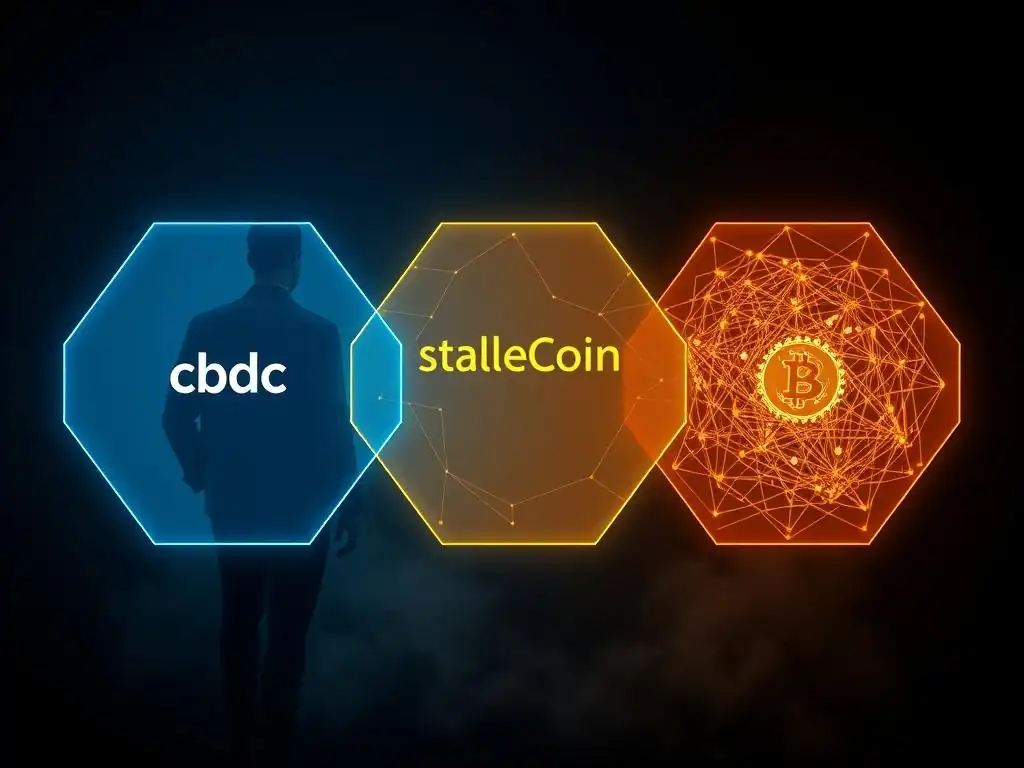
A Side-by-Side Analysis of Energy Usage and Carbon Emissions
A side-by-side analysis of the energy usage and carbon emissions of CBDCs, stablecoins, and cryptocurrencies reveals a complex landscape with significant variations depending on specific implementations and underlying technologies. CBDCs, with their centralized or semi-centralized nature and potential for optimized infrastructure, have the potential to achieve the lowest energy footprint per transaction, especially when utilizing energy-efficient consensus mechanisms and renewable energy sources. However, their actual environmental impact will depend on the specific design choices made by central banks and the scale of their deployment.
Stablecoins' environmental footprint is highly variable, largely dependent on their backing mechanism. Fiat-backed stablecoins may have a comparable or slightly lower energy footprint than traditional digital payment systems, while cryptocurrency-collateralized stablecoins can inherit the high energy consumption of their collateral cryptocurrencies, particularly if backed by Proof-of-Work coins. Cryptocurrencies, as a category, exhibit the widest range of energy consumption profiles.
Proof-of-Work cryptocurrencies like Bitcoin have the highest energy footprint, while Proof-of-Stake cryptocurrencies like post-Merge Ethereum demonstrate significantly lower energy consumption. The choice of consensus mechanism and energy sources used for network operations are the primary determinants of the environmental impact for each type of digital currency.
Transaction Processing and Environmental Impact: A Comparative Study
Comparing transaction processing and environmental impact across CBDCs, stablecoins, and cryptocurrencies requires considering transaction throughput, energy consumption per transaction, and overall network efficiency. CBDCs, designed for national-scale payment systems, are typically engineered for high transaction throughput and efficiency. Their permissioned nature and optimized infrastructure can lead to a lower energy consumption per transaction compared to permissionless cryptocurrencies. However, the actual energy per transaction will depend on the specific technology and scale of the CBDC network.
Stablecoins' transaction processing efficiency and environmental impact are influenced by the underlying blockchain network they operate on. Stablecoins built on more scalable and energy-efficient blockchains will generally have a lower environmental impact per transaction compared to those operating on less efficient networks. Cryptocurrencies exhibit a wide range of transaction processing capabilities and energy consumption per transaction. Proof-of-Work cryptocurrencies, while offering high security, often have lower transaction throughput and higher energy consumption per transaction. Proof-of-Stake cryptocurrencies, in contrast, can achieve higher transaction throughput and significantly lower energy consumption per transaction, making them more environmentally efficient for transaction processing.
The Role of Scalability Solutions in Reducing Environmental Impact
Scalability solutions play a crucial role in reducing the environmental impact of all types of digital currencies, including CBDCs, stablecoins, and cryptocurrencies. Scalability solutions aim to increase the transaction throughput of blockchain networks without proportionally increasing energy consumption. Layer-2 scaling solutions, such as Lightning Network for Bitcoin and rollups for Ethereum, enable faster and cheaper transactions by processing them off-chain and only settling the final state on the main blockchain. This reduces congestion on the main chain and lowers the energy required for processing each transaction.
For CBDCs and stablecoins, scalability solutions can further enhance the efficiency of their underlying blockchain infrastructure, reducing energy consumption and improving transaction speeds. For cryptocurrencies, particularly Proof-of-Work coins, scalability solutions offer a pathway to mitigate the environmental impact associated with increasing transaction volumes. By processing more transactions off-chain, scalability solutions can significantly reduce the overall energy footprint of digital currency networks and pave the way for more sustainable and environmentally friendly digital finance. Continued development and adoption of scalability solutions are essential for minimizing the environmental impact of digital currencies as their adoption grows.
Mitigating the Environmental Impact of Digital Currencies
Sustainable Blockchain Technologies: Renewable Energy Powered Mining and Carbon Offsetting Programs
Mitigating the environmental impact of digital currencies requires a multi-faceted approach, encompassing technological innovation, regulatory frameworks, and industry-led initiatives. Sustainable blockchain technologies are central to this effort, focusing on transitioning to more energy-efficient consensus mechanisms and utilizing renewable energy sources for network operations. For cryptocurrencies still employing Proof-of-Work, transitioning to Proof-of-Stake or other less energy-intensive algorithms is a critical step. Furthermore, initiatives to power cryptocurrency mining operations with renewable energy sources like solar, wind, and hydro power are gaining momentum.
Renewable energy powered mining can significantly reduce the carbon footprint of Proof-of-Work cryptocurrencies. In regions with abundant renewable energy resources, mining operations can be established that rely primarily or entirely on clean energy. Carbon offsetting programs also offer a supplementary approach to mitigate the environmental impact of digital currencies. These programs involve investing in projects that remove or reduce carbon emissions from the atmosphere, effectively offsetting the carbon footprint of digital currency operations. Combining technological transitions to energy-efficient consensus mechanisms with renewable energy adoption and carbon offsetting programs is crucial for creating a more sustainable digital currency ecosystem.
Regulatory Approaches to Reduce Cryptocurrency Environmental Impact
Regulatory approaches are increasingly being considered as a means to address the environmental impact of cryptocurrencies, particularly Proof-of-Work based systems. Governments and regulatory bodies are exploring various measures, ranging from energy consumption disclosure requirements to outright bans or restrictions on energy-intensive mining activities. Energy consumption disclosure requirements can increase transparency and incentivize cryptocurrency operations to adopt more sustainable practices. Taxes or levies on energy consumption for cryptocurrency mining are another regulatory tool being considered to discourage excessive energy use and encourage efficiency.
In some regions with stringent environmental regulations, outright bans or restrictions on Proof-of-Work mining have been implemented or proposed. These measures aim to directly reduce the environmental impact of cryptocurrency mining within specific jurisdictions. However, regulatory approaches need to be carefully designed to avoid stifling innovation and to ensure a level playing field.
International cooperation and coordination are also essential to address the global nature of cryptocurrency networks and to prevent regulatory arbitrage, where mining operations simply relocate to regions with less stringent environmental regulations. A balanced regulatory framework that promotes sustainability while fostering innovation is crucial for the long-term development of the digital currency space.
The Future of Green Crypto and Sustainable Digital Finance
The future of digital currencies is increasingly intertwined with the concept of "Green Crypto" and sustainable digital finance. This vision emphasizes the development and adoption of environmentally responsible digital currency technologies and practices. The successful transition of Ethereum to Proof-of-Stake has demonstrated the feasibility and impact of moving towards more sustainable consensus mechanisms. Continued innovation in blockchain technology is expected to yield further advancements in energy efficiency and environmental sustainability. Researchers and developers are exploring novel consensus algorithms, energy-efficient hardware, and optimized network architectures to minimize the environmental footprint of digital currencies.
The growing awareness of environmental concerns among investors and consumers is also driving demand for green crypto and sustainable digital financial products. Cryptocurrencies and stablecoins that prioritize energy efficiency and sustainability are likely to gain a competitive advantage in the market. Furthermore, the integration of blockchain technology into green finance initiatives, such as carbon credit markets and renewable energy financing, can further contribute to a more sustainable global economy. The future of digital currencies hinges on embracing sustainability and aligning technological innovation with environmental responsibility, paving the way for a greener and more inclusive financial system.
Case Studies: Environmental Initiatives in the Digital Currency Space
Singapore's Project Orchid: Exploring Green Finance Use Cases
Singapore's Project Orchid, a collaborative initiative led by the Monetary Authority of Singapore (MAS), is exploring the potential use cases of a CBDC in various sectors, including green finance. One key focus area is leveraging CBDCs to enhance the efficiency and transparency of green bond issuance and trading. Green bonds are debt instruments specifically earmarked to finance environmentally beneficial projects. Project Orchid is investigating how a CBDC can streamline the process of issuing, tracking, and verifying green bonds, making it easier for investors to participate in sustainable finance and ensuring that funds are effectively channeled to environmentally friendly initiatives.
By utilizing a CBDC for green bond transactions, Project Orchid aims to reduce administrative costs, improve transparency in fund flows, and enhance investor confidence in green investments. This initiative highlights the potential of CBDCs not only as efficient payment systems but also as enablers of sustainable finance and environmental initiatives. Singapore's proactive exploration of CBDCs in the context of green finance demonstrates a forward-thinking approach to integrating digital currency innovation with environmental responsibility and promoting a greener financial ecosystem.
Algorand's Carbon-Negative Blockchain: Achieving Carbon Neutrality Through Offsetting
Algorand, a blockchain platform and cryptocurrency, has distinguished itself by achieving carbon neutrality and even aiming for carbon negativity. Algorand utilizes a Proof-of-Stake consensus mechanism, which is inherently energy-efficient compared to Proof-of-Work. To further minimize its environmental impact, Algorand has implemented a carbon offsetting program. For every block added to the Algorand blockchain, the network calculates its carbon emissions and purchases carbon credits to offset those emissions. These carbon credits are used to support verified environmental projects that reduce or remove carbon dioxide from the atmosphere.
Algorand's commitment to carbon neutrality and negativity demonstrates a proactive approach to environmental sustainability in the cryptocurrency space. By combining an energy-efficient consensus mechanism with a comprehensive carbon offsetting program, Algorand has positioned itself as a leader in green crypto. This case study illustrates how blockchain projects can take concrete steps to minimize their environmental footprint and contribute to broader climate action goals. Algorand's initiative serves as an example for other digital currency projects to adopt similar strategies and prioritize environmental sustainability.
Chia Network's "Proof of Space and Time": An Energy-Efficient Consensus Mechanism
Chia Network, a blockchain and cryptocurrency, has introduced a novel consensus mechanism called "Proof of Space and Time" (PoST) as an alternative to energy-intensive Proof-of-Work. PoST utilizes hard drive space rather than computational power for network security and transaction validation. In PoST, "farmers" allocate unused hard drive space to "plot" data, and the probability of a farmer being selected to create a new block is proportional to the amount of storage space they have allocated. This approach significantly reduces energy consumption compared to Proof-of-Work, as hard drive storage is considerably less energy-intensive than specialized mining hardware.
Chia Network's Proof of Space and Time mechanism offers a compelling example of how innovative consensus algorithms can dramatically reduce the environmental impact of blockchain technology. Studies have indicated that Chia's energy consumption is significantly lower than that of Proof-of-Work cryptocurrencies like Bitcoin. While PoST introduces its own set of considerations, such as potential electronic waste from hard drives, its overall energy efficiency represents a significant improvement over PoW. Chia Network's approach highlights the ongoing innovation in consensus mechanism design aimed at creating more environmentally sustainable blockchain technologies and digital currencies.
Conclusion: Towards a Sustainable Future for Digital Currencies
Balancing Innovation and Environmental Responsibility in the Blockchain Space
The future of digital currencies hinges on striking a delicate balance between fostering innovation and upholding environmental responsibility within the blockchain space. While digital currencies offer transformative potential for finance and various industries, their environmental impact, particularly from energy-intensive operations, cannot be overlooked. The transition of Ethereum to Proof-of-Stake and the emergence of projects like Algorand and Chia Network demonstrate that sustainable alternatives are not only feasible but also increasingly practical and attractive. The challenge lies in promoting the widespread adoption of these sustainable technologies and practices across the digital currency ecosystem.
Balancing innovation and environmental responsibility requires a collaborative effort from technologists, policymakers, and industry stakeholders. Continued research and development of energy-efficient consensus mechanisms, renewable energy integration, and carbon offsetting programs are crucial. Regulatory frameworks that incentivize sustainable practices and discourage excessive energy consumption are also essential. Furthermore, fostering greater awareness and understanding of the environmental impact of digital currencies among users and investors can drive demand for greener alternatives and promote a more sustainable digital finance landscape.
The Future of CBDCs, Stablecoins, and Cryptocurrencies: A Greener Perspective
The future of CBDCs, stablecoins, and cryptocurrencies points towards a greener perspective, driven by technological advancements, environmental awareness, and evolving regulatory landscapes. CBDCs, with their potential for optimized infrastructure and centralized control, have the opportunity to be designed and operated with minimal environmental impact, potentially even leveraging renewable energy mandates. Stablecoins can contribute to a greener future by prioritizing backing mechanisms that are environmentally sustainable, such as fiat reserves held in responsible institutions or collateralization with energy-efficient cryptocurrencies.
Cryptocurrencies, particularly permissionless networks, are increasingly moving towards more sustainable consensus mechanisms like Proof-of-Stake. The continued adoption of PoS and the development of even more energy-efficient alternatives are expected to significantly reduce the environmental footprint of the cryptocurrency sector. The future of digital currencies is not predetermined but rather a path that can be shaped by conscious choices and a commitment to sustainability. By prioritizing environmental responsibility, the digital currency ecosystem can unlock its transformative potential while minimizing its impact on the planet.
Call to Action: Promoting Sustainable Practices in the Digital Currency Ecosystem
A call to action is needed to promote sustainable practices throughout the digital currency ecosystem. For developers and technologists, this means prioritizing energy efficiency in the design and development of blockchain technologies and digital currencies. For cryptocurrency miners, it entails transitioning to renewable energy sources and adopting carbon offsetting programs. For stablecoin issuers, it involves carefully considering the environmental impact of their backing mechanisms and choosing sustainable alternatives. For policymakers and regulators, it requires developing balanced frameworks that incentivize sustainability and discourage environmentally harmful practices.
For users and investors, the call to action is to become more informed about the environmental impact of digital currencies and to support projects and initiatives that prioritize sustainability. Choosing to use and invest in green crypto projects can send a powerful market signal and drive further innovation in sustainable digital finance. By working together, stakeholders across the digital currency ecosystem can collectively contribute to a more sustainable and environmentally responsible future for digital currencies, ensuring that their transformative potential is realized without compromising the health of the planet.
Frequently Asked Questions
How does the environmental impact of CBDCs differ from that of cryptocurrencies like Bitcoin?
CBDCs, if implemented using centralized or permissioned blockchain technologies, can have a significantly lower environmental footprint than Proof-of-Work cryptocurrencies. This is due to their reliance on less energy-intensive consensus mechanisms, compared to Bitcoin's energy-hungry mining process.
What specific environmental concerns are raised by the operation of various stablecoins?
The environmental impact of stablecoins depends on the underlying assets backing them. Stablecoins backed by fiat currency have a minimal direct environmental impact, whereas those backed by cryptocurrencies can inherit the environmental problems associated with those underlying digital assets.
What is a "CBDC environmental impact analysis" and why is it important?
A "CBDC environmental impact analysis" is a systematic assessment of a Central Bank Digital Currency's effects on the environment. It's important to understand the energy consumption, resource utilization, and carbon footprint associated with its design, implementation, and operation.
What regulatory measures are being considered to mitigate the environmental impact of digital currencies?
Regulators are exploring various measures, including carbon taxes on energy-intensive cryptocurrency mining, promoting the adoption of more sustainable blockchain technologies, and mandating environmental disclosures for digital currency issuers.
Can decentralized finance (DeFi) be made more environmentally friendly, and if so, how?
Yes, DeFi can become more environmentally friendly by transitioning to Proof-of-Stake (PoS) or other low-energy consensus mechanisms. Exploring layer-2 scaling solutions and optimizing smart contract code can also help reduce energy consumption.
The exploration of the environmental impact of CBDCs, stablecoins, and cryptocurrencies reveals a critical juncture in the evolution of digital finance. The choices we make today regarding the underlying technologies and energy consumption models will fundamentally shape the sustainability of our future financial systems. Ignoring the environmental consequences in the pursuit of innovation is a gamble we cannot afford to take.
The ongoing debate surrounding the energy consumption of various blockchain technologies has profoundly influenced the cultural and social landscape, forcing a re-evaluation of our relationship with technology and its impact on the planet. This examination has personally reinforced the importance of informed decision-making and the need for transparency in the digital asset space. We are living in a world where the price of carbon is becoming increasingly important, and the environmental impact of our financial systems cannot be ignored.
This quote underscores the urgency of addressing the environmental footprint of digital currencies.
As we stand at the precipice of a new era in finance, I invite you to reflect on your own role in shaping a sustainable future. Consider the environmental impact of the technologies you support, the investments you make, and the conversations you engage in. Let us collectively strive to build a digital financial ecosystem that is not only innovative and efficient but also environmentally responsible, ensuring a brighter future for generations to come.
Sure, please provide the article, and I will craft a compelling call-to-action for "Exploring the Environmental Impact of CBDCs, Stablecoins, and Cryptocurrencies" for Blockchain Trends.
Leave a Reply