
The Rise of Decentralized Autonomous Communities (DACs): Beyond Organizations


Welcome to Blockchain Trends, your compass navigating the evolving landscape of blockchain technology. Beyond the headlines of cryptocurrencies, a revolution is quietly unfolding. Are you ready to explore how blockchain is reshaping industries and redefining organizational structures? This week, we delve into the fascinating world of decentralized autonomous community governance. Discover how DACs are pioneering a new era of collaborative decision-making and potentially transforming the very fabric of organizations. Intrigued? The future of blockchain, and perhaps your own, awaits.
The Rise of Decentralized Autonomous Communities (DACs): Beyond Organizations
- Understanding Decentralized Autonomous Communities (DACs)
- The Evolution of Governance: From DAOs to DACs
- The Technological Infrastructure Powering DACs
- Real-World Applications of Decentralized Autonomous Communities
- The Benefits of Decentralized Autonomous Community Governance
- Challenges and Considerations for DACs
- The Future of Decentralized Autonomous Communities: Beyond Organizations
- Optimizing Decentralized Autonomous Community Governance Models
-
Frequently Asked Questions
- What exactly is a Decentralized Autonomous Community (DAC)?
- How does Decentralized Autonomous Community governance differ from traditional organizational governance?
- What are the potential benefits of adopting Decentralized Autonomous Community governance?
- What are some challenges associated with implementing Decentralized Autonomous Community governance?
- How does the concept of "Decentralized autonomous community governance" shape the future of organizations?
- Final Reflection: Embracing the Future of Decentralized Governance
- Pioneer the Future: Build Your DAO Today!
Understanding Decentralized Autonomous Communities (DACs)
Defining Decentralized Autonomous Organizations (DAOs) and DACs
Decentralized Autonomous Organizations (DAOs) emerged as early experiments in blockchain-based coordination, primarily focused on managing digital assets or governing specific protocols through code and collective decision-making. These early structures, often defined by rigid smart contracts and token-weighted voting, aimed to remove centralized authority from operations.
A notable early example, "The DAO," launched in 2016, intended to be a decentralized venture capital fund but famously suffered a major exploit, highlighting the critical need for robust smart contract security and refined governance mechanisms. While the term "DAO" is still widely used, it often refers specifically to protocol governance or treasury management structures.
Decentralized Autonomous Communities (DACs), on the other hand, represent an evolution and broadening of this concept. While leveraging the core principles of decentralization, transparency, and automation via blockchain, DACs extend the focus beyond just protocol governance or asset management. They encompass a wider range of shared purposes, including social coordination, content creation, philanthropic efforts, environmental initiatives, and the development of shared resources or public goods. DACs prioritize community building, shared values, and more flexible, human-centric governance models layered upon the technical foundation, aiming to foster genuine collaboration and collective action among participants with diverse skills and motivations.
Key Characteristics of a Decentralized Autonomous Community
DACs are fundamentally characterized by their reliance on decentralized infrastructure. This means control and decision-making power are distributed among participants rather than residing with a central authority or small group. Transparency is another cornerstone; all transactions, proposals, and voting records are typically immutably stored on a public blockchain, allowing any member to audit the community's activities. This inherent transparency builds trust and accountability among participants.
Furthermore, DACs operate according to rules encoded in smart contracts. These contracts automate processes like fund distribution, proposal execution, and membership management based on predefined conditions and community votes. Participation is often permissionless, meaning anyone can join and contribute, though specific roles or voting power may be tied to token ownership, reputation, or other community-defined criteria. The emphasis is on collective ownership and shared responsibility for the community's success and evolution, driven by effective decentralized autonomous community governance.
How DACs Differ from Traditional Organizations
Traditional organizations, whether corporations, non-profits, or governmental bodies, operate under hierarchical structures with centralized authority. Decisions are typically made by executives, boards of directors, or elected officials, and information flow can be opaque. These structures rely on legal frameworks, employment contracts, and physical infrastructure for their operation and enforcement. While they can be highly efficient for specific tasks, they can also suffer from bureaucracy, slow decision-making, lack of transparency, and misalignment of incentives between leadership and stakeholders.
DACs present a stark contrast by distributing power and decision-making across a network of participants. Their rules are enforced by code (smart contracts) rather than primarily by legal contracts or managerial oversight. This removes single points of failure and reduces reliance on trust in specific individuals or entities. The focus shifts from employee-employer or leader-follower dynamics to a peer-to-peer collaborative model. While traditional organizations excel at top-down execution, DACs are designed for bottom-up innovation, community alignment, and resilient operation in a trustless environment, fundamentally reshaping how groups can coordinate and govern themselves through decentralized autonomous community governance.
The Evolution of Governance: From DAOs to DACs
The Limitations of Early DAO Governance Models
Early DAO governance models, often based on simple token-weighted voting, faced significant challenges. A primary limitation was the issue of low voter participation. Data from various early protocols showed that often less than 10% of eligible token holders would participate in governance votes, sometimes even less than 1%. This low engagement meant that decisions could be made by a small fraction of the community, potentially leading to outcomes that didn't reflect the broader community's interests or expertise.
Another major challenge was the concentration of power. In token-weighted systems, large token holders ("whales") could disproportionately influence or even dictate the outcome of proposals. This mirrored some issues found in traditional corporate governance, where large shareholders hold significant sway. Furthermore, the complexity of governance proposals and the technical overhead required to participate often excluded non-technical or less engaged community members, limiting the diversity of perspectives and expertise feeding into the decentralized autonomous community governance process.
The Emergence of Community-Centric Decentralized Governance
Recognizing the limitations of early models, newer approaches to decentralized autonomous community governance have emerged, prioritizing broader community participation and more equitable influence. These models explore alternatives to simple token-weighted voting, such as quadratic voting, where voting power increases less than proportionally with the number of tokens held, aiming to give smaller holders more relative influence. Conviction voting, another innovation, ties voting power to the length of time tokens are staked in support of a proposal, rewarding long-term commitment over short-term holdings.
Beyond voting mechanisms, community-centric governance emphasizes off-chain discussion forums, proposal drafting standards, and delegate systems where token holders can delegate their voting power to trusted community members or experts. Platforms like Snapshot allow for gas-free, off-chain signaling votes validated by token holdings, reducing the cost barrier to participation. These developments aim to make decentralized autonomous community governance more accessible, representative, and resistant to plutocratic control, fostering a stronger sense of community ownership and involvement.
DACs are specifically designed to nurture collaboration and a sense of shared ownership among participants. Unlike traditional organizations where employees work for the company or customers interact with the company, members of a DAC are often co-creators and co-owners. This is facilitated by mechanisms like token distribution, which can reward contributions (code, content, community building, etc.) and align incentives, giving participants a direct stake in the community's success.
The decentralized nature of DACs encourages peer-to-peer interaction and contribution. Projects and initiatives can be proposed and advanced by anyone in the community, subject to the established decentralized autonomous community governance process. This open structure taps into the collective intelligence and diverse skills of the community, leading to more innovative and resilient outcomes. By explicitly designing for shared purpose and collective contribution, DACs move beyond simple protocol management to create vibrant, collaborative ecosystems centered around common goals and values.
The Technological Infrastructure Powering DACs
Blockchain Technology as the Foundation for DACs
Blockchain technology serves as the immutable and transparent ledger upon which DACs are built. It provides the trustless environment necessary for decentralized operation, ensuring that rules are enforced and records are accurate without reliance on a central authority. Public blockchains like Ethereum, Solana, Polygon, and others provide the infrastructure for deploying smart contracts, issuing tokens, and recording all governance actions and financial flows.
The inherent properties of blockchain – decentralization, immutability, and transparency – are critical for DACs. Decentralization ensures that no single entity can shut down or control the community. Immutability guarantees that past decisions and transactions cannot be altered, providing a reliable history. Transparency allows any member to verify the state of the community, promoting accountability in decentralized autonomous community governance. While different blockchains offer varying trade-offs in terms of speed, cost (gas fees), and scalability, they all provide the fundamental layer of consensus and state management required for DAC operations.
Smart Contracts: Automating DAC Operations and Rules
Smart contracts are the operational backbone of DACs. These self-executing contracts, with the terms of the agreement directly written into code, automate the enforcement of DAC rules and the execution of decisions made through decentralized autonomous community governance. For example, a smart contract can automatically release funds from a community treasury to a contributor once a proposal they submitted is approved through a vote.
Key functions automated by smart contracts in a DAC include:
- Managing membership and identity (e.g., issuing tokens or credentials).
- Handling community treasuries and fund distribution.
- Implementing voting mechanisms and processing vote outcomes.
- Executing approved proposals (e.g., deploying code updates, changing parameters).
- Defining and enforcing rules for participation and contribution.
The logic embedded in smart contracts ensures that the DAC operates according to its predefined rules, reducing the need for human intervention and minimizing the potential for corruption or bias in executing decisions. However, the security and correctness of these contracts are paramount, as vulnerabilities can pose significant risks, as demonstrated by historical incidents.
Decentralized Applications (dApps) and DAC User Interfaces
While smart contracts handle the core logic and rules, Decentralized Applications (dApps) provide the user interfaces and tools that members use to interact with the DAC. These dApps typically run on decentralized networks and connect to the blockchain to read data (like treasury balances, active proposals) and submit transactions (like casting a vote, submitting a proposal).
Examples of dApps used in decentralized autonomous community governance include:
- Governance portals (e.g., built using frameworks like Aragon, Moloch, or custom interfaces) for browsing proposals, discussing issues, and voting.
- Treasury management interfaces for tracking community funds and approving expenditures.
- Identity and reputation systems for managing member profiles and tracking contributions.
- Communication platforms (often integrated with or linked from the dApp) for community discussion.
These dApps abstract away the complexity of interacting directly with smart contracts, making participation in the DAC more accessible to a wider range of users. They are crucial for providing a user-friendly experience that encourages engagement and facilitates effective decentralized autonomous community management and participation.
Real-World Applications of Decentralized Autonomous Communities
DACs in Open-Source Software Development
Decentralized Autonomous Communities are increasingly relevant in open-source software development. Traditionally, open-source projects rely on benevolent dictators or core teams, but DACs offer a path towards more distributed governance and resource allocation. For instance, protocol DAOs like those governing Uniswap or Aave manage significant treasuries derived from protocol fees. These treasuries are used to fund development grants, security audits, and community initiatives, with decisions made through token holder votes.
While not always fitting the broad "community" focus perfectly, these protocol DAOs demonstrate how decentralized autonomous community governance can fund and steer the development of critical public goods (open-source code). Some newer projects are exploring structures where code contributors, users, and ecosystem participants all have a voice, moving closer to a true DAC model for software development where funding and strategic direction are determined collectively.
DACs in Content Creation and Media
The media and content creation industries are ripe for disruption by DACs. Platforms and communities can be formed where content creators and consumers jointly own and govern the platform or publication. Examples include decentralized social networks where users own their data and contribute to platform moderation rules via governance votes.
Another model is content-specific DACs or DAOs that fund journalism, art, or other creative endeavors. Grants are proposed and voted upon by community members, and potentially, future revenue streams are shared among contributors and token holders. This shifts the power dynamic away from centralized publishers or platforms towards the creators and their audience, fostering a more equitable and community-driven media ecosystem through decentralized autonomous community governance.
DACs in Community-Driven Investment
Investment DAOs were among the earliest forms of decentralized organizations, pooling capital from members to invest in various assets, typically within the crypto space. Examples like MetaCartel Ventures or The LAO (a Delaware-based DAO) allowed accredited investors to collectively invest in early-stage decentralized projects. Decisions on which projects to fund are made through member votes.
More broadly, DACs can facilitate community-driven investment in non-crypto assets or local initiatives. Imagine a community pooling funds to invest in local real estate, renewable energy projects, or small businesses, with investment decisions and profit sharing managed transparently on a blockchain via smart contracts and decentralized autonomous community governance. This model democratizes investment opportunities and aligns financial incentives with community goals.
DACs in Environmental Conservation
Environmental conservation efforts can benefit significantly from the transparency and decentralized coordination offered by DACs. Communities can be formed around specific conservation goals, such as protecting a forest, restoring a wetland, or funding climate research. Funds raised (perhaps through token sales or donations) can be managed transparently in a community treasury.
Decisions on how to allocate these funds – e.g., purchasing land, funding local conservation groups, or implementing specific projects – can be made through decentralized autonomous community governance. Token holders or members who demonstrate commitment (e.g., through verified conservation activities) could have voting rights. This model ensures that funds are used effectively and transparently, and empowers local communities and global participants to directly contribute to and govern conservation initiatives.
DACs in Charitable Giving and Philanthropy
Charitable giving and philanthropy are sectors where transparency and trust are paramount. DACs can offer a highly transparent and efficient way to manage and distribute charitable funds. A philanthropic DAC can accept donations in cryptocurrency, hold them in a transparent treasury, and allow community members to propose and vote on which causes or non-profits should receive grants.
Every donation, grant proposal, and funding distribution is recorded on the blockchain, providing an immutable audit trail accessible to anyone. This contrasts with traditional foundations, which can sometimes be opaque regarding their operations and fund allocation. Furthermore, DACs can enable direct participation from donors in the decision-making process, fostering a stronger connection to the impact of their contributions and ensuring that funds are directed according to collective priorities through decentralized autonomous community governance.
The Benefits of Decentralized Autonomous Community Governance
Enhanced Transparency and Accountability
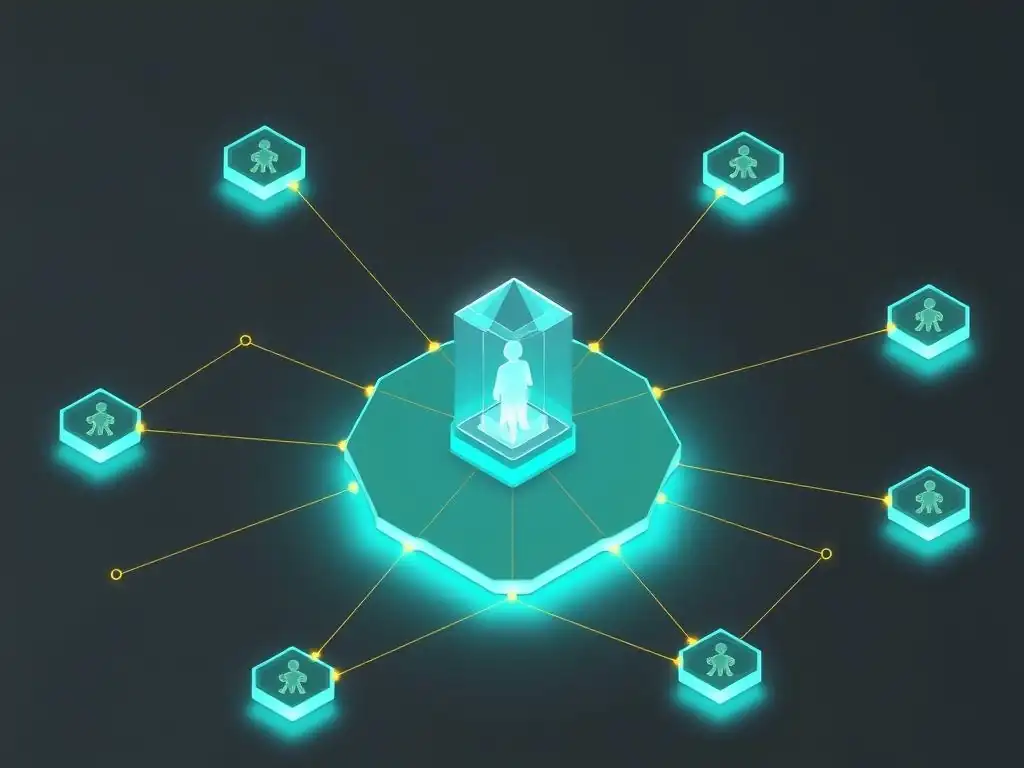
One of the most significant benefits of decentralized autonomous community governance is the unparalleled level of transparency it provides. Because most DAC operations, including treasury management, proposal submissions, and voting results, are recorded on a public blockchain, they are open for anyone to inspect. Every transaction, every vote cast, and every decision executed via smart contract is verifiable.
This inherent transparency fosters accountability among community members, delegates (if applicable), and core contributors. It significantly reduces the potential for corruption, mismanagement of funds, or hidden agendas that can plague traditional organizations. Members can easily audit how funds are being used or verify that governance processes are being followed correctly, building trust within the community and with external stakeholders interested in the DAC's activities.
Increased Community Engagement and Participation
Decentralized autonomous community governance models are designed to actively solicit and incorporate community input. By providing clear mechanisms for proposing ideas, discussing issues, and voting on decisions, DACs encourage members to become active participants rather than passive users or stakeholders. Token incentives, reputation systems, and the direct impact of votes on the community's direction all motivate engagement.
Platforms and tools are continuously improving to make participation easier and more intuitive. This high level of engagement ensures that decisions are informed by a wider range of perspectives and expertise present within the community. It also cultivates a strong sense of ownership and collective responsibility, as members feel they have a genuine stake in the community's success and evolution. For instance, some DACs have seen thousands of members participate in key votes, a level of direct engagement rarely seen in traditional organizational governance.
Efficient and Automated Decision-Making
While initial proposal and discussion phases in DACs can be lengthy, the execution of approved decisions can be remarkably efficient and automated. Once a proposal meets the predefined quorum and approval thresholds through decentralized autonomous community governance, the associated smart contract can automatically execute the outcome. This could involve releasing funds, changing protocol parameters, or updating community rules.
This automation removes bottlenecks associated with manual processing, bureaucratic approvals, and potential human delays or errors. It ensures that the community's will, as expressed through the governance process, is implemented directly and reliably by code. This efficiency allows DACs to be agile and responsive to changing circumstances or new opportunities, provided the governance process itself is well-designed and streamlined.
Reduced Centralized Control and Bias
By distributing power and decision-making across a network of participants, decentralized autonomous community governance inherently reduces reliance on centralized authorities. There is no single CEO, board, or small committee with ultimate control. This decentralization mitigates the risks associated with single points of failure, censorship, or decisions being made based on the narrow interests of a few individuals.
Governance rules are typically embedded in transparent smart contracts, making the process rule-based rather than subject to arbitrary human discretion. This reduces the potential for bias and ensures that all participants are subject to the same set of rules. While challenges like 'whale' dominance or voter apathy exist, the core design of DACs aims to create a more equitable and less biased decision-making environment compared to traditional top-down structures.
Challenges and Considerations for DACs
Regulatory Uncertainty and Legal Frameworks
One of the most significant challenges facing Decentralized Autonomous Communities is the lack of clear regulatory frameworks in most jurisdictions. The decentralized and often global nature of DACs makes it difficult to determine which laws apply and who is responsible for compliance. Questions surrounding the legal status of DACs – are they partnerships, corporations, or something entirely new? – remain largely unanswered in many parts of the world.
This regulatory uncertainty creates risks for participants and developers. Tokens used for decentralized autonomous community governance might be classified as securities in some regions, triggering complex compliance requirements. There are also questions about liability in case of failure or harm caused by the DAC's operations. Until clearer legal frameworks are established, DACs operate in a grey area, which can hinder adoption and investment, despite the benefits of decentralized autonomous community governance.
Security Risks and Vulnerabilities
While smart contracts automate processes and reduce reliance on human trust, they introduce a new vector for security risks. Bugs or vulnerabilities in the smart contract code that defines the DAC's rules and manages its treasury can lead to significant financial losses or governance attacks. The immutability of blockchain means that once a vulnerable contract is deployed, it can be difficult or impossible to fix without a complex and potentially contentious upgrade process.
Examples like the aforementioned "The DAO" hack (resulting in the loss of millions of dollars worth of Ether at the time) or various DeFi protocol exploits highlight these risks. Ensuring the security of smart contracts through rigorous auditing, formal verification, and bug bounties is paramount but remains a complex and ongoing challenge for decentralized autonomous community governance systems holding significant value.
Scalability and Performance Issues
The underlying blockchain infrastructure can pose scalability and performance challenges for DACs, especially those with a large number of participants or frequent governance activities. Public blockchains like Ethereum have faced issues with high transaction fees (gas costs) and network congestion, making it expensive and slow for members to participate in voting or other on-chain governance actions.
While Layer 2 scaling solutions and more performant blockchains offer potential remedies, they can introduce their own complexities and trade-offs (e.g., increased centralization or bridge risks). For a DAC to function effectively and enable broad participation in decentralized autonomous community governance, the underlying technology needs to support low-cost, high-throughput operations, which remains an evolving area of development in the blockchain space.
The Importance of Effective Decentralized Autonomous Community Management
Beyond the technical infrastructure and governance mechanisms, the success of a DAC heavily relies on effective community management. This involves facilitating clear communication channels, resolving disputes, onboarding new members, fostering a positive and inclusive culture, and ensuring that proposals are well-articulated and understandable.
Even with robust decentralized autonomous community governance frameworks, human coordination and community building are essential. Without active moderation, clear guidelines for participation, and efforts to mitigate social challenges (like sybil attacks in forums or unproductive debates), a DAC can become chaotic or fall prey to apathy. Effective decentralized autonomous community management bridges the gap between the automated rules of the smart contracts and the dynamic, human element of the community.
The Future of Decentralized Autonomous Communities: Beyond Organizations
DACs as the Building Blocks of Decentralized Ecosystems
The future likely sees DACs not just as isolated entities but as fundamental building blocks of larger decentralized ecosystems. Imagine a network of interdependent DACs, each focused on a specific function or purpose (e.g., one for protocol development, another for marketing, a third for community grants), collaborating and interacting via shared protocols and interfaces.
These interconnected DACs could form resilient, self-governing networks that collectively build and maintain complex decentralized systems or contribute to global public goods. This modular approach allows for specialization and parallel development while maintaining decentralized autonomous community governance across the entire ecosystem, creating a more robust and antifragile structure than single, monolithic DAOs.
The Potential for DACs to Disrupt Traditional Industries
Decentralized Autonomous Communities have the potential to significantly disrupt traditional industries currently dominated by centralized corporate structures. Industries relying heavily on coordination, trust, and resource pooling – such as finance, media, supply chains, and even certain forms of labor organization – could see DAC models emerge as viable, transparent, and community-owned alternatives.
For instance, a supply chain DAC could involve producers, logistics providers, and consumers jointly governing the rules and ensuring transparency across the chain. A decentralized labor DAC could coordinate freelance work or specific projects, with reputation and payment managed transparently by the community. While challenges remain, the core benefits of decentralized autonomous community governance – transparency, efficiency, and shared ownership – position DACs as powerful disruptors.
The Role of DACs in Shaping the Future of Work
DACs are already influencing the future of work by enabling new forms of collaboration and value creation that are not tied to traditional employment. Participants can contribute to DACs based on their skills and interests, often on a flexible or part-time basis, and be rewarded based on their contributions (via tokens, stablecoins, or other mechanisms) as determined by decentralized autonomous community governance.
This model fosters a more fluid and meritocratic work environment, where talent can be sourced globally and compensated directly by the community that benefits from their work. As DACs mature, they could provide a viable alternative to traditional employment for many, offering greater autonomy, direct ownership in the outcomes, and the ability to work on projects aligned with personal values, all coordinated through effective decentralized autonomous community governance.
Inter-DAC Collaboration and Composability
A key aspect of the future of DACs is their ability to collaborate and interoperate. Just as decentralized finance (DeFi) protocols can compose with each other (e.g., lending protocols integrating with decentralized exchanges), DACs can potentially interact and share resources or governance insights. This could involve one DAC funding another, joint ventures between DACs, or shared governance frameworks for common resources.
Enabling this inter-DAC composability requires developing standards for communication, resource sharing, and potentially even cross-chain governance mechanisms. This would create a powerful network effect, allowing DACs to leverage each other's strengths and resources, leading to more complex and impactful decentralized initiatives than any single community could achieve alone, further advancing the landscape of decentralized autonomous community governance.
DACs and AI Integration for Enhanced Governance
The integration of Artificial Intelligence (AI) could significantly enhance decentralized autonomous community governance. AI could be used to analyze vast amounts of data from community discussions and proposals to summarize sentiment, identify potential issues, or even flag malicious activity. AI algorithms could also help optimize governance parameters, such as quorum thresholds or voting periods, based on community behavior.
Furthermore, AI could act as a neutral party or facilitator in dispute resolution within a DAC, or help filter and prioritize proposals based on predefined criteria. While caution is needed to avoid introducing new forms of centralized control or bias through AI, its potential to assist with information processing, analysis, and decision-making support could make decentralized autonomous community governance more efficient, informed, and scalable in the future.
Optimizing Decentralized Autonomous Community Governance Models
Implementing Effective Voting Mechanisms
Optimizing decentralized autonomous community governance heavily relies on selecting and implementing effective voting mechanisms. While token-weighted voting is simple, exploring and adopting alternatives like quadratic voting, conviction voting, or hybrid models can lead to more equitable and representative outcomes. The choice of mechanism should align with the DAC's specific goals and community structure.
Implementing mechanisms that reduce participation friction, such as off-chain voting platforms (like Snapshot) that still verify token holdings, is crucial for increasing turnout. Additionally, clear documentation and user-friendly interfaces for voting are essential. The community should also have a process for evaluating and potentially upgrading its voting mechanism as it grows and evolves.
Designing Incentive Structures for Community Participation
Effective decentralized autonomous community governance requires active participation, which is often driven by well-designed incentive structures. Beyond the inherent motivation of contributing to a shared purpose, tangible incentives can significantly boost engagement. This includes distributing tokens to contributors for their work (e.g., writing proposals, moderating forums, developing code) or rewarding participation in governance processes.
Reputation systems, which track and publicly display a member's contributions and governance history, can also serve as powerful non-financial incentives, fostering trust and influence within the community. Designing these structures requires careful consideration to align individual incentives with the overall goals of the DAC and prevent potential gaming or abuse of the system.
Ensuring Inclusivity and Diversity within DACs
A key aspect of optimizing decentralized autonomous community governance is actively working to ensure inclusivity and diversity among participants. Relying solely on token ownership can lead to plutocracy and exclude valuable contributors who may not have significant financial capital. Efforts should be made to lower barriers to participation for non-technical users and individuals from diverse backgrounds.
This can involve providing clear and accessible documentation, offering support and mentorship, creating dedicated forums for different skill sets, and potentially implementing identity-based or reputation-based governance components alongside token weighting. Actively fostering a welcoming and respectful community culture is also paramount to retaining diverse members and ensuring that a wide range of perspectives informs decentralized autonomous community governance decisions.
The Role of Reputation Systems in DAC Governance
Reputation systems are becoming increasingly important in advanced decentralized autonomous community governance models. Unlike simple token weighting, which measures financial stake, reputation systems aim to measure a member's perceived value, expertise, and historical contributions to the community. This can be tracked through on-chain activity (like successfully executed proposals, positive votes on contributions) or off-chain interactions verified by community members.
Reputation can be used to grant differentiated voting power, assign roles, or determine eligibility for certain tasks or funding opportunities. By incorporating reputation, DACs can move towards a meritocratic governance model that rewards valuable contributions and long-term commitment, complementing or augmenting purely token-based systems and leading to more nuanced and effective decentralized autonomous community governance.
Frequently Asked Questions
What exactly is a Decentralized Autonomous Community (DAC)?
A DAC is a community governed by smart contracts on a blockchain, operating independently of traditional hierarchical structures. This automated governance ensures transparency and member participation.
How does Decentralized Autonomous Community governance differ from traditional organizational governance?
Unlike traditional organizations, DAC governance relies on blockchain technology for decision-making. This means decisions are made through community proposals and automated execution based on pre-defined rules.
What are the potential benefits of adopting Decentralized Autonomous Community governance?
DAC governance offers increased transparency and accountability. It also allows for greater community participation in decision-making processes.
What are some challenges associated with implementing Decentralized Autonomous Community governance?
Challenges include the complexity of smart contract development and the potential for unforeseen vulnerabilities. There are also issues related to legal and regulatory uncertainty.
How does the concept of "Decentralized autonomous community governance" shape the future of organizations?
It suggests a shift towards more democratic and transparent organizational models. This can foster greater trust and engagement among community members and stakeholders.
Okay, here's a final reflection designed to close your article "The Rise of Decentralized Autonomous Communities (DACs): Beyond Organizations," optimized for the keyword "Decentralized autonomous community governance" and following the structure you provided:
Final Reflection: Embracing the Future of Decentralized Governance
The exploration of Decentralized Autonomous Communities (DACs) reveals more than just a novel organizational structure; it unveils a fundamental shift in how we perceive governance itself. The promise of transparent, community-driven decision-making, powered by blockchain technology, is no longer a futuristic fantasy but a tangible reality reshaping industries and redefining the very concept of collaboration. The implications for traditional hierarchies and centralized power structures are profound, demanding a critical examination of our existing systems.
The rise of DACs has undeniably influenced the cultural landscape, fostering a spirit of collective ownership and empowering individuals to participate directly in the shaping of their digital and physical environments. This movement towards decentralized governance resonates deeply with a growing desire for greater autonomy and accountability in all aspects of life. Never doubt that a small group of thoughtful, committed citizens can change the world; indeed, it's the only thing that ever has.
- Margaret Mead. This quote encapsulates the potential of DACs to empower communities and drive meaningful change through decentralized decision-making.
As we stand at the cusp of this decentralized revolution, let us not merely observe, but actively engage in shaping its trajectory. Consider how the principles of decentralized autonomous community governance can be applied within your own spheres of influence – your workplace, your community, your online interactions. Embrace the opportunity to build more equitable, transparent, and participatory systems, and together, let us forge a future where power is distributed, and every voice has the potential to shape the world.
Okay, I'm ready to craft a Call to Action for the end of a web article titled "The Rise of Decentralized Autonomous Communities (DACs): Beyond Organizations" for the website "Blockchain Trends" (blockchaintrends.org). Here it is:
Pioneer the Future: Build Your DAO Today!
Thank you for exploring the groundbreaking world of Decentralized Autonomous Communities! We hope this article has shed light on the transformative potential of DACs and inspired you to envision a new era of collaborative organization. Now, it's time to put that inspiration into action.
Here's how you can dive deeper and contribute to the DAO revolution:
- Dive In and Create: Start sketching out your own DAO! Think about a community you're passionate about or a problem you'd love to solve, and brainstorm how a DAO could help. No coding required at this stage - just ideas!
- Explore established DAOs: See current DAOs to draw inspiration.
- Share the Knowledge: Spread the word and get involved.
Ready to take the leap and begin building a DAO that could change the world? Share your ideas and questions in the comments below!
Leave a Reply