
Blockchain and Preventative Healthcare: DataDriven Insights for Proactive Wellness


Welcome to Blockchain Trends, your premier source for unraveling the transformative power of blockchain technology. Beyond the buzz of cryptocurrencies, we delve into the real-world applications shaping our future. Are you ready to explore how blockchain is revolutionizing healthcare? Our latest article investigates Blockchain healthcare data security and its potential to unlock data-driven insights for proactive wellness. Discover how secure, decentralized systems are paving the way for a future where preventative healthcare is not just a possibility, but a reality. Intrigued? Read on to learn more!
Blockchain and Preventative Healthcare: Data-Driven Insights for Proactive Wellness
- Introduction: The Promise of Blockchain in Revolutionizing Preventative Healthcare
- Blockchain Healthcare Data Security: A Foundation for Proactive Wellness
- Data-Driven Insights: Leveraging Blockchain for Predictive and Personalized Healthcare
- Empowering Patients: Blockchain-Based Control Over Health Data for Preventative Measures
- Blockchain for Supply Chain Transparency in Preventative Healthcare Products
- Overcoming Implementation Barriers: Challenges and Opportunities for Blockchain Adoption in Preventative Healthcare
- The Future of Blockchain in Preventative Healthcare: A Data-Driven Ecosystem
- Conclusion: Embracing Blockchain for a Proactive and Healthier Future
-
Frequently Asked Questions
- How can blockchain enhance healthcare data security?
- What role does blockchain play in preventative healthcare?
- What are some examples of blockchain applications in healthcare beyond data security?
- How does blockchain address regulatory concerns in healthcare data management?
- What is the future outlook for blockchain adoption in healthcare?
- Final Reflection: Securing Wellness Through Decentralization
- Embrace Blockchain for a Healthier Future!
Introduction: The Promise of Blockchain in Revolutionizing Preventative Healthcare
The Current Landscape of Preventative Healthcare and its Challenges
Preventative healthcare, focused on maintaining health and preventing illness rather than treating sickness, faces significant systemic challenges today. Despite widespread recognition of its importance, the current system is often reactive, fragmented, and struggles with patient engagement and data utilization. Data silos across different healthcare providers, laboratories, and even wearable devices make it difficult to gain a holistic view of a patient's health status and risk factors. This fragmentation hinders effective risk assessment, timely intervention, and personalized wellness plans.
Furthermore, patients often lack agency over their own health data, which is typically controlled by various institutions. This limits their ability to share it for coordinated care or research, or even to fully understand their own health journey and compliance with preventative measures.
The lack of seamless data flow and patient empowerment contributes to missed opportunities for early detection and intervention, ultimately driving up healthcare costs. According to the CDC, chronic diseases, many of which are preventable, account for roughly 90% of the $4.1 trillion in annual U.S. healthcare costs, underscoring the urgent need for a more effective preventative approach.
How Blockchain Technology Can Address Key Healthcare Challenges
Blockchain technology, traditionally associated with cryptocurrencies, offers unique properties that can fundamentally address these challenges in preventative healthcare. Its decentralized, immutable, and transparent ledger system provides a robust framework for managing health data in a way that enhances security, privacy, and interoperability. By creating a single, shared source of truth (or a verifiable audit trail for distributed data), blockchain can help break down data silos and enable authorized stakeholders to access patient information more efficiently and securely.
The inherent security features of blockchain, including cryptographic hashing and decentralized consensus mechanisms, make it significantly more resistant to tampering and unauthorized access compared to traditional centralized databases. This is particularly crucial for sensitive health information. Moreover, blockchain can empower patients by giving them control over who can access their data and for what purpose, shifting from an institution-centric model to a patient-centric one. This enhanced control and trust can encourage greater patient participation in preventative programs and data sharing for public health and research, paving the way for a more proactive and data-driven healthcare ecosystem.
Blockchain Healthcare Data Security: A Foundation for Proactive Wellness
Enhancing Data Security and Privacy in Preventative Healthcare with Blockchain
Ensuring robust data security and privacy is paramount in healthcare, particularly when dealing with sensitive preventative health information. Traditional centralized systems are vulnerable to breaches, which can have devastating consequences for individuals and healthcare organizations. Blockchain technology, through its cryptographic principles and decentralized architecture, offers significant advancements in Blockchain healthcare data security. By storing data pointers or encrypted metadata on an immutable ledger, while potentially keeping the actual sensitive data off-chain in secure, permissioned systems, blockchain creates a tamper-evident log of all data access and modifications.
Each transaction (like a data access request or an update) is cryptographically signed and added to the chain, creating an auditable history that cannot be altered retroactively. This inherent immutability, combined with strong encryption and granular access controls managed via smart contracts, drastically reduces the risk of data manipulation or unauthorized access.
For example, a patient's vaccination record or screening history, if recorded or referenced on a blockchain, becomes a highly secure and verifiable piece of information. The average cost of a healthcare data breach reached $10.93 million globally in 2023, highlighting the critical need for enhanced Blockchain healthcare data security measures that distributed ledger technology can provide.
Addressing Data Silos and Improving Interoperability with Distributed Ledger Technology (DLT)
A major impediment to effective preventative healthcare is the fragmentation of patient data across disparate systems used by different hospitals, clinics, pharmacies, and labs. This creates data silos that prevent a comprehensive view of a patient's health history and make it difficult to coordinate care or analyze population health trends. Distributed Ledger Technology (DLT), the underlying technology behind blockchain, offers a potential solution by creating a shared, distributed database or, more commonly in healthcare, a shared index or consent layer that sits above existing systems.
Instead of migrating all data to a single blockchain, a DLT network can enable different parties to securely share and verify data access rights and metadata. A patient could grant a new primary care physician access to relevant past records stored across various institutions via a permission recorded on the DLT. This improves interoperability without requiring organizations to overhaul their entire IT infrastructure.
While challenges remain in standardizing data formats and establishing governance models, DLT provides the foundational layer for a more connected and interoperable healthcare data ecosystem, crucial for providing timely and informed preventative care. This enhanced interoperability, built on secure DLT principles, strengthens Blockchain healthcare data security by ensuring data is accessed and shared only with proper authorization.
Data-Driven Insights: Leveraging Blockchain for Predictive and Personalized Healthcare
Utilizing Blockchain for Secure and Transparent Data Sharing in Research
Advancing preventative healthcare relies heavily on research, which in turn requires access to large, diverse, and high-quality datasets. However, sharing sensitive patient data for research purposes is fraught with privacy concerns and regulatory hurdles. Blockchain can facilitate secure and transparent data sharing for research while maintaining patient privacy and control. Patients can provide explicit consent, recorded immutably on the blockchain, for specific types of data to be shared with researchers.
Furthermore, blockchain can track the provenance and usage of data, ensuring researchers adhere to the terms of consent. Techniques like tokenization or differential privacy, combined with blockchain's auditability, allow researchers to access anonymized or aggregated data, or even perform computations on encrypted data, without ever seeing identifiable patient information. This could significantly accelerate studies into disease risk factors, the effectiveness of interventions, and the development of personalized preventative strategies. For instance, securely sharing genomic data (with consent managed via blockchain) could unlock insights into genetic predispositions for conditions like certain cancers or cardiovascular diseases, enabling highly targeted preventative measures.
Enabling AI-Powered Predictive Analytics for Early Disease Detection
Predictive analytics powered by Artificial Intelligence (AI) holds immense promise for identifying individuals at high risk of developing specific diseases before symptoms appear. However, the effectiveness of AI models is directly dependent on the availability of large, diverse, and clean datasets. Blockchain can play a crucial role in enabling this by facilitating the secure and ethical aggregation of health data from various sources, including electronic health records, lab results, and data from wearable devices.
By providing a trusted, tamper-proof layer for data provenance and access, blockchain ensures that the data used to train AI models is reliable and that patient privacy is protected. Smart contracts can automate data usage agreements, ensuring data is only used for approved analytical purposes.
For example, an AI model could analyze anonymized data from millions of individuals, securely aggregated via a blockchain platform, to identify subtle patterns indicative of pre-diabetic states or early signs of neurological conditions. This enables healthcare providers to intervene earlier with personalized lifestyle recommendations or preventative treatments, moving healthcare from reactive treatment to proactive prevention.
Blockchain-Based Remote Patient Monitoring for Chronic Disease Management
Remote patient monitoring (RPM) is an increasingly important tool in preventative care, particularly for managing chronic conditions like hypertension, diabetes, or asthma. Devices like smartwatches, blood pressure monitors, and glucose meters collect vast amounts of data. Ensuring the integrity and security of this data is vital for accurate monitoring and timely interventions. Blockchain can provide a secure and immutable ledger for recording data streams from these RPM devices.
Each data point, perhaps aggregated hourly or daily, can be hashed and recorded on the blockchain, creating a verifiable log that neither the patient nor the provider can tamper with. This trusted data can then be used by healthcare providers to monitor trends, detect anomalies, and trigger alerts if a patient's condition deteriorates or if they are not adhering to their treatment plan.
For example, a patient with hypertension could have their daily blood pressure readings securely logged via a blockchain application, providing their doctor with a reliable history for adjusting medication or recommending lifestyle changes proactively. This secure data infrastructure, underpinned by Blockchain healthcare data security, allows for more effective management of chronic conditions and prevention of acute episodes.
Empowering Patients: Blockchain-Based Control Over Health Data for Preventative Measures
Patient-Centric Data Management and Ownership with Blockchain
Historically, patient health data has been managed and controlled by healthcare institutions, leaving individuals with limited access or control. Blockchain technology offers a paradigm shift by enabling patient-centric data management and ownership. Through a blockchain-based personal health record or identity, patients can gain unprecedented control over their health information, including preventative care history, test results, and wearable device data.
Patients can decide who has access to their data – whether it's a new specialist, a wellness program provider, or a research institution – and for how long. This is typically managed through cryptographic keys and smart contracts on the blockchain. This empowerment fosters greater patient engagement in their own health and preventative care journey. Knowing they control their data and that its access is transparently logged can build trust in the healthcare system and encourage individuals to actively participate in sharing their data for better care coordination and research, ultimately benefiting collective preventative health efforts.
Secure and Auditable Tracking of Preventative Care Compliance
Adherence to preventative care recommendations, such as getting annual check-ups, vaccinations, or following specific dietary and exercise plans, is crucial for long-term health. However, tracking and verifying compliance can be challenging for both patients and providers. A blockchain-based system can provide a secure and auditable method for tracking preventative care compliance.
When a patient receives a vaccination, undergoes a screening, or completes a milestone in a wellness program, this event can be recorded or referenced on the blockchain with their consent. This creates an immutable and verifiable record of their compliance. Patients can easily access this record to demonstrate their preventative health status, for instance, for school enrollment or insurance purposes.
Healthcare providers can use this data (with patient permission) to identify individuals who are overdue for screenings or vaccinations, enabling targeted outreach and improving population-level preventative care uptake. The inherent auditability of the blockchain ensures the integrity of these compliance records, reinforcing Blockchain healthcare data security for this type of historical data.
Blockchain-Enabled Vaccination Tracking and Verification
A concrete example of blockchain's application in preventative healthcare is vaccination tracking and verification. Accurate, verifiable vaccination records are essential for individual health, public health management, and even international travel. Traditional paper records can be lost or forged, and digital systems are often fragmented and vulnerable to data manipulation.
A blockchain-based vaccination registry can provide an immutable and cryptographically secure record of every vaccination administered. When a dose is given, the details (vaccine type, lot number, date, administrator) are recorded on the blockchain. The individual receives a digital credential or verifiable identifier linked to this record, which they control. This allows individuals to easily and securely prove their vaccination status without revealing other sensitive health information. Such systems are being explored globally; for example, some initiatives have piloted tracking millions of vaccine doses, demonstrating the potential for enhanced public health management and individual empowerment through secure, blockchain-based records.
Blockchain for Supply Chain Transparency in Preventative Healthcare Products
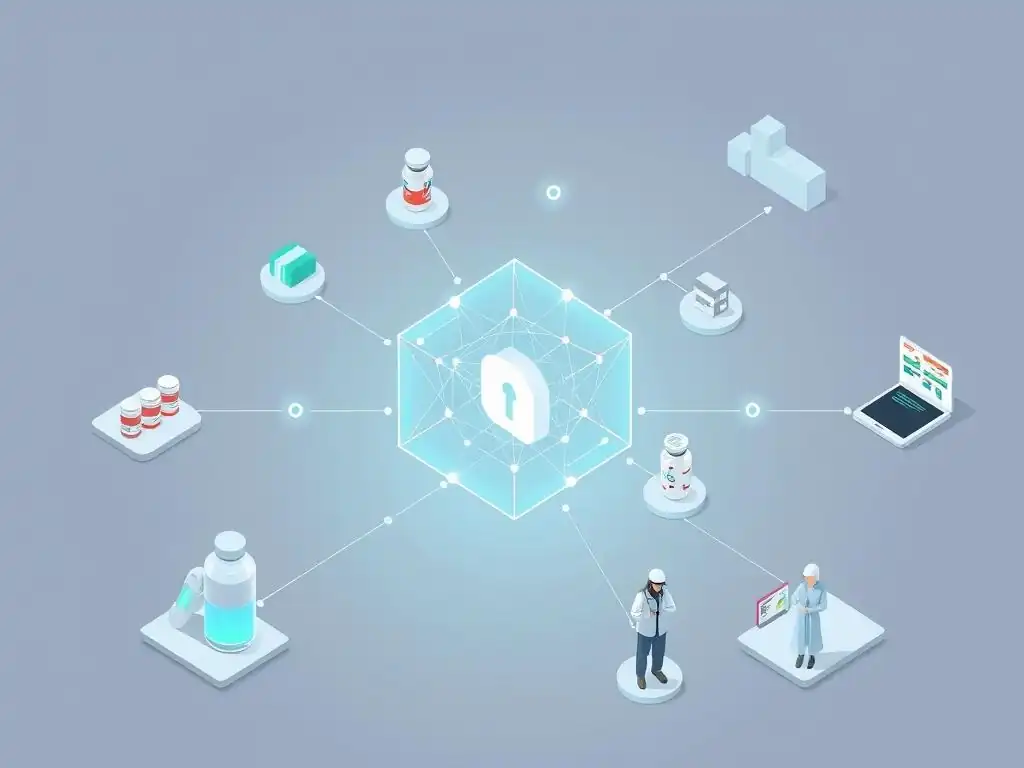
Ensuring Authenticity and Traceability of Pharmaceuticals and Supplements
The integrity of the supply chain for preventative healthcare products, such as vaccines, essential medications for chronic conditions, and dietary supplements, is critical for patient safety. Counterfeit or substandard products pose a significant health risk. Blockchain technology can bring unprecedented transparency and traceability to this complex supply chain, ensuring the authenticity and quality of products from manufacturer to patient.
By creating a shared, distributed ledger accessible to all authorized stakeholders (manufacturers, distributors, pharmacies, regulators), blockchain can record every transfer and handling event for each batch or even individual unit of a product. This creates an immutable audit trail documenting the product's journey. If a product's history on the blockchain doesn't match its physical presence or if any step is missing, it can indicate tampering or counterfeiting. This level of transparency helps build trust in the supply chain and ensures that patients receive legitimate and safe preventative healthcare products.
Combating Counterfeit Drugs and Protecting Patient Safety
Counterfeit drugs are a global menace, estimated by the WHO to constitute up to 10% of medical products in low- and middle-income countries and still present in high-income countries. These fake medications can be ineffective, contain incorrect ingredients, or be contaminated, posing serious health risks, especially for individuals relying on them for preventative care or managing chronic conditions. Blockchain's supply chain tracking capabilities are a powerful tool in combating this issue.
By providing a secure, verifiable history for every product, blockchain makes it significantly harder for counterfeit items to infiltrate the legitimate supply chain. Pharmacies or consumers could potentially scan a QR code on packaging, triggering a blockchain query to verify the product's origin and journey. If the blockchain record doesn't align, it flags the product as potentially suspect.
This proactive approach helps identify and remove counterfeit drugs before they reach patients, directly enhancing patient safety and the effectiveness of preventative treatments. This application of blockchain directly contributes to safeguarding public health by ensuring the integrity of critical preventative health products.
Overcoming Implementation Barriers: Challenges and Opportunities for Blockchain Adoption in Preventative Healthcare
Regulatory Considerations and Compliance in Blockchain Healthcare Data
Implementing blockchain solutions in healthcare, particularly those involving sensitive patient data, must navigate a complex landscape of regulatory requirements. In the United States, HIPAA (Health Insurance Portability and Accountability Act) governs the privacy and security of protected health information (PHI). In Europe, the GDPR (General Data Protection Regulation) imposes strict rules on data processing and the "right to be forgotten." While blockchain's security features enhance Blockchain healthcare data security, its immutable nature can conflict with regulations like GDPR's right to erasure.
Solutions are being developed to address this, such as storing only encrypted hashes or pointers to off-chain data on the blockchain, allowing the actual data to be modified or deleted in compliance with regulations, while maintaining an immutable log of these actions. Navigating consent management in a compliant manner is also critical. Healthcare organizations must work closely with legal and compliance experts to design blockchain solutions that meet these stringent requirements, ensuring both innovation and patient data protection.
Scalability and Interoperability Challenges for Widespread Blockchain Adoption
While promising, blockchain technology still faces significant technical hurdles for widespread adoption in healthcare. Scalability is a major concern; public blockchains like Ethereum can struggle with the transaction volume required for a large-scale healthcare system. Private or consortium blockchains offer better scalability and privacy for healthcare but require careful governance. Furthermore, integrating blockchain systems with existing legacy healthcare IT infrastructure is a complex challenge. Most healthcare providers rely on established electronic health record (EHR) systems that are not inherently designed to interact with distributed ledgers.
Achieving true interoperability requires developing standardized APIs, data models, and protocols that allow seamless communication between blockchain networks, traditional databases, and various healthcare applications. While pilot programs demonstrate feasibility, scaling these solutions across diverse healthcare settings and ensuring they can exchange data reliably and efficiently remains a significant technical and logistical challenge that needs to be addressed for blockchain to realize its full potential in preventative healthcare.
The Role of Standards and Collaboration in Overcoming Barriers
Addressing the implementation barriers requires a concerted effort focused on developing industry standards and fostering collaboration among stakeholders. Standardized data formats (like FHIR - Fast Healthcare Interoperability Resources) compatible with blockchain structures are essential for achieving interoperability between different systems and networks. Without common standards for how health data is represented and exchanged on or via blockchain, data silos will simply migrate to the blockchain layer.
Collaboration between technology providers, healthcare organizations, regulatory bodies, and patient advocacy groups is also crucial. Pilot programs and consortia can help test and refine blockchain solutions in real-world settings, identify best practices, and inform the development of appropriate governance frameworks and regulatory guidelines. Establishing clear standards for Blockchain healthcare data security and privacy within these collaborative efforts will build trust and pave the way for broader adoption, transforming the vision of a data-driven preventative healthcare system into reality.
The Future of Blockchain in Preventative Healthcare: A Data-Driven Ecosystem
Potential Applications of Blockchain in Personalized Medicine and Genomics
The future of preventative healthcare is increasingly moving towards personalized medicine, tailoring interventions based on an individual's genetic makeup, lifestyle, and environment. Genomic data is incredibly sensitive and complex to manage, yet crucial for identifying genetic predispositions to diseases and informing personalized prevention strategies. Blockchain technology is uniquely positioned to secure and manage access to this type of data.
By storing consent, metadata, or encrypted access controls on a blockchain, while keeping the raw genomic data in highly secure, off-chain storage, individuals can control who accesses their genetic information and for what specific research or clinical purpose. This secure framework could facilitate the creation of large, privacy-preserving genomic datasets for research, accelerating the discovery of genetic markers for disease risk. It could also enable individuals to share their genomic insights with healthcare providers or wellness programs in a controlled manner, leading to truly personalized preventative health plans based on their unique genetic profile.
Exploring Decentralized Clinical Trials and Research using Blockchain
Clinical trials are fundamental to developing new preventative treatments and validating interventions. However, traditional trials are often slow, expensive, and opaque. Blockchain can enable decentralized clinical trials (DCTs), increasing efficiency, transparency, and data integrity. Data from participants, including outcomes from preventative interventions or side effects, can be securely recorded on a blockchain, creating an immutable and verifiable audit trail.
Smart contracts can automate processes like consent management, data validation, and even participant payments. Wearable device data can be integrated securely via blockchain, providing continuous, real-world data. This approach reduces reliance on intermediaries, enhances data integrity, and can potentially lower trial costs and timelines. By making clinical trials more efficient and trustworthy, blockchain can accelerate the development and validation of new preventative strategies and technologies, bringing them to market faster to benefit public health.
Long-Term Impact of Blockchain on Preventative Healthcare
The long-term impact of blockchain on preventative healthcare has the potential to be transformative. By creating a secure, interoperable, and patient-centric data ecosystem, blockchain can fundamentally shift the healthcare paradigm from reactive "sick care" to proactive "well care." Empowered patients, armed with control over their health data and verifiable records of preventative actions, are more likely to engage in their own wellness.
Healthcare providers, with access to more complete and trustworthy data (secured by Blockchain healthcare data security measures), can offer more personalized and effective preventative interventions. Researchers can accelerate discoveries by accessing larger, more diverse datasets under secure, transparent conditions. A more transparent supply chain ensures the safety and authenticity of preventative products. Ultimately, blockchain has the potential to build a more efficient, equitable, and effective preventative healthcare system that focuses on keeping populations healthy rather than just treating illness, leading to better health outcomes and potentially reducing overall healthcare costs over time.
Conclusion: Embracing Blockchain for a Proactive and Healthier Future
Key Takeaways: The Transformative Potential of Blockchain in Preventative Healthcare
Blockchain technology offers a compelling solution to many of the fundamental challenges facing preventative healthcare today. Its core attributes of decentralization, immutability, transparency, and cryptography provide a robust foundation for enhancing Blockchain healthcare data security and privacy, addressing data silos, and improving interoperability.
By empowering patients with control over their health information and enabling secure data sharing for research and predictive analytics, blockchain can drive the shift towards a more proactive, data-driven, and personalized approach to wellness. The ability to track preventative care compliance and ensure the integrity of the supply chain for healthcare products further underscores its potential to build a more trustworthy and effective preventative health ecosystem.
Call to Action
Exploring and implementing blockchain solutions in preventative healthcare requires collaboration across the industry. Healthcare providers, technology developers, regulators, and patients must work together to develop standards, pilot innovative applications, and build the necessary infrastructure to leverage the full potential of this transformative technology. The journey towards a truly data-driven, proactive healthcare future is complex, but the potential benefits for individual and public health make it a critical endeavor worth pursuing.
Frequently Asked Questions
How can blockchain enhance healthcare data security?
Blockchain offers enhanced data security through its decentralized and immutable nature. This helps prevent unauthorized access and tampering with sensitive patient information, ensuring data integrity.
What role does blockchain play in preventative healthcare?
Blockchain facilitates the secure and transparent sharing of healthcare data, enabling data-driven insights for proactive wellness. This allows for personalized preventative care and early detection of potential health issues based on aggregated data analysis.
What are some examples of blockchain applications in healthcare beyond data security?
Beyond security, blockchain can streamline supply chain management for pharmaceuticals, improve clinical trial data integrity, and facilitate secure electronic health record (EHR) sharing.
How does blockchain address regulatory concerns in healthcare data management?
Blockchain's audit trail and data immutability aid in compliance with regulations like HIPAA. It provides a transparent and verifiable record of data access and modifications, enhancing regulatory oversight and accountability.
What is the future outlook for blockchain adoption in healthcare?
The future involves wider adoption of blockchain for secure data exchange, improved interoperability between healthcare systems, and the development of innovative decentralized healthcare applications focused on patient empowerment.
Final Reflection: Securing Wellness Through Decentralization
The promise of blockchain healthcare data security is no longer a distant aspiration, but a tangible opportunity to revolutionize preventative healthcare. As we've explored, the secure, transparent, and immutable nature of blockchain technology offers a powerful framework for managing and utilizing health data in a way that empowers both patients and providers, fostering proactive wellness strategies grounded in data-driven insights.
The impact of this technology extends far beyond simply securing records; it fundamentally shifts the power dynamic, placing individuals at the center of their own healthcare journey. This potential for personalized, preventative care, driven by secure and accessible data, is profoundly inspiring. The future of healthcare is preventative, personalized, and participatory.
- Atul Gawande
Let us not simply observe this technological evolution, but actively participate in shaping its trajectory. Consider how you can advocate for the responsible implementation of blockchain in healthcare, ensuring that its benefits are accessible to all. Reflect on the ways you can leverage data to take control of your own health and well-being, and champion a future where proactive wellness is not a privilege, but a right, secured by the transformative power of blockchain.
Embrace Blockchain for a Healthier Future!
Thank you for exploring the potential of blockchain in preventative healthcare. We hope you now have a clearer understanding of how this technology can help you take control of your well-being. Let's turn that knowledge into action!
Here are a few ways to get involved:
- Begin researching blockchain-based health platforms that match your personal health goals. Look for initiatives that prioritize data privacy and secure information sharing.
- Share this article with friends and family interested in innovative healthcare solutions. Spreading awareness is the first step toward adoption!
- Consider attending a local tech meetup or online forum focused on blockchain and healthcare. Engaging with the community can reveal even more exciting opportunities.
What is one small step you will take this week to see how blockchain can enhance your preventative healthcare journey? Share your plans in the comments below!
Leave a Reply