
The Power of Small Beginnings: Starting Crypto Trading with Limited Capital


Welcome to Blockchain Trends, your guide to navigating the ever-evolving world of decentralized technologies!
Dive into the transformative potential of blockchain, extending far beyond the realm of cryptocurrencies. Are you curious about breaking into the crypto market but feel limited by your initial investment? Our featured article, " The Power of Small Beginnings: Starting Crypto Trading with Limited Capital," reveals practical strategies and insights for achieving success even with modest resources. Discover how to leverage crypto trading with small capital and unlock exciting opportunities in the digital economy. Ready to begin your journey?
-
The Power of Small Beginnings: Starting Crypto Trading with Limited Capital
- Understanding Crypto Trading with Small Capital
- Key Concepts in Crypto Trading for Beginners
- Choosing the Right Crypto Exchange for Small Capital
- Effective Strategies for Crypto Trading with Limited Capital
- Recommended Tools and Platforms for Small Capital Traders
- Real-Life Success Stories of Small Capital Traders
- Common Mistakes to Avoid in Crypto Trading with Limited Capital
- Conclusion: Embracing the Journey of Crypto Trading with Small Capital
-
Frequently Asked Questions
- How can I start crypto trading with a small amount of capital?
- What are the biggest risks of crypto trading with small capital?
- Which cryptocurrencies are best for beginners with limited capital?
- How can I manage risk effectively when trading crypto with small capital?
- What are some strategies for growing a small crypto trading account?
- Final Reflection: Embracing the Crypto Journey
- Unlock Your Crypto Potential: Start Small, Dream Big!
The Power of Small Beginnings: Starting Crypto Trading with Limited Capital
Understanding Crypto Trading with Small Capital
What is Crypto Trading?
Crypto trading involves speculating on cryptocurrency price movements via a trading account, or buying and selling the underlying digital assets via an exchange. Essentially, it's the act of exchanging one cryptocurrency for another, or for traditional fiat currency, with the aim of profiting from price fluctuations. The crypto market is known for its volatility, offering opportunities for significant gains but also carrying substantial risk. Unlike traditional stock markets, crypto markets often operate 24/7, providing constant trading opportunities.
This form of trading can range from simple spot buying and selling on exchanges like Binance or Coinbase to more complex derivatives trading involving futures and options. For those undertaking crypto trading small capital, spot trading is typically the recommended starting point due to its relative simplicity and lower risk compared to leveraged products. Understanding the basic mechanics of placing buy and sell orders, setting stop-losses, and taking profits is fundamental before risking even a small amount of capital.
The Importance of Starting with Limited Capital
Starting crypto trading small capital is not just a necessity for those with limited funds; it's often a strategic advantage. It allows beginners to learn the ropes, understand market dynamics, and test trading strategies without risking significant financial loss. The emotional aspect of trading is profound, and managing the psychological impact of gains and losses is much easier when the amounts involved are small. This initial phase serves as a crucial learning period, building experience and resilience.
Furthermore, commencing crypto trading small capital forces discipline and careful decision-making. With limited funds, every trade counts, encouraging thorough research and avoiding impulsive actions. It teaches the value of risk management from day one, as a single large loss can wipe out a significant portion of a small portfolio. This disciplined approach is invaluable and often differentiates successful long-term traders from those who quickly lose their initial investment.
How Small Investments Can Lead to Big Gains
While starting with small capital means initial profits will also be small in absolute terms, the percentage gains can be substantial in the volatile crypto market. For example, investing $100 in a cryptocurrency that appreciates by 500% turns the initial investment into $600. While $500 might not seem like a fortune, achieving a 500% return is remarkable and builds confidence. Consistent application of sound strategies to a growing small capital base can lead to significant accumulation over time.
The key to turning small investments into larger gains lies in consistency, patience, and smart strategy implementation like Dollar-Cost Averaging (DCA) or carefully selected trades with high potential. It's not about getting rich overnight with one lucky trade. Instead, it's about compounding returns over months and years. A disciplined approach to crypto trading small capital, focusing on percentage growth and reinvesting profits, is the realistic path to expanding a modest starting fund significantly.
Key Concepts in Crypto Trading for Beginners
Basics of Cryptocurrency and Blockchain Technology
At its core, cryptocurrency is a digital or virtual currency that is secured by cryptography, which makes it nearly impossible to counterfeit or double-spend. Many cryptocurrencies are decentralized networks based on blockchain technology—a distributed ledger enforced by a disparate network of computers. This decentralized and immutable nature is a fundamental departure from traditional financial systems, which are controlled by central authorities like banks.
Understanding blockchain is crucial because it underpins the existence and operation of cryptocurrencies. It provides transparency (transactions are recorded on a public ledger), security (cryptographic hashing links blocks and prevents tampering), and often decentralization (no single point of control). For anyone engaging in crypto trading small capital, grasping these basics helps in evaluating the legitimacy and potential of different digital assets and understanding the underlying market forces.
Understanding Market Volatility and Risk Management
Cryptocurrency markets are notoriously volatile, meaning prices can experience rapid and significant swings in short periods. This volatility is what creates opportunities for profit, but it also poses considerable risk, especially when undertaking crypto trading small capital where drawdowns can quickly deplete funds. Factors influencing volatility include market sentiment, regulatory news, technological developments, and macroeconomic events.
Effective risk management is paramount for survival and success in this environment. For beginners, this primarily involves determining how much capital to allocate to crypto trading in total, and then deciding how much to risk on any single trade. A common rule is to risk no more than 1-2% of your total trading capital on one trade. This means if you have $500, you would risk no more than $5-$10 per trade, typically by setting a stop-loss order. This approach protects your limited capital from being wiped out by a few bad trades.
Essential Trading Terminology for Small Capital Traders
Navigating the world of crypto trading requires understanding specific jargon. Key terms include "Pair" (e.g., BTC/USD, ETH/BTC, representing the assets being traded), "Bid" (the highest price a buyer is willing to pay), "Ask" (the lowest price a seller is willing to accept), and "Spread" (the difference between the bid and ask prices). Order types are also critical: "Market Order" (executing immediately at the best available price) and "Limit Order" (executing at a specified price or better).
Understanding these terms is vital for executing trades effectively and managing risk. For example, using limit orders allows a trader to buy or sell at their desired price, potentially saving money compared to market orders, which is important when trading with limited funds where every cent counts. Other important terms include "Stop-Loss" (an order to sell when the price drops to a certain level to limit losses) and "Take Profit" (an order to sell when the price reaches a certain level to secure gains). Mastering this vocabulary is a necessary step for anyone starting crypto trading small capital.
Choosing the Right Crypto Exchange for Small Capital
Top Crypto Exchanges for Beginners
Selecting the appropriate exchange is a critical decision when embarking on crypto trading small capital. Several platforms cater well to beginners with limited funds. Binance, for instance, is known for its vast selection of cryptocurrencies and relatively low trading fees, particularly if you hold and use their native BNB token. Its user interface, while extensive, also offers simplified views suitable for novices.
Coinbase is often recommended for absolute beginners due to its extremely user-friendly interface and straightforward buying process. While its fees can be slightly higher than some competitors for simple transactions, it provides a very accessible entry point into the market and strong security measures. Kraken is another solid choice, respected for its security features and offering a good balance between ease of use and advanced trading options, along with competitive fees for small capital traders.
Factors to Consider When Selecting an Exchange
When choosing an exchange for crypto trading small capital, fees are perhaps the most significant factor. Transaction costs can quickly eat into small profits or exacerbate small losses. Look for exchanges with low trading fees, and be mindful of withdrawal fees as well. Some exchanges offer tiered fees that decrease with higher trading volume, but focus on the base fees applicable to smaller traders.
Supported cryptocurrencies are also important. While you might start with major coins like Bitcoin (BTC) or Ethereum (ETH), having access to a wider range of altcoins can offer more potential opportunities as you gain experience. Finally, prioritize security measures like two-factor authentication (2FA), cold storage of funds, and regulatory compliance. A user-friendly interface is also crucial for beginners to avoid costly errors. Considering these factors ensures a safer and more efficient start to crypto trading small capital.
Effective Strategies for Crypto Trading with Limited Capital
Dollar-Cost Averaging: A Smart Approach for Beginners
Dollar-Cost Averaging (DCA) is a powerful and relatively low-risk strategy particularly suitable for crypto trading small capital. It involves investing a fixed amount of money at regular intervals (e.g., $20 every week) regardless of the asset's price. This approach averages out the purchase price over time, reducing the risk of buying a large amount at a market peak. It removes the need to time the market, which is notoriously difficult even for experienced traders.
Implementing DCA is straightforward on most exchanges and platforms. By automating small, consistent investments, beginners can build a position in a cryptocurrency gradually. For instance, investing $50 every two weeks into Bitcoin means you buy more BTC when the price is low and less when it's high. Over months or years, this strategy typically results in a lower average cost per coin than trying to guess the perfect entry points, making it highly effective for growing small capital steadily.
Utilizing Leverage Wisely
Leverage allows traders to control a larger position with a smaller amount of capital than would otherwise be required. While this can amplify profits, it also significantly magnifies losses. For beginners undertaking crypto trading small capital, using leverage is extremely risky and generally not recommended. A small adverse price movement can lead to a margin call, where the exchange automatically closes your position, resulting in a total loss of the small capital allocated to that trade.
If considering leverage at all (and only after gaining significant experience), it should be used with extreme caution and low leverage ratios (e.g., 2x or 3x, not 20x or 100x). Robust risk management, including strict stop-loss orders, is absolutely essential. However, for those just starting crypto trading small capital, focusing on spot trading and avoiding leverage is the prudent path to protect limited funds and build a sustainable trading practice.
Diversification: Spreading Risk Across Cryptocurrencies
Diversification involves spreading your investment capital across different cryptocurrencies rather than putting all your funds into one or two assets. This strategy helps to reduce risk, as a poor performance in one asset won't necessarily devastate your entire portfolio. For those with limited capital, diversification might mean allocating small amounts (e.g., $20-$50) to several different promising coins rather than investing the entire sum in just one.
While tempting to put all small capital into a single 'moonshot' altcoin, this is akin to gambling. A more measured approach for crypto trading small capital involves holding a few established cryptocurrencies like BTC and ETH, alongside a couple of smaller cap coins you've researched thoroughly. Even with a small portfolio, spreading risk across 3-5 carefully chosen assets is a form of diversification that enhances the resilience of your limited funds against market downturns in individual coins.
Recommended Tools and Platforms for Small Capital Traders
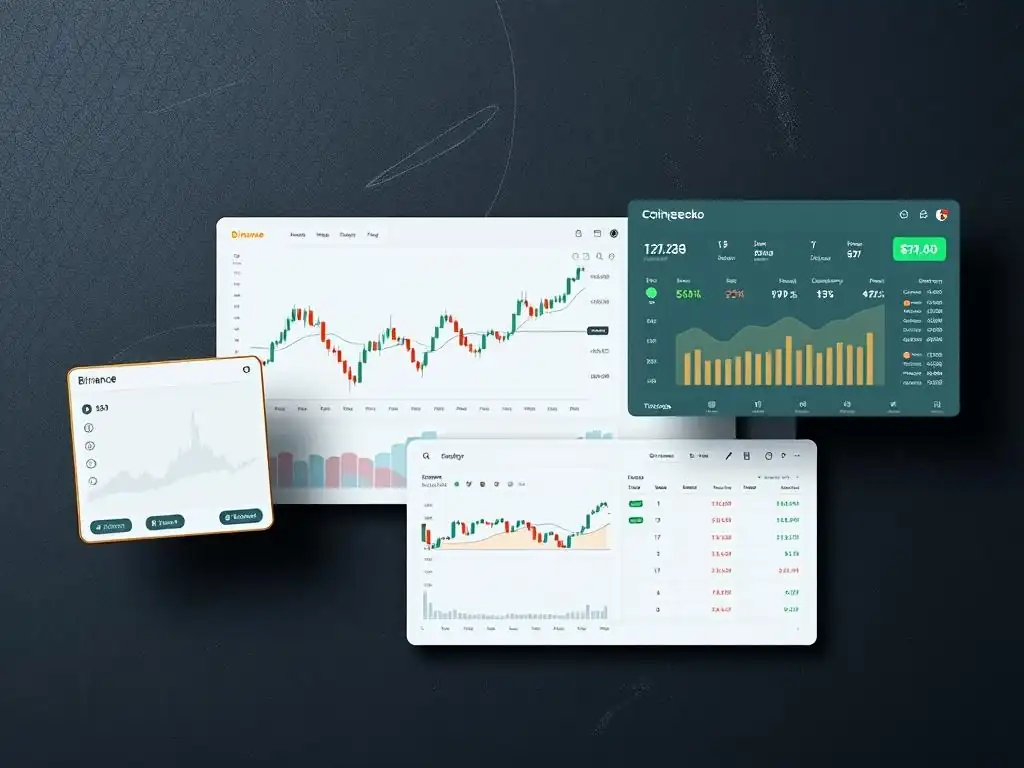
Crypto Trading Bots for Automated Trading
Crypto trading bots are software programs that execute trades on your behalf based on predefined strategies. For beginners undertaking crypto trading small capital, bots can help automate repetitive tasks and execute trades based on technical indicators without emotional interference. 3Commas is a popular platform offering user-friendly bots and strategies suitable for beginners, allowing them to set up simple automated trading strategies like DCA bots.
Cryptohopper is another well-regarded platform offering a range of bots and tools, including strategies suitable for smart trading with limited funds. While bots require initial setup and understanding of trading parameters, they can be beneficial for executing strategies consistently, especially for those who cannot monitor the market constantly. However, it's crucial to understand that bots are not foolproof and require monitoring; they can also incur subscription costs which must be factored into the profitability calculations for small capital.
Portfolio Trackers to Manage Your Investments
Managing your investments effectively is crucial, especially when dealing with crypto trading small capital spread across different assets or exchanges. Portfolio tracking apps provide a consolidated view of your holdings, their current value, and performance over time. Blockfolio (now part of FTX, though independent trackers exist) and Delta are widely used examples.
These tools allow you to manually input your trades or, in some cases, link to exchanges via API keys (use with caution and understand permissions) to automatically track your portfolio's growth or decline. For a beginner with small capital, seeing the overall performance helps in evaluating strategies, understanding the impact of market movements, and making informed decisions about rebalancing or adjusting holdings without needing complex spreadsheets.
Real-Life Success Stories of Small Capital Traders
Case Study: Transforming $100 into $1,000
While specific, verifiable individual stories can be difficult to attribute without privacy concerns, the principle of turning a small initial amount into a significantly larger sum in crypto is plausible through strategic trading and market appreciation. Consider a hypothetical case: A beginner starts crypto trading small capital with $100, allocated $50 to Bitcoin and $50 to Ethereum in early 2020. By the peak of the bull run in late 2021, both assets saw massive price increases. Bitcoin surged from around $7,000 to over $60,000, and Ethereum from around $130 to over $4,000.
Even without perfect timing, simply holding these assets through significant growth periods would have resulted in substantial percentage gains. The initial $50 in BTC could have grown significantly, potentially turning into several hundred dollars, and the $50 in ETH could have seen even larger percentage growth. While market conditions were exceptionally favorable during that period, this example illustrates how significant percentage gains on small capital are achievable through long-term holding and market appreciation, not necessarily complex day trading.
Lessons Learned from Successful Small Capital Crypto Traders
Analyzing anecdotal successes in crypto trading small capital reveals common themes. Patience is paramount; significant gains often require holding through volatile periods rather than trying to profit from every small price swing. Research is crucial; successful small capital traders don't blindly invest but research the technology, use case, and market position of the cryptocurrencies they choose.
Another key lesson is the importance of managing expectations and emotions. The allure of quick riches can lead to impulsive decisions. Successful small capital traders understand that losses are part of the game and focus on continuous learning and refining their approach. They often stick to a disciplined strategy like DCA and prioritize risk management, demonstrating that consistent, informed action on small capital is more effective than speculative gambling with limited funds.
Common Mistakes to Avoid in Crypto Trading with Limited Capital
Overtrading: The Pitfall of New Traders
Overtrading, or buying and selling too frequently, is a common mistake that is particularly detrimental when undertaking crypto trading small capital. Each trade incurs fees (trading fees, sometimes withdrawal fees), and these costs can quickly erode a small capital base, even if trades are marginally profitable. New traders often feel compelled to constantly be in the market, reacting to every price fluctuation, which leads to poor decision-making and increased transaction costs.
Instead of overtrading, focus on making fewer, higher-conviction trades based on thorough research or sticking to automated strategies like DCA. For example, executing 10 trades with $50 each might incur significant fees compared to making one or two larger, well-planned trades. Resisting the urge to constantly trade is essential for preserving and growing limited funds in the volatile crypto market.
Ignoring Market Research and Analysis
Many beginners jump into crypto trading small capital based on hype, social media trends, or tips without conducting their own research. This is a recipe for failure. The crypto market is complex, influenced by technology, regulation, market sentiment, and macroeconomic factors. Ignoring market research and analysis means making uninformed decisions that are essentially guesses.
Before investing even a small amount, understand what you are buying. Learn the basics of technical analysis (reading charts, identifying trends) and fundamental analysis (understanding the project's technology, team, and market potential). While you don't need to be an expert, a basic understanding allows you to make more strategic choices and avoid falling victim to pump-and-dump schemes or investing in fundamentally weak projects, protecting your precious small capital.
Emotional Trading: How to Stay Rational
The extreme volatility of the crypto market can trigger strong emotions like fear (leading to panic selling during dips) and greed (leading to impulsive buying during pumps or holding onto losing trades too long hoping for a recovery). Trading based on emotion is a major pitfall, especially for those with limited capital who cannot afford significant losses. Fear and greed override rational analysis and strategy.
To avoid emotional trading, develop a trading plan and stick to it. Define your entry and exit points before entering a trade and use tools like stop-loss and take-profit orders to execute your plan automatically. Avoid checking prices constantly, which can fuel anxiety. Approach crypto trading small capital with a professional mindset, focusing on executing your strategy rather than reacting to every market swing. Discipline and patience are key allies against emotional decision-making.
Conclusion: Embracing the Journey of Crypto Trading with Small Capital
The Future of Crypto Trading for Beginners
The landscape of crypto trading is continuously evolving, with increasing regulatory clarity in some regions and ongoing technological advancements. As the market matures, more user-friendly platforms and tools are emerging, making crypto trading small capital more accessible than ever. Educational resources are becoming more prevalent, empowering beginners to learn the necessary skills and strategies. The future likely holds more integration with traditional finance and further innovation in decentralized finance (DeFi), potentially offering new avenues for small capital participation.
While the market will remain volatile, the foundational principles of smart investing—research, risk management, and patience—will continue to be the bedrock of success. For those starting with limited funds, the focus will remain on consistent learning, strategic allocation of small amounts, and leveraging the power of compounding over time. The journey of crypto trading small capital is becoming more navigable and potentially rewarding for informed participants.
Encouragement to Start Your Trading Journey Today
Starting crypto trading small capital can feel daunting, but it is a journey of learning and potential growth. The most important step is simply beginning, armed with the right knowledge and a cautious approach. Don't be discouraged by the size of your initial capital; focus on the percentage growth and the invaluable experience you will gain. Every successful trader started somewhere, often with limited resources.
Embrace the learning process, commit to continuous education, and prioritize protecting your capital above seeking massive, quick gains. By understanding the market basics, choosing suitable platforms, employing smart strategies like DCA, and avoiding common mistakes, you can build a solid foundation for your crypto trading journey. Your small beginnings in crypto trading small capital today could pave the way for significant achievements tomorrow.
Frequently Asked Questions
How can I start crypto trading with a small amount of capital?
You can begin by using platforms that allow fractional ownership of cryptocurrencies. Another option is to focus on low-fee exchanges and carefully manage your risk with small, incremental trades.
What are the biggest risks of crypto trading with small capital?
The biggest risks include higher percentage losses from small price fluctuations and the impact of transaction fees eating into your profits. Also, emotional decision-making can be amplified due to the perceived scarcity of funds.
Which cryptocurrencies are best for beginners with limited capital?
Consider cryptocurrencies with lower prices per unit to maximize the number of coins you can acquire. Research projects with strong fundamentals and potential for future growth, but remember that all crypto investments carry risk.
How can I manage risk effectively when trading crypto with small capital?
Employ stop-loss orders to limit potential losses on each trade. Diversify your portfolio, even with small amounts, across a few different cryptocurrencies. Never invest more than you can afford to lose.
What are some strategies for growing a small crypto trading account?
Focus on consistent, small profits rather than chasing large gains. Reinvest profits wisely and continue to educate yourself on market trends and trading strategies. Implement a dollar-cost averaging strategy.
Final Reflection: Embracing the Crypto Journey
The journey into cryptocurrency trading, especially when starting with limited capital, can seem daunting. However, as we've explored, it's precisely these small beginnings that often lay the foundation for long-term success. The principles of patience, disciplined risk management, and continuous learning are not just theoretical concepts; they are the cornerstones of navigating the volatile crypto landscape, regardless of the size of your initial investment.
This approach, focusing on incremental growth and strategic decision-making, resonates far beyond the realm of crypto. It speaks to the power of perseverance and the belief that even the smallest seeds, nurtured with care, can blossom into something substantial. Do not despise these small beginnings, for the Lord rejoices to see the work begin...
This quote, while not directly about crypto, encapsulates the spirit of embracing the initial stages, recognizing their inherent value and potential.
So, as you embark on or continue your crypto trading journey with limited capital, remember the lessons we've discussed. Don't be discouraged by the seemingly overwhelming nature of the market. Instead, embrace the power of small beginnings, cultivate a mindset of continuous learning, and let your disciplined approach guide you towards achieving your financial goals. The future of finance is being shaped now, and you, with your dedication and strategic approach, have the potential to be a part of it.
Unlock Your Crypto Potential: Start Small, Dream Big!
Thanks for exploring the world of crypto trading with Blockchain Trends! Remember, entering the market doesn’t require a large investment. Now is the perfect time to take what you've learned and start your crypto journey.
Here are some steps you can take today:
- Open a demo account with a reputable exchange and practice your trading strategies using virtual funds. This is the safest way to learn the ropes and build confidence.
- Explore different cryptocurrencies beyond Bitcoin and Ethereum. Research altcoins with promising use cases and growth potential, while keeping your initial investments small and diversified.
- Join the Blockchain Trends community forum to share your experiences, ask questions, and connect with other aspiring crypto traders.
What is the first cryptocurrency you plan to research, and what draws you to it? Let us know in the comments below!
Leave a Reply