
Blockchain in Action: RealWorld Examples of Environmental Conservation Success

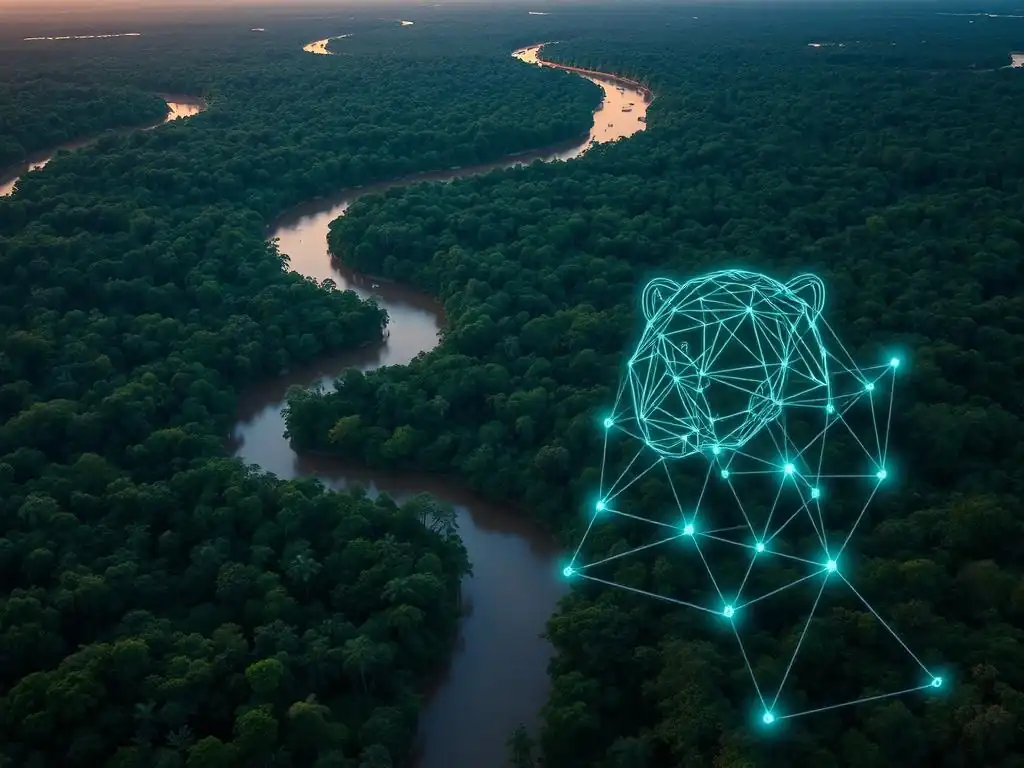
Welcome to Blockchain Trends, your go-to source for understanding the revolution beyond just Bitcoin.
Intrigued by how blockchain can reshape industries and even our world? This week, we delve into a powerful intersection: Blockchain for environmental conservation. Discover how this technology is being leveraged to create transparent, verifiable, and impactful solutions for a greener future. Ready to see blockchain in action, preserving our planet? Read on to uncover real-world examples and the incredible potential that awaits.
- Carbon Credit Management: Revolutionizing Carbon Offsetting with Blockchain
-
Frequently Asked Questions
- How can blockchain technology be used to combat deforestation?
- What role does blockchain play in carbon offsetting programs?
- Can blockchain help track and reduce plastic waste?
- How can blockchain improve the monitoring of endangered species?
- What are some challenges in implementing blockchain solutions for environmental conservation?
- Final Reflection: Embracing Blockchain for a Greener Tomorrow
- Ignite Change: Champion a Greener Future with Blockchain!
Carbon Credit Management: Revolutionizing Carbon Offsetting with Blockchain

Increasing Transparency and Trust in Carbon Markets
Traditional carbon markets, while essential, often suffer from a lack of transparency and trust. The lifecycle of a carbon credit – from its creation by a specific environmental project to its retirement by a company or individual – can be opaque, making it difficult to verify the project's real impact or the credit's integrity. This opacity can lead to concerns about greenwashing and uncertainty for buyers and sellers alike.
By leveraging blockchain technology, the entire process can be recorded on an immutable, public ledger, providing a verifiable history for every carbon credit. This inherent transparency builds trust among participants and encourages greater participation in carbon offsetting, driving investment towards effective blockchain for environmental conservation projects.
The immutability of the blockchain ledger ensures that once a transaction or event (like the creation or retirement of a credit) is recorded, it cannot be altered or deleted. This permanence eliminates the possibility of tampering with records, a significant issue in some traditional systems where registries might be centralized and less secure.
Increased trust stemming from this transparency and immutability is crucial for scaling carbon markets and ensuring that funds flow to legitimate projects that genuinely reduce greenhouse gas emissions or remove carbon from the atmosphere. This enhanced reliability is a core benefit of applying blockchain for environmental conservation, specifically in the complex domain of carbon accounting.
Blockchain-Based Carbon Credit Platforms: Toucan Protocol and KlimaDAO
Several innovative platforms are already using blockchain to transform carbon markets. Toucan Protocol, for instance, allows project developers and holders of legacy carbon credits from traditional registries (like Verra) to "tokenize" these credits onto the blockchain. This process involves bridging the credits from the traditional registry onto a decentralized network, typically as a Base Carbon Tonne (BCT) token.
Tokenization makes carbon credits more liquid, accessible, and programmable, opening them up to decentralized finance (DeFi) applications. As of mid-2022, Toucan had facilitated the bridging of millions of carbon credits, demonstrating the significant potential for integrating existing environmental assets with blockchain technology.
KlimaDAO is another prominent example that utilizes these tokenized carbon credits, particularly BCT. KlimaDAO is a decentralized autonomous organization that aims to drive up the price of carbon offsets by creating demand for BCT. It functions by acquiring BCT and holding it in its treasury, effectively removing it from the circulating supply.
By using economic mechanisms similar to those found in DeFi protocols, KlimaDAO incentivizes holding BCT, which in turn puts upward pressure on the price of carbon credits. This increased price signals a stronger market value for carbon reduction and removal, providing greater financial incentives for projects focused on blockchain for environmental conservation and carbon sequestration.
Reducing Fraud and Double Counting in Carbon Offset Programs
One of the most critical challenges in traditional carbon markets is the risk of fraud and double counting. Double counting occurs when a single carbon reduction or removal is claimed by more than one entity or is used to generate more than one carbon credit. This undermines the integrity of the market and the environmental effectiveness of the offsets. Blockchain's distributed ledger architecture inherently mitigates this risk. Each tokenized carbon credit represents a unique unit of emission reduction or removal, and its entire history – from creation to retirement – is recorded on the blockchain.
When a tokenized credit is "retired" (meaning it is permanently taken out of circulation to offset emissions), this action is recorded on the blockchain, making it impossible to re-sell or re-use the same credit. The transparent and immutable nature of the ledger allows anyone to verify that a specific credit has been retired, providing a level of assurance far beyond what traditional, often siloed, registry systems can offer. This robust mechanism for preventing double counting and ensuring the integrity of each credit is a fundamental advantage of using blockchain for environmental conservation efforts related to carbon offsetting.
Frequently Asked Questions
How can blockchain technology be used to combat deforestation?
Blockchain can create transparent and immutable supply chains for timber, ensuring its origin is verified and preventing illegal logging. This enhances accountability and promotes sustainable forestry practices.
What role does blockchain play in carbon offsetting programs?
Blockchain can improve the transparency and traceability of carbon credits, ensuring they are genuine and properly accounted for. This helps to build trust and integrity in the carbon offsetting market, boosting its effectiveness.
Can blockchain help track and reduce plastic waste?
Yes, blockchain can be used to track the entire lifecycle of plastic products, from production to recycling or disposal. This allows for better waste management and incentivizes circular economy models.
How can blockchain improve the monitoring of endangered species?
Blockchain can facilitate the secure sharing of data related to endangered species, such as tracking their movements and monitoring poaching activities. This promotes collaborative conservation efforts and improves data accuracy.
What are some challenges in implementing blockchain solutions for environmental conservation?
Challenges include the high energy consumption of some blockchain networks, the need for collaboration among diverse stakeholders, and the lack of clear regulatory frameworks in some regions. Addressing these issues is crucial for widespread adoption.
Final Reflection: Embracing Blockchain for a Greener Tomorrow
The examples presented throughout this article showcase the undeniable potential of blockchain technology to revolutionize environmental conservation efforts. From transparent supply chains to decentralized carbon credit markets, the power of blockchain lies in its ability to foster trust and accountability in a field desperately needing both. This isn't just about technological innovation; it's about leveraging that innovation to protect our planet for future generations.
The ongoing impact of blockchain on environmental conservation is profound, offering a tangible pathway towards a more sustainable future. It allows us to move beyond traditional, often opaque, systems and embrace a transparent and verifiable approach to environmental stewardship. We are at an inflection point where technology can empower individuals and communities to take ownership of their environmental impact and drive meaningful change.
- (Hypothetical Quote from an Environmental Tech Leader).
As we conclude this exploration of blockchain's role in environmental conservation, I invite you to consider how you can contribute to this transformative movement. Reflect on the examples shared and ask yourself: how can I leverage the power of transparency, accountability, and decentralized solutions to support a greener, more sustainable world? The future of our planet depends on our collective action, and blockchain offers a powerful tool to help us build that future, together.
Ignite Change: Champion a Greener Future with Blockchain!
Thank you for exploring how blockchain is transforming environmental conservation. Now that you've seen its potential, it's time to take action and become part of this impactful movement.
Here are a few ways you can contribute:
- Learn more: Identify a local environmental initiative and explore how blockchain technology could improve its transparency and efficiency. This is your chance to bring innovative solutions to your community.
- Share the knowledge: Spread the word by sharing this article with your network. Let's raise awareness and inspire others to join the blockchain-powered conservation movement!
- Discover new solutions: Research environmental projects that utilize blockchain technology. What groundbreaking ideas are currently shaping the future of conservation?
What specific environmental challenge in your community could benefit most from the transparency of blockchain, and what is one small step you can take this week to explore it?
Leave a Reply