
Overcoming Supply Chain Bottlenecks: Blockchain Solutions in Action Case Studies


Welcome to Blockchain Trends, your compass in navigating the dynamic world of decentralized innovation. Are you ready to witness the real-world impact of blockchain beyond the hype? Dive into our latest article, " Overcoming Supply Chain Bottlenecks: Blockchain Solutions in Action Case Studies, and discover how businesses are revolutionizing their operations. Uncover the secrets to enhanced transparency, traceability, and efficiency – and see how blockchain supply chain solutions are not just a concept, but a tangible reality. What challenges are they solving, and what lessons can you learn? Explore the case studies now!
Overcoming Supply Chain Bottlenecks: Blockchain Solutions in Action - Case Studies
- Introduction: The Growing Need for Resilient Supply Chains
-
Case Study 1: Tracking Pharmaceuticals with Blockchain for Enhanced Security
- The Challenge: Counterfeit Drugs and Lack of Transparency in Pharmaceutical Supply Chains
- The Blockchain Solution: MediLedger and its Implementation
- Key Features: Immutable Tracking, Verification, and Secure Data Sharing
- Results: Improved Traceability, Reduced Counterfeiting, and Enhanced Regulatory Compliance
- Lessons Learned: Importance of Industry Collaboration and Standardized Data Formats
-
Case Study 2: Enhancing Food Traceability with Blockchain for Consumer Trust
- The Challenge: Food Safety Concerns and Lack of Transparency in the Food Supply Chain
- The Blockchain Solution: IBM Food Trust for Food Product Tracking
- Key Features: Origin Tracking, Real-time Monitoring, and Secure Data Sharing
- Results: Increased Consumer Confidence, Improved Recall Efficiency, and Enhanced Brand Reputation
- Lessons Learned: The Need for Data Standardization and Collaboration Among Stakeholders
-
Case Study 3: Optimizing Logistics and Reducing Delays with Blockchain in Shipping
- The Challenge: Inefficient Logistics Processes and Delays in International Shipping
- The Blockchain Solution: TradeLens for Streamlined Logistics
- Key Features: Smart Contracts, Automated Payments, and Real-time Visibility
- Results: Reduced Shipping Times, Lower Costs, and Improved Efficiency
- Lessons Learned: The Importance of Data Integration and Interoperability with Existing Systems
- Comparing Blockchain Supply Chain Solutions: Key Features and Benefits
- The Future of Blockchain in Supply Chain Management
- Conclusion: Blockchain as a Catalyst for Supply Chain Resilience and Efficiency
-
Frequently Asked Questions
- How can blockchain technology improve supply chain transparency?
- What are some real-world benefits of using blockchain in supply chain management?
- What challenges might companies face when implementing blockchain supply chain solutions?
- How are blockchain supply chain solutions different from traditional supply chain management systems?
- Where can I find examples of successful blockchain supply chain implementations?
- Final Reflection: Embracing Transparency and Resilience
- Unveil Your Supply Chain's Potential!
Introduction: The Growing Need for Resilient Supply Chains
Understanding Current Supply Chain Challenges and Vulnerabilities
Modern global supply chains are intricate networks susceptible to numerous disruptions, from geopolitical instability and natural disasters to cyberattacks and pandemics. A significant challenge is the inherent lack of transparency and fragmented data flow across disparate systems used by multiple parties – manufacturers, logistics providers, distributors, and retailers.
This opacity makes it difficult to track goods in real-time, identify sources of delays, or verify the authenticity of products, leading to inefficiencies, increased costs, and reduced responsiveness. The COVID-19 pandemic, for instance, starkly highlighted these vulnerabilities, causing widespread delays and exposing the fragility of just-in-time inventory systems reliant on predictable global movement.
Beyond external shocks, internal inefficiencies plague traditional supply chains. Manual processes, paper-based documentation, and reliance on intermediaries introduce delays, errors, and potential for fraud. For example, processing shipping documentation can take days, involving numerous parties and physical handoffs. This lack of a single, trusted source of truth for transactions and product information impedes effective collaboration, makes audits cumbersome, and delays dispute resolution. The complexity escalates with the number of participants and geographical spread, creating fertile ground for bottlenecks that impact everything from raw material sourcing to final product delivery.
The Promise of Blockchain Technology for Supply Chain Optimization
Blockchain technology, fundamentally a distributed and immutable ledger, offers a compelling solution to many of these long-standing supply chain problems. By providing a shared, secure, and transparent record of transactions and product movements, it can create a single source of truth accessible to all authorized participants.
This inherent transparency helps build trust among parties who may not traditionally trust each other, streamlining processes that previously required extensive verification and manual checks. Smart contracts, self-executing contracts with the terms of the agreement directly written into code, can automate processes like payments or transfers of ownership based on predefined conditions being met, significantly reducing administrative overhead and potential for disputes.
The immutability of blockchain records ensures that once data is added, it cannot be altered or deleted, providing a high level of data integrity and security. This is crucial for verifying product authenticity, tracking provenance, and ensuring compliance with regulations. Furthermore, the decentralized nature of blockchain reduces reliance on central authorities or single points of failure, making the system more resilient.
By integrating blockchain, companies can achieve unprecedented levels of visibility, traceability, and efficiency, paving the way for more robust, cost-effective, and responsive supply chains. This potential is driving interest in blockchain supply chain solutions case studies across various industries.
Focus: Blockchain Supply Chain Solutions Case Studies
Exploring real-world implementations is the best way to understand the practical impact of blockchain technology. These blockchain supply chain solutions case studies move beyond theoretical discussions to demonstrate tangible benefits and lessons learned from companies and consortia that have adopted this technology. We will examine specific examples across different sectors – pharmaceuticals, food, and logistics – to illustrate how blockchain is being applied to overcome specific challenges.
These examples provide valuable insights into the technical implementation, the collaborative efforts required, and the measurable outcomes achieved. By analyzing these blockchain supply chain solutions case studies, businesses can gain a clearer picture of the potential return on investment, the complexities involved in deployment, and the strategic advantages offered by early adoption of distributed ledger technology (DLT) in their operations. The focus is on practical applications and the results they have yielded.
Case Study 1: Tracking Pharmaceuticals with Blockchain for Enhanced Security
The Challenge: Counterfeit Drugs and Lack of Transparency in Pharmaceutical Supply Chains
The global pharmaceutical supply chain is incredibly complex, involving manufacturers, distributors, wholesalers, pharmacies, and healthcare providers spread across numerous countries. A critical and life-threatening challenge within this network is the proliferation of counterfeit drugs.
The World Health Organization (WHO) estimates that up to 10% of medical products in low- and middle-income countries are substandard or falsified, posing a significant risk to public health and eroding trust in the pharmaceutical industry. Traditional tracking methods, often relying on paper trails or disparate databases, are easily manipulated or incomplete, making it difficult to authenticate products at various points in the supply chain and trace their origin quickly and reliably in case of issues.
The lack of end-to-end visibility also hampers regulatory compliance and efficient recalls. When a problem with a batch of medication is identified, tracing its distribution path to pharmacies and patients can be a slow and arduous process, potentially delaying the removal of harmful products from the market. Furthermore, ensuring compliance with regulations like the US Drug Supply Chain Security Act (DSCSA), which mandates electronic, interoperable systems for tracing prescription drugs, requires robust and trustworthy data sharing among diverse stakeholders who may be hesitant to share sensitive business data through traditional centralized systems.
The Blockchain Solution: MediLedger and its Implementation
The MediLedger Project, a consortium of pharmaceutical companies, distributors, and technology providers, developed a blockchain-based network specifically designed to address the challenges of tracking prescription medicines. Instead of storing sensitive transaction data directly on the blockchain, MediLedger uses a decentralized network where participants maintain their own data but use the blockchain as a coordination layer and for verifying data integrity. The core implementation leverages private, permissioned blockchain technology, ensuring that only authorized participants can join the network and access relevant information based on their role and specific queries.
Participants use standardized interfaces and protocols to record key events in the product lifecycle, such as manufacturing, packaging, shipping, and receiving. These events are cryptographically linked and recorded on the distributed ledger, creating an immutable audit trail. Verification processes, such as checking product identifiers against manufacturer data, are performed on the network in a decentralized manner, confirming authenticity without requiring companies to expose proprietary internal systems or competitive data. This collaborative approach, built on a shared technological infrastructure, facilitates trust and secure information exchange necessary for effective tracing and verification.
Key Features: Immutable Tracking, Verification, and Secure Data Sharing
One of the primary features of the MediLedger solution is its immutable tracking ledger. Every transaction or handling event related to a specific product is recorded on the blockchain, creating a permanent, tamper-proof history from the point of manufacture to the point of dispense. This record includes details like serial numbers, lot numbers, expiration dates, and transaction partners, providing comprehensive provenance information.
Crucially, the network enables decentralized verification. A pharmacy or distributor receiving a product can query the network to verify its authenticity and ownership history without needing to access a central database owned by a single company.
This verification process uses cryptographic proofs on the blockchain to confirm that the product information matches the manufacturer's records and that the transfer history is legitimate. Data sharing is secure and permissioned; while the blockchain provides a shared index and verification layer, sensitive business data remains within participants' own systems, only shared on a need-to-know basis through secure, encrypted channels facilitated by the network architecture.
Results: Improved Traceability, Reduced Counterfeiting, and Enhanced Regulatory Compliance
While specific aggregate metrics across the entire network are not always publicly disclosed due to competitive reasons, pilot programs and ongoing operations demonstrate significant improvements. The ability to trace a product's journey instantly back to its origin is dramatically enhanced, often reducing tracing times from days or weeks to mere seconds. This rapid traceability is critical for identifying and isolating potentially counterfeit or adulterated products before they reach patients.
By providing a reliable method for verifying product authenticity at any point, MediLedger serves as a powerful deterrent against counterfeiting. Illegitimate products cannot be verified against the immutable blockchain record, making them harder to introduce and easier to detect. Furthermore, the system directly supports compliance with regulations like the DSCSA by providing the electronic, interoperable system required for tracing. Companies participating in MediLedger are better positioned to meet these stringent requirements, reducing compliance burdens and risks. These are significant outcomes illustrating the power of blockchain supply chain solutions case studies in critical sectors.
Lessons Learned: Importance of Industry Collaboration and Standardized Data Formats
The success of the MediLedger project underscores the absolute necessity of industry-wide collaboration. Building a truly effective blockchain network for supply chain management requires agreement among competitors on shared standards, protocols, and governance structures. Without this collective effort, fragmentation would persist, limiting the network's reach and utility.
Another key lesson is the critical importance of standardized data formats. For participants' systems to communicate effectively and record information consistently on the blockchain, there must be universal agreement on how product identifiers, transaction types, and location data are represented. Achieving this standardization across diverse legacy systems and business practices is a major undertaking but is fundamental to the interoperability and success of any blockchain-based supply chain solution.
Case Study 2: Enhancing Food Traceability with Blockchain for Consumer Trust
The Challenge: Food Safety Concerns and Lack of Transparency in the Food Supply Chain
The food supply chain is notoriously complex, stretching from farms and fisheries through processors, distributors, wholesalers, and retailers before reaching the consumer. This complexity creates significant challenges for food safety and transparency. Foodborne illness outbreaks occur regularly, and quickly identifying the source of contamination can be incredibly difficult and time-consuming, often taking days or even weeks.
This delay exacerbates the spread of illness, leads to massive product recalls, and results in significant financial losses and damage to brand reputation for companies involved, even if they were not the source of the contamination. Consumers are increasingly demanding more information about where their food comes from, how it was produced, and its journey to the plate.
Traditional traceability systems often rely on fragmented, paper-based records or isolated internal databases that do not easily share information across different companies in the chain. This lack of interoperability means that tracing a product from farm to fork requires piecing together information from multiple, often incompatible, sources, a process that is slow, inefficient, and prone to errors. The opaque nature of this process erodes consumer trust, making it difficult for consumers to feel confident about the safety and authenticity of the food they purchase.
The Blockchain Solution: IBM Food Trust for Food Product Tracking
IBM Food Trust is a prominent example of a blockchain-based network designed to improve transparency and traceability within the food supply chain. Developed by IBM and built on the Hyperledger Fabric blockchain framework, it brings together growers, processors, wholesalers, distributors, manufacturers, retailers, and others onto a shared, permissioned network. Participants contribute data about their role in the food's journey, creating a comprehensive and accessible history.
The platform operates on a subscription model, allowing participants to share and access information based on their permissions. It provides a common language and framework for sharing data across the supply chain, moving away from disparate systems. The core idea is to create a tamper-evident record of every step a food product takes, from its origin on the farm or fishing boat through processing, packaging, shipping, and display on the store shelf.
Key Features: Origin Tracking, Real-time Monitoring, and Secure Data Sharing
A key feature of IBM Food Trust is its robust origin tracking capability. By capturing data points at each handover and transformation stage – such as planting dates, harvest locations, processing facilities, and shipping routes – the platform creates a detailed, immutable record of a food item's provenance. This allows for rapid verification of origin information, which is crucial for both safety and sustainability claims.
The system facilitates near real-time monitoring of product movement. As products move through the supply chain, participants update the ledger with relevant information. This provides unprecedented visibility into the location and status of goods, allowing for better inventory management, logistics optimization, and quick identification of bottlenecks or deviations. Data sharing is managed securely and permissioned; while the network provides a shared view, companies control what data they share and with whom, protecting sensitive business information while enabling necessary collaboration for tracing and safety.
Results: Increased Consumer Confidence, Improved Recall Efficiency, and Enhanced Brand Reputation
Pilot programs and implementations of IBM Food Trust have demonstrated dramatic improvements in traceability speed. In a notable example, Walmart used the platform to trace mangoes from farm to store. What previously took days or weeks using traditional methods was accomplished in just 2.2 seconds. This rapid tracing ability is transformative for recall management, significantly reducing the time it takes to identify and remove potentially contaminated products from shelves, thereby limiting the scope of outbreaks and protecting consumers.
Improved traceability directly contributes to increased consumer confidence. When retailers and brands can quickly and transparently provide information about a product's journey, it builds trust. This enhanced transparency and the ability to quickly handle safety issues also protect and enhance brand reputation, demonstrating a commitment to food safety and quality. These tangible benefits highlight the value proposition demonstrated by blockchain supply chain solutions case studies in the food sector.
Lessons Learned: The Need for Data Standardization and Collaboration Among Stakeholders
Similar to the pharmaceutical case study, a primary lesson from IBM Food Trust's implementation is the absolute necessity of data standardization across the supply chain. For the network to function effectively, all participants must agree on common data formats and identifiers for products, locations, and events. This requires significant effort in data cleansing and integration from legacy systems.
Furthermore, successful adoption hinges on robust collaboration among a diverse group of stakeholders, including direct competitors. Building trust and demonstrating the mutual benefits of sharing data within the network are critical for onboarding participants and achieving critical mass. The value of the network increases exponentially with the number of active participants contributing data, emphasizing the collaborative nature required for such blockchain supply chain solutions case studies.
Case Study 3: Optimizing Logistics and Reducing Delays with Blockchain in Shipping
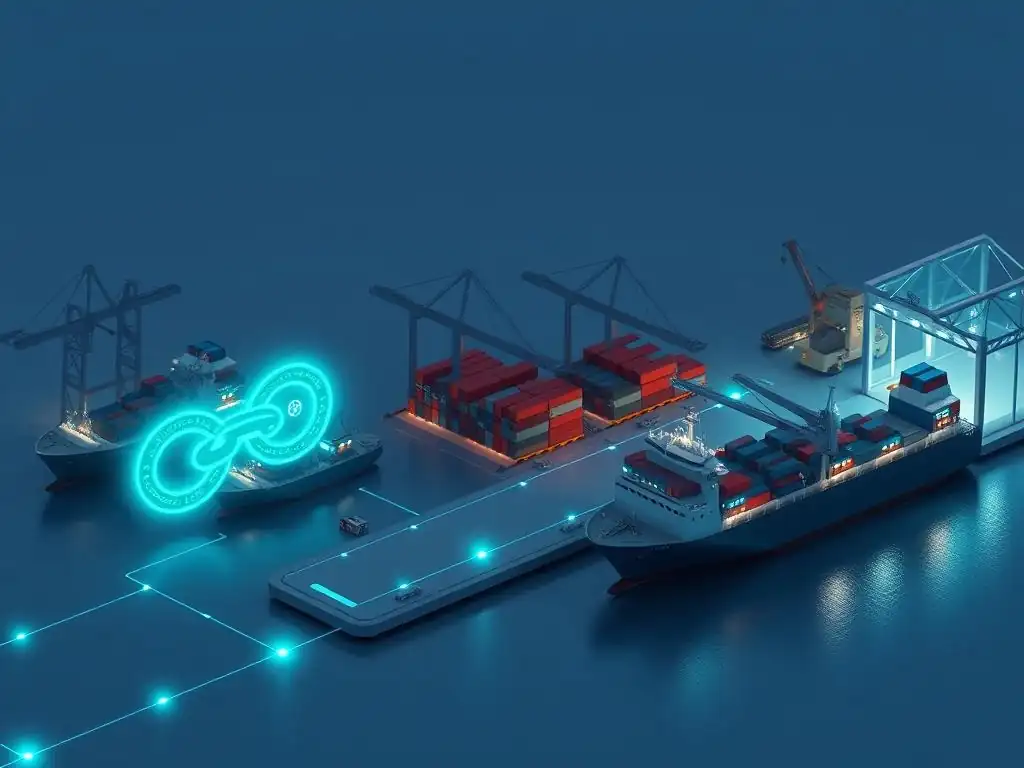
The Challenge: Inefficient Logistics Processes and Delays in International Shipping
International shipping and logistics are characterized by complex, multi-party processes involving carriers, ports, customs authorities, freight forwarders, and shippers. These processes often rely on extensive paper documentation – bills of lading, customs declarations, manifests, etc. – which are slow to process, prone to errors, and susceptible to loss or fraud. The manual handling and verification of these documents create significant delays at ports and throughout the transportation journey. A single shipment can involve dozens of documents and interactions between multiple entities, leading to bottlenecks and lack of real-time visibility into the status and location of goods.
The lack of a shared, trusted platform for information exchange means that participants often work with outdated or inconsistent data. This leads to inefficiencies in scheduling, cargo handling, and customs clearance. Discrepancies in documentation can cause shipments to be held up for days or even weeks, resulting in demurrage charges, increased costs, and unpredictable delivery times. Resolving disputes related to cargo damage or delays is also complicated by the fragmented nature of the documentation and communication flow.
The Blockchain Solution: TradeLens for Streamlined Logistics
TradeLens, a platform jointly developed by Maersk and IBM, is a blockchain-enabled shipping solution designed to address these inefficiencies by providing a shared, immutable record of transactions and events across the global supply chain ecosystem. It connects shippers, shipping lines, freight forwarders, port and terminal operators, inland transportation, customs authorities, and other stakeholders onto a single platform built on Hyperledger Fabric.
The platform captures and shares data related to cargo movements, documentation, and events in real-time. By digitizing and decentralizing the flow of information, TradeLens aims to replace or supplement traditional paper-based processes and disparate systems. It creates a comprehensive, shared view of the supply chain journey for all authorized participants, reducing the need for manual data entry and reconciliation across different parties.
Key Features: Smart Contracts, Automated Payments, and Real-time Visibility
TradeLens leverages smart contracts to automate various aspects of the shipping process. For example, smart contracts can be used to automate payments based on proof of delivery or the completion of specific customs procedures, reducing administrative delays and manual invoicing. They can also trigger notifications or actions based on predefined conditions being met within the shipment's journey.
The platform provides enhanced real-time visibility into cargo movements. As containers move through ports, onto vessels, and through customs, data updates from various participants are recorded on the shared ledger. This allows shippers and other stakeholders to track their cargo's progress with greater accuracy and predictability than traditional methods. Data access is controlled via permissions, ensuring that participants only see the information relevant to their role in the supply chain.
Results: Reduced Shipping Times, Lower Costs, and Improved Efficiency
While specific aggregate data is proprietary to TradeLens and its users, reports from participating companies indicate significant improvements. Maersk Line, a founding partner, reported a potential reduction in the time it takes for cargo to get from a port terminal to its final destination by up to 40% in some cases, largely due to faster documentation processing and improved visibility. A single shipment can involve interactions with over 30 different parties and more than 200 communications; digitizing and streamlining these interactions through TradeLens dramatically cuts down on processing time and potential errors.
The reduction in delays and administrative effort leads to lower costs for shippers and carriers, including reduced demurrage and detention charges. Improved efficiency in customs clearance, facilitated by shared and verified documentation, further speeds up cargo movement. The platform also provides a more reliable audit trail for compliance and dispute resolution. These outcomes underscore the practical benefits highlighted by blockchain supply chain solutions case studies in the logistics sector.
Lessons Learned: The Importance of Data Integration and Interoperability with Existing Systems
A major challenge and lesson learned in implementing TradeLens is the complexity of integrating the platform with the diverse range of existing legacy systems used by ports, carriers, customs agencies, and other parties globally. Achieving seamless data flow requires significant effort in building APIs and connectors to bridge the gap between the blockchain platform and the operational systems used daily by participants.
Interoperability is also key. While TradeLens aims to be a comprehensive platform, the global supply chain ecosystem is vast and includes other digital initiatives. Ensuring that TradeLens can effectively interact and share data with other relevant platforms and systems is crucial for its widespread adoption and ultimate success in transforming global logistics.
Comparing Blockchain Supply Chain Solutions: Key Features and Benefits
Blockchain supply chain solutions case studies reveal common themes and distinct approaches across different industries. Comparing these solutions highlights the core benefits derived from implementing DLT in supply chain management.
Traceability and Transparency: A Comparative Analysis
All three case studies – MediLedger, IBM Food Trust, and TradeLens – demonstrate a fundamental improvement in traceability. MediLedger focuses on tracking individual pharmaceutical products for authenticity and regulatory compliance. IBM Food Trust excels at tracing food items from source to shelf for safety and consumer information. TradeLens provides detailed tracking of shipping containers and associated documentation for logistics efficiency.
The level of transparency varies based on the network's design and permissions. While all provide a shared, immutable ledger of events, the specific data shared and visible to participants is controlled. MediLedger prioritizes privacy, using the blockchain for verification rather than storing all data on-chain. IBM Food Trust allows participants to control data sharing based on relationships. TradeLens focuses on sharing key shipping and documentation events. However, compared to traditional systems, all three offer significantly enhanced visibility into the product's journey, creating a level of transparency previously unattainable.
Security and Immutable Records: A Comparative Analysis
A common thread across these blockchain supply chain solutions case studies is the enhanced security provided by the immutable nature of the blockchain. Once data is recorded, it cannot be retrospectively altered without the consensus of the network participants, making it highly tamper-evident. This is critical for preventing fraud in pharmaceuticals, ensuring data integrity for food safety, and securing shipping documentation.
The security models differ slightly based on the underlying blockchain technology (e.g., Hyperledger Fabric) and network design (permissioned vs. public). Permissioned networks like those used by MediLedger, IBM Food Trust, and TradeLens offer robust identity management and access controls, ensuring that only authorized parties can participate and view specific data. This contrasts with public blockchains but is necessary for enterprise applications dealing with sensitive commercial data. Cryptography is used extensively in all cases to secure transactions and verify data authenticity.
Efficiency and Cost Reduction: A Comparative Analysis
Improvements in efficiency and reductions in operational costs are recurring benefits in these blockchain supply chain solutions case studies. By automating processes (e.g., smart contracts in TradeLens), reducing manual data entry and reconciliation, and speeding up information flow, these platforms significantly streamline operations.
IBM Food Trust's ability to reduce tracing time from weeks to seconds directly impacts efficiency during recalls, minimizing losses. TradeLens's reported reduction in documentation processing and shipping times translates into lower demurrage costs and more predictable logistics. While direct cost savings are harder to quantify publicly for MediLedger, the prevention of counterfeit drugs represents a massive potential saving in healthcare costs and loss of life. Overall, the move from paper-based, fragmented systems to a digital, shared ledger inherently drives operational efficiency and reduces costs associated with delays, errors, and manual processing.
Scalability and Interoperability: A Comparative Analysis
Scalability and interoperability remain key challenges and areas of focus for all blockchain supply chain solutions. While the platforms discussed are designed for enterprise scale, widespread adoption requires the ability to handle millions of transactions and onboard a vast number of participants globally. The underlying blockchain technology and network architecture play a significant role here.
Interoperability with existing legacy systems is a crucial factor determining the ease and speed of adoption. All three case studies highlight the challenge of integrating with diverse systems used by participants. Furthermore, interoperability between different blockchain networks or platforms is an emerging challenge. As more industry-specific or regional blockchain solutions emerge, the ability for these networks to communicate and share relevant data will be essential for creating truly seamless global supply chains. The lessons learned emphasize that while current solutions are scalable within their network, broader interoperability is a future frontier.
The Future of Blockchain in Supply Chain Management
The blockchain supply chain solutions case studies examined demonstrate the technology's significant potential, yet the journey towards widespread adoption is ongoing. The future promises further integration with other technologies and continued evolution of the blockchain ecosystem.
Emerging Trends: IoT Integration and AI-Powered Supply Chains
A major emerging trend is the integration of blockchain with Internet of Things (IoT) devices. IoT sensors placed on products, containers, or vehicles can automatically record data points – such as temperature, humidity, location, and handling shocks – directly onto the blockchain.
This eliminates manual data entry for environmental conditions and logistics events, providing a richer, more accurate, and real-time data stream that is immutably recorded. For example, monitoring the temperature of sensitive goods like pharmaceuticals or food throughout their journey using IoT sensors linked to a blockchain can provide irrefutable proof of proper handling conditions, enhancing quality control and reducing waste.
Furthermore, the combination of blockchain's reliable data foundation with Artificial Intelligence (AI) is set to create AI-powered supply chains. AI algorithms can analyze the vast amounts of secure, verified data collected on the blockchain to identify patterns, predict potential disruptions, optimize routes, manage inventory more effectively, and automate decision-making. For instance, AI could analyze historical data from a blockchain logistics platform to predict delays at specific ports based on weather patterns or congestion levels, allowing for proactive rerouting via smart contracts. This synergy between blockchain, IoT, and AI promises highly intelligent, automated, and resilient supply chains.
Overcoming Barriers to Adoption: Scalability, Interoperability, and Regulation
Despite the proven benefits in these blockchain supply chain solutions case studies, several barriers still impede widespread adoption. Scalability remains a technical challenge for some blockchain implementations, particularly public networks, though permissioned enterprise solutions like those discussed are specifically designed to handle high transaction volumes. However, scaling to include millions of small and medium-sized enterprises (SMEs) alongside large corporations requires accessible and cost-effective solutions.
- [ ] Address technical scalability for massive transaction volumes.
- [ ] Improve interoperability between different blockchain platforms and legacy systems.
- [ ] Develop clear and consistent regulatory frameworks globally.
- [ ] Reduce complexity and cost of implementation for smaller businesses.
- [ ] Foster greater collaboration and trust among supply chain participants.
Interoperability, as highlighted in the case studies, is critical. Different industries and companies may adopt different blockchain platforms, necessitating protocols and standards that allow these networks to communicate seamlessly. The lack of clear and consistent regulatory frameworks across different jurisdictions also creates uncertainty and can hinder cross-border blockchain implementations. Finally, the initial cost and technical complexity of implementing blockchain solutions can be a barrier for businesses, particularly SMEs, requiring simpler, more accessible entry points.
The Potential for Widespread Transformation of Global Supply Chains with Distributed Ledger Technology (DLT)
Despite the challenges, the potential for Distributed Ledger Technology (DLT), including blockchain, to fundamentally transform global supply chains is immense. DLT can create truly end-to-end visibility, enabling stakeholders to track products from raw materials to the final consumer with unprecedented accuracy and transparency. This level of visibility is not only crucial for safety and compliance but also for optimizing every stage of the supply chain, reducing waste, and improving sustainability.
The widespread adoption of DLT can lead to a more interconnected and collaborative supply chain ecosystem where information flows freely and securely among trusted partners. This fosters greater efficiency, reduces reliance on manual processes and intermediaries, and lowers operational costs significantly. As regulatory clarity improves, technology matures, and industry standards emerge, DLT is poised to become a foundational technology for building the resilient, efficient, and transparent supply chains required for the global economy of the future. The insights from these blockchain supply chain solutions case studies provide a compelling glimpse into this transformative potential.
Conclusion: Blockchain as a Catalyst for Supply Chain Resilience and Efficiency
Recap of Key Findings from the Blockchain Supply Chain Case Studies
The blockchain supply chain solutions case studies of MediLedger, IBM Food Trust, and TradeLens collectively demonstrate the tangible benefits of applying distributed ledger technology to complex supply chain challenges. We've seen how blockchain enhances security and combats counterfeiting in pharmaceuticals, improves food safety tracing and builds consumer trust, and streamlines international logistics by digitizing documentation and improving visibility.
Across these diverse sectors, the core benefits consistently include enhanced traceability, improved data security through immutability, increased operational efficiency, and the potential for significant cost reductions. These examples move blockchain beyond theoretical discussions, providing concrete evidence of its capability to create more transparent, trustworthy, and resilient supply chain networks. The lessons learned from these pioneering implementations highlight the critical need for industry collaboration, data standardization, and careful integration with existing systems.
The Importance of Blockchain Adoption for Competitive Advantage
In an increasingly volatile and competitive global market, building resilient and efficient supply chains is not just an operational necessity but a strategic imperative. Companies that leverage blockchain technology to achieve greater transparency, traceability, and automation gain a significant competitive advantage. The ability to quickly respond to disruptions, ensure product authenticity, meet stringent regulatory requirements with ease, and provide consumers with detailed provenance information sets early adopters apart.
Furthermore, the cost savings and efficiency gains realized through blockchain implementation can directly impact the bottom line, freeing up resources that can be reinvested in innovation or business growth. As blockchain technology matures and becomes more accessible, its adoption will likely shift from being a differentiator to a standard requirement for participation in modern, interconnected supply chain ecosystems. The insights gleaned from these blockchain supply chain solutions case studies are invaluable for understanding this evolving landscape.
Call to Action: Exploring and Implementing Blockchain Solutions for Your Supply Chain.
The evidence presented in these blockchain supply chain solutions case studies is clear: blockchain technology offers powerful tools to overcome many of the persistent challenges plaguing traditional supply chains. For businesses looking to enhance resilience, improve efficiency, build trust, and secure their operations, exploring blockchain solutions is a crucial next step.
Consider your specific pain points – whether it's traceability issues, documentation bottlenecks, or lack of trust among partners. Research existing blockchain supply chain solutions case studies in your industry or a similar one to understand how others have tackled these challenges. Engage with technology providers and consortia that are developing and implementing DLT platforms. Start with pilot programs focused on specific, well-defined use cases to demonstrate value and learn valuable lessons before scaling. The time to investigate how blockchain can transform your supply chain is now.
Frequently Asked Questions
How can blockchain technology improve supply chain transparency?
Blockchain provides an immutable ledger, allowing all participants in the supply chain to track the origin and movement of goods. This increased visibility helps to build trust and reduce fraud.
What are some real-world benefits of using blockchain in supply chain management?
Companies are seeing benefits like reduced counterfeiting, improved traceability, and faster delivery times. These improvements translate to cost savings and enhanced customer satisfaction.
What challenges might companies face when implementing blockchain supply chain solutions?
Challenges include integration with existing systems, data privacy concerns, and the need for industry-wide collaboration. Addressing these challenges is key to successful implementation.
How are blockchain supply chain solutions different from traditional supply chain management systems?
Traditional systems often rely on centralized databases and manual processes, leading to inefficiencies. Blockchain offers a decentralized, transparent, and secure alternative for managing supply chain data.
Where can I find examples of successful blockchain supply chain implementations?
Blockchain Trends features blockchain supply chain solutions case studies, highlighting real-world applications and the measurable impact of this technology. These case studies serve as valuable learning tools.
Final Reflection: Embracing Transparency and Resilience
The case studies presented throughout this article underscore the transformative potential of blockchain in resolving persistent supply chain bottlenecks. What was once a theoretical promise is now a tangible reality, with companies across diverse sectors leveraging distributed ledger technology to enhance visibility, security, and efficiency in their operations. The lessons learned from these real-world implementations offer invaluable insights for organizations seeking to navigate the complexities of modern supply chains and build more resilient and responsive networks.
This exploration of blockchain's impact on supply chains has profoundly influenced my understanding of how technology can reshape industries. It's clear that the future of supply chain management hinges on embracing transparency and collaboration, values inherently fostered by blockchain technology. The supply chain isn't a chain at all; it's a complex, interconnected web. Blockchain provides the thread to navigate that web with confidence.
This quote perfectly encapsulates the shift from linear, opaque processes to interconnected, transparent ecosystems, a shift that promises to unlock unprecedented levels of efficiency and trust.
Now, I invite you, the reader, to consider how these blockchain supply chain solutions can be adapted and implemented within your own sphere of influence. Whether you are a business leader, a technology enthusiast, or simply a curious observer, the principles of transparency, security, and collaboration highlighted in these case studies hold universal value. Let us all strive to build more resilient and ethical supply chains, leveraging the power of blockchain to create a future where goods flow freely, information is readily accessible, and trust is the foundation of every transaction.
Unveil Your Supply Chain's Potential!
Thank you for exploring how blockchain is transforming supply chains. You've seen how innovative solutions are reducing bottlenecks and making processes more transparent and efficient. Now, it's time to consider how these insights can benefit your organization.
Here are some practical steps to get started:
- Plan your blockchain integration: Identify specific pain points in your supply chain and evaluate how blockchain technology could help solve them. Start with a small pilot project to test its effectiveness.
- Learn from real-world examples: Review case studies of successful implementations, and research the blockchain platforms used. Understand their features and limitations to see if they fit your business needs.
- Engage your team: Share this article with colleagues involved in logistics or supply chain management and discuss potential blockchain applications. Collaborate on possible implementation strategies.
What will be your first step toward adopting blockchain technology to enhance your supply chain? Share your thoughts in the comments!
Leave a Reply