
CrossChain DeFi and the Metaverse: Building Decentralized Worlds Across Chains

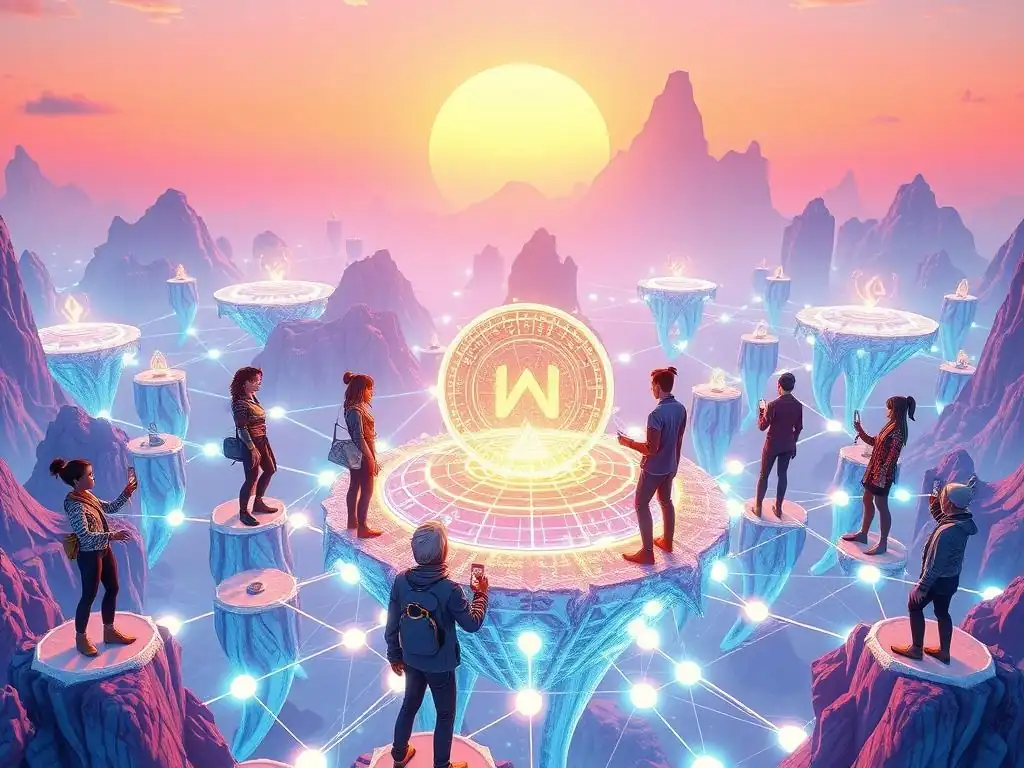
Welcome to Blockchain Trends, your guide to navigating the revolutionary landscape of blockchain technology. Prepare to delve beyond the hype and explore its transformative potential across various industries. Today, we're diving deep into CrossChain DeFi Metaverse integration, unpacking how these cutting-edge technologies are converging to build truly decentralized and interconnected virtual worlds. Curious about the possibilities? Keep reading to unlock the future of finance and immersive experiences!
Cross-Chain DeFi and the Metaverse: Building Decentralized Worlds Across Chains
- Introduction: Exploring the Convergence of Cross-Chain DeFi and the Metaverse
- Understanding Cross-Chain Technology for Metaverse Applications
- DeFi in the Metaverse: Current Landscape and Challenges
- Building Decentralized Worlds Across Chains: Use Cases and Examples
- Cross-Chain DeFi Metaverse Integration Strategies: A Deep Dive
- The Future of Cross-Chain DeFi and the Metaverse
- Conclusion: The Transformative Potential of Cross-Chain DeFi Metaverse Integration
-
Frequently Asked Questions
- What is CrossChain DeFi and how does it relate to the Metaverse?
- How does CrossChain technology enhance the Metaverse experience?
- What are some potential use cases for CrossChain DeFi in the Metaverse?
- What are the main challenges in achieving seamless CrossChain DeFi Metaverse integration?
- What is the future outlook for CrossChain DeFi and the Metaverse?
- Final Reflection: Bridging Worlds, Building Futures
- Unleash the Metaverse: Start Building Across Chains!
Introduction: Exploring the Convergence of Cross-Chain DeFi and the Metaverse
The Rise of Decentralized Finance (DeFi) and its Limitations
Decentralized Finance (DeFi) has emerged as a revolutionary paradigm shift in financial services, leveraging blockchain technology to offer transparent, permissionless, and efficient alternatives to traditional financial systems. Since its inception around 2020, DeFi has witnessed exponential growth, with the total value locked (TVL) in DeFi protocols reaching peaks of over \$100 billion in 2021 and fluctuating around \$50-80 billion in recent times. This growth is fueled by innovative applications like decentralized exchanges (DEXs), lending and borrowing platforms, and yield farming opportunities, all operating without intermediaries on public blockchains like Ethereum.
However, the rapid expansion of DeFi has also unveiled certain limitations, primarily centered around blockchain silos. The majority of DeFi activity is concentrated on a few dominant blockchains, leading to fragmented liquidity and isolated ecosystems. For instance, while Ethereum hosts a significant portion of DeFi applications, other robust blockchains like Binance Smart Chain, Solana, and Avalanche have developed their own thriving DeFi landscapes.
This blockchain fragmentation hinders seamless asset movement and value transfer across different networks, creating inefficiencies and limiting the overall potential of DeFi to become a truly interconnected global financial system. Users often face challenges and increased costs when attempting to interact with DeFi protocols across different chains, necessitating solutions that bridge these isolated environments.
The Metaverse: A New Frontier for Digital Interaction and Ownership
The metaverse represents the next evolution of the internet, envisioning immersive, shared, and persistent virtual worlds where users can interact with each other, digital objects, and experiences. Fueled by advancements in virtual reality (VR), augmented reality (AR), and blockchain technology, the metaverse is rapidly transitioning from a futuristic concept to a tangible reality.
Companies like Meta (formerly Facebook), Microsoft, and numerous blockchain-based projects are investing heavily in building metaverse platforms, each with its unique vision and ecosystem. Estimates suggest that the metaverse market could reach trillions of dollars in the coming years, impacting various sectors from entertainment and gaming to commerce and social interaction.
A key element distinguishing the metaverse from previous iterations of online virtual spaces is the emphasis on digital ownership and user empowerment, often facilitated by blockchain and NFTs (Non-Fungible Tokens). NFTs enable verifiable ownership of digital assets within the metaverse, ranging from virtual land and avatars to in-game items and art.
This digital ownership creates new economic models within these virtual worlds, allowing users to generate value, trade assets, and participate in decentralized economies. However, similar to DeFi, the metaverse landscape is currently fragmented, with different platforms operating in isolation, hindering interoperability and limiting the true potential of a unified and open metaverse experience.
Why Cross-Chain DeFi Metaverse Integration Matters: Bridging the Gaps
The convergence of cross-chain DeFi and the metaverse holds immense potential to unlock a truly interconnected and decentralized digital future. Currently, both DeFi and the metaverse ecosystems face challenges due to blockchain fragmentation. Cross-chain technology offers the crucial bridge to overcome these limitations, enabling seamless interaction and value flow between different blockchains and metaverse platforms. "CrossChain DeFi Metaverse integration" is not just a technological advancement, it's a necessary evolution to realize the full potential of both domains.
Integrating cross-chain DeFi solutions into the metaverse can address key pain points such as fragmented liquidity, limited asset utility, and siloed user experiences. For example, users holding digital assets in one metaverse platform could utilize DeFi protocols on a different blockchain to earn yield or access financial services without needing to bridge assets manually through complex and often costly procedures.
This integration can foster a more fluid and efficient virtual economy, where digital assets can move freely across different metaverse environments and interact seamlessly with a wider range of DeFi applications. Ultimately, "CrossChain DeFi Metaverse integration" aims to create a more unified, accessible, and user-centric decentralized web, where value and experiences are not confined by blockchain boundaries.
Understanding Cross-Chain Technology for Metaverse Applications
What is Cross-Chain Interoperability and Why is it Crucial?
Cross-chain interoperability refers to the ability of different blockchains to communicate and interact with each other. In essence, it is the technology that enables the transfer of data, assets, and instructions between otherwise isolated blockchain networks. This interoperability is crucial because the blockchain space, including both DeFi and the metaverse, is currently characterized by a multi-chain environment. Numerous blockchains exist, each with its own strengths, weaknesses, and communities. Without cross-chain solutions, these blockchains operate as silos, limiting the flow of value and innovation.
The necessity of cross-chain interoperability becomes even more pronounced in the context of the metaverse. Imagine a metaverse ecosystem where users possess digital assets, participate in virtual economies, and engage in social interactions across various virtual worlds. If these metaverse platforms are built on different blockchains and lack interoperability, users would face significant friction.
They might be unable to use assets acquired in one metaverse in another, limiting the utility and value of their digital possessions. Cross-chain technology is therefore fundamental to creating a truly open and interconnected metaverse, allowing users to seamlessly navigate between different virtual worlds and leverage their digital assets across the entire ecosystem, boosting "CrossChain DeFi Metaverse integration".
Key Cross-Chain Protocols and Technologies for DeFi and Metaverse
Several protocols and technologies are emerging to address the challenge of cross-chain interoperability, particularly relevant for DeFi and metaverse applications. These solutions can be broadly categorized into bridges, relayers, and cross-chain communication protocols. Bridges facilitate the transfer of assets between two blockchains, often by locking assets on one chain and minting representative assets on another. Relayers operate as intermediaries, verifying and relaying information between chains. More advanced cross-chain communication protocols aim to establish secure and generalized messaging layers that allow for more complex interactions beyond simple asset transfers.
Examples of prominent cross-chain protocols include Polkadot, Cosmos, and LayerZero. Polkadot utilizes a "parachain" architecture, allowing multiple blockchains (parachains) to connect to a central "relay chain" for shared security and interoperability. Cosmos employs the Inter-Blockchain Communication (IBC) protocol, enabling sovereign blockchains ("zones") to transact and exchange data with each other. LayerZero stands out as an omnichain interoperability protocol designed for lightweight messaging and asset transfers across numerous blockchains, including Ethereum, Avalanche, and Polygon. These technologies are foundational for enabling "CrossChain DeFi Metaverse integration".
LayerZero, Polkadot, Cosmos: A Comparative Overview
LayerZero distinguishes itself by its approach to cross-chain communication, utilizing "Ultra-light Nodes" (ULNs) which are significantly less resource-intensive than traditional full nodes. This allows for more efficient and cost-effective message verification across chains. LayerZero relies on a combination of oracles and relayers for secure message delivery, offering a balance between security and efficiency. It is designed to be highly versatile and compatible with a wide range of blockchains, making it a strong contender for powering cross-chain metaverse applications requiring frequent and low-cost communication.
Polkadot, on the other hand, emphasizes shared security and scalability through its parachain model. Parachains benefit from the security of the relay chain, making it suitable for applications requiring robust security guarantees. However, developing and deploying parachains can be more complex and resource-intensive compared to utilizing protocols like LayerZero. Polkadot's ecosystem is also focused on chains built specifically within its framework.
Cosmos, with its IBC protocol, offers sovereignty to connected blockchains while enabling interoperability. Cosmos is well-suited for projects seeking to build independent but interoperable blockchains. The choice between LayerZero, Polkadot, Cosmos, or other cross-chain solutions depends on the specific requirements of the metaverse application, including security needs, scalability demands, and the desired level of customization and control.
Benefits of Cross-Chain Solutions within Metaverse Ecosystems
The integration of cross-chain solutions within metaverse ecosystems offers a multitude of benefits, significantly enhancing user experience and unlocking new possibilities. These benefits are crucial for the long-term growth and adoption of both the metaverse and "CrossChain DeFi Metaverse integration".
Enhanced Liquidity and Asset Transfer
One of the most immediate benefits of cross-chain technology in the metaverse is enhanced liquidity and seamless asset transfer. Without cross-chain solutions, digital assets within the metaverse would be largely confined to the specific blockchain or platform where they were created. This fragmentation limits the liquidity of these assets and makes it difficult for users to utilize them across different metaverse experiences.
Cross-chain bridges and protocols enable users to move their metaverse assets, such as virtual land NFTs or in-game items, between different blockchains and metaverse platforms. This increased liquidity unlocks greater utility for digital assets and creates more vibrant and interconnected metaverse economies. For example, a user might purchase virtual land on a metaverse built on Ethereum and then seamlessly transfer it to a different metaverse platform built on Solana, leveraging the unique features and communities of both worlds.
Seamless User Experience Across Different Metaverse Platforms
Beyond liquidity, cross-chain technology drastically improves the user experience within the metaverse. Currently, navigating between different metaverse platforms can be cumbersome, often requiring users to manage multiple wallets, accounts, and currencies. Cross-chain solutions can abstract away this complexity, enabling a more seamless and unified user experience.
Imagine a future where users can utilize a single wallet to access multiple metaverse platforms, seamlessly transferring assets and identities between them. This interoperability reduces friction and allows users to explore and engage with a wider range of metaverse experiences without being hindered by technical complexities. This frictionless experience is vital for mainstream adoption of the metaverse and for realizing the full potential of "CrossChain DeFi Metaverse integration", making the metaverse more accessible and user-friendly for a broader audience.
DeFi in the Metaverse: Current Landscape and Challenges
Existing DeFi Implementations within Metaverse Environments
While still in its early stages, DeFi is already finding practical implementations within metaverse environments. These initial integrations showcase the potential of combining decentralized finance with immersive virtual worlds and provide a glimpse into the future of "CrossChain DeFi Metaverse integration".
Virtual Land Lending and Borrowing
Virtual land, represented as NFTs, is a core component of many metaverse platforms. As digital real estate becomes increasingly valuable, DeFi protocols are emerging to facilitate virtual land lending and borrowing. Platforms like Genesis Worlds and Decentraland have seen the development of protocols that allow users to collateralize their virtual land NFTs to borrow cryptocurrency or earn interest by lending out their virtual land.
For example, a user owning valuable land in Decentraland could deposit their LAND NFT into a DeFi lending platform to borrow DAI stablecoins, which they could then use to invest in other metaverse assets or for real-world expenses. This integration of DeFi provides utility to virtual land NFTs beyond simple ownership, creating new financial opportunities within the metaverse. These early examples pave the way for more sophisticated "CrossChain DeFi Metaverse integration" in the future.
Play-to-Earn (P2E) Games and DeFi Integration
Play-to-Earn (P2E) gaming models are becoming increasingly popular within the metaverse, and DeFi plays a crucial role in powering these economies. Many P2E games utilize in-game tokens that players can earn by participating in gameplay and then trade or utilize within the game's ecosystem. DeFi protocols are being integrated to provide liquidity for these in-game tokens, enable staking for rewards, and facilitate decentralized governance of game economies.
For example, games like Axie Infinity have integrated their in-game token, AXS, with decentralized exchanges like Uniswap, allowing players to easily trade their earnings. Furthermore, some P2E games are exploring decentralized autonomous organizations (DAOs) to allow players to participate in the governance of the game's economy and development, further blurring the lines between gaming and DeFi and highlighting the potential of "CrossChain DeFi Metaverse integration".
Challenges of DeFi in the Metaverse
Despite the promising early implementations, integrating DeFi into the metaverse also presents significant challenges that need to be addressed for widespread adoption and the successful realization of "CrossChain DeFi Metaverse integration".
Scalability Issues and High Transaction Fees
Both DeFi and metaverse platforms, especially those built on Ethereum, often face scalability issues and high transaction fees, particularly during periods of high network congestion. These challenges are amplified when combining DeFi and metaverse applications. Interacting with DeFi protocols within the metaverse, such as lending virtual land or trading in-game assets, can become prohibitively expensive due to gas fees on chains like Ethereum.
For instance, during peak times, a simple transaction on Ethereum can cost upwards of \$50, making micro-transactions and frequent interactions within the metaverse economically unviable for many users. Layer-2 scaling solutions like Polygon and Optimism are being explored to mitigate these issues, but further advancements are needed to ensure scalable and affordable "CrossChain DeFi Metaverse integration" experiences.
Security Risks and Vulnerabilities in Cross-Chain Smart Contracts
Security is paramount in both DeFi and the metaverse, and cross-chain interactions introduce additional layers of complexity and potential vulnerabilities. Cross-chain smart contracts, which are essential for "CrossChain DeFi Metaverse integration", are inherently more complex to develop and audit than single-chain contracts. Bridges and cross-chain protocols themselves can also become targets for exploits, as demonstrated by several high-profile bridge hacks in recent years, where hundreds of millions of dollars in assets were stolen.
For example, the Ronin Bridge hack in March 2022 resulted in the theft of over \$600 million in ETH and USDC. Ensuring the security of cross-chain smart contracts and bridge infrastructure is critical to building trust and preventing catastrophic losses in the emerging "CrossChain DeFi Metaverse integration" landscape. Robust auditing, formal verification, and continuous security monitoring are essential to mitigate these risks.
Building Decentralized Worlds Across Chains: Use Cases and Examples

Cross-Chain NFT Marketplaces in the Metaverse
Enabling Interoperability for Digital Assets
Cross-chain NFT marketplaces are a crucial component for enabling interoperability of digital assets within the metaverse. Currently, NFT marketplaces are often chain-specific, meaning NFTs minted on one blockchain are typically traded only on marketplaces supporting that specific chain. This limits the liquidity and accessibility of NFTs, particularly for metaverse assets that could be valuable across different virtual worlds.
Cross-chain NFT marketplaces aim to solve this by allowing users to buy, sell, and trade NFTs across multiple blockchains from a single platform. For example, a user could list an NFT minted on Solana on a marketplace that also supports Ethereum, allowing buyers from both ecosystems to bid on and purchase the asset. This cross-chain functionality is essential for creating a more open and interconnected metaverse economy, and it directly supports "CrossChain DeFi Metaverse integration" by facilitating the seamless flow of digital ownership.
Cross-Chain Governance and DAOs in Metaverse Environments
Decentralized Decision-Making Across Multiple Chains
Decentralized Autonomous Organizations (DAOs) are increasingly being utilized for governance within metaverse projects, allowing communities to collectively make decisions about the direction and development of virtual worlds. Cross-chain governance extends this concept by enabling decentralized decision-making across multiple blockchains and metaverse platforms. This is particularly relevant in a multi-chain metaverse landscape where different components of a virtual world might be deployed on separate blockchains for scalability or specific functionalities.
Cross-chain DAOs could allow token holders from different chains to participate in unified governance processes, ensuring that decisions reflect the collective will of the entire ecosystem. For instance, a metaverse project might utilize a cross-chain DAO to govern the allocation of resources across different virtual worlds built on various blockchains, promoting collaborative development and consistent user experiences across the entire "CrossChain DeFi Metaverse integration" ecosystem.
Cross-Chain Lending and Borrowing Platforms for Metaverse Assets
Expanding Access to Financial Services in Virtual Worlds
Cross-chain lending and borrowing platforms are expanding access to financial services within virtual worlds by allowing users to leverage their metaverse assets across different blockchains. As mentioned earlier, virtual land and in-game NFTs can serve as collateral for loans, but the utility of these assets is currently limited by blockchain silos. Cross-chain lending platforms can unlock greater financial flexibility by allowing users to collateralize assets on one blockchain to borrow funds on another.
For example, a user holding valuable virtual land on Ethereum could use a cross-chain lending platform to borrow stablecoins on Polygon, potentially benefiting from lower transaction fees on Polygon while still leveraging their Ethereum-based assets. This cross-chain functionality enhances the capital efficiency of metaverse assets and provides users with more diverse financial options within virtual economies, further driving "CrossChain DeFi Metaverse integration".
Cross-Chain DeFi Metaverse Integration Strategies: A Deep Dive
Developing Cross-Chain Smart Contracts for Metaverse Applications
Security Best Practices for Cross-Chain Development
Developing secure cross-chain smart contracts for metaverse applications is crucial for ensuring the integrity and reliability of "CrossChain DeFi Metaverse integration". Given the increased complexity and potential vulnerabilities associated with cross-chain interactions, adhering to security best practices is paramount. These best practices include rigorous auditing by reputable security firms specializing in cross-chain protocols, formal verification of contract logic to mathematically prove its correctness, and implementing robust error handling and fallback mechanisms to mitigate potential risks.
Developers should also prioritize modularity and simplicity in contract design to reduce complexity and improve auditability. Furthermore, utilizing battle-tested cross-chain communication protocols and libraries, rather than building custom solutions from scratch, can significantly enhance security and reduce the risk of introducing vulnerabilities. Regular security updates and proactive monitoring for suspicious activities are also essential for maintaining the long-term security of cross-chain metaverse applications.
Leveraging Oracles for Reliable Data Feeds Across Chains
Ensuring Accurate Pricing and Information in the Metaverse
Oracles play a vital role in "CrossChain DeFi Metaverse integration" by providing reliable and accurate data feeds across different blockchains. Many metaverse applications, particularly those involving DeFi elements, rely on real-world data or data from other blockchains to function correctly. For example, decentralized exchanges within the metaverse need accurate price feeds for in-game assets and cryptocurrencies.
Cross-chain oracles are necessary to bridge the data gap between different blockchain environments, ensuring that smart contracts on one chain can access and utilize data from another chain securely and reliably. Leading oracle networks like Chainlink and Band Protocol are expanding their cross-chain capabilities to support the growing demand for data interoperability in the metaverse and DeFi space. Utilizing decentralized and reputable oracle solutions is critical for preventing data manipulation and ensuring the integrity of "CrossChain DeFi Metaverse integration" applications.
Implementing Cross-Chain Bridges for Asset Transfers and Communication
Optimizing Bridge Security and Efficiency
Implementing secure and efficient cross-chain bridges is fundamental for enabling seamless asset transfers and communication within the "CrossChain DeFi Metaverse integration" ecosystem. Bridges are the infrastructure backbone that allows users to move assets and data between different blockchains, and their security and efficiency directly impact the user experience and overall functionality of cross-chain metaverse applications. Optimizing bridge security involves employing robust security architectures, such as multi-signature schemes, secure multi-party computation (MPC), and optimistic rollups, to minimize the risk of exploits and attacks.
Efficiency can be improved by utilizing lightweight and fast cross-chain communication protocols and optimizing bridge designs for specific use cases. Furthermore, diversifying bridge infrastructure and avoiding reliance on single points of failure can enhance the resilience and robustness of the overall "CrossChain DeFi Metaverse integration" ecosystem. Continuous monitoring and proactive security measures are essential for maintaining the integrity and reliability of cross-chain bridges.
The Future of Cross-Chain DeFi and the Metaverse
Emerging Trends and Innovations in Cross-Chain Metaverse Development
Axelar Network: Secure Cross-Chain Communication for Metaverse Assets
The future of "CrossChain DeFi Metaverse integration" is being shaped by emerging trends and innovations in cross-chain development. One notable trend is the increasing focus on generalized cross-chain communication protocols that go beyond simple asset transfers and enable more complex interactions between blockchains. Projects like Axelar Network are at the forefront of this trend, providing a secure and universal cross-chain communication layer for Web3 applications, including metaverse projects.
Axelar enables developers to build truly cross-chain applications that can seamlessly interact with assets and functionalities across multiple blockchains. For metaverse applications, Axelar can facilitate the transfer of NFTs, tokens, and data across different virtual worlds, enabling more interconnected and interoperable metaverse experiences. Its focus on security and ease of use makes it a promising infrastructure component for the future of "CrossChain DeFi Metaverse integration".
Potential Challenges and Mitigation Strategies
Regulatory Uncertainty and Compliance
Despite the immense potential of "CrossChain DeFi Metaverse integration", several challenges need to be addressed to ensure its sustainable growth and widespread adoption. Regulatory uncertainty and compliance are significant concerns. The regulatory landscape for both DeFi and the metaverse is still evolving, and cross-chain applications operating across multiple jurisdictions face even greater complexity.
Navigating these regulatory uncertainties requires proactive engagement with regulatory bodies, adherence to evolving compliance standards, and the adoption of privacy-preserving technologies to protect user data. Industry collaboration and the development of self-regulatory frameworks can also play a crucial role in shaping a responsible and compliant "CrossChain DeFi Metaverse integration" ecosystem.
Ensuring User Security and Data Privacy
Ensuring user security and data privacy is paramount for the long-term success of "CrossChain DeFi Metaverse integration". As metaverse and DeFi applications become more interconnected and complex, the attack surface for malicious actors expands. Robust security measures, including secure smart contract development, thorough auditing, and proactive monitoring, are essential to protect user assets and prevent exploits.
Data privacy is also a growing concern in the metaverse, as users generate vast amounts of personal data within virtual worlds. Implementing privacy-enhancing technologies, such as zero-knowledge proofs and decentralized identity solutions, can help mitigate privacy risks and ensure that users have control over their data in the "CrossChain DeFi Metaverse integration" landscape. Education and awareness campaigns are also crucial to empower users to make informed decisions about their security and privacy in the metaverse.
Conclusion: The Transformative Potential of Cross-Chain DeFi Metaverse Integration
Key Takeaways and Future Outlook
"CrossChain DeFi Metaverse integration" represents a transformative evolution for both decentralized finance and the metaverse. By bridging the gaps between isolated blockchain ecosystems, cross-chain technology unlocks unprecedented opportunities for creating more interconnected, accessible, and user-centric virtual worlds. Key takeaways include the crucial role of cross-chain interoperability in overcoming blockchain fragmentation, the emerging use cases of DeFi within the metaverse, and the ongoing development of secure and efficient cross-chain solutions.
The future outlook for "CrossChain DeFi Metaverse integration" is bright, with ongoing innovations in cross-chain protocols and increasing adoption by metaverse projects. However, addressing challenges related to security, scalability, regulation, and user privacy is essential to realize the full potential of this convergence.
Embracing Decentralization and Interoperability for a More Open Metaverse
Embracing decentralization and interoperability is paramount for building a truly open and inclusive metaverse. "CrossChain DeFi Metaverse integration" is a key enabler of this vision, fostering a metaverse where users can seamlessly navigate between different virtual worlds, leverage their digital assets across platforms, and participate in decentralized economies without being constrained by blockchain silos.
By prioritizing interoperability and collaboration, the blockchain community can collectively build a more open, accessible, and empowering metaverse that benefits all users and unlocks the transformative potential of decentralized technologies. The journey towards a fully realized "CrossChain DeFi Metaverse integration" is ongoing, but the direction is clear: towards a more connected, decentralized, and interoperable digital future.
Frequently Asked Questions
What is CrossChain DeFi and how does it relate to the Metaverse?
CrossChain DeFi refers to decentralized finance applications that operate across multiple blockchains, allowing for asset transfer and interoperability. This is crucial for the Metaverse, enabling users to utilize assets and participate in DeFi activities seamlessly across different virtual worlds.
How does CrossChain technology enhance the Metaverse experience?
CrossChain technology allows for the seamless movement of digital assets (like NFTs and metaverse tokens) between different blockchain-based Metaverse platforms. This increases liquidity and allows users to use their assets across multiple virtual environments.
What are some potential use cases for CrossChain DeFi in the Metaverse?
Potential use cases include cross-chain lending and borrowing within virtual worlds, allowing users to leverage their Metaverse assets for DeFi activities. Another is interoperable NFT marketplaces, where NFTs created on one chain can be traded on another, enhancing their value and utility.
What are the main challenges in achieving seamless CrossChain DeFi Metaverse integration?
One major challenge is ensuring security and preventing exploits when moving assets between different blockchains. Another is addressing the complexity of integrating multiple DeFi protocols and Metaverse platforms that may have different standards and governance models.
What is the future outlook for CrossChain DeFi and the Metaverse?
The future looks promising, with increased adoption of interoperable protocols and a growing focus on building user-friendly interfaces. This integration could lead to a more decentralized and accessible Metaverse, where users have greater control over their digital assets and experiences.
Final Reflection: Bridging Worlds, Building Futures
The exploration of CrossChain DeFi Metaverse integration reveals not just a technological advancement, but a fundamental shift in how we interact with digital ownership and virtual experiences. The potential to seamlessly move assets and identities between different blockchain ecosystems and immersive virtual worlds is no longer a futuristic fantasy, but a rapidly approaching reality with profound implications for the future of finance and social interaction.
The ongoing development of this integration is reshaping the cultural and social landscape by fostering greater accessibility and interoperability within the digital realm. This evolution is deeply personal, as it promises to democratize access to financial opportunities and creative expression, empowering individuals to build and participate in decentralized economies. The metaverse is coming, and it will affect every product, company and person that we touch.
- Vishal Shah, Metaverse Strategist. This quote underscores the transformative power of this convergence, highlighting its potential to reshape our lives in ways we are only beginning to understand.
As we stand on the cusp of this new era, let us embrace the possibilities of CrossChain DeFi Metaverse integration with both enthusiasm and a critical eye. Consider how you can leverage these emerging technologies to build a more equitable and interconnected digital future, one where ownership, creativity, and community thrive across the boundaries of chains and worlds.
Unleash the Metaverse: Start Building Across Chains!
Thank you for exploring the possibilities of cross-chain DeFi and the Metaverse! You've gained insight into the exciting future of interconnected digital worlds. Are you ready to turn that inspiration into action?
Here’s how you can get started:
- Experiment with cross-chain DeFi protocols. Try bridging a small amount of your preferred asset to a different blockchain and explore the decentralized finance opportunities available. This hands-on approach helps you understand the true potential of cross-chain interactions.
- Share this article with your network to spread awareness about the transformative possibilities of cross-chain DeFi and the Metaverse.
- Dive into the documentation of a cross-chain communication protocol such as LayerZero or Chainlink CCIP to grasp the technical foundations behind these innovations.
What innovative cross-chain application will you create to connect the Metaverse?
Leave a Reply