
Mitigating Privacy Risks in BlockchainBased Supply Chains


Welcome to Blockchain Trends, your compass in the ever-evolving world of decentralized technologies. Prepare to delve beyond the hype and uncover the real-world impact of blockchain. In this article, we tackle a critical, often overlooked aspect of its application: the potential privacy risks lurking within blockchain-based supply chains. Are your data and your partners truly protected? Read on to explore the regulatory landscape and legal intricacies surrounding this burgeoning field and discover how to mitigate these risks before they become liabilities, leaving you wondering what's next in the regulatory evolution of blockchain applications.
- Mitigating Privacy Risks in Blockchain-Based Supply Chains
- The Promise and Peril of Blockchain in Supply Chain Management
- Identifying Key Blockchain Supply Chain Privacy Risks
-
Strategies for Mitigating Blockchain Supply Chain Privacy Risks
- Data Minimization Techniques for Blockchain Supply Chains
- Implementing Differential Privacy in Supply Chain Blockchain Networks
- Zero-Knowledge Proofs for Enhanced Privacy in Blockchain Transactions
- Encryption Methods to Protect Supply Chain Data on the Blockchain
- Access Control Mechanisms for Secure Supply Chain Data Sharing
- Blockchain-Based Privacy-Enhancing Technologies (PETs) for Supply Chains
- Best Practices for Building Privacy-Compliant Blockchain Supply Chains
- Case Studies: Successfully Addressing Privacy Challenges in Blockchain Supply Chains
- The Future of Privacy in Blockchain-Enabled Supply Chains
- Conclusion: Building Trust and Ensuring Privacy in Blockchain Supply Chains
-
Frequently Asked Questions
- What are the primary privacy risks associated with using blockchain in supply chains?
- How can permissioned blockchains help mitigate privacy risks in supply chain management?
- What are some technical solutions for enhancing privacy on blockchain-based supply chains?
- What role does regulation play in addressing privacy concerns in blockchain supply chains?
- How might the future of blockchain technology further enhance privacy in supply chain applications?
- Final Reflection: Securing Trust in the Chain
- Unlock Secure Supply Chains: Take Action Now!
Mitigating Privacy Risks in Blockchain-Based Supply Chains
Introduction: Understanding Blockchain's Impact on Supply Chain Transparency
Blockchain technology is fundamentally changing how supply chains operate by offering unprecedented levels of transparency and traceability. Traditionally opaque processes involving multiple intermediaries can now be recorded on a shared, immutable ledger, allowing participants to track goods from origin to destination with greater confidence. This enhanced visibility aims to improve efficiency, reduce fraud, and build trust among diverse stakeholders, from raw material suppliers to end consumers. The distributed nature of blockchain ensures that data, once recorded, is extremely difficult to alter, providing a reliable audit trail.
However, this very transparency, while beneficial for verifying authenticity and tracking provenance, introduces significant challenges regarding data privacy. Supply chains involve a wealth of sensitive information, including proprietary sourcing details, confidential pricing agreements, inventory levels, and even potentially sensitive details about participants or consumers. Placing all or even a significant portion of this data onto a publicly verifiable or widely accessible ledger raises substantial blockchain supply chain privacy risks. Addressing these risks is paramount for the successful and ethical adoption of blockchain in this sector.
The Promise and Peril of Blockchain in Supply Chain Management
Enhanced Traceability and Efficiency: The Benefits of Blockchain Supply Chains
Blockchain technology offers a compelling value proposition for supply chain management, primarily through enhanced traceability and operational efficiency. By creating a shared, immutable record of transactions and events, participants can gain real-time visibility into the movement and status of goods. For instance, tracking a shipment of perishable goods can move from periodic, manually updated logs to continuous, automated updates triggered by sensor data recorded on the blockchain. This reduces delays caused by information lag and improves overall coordination.
Operational efficiency is also significantly boosted. Smart contracts, self-executing agreements with the terms directly written into code, can automate processes such as payments upon delivery verification or triggering insurance claims based on predefined conditions being met on the blockchain. This automation reduces administrative overhead, minimizes disputes, and accelerates settlement times. Reports suggest that blockchain implementations can reduce administrative costs in logistics by up to 15% and shorten dispute resolution times from weeks to days, demonstrating tangible efficiency gains.
Data Privacy Concerns in Transparent Supply Chain Systems: A Growing Challenge
While transparency is a key benefit of blockchain, it also presents a significant challenge for data privacy within supply chains. The inherent design of many blockchain architectures, particularly public ones, makes transaction data openly accessible to all participants, and sometimes even the general public. This can expose commercially sensitive information that businesses traditionally protect fiercely. For example, a company might not want competitors or even partners to see the specific volumes of goods they are purchasing from a particular supplier or the negotiated prices.
Furthermore, regulatory landscapes are increasingly stringent regarding data protection. Laws like the European Union's GDPR or California's CCPA mandate specific requirements for handling personal data, including the right to erasure and data minimization. The immutable nature of blockchain, where data is permanently recorded, directly conflicts with the "right to be forgotten," posing a significant legal and technical hurdle. Navigating these complex blockchain supply chain privacy risks while leveraging the benefits of distributed ledger technology is a critical area of focus for enterprises today.
Identifying Key Blockchain Supply Chain Privacy Risks
Data Sensitivity in Supply Chain Data: Product Origin, Pricing, and Inventory Levels
Supply chain operations generate vast amounts of highly sensitive data that, if exposed, could lead to significant competitive disadvantages, financial losses, or reputational damage. This includes granular details about product origin, such as the specific farms or factories goods are sourced from, which can reveal proprietary sourcing strategies. Confidential pricing agreements between buyers and suppliers, often the result of complex negotiations, are also vulnerable. If these prices are visible on a shared ledger, it could undermine future negotiations and expose profit margins.
Inventory levels at various points in the supply chain are another critical piece of sensitive data. Knowledge of a company's stock levels can inform competitors' strategies, reveal potential shortages or surpluses, and impact market speculation. Similarly, data on shipping routes, logistics partners, and production schedules contains valuable operational intelligence. The potential for unauthorized access to this information through a blockchain implementation constitutes a major element of blockchain supply chain privacy risks.
Risk of Data Exposure: Vulnerabilities in Blockchain Implementation
While the core cryptographic principles of blockchain are robust, the risk of data exposure often stems from vulnerabilities in how blockchain solutions are implemented and integrated into existing systems. Smart contract code, which automates transactions and logic on the blockchain, can contain bugs or security flaws that could unintentionally reveal data or allow unauthorized access. The infamous DAO hack in 2016, resulting in the loss of millions of dollars worth of Ether due to a smart contract vulnerability, serves as a stark reminder of the risks associated with faulty code.
Furthermore, the security of the off-chain components and integration points is crucial. Supply chain data often originates from or is linked to traditional databases, IoT devices, or enterprise resource planning (ERP) systems. If these systems are compromised, or if the bridges connecting them to the blockchain are insecure, sensitive data can be leaked before it even reaches the ledger or expose the link between on-chain hashes and off-chain sensitive data. These implementation-level weaknesses contribute significantly to blockchain supply chain privacy risks.
The intersection of blockchain's immutability and global data privacy regulations like GDPR creates complex challenges for supply chain applications. GDPR, for instance, grants data subjects the right to access their personal data, rectify inaccuracies, and, critically, the "right to erasure" or "right to be forgotten." Since data recorded on a blockchain is typically permanent and distributed across multiple nodes, fulfilling a request to delete personal data from the chain is technically challenging, if not impossible, in a truly decentralized, public network.
Compliance extends beyond just deletion rights. Regulations require data processing to be lawful, fair, and transparent, collected for specified, explicit, and legitimate purposes, and minimized to what is necessary. Supply chain blockchains must be designed to handle personal data (e.g., employee names, driver IDs, customer information in direct-to-consumer models) in a way that aligns with these principles. Failure to comply can result in severe penalties; GDPR violations, for example, can lead to fines of up to 4% of global annual revenue, highlighting the significant regulatory dimension of blockchain supply chain privacy risks.
Identity Management Challenges: Protecting Stakeholder Anonymity
Effectively managing identities within a blockchain supply chain network while preserving privacy is a significant hurdle. Participants in a supply chain, such as individual farmers, small manufacturers, or specific logistics providers, may require some degree of anonymity or pseudonymity for commercial or personal reasons. However, for accountability and verification purposes, their identity or at least their legitimacy needs to be verifiable by authorized parties. Balancing this need for verifiable identity with the desire or requirement for privacy is complex.
Simply associating real-world identities directly with on-chain transactions makes sensitive business relationships and volumes transparent to all network participants. Using pseudonymous addresses helps, but sophisticated analysis of transaction patterns can sometimes de-anonymize participants. Developing robust identity management frameworks that allow selective disclosure of identity or verification of credentials without revealing the underlying identity to the entire network is crucial for mitigating blockchain supply chain privacy risks related to participant identification.
Strategies for Mitigating Blockchain Supply Chain Privacy Risks
Data Minimization Techniques for Blockchain Supply Chains
A fundamental strategy for mitigating blockchain supply chain privacy risks is data minimization. This principle dictates that only the absolute minimum amount of data necessary for the blockchain's function (e.g., verification, tracking key milestones) should be stored on the ledger. Sensitive or proprietary data should be kept off-chain in secure, traditional databases or distributed storage systems with robust access controls. The blockchain then stores only a hash or a pointer to this off-chain data.
For example, instead of putting the full commercial invoice details on-chain, a supply chain blockchain might only record a transaction ID, a timestamp, and a cryptographic hash of the invoice document stored elsewhere. Participants needing to verify the invoice would use the on-chain hash to confirm the document's integrity and then access the document itself via an authorized off-chain connection. This approach significantly reduces the amount of sensitive information exposed on the distributed ledger, thereby lowering privacy exposure.
Implementing Differential Privacy in Supply Chain Blockchain Networks
Differential privacy is an advanced technique that can be applied to supply chain data, particularly when aggregated data analytics are performed on blockchain records. It works by adding a carefully calibrated amount of "noise" to data or queries in a way that makes it statistically impossible to determine whether any single individual's or entity's data was included in the dataset or influenced the query result. This allows for aggregate insights and analysis (e.g., overall shipment volumes, average transit times) while protecting the privacy of individual transactions or participants.
In a supply chain context, differential privacy could be used when analyzing aggregated data from various participants to identify bottlenecks or forecast demand across the network. While the analysis provides valuable system-wide insights, the privacy of individual suppliers' specific production volumes or individual carriers' route details is preserved. This technique helps strike a balance between leveraging the collective data for optimization and protecting sensitive commercial information, addressing certain blockchain supply chain privacy risks related to analytics.
Zero-Knowledge Proofs for Enhanced Privacy in Blockchain Transactions
Zero-Knowledge Proofs (ZKPs) represent a powerful cryptographic tool for enhancing privacy in blockchain supply chains. A ZKP allows one party (the prover) to prove to another party (the verifier) that a particular statement is true, without revealing any information beyond the validity of the statement itself.
In a supply chain, this means a participant can prove they meet a certain condition (e.g., "I have shipped the required quantity," "this product has passed quality inspection," or "I have the necessary credentials to access this data") without exposing the underlying sensitive details (the exact quantity, the specific inspection results, or the nature of the credentials).
For instance, a supplier could use a ZKP to prove to a buyer via the blockchain that a shipment contains at least 1000 units of a product, without revealing the exact total quantity if it's higher, or other details like the batch number. Similarly, a regulatory body could verify that a company complies with certain sourcing standards without seeing the company's entire list of suppliers. ZKPs are particularly effective at mitigating blockchain supply chain privacy risks by decoupling verification from direct data exposure.
Encryption Methods to Protect Supply Chain Data on the Blockchain
Encryption is a fundamental security technique applicable to protecting data within blockchain supply chains, whether the data resides on-chain or off-chain. While public blockchains don't typically encrypt transaction payloads by default (as they need to be publicly verifiable), permissioned blockchains can utilize encryption for data stored on shared ledgers, where only authorized nodes hold the decryption keys. Various encryption methods can be employed, including symmetric encryption (using the same key for encryption and decryption), asymmetric encryption (using a public/private key pair), and more advanced techniques like searchable encryption.
For data stored off-chain but referenced by the blockchain, robust encryption is essential. Data at rest in databases and data in transit between systems and the blockchain should be encrypted. Homomorphic encryption, an emerging technology, even allows computations to be performed directly on encrypted data without decrypting it first, offering potential for privacy-preserving analytics on sensitive supply chain data. Careful key management is paramount for the success of any encryption strategy in mitigating blockchain supply chain privacy risks.
Access Control Mechanisms for Secure Supply Chain Data Sharing
Granular access control is vital in permissioned blockchain supply chains to ensure that sensitive data is only visible to authorized participants. Unlike public, open networks, permissioned blockchains restrict who can join the network and often implement sophisticated permissions layers determining what data participants can see and what actions they can perform. Role-based access control (RBAC) is a common model where users are assigned roles (e.g., "manufacturer," "shipper," "regulator"), and permissions are attached to those roles.
Smart contracts can enforce these access rules programmatically. For example, a smart contract could be designed so that only participants with the "auditor" role can view specific financial data associated with a shipment, while participants with the "logistics" role can only see tracking and location data. This ensures that participants only have access to the information necessary for their specific function within the supply chain network, significantly reducing the exposure of sensitive data and addressing key blockchain supply chain privacy risks.
Blockchain-Based Privacy-Enhancing Technologies (PETs) for Supply Chains
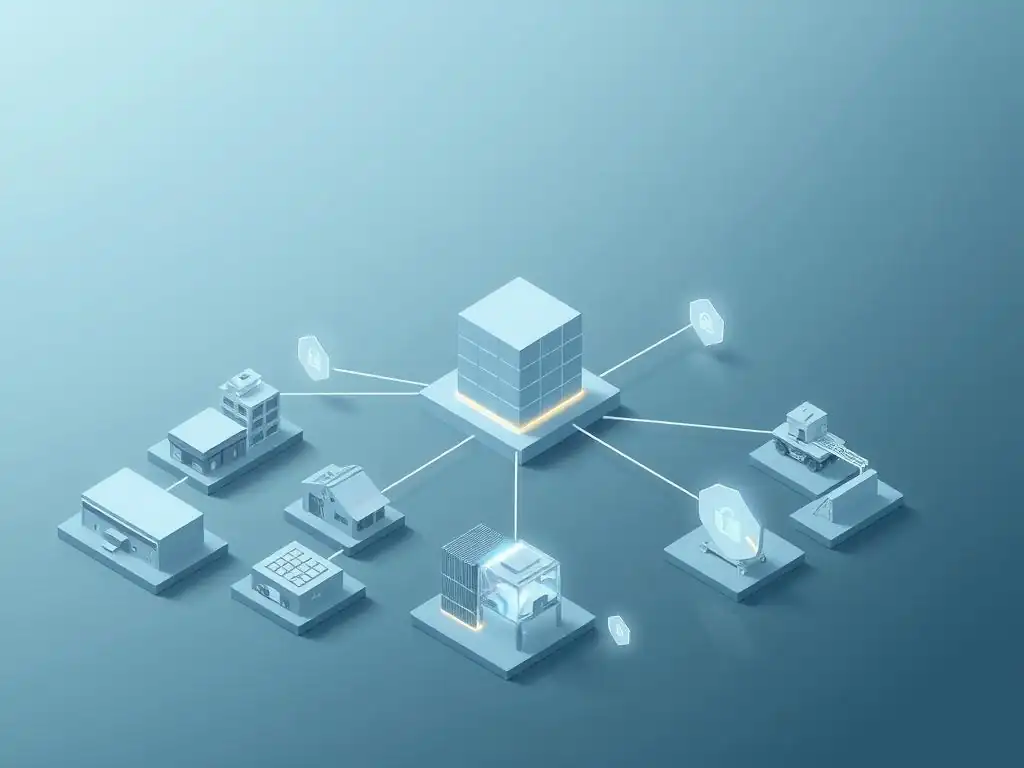
Exploring Privacy-Preserving Computation on Blockchain Data
Privacy-Preserving Computation (PPC) techniques are crucial for enabling valuable analysis of supply chain data without compromising privacy. While data might be stored securely (possibly off-chain or encrypted on-chain), deriving insights often requires processing this data. Techniques like Secure Multi-Party Computation (MPC) allow multiple parties to jointly compute a function over their inputs while keeping those inputs private. For example, competing suppliers could use MPC to calculate the total regional supply volume without any party revealing their individual contribution.
Another PPC method is using Trusted Execution Environments (TEEs), discussed further below, which provide a secure space for processing data. Integrating these PPC techniques with blockchain allows for verifiable, collaborative data analysis. The blockchain can be used to manage access to the computation, record the results, or ensure the integrity of the process, while the sensitive computation itself happens in a privacy-preserving manner, directly addressing blockchain supply chain privacy risks related to data analysis.
Federated Learning for Collaborative Supply Chain Data Analysis
Federated Learning (FL) is a machine learning approach particularly well-suited for collaborative analysis in decentralized environments like supply chains, where data is distributed among many participants. Instead of pooling all data into a central location (which would raise significant privacy concerns), FL trains a shared model across multiple decentralized edge devices or servers holding local data samples. Only the model updates (gradients) are sent to a central server or a blockchain network for aggregation, not the raw data itself.
In a supply chain context, various participants (e.g., retailers, distributors, manufacturers) could use FL to train a demand forecasting model. Each participant trains the model using their proprietary sales or inventory data locally. The aggregated model updates, potentially coordinated via a blockchain, result in a more accurate overall forecast without any participant's sensitive sales figures ever leaving their environment. This capability is invaluable for mitigating blockchain supply chain privacy risks while enabling data-driven decision-making across the network.
Trusted Execution Environments (TEEs) for Secure Data Processing
Trusted Execution Environments (TEEs), such as Intel SGX or ARM TrustZone, offer hardware-based security for processing sensitive data. A TEE creates a secure enclave within a processor where data and computations are isolated from the rest of the system, including the operating system and hypervisor. Data within the TEE is encrypted and inaccessible from outside the enclave, even if the main system is compromised.
Integrating TEEs with blockchain technology provides a powerful combination for supply chains. Sensitive data that needs processing (e.g., calculating a supplier's performance score based on confidential metrics, reconciling sensitive financial data) can be sent into a TEE. A smart contract on the blockchain could trigger the computation within the TEE and receive the verifiable, privacy-preserving result back on-chain. This allows for complex, sensitive computations to occur off-chain in a secure hardware environment, with the blockchain ensuring the integrity and execution of the process, thereby reducing blockchain supply chain privacy risks associated with processing sensitive data.
Best Practices for Building Privacy-Compliant Blockchain Supply Chains
Conducting Privacy Impact Assessments (PIAs) for Blockchain Implementations
A critical best practice for developing privacy-compliant blockchain supply chains is conducting thorough Privacy Impact Assessments (PIAs) early and throughout the development lifecycle. A PIA is a systematic process for identifying and evaluating potential privacy risks associated with the collection, use, and disclosure of personal or sensitive information. For blockchain, this means analyzing what data will be processed, how it will be stored (on-chain vs. off-chain), who will have access, and how the system design addresses regulatory requirements like consent, access, and deletion rights.
The PIA should involve stakeholders from legal, compliance, IT security, and business operations. It helps in proactively identifying blockchain supply chain privacy risks inherent in the proposed design and implementing necessary safeguards before deployment. This iterative process ensures that privacy considerations are built into the system architecture from the ground up ("privacy by design") rather than being retrofitted as an afterthought, which is often more difficult and costly.
Developing Data Governance Policies for Blockchain Supply Chains
Robust data governance policies are essential for the effective and privacy-compliant operation of a blockchain supply chain network. These policies define the rules and responsibilities for managing data within the network, including data ownership, data quality standards, data retention periods, and procedures for handling data breaches or privacy incidents. Given the distributed nature of blockchain, defining clear roles and responsibilities for data stewards across different participating organizations is paramount.
Policies should specify what types of data are permitted on-chain vs. off-chain, how data access permissions are managed and audited, and how updates or corrections to off-chain data referenced by the blockchain are handled. For instance, a policy might dictate that sensitive pricing data must never be stored on the shared ledger but can only be accessed off-chain via encrypted channels after verification via a blockchain-recorded permission. Clear, well-communicated data governance policies are foundational to mitigating blockchain supply chain privacy risks.
Training Stakeholders on Data Privacy and Security Best Practices
Technology alone cannot eliminate blockchain supply chain privacy risks; human factors play a significant role. Therefore, comprehensive training for all stakeholders involved in the blockchain supply chain network is a crucial best practice. This includes not only technical staff but also business users, data entry personnel, and management across all participating organizations.
Training should cover the fundamentals of data privacy principles, the specific data governance policies of the network, the importance of secure handling of sensitive information, and the correct use of the blockchain platform and associated privacy-enhancing tools (like access controls or off-chain data management systems). Educating participants about the potential consequences of data breaches and their role in maintaining the security and privacy of the network fosters a culture of privacy awareness, which is vital for the long-term success and trustworthiness of the blockchain solution.
Case Studies: Successfully Addressing Privacy Challenges in Blockchain Supply Chains
Food Supply Chain: Using Blockchain for Traceability While Protecting Farmer Data
In the food supply chain, traceability from farm to fork is increasingly demanded by consumers and regulators. Blockchain solutions are being implemented to provide this transparency, allowing consumers to scan a QR code and see the origin of their food. However, revealing the specific identity, location, or yield data of individual farmers could expose them to various risks, including targeted marketing, land speculation, or revealing commercially sensitive information to aggregators or competitors.
To address this, blockchain food traceability initiatives often employ a hybrid approach. Public or permissioned ledgers track the movement of goods between larger entities (processors, distributors, retailers) using transaction IDs and hashes.
More granular, sensitive data like individual farm details, specific harvest yields, or farmer income is stored off-chain in secure databases managed by trusted parties (e.g., cooperatives, certification bodies). The blockchain record contains only a verifiable link or hash to this off-chain data, accessible only to authorized parties, like an auditor or the farmer themselves, effectively balancing traceability with the need to protect sensitive farmer data and mitigate blockchain supply chain privacy risks at the source.
Pharmaceutical Supply Chain: Ensuring Data Integrity and Patient Privacy
The pharmaceutical supply chain requires rigorous tracking to combat counterfeiting, manage recalls, and ensure regulatory compliance (e.g., serialization requirements under the US Drug Supply Chain Security Act - DSCSA). Blockchain offers a promising solution for creating an immutable record of drug ownership and handling as it moves through the supply chain. However, this process generates data that must be handled with extreme care to protect patient privacy and commercially sensitive manufacturing information. Patient data, such as prescriptions or health records linked to specific drug batches, must never be stored directly on the blockchain.
Solutions in this sector typically utilize permissioned blockchain networks where participation is restricted and validated. Instead of storing sensitive details on the shared ledger, the blockchain records unique serial numbers for drug packages and cryptographic hashes of associated documents (like manufacturing records or transaction details).
Sensitive information, like the composition of a drug or the identity of the end patient, remains strictly off-chain within secure, compliant healthcare systems. Access controls on the blockchain and off-chain systems ensure that only authorized parties (e.g., regulators, manufacturers during a recall) can access the necessary linked data, effectively managing data integrity requirements while safeguarding patient privacy and mitigating significant blockchain supply chain privacy risks.
The Future of Privacy in Blockchain-Enabled Supply Chains
Emerging Technologies and Trends in Blockchain Privacy
The field of blockchain privacy is rapidly evolving, with several emerging technologies holding significant promise for future supply chain applications. Advances in Zero-Knowledge Proofs (ZKPs) are making them more efficient and easier to implement, enabling complex verifications without data exposure. Homomorphic Encryption (HE), while still computationally intensive, is seeing improvements that could allow for more practical privacy-preserving computations on encrypted supply chain data.
Furthermore, research into new blockchain architectures and consensus mechanisms is exploring ways to build privacy into the foundational layer. Techniques like confidential transactions (where transaction amounts are obscured) and sophisticated mixing services are being refined. The development of interoperability standards between different blockchain platforms and traditional systems will also influence privacy, requiring careful design to prevent data leakage at integration points. These technological advancements are crucial for continuously addressing evolving blockchain supply chain privacy risks.
The Role of Regulation in Shaping Blockchain Supply Chain Privacy Practices
Regulatory bodies worldwide are grappling with how existing data protection laws apply to distributed ledger technologies and considering potential new regulations specifically for blockchain. The interpretation and enforcement of principles like the "right to erasure" will continue to shape how data is stored and managed in blockchain supply chains. Future regulations might provide clearer guidelines on the use of off-chain data storage, the requirements for permissioned vs. public networks, and standards for identity management.
Industry-specific regulations, such as those in pharmaceuticals or food safety, will also increasingly intersect with blockchain implementations, adding layers of compliance requirements related to data handling and privacy. Proactive engagement with regulators and participation in industry standard-setting bodies will be vital for organizations building blockchain supply chains to ensure they remain compliant and effectively manage blockchain supply chain privacy risks in a dynamic legal environment.
Balancing Transparency and Privacy in Decentralized Supply Chains
The fundamental challenge in blockchain-enabled supply chains will continue to be finding the optimal balance between the desired transparency and the essential need for privacy. While end-to-end visibility is beneficial for trust and efficiency, not all data needs to be, or should be, universally transparent. Future solutions will likely involve more sophisticated hybrid architectures that leverage the blockchain for its strengths – immutability, traceability, and verification of key events – while employing off-chain systems and advanced cryptographic techniques to handle sensitive or proprietary data privately.
The ability to selectively disclose information based on granular access controls and zero-knowledge proofs will be key. Decentralized identity solutions that allow verifiable credentials without revealing the underlying identity will also play a significant role. The ongoing development will focus on creating systems that are transparent where it matters for trust and efficiency, while remaining private where necessary to protect commercial interests, comply with regulations, and manage blockchain supply chain privacy risks effectively.
Conclusion: Building Trust and Ensuring Privacy in Blockchain Supply Chains
Blockchain technology offers transformative potential for supply chains, promising enhanced transparency, efficiency, and trust. However, realizing this potential requires a clear-eyed understanding and proactive mitigation of the inherent blockchain supply chain privacy risks. The tension between blockchain's transparency and the need to protect sensitive commercial data, comply with stringent privacy regulations, and manage participant identities securely is a central challenge.
Successfully navigating these risks involves implementing a multi-faceted strategy. This includes foundational steps like data minimization and robust access controls, leveraging advanced cryptographic techniques such as Zero-Knowledge Proofs and encryption, and exploring emerging Privacy-Enhancing Technologies (PETs) like Federated Learning and TEEs. Equally important are best practices in governance, including conducting Privacy Impact Assessments, developing clear data policies, and providing comprehensive stakeholder training. By prioritizing privacy alongside transparency, organizations can build trusted, compliant, and truly resilient blockchain-enabled supply chains that benefit all participants while safeguarding sensitive information.
Frequently Asked Questions
What are the primary privacy risks associated with using blockchain in supply chains?
The primary risks involve data immutability, making it difficult to correct errors or remove sensitive information. There's also the risk of data correlation if blockchain identifiers can be linked to real-world identities. Finally, smart contract vulnerabilities can expose data.
How can permissioned blockchains help mitigate privacy risks in supply chain management?
Permissioned blockchains restrict access, allowing only authorized participants to view and modify data. This helps control the flow of information and reduces the risk of unauthorized data access. They also offer more granular control over data sharing.
What are some technical solutions for enhancing privacy on blockchain-based supply chains?
Techniques like zero-knowledge proofs allow parties to verify information without revealing the underlying data. Homomorphic encryption enables computations on encrypted data. Differential privacy adds noise to data to protect individual privacy.
What role does regulation play in addressing privacy concerns in blockchain supply chains?
Regulations like GDPR impose requirements on data privacy and data security, forcing blockchain supply chains to comply. This includes obligations related to data minimization and the right to be forgotten.
How might the future of blockchain technology further enhance privacy in supply chain applications?
Advancements like private smart contracts and decentralized identity solutions are promising. These technologies will offer greater control over data ownership and enable more secure and private transactions within the supply chain.
Okay, here's a final reflection designed to resonate with readers of an article titled "Mitigating Privacy Risks in Blockchain-Based Supply Chains," while also optimizing for the keyword "Blockchain supply chain privacy risks."
Final Reflection: Securing Trust in the Chain
The journey through understanding and mitigating blockchain supply chain privacy risks reveals a critical truth: technological innovation must be tempered with ethical considerations. The promise of transparency and efficiency offered by blockchain is undeniable, but without robust privacy safeguards, we risk undermining the very trust these systems are designed to foster. Ignoring these risks could lead to significant reputational damage, regulatory penalties, and ultimately, the failure of blockchain adoption in supply chain management.
The ongoing debate surrounding data ownership and control in decentralized systems highlights the profound influence of privacy concerns on the future of commerce. The ability to trace a product's journey from origin to consumer shouldn't come at the cost of exposing sensitive business information or compromising individual privacy. This delicate balance is crucial. As the saying goes, Privacy is not an option, and it shouldn't come with the software.
This sentiment underscores the need for proactive measures to protect privacy within blockchain-based supply chains.
Now, as you consider the implications of blockchain technology in your own supply chain, I urge you to reflect on the principles of privacy by design. How can you leverage the benefits of blockchain while simultaneously safeguarding sensitive data? The future of supply chain management hinges on our collective commitment to building secure, transparent, and, above all, private systems. Let's ensure that innovation serves humanity, not the other way around.
Unlock Secure Supply Chains: Take Action Now!
Thank you for exploring strategies to enhance privacy in blockchain-based supply chains. With this knowledge, you are better equipped to navigate the complexities of maintaining confidentiality while ensuring transparency. Let’s put these insights into practice to create more trustworthy and secure systems.
You can contribute to a more privacy-conscious future by:
- Implementing a pilot program that uses advanced cryptographic techniques to protect sensitive supply chain data while preserving traceability. Try testing this approach to see its benefits firsthand.
- Exploring alternative blockchain architectures, such as federated or permissioned networks, to customize privacy features according to your supply chain's needs.
- Sharing this article with colleagues and industry peers to spark discussions about the importance of privacy in blockchain supply chains—together, we can raise awareness and drive change.
What privacy challenges are you currently facing in your blockchain supply chain projects, and what solutions are you considering to address them?
Leave a Reply