
Web3 and the Transformation of Gaming Economies: True Digital Ownership

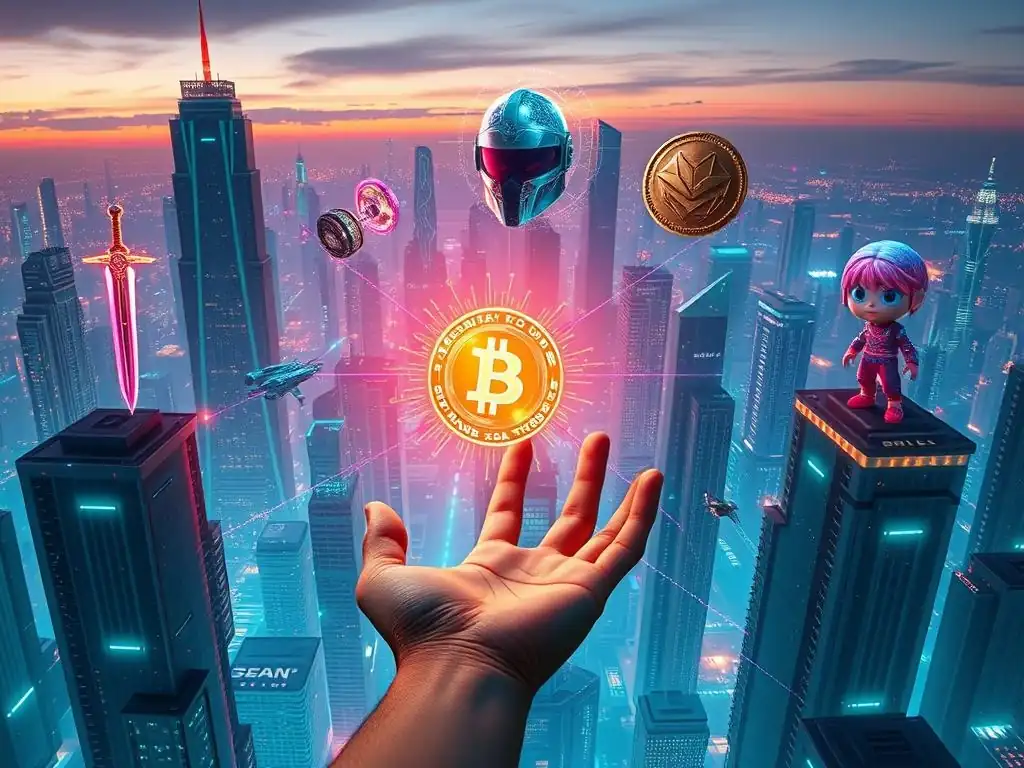
Welcome to Blockchain Trends, your compass in the rapidly evolving world of decentralized technology!
Dive in to explore how blockchain is reshaping industries far beyond cryptocurrencies, from revolutionary DeFi protocols to groundbreaking enterprise solutions. But what does this all mean for the future? Today, we're unlocking the secrets of a particularly exciting development: blockchain gaming ownership models. Are you ready to discover how Web3 is poised to revolutionize gaming economies, granting players true digital ownership and fundamentally altering the industry landscape? Let's explore the transformative potential that awaits...
Blockchain Gaming and Player Empowerment: Redefining Digital Ownership
- Introduction: The Shift Towards Player-Owned Gaming Economies
- Exploring Blockchain Gaming Ownership Models
- Benefits of Blockchain-Based Ownership for Gamers
- Challenges for Blockchain Game Development
- Integrating Blockchain with Traditional Gaming
- Empowering Game Developers Through Blockchain
- Beyond Entertainment: The Wider Impact of Blockchain Gaming
- Conclusion: The Future of Gaming is Player-Owned
-
Frequently Asked Questions
- What are the key differences between traditional gaming ownership models and those enabled by blockchain?
- How does Web3 facilitate the creation of new "Blockchain gaming ownership models" within gaming economies?
- What benefits do "Blockchain gaming ownership models" offer to players compared to traditional models?
- What are some of the regulatory challenges surrounding "Blockchain gaming ownership models" and their impact on the gaming industry?
- How might "Blockchain gaming ownership models" shape the future of gaming and the broader digital economy?
- Final Reflection: Embracing the Future of Play
- Ignite Your Web3 Gaming Revolution!
Introduction: The Shift Towards Player-Owned Gaming Economies
From Centralized Control to Decentralized Ecosystems
Historically, the gaming industry has operated under a centralized model where game publishers and developers held absolute control over in-game assets, economies, and player data. Players invested significant time and money into acquiring items, characters, and virtual property, yet their ownership was merely a license to use these assets within the confines of a specific game, dictated by the publisher's terms of service.
This meant assets could be altered, removed, or devalued by the publisher at any time, and players had no true claim or ability to transfer these digital goods outside the game's ecosystem. The value generated by players primarily flowed back to the central entity.
The advent of blockchain technology is fundamentally challenging this paradigm. By enabling the creation of decentralized ecosystems, blockchain allows for a shift in power and value distribution. Instead of assets residing on proprietary, centralized servers, they can exist on a public, immutable ledger, giving players a verifiable claim to ownership.
This move towards decentralized blockchain gaming ownership models is not just about technology; it represents a significant cultural and economic shift, empowering players and fostering new types of interaction and value creation within virtual worlds. This evolution promises to unlock new economic opportunities and redefine the relationship between players, developers, and the digital assets they interact with.
Defining Verifiable Digital Ownership Through Blockchain
Verifiable digital ownership, powered by blockchain, means that players can own in-game assets in a way that is transparent, secure, and independent of the game developer's direct control. Unlike traditional digital licenses, blockchain-based assets are recorded on a distributed ledger, making their existence, scarcity, and ownership history publicly auditable. This provides an unprecedented level of transparency and trust, as players can verify that they truly own an asset and that it is unique or one of a specific limited supply, rather than simply trusting the game publisher's database.
This verifiable ownership is typically facilitated through non-fungible tokens (NFTs), which are unique digital identifiers recorded on a blockchain. Each NFT represents a specific item – be it a sword, a piece of virtual land, a character skin, or a trading card – and its ownership is recorded on the blockchain ledger. Because the blockchain is decentralized and immutable, once an asset is assigned to a player's wallet, that player has control over it.
They can use it within the game, trade it on open marketplaces, or even hold it outside the game environment, free from the constraints of a single platform. This is the core principle behind the transformative potential of blockchain gaming ownership models.
Exploring Blockchain Gaming Ownership Models
Play-to-Earn (P2E) vs. Play-and-Own: A Comparative Analysis
Play-to-Earn (P2E) and Play-and-Own represent two prominent, yet distinct, approaches within blockchain gaming ownership models. P2E games prioritize the ability for players to earn valuable digital assets or cryptocurrency through gameplay, often incentivizing participation with financial rewards. In many early P2E models, the primary driver for players was the potential to generate income, sometimes overshadowing the enjoyment of the game itself.
Games like Axie Infinity, at its peak, saw players joining primarily to earn Smooth Love Potion (SLP) tokens, which could be converted to fiat currency, making it a significant income source for many, particularly in developing economies. This model demonstrated the power of economic incentives but also highlighted potential sustainability challenges if the in-game economy relies too heavily on new player investment.
Play-and-Own shifts the focus slightly, emphasizing the inherent value and utility of owning the digital assets themselves, alongside the potential for earning. While earning opportunities exist, the core appeal lies in true digital ownership and the ability to use, customize, or benefit from assets independent of direct financial gain from every minute of gameplay.
Players accumulate assets (often NFTs) through gameplay, purchase, or trading, and these assets retain value based on their utility, scarcity, and desirability within the game's ecosystem and potentially across others. This model aims for a more sustainable loop where players are engaged both by the fun of the game and the long-term value of their owned digital property, fostering deeper engagement with blockchain gaming ownership models that feel more integrated into the core gameplay loop.
Non-Fungible Tokens (NFTs): The Cornerstone of Digital Asset Ownership
Non-Fungible Tokens (NFTs) are the fundamental building blocks enabling true digital ownership within blockchain gaming. Unlike cryptocurrencies such as Bitcoin or Ethereum, where each unit is interchangeable (fungible), each NFT possesses unique characteristics and value. This makes them ideal for representing distinct in-game items like a specific weapon with unique stats, a plot of virtual land, a rare character skin, or a collectible card. The metadata associated with an NFT, stored on or linked from the blockchain, contains information defining the asset's properties, history, and provenance, ensuring its authenticity and uniqueness.
The use of NFTs within blockchain gaming ownership models allows developers to create scarce, verifiable digital assets that players can truly own. Once a player acquires an NFT asset, it resides in their cryptocurrency wallet, giving them complete control. They are not merely borrowing the item from the game server; they possess the token that represents that item on the blockchain.
This control extends beyond the game itself, enabling players to trade these assets on secondary NFT marketplaces like OpenSea or Rarible, potentially realizing monetary value from their in-game efforts and investments, independent of the game publisher's platform. This liquidity and portability are transformative, turning in-game items from temporary licenses into potentially valuable, tradable property.
Decentralized Autonomous Organizations (DAOs) in Game Governance
Decentralized Autonomous Organizations (DAOs) are emerging as a powerful mechanism within blockchain gaming ownership models, allowing for player participation in game governance and development decisions. A DAO is an organization represented by rules encoded as a transparent computer program, controlled by the organization members, and not influenced by a central government. In gaming, this means token holders – often players who own specific governance tokens or NFTs – can propose and vote on significant changes to the game, including economic parameters, feature development, and even treasury management.
Implementing a DAO structure shifts power from a centralized development studio to the community that plays and invests in the game. For instance, players might vote on whether to increase or decrease the drop rate of a rare item, propose new gameplay modes, or decide how a portion of the game's revenue is used.
This not only aligns incentives between players and developers but also gives players a direct stake in the long-term success and evolution of the game, fostering a stronger sense of community and ownership over the virtual world they inhabit. While challenges exist in achieving broad and informed participation, DAOs offer a path towards genuinely player-centric game development and governance within blockchain gaming ownership models.
Benefits of Blockchain-Based Ownership for Gamers
Economic Opportunities: Earning and Trading Digital Assets
One of the most compelling benefits of blockchain gaming ownership models for players is the creation of tangible economic opportunities. Traditionally, the value generated by a player's time, skill, and investment in a game primarily benefited the game publisher. With blockchain, players can now earn valuable digital assets, typically in the form of cryptocurrencies or NFTs, directly through gameplay, participation, or contribution to the ecosystem. These earned assets are not locked within the game but can be freely traded on open marketplaces, converted into other cryptocurrencies, or even exchanged for fiat money.
This opens up entirely new avenues for players to monetize their gaming activities. Skilled players can earn income by competing in tournaments, farming rare items, breeding digital creatures, or providing services within the game's virtual world.
The ability to trade NFTs representing in-game items or virtual land allows players to potentially profit from their investments or time spent acquiring desirable assets. Examples like the virtual land boom in Decentraland or the trading volume of Axie NFTs demonstrate the significant economic activity these blockchain gaming ownership models can generate, turning gaming from a pure consumption activity into one with potential for wealth creation.
Enhanced Player Agency: Control and Customization of Assets
Blockchain-based ownership grants players unprecedented agency and control over their digital assets. Unlike traditional games where items are tied to a specific account on a developer's server, blockchain assets reside in the player's digital wallet. This means players have full custody and control over their in-game possessions. They can freely move these assets, store them securely, or transfer them to others without needing permission from the game developer. This level of control empowers players, reducing the risk of losing assets due to account bans, game closures, or server issues.
Furthermore, true ownership facilitates greater customization and personalization. In some blockchain games, players can not only own assets but also modify or combine them, creating unique variants that are also represented as NFTs. This fosters creativity and allows players to express themselves through their digital possessions in ways that were previously limited by centralized game design. The ability to truly own and control digital items fundamentally changes the player experience, fostering a deeper connection to their in-game identity and possessions within these evolving blockchain gaming ownership models.
Interoperability: Cross-Game Utility and Asset Portability
A groundbreaking potential benefit of blockchain gaming ownership models is the concept of interoperability – the ability to use digital assets across different games and virtual environments. While still in its nascent stages, the vision is that an NFT representing a character skin from one game could potentially be used as an avatar in a different game, or a weapon acquired in one virtual world could appear (perhaps with adjusted stats) in another. This is possible because the asset's ownership is recorded on the blockchain, independent of any single game platform.
Achieving true, seamless interoperability is technically complex, requiring collaboration between different development studios and standardization of asset formats. However, early examples and frameworks are emerging. Some projects are building interconnected metaverses where assets can flow between different experiences, or creating asset standards that multiple games can potentially support. If successful, interoperability would drastically increase the value and utility of digital assets for players, breaking down the silos of traditional gaming and creating a more connected and persistent digital identity across multiple virtual worlds, further enhancing the appeal of blockchain gaming ownership models.
Challenges for Blockchain Game Development
Developing games that incorporate blockchain technology and digital asset ownership faces significant hurdles in navigating complex and often uncertain regulatory landscapes. Governments worldwide are still grappling with how to classify and regulate cryptocurrencies, NFTs, and decentralized organizations. This ambiguity creates legal risks for developers, as rules regarding securities, gambling, consumer protection, and taxation vary widely and are constantly evolving. A game's in-game currency or token could potentially be classified as a security in some jurisdictions, triggering stringent regulatory requirements.
Furthermore, legal questions surrounding the intellectual property rights associated with NFTs and in-game assets are still being debated. While a player might own an NFT, the underlying artwork, game code, or brand associated with it typically remains the intellectual property of the game developer. Developers must ensure their game design and tokenomics comply with existing laws while anticipating potential future regulations, which can slow down development and require significant legal expertise. This regulatory uncertainty is a major challenge for the widespread adoption and stability of blockchain gaming ownership models.
Addressing Scalability and Performance Limitations
A significant technical challenge for blockchain gaming is addressing the inherent scalability and performance limitations of current blockchain networks. Traditional games require high transaction throughput and low latency to support real-time gameplay, character movement, and item interactions for potentially millions of players simultaneously. Many mainstream blockchains, such as Ethereum (especially before Layer 2 solutions became prevalent), have limited transaction capacity (transactions per second) and can experience high transaction fees (gas costs) and slower confirmation times, particularly during periods of high network congestion.
These limitations can negatively impact the player experience in blockchain games, leading to delays in confirming in-game actions, high costs for simple transactions like trading items or breeding characters, and potential network instability under heavy load. While Layer 2 scaling solutions, sidechains, and alternative high-performance blockchains (like Polygon, Solana, or Flow) are being developed and utilized to improve speed and reduce costs, ensuring a smooth, responsive gameplay experience comparable to traditional games remains a key technical hurdle that developers must overcome to make blockchain gaming ownership models truly mass-market ready.
Mitigating Security Risks and Protecting User Assets
Security is paramount in blockchain gaming, particularly when dealing with valuable digital assets and user funds, yet mitigating security risks is a significant challenge. While the blockchain itself is designed to be secure and immutable, vulnerabilities can exist at various points of interaction: within smart contracts that govern asset creation and transfer, in the game's off-chain infrastructure, in connected wallets, and through user error or malicious attacks like phishing. Exploits in smart contracts, such as re-entrancy attacks or logic errors, can lead to the theft or loss of valuable in-game assets or cryptocurrencies.
Protecting user assets requires robust security practices from developers, including rigorous smart contract auditing, secure backend infrastructure, and clear guidance for users on wallet security. However, the decentralized nature also places a greater responsibility on players to secure their private keys, as the loss of a private key means irreversible loss of assets, with no central authority to recover them. Educating the player base about security best practices and implementing safeguards against common attack vectors are ongoing challenges vital for building trust and ensuring the safety of blockchain gaming ownership models.
Integrating Blockchain with Traditional Gaming
Blending Blockchain Elements with Established Game Mechanics
Integrating blockchain technology into existing or new traditional game genres requires careful consideration to ensure that the blockchain elements enhance, rather than detract from, the core gameplay experience. Simply adding NFTs or a cryptocurrency token to a game without a thoughtful design can feel tacked on and fail to resonate with players primarily seeking entertainment. The challenge lies in blending blockchain gaming ownership models seamlessly with established game mechanics, leveraging the unique properties of blockchain – true ownership, transparency, and potential interoperability – to create innovative and engaging experiences.
This might involve designing game loops where asset ownership provides tangible in-game benefits, such as enhanced abilities, access to exclusive content, or participation in governance that directly impacts the game world. It could also involve creating compelling narratives or strategic depth around the collection, trading, and utilization of verifiable digital assets. Successful integration requires developers to understand what makes traditional games fun and addictive and then strategically apply blockchain technology where it genuinely adds value, whether through enabling player economies, fostering community investment, or providing verifiable scarcity for collectibles.
Case Studies: Axie Infinity, Decentraland, and The Sandbox
Real-world examples offer valuable insights into the application and impact of blockchain gaming ownership models. Axie Infinity, a creature-collecting and battling game, popularized the Play-to-Earn model, allowing players to earn cryptocurrency tokens (SLP and AXS) and trade NFT creatures (Axies). At its peak, it demonstrated the potential for blockchain games to provide economic opportunities on a massive scale, though it also highlighted the challenges of maintaining sustainable in-game economies dependent on token emissions and new user growth.
Decentraland and The Sandbox represent leading examples of blockchain-based virtual worlds or metaverses where players can own, develop, and monetize virtual land and assets as NFTs. In Decentraland, players can buy plots of LAND (an NFT), build experiences on them, and rent or sell their property.
The Sandbox offers a similar voxel-based platform where users can create assets (ASSETs, which are NFTs), build games on their LAND (also an NFT), and monetize their creations. These platforms showcase blockchain gaming ownership models focused on virtual real estate, user-generated content, and the creation of persistent, player-owned digital environments, demonstrating the potential for diverse economic activities beyond traditional gameplay loops.
The Hybrid Approach: Balancing Centralization and Decentralization
Many game developers are exploring a hybrid approach, combining elements of centralized game design and infrastructure with decentralized blockchain components. This strategy aims to leverage the benefits of blockchain, such as true asset ownership and transparent economies, while maintaining the performance, accessibility, and ease-of-use often associated with centralized systems. Core gameplay loops, rendering, and rapid interactions might run on traditional servers for speed and responsiveness, while valuable asset ownership and marketplace transactions are handled on the blockchain.
This hybrid model allows developers to offer blockchain gaming ownership models without requiring every single in-game action to be a blockchain transaction, which would be prohibitively slow and expensive on many networks. For example, a game might use blockchain for high-value items or land ownership but manage common items or temporary boosts within a traditional database. This pragmatic approach enables a smoother player experience and can lower the barrier to entry for players unfamiliar with blockchain wallets and transaction fees, providing a bridge between traditional gaming and the fully decentralized future.
Empowering Game Developers Through Blockchain
Innovative Revenue Models and Monetization Strategies
Blockchain technology offers game developers innovative revenue models that move beyond traditional upfront purchases, subscriptions, and randomized loot boxes. With blockchain gaming ownership models, developers can generate revenue through transaction fees on secondary marketplaces for in-game assets (royalties on NFT trades), initial sales of limited-edition NFT assets, or through a portion of the fees generated within the game's decentralized economy. This creates a continuous revenue stream tied to the activity and health of the game's ecosystem, aligning developer incentives with the long-term success and player engagement.
Furthermore, the ability to create scarce, verifiable digital assets as NFTs opens up new monetization strategies based on collectibles, limited releases, and unique in-game items that hold value due to their provenance and verifiable ownership. Developers can design economies where players are incentivized to participate and trade, generating revenue for the studio through marketplace fees or token sinks. These models can foster a more transparent and potentially more sustainable economic relationship between developers and players compared to opaque loot box mechanics.
Fostering Community and Engagement Through Web3 Principles
Web3 principles, including decentralization, ownership, and community governance, empower developers to foster deeper community engagement. By giving players a real stake in the game through blockchain gaming ownership models and potential participation in governance via DAOs, developers can cultivate a highly committed and invested player base. Players become not just consumers but also stakeholders and contributors to the game's ecosystem, motivated to help it succeed.
This can manifest in various ways: players actively participating in game development decisions, contributing user-generated content (which they can own and potentially monetize as NFTs), promoting the game because they have a financial or emotional investment in its success, and building robust communities around trading, competing, and collaborating. The transparency of blockchain transactions and verifiable ownership can also build trust, further strengthening the bond between the development team and its community.
Ensuring Transparency and Fair Play with Blockchain
Blockchain's inherent transparency can significantly contribute to ensuring fair play and building trust within gaming ecosystems. By recording key transactions and asset movements on a public, immutable ledger, blockchain gaming ownership models make the history and scarcity of digital assets verifiable by anyone. This reduces the potential for developers to secretly manipulate asset markets or inflate supply, issues that have sometimes plagued traditional in-game economies.
While core gameplay logic often remains off-chain for performance reasons, critical elements like asset issuance, ownership transfers, and potentially the outcomes of significant in-game events can be recorded on the blockchain, providing an auditable trail. This transparency helps combat fraud, reduces reliance on trusting the developer's claims about asset rarity or supply, and creates a fairer environment for players. For instance, players can verify the total supply of a specific NFT item or track its ownership history, providing a level of assurance previously unavailable in centralized gaming systems.
Beyond Entertainment: The Wider Impact of Blockchain Gaming
Educational Applications and Skill Development
Blockchain gaming ownership models are not limited purely to entertainment; they also hold potential for educational applications and skill development. Engaging with blockchain games can introduce players to fundamental concepts of blockchain technology, cryptocurrencies, digital wallets, and decentralized finance (DeFi) in a practical and interactive way. Players learn about transaction fees, public and private keys, smart contracts (often through interacting with them), and the dynamics of digital asset markets simply by playing the game and participating in its economy.
Furthermore, skills developed within complex blockchain game economies, such as trading, market analysis, strategic asset management, and understanding economic incentives, are directly transferable to the broader Web3 space and even traditional finance. Some games require players to manage complex digital portfolios, make investment decisions, and understand supply and demand dynamics, providing a hands-on learning experience in digital economics and entrepreneurship.
Blockchain gaming ecosystems can also facilitate social impact and charitable initiatives. The transparency and programmability of blockchain enable developers and communities to integrate mechanisms for social good directly into the game's economy. For example, a portion of marketplace transaction fees or in-game earnings could be automatically directed to a charitable wallet. Developers or player-led DAOs could organize in-game events or sell special NFT collectibles where all or a percentage of the proceeds go to a specific cause.
The ability to create and manage decentralized treasuries within DAOs also allows communities to collectively decide on funding social or charitable projects. The verifiable nature of blockchain ensures that funds are tracked transparently. This integration of social responsibility into the core economic loop of blockchain gaming ownership models provides a powerful new avenue for engaging players in philanthropy and collective action, leveraging the popularity and economic activity of games for wider societal benefit.
The Metaverse: Expanding the Scope of Digital Asset Ownership
The concept of the metaverse – a persistent, interconnected series of virtual worlds and experiences – significantly expands the potential scope of blockchain gaming ownership models. In a fully realized metaverse, digital assets owned by players, whether they are game items, avatars, virtual property, or digital art, could potentially be carried and used across multiple distinct virtual environments. This vision relies heavily on blockchain to provide the underlying infrastructure for verifiable, interoperable ownership.
Owning a digital identity or avatar as an NFT that can represent you across different games and social spaces, or owning virtual land in one world that can host experiences accessible from others, breaks down the barriers between traditional digital platforms. This expands the utility and value of digital assets far beyond a single game, making the concept of digital property more akin to real-world property – something that can be used in multiple contexts, traded, and developed. The metaverse represents the ultimate realization of the potential for blockchain gaming ownership models to create a truly player-owned digital universe.
Conclusion: The Future of Gaming is Player-Owned
Blockchain's Potential to Transform the Gaming Industry
Blockchain technology is poised to fundamentally transform the gaming industry, moving beyond its initial association with cryptocurrencies to reshape how games are developed, played, and owned. By enabling verifiable digital ownership through NFTs and fostering decentralized economies and governance, blockchain gaming ownership models are shifting power towards players. This transition creates new economic opportunities, enhances player agency, and allows for the creation of interconnected virtual worlds where digital assets have persistent value and utility.
While significant challenges remain in areas like scalability, regulation, and user experience, the potential benefits for both players and developers are substantial. The ability for players to earn, own, and trade digital assets and for developers to explore innovative revenue models and build deeply engaged communities points towards a future where gaming is more equitable, transparent, and player-centric. The initial successes and ongoing development in this space suggest that blockchain is not just a fleeting trend but a foundational technology for the next era of digital entertainment.
Key Trends Shaping the Future of Blockchain Gaming Ownership
Several key trends are currently shaping the future evolution of blockchain gaming ownership models. Firstly, there is a clear move towards improving user experience and accessibility, simplifying wallet interactions and reducing friction for players new to Web3. Secondly, the focus is shifting from purely Play-to-Earn mechanics to more sustainable Play-and-Own models that prioritize engaging gameplay alongside asset ownership.
Thirdly, the development of more performant and cost-effective blockchain infrastructure (Layer 2 solutions, app-specific chains) is crucial for supporting complex games with large player bases. Fourthly, increasing efforts are being made towards achieving greater interoperability between games and metaverse platforms, enhancing asset utility. Finally, we are seeing increased exploration of DAO structures to give communities a greater say in game governance and development, solidifying the player-owned future. These trends indicate a maturation of the space, moving towards more robust, player-friendly, and integrated blockchain gaming experiences.
Explore and Engage with Blockchain Gaming Platforms
The landscape of blockchain gaming ownership models is rapidly evolving, offering diverse experiences for players interested in true digital ownership. From virtual worlds like Decentraland and The Sandbox where you can own and build on virtual land, to strategy and collection games like Axie Infinity or Splinterlands, there are numerous platforms to explore. Engaging with these games provides a firsthand understanding of how blockchain technology is redefining asset ownership, creating player-driven economies, and building vibrant digital communities.
Potential players should research platforms carefully, understanding the specific blockchain gaming ownership models they utilize, the nature of their in-game assets (NFTs, tokens), and the mechanics for earning, trading, and using these assets. Participating in community forums and exploring marketplaces can also provide valuable insights. By exploring and engaging with these platforms, individuals can become part of the pioneering wave of gamers experiencing the transformative potential of player-owned digital economies and the future of interactive entertainment.
Frequently Asked Questions
What are the key differences between traditional gaming ownership models and those enabled by blockchain?
Traditional gaming models often restrict ownership, with items locked within the game's ecosystem. Blockchain gaming, particularly with Web3, introduces true digital ownership through NFTs, allowing players to own and trade in-game assets.
How does Web3 facilitate the creation of new "Blockchain gaming ownership models" within gaming economies?
Web3 leverages blockchain technology to enable decentralized systems that foster new ownership models. These models often involve player-owned assets, verifiable scarcity, and enhanced interoperability across different games or platforms.
What benefits do "Blockchain gaming ownership models" offer to players compared to traditional models?
Players gain greater control over their in-game assets, benefiting from ownership rights, the ability to earn rewards for their contributions, and the potential to participate in the game's economy.
What are some of the regulatory challenges surrounding "Blockchain gaming ownership models" and their impact on the gaming industry?
Regulatory uncertainty regarding NFTs and decentralized finance (DeFi) can create challenges. This includes concerns about securities laws and the potential for money laundering, impacting the adoption and development of blockchain gaming.
How might "Blockchain gaming ownership models" shape the future of gaming and the broader digital economy?
These models could lead to more immersive and engaging gaming experiences, fostering stronger player communities and enabling new forms of digital ownership and economic participation in the metaverse.
Final Reflection: Embracing the Future of Play
The exploration of Web3 and its impact on gaming economies reveals a profound shift, where true digital ownership is no longer a distant dream but a tangible reality. This transformation, driven by blockchain technology, is not just about new games; it's about fundamentally altering the relationship between players, developers, and the virtual worlds they inhabit, creating a more equitable and engaging ecosystem.
The rise of blockchain gaming ownership models has undeniably begun to reshape the cultural landscape of gaming. The ability to truly own in-game assets, to trade them freely, and to participate in the governance of the games we love, represents a paradigm shift in how we perceive digital value. The future of gaming is not just about playing games, but about owning a piece of the game itself.
This sentiment encapsulates the power and potential of Web3 to empower players and foster a more collaborative and rewarding gaming experience.
As we stand at the cusp of this new era, let us embrace the possibilities that blockchain gaming ownership models offer. Let us reflect on the implications of true digital ownership and consider how we can contribute to building a future where players are not just consumers, but active participants and stakeholders in the games they love. The power to shape the future of play is in our hands; let's use it wisely and create a gaming landscape that is more fair, transparent, and rewarding for all.
Ignite Your Web3 Gaming Revolution!
Thank you for delving into the fascinating world of Web3 gaming economies and true digital ownership. We hope you've gained a clearer understanding of how blockchain technology is reshaping the gaming landscape and empowering players like never before. Ready to take control and shape the future?
Here's how you can dive deeper:
- Claim your stake! Explore a Web3 game that grants you genuine digital ownership of in-game assets. Research options like Axie Infinity, Decentraland, or Illuvium.
- Delve into the whitepapers of these projects. It's vital to understand how each game operates so you can make a sound decision.
- Share this article with other gaming enthusiasts who deserve to know about the future of gaming!
What Web3 game are you most excited to explore first, and why? Share your thoughts in the comments below!
Leave a Reply