
Developing World Ethics: Blockchain for Fairer Supply Chains in Emerging Markets

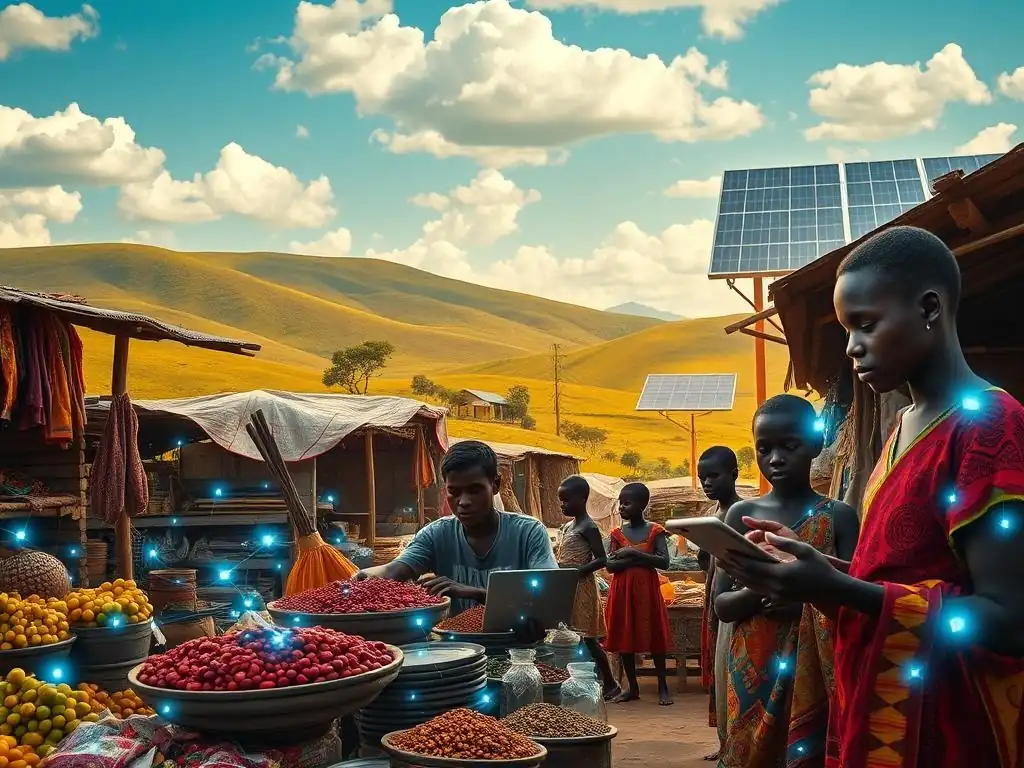
Welcome to Blockchain Trends, your guide to understanding the revolutionary impact of blockchain beyond the hype.
Dive into the world of decentralized innovation and discover how this technology is reshaping industries and societies. This week, we're exploring Blockchain for Fairer Supply Chains, examining how distributed ledgers can bring transparency and ethical practices to emerging markets. Can blockchain really empower producers and ensure fair trade? Uncover the challenges and opportunities as we delve into real-world applications and the future of ethical sourcing.
-
Developing World Ethics: Blockchain for Fairer Supply Chains in Emerging Markets
- Introduction: Blockchain's Potential for Ethical Supply Chains in Emerging Markets
- The Challenges of Traditional Supply Chains in Developing Countries
- Blockchain Technology: A Solution for Ethical and Transparent Supply Chains
- Blockchain Use Cases for Fairer Supply Chains in Emerging Markets
- Benefits of Blockchain-Enabled Ethical Supply Chains
- Overcoming Challenges to Blockchain Adoption in Developing Markets
- The Future of Blockchain for Fair Supply Chains: Trends and Predictions
- Conclusion: Blockchain as a Catalyst for Ethical and Equitable Trade in Emerging Markets
-
Frequently Asked Questions
- How can blockchain technology improve fairness in supply chains within emerging markets?
- What are the key challenges in implementing blockchain for supply chain management in developing countries?
- How does blockchain help combat unethical practices like forced labor in emerging market supply chains?
- What role do regulatory frameworks play in fostering the adoption of blockchain for ethical supply chains?
- Beyond ethics, what other benefits can blockchain bring to supply chains in developing economies?
- Final Reflection: Blockchain's Promise of Ethical Supply Chains
- Embrace Ethical Change: Build a Fairer Future Now!
Developing World Ethics: Blockchain for Fairer Supply Chains in Emerging Markets
Introduction: Blockchain's Potential for Ethical Supply Chains in Emerging Markets
Emerging markets face unique challenges in their supply chains, often characterized by complex, multi-layered networks that can obscure origins, labor practices, and product quality. These complexities make ensuring ethical sourcing and fair trade incredibly difficult, leading to issues ranging from exploitation of workers and farmers to the proliferation of counterfeit goods. The lack of transparency undermines trust among consumers and creates significant risks for businesses operating within or sourcing from these regions. Traditional methods of tracking and verification, relying on paper trails and centralized databases, are often inefficient, prone to error, and susceptible to manipulation.
Blockchain technology offers a transformative approach to these long-standing problems. By providing a decentralized, immutable, and transparent ledger, blockchain can create an indisputable record of transactions and movements throughout a supply chain. This inherent transparency is crucial for building Blockchain fair supply chains in developing countries, where opacity is a major barrier to ethical conduct.
Implementing blockchain can help shine a light on every step, from the initial producer to the final consumer, enabling stakeholders to verify claims about origin, sustainability, and labor standards. The potential to leverage this technology for social good, particularly in regions striving for economic growth while upholding ethical principles, is significant.
The Challenges of Traditional Supply Chains in Developing Countries
Lack of Transparency and Traceability in Emerging Market Supply Chains
Supply chains in many developing nations are notoriously opaque, lacking standardized procedures and digital infrastructure necessary for comprehensive tracking. Goods often pass through numerous intermediaries, each adding a layer of complexity and potentially obscuring information about the product's journey.
For instance, in the agricultural sector, a single commodity like coffee or cocoa might change hands multiple times between the smallholder farmer and the exporting trader, making it nearly impossible for the final buyer to know the exact farm or conditions under which it was produced. This lack of visibility makes it difficult to verify claims about fair wages, sustainable farming practices, or even the true origin of the product, hindering efforts to establish Blockchain fair supply chains.
This opacity has tangible economic and social costs. Consumers in developed markets are increasingly demanding ethical and sustainable products, but without robust traceability, brands struggle to provide credible assurances. This can limit market access for producers in emerging economies who are adhering to high standards but lack the means to prove it.
Furthermore, governments and NGOs working to improve conditions often face challenges in monitoring compliance with regulations or aid distribution due to the fragmented and undocumented nature of these supply networks. An estimated 80% of global trade involves supply chains, and a significant portion of the opacity exists within the segments operating in developing regions.
Exploitation and Unfair Labor Practices: Ethical Concerns in Global Trade
Unfair labor practices, including low wages, unsafe working conditions, and even child labor, remain pervasive issues in supply chains operating within some developing countries. The pressure to reduce costs in global trade often translates into squeezed margins for the most vulnerable participants at the beginning of the chain – the farmers and factory workers.
For example, in the garment industry, workers in certain developing nations may earn as little as 1-3% of the retail price of a piece of clothing, often working excessive hours in environments that fail to meet international safety standards. The complexity and lack of transparency in these chains make it easy for unethical practices to go unnoticed or unaddressed by brands and consumers further down the line.
The structure of traditional supply chains frequently leaves smallholder farmers and producers with minimal bargaining power. They are often reliant on local intermediaries who may offer unfair prices, trapping them in cycles of poverty.
In the cocoa sector, for instance, many farmers in West Africa earn less than $1 per day, far below living wage standards, despite producing the raw material for a multi-billion dollar global industry. Without clear, verifiable records of transactions and payments throughout the supply chain, it is exceedingly difficult to ensure that value is distributed equitably and that labor rights are respected, highlighting the critical need for Blockchain fair supply chains.
Counterfeit Goods and Quality Control Issues in Developing Nations
The prevalence of counterfeit goods and challenges in maintaining consistent product quality are significant concerns within supply chains originating from or passing through developing markets. Counterfeiting is not limited to luxury items; it poses serious risks in sectors like pharmaceuticals, agriculture, and consumer goods. The World Health Organization (WHO) has estimated that up to 10% of medical products in low and middle-income countries are substandard or falsified, leading to treatment failures, health complications, and even death. The lack of robust tracking systems makes it easy for fake products to enter distribution channels undetected.
Maintaining quality control is also challenging when visibility is limited. Products may be mishandled, stored improperly, or substituted with lower-quality alternatives at various points in the chain without detection. This not only damages the reputation of legitimate producers and brands but also puts consumers at risk.
For example, food products might be subject to contamination or spoilage if temperature or handling conditions are not monitored and recorded reliably. The inability to pinpoint where quality deviations occur or where counterfeit goods enter the system underscores the urgent need for verifiable and transparent tracking mechanisms, which blockchain technology is uniquely positioned to provide for Blockchain fair supply chains.
Blockchain Technology: A Solution for Ethical and Transparent Supply Chains
How Blockchain Enhances Supply Chain Transparency and Traceability
Blockchain technology provides a shared, distributed ledger that records every transaction or data point added to it. Once information is recorded on the blockchain, it is extremely difficult to alter or delete, creating an immutable history of a product's journey. In a supply chain context, this means that details about origin, processing, transportation, and handling can be logged at each step.
Participants in the chain, granted appropriate permissions, can access this shared ledger to view the history of a specific batch of goods. This level of transparency is a fundamental shift from traditional siloed databases, where information is often held exclusively by individual companies.
For instance, tracking agricultural products using blockchain involves recording data points such as when a crop was harvested, by whom, where it was processed, the date of shipment, and its destination. This creates an end-to-end, verifiable trail. Consumers, using a QR code on a product, could potentially access this blockchain data to see the farm where their coffee beans were grown or the cooperative that harvested their cocoa.
This enhanced visibility helps build Blockchain fair supply chains by allowing stakeholders to verify ethical claims and identify bottlenecks or issues rapidly. Pilot programs have shown significant improvements in traceability speed, reducing the time to trace a product's origin from days or weeks down to seconds.
Immutability and Security: Ensuring Data Integrity in the Supply Chain
One of the core features of blockchain that makes it ideal for supply chains is its immutability. Each block of data is cryptographically linked to the previous one, forming a chain. Any attempt to tamper with data in a block would break this cryptographic link, immediately alerting others on the network. This makes the historical record highly resistant to fraud and unauthorized changes. In traditional systems, a single entity controls the database, making it a single point of failure and vulnerability for data manipulation, whether accidental or malicious.
This security and immutability are critical for ensuring the integrity of information related to ethical sourcing and quality control. When data about labor conditions, fair wage payments, or product certifications are recorded on a blockchain, stakeholders can trust that this information has not been altered after the fact. This builds confidence among buyers, regulators, and consumers.
For example, a certification mark recorded on the blockchain provides a much stronger guarantee of authenticity than a paper certificate that could be easily forged. The distributed nature of the ledger further enhances security, as there is no central server to hack; data is replicated across multiple nodes in the network, making it resilient against attacks and system failures.
Smart Contracts: Automating Ethical Compliance and Fair Trade Practices
Smart contracts are self-executing contracts with the terms of the agreement directly written into code. They run on the blockchain, automatically executing actions when predefined conditions are met. In the context of supply chains, smart contracts can automate and enforce ethical and fair trade practices without the need for intermediaries. For example, a smart contract could be programmed to automatically release payment to a farmer's digital wallet only after verifiable data (e.g., a sensor reading confirming goods arrived, or a quality inspection report) is recorded on the blockchain.
This automation reduces delays in payment, which is a significant issue for small producers in developing markets, and ensures that payments are made according to agreed-upon terms. Smart contracts can also automate compliance checks. For instance, a contract could verify that a shipment of goods meets specific sustainability standards recorded on the ledger before allowing the next step in the process to proceed.
By embedding ethical rules into the very logic of transactions, smart contracts help create truly Blockchain fair supply chains, reducing the potential for human error or deliberate non-compliance. They provide a transparent and automated way to enforce agreements related to pricing, quality, and ethical conduct.
Blockchain Use Cases for Fairer Supply Chains in Emerging Markets
Case Study 1: Blockchain for Traceable Cocoa Supply Chain in Ghana
Several initiatives have explored using blockchain to improve the traceability and fairness of the cocoa supply chain in West Africa, particularly Ghana and Côte d'Ivoire, which produce over 60% of the world's cocoa. Projects involving companies like Cargill and Nestle, often in partnership with technology providers and NGOs, have piloted blockchain platforms to track cocoa beans from individual farms to processing plants. The goal is to create an immutable record of the beans' journey, including details about the farmers who grew them, the price paid at the farm gate, and certifications related to labor practices and sustainability.
One pilot project in Ghana demonstrated the ability to trace cocoa from farm to factory, providing buyers with visibility into the source. While specific farmer income increases are still being measured as these projects scale, the increased transparency empowers farmers by providing verifiable proof of their produce's origin and quality, potentially enabling them to command better prices in the future or access premium markets.
The ability to record fair premium payments directly on the ledger also helps ensure that these funds reach the intended recipients, fostering Blockchain fair supply chains in a sector historically plagued by opacity and inequitable distribution of value.
Case Study 2: Implementing Blockchain for Ethical Shrimp Production in Indonesia
Indonesia is a major global exporter of seafood, including shrimp, but its supply chains face challenges related to illegal fishing, forced labor, and unsustainable practices. Technology companies and industry players have launched blockchain initiatives to bring transparency to the Indonesian shrimp and seafood industry. These projects aim to track seafood from the point of catch or farm to the consumer, recording data such as fishing vessel information, catch dates, handling temperatures, and processing details.
One such project involved tracking shrimp from ponds in Sumatra to retailers in the US and Europe. By recording key data points on a blockchain, the initiative provided verifiable proof of origin and handling, combating issues like 'shrimp laundering' (mixing illegally caught or unethically produced shrimp with legitimate supply).
This transparency allows buyers and consumers to make informed choices and supports producers who adhere to ethical and sustainable standards. While initial figures on the scale of adoption are still emerging, the potential to reduce illegal fishing and improve labor conditions through enhanced traceability is significant, contributing to Blockchain fair supply chains in the fisheries sector.
Case Study 3: Using Blockchain to Combat Counterfeit Medications in Sub-Saharan Africa
The fight against counterfeit pharmaceuticals is a critical public health challenge in Sub-Saharan Africa, where falsified medicines pose a severe threat. Blockchain technology is being explored as a tool to create secure, transparent, and verifiable supply chains for medications, from manufacturer to pharmacy. Initiatives involve assigning unique identifiers to medicine packages and recording their movement and ownership on a blockchain ledger at every step of distribution.
Companies and health organizations are piloting systems where manufacturers upload drug information and serial numbers to a blockchain. As drugs move through wholesalers, distributors, and pharmacies, each transaction is recorded. Healthcare providers and even patients could potentially scan a code on the packaging to verify the authenticity and history of the medicine.
Early trials in regions facing significant counterfeit issues have shown promise in detecting fake products before they reach consumers. While full-scale implementation faces infrastructure hurdles, the potential to drastically reduce the flow of counterfeit drugs and build trust in the pharmaceutical supply chain represents a life-saving application of blockchain for ethical distribution.
Benefits of Blockchain-Enabled Ethical Supply Chains

Increased Transparency and Accountability for Stakeholders
Blockchain fundamentally increases visibility across the supply chain, making it easier for all stakeholders – from producers and intermediaries to brands, regulators, and consumers – to access and verify information. This enhanced transparency fosters greater accountability. When every transaction and movement is recorded on an immutable ledger, it becomes difficult for participants to hide unethical practices or misrepresent information. For example, if a shipment is delayed or mishandled, the blockchain record can pinpoint exactly where and when the issue occurred.
This improved accountability is particularly impactful in developing markets where traditional oversight mechanisms may be weak. Brands sourcing from these regions can gain better control over their supply chains and ensure compliance with their ethical standards, reducing reputational risk. Regulators can more effectively monitor trade flows and enforce regulations related to quality, safety, and labor. Ultimately, this transparency empowers all actors to hold each other accountable, driving improvements towards Blockchain fair supply chains. Studies suggest that increased supply chain transparency can lead to a significant reduction in incidents of non-compliance.
Empowering Farmers and Producers in Emerging Economies
Blockchain technology has the potential to directly empower smallholder farmers and producers, who are often at the bottom of traditional supply chain hierarchies. By creating a direct, verifiable link between their product and the end consumer or buyer, blockchain reduces reliance on multiple layers of intermediaries who may take excessive cuts or delay payments. Smart contracts, as discussed, can automate fair payments upon delivery or verification of quality, ensuring producers receive timely and agreed-upon compensation.
Furthermore, having verifiable data about their produce's origin and quality on a blockchain can help farmers build a reputation and access premium markets that pay more for ethically sourced or high-quality goods. For instance, a coffee farmer who can prove their beans meet specific sustainability standards through blockchain data might be able to sell directly to specialty roasters at a higher price than they would receive through conventional channels. This shift in power dynamics helps create more equitable and Blockchain fair supply chains, enabling producers to earn a fairer share of the final product value.
Improved Product Quality and Consumer Trust
The enhanced traceability and data integrity provided by blockchain contribute directly to improving product quality and building consumer trust. By recording conditions like temperature, humidity, and handling at each step, blockchain allows for better monitoring of product quality throughout its journey. If issues arise, the source can be quickly identified and addressed. This is especially important for perishable goods or sensitive products like pharmaceuticals.
Consumers are increasingly concerned about the origin, quality, and ethical credentials of the products they purchase. Blockchain provides a powerful tool for brands to offer credible proof of these claims. When a consumer can scan a QR code and see the verifiable history of a product – confirming its origin, ethical certifications, and handling – it builds significant trust.
This transparency differentiates products and brands that are committed to ethical practices, potentially leading to increased sales and brand loyalty. A survey by Provenance found that consumers are willing to pay a premium, sometimes up to 10%, for products with verifiable ethical sourcing information.
Reduced Risk of Fraud and Counterfeiting
The immutable and transparent nature of blockchain makes it a formidable tool against fraud and counterfeiting in supply chains. Every legitimate product or batch can be assigned a unique digital identity recorded on the blockchain. As the product moves, its location and ownership changes are logged. This creates a verifiable chain of custody that is extremely difficult for counterfeit goods to penetrate unnoticed. Any product without a corresponding, verifiable record on the blockchain can be flagged as suspicious.
This is particularly impactful in sectors like pharmaceuticals, luxury goods, and electronics, where counterfeiting is rampant and costly. By providing a secure way to track items from manufacturing to sale, blockchain helps ensure that consumers receive authentic products. It also protects the revenue and reputation of legitimate businesses. While not a complete panacea, implementing blockchain significantly raises the bar for counterfeiters and provides a robust defense against fraudulent activities within the supply chain, contributing to secure and Blockchain fair supply chains.
Overcoming Challenges to Blockchain Adoption in Developing Markets
Infrastructure Limitations and Digital Literacy Gaps
Adopting blockchain technology requires a certain level of digital infrastructure, including reliable internet connectivity, access to computing devices (even smartphones), and consistent electricity. These can be significant barriers in many rural and remote areas of developing countries where producers, particularly smallholder farmers, operate. Implementing blockchain solutions requires these participants to be able to record data onto the ledger, which is difficult without the necessary tools and connectivity.
Furthermore, there is a significant digital literacy gap. Producers and workers at the initial stages of the supply chain may have limited experience with digital technologies, let alone understanding how to interact with a blockchain platform. Training and support are essential to ensure that participants can effectively use the technology and understand its benefits. Solutions need to be designed with user-friendliness in mind, perhaps relying on simple mobile interfaces or leveraging local cooperatives for data entry support. Overcoming these infrastructure and literacy challenges is crucial for scaling Blockchain fair supply chains initiatives effectively.
Regulatory Uncertainty and Legal Frameworks
The legal and regulatory landscape surrounding blockchain technology is still evolving globally, and this is particularly true in many developing nations. There may be a lack of clear regulations regarding the use of blockchain for supply chain management, data ownership, smart contracts, and cryptocurrency (if used for payments). This uncertainty can deter businesses from investing in and implementing blockchain solutions due to potential legal risks or compliance issues.
Developing clear legal frameworks that recognize blockchain records as valid evidence and provide certainty around smart contract enforceability is essential for widespread adoption. Governments and international bodies need to work together to create supportive regulatory environments that encourage innovation while addressing potential risks. Without clear guidelines, the path to establishing legally recognized and scalable Blockchain fair supply chains remains challenging, requiring careful navigation of existing legal systems and potential advocacy for regulatory reform.
Scalability and Interoperability Issues
Current blockchain platforms, especially public ones, can face challenges with scalability – the ability to handle a high volume of transactions quickly and cost-effectively. Supply chains, particularly those for high-volume commodities, involve millions of transactions and data points daily. Ensuring that a blockchain network can process this volume efficiently without becoming prohibitively expensive (due to transaction fees) or slow is a technical hurdle.
Interoperability is another challenge. Different supply chain participants might use different blockchain platforms or legacy systems. For blockchain to provide end-to-end transparency across a complex global supply chain, these disparate systems need to be able to communicate and share data seamlessly. Developing standards and protocols for interoperability between different blockchain networks and traditional databases is crucial for creating truly integrated and Blockchain fair supply chains. While progress is being made with various layer-2 solutions and cross-chain technologies, achieving widespread interoperability remains a work in progress.
The Future of Blockchain for Fair Supply Chains: Trends and Predictions
Integration with IoT and AI for Enhanced Supply Chain Visibility
The future of Blockchain fair supply chains will likely see increased integration with other emerging technologies like the Internet of Things (IoT) and Artificial Intelligence (AI). IoT devices, such as sensors placed on shipments or in storage facilities, can automatically collect real-time data on conditions like temperature, humidity, and location. This data can then be automatically fed onto the blockchain, creating a highly granular and tamper-proof record of the product's environment throughout its journey.
AI can be used to analyze the vast amounts of data collected on the blockchain and from IoT devices. AI algorithms can identify patterns, predict potential issues (e.g., predicting spoilage based on temperature history), verify data consistency, and even automate complex decision-making processes within the supply chain based on the verifiable blockchain data. This integration promises to create highly automated, intelligent, and transparent supply chains, further enhancing visibility and enabling proactive management to ensure fairness and quality.
The Role of Blockchain in Promoting Sustainable Development Goals (SDGs)
Blockchain technology has significant potential to contribute to several of the United Nations' Sustainable Development Goals (SDGs), particularly those related to decent work and economic growth (SDG 8), responsible consumption and production (SDG 12), and partnerships for the goals (SDG 17). By creating transparent and accountable supply chains, blockchain can help eliminate forced labor, ensure fair wages, and promote safe working conditions (SDG 8).
Furthermore, blockchain enables better tracking of resource use, waste, and emissions, supporting responsible production and consumption patterns (SDG 12). It can verify sustainable sourcing claims and prevent greenwashing. The very nature of blockchain fosters collaboration and data sharing among disparate actors in a supply chain, strengthening partnerships for development (SDG 17). As global efforts intensify to meet the SDGs by 2030, the role of transparent and Blockchain fair supply chains will become increasingly central to achieving these targets, especially in developing economies.
Blockchain-Based Certification and Verification Systems
Traditional certification systems for ethical sourcing, organic produce, or fair trade often rely on periodic audits and paper trails, which can be costly, time-consuming, and susceptible to fraud. The future will likely see the rise of blockchain-based certification and verification systems that offer more continuous, transparent, and tamper-proof proof of compliance.
In such systems, compliance data (e.g., records of fair wage payments, sustainable farming practices, or carbon footprint data) would be recorded directly onto a blockchain by authorized parties. Certifications could be issued as digital tokens or verifiable credentials on the ledger, accessible to buyers and consumers. This provides a more dynamic and trustworthy way to verify claims compared to static paper certificates. These blockchain-based systems can make certifications more accessible and affordable for producers in developing markets, helping them gain access to premium markets and reinforcing the integrity of Blockchain fair supply chains.
Conclusion: Blockchain as a Catalyst for Ethical and Equitable Trade in Emerging Markets
The Path Forward: Collaborating to Build Transparent and Ethical Supply Chains with Blockchain
Blockchain technology offers a compelling path towards building truly ethical and equitable supply chains in emerging markets. By addressing the fundamental issues of transparency, traceability, and data integrity that plague traditional systems, blockchain empowers stakeholders, protects vulnerable producers, and enhances trust among consumers. The potential to combat exploitation, reduce counterfeiting, and ensure fair compensation makes it a powerful tool for fostering sustainable development and inclusive economic growth in these regions.
Realizing the full potential of Blockchain fair supply chains, however, requires concerted effort and collaboration. Businesses need to invest in pilot programs and scale successful initiatives. Governments must develop supportive regulatory frameworks and invest in digital infrastructure and literacy programs.
Technology providers need to develop user-friendly, scalable, and interoperable blockchain solutions tailored to the specific needs and constraints of developing environments. International organizations and NGOs can play a crucial role in facilitating partnerships, providing training, and advocating for the adoption of transparent supply chain practices. By working together, we can leverage blockchain to create a future where global trade is not only efficient but also fundamentally fair and ethical for everyone involved.
Frequently Asked Questions
How can blockchain technology improve fairness in supply chains within emerging markets?
Blockchain offers enhanced transparency and traceability, enabling consumers and businesses to verify the origin and ethical sourcing of products, reducing the risk of exploitation. This creates greater accountability across the entire supply chain.
What are the key challenges in implementing blockchain for supply chain management in developing countries?
Challenges include limited infrastructure, digital literacy barriers, and the high initial investment costs associated with implementing and maintaining blockchain systems. Data privacy concerns also require careful consideration.
How does blockchain help combat unethical practices like forced labor in emerging market supply chains?
By providing an immutable record of each transaction and process, blockchain makes it harder to conceal unethical practices such as forced labor or child labor. This increased transparency enables better monitoring and enforcement.
What role do regulatory frameworks play in fostering the adoption of blockchain for ethical supply chains?
Clear and supportive regulatory frameworks are crucial for building trust and encouraging adoption. They can establish standards for data privacy, security, and interoperability, fostering a more favorable environment for blockchain implementation.
Beyond ethics, what other benefits can blockchain bring to supply chains in developing economies?
Blockchain can improve supply chain efficiency, reduce transaction costs, and enhance access to finance for small and medium-sized enterprises (SMEs) within developing economies, leading to economic growth and empowerment.
Final Reflection: Blockchain's Promise of Ethical Supply Chains
The journey through the potential of blockchain technology to revolutionize supply chains in emerging markets reveals a powerful truth: technology, when ethically applied, can be a catalyst for profound social change. The challenges of opacity, exploitation, and unfair practices that plague these supply chains demand innovative solutions, and blockchain offers a compelling pathway towards greater transparency and accountability.
The ongoing influence of this technology on the cultural and social landscape of emerging markets is undeniable. Witnessing the potential for marginalized communities to gain greater control over their livelihoods and receive fair compensation is profoundly inspiring. Blockchain is not just about technology; it's about trust, transparency, and empowering individuals to participate in a more equitable global economy.
This shift towards ethical supply chains, driven by blockchain, represents a fundamental re-evaluation of how we interact with and support developing nations.
As we conclude this exploration, I invite you to reflect on your own role in shaping a more ethical future. Consider the products you consume, the companies you support, and the impact your choices have on global supply chains. By demanding transparency and advocating for fair practices, you can contribute to a world where technology empowers, rather than exploits, and where the promise of blockchain truly unlocks fairer supply chains for all.
Embrace Ethical Change: Build a Fairer Future Now!
Thank you for exploring how blockchain technology can transform supply chains and promote ethical practices in emerging markets. You've gained valuable insights into how this innovation can enhance transparency and empower communities. Now, it's time to turn that knowledge into action!
Here's how you can contribute to creating a more ethical and equitable world starting today:
- Deepen Your Understanding: Educate yourself about blockchain solutions that prioritize ethical considerations in supply chains, particularly in emerging markets. Share what you learn with your network!
- Support Ethical Businesses: Choose products from brands known for transparent and ethically sourced supply chains, even if they come at a higher cost. Look into their blockchain implementation to understand how they ensure integrity.
- Join the Conversation: Participate in discussions on blockchain trends to explore innovative ways blockchain is used for ethical supply chain management. Share your perspectives and discoveries with others.
What small step will you take this week to support blockchain solutions that promote fairness and transparency in global supply chains? Share your plans in the comments below!
Leave a Reply