
Blockchain and Pharma Serialization: The Next Level of Drug Authentication

Welcome to Blockchain Trends, your go-to source for understanding the real-world impact of blockchain beyond the hype. Discover how this revolutionary technology is reshaping industries and redefining trust.
Intrigued by the potential of blockchain in healthcare? Our featured article delves into the compelling world of blockchain drug authentication benefits, exploring how it's poised to revolutionize pharma serialization and combat counterfeit medications. But that's just the beginning. Read on to uncover the transformative power of blockchain and its potential to secure a safer future for us all.
Blockchain and Pharma Serialization: The Next Level of Drug Authentication
- Introduction: The Urgent Need for Enhanced Drug Authentication
- Blockchain's Role in Pharma Serialization: A Deep Dive
- Blockchain Drug Authentication Benefits: Addressing Key Challenges
-
Implementing Blockchain for Pharma Serialization: Key Considerations
- Choosing the Right Blockchain Platform: Permissioned vs. Public Blockchains
- Data Security and Privacy in Blockchain-Based Pharma Solutions
- Interoperability with Existing Pharma Systems: Integrating Blockchain with ERP and WMS
- Regulatory Compliance and Blockchain Adoption in the Pharmaceutical Industry
- Real-World Examples: Blockchain in Pharma Serialization Success Stories
- The Future of Blockchain in Pharma Supply Chain: Beyond Serialization
- Addressing Concerns and Challenges in Blockchain Pharma Adoption
- Conclusion: Blockchain as the Future of Pharma Authentication
-
Frequently Asked Questions
- What are the primary benefits of using blockchain for drug authentication?
- How does blockchain enhance pharma serialization compared to traditional methods?
- What are some real-world applications of blockchain in drug authentication currently being explored?
- What regulatory challenges need to be addressed for wider adoption of blockchain in pharma serialization?
- What is the future outlook for blockchain technology in the pharmaceutical industry, specifically regarding drug authentication?
- Final Reflection: Embracing Transparency in Healthcare
- Reimagine Pharmaceutical Security: Embrace the Blockchain Revolution!
Introduction: The Urgent Need for Enhanced Drug Authentication
Counterfeit Drugs: A Growing Threat to Public Health
The proliferation of counterfeit drugs represents a critical global health crisis. These illicit products, which may contain incorrect dosages, wrong ingredients, or no active pharmaceutical ingredients at all, pose a direct threat to patient safety and erode public trust in legitimate healthcare systems. The World Health Organization (WHO) estimates that up to 10% of medical products in low- and middle-income countries are substandard or falsified, contributing to hundreds of thousands of deaths annually. The economic impact is also substantial, with some reports estimating the value of the counterfeit drug market to be over $200 billion annually.
This pervasive issue undermines the significant investments made by pharmaceutical companies in research, development, and quality control. It also complicates the efforts of regulatory bodies to ensure the safety and efficacy of medications available to the public. The sophisticated nature of modern counterfeiting operations, often involving complex global supply chains, makes traditional methods of verification increasingly challenging to scale and enforce effectively across diverse jurisdictions.
The Limitations of Traditional Pharma Serialization Methods
Traditional pharma serialization methods, while a necessary step, often fall short of providing a truly secure and transparent supply chain. These systems typically rely on centralized databases or proprietary networks that are vulnerable to data manipulation, hacking, or errors. Serial numbers and tracking data, while assigned to individual drug packages, can be altered or deleted at various points in the supply chain without leaving a tamper-evident record visible to all stakeholders.
Furthermore, disconnected data silos among different participants – manufacturers, distributors, pharmacies, and regulators – create blind spots. Information exchange can be slow, manual, and prone to discrepancies, hindering the ability to quickly and confidently verify the authenticity of a drug product as it moves from production to patient. This lack of a single, immutable source of truth makes it difficult to definitively prove provenance and detect fraudulent products efficiently.
How Blockchain Technology Offers a Solution for Drug Authentication
Blockchain technology presents a promising solution to the inherent vulnerabilities of traditional pharma serialization. By providing a decentralized, distributed ledger, blockchain creates a tamper-proof and transparent record of transactions – in this context, the movement and ownership of serialized drug products. Each transaction, such as a change in custody or location, is recorded as a block and cryptographically linked to the previous block, forming an immutable chain.
This distributed nature means that no single entity has complete control over the data, making it significantly harder for malicious actors to alter records undetected. When integrated with serialization, blockchain can track a drug package's journey from the manufacturing line through the entire supply chain, providing a verifiable history that stakeholders can access (based on permissions). This robust system enhances trust and provides a foundation for reliable drug authentication.
Blockchain's Role in Pharma Serialization: A Deep Dive
Understanding Blockchain Technology: A Foundation for Secure Drug Tracking
At its core, blockchain is a type of Distributed Ledger Technology (DLT) that records transactions across many computers. Once data is added to a block and the block is added to the chain, it is exceptionally difficult to change or remove it without the consensus of the network participants. This immutability is crucial for building trust in a multi-party supply chain where verifying the integrity of information is paramount.
For pharma serialization, this means that each serialized package's unique identifier and associated data (like batch number, expiration date, and manufacturing location) can be recorded on the blockchain at the point of production. As the package moves through the supply chain – from manufacturer to wholesaler, to pharmacy, and potentially even to the patient – each transfer of custody or significant event can be recorded as a transaction on the ledger. This creates a transparent, shared history that is resistant to tampering.
Pharma Serialization and Track-and-Trace: Meeting Regulatory Requirements
Regulatory bodies worldwide are increasingly mandating stringent serialization and track-and-trace requirements for pharmaceutical products. In the United States, the Drug Supply Chain Security Act (DSCSA) outlines a phased approach to achieving interoperable electronic tracing of products at the package level by November 2023 (enforcement discretion has extended this timeline for certain requirements). Similarly, the European Union's Falsified Medicines Directive (FMD) introduced a verification system based on unique identifiers on packaging.
These regulations require stakeholders to exchange transaction information, history, and statements. Traditional systems often struggle with the seamless, secure, and interoperable exchange of this data across diverse company systems. Blockchain's ability to provide a shared, immutable ledger accessible (with appropriate permissions) to all authorized parties offers a potential solution for meeting these complex regulatory demands by facilitating secure, transparent, and efficient data sharing necessary for track-and-trace compliance.
Blockchain-Based Serialization: Creating an Immutable Audit Trail
Implementing serialization on a blockchain creates an unparalleled, immutable audit trail for every unit of medication. When a unique serial number is generated and applied to a drug package, this action is recorded on the blockchain. Each subsequent event in the supply chain – such as aggregation into a case, shipping from a warehouse, receiving at a distribution center, or dispensing at a pharmacy – can be logged as a transaction linked to that serial number.
This chain of transactions, visible to authorized participants, provides a complete and verifiable history of the product's journey. If a dispute arises regarding a product's authenticity or handling, the blockchain record offers an undeniable account of events. This contrasts sharply with traditional systems where records might exist in disparate databases managed by individual companies, making a unified, trusted audit trail difficult or impossible to reconstruct reliably.
Blockchain Drug Authentication Benefits: Addressing Key Challenges
Enhanced Transparency and Traceability in the Pharma Supply Chain
One of the most significant blockchain drug authentication benefits is the dramatic increase in transparency and traceability it provides. By recording every significant movement and handling event of a serialized drug package on a shared, distributed ledger, blockchain allows authorized stakeholders to see the product's journey from manufacturer to point of dispense. This end-to-end visibility is often lacking in traditional, fragmented supply chains.
This enhanced transparency allows for rapid identification of where a product has been, who has handled it, and when. For instance, if a batch recall is necessary, the immutable ledger can quickly pinpoint the location of affected units. This level of traceability helps build trust among supply chain partners and provides regulators with a clearer picture of product flow, addressing critical blind spots that currently exist.
Preventing Counterfeiting and Diversion of Pharmaceutical Products
Blockchain technology serves as a powerful deterrent against counterfeiting and diversion, offering tangible blockchain drug authentication benefits. Because the blockchain record is immutable and distributed, it is extremely difficult for counterfeiters to introduce fake products with legitimate-looking serial numbers or for legitimate products to be diverted from their intended path without leaving a detectable trace on the ledger.
A pharmacist or patient could potentially scan a drug package's serial number (via a secure app or portal) and instantaneously verify its authenticity and journey history against the blockchain record. Any discrepancy – such as a serial number already recorded as dispensed elsewhere, a product appearing in an unexpected location, or a history that doesn't match the expected path – would immediately flag the item as suspicious, enabling rapid intervention and preventing potentially harmful products from reaching patients.
Improved Patient Safety Through Verified Drug Provenance
Ultimately, the core objective of enhanced serialization and authentication is improving patient safety, a major component of blockchain drug authentication benefits. By providing a reliable method to verify the provenance of a drug product at the point of dispense, blockchain empowers pharmacists and potentially even patients to confirm that they are receiving a genuine, properly handled medication from a legitimate source.
This verification process reduces the risk of patients unknowingly consuming counterfeit, expired, or improperly stored drugs. In a system where every legitimate transaction is recorded and verifiable, the confidence in the medication's integrity increases significantly. This direct line of sight from manufacturer to patient, secured by the blockchain's cryptographic properties, is a critical step towards eliminating the threat of falsified medicines reaching vulnerable populations.
Streamlined Supply Chain Operations and Reduced Costs
Beyond security and safety, blockchain implementation for serialization can also yield significant operational and cost-related blockchain drug authentication benefits. The shared, real-time nature of a blockchain ledger can automate data exchange between supply chain partners, reducing manual processes, paperwork, and potential data entry errors. This streamlines operations from shipping and receiving to inventory management.
Furthermore, the ability to quickly verify product authenticity and track its location can dramatically reduce the time and cost associated with investigations into suspect products or managing recalls. By minimizing the circulation of counterfeits and increasing supply chain efficiency, companies can potentially lower losses due to fraud, reduce administrative overhead, and optimize inventory levels, contributing to overall cost savings.
Implementing Blockchain for Pharma Serialization: Key Considerations
Choosing the Right Blockchain Platform: Permissioned vs. Public Blockchains
A critical decision when implementing blockchain for pharma serialization is selecting the appropriate platform. Public blockchains, like Ethereum or Bitcoin, are open and decentralized but may face challenges regarding transaction speed, cost (gas fees), and data privacy for sensitive pharmaceutical information. Permissioned blockchains, such as Hyperledger Fabric or R3 Corda, offer a more controlled environment.
In a permissioned network, participants are known and vetted, providing better governance, speed, and privacy controls suitable for a regulated industry like pharmaceuticals. Participants require permission to join the network and access data, which aligns well with the need to share sensitive supply chain information only among authorized parties while maintaining confidentiality from the wider public. The choice depends on the specific needs for privacy, scalability, and governance among collaborating supply chain partners.
Data Security and Privacy in Blockchain-Based Pharma Solutions
While blockchain offers inherent security through immutability and cryptography, ensuring data security and privacy within a pharma solution requires careful design. Not all sensitive data, such as patient information or commercially confidential details beyond the required track-and-trace data, should be stored directly on the blockchain.
Solutions often employ a hybrid approach where sensitive data is stored off-chain in secure, permissioned databases, and only cryptographically secure hashes or references are recorded on the blockchain. Access controls and encryption are paramount to ensure that only authorized parties can view specific transaction data related to product movement, maintaining compliance with privacy regulations like GDPR and HIPAA while leveraging the blockchain for integrity and trust.
Interoperability with Existing Pharma Systems: Integrating Blockchain with ERP and WMS
Integrating a new blockchain system with existing enterprise resource planning (ERP) systems, warehouse management systems (WMS), and other legacy IT infrastructure is a significant technical hurdle. Pharmaceutical companies have complex, established systems that manage manufacturing execution, inventory, logistics, and finance.
Successful blockchain adoption requires robust integration layers that allow seamless communication between the blockchain ledger and these existing systems. Data generated by ERP (e.g., batch information) or WMS (e.g., shipping records) needs to be accurately and efficiently fed onto the blockchain, and verification data from the blockchain might need to be accessible within these systems. APIs and middleware are crucial for bridging the gap and ensuring that the blockchain solution augments, rather than disrupts, current operations.
Regulatory Compliance and Blockchain Adoption in the Pharmaceutical Industry
Navigating the complex regulatory landscape is paramount for blockchain adoption in pharma serialization. While regulations like DSCSA and FMD specify what needs to be tracked and shared, they generally don't mandate how the underlying technology must work, as long as it meets the requirements for interoperability, security, and data integrity.
Companies must ensure that their blockchain solution facilitates compliance with current and future regulations regarding data storage, access, reporting, and verification. Working closely with regulatory bodies and industry consortia can help shape standards and ensure that blockchain implementations are recognized as valid and compliant methods for achieving secure and transparent pharmaceutical supply chains.
Real-World Examples: Blockchain in Pharma Serialization Success Stories
Case Study 1: Chronicled's Implementation of Blockchain for Drug Tracking
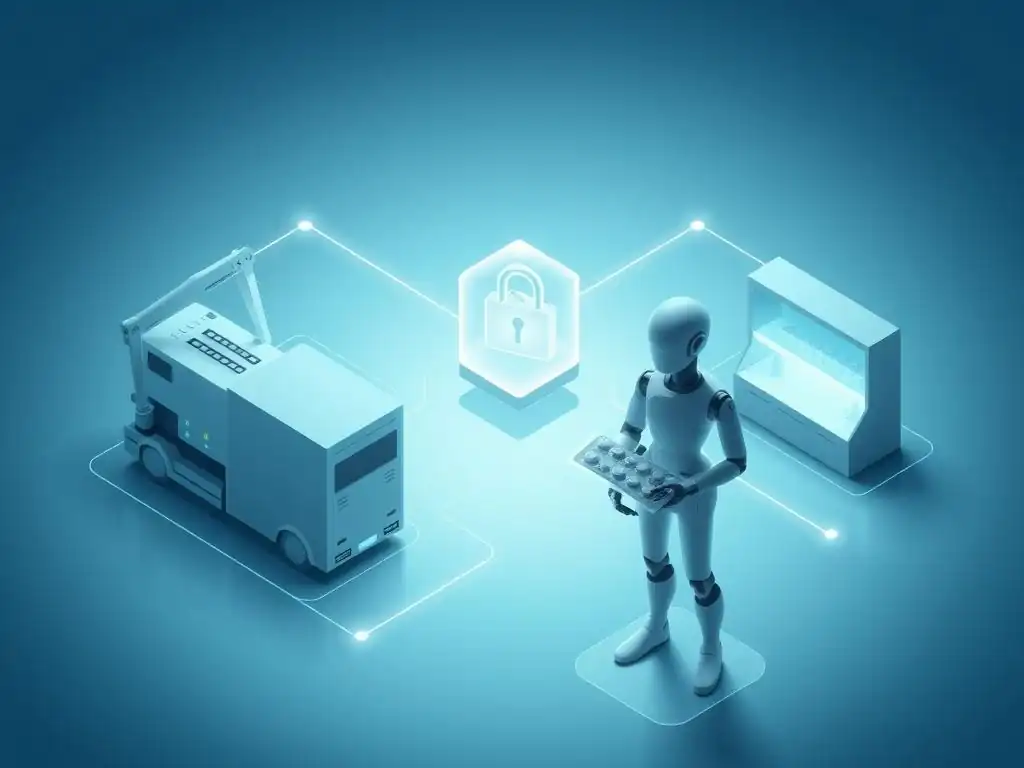
Chronicled, a technology company, has been a notable player in leveraging blockchain for the pharmaceutical supply chain, particularly focusing on DSCSA compliance. They developed the MediLedger Network, a permissioned blockchain designed specifically for the life sciences industry. The network enables secure, peer-to-peer communication and data exchange among trading partners, including manufacturers, wholesalers, and dispensers.
One of their key implementations focuses on verifying product returns – a process often plagued by inefficiencies and the risk of counterfeit products re-entering the supply chain. By using the blockchain to record transactions and verify product identifiers, the MediLedger Network allows participants to instantly check the validity of returned serialized products against their original transaction history, significantly streamlining the returns process and enhancing security.
Case Study 2: MediLedger's Use of Blockchain to Combat Counterfeit Medications
As mentioned, the MediLedger Network, initiated by Chronicled and involving major pharmaceutical companies and distributors, is a prime example of blockchain in action against counterfeiting. The network focuses on establishing a shared, trusted source of transaction data for serialized products. Participants record key transaction events – like who sold a product to whom – on the distributed ledger.
This shared ledger allows authorized parties to query the network to verify the legitimate change of ownership and location of a specific serialized drug package. If a product appears with a serial number that doesn't have a valid, traceable history on the network, or if its history shows a suspicious deviation, it can be flagged as potentially counterfeit or diverted. This collaborative approach, enabled by the blockchain's shared truth, provides a powerful mechanism to detect and prevent illicit products from moving through the legitimate supply chain.
Lessons Learned from Early Blockchain Pharma Serialization Adopters
Early adopters of blockchain in pharma serialization have highlighted several key lessons. Firstly, collaboration is essential; blockchain's value increases significantly when multiple supply chain partners participate in the same network or use interoperable systems. Secondly, the technology is not a magic bullet; successful implementation requires significant process re-engineering and change management within organizations.
Thirdly, defining clear governance models for the blockchain network is crucial, especially for permissioned ledgers where participants need to agree on rules, access levels, and dispute resolution. Finally, focusing on specific, high-value use cases like returns verification or chargeback disputes (which MediLedger also addresses) can provide tangible ROI early on, building momentum for broader adoption of blockchain drug authentication benefits across the entire supply chain.
The Future of Blockchain in Pharma Supply Chain: Beyond Serialization
Exploring Smart Contracts for Automated Supply Chain Management
Beyond basic serialization and tracking, the integration of smart contracts represents a significant future potential for blockchain in pharma. Smart contracts are self-executing contracts with the terms of the agreement directly written into code. Stored on the blockchain, they automatically execute predefined actions when specific conditions are met, without the need for intermediaries.
In the pharma supply chain, smart contracts could automate processes like payments upon delivery verification, trigger alerts if temperature conditions are breached (when combined with IoT sensors), or automatically initiate a product recall notice to relevant parties if a certain event occurs. This automation can increase efficiency, reduce administrative overhead, and minimize delays, building upon the foundational blockchain drug authentication benefits.
Utilizing Blockchain for Temperature Monitoring and Cold Chain Integrity
Maintaining the cold chain is critical for the efficacy and safety of many pharmaceutical products, such as vaccines and biologics. Integrating IoT sensors that monitor temperature and humidity with a blockchain network could create an immutable record of a product's environmental conditions throughout its journey.
As a product moves, sensors could periodically log data points onto the blockchain. If a temperature excursion occurs, this event is recorded permanently. Smart contracts could then automatically trigger actions, like alerting responsible parties or even invalidating the product's authenticity certificate on the blockchain, preventing it from being dispensed. This provides a level of verifiable cold chain integrity that is difficult to achieve with traditional, siloed monitoring systems.
The Potential of Blockchain for Personalized Medicine and Data Sharing
Looking further ahead, blockchain could play a role in managing the complex data flows associated with personalized medicine and clinical trials. As treatments become more tailored to individual genetic profiles, securely sharing relevant patient data (with consent) among researchers, manufacturers, and healthcare providers becomes essential yet challenging due to privacy concerns.
Blockchain, combined with privacy-preserving technologies, could enable secure, consent-based sharing of anonymized or pseudonymized patient data for research and development, while maintaining an immutable audit trail of who accessed the data and when. This could accelerate drug discovery and development for personalized therapies, demonstrating blockchain's potential impact extends beyond supply chain logistics to data management and innovation in healthcare.
Addressing Concerns and Challenges in Blockchain Pharma Adoption
Scalability and Performance of Blockchain Networks
A significant challenge for widespread blockchain adoption in the pharmaceutical industry is scalability. The industry deals with billions of drug packages annually, each requiring multiple transactions logged on the blockchain throughout its lifecycle. Public blockchains, in particular, can face limitations in transaction throughput (transactions per second) and latency, which might not meet the high volume and speed requirements of a global supply chain.
Permissioned blockchains generally offer better performance and scalability for enterprise use cases. However, designing and managing these networks to handle the immense volume of data generated by serialization across the entire industry remains a key technical challenge that blockchain platforms and implementers are actively working to optimize.
Data Management and Storage on the Blockchain
While blockchain is excellent for recording transaction hashes and key data points immutably, storing large volumes of data directly on the chain can be inefficient and costly. The size of the ledger grows with every transaction, and storing extensive details about each product or event for billions of items is not practical on-chain.
Effective blockchain solutions for pharma serialization employ strategies for data management. This includes determining precisely what data needs to be on-chain (e.g., transaction hashes, serial numbers, timestamps, key event identifiers) versus what data can be stored off-chain in traditional databases, with references or cryptographic proofs stored on the blockchain to maintain integrity and linkability. This hybrid approach is crucial for managing data volume and cost.
Overcoming Resistance to Change within the Pharmaceutical Industry
Like any major technological shift, adopting blockchain in the pharmaceutical industry faces resistance to change. Implementing a blockchain solution requires significant investment not just in technology but also in training personnel, redefining processes, and fostering collaboration among disparate supply chain partners who may have different levels of technological maturity and trust.
Overcoming this resistance involves clear communication about the benefits, starting with pilot programs focused on specific pain points (like the aforementioned returns verification), demonstrating tangible blockchain drug authentication benefits and ROI, and establishing industry-wide standards and consortia to facilitate adoption and interoperability across the ecosystem. Education and successful pilot implementations are key to building confidence and driving widespread change.
Conclusion: Blockchain as the Future of Pharma Authentication
The Transformative Potential of Blockchain in Securing the Drug Supply Chain
Blockchain technology holds immense transformative potential for the pharmaceutical supply chain, particularly in the critical area of drug authentication. By providing a secure, transparent, and immutable ledger for tracking serialized products, it addresses fundamental vulnerabilities in traditional systems that have long been exploited by counterfeiters and diverters. The ability to create a trustworthy, shared record visible to authorized parties marks a significant leap forward in securing the path of medications from manufacturing plant to patient.
This shift towards a decentralized, verifiable system builds a foundation of trust that is currently fragmented across multiple private databases. It empowers stakeholders, from manufacturers and distributors to pharmacies and regulators, with the tools needed to verify authenticity, track provenance, and respond rapidly to threats or quality issues. The potential for increased efficiency, reduced losses, and enhanced regulatory compliance further strengthens the case for blockchain adoption.
Blockchain Drug Authentication Benefits: A Summary of Key Advantages
The key blockchain drug authentication benefits are clear and compelling. They include dramatically enhanced transparency and traceability across the entire supply chain, providing end-to-end visibility of a product's journey. This directly leads to a stronger ability to prevent counterfeiting and diversion by making it significantly harder to introduce or reroute illicit products undetected.
Crucially, these benefits culminate in improved patient safety, ensuring that patients receive genuine, safe, and effective medications through verifiable provenance. Additionally, the technology offers the potential for streamlined supply chain operations, reduced administrative burdens, and potentially lower costs associated with managing product verification, recalls, and compliance reporting.
Embracing Innovation for a Safer and More Transparent Pharmaceutical Future
Embracing blockchain technology for pharmaceutical serialization is not just about adopting a new technology; it's about investing in a safer, more transparent, and more resilient pharmaceutical future. While challenges related to scalability, interoperability, and industry-wide adoption exist, the inherent advantages of blockchain in creating a trusted, immutable record are uniquely suited to the needs of securing the drug supply chain.
As pilot programs demonstrate success and industry consortia work towards standardization, the path forward involves continued collaboration, technological refinement, and a commitment from all stakeholders to leverage innovation. Implementing blockchain-based serialization is a vital step towards safeguarding public health, protecting the integrity of legitimate pharmaceutical products, and building a supply chain that patients and providers can unequivocally trust.
Frequently Asked Questions
What are the primary benefits of using blockchain for drug authentication?
Blockchain offers enhanced traceability and immutable records, making it significantly harder to counterfeit drugs. This ensures greater supply chain transparency and patient safety.
How does blockchain enhance pharma serialization compared to traditional methods?
Traditional methods are often vulnerable to manipulation. Blockchain provides a decentralized and tamper-proof ledger, creating a single source of truth that's accessible to authorized parties.
What are some real-world applications of blockchain in drug authentication currently being explored?
Pilot programs are exploring the use of blockchain to track drugs from manufacturer to patient, verifying authenticity at each step. This includes preventing diversion and ensuring proper storage conditions.
What regulatory challenges need to be addressed for wider adoption of blockchain in pharma serialization?
Clarifying data privacy regulations and establishing industry standards for blockchain implementation are crucial. Interoperability between different blockchain systems also needs to be considered.
What is the future outlook for blockchain technology in the pharmaceutical industry, specifically regarding drug authentication?
The future looks promising, with blockchain potentially becoming a standard practice for ensuring drug authenticity and combatting counterfeiting. Expect increased integration with other technologies like IoT for enhanced tracking.
Final Reflection: Embracing Transparency in Healthcare
The promise of enhanced security and traceability offered by blockchain technology in pharmaceutical serialization is no longer a distant possibility, but a rapidly approaching reality. The challenges of counterfeit drugs and compromised supply chains demand innovative solutions, and blockchain presents a compelling answer, poised to revolutionize how we authenticate and protect medications, ultimately safeguarding patient health and building trust in the pharmaceutical industry.
The integration of blockchain into pharma serialization represents more than just a technological upgrade; it signifies a fundamental shift towards greater transparency and accountability within the healthcare ecosystem. This transformation resonates deeply, reminding us of the profound responsibility we have to ensure the integrity of the medications we rely on. The best way to predict the future is to create it.
- Peter Drucker. This quote encapsulates the proactive approach needed to fully realize the potential of blockchain in securing our pharmaceutical supply chains.
As we stand on the cusp of this technological revolution, let us each consider our role in fostering its responsible implementation. How can we, as individuals and as members of the broader healthcare community, advocate for the adoption of blockchain solutions that prioritize patient safety and build a future where the authenticity of every medication is unequivocally assured? The time to act is now, to embrace the power of blockchain and forge a path towards a healthier and more secure future for all.
Reimagine Pharmaceutical Security: Embrace the Blockchain Revolution!
Thank you for exploring how blockchain technology is transforming drug authentication and supply chain integrity. You now see the potential for greater transparency and trust within the pharmaceutical industry. It's time to move from awareness to action.
Here’s how you can lead this change:
- Reach Out: Contact your local pharmaceutical representatives to learn about their current serialization processes and discuss how blockchain solutions could enhance security. Taking this step can help drive meaningful progress.
- Research: Investigate innovative blockchain startups focused on supply chain solutions in the pharmaceutical sector. You may discover promising investment opportunities or potential partnerships.
- Share: Spread the word by sharing this article with your network and encouraging discussions about blockchain’s vital role in safeguarding public health.
What questions do you plan to ask your pharmaceutical contacts about implementing blockchain serialization? Share your thoughts in the comments below!
Leave a Reply