
Patient Data Security Transformed: Blockchain Healthcare Case Study Deep Dives


Welcome to Blockchain Trends, your compass in the evolving landscape of decentralized technology! Delve into the transformative power of blockchain beyond the headlines. Are you ready to discover how this revolutionary technology is reshaping industries? Our latest deep dive unveils a critical application, exploring the groundbreaking ways blockchain healthcare data security is being implemented right now. Uncover the case studies, dissect the successes, and ponder the possibilities that a secure, decentralized future holds for patient information. The revolution is underway – are you ready to explore?
Patient Data Security Transformed: Blockchain Healthcare Case Study Deep Dives
- Introduction: The Urgent Need for Enhanced Healthcare Data Security
- Understanding Blockchain's Role in Healthcare Data Security
-
Case Study 1: Estonia's e-Health System - Securing National Health Records with Blockchain
- The Challenge: Protecting National Health Records from Cyberattacks and Ensuring Data Integrity
- The Solution: Implementing Keyless Signature Infrastructure (KSI) Blockchain for Data Integrity and Auditability
- Key Features of the Blockchain EHR System
- Results: Enhanced Security, Improved Data Integrity, and Transparent Audit Trails
-
Case Study 2: MediLedger - Enhancing Drug Supply Chain Traceability using Blockchain
- The Problem: Counterfeit Drugs and Supply Chain Inefficiencies in the Pharmaceutical Industry
- The Solution: Utilizing Blockchain for End-to-End Supply Chain Tracking and Verification
- How Blockchain Ensures Drug Authenticity and Prevents Diversion
- Outcomes: Increased Supply Chain Transparency, Reduced Counterfeiting, and Improved Patient Safety
-
Case Study 3: Solve.Care - Facilitating Healthcare Benefits Administration and Payments with Blockchain
- The Need: Streamlining Healthcare Payments and Benefits Administration While Reducing Fraud
- The Solution: Building a Blockchain-Based Platform for Healthcare Coordination and Payments
- Ensuring Data Privacy and Compliance with Regulations (e.g., HIPAA)
- Impact: Reduced Administrative Costs, Improved Payment Accuracy, and Enhanced Patient Experience
- Overcoming Challenges and Implementing Blockchain for Healthcare Data
- The Future of Blockchain in Healthcare Data Security
- Conclusion: Blockchain as a Catalyst for Secure and Efficient Healthcare Data Management
-
Frequently Asked Questions
- How does blockchain enhance healthcare data security compared to traditional methods?
- What are some real-world examples of blockchain being used for healthcare data security?
- What are the main challenges in implementing blockchain solutions for healthcare data security?
- How does blockchain address concerns about patient privacy while ensuring data security?
- What is the future outlook for blockchain in healthcare data security?
- Final Reflection: Securing Healthcare's Future with Blockchain
- Uncover the Future: Secure Your Health Data Now!
Introduction: The Urgent Need for Enhanced Healthcare Data Security
The Growing Threat to Patient Data Privacy in the Digital Age
The digital transformation of healthcare has brought unprecedented convenience and efficiency, but it has also exposed sensitive patient data to escalating risks. Cyberattacks targeting healthcare organizations are becoming increasingly sophisticated and frequent. Reports indicate that in 2023 alone, millions of patient records were compromised in data breaches across the globe.
For example, a significant breach at a major health system in the United States potentially exposed the data of over 11 million patients, including names, birth dates, medical record numbers, and even clinical information. This surge in breaches underscores the critical vulnerability of current systems and highlights the urgent need for robust blockchain healthcare data security measures.
Beyond large-scale breaches, the threat landscape includes ransomware attacks that lock access to vital patient information, phishing schemes targeting healthcare professionals, and insider threats. The value of healthcare data on the black market is significantly higher than other types of personal data, making healthcare a prime target for cybercriminals. Protecting this data is not just a matter of privacy; it's essential for patient safety, continuity of care, and maintaining public trust in healthcare institutions.
Why Traditional Security Measures are Falling Short
Traditional healthcare data security relies heavily on perimeter defenses like firewalls, intrusion detection systems, and access controls layered on top of centralized databases. While these measures are necessary, they often form a single point of failure. Once a breach occurs through a vulnerability in one layer, the entire database can be compromised. Furthermore, maintaining data integrity across multiple disparate systems within a healthcare network, or between different organizations (like hospitals, labs, and pharmacies), is a significant challenge with traditional methods. Data can be altered or lost without a transparent, immutable audit trail.
Existing systems often struggle with granular access control, making it difficult for patients to truly control who accesses their health information. While regulations like HIPAA in the US or GDPR in Europe mandate data protection, technical implementations often fall short of providing truly decentralized, patient-centric control. This points to a fundamental need for a more resilient and decentralized approach to enhance blockchain healthcare data security.
Blockchain Technology: A Potential Solution for Healthcare Data Security
Blockchain technology offers a paradigm shift in how data can be stored, managed, and secured. At its core, a blockchain is a distributed, immutable ledger that records transactions (in this case, data interactions) across a network of computers. Once data is added to the blockchain, it is extremely difficult, if not impossible, to alter or delete without the consensus of the network, creating an inherent layer of data integrity and security.
This distributed nature eliminates the single points of failure inherent in centralized databases. By encrypting data and linking blocks cryptographically, blockchain ensures that any attempt to tamper with data is immediately detectable. Furthermore, blockchain can facilitate secure, transparent, and auditable data sharing, potentially resolving interoperability issues while maintaining stringent access controls. These characteristics make blockchain a compelling technology for addressing the challenges in blockchain healthcare data security.
Understanding Blockchain's Role in Healthcare Data Security
How Blockchain Enhances Data Integrity and Immutability
One of the most significant contributions of blockchain to blockchain healthcare data security is its ability to ensure data integrity and immutability. When a patient's health record update, a lab result, or a prescription fill is recorded on a blockchain, it is bundled into a block with other transactions.
This block is then cryptographically linked to the previous block using a hash, creating a chain. Any attempt to alter the data within a block after it has been added to the chain would change the block's hash, breaking the link to the next block and immediately signaling tampering to the entire network.
Unlike traditional databases where a single administrator could potentially alter records without a verifiable trace, a blockchain ledger provides a transparent and permanent history of all data modifications. This is crucial in healthcare for maintaining accurate patient records, ensuring the integrity of clinical trial data, and creating reliable audit trails for regulatory compliance. The distributed nature means copies of the ledger are held by multiple participants, making it computationally infeasible for a malicious actor to alter enough copies to validate a fraudulent change.
Decentralized Access Control and Patient Empowerment
Blockchain can fundamentally change how access to patient data is managed, shifting control away from institutions and towards the patient. Using smart contracts – self-executing contracts with the terms of the agreement directly written into code – patients can define granular permissions for who can access their data, under what conditions, and for how long. For example, a patient could grant temporary access to a specialist for a consultation or permit researchers access to anonymized data for a specific study.
This decentralized access control model enhances patient privacy and empowerment. Instead of requesting data from various providers who hold fragmented records, patients could potentially manage a key that grants or revokes access to their consolidated health information stored securely, perhaps in a distributed file system referenced on the blockchain. This model not only improves blockchain healthcare data security by reducing the number of parties with full, unrestricted access but also aligns with the principles of patient data ownership and control.
Improving Data Interoperability with Blockchain Solutions
A major hurdle in modern healthcare is the lack of seamless data exchange between different healthcare providers, systems, and organizations – a problem known as interoperability. Electronic Health Record (EHR) systems from different vendors often use incompatible data formats or protocols, making it difficult to share patient information efficiently and securely. This fragmentation can lead to incomplete patient histories, redundant tests, and delays in care.
Blockchain can act as an underlying layer or a secure index that facilitates interoperability without requiring organizations to abandon their existing EHR systems. By creating a shared, immutable index on the blockchain that points to the location of patient data stored securely off-chain (due to privacy and storage considerations), healthcare providers can discover and request access to relevant patient information across different networks, provided they have the necessary permissions granted via smart contracts. This approach improves blockchain healthcare data security by ensuring that only authorized parties access data, while also creating a transparent record of every access attempt.
Case Study 1: Estonia's e-Health System - Securing National Health Records with Blockchain
The Challenge: Protecting National Health Records from Cyberattacks and Ensuring Data Integrity
Estonia, a pioneer in digital governance, faced the significant challenge of securing the health records of its entire population against cyber threats and ensuring the absolute integrity of that data. As a small nation with a highly digitized public sector, including a comprehensive e-Health system launched in the mid-2000s, Estonia recognized its vulnerability to sophisticated state-sponsored cyberattacks.
Protecting sensitive health information, including diagnoses, treatments, and prescriptions, was paramount. The core challenge was to implement a system that could not only withstand attacks but also provide undeniable proof if any data had been tampered with, a crucial aspect of blockchain healthcare data security.
The traditional database infrastructure, while advanced for its time, still presented potential points of failure and lacked an inherent, real-time mechanism to detect unauthorized alterations across its distributed health information system. The need for an unimpeachable audit trail for every access and modification was critical for maintaining trust in the national digital health infrastructure.
The Solution: Implementing Keyless Signature Infrastructure (KSI) Blockchain for Data Integrity and Auditability
To address these challenges, Estonia integrated Guardtime's Keyless Signature Infrastructure (KSI) blockchain technology into its existing e-Health system starting around 2012. KSI is a specific type of blockchain focused on providing irrefutable proof of data integrity and origin, rather than supporting cryptocurrencies or complex smart contracts. It uses cryptographic hashing and linking to create a verifiable chain of data states. Every piece of data or log entry within the e-Health system is timestamped and hashed, and these hashes are then aggregated into a blockchain.
This implementation created a continuous, real-time integrity check across the entire national health record system. By verifying the KSI chain, Estonian authorities can instantly detect whether any record has been altered since it was originally logged. This provides a powerful layer of blockchain healthcare data security by making tampering immediately visible and verifiable, serving as a digital notary for all health data transactions.
Key Features of the Blockchain EHR System
The integration of KSI blockchain into Estonia's e-Health system introduced several key features focused on enhancing security and trust:
- Real-time Data Integrity Verification: Every health record entry is cryptographically linked in a chain, allowing for continuous monitoring and instant detection of unauthorized modifications.
- Immutable Audit Trails: The blockchain records every access and modification event, creating a permanent, verifiable history that cannot be tampered with. This is essential for compliance and accountability.
- Decentralized Trust: While the e-Health system itself is managed by the state, the integrity of the data is anchored in the distributed nature of the KSI blockchain's verification process, which involves independent validators.
- Scalability: KSI is designed to handle a massive volume of data integrity proofs needed for a national system, processing potentially millions of transactions daily related to data access and modification logs.
Results: Enhanced Security, Improved Data Integrity, and Transparent Audit Trails
The integration of KSI blockchain has significantly bolstered the security posture of Estonia's national e-Health system. It provides an unprecedented level of assurance regarding the integrity of patient data. While specific breach prevention statistics directly attributable solely to the blockchain layer are difficult to isolate, its primary impact is on detection and proof of integrity. The system ensures that even if a breach were to occur and data were accessed or copied, any attempt to alter the data within the official records would be instantly detectable via the blockchain's verification process.
This enhanced data integrity and the availability of transparent, undeniable audit trails have increased trust in the digital health system among citizens and healthcare professionals. The implementation demonstrates a successful large-scale application of blockchain technology specifically for ensuring the integrity and auditability of sensitive national data, providing a compelling example for blockchain healthcare data security. The system currently secures the records of over 1.2 million citizens.
Case Study 2: MediLedger - Enhancing Drug Supply Chain Traceability using Blockchain
The Problem: Counterfeit Drugs and Supply Chain Inefficiencies in the Pharmaceutical Industry
The global pharmaceutical supply chain is incredibly complex, involving manufacturers, distributors, pharmacies, and healthcare providers across multiple jurisdictions. This complexity creates opportunities for counterfeit or substandard drugs to enter the market, posing severe risks to patient health and safety. The World Health Organization (WHO) estimates that 1 in 10 medical products in low- and middle-income countries is substandard or falsified.
Additionally, inefficiencies in tracking and verifying the authenticity and ownership of drugs lead to significant costs, delays, and lack of visibility throughout the supply chain. Current track-and-trace systems often rely on centralized databases or fragmented systems that are vulnerable to data manipulation and do not provide a single, shared source of truth.
The inability to quickly and reliably verify the legitimacy and journey of a drug from manufacturer to patient is a major gap in ensuring patient safety and requires advanced solutions for blockchain healthcare data security within the supply chain context.
The Solution: Utilizing Blockchain for End-to-End Supply Chain Tracking and Verification
MediLedger is a blockchain network built by the pharmaceutical industry, specifically for the pharmaceutical industry, to address these supply chain challenges. It uses a permissioned blockchain model, where participating companies (manufacturers, distributors, etc.) are known and validated. The system does not store sensitive business or patient data directly on the blockchain but uses the immutable ledger to record transaction data – such as ownership transfers, shipping events, and verification requests – associated with unique drug identifiers (like serial numbers).
By recording these key events on a shared, distributed ledger, MediLedger creates an unalterable history of a drug's journey through the supply chain. Participants can query the network to verify the authenticity of a drug based on its serial number and confirm its legitimate path from the manufacturer. This significantly enhances transparency and trust among supply chain partners and provides a robust system for blockchain healthcare data security focused on product integrity.
How Blockchain Ensures Drug Authenticity and Prevents Diversion
Blockchain on the MediLedger network ensures drug authenticity and helps prevent diversion through several mechanisms:
- Immutable Transaction History: Every time a drug lot or item changes hands, the transaction is recorded on the blockchain. This creates a permanent, auditable record that cannot be retroactively altered.
- Verification at Any Point: Stakeholders (e.g., a pharmacy receiving a shipment) can query the blockchain using the drug's serial number to verify its provenance and ensure it has followed the expected path through the legitimate supply chain. If a drug's history doesn't match the expected chain of custody, it raises a red flag for potential counterfeiting or diversion.
- Decentralized Consensus: Because the ledger is distributed among network participants, no single entity can unilaterally alter the transaction history to legitimize a counterfeit product or hide diversion. Consensus among participants is required for new blocks (containing transaction data) to be added.
- Secure Identity Management: Participants on the permissioned network have verified identities, adding a layer of trust to the transactions recorded on the ledger.
Outcomes: Increased Supply Chain Transparency, Reduced Counterfeiting, and Improved Patient Safety
The implementation of MediLedger has led to demonstrable outcomes in enhancing pharmaceutical supply chain security and efficiency. While specific global statistics on reduced counterfeiting directly attributed solely to MediLedger are still emerging as the network expands, early results from pilot programs and ongoing operations show significant improvements. For example, participants report a dramatic reduction in the time and effort required to investigate potential diversion or authenticity issues, from days or weeks down to minutes, because the blockchain provides a single, verifiable source of truth.
The network has successfully processed millions of verification requests related to drug serial numbers. This increased transparency and the ability for any authorized party to quickly verify a drug's legitimacy at any point in the supply chain directly contribute to reducing the risk of counterfeit drugs reaching patients. By securing the integrity of the supply chain data, MediLedger provides a vital layer of blockchain healthcare data security that ultimately enhances patient safety.
Case Study 3: Solve.Care - Facilitating Healthcare Benefits Administration and Payments with Blockchain
The Need: Streamlining Healthcare Payments and Benefits Administration While Reducing Fraud
Healthcare systems worldwide grapple with complex and inefficient processes for benefits administration, claims processing, and payments. This often involves multiple intermediaries, manual steps, and a lack of transparency, leading to administrative costs that can consume a significant portion of healthcare spending (estimates range from 15% to 30% in some systems). Additionally, the fragmentation and lack of real-time data sharing create opportunities for fraud, waste, and abuse, further driving up costs and compromising the integrity of the system. Patients and providers alike suffer from delays, confusion, and administrative burdens.
There was a clear need for a more streamlined, transparent, and secure system to manage healthcare benefits and payments, one that could also ensure blockchain healthcare data security while facilitating efficient transactions.
The Solution: Building a Blockchain-Based Platform for Healthcare Coordination and Payments
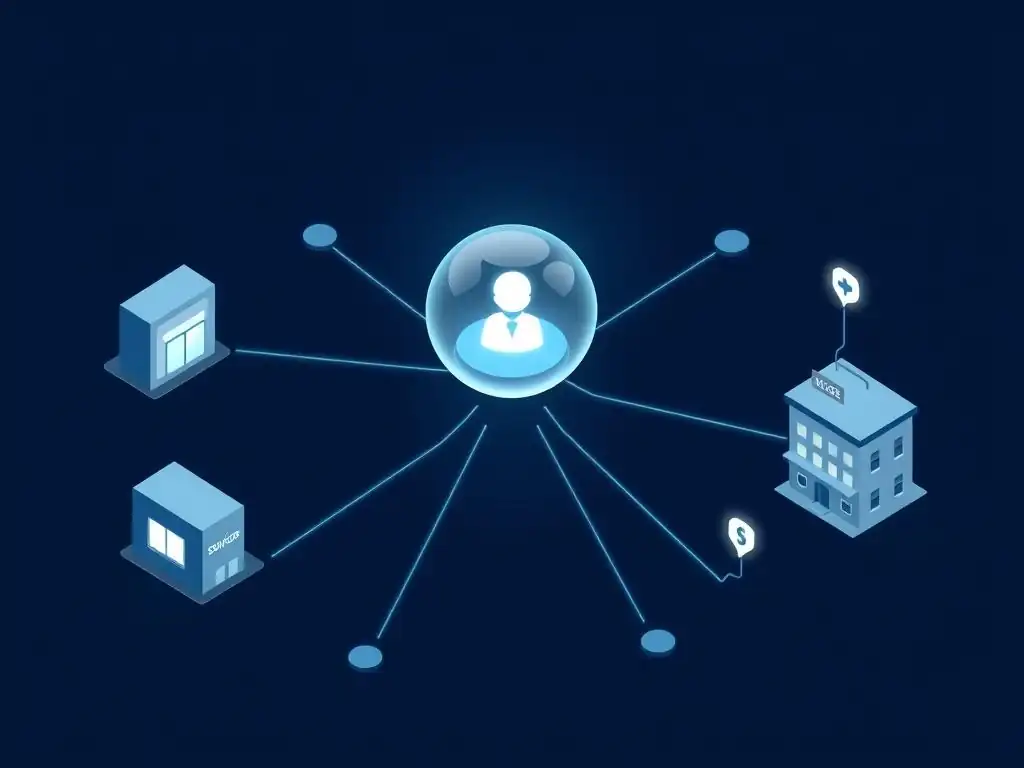
Solve.Care developed a blockchain-based platform designed to revolutionize healthcare administration, coordination, and payments. The platform utilizes a private, permissioned blockchain network to connect patients, providers, employers, and payers (like insurance companies). Instead of relying on traditional, siloed systems, Solve.Care creates "Care Networks" on the blockchain, which are digital health communities focused on specific conditions, populations, or payment models.
Within these Care Networks, the platform uses "Care Cards" (digital tokens or smart contracts) to represent units of care, benefits, or payments. When a healthcare service is rendered or a benefit needs to be administered, the transaction is recorded on the blockchain. This includes verifying eligibility, processing claims, and executing payments automatically via smart contracts. The blockchain provides a shared, immutable ledger of all these interactions, ensuring transparency and accountability among all parties involved.
Ensuring Data Privacy and Compliance with Regulations (e.g., HIPAA)
A critical aspect of the Solve.Care platform is ensuring blockchain healthcare data security and compliance with stringent regulations like HIPAA (Health Insurance Portability and Accountability Act) in the United States or GDPR in Europe. The platform does not store sensitive Protected Health Information (PHI) directly on the public or even the permissioned blockchain ledger due to privacy concerns and regulatory requirements.
Instead, the blockchain is used to store encrypted transaction metadata, hashes of documents, and references to patient/provider identities, along with the rules and permissions embedded in smart contracts. The actual detailed PHI is stored securely off-chain in compliance with regulations, with access governed by granular permissions recorded and managed on the blockchain. This hybrid approach leverages the security, transparency, and automation benefits of blockchain while adhering to privacy mandates, ensuring that patient data remains confidential and accessible only to authorized parties as defined by smart contracts and regulatory frameworks.
Impact: Reduced Administrative Costs, Improved Payment Accuracy, and Enhanced Patient Experience
Solve.Care's platform has demonstrated significant positive impacts in pilot programs and deployments. By automating eligibility checks, claims processing, and payments via smart contracts on the blockchain, administrative costs can be substantially reduced. For instance, pilot programs have shown potential reductions in administrative processing times from weeks to minutes and significant decreases in manual effort and paperwork.
The transparency and immutability of the blockchain ledger reduce opportunities for fraud and improve payment accuracy, as all transactions are recorded and verifiable by all authorized network participants. Patients benefit from faster access to care, clearer understanding of their benefits, and reduced administrative hassles. Providers experience quicker and more reliable payments. This case study illustrates how blockchain can streamline complex healthcare processes while simultaneously enhancing blockchain healthcare data security and compliance.
Overcoming Challenges and Implementing Blockchain for Healthcare Data
Addressing Scalability Concerns in Blockchain Healthcare Applications
One of the primary technical challenges for widespread adoption of blockchain healthcare data security solutions is scalability. Public blockchains like Bitcoin or Ethereum (before its recent upgrades) faced limitations in transaction speed and volume, processing only a handful of transactions per second compared to the thousands or tens of thousands needed for large-scale healthcare systems. Storing vast amounts of sensitive data directly on many types of blockchains is also impractical due to storage costs and privacy concerns.
Solutions to address scalability include using permissioned or private blockchains, which can process transactions much faster within a controlled network of known participants. Off-chain storage solutions, where sensitive data is stored securely in traditional databases or distributed file systems and only hashes or metadata are placed on the blockchain, are also crucial. Layer 2 scaling solutions, sharding, and optimized consensus mechanisms are other technical approaches being explored and implemented to make blockchain networks viable for the high transaction volumes and data requirements of healthcare.
Implementing blockchain healthcare data security solutions requires careful navigation of complex and evolving regulatory landscapes, such as HIPAA, GDPR, and others specific to different regions. These laws mandate strict requirements for patient data privacy, security, and control, including the right to access, amend, and even erase personal data (the "right to be forgotten" under GDPR). The immutable nature of traditional blockchain can conflict with the right to erasure.
Healthcare blockchain projects must design architectures that comply with these regulations. This typically involves the hybrid approach mentioned earlier, storing sensitive data off-chain in compliant systems while using the blockchain for indexing, access control management, and audit trails. Legal frameworks around data ownership, consent management on the blockchain, and the legal status of smart contracts in healthcare transactions are still developing and require close attention from implementers.
The Importance of Interoperability and Data Standardization
While blockchain can facilitate interoperability, it doesn't automatically solve the underlying problem of data standardization. Healthcare data exists in myriad formats (e.g., HL7, FHIR, DICOM) and coding systems (e.g., ICD-10, CPT). For blockchain-based solutions to effectively enable data exchange, there must be a concerted effort to standardize data formats or develop robust mapping and translation layers.
Successful blockchain healthcare data security and interoperability solutions will likely integrate with existing healthcare data standards and leverage APIs to connect with legacy systems. Industry-wide collaboration is essential to develop common standards and protocols for how healthcare data is represented and exchanged on or referenced by blockchain networks, ensuring seamless communication between disparate systems and providers.
Building Trust and Educating Stakeholders about Blockchain Benefits
Adoption of blockchain in healthcare is also hindered by a lack of understanding and trust among key stakeholders, including patients, healthcare providers, administrators, and regulators. There's often confusion about what blockchain is, how it works, and its specific benefits and limitations compared to existing technologies. Concerns about the complexity, cost of implementation, and the permanence of data on the ledger are common.
Educating stakeholders about the specific value proposition of blockchain healthcare data security – such as enhanced data integrity, improved auditability, and patient empowerment – is crucial. Demonstrating successful pilot programs and case studies (like the ones discussed) helps build confidence. Clear communication about how data privacy is maintained and how regulatory compliance is achieved is essential to gain acceptance and drive broader adoption.
The Future of Blockchain in Healthcare Data Security
Emerging Trends and Innovations in Blockchain Healthcare
The field of blockchain healthcare data security is rapidly evolving, with several emerging trends and innovations on the horizon. One trend is the development of more specialized blockchain platforms tailored for healthcare, offering features like enhanced privacy through zero-knowledge proofs (ZKPs) or homomorphic encryption, which allow computations on encrypted data. Another is the focus on decentralized identity solutions, enabling patients and providers to manage their digital identities securely and control access to their data across different platforms.
Interoperability standards for blockchain are also being developed to ensure different blockchain networks and legacy systems can communicate effectively. The use of tokenization beyond payments, such as creating tokens representing patient consent or access rights, is also gaining traction. These innovations promise to further enhance the security, privacy, and functionality of blockchain applications in healthcare.
The Potential for AI and Blockchain Integration in Healthcare
The integration of Artificial Intelligence (AI) and blockchain holds significant potential for advancing blockchain healthcare data security and functionality. AI requires access to vast amounts of high-quality data for training and analysis. Blockchain can provide a secure, immutable, and auditable infrastructure for managing and sharing this data. For instance, blockchain can track the provenance of data used to train AI models, ensuring its integrity and preventing the use of manipulated datasets.
Furthermore, blockchain can facilitate secure data marketplaces where researchers or AI developers can gain authorized access to anonymized or aggregated patient data recorded on a blockchain, with transactions transparently logged. AI can also be used to monitor blockchain networks for suspicious activity, adding another layer of security. The combination of AI's analytical power and blockchain's security and transparency could revolutionize areas like drug discovery, personalized medicine, and fraud detection in healthcare.
The Role of Blockchain in Personalized Medicine and Patient-Centric Care
Personalized medicine relies heavily on collecting, analyzing, and securely sharing vast amounts of patient data, including genomic information, lifestyle data, and electronic health records. Blockchain is uniquely positioned to support this by providing a secure, patient-controlled platform for managing this complex data. Patients could use blockchain-based systems to aggregate their data from various sources, grant specific researchers or clinicians access for personalized treatment or research, and maintain a transparent record of how their data is used.
This shifts the focus towards truly patient-centric care, empowering individuals to control their health information and participate more actively in decisions about their treatment and data sharing. By ensuring the security, integrity, and auditable sharing of this highly sensitive information, blockchain can be a fundamental enabler for the future of personalized medicine and enhanced blockchain healthcare data security.
Conclusion: Blockchain as a Catalyst for Secure and Efficient Healthcare Data Management
Key Takeaways from the Blockchain Healthcare Case Studies
The case studies of Estonia's e-Health system, MediLedger, and Solve.Care provide compelling real-world examples of blockchain's transformative potential beyond cryptocurrencies, specifically in enhancing blockchain healthcare data security. Estonia demonstrates the power of blockchain for ensuring the integrity and auditability of national health records. MediLedger highlights its effectiveness in securing complex supply chains and verifying product authenticity to protect patient safety. Solve.Care illustrates how blockchain can streamline administrative processes, reduce fraud, and empower patients in benefits management and payments.
These examples show that while challenges exist, practical, impactful blockchain solutions are being successfully implemented in healthcare today. They underscore the technology's ability to provide a distributed, immutable, and transparent ledger that is inherently more resilient to tampering and provides better auditability than many traditional systems.
The Transformative Potential of Blockchain for Patient Data Security
Blockchain technology offers a fundamental shift in how patient data security can be approached. By moving away from centralized, vulnerable databases towards distributed, immutable ledgers and leveraging cryptographic principles, blockchain can significantly enhance data integrity, provide robust audit trails, and enable more granular, patient-controlled access. This is critical in an era of escalating cyber threats and increasing demands for data privacy and patient empowerment.
The potential extends beyond just security to improving interoperability, streamlining administrative processes, securing supply chains, and laying the groundwork for future innovations like personalized medicine and AI integration. The core capabilities of blockchain – transparency, immutability, and decentralization – are precisely what is needed to address some of the most persistent challenges in managing healthcare data securely and efficiently.
Call to Action: Embracing Blockchain for a More Secure Healthcare Future
Healthcare organizations, technology providers, and policymakers must actively explore and embrace the potential of blockchain technology to build a more secure and efficient healthcare future. This requires investing in pilot programs, collaborating on standards, navigating regulatory complexities with innovative solutions, and, crucially, educating stakeholders about the benefits and practical applications of blockchain healthcare data security.
While not a panacea for all healthcare IT challenges, blockchain offers a powerful set of tools that, when implemented correctly and in compliance with regulations, can significantly enhance the security, integrity, and privacy of patient data. By learning from existing case studies and committing to thoughtful adoption, the healthcare industry can leverage blockchain to build systems that are not only more secure but also more transparent, efficient, and patient-centric.
Frequently Asked Questions
How does blockchain enhance healthcare data security compared to traditional methods?
Blockchain's decentralized and immutable ledger offers superior security. It uses cryptographic hashing and distributed consensus mechanisms to prevent unauthorized access and alterations, ensuring data integrity and confidentiality.
What are some real-world examples of blockchain being used for healthcare data security?
Several case studies demonstrate blockchain's potential. These include secure patient record sharing, supply chain management for pharmaceuticals, and identity management for healthcare professionals, all contributing to enhanced data security and transparency.
What are the main challenges in implementing blockchain solutions for healthcare data security?
Challenges include scalability issues due to the large volume of healthcare data, interoperability problems with existing systems, and regulatory uncertainties surrounding data privacy and blockchain technology. Also lack of skilled personnel.
How does blockchain address concerns about patient privacy while ensuring data security?
Blockchain utilizes techniques like permissioned networks and zero-knowledge proofs to control access to sensitive data. This allows for secure data sharing while maintaining patient privacy and compliance with regulations like HIPAA.
What is the future outlook for blockchain in healthcare data security?
The future holds significant promise, with blockchain becoming increasingly integrated into healthcare systems. Expect to see greater adoption of decentralized identity solutions, more secure data sharing platforms, and enhanced transparency in pharmaceutical supply chains, ultimately improving patient data security.
Final Reflection: Securing Healthcare's Future with Blockchain
The exploration of blockchain's potential in healthcare data security, as highlighted in this article, is not merely a theoretical exercise; it's a vital imperative for the future of patient care. The vulnerabilities inherent in current centralized systems demand innovative solutions, and the case studies presented demonstrate blockchain's capacity to revolutionize how sensitive medical information is managed and protected. The stakes are high, and the urgency for adoption is undeniable.
This journey into blockchain healthcare data security has underscored the profound impact technology can have on individual lives and societal well-being. The promise of enhanced privacy, improved data integrity, and streamlined interoperability is not just about efficiency; it's about empowering patients and fostering trust in the healthcare system. Data is the new oil, and healthcare data is the most precious commodity of all.
This quote encapsulates the immense value and responsibility that comes with managing patient information, a responsibility blockchain is uniquely positioned to address.
As we conclude this exploration, I invite you to consider the role you can play in shaping the future of healthcare. Whether you're a healthcare professional, a technology enthusiast, or simply a concerned citizen, your understanding and advocacy for secure data management are crucial. Let us embrace the potential of blockchain to build a healthcare ecosystem where patient data is not only protected but also empowers individuals to take control of their health journey.
Uncover the Future: Secure Your Health Data Now!
Thank you for exploring the transformative potential of blockchain technology in enhancing patient data security. We hope this overview of real-world case studies has deepened your understanding of how blockchain can revolutionize healthcare. Now, it's time to take action.
Here are some ways you can contribute to building a more secure and transparent healthcare system:
- Start a conversation: Share this article with your network and discuss how blockchain can improve patient data security. Opening up dialogue is the first step toward wider adoption.
- Research blockchain-based healthcare projects: Look into existing initiatives and identify opportunities for collaboration or contribution. Knowing what’s already in progress is essential.
- Advocate for change: Reach out to your local representatives and encourage them to consider implementing blockchain solutions to enhance data security and protect patient privacy. Be a voice for progress!
What specific application of blockchain in healthcare excites you the most, and why? Share your thoughts in the comments below!
Leave a Reply