
Challenges of the Metaverse: Addressing Scalability and Interoperability with Blockchain


Welcome to Blockchain Trends, your compass in the ever-evolving world of decentralized technologies!
Dive deep into the transformative potential of blockchain, moving beyond the hype to explore its impact on DeFi, enterprise solutions, and the regulatory landscape. Are you ready to unlock the true potential of the metaverse? Our latest insights tackle the critical issue of blockchain metaverse scalability challenges, uncovering the hurdles and innovative solutions shaping the future of immersive digital experiences. What are the key bottlenecks preventing mass adoption, and how can blockchain address them? Read on to discover more and join the conversation!
Challenges of the Metaverse: Addressing Scalability and Interoperability with Blockchain
- Introduction: The Metaverse Vision and the Role of Blockchain
- Blockchain Metaverse Scalability Challenges: Bottlenecks and Limitations
- Interoperability Hurdles in the Metaverse: Creating Seamless Experiences
- Blockchain Solutions for Metaverse Scalability
- Addressing Interoperability with Blockchain Technology
- Case Studies: Blockchain Projects Tackling Metaverse Challenges
- The Future of the Blockchain Metaverse: Overcoming Obstacles
- Conclusion: Towards a Scalable and Interoperable Blockchain Metaverse
-
Frequently Asked Questions
- How does blockchain address scalability challenges within the metaverse?
- What role does interoperability play in the success of a blockchain-powered metaverse?
- What are the primary regulatory concerns surrounding blockchain applications in the metaverse?
- How can DeFi (Decentralized Finance) enhance the metaverse experience?
- What are the potential limitations of using blockchain to build the metaverse?
- Final Reflection: Navigating the Blockchain Metaverse Frontier
- Dive Deeper: Shape the Future of the Metaverse!
Introduction: The Metaverse Vision and the Role of Blockchain
Exploring the Potential of a Blockchain-Powered Metaverse
The metaverse, envisioned as a persistent, shared, 3D virtual world, promises to revolutionize how we interact, work, and play. Imagine attending a virtual concert with friends from around the globe, owning digital land in a thriving virtual city, or seamlessly transferring your avatar and digital assets between different virtual experiences. This immersive future hinges on the robust infrastructure provided by blockchain technology.
Blockchain offers the potential to establish verifiable digital ownership, secure transactions, and create decentralized governance within these virtual worlds, moving beyond centralized control and fostering user empowerment. This foundational layer is critical for building trust and enabling a truly open and user-centric metaverse experience, differentiating it from current centralized gaming and social platforms.
Blockchain's inherent characteristics – decentralization, transparency, and immutability – align perfectly with the core principles of the metaverse. By leveraging blockchain, metaverse platforms can ensure that digital assets are genuinely owned by users, not platforms. This ownership is validated cryptographically, providing a level of security and control previously unattainable in digital spaces.
Smart contracts, executed on the blockchain, can automate complex interactions within the metaverse, from virtual land sales to in-game economies, creating transparent and efficient systems. This combination of features lays the groundwork for a metaverse that is not only immersive and engaging but also economically viable and democratically governed.
Why Scalability and Interoperability are Crucial for Metaverse Success
The success of the metaverse hinges on two critical pillars: scalability and interoperability. Scalability refers to the metaverse's ability to handle a massive influx of users, transactions, and data without compromising performance or user experience. Imagine millions, or even billions, of users interacting simultaneously within various metaverse environments. Current blockchain and computing infrastructures face significant hurdles in supporting such a scale. Without addressing scalability, the metaverse risks becoming fragmented, slow, and ultimately, unable to realize its full potential as a truly global and interconnected virtual world.
Interoperability, on the other hand, focuses on the seamless interaction between different metaverse platforms and environments. Users should be able to move their avatars, digital assets, and identities fluidly across various virtual worlds, much like navigating different websites on the internet today. However, the current metaverse landscape is characterized by walled gardens and proprietary systems, hindering interoperability.
Imagine purchasing a digital artwork in one metaverse and being unable to display it in another, or having to create separate avatars and identities for each platform. This lack of interoperability creates friction, limits user choice, and fragments the metaverse experience, preventing the emergence of a unified and cohesive virtual universe. Therefore, resolving both scalability and interoperability challenges is paramount to unlocking the transformative potential of the blockchain metaverse.
Blockchain Metaverse Scalability Challenges: Bottlenecks and Limitations
Transaction Throughput Limitations in Current Blockchain Infrastructures
One of the primary scalability challenges for a blockchain-based metaverse lies in the inherent transaction throughput limitations of many current blockchain infrastructures. Blockchains like Bitcoin and Ethereum, while pioneers in the space, were not designed to handle the high volume of transactions expected within a bustling metaverse.
Bitcoin, for instance, can process approximately 7 transactions per second (TPS), while Ethereum 1.0 could handle around 15-30 TPS. These figures are dwarfed by the transaction volumes required for a metaverse where millions of users might be simultaneously engaging in activities such as buying virtual goods, trading NFTs, participating in virtual events, and interacting with decentralized applications (dApps).
Consider a popular metaverse event, like a virtual concert, attracting tens of thousands of concurrent users. Each user interaction, from purchasing a virtual ticket to tipping a performer, could potentially involve a blockchain transaction. If each of these interactions were to be processed on a base layer blockchain with limited TPS, the network would quickly become congested, leading to significant delays and soaring transaction fees, often referred to as "gas fees" on Ethereum.
For example, during periods of high network activity on Ethereum, gas fees for simple transactions have surged to hundreds of dollars, making micro-transactions and everyday metaverse interactions economically unfeasible. This bottleneck in transaction throughput directly impacts the user experience and hinders the widespread adoption of blockchain-based metaverses.
High Latency and Slow Confirmation Times Affecting User Experience
Beyond transaction throughput, high latency and slow confirmation times on blockchains pose another significant hurdle to creating a seamless and immersive metaverse experience. Latency refers to the delay between initiating an action and seeing its result, while confirmation time is the duration it takes for a blockchain transaction to be verified and added to the blockchain, making it irreversible. Blockchains like Bitcoin can have confirmation times ranging from 10 minutes to over an hour, while Ethereum's confirmation times are typically shorter, ranging from minutes to tens of minutes, but still too long for real-time metaverse interactions.
Imagine a fast-paced action game within the metaverse where players are constantly interacting with each other and the environment. If every action, such as firing a virtual weapon or picking up an item, requires a blockchain transaction with a confirmation time of several minutes, the gameplay would become laggy and unresponsive, destroying the immersive experience. Users expect near-instantaneous feedback in virtual environments, similar to traditional online games.
High latency and slow confirmation times disrupt this real-time interaction flow, creating a disjointed and frustrating user experience. For the metaverse to truly become a compelling alternative to physical reality, it needs to offer responsiveness and speed comparable to, or even exceeding, current digital experiences, which necessitates addressing these latency and confirmation time challenges inherent in many blockchain systems.
Data Storage and Management Issues within the Metaverse
The metaverse, by its very nature, will be a data-intensive environment, encompassing vast amounts of user-generated content, virtual assets, and persistent world states. Storing and managing this massive volume of data on-chain directly on a blockchain is prohibitively expensive and inefficient. Blockchains are designed for transaction verification and consensus, not for large-scale data storage. Storing every metaverse asset, interaction, and piece of world data directly on-chain would lead to exponentially increasing blockchain sizes, making nodes more resource-intensive to operate and potentially compromising decentralization.
For instance, consider the sheer volume of data associated with Non-Fungible Tokens (NFTs), which are expected to be the cornerstone of digital ownership in the metaverse. While the ownership record of an NFT can be stored on-chain, the actual media files associated with NFTs, such as images, videos, and 3D models, are often too large to be stored directly on the blockchain. Current practices often rely on off-chain storage solutions, like centralized servers or InterPlanetary File System (IPFS), to host these media files, with only a hash linking to the off-chain data stored on the blockchain. However, relying solely on off-chain solutions introduces vulnerabilities related to data availability and permanence. If the off-chain storage provider goes offline or the data is tampered with, the NFT's value and integrity can be compromised. Therefore, efficient and decentralized data storage and management solutions are crucial for building a robust and sustainable blockchain metaverse.
Interoperability Hurdles in the Metaverse: Creating Seamless Experiences
Lack of Standardized Protocols and Data Formats
A significant barrier to metaverse interoperability is the current lack of standardized protocols and data formats across different platforms. Each metaverse project often operates with its own proprietary technology stack, using unique data formats for avatars, virtual assets, and world environments. This fragmented landscape prevents seamless communication and data exchange between different virtual worlds. Imagine trying to use a document created in one word processing program with another program that uses a different file format – the same problem exists in the metaverse today.
For example, avatars created in one metaverse platform are typically incompatible with other platforms. Their 3D models, animations, and associated data are often encoded in proprietary formats that are not recognized by other metaverse engines.
Similarly, virtual assets like digital clothing or virtual land deeds are often represented by NFTs with different metadata standards or smart contract implementations, making it difficult to transfer or utilize them across different platforms. This lack of standardization forces users to create separate identities and build digital asset collections within each metaverse, hindering the vision of a unified and interconnected virtual universe where users can freely navigate and bring their digital selves and possessions with them.
Siloed Metaverse Platforms and Limited Asset Portability
The current metaverse ecosystem is largely characterized by siloed platforms, each operating independently and with limited or no interoperability with others. This "walled garden" approach restricts asset portability and user mobility, hindering the development of a truly open and interconnected metaverse. Users are often locked into specific platforms and ecosystems, unable to freely move their digital assets or identities between different virtual worlds.
Consider popular metaverse platforms like Decentraland and The Sandbox. While both utilize blockchain technology and NFTs, assets created or purchased within Decentraland are generally not compatible with The Sandbox, and vice versa. LAND NFTs, avatars, and virtual items are confined to their respective platforms, creating isolated ecosystems.
This lack of asset portability not only limits user choice and flexibility but also fragments the metaverse economy. Users are unable to fully leverage their digital asset holdings across different virtual experiences, and the potential for a unified metaverse economy is significantly diminished. Breaking down these silos and enabling seamless asset portability is crucial for fostering a more open, vibrant, and user-centric metaverse.
The Challenge of Identity and Data Ownership Across Metaverses
Establishing a universal and interoperable identity system within the metaverse presents a complex challenge, particularly when considering data ownership and privacy. Currently, users typically create separate accounts and avatars for each metaverse platform, leading to fragmented digital identities and data silos. Ideally, users should have a single, portable digital identity that they can use across different virtual worlds, while maintaining control over their personal data and how it is used.
However, achieving this requires overcoming significant technical and philosophical hurdles. Different metaverse platforms may have varying requirements for user authentication and data collection. Furthermore, questions of data ownership and privacy become paramount in a metaverse where vast amounts of personal data are generated and potentially shared across platforms. Users need to be empowered to control their identity data, decide what information is shared, and have assurance that their privacy is protected as they navigate different virtual environments. Developing decentralized identity solutions that are interoperable, secure, and privacy-preserving is essential for building a trustworthy and user-empowering metaverse.
Blockchain Solutions for Metaverse Scalability
Layer-2 Scaling Solutions for the Metaverse: Rollups and Channels
To address the scalability limitations of base layer blockchains, Layer-2 scaling solutions are emerging as critical components for building a scalable metaverse. Layer-2 solutions operate on top of a base layer blockchain, like Ethereum, processing transactions off-chain and then periodically settling them on the main chain. This approach significantly increases transaction throughput and reduces transaction costs, while still inheriting the security and decentralization of the underlying base layer. Two prominent Layer-2 scaling solutions relevant to the metaverse are rollups and state channels.
Rollups, such as Optimistic Rollups and Zero-Knowledge Rollups (ZK-Rollups), bundle multiple transactions together into a single batch and submit a summary of these transactions to the base layer blockchain. This drastically reduces the load on the main chain and increases transaction throughput by orders of magnitude. For example, Optimistic Rollups can potentially increase Ethereum's transaction throughput to thousands of TPS.
State channels, on the other hand, enable direct, off-chain communication and transaction processing between two or more parties. They are particularly suitable for scenarios involving frequent interactions between a limited number of users within the metaverse, such as in-game interactions or peer-to-peer marketplaces. By leveraging Layer-2 solutions, metaverse platforms can achieve the necessary scalability to support a massive user base and high transaction volumes without sacrificing the benefits of blockchain technology.
Sharding is another promising scalability technique that aims to improve blockchain performance by dividing the blockchain network into smaller, manageable partitions called "shards." Each shard processes only a subset of transactions and data, allowing the network to handle a significantly larger overall transaction volume in parallel. Imagine dividing a large city into smaller districts, each with its own local governance and infrastructure, but still connected and part of the larger city. Sharding applies a similar principle to blockchain networks.
By distributing the workload across multiple shards, sharding can dramatically increase the overall transaction throughput and network capacity of a blockchain. For example, Ethereum 2.0, a major upgrade to the Ethereum network, incorporates sharding as a core scalability solution. While sharding is a complex technical undertaking, its potential to significantly enhance blockchain performance makes it a crucial technology for supporting the scalability demands of a large-scale metaverse. As metaverse adoption grows, sharding and similar blockchain scaling techniques will become increasingly important for ensuring a smooth and responsive user experience.
Decentralized Storage Solutions for Metaverse Assets and Data
To address the data storage challenges in the metaverse, decentralized storage solutions offer a compelling alternative to traditional centralized storage providers. Decentralized storage networks, like IPFS and Filecoin, distribute data across a network of nodes, eliminating single points of failure and enhancing data resilience and availability. These solutions are particularly well-suited for storing the vast amounts of user-generated content and virtual assets within the metaverse, such as NFT media files, 3D models, and world data.
IPFS (InterPlanetary File System) is a peer-to-peer distributed file system that uses content-addressing to uniquely identify files based on their content, rather than their location. This ensures data integrity and prevents content tampering. Filecoin is a decentralized storage network built on top of IPFS that incentivizes storage providers to contribute storage space and provides a marketplace for storage and retrieval services.
By utilizing decentralized storage solutions, metaverse platforms can ensure the long-term availability and immutability of metaverse assets and data, while also fostering greater decentralization and user control. This shift towards decentralized storage aligns with the core principles of blockchain and is crucial for building a robust and censorship-resistant metaverse.
Addressing Interoperability with Blockchain Technology
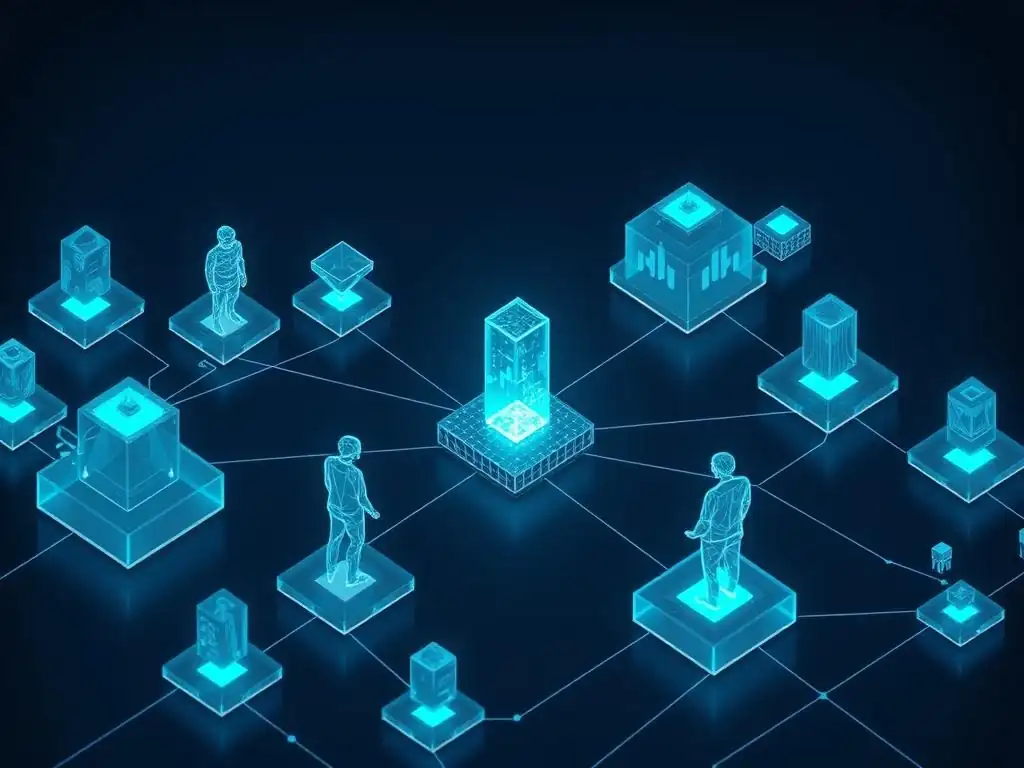
Cross-Chain Bridges and Asset Transfers for Metaverse Interconnectivity
To bridge the gap between siloed metaverse platforms and enable asset portability, cross-chain bridges are emerging as vital infrastructure components. Cross-chain bridges facilitate the transfer of assets and data between different blockchain networks, allowing users to move their digital possessions across various metaverse environments built on different blockchains. Imagine being able to seamlessly transfer an NFT purchased on a Solana-based metaverse platform to an Ethereum-based metaverse platform, or vice versa. Cross-chain bridges make this level of interoperability possible.
These bridges typically work by locking assets on the source chain and minting equivalent wrapped assets on the destination chain. When the wrapped assets are transferred back to the source chain, the original assets are unlocked. While cross-chain bridges are still a relatively nascent technology and face security challenges, they are rapidly evolving and becoming more robust. As the metaverse landscape matures, cross-chain bridges will play an increasingly crucial role in connecting disparate metaverse platforms and fostering a more interconnected and unified virtual universe, allowing for greater user freedom and asset utility.
Standardized Token Protocols and Metadata for Seamless Integration
Standardization of token protocols and metadata is paramount for achieving seamless integration and interoperability within the metaverse. NFT standards like ERC-721 and ERC-1155 on Ethereum have already played a significant role in enabling the creation and trading of digital assets. However, further standardization is needed to ensure that NFTs and other digital assets are truly interoperable across different metaverse platforms. This includes standardizing metadata schemas, which define the properties and attributes of digital assets, and token protocols, which govern how these assets are created, transferred, and utilized.
For example, standardized metadata for virtual avatars could ensure that avatar models, animations, and associated data are consistently interpreted across different metaverse platforms. Similarly, standardized metadata for virtual land NFTs could ensure that land parcels are recognized and rendered correctly in different virtual worlds. Efforts towards standardization are being driven by various industry bodies and open-source initiatives. Adopting and promoting these standards will be crucial for fostering interoperability and creating a more cohesive and user-friendly metaverse experience, reducing friction and enabling greater innovation and collaboration across different metaverse projects.
Decentralized Identity Solutions for Universal Metaverse Avatars
Decentralized Identity (DID) solutions offer a promising approach to creating universal metaverse avatars and enabling users to control their digital identities across different virtual worlds. DIDs allow users to own and manage their digital identities without relying on centralized intermediaries. These identities are typically anchored on a blockchain and allow users to selectively disclose verifiable credentials, such as avatar attributes or metaverse platform memberships, to different applications and services.
Imagine having a single DID that represents your metaverse avatar, which you can use to log into different virtual worlds and experiences. This DID could store verifiable credentials related to your avatar's appearance, skills, and digital asset ownership. Decentralized identity solutions empower users to control their personal data and how it is shared across different metaverse platforms, enhancing privacy and user autonomy.
Several projects are actively developing DID solutions specifically tailored for the metaverse, aiming to create a more user-centric and interoperable identity layer for the virtual world. Adoption of decentralized identity standards will be crucial for building a metaverse where users have greater control over their digital presence and can seamlessly navigate different virtual environments with a consistent and portable identity.
Case Studies: Blockchain Projects Tackling Metaverse Challenges
Decentraland: Enabling User-Owned Virtual Worlds
Decentraland stands as a pioneering example of a blockchain-based metaverse focused on user ownership and decentralization. Built on the Ethereum blockchain, Decentraland allows users to own virtual land represented as NFTs (LAND tokens). This ownership grants users complete control over their virtual parcels, enabling them to build experiences, host content, and even monetize their LAND. The finite supply of LAND (90,000 parcels) creates digital scarcity, contributing to the value and economic activity within Decentraland.
Decentraland tackles scalability challenges through Layer-2 solutions and is exploring further scaling techniques to accommodate a growing user base. While still facing ongoing development and scalability improvements, Decentraland demonstrates the potential of blockchain to empower users with true digital ownership within a virtual world. The platform's governance is also increasingly decentralized, with LAND owners and MANA token holders participating in decisions about the platform's future, further embodying the principles of a user-centric and community-driven metaverse. Decentraland's open and decentralized nature sets it apart from traditional centralized virtual platforms and exemplifies the potential of blockchain to reshape the metaverse landscape.
The Sandbox: Empowering Creators Through NFTs
The Sandbox is another prominent blockchain metaverse platform that emphasizes user-generated content and creator empowerment through NFTs. Built on the Ethereum blockchain (with migration to Polygon Layer-2), The Sandbox provides users with tools to create voxel-based assets, games, and experiences. These creations can be tokenized as NFTs and traded within The Sandbox marketplace, allowing creators to monetize their work and participate in a user-driven economy.
The Sandbox addresses scalability through its migration to Polygon, a Layer-2 scaling solution for Ethereum, enabling faster and cheaper transactions for users and creators. The platform's focus on user-generated content and NFT-based ownership fosters a vibrant creator ecosystem and demonstrates the potential of blockchain to democratize content creation and distribution within the metaverse. Brands and celebrities are also increasingly engaging with The Sandbox, creating virtual experiences and LAND parcels, showcasing the platform's growing mainstream appeal and its potential to become a major hub for metaverse entertainment and commerce.
Somnium Space: Building an Open and Persistent Metaverse
Somnium Space is a blockchain-based metaverse platform focused on building an open, persistent, and VR/AR-compatible virtual world. Built on Ethereum and utilizing Solana for faster transactions, Somnium Space emphasizes land ownership, avatar customization, and immersive experiences. Like Decentraland and The Sandbox, land in Somnium Space is represented by NFTs, granting users ownership and control over their virtual properties.
Somnium Space distinguishes itself through its strong focus on virtual reality and augmented reality integration, aiming to create a highly immersive and persistent metaverse accessible through various devices. The platform also emphasizes open standards and interoperability, exploring ways to connect with other metaverse platforms and enable asset portability. Somnium Space's commitment to openness, persistence, and VR/AR integration positions it as a platform pushing the boundaries of metaverse development and exploring the future of immersive virtual experiences powered by blockchain technology.
The Future of the Blockchain Metaverse: Overcoming Obstacles
The Importance of Open Standards and Collaboration
The future success of the blockchain metaverse hinges on the widespread adoption of open standards and fostering collaboration across different projects and organizations. Just as the internet thrived on open protocols like TCP/IP and HTTP, the metaverse needs open standards for avatars, assets, identities, and communication to ensure interoperability and seamless user experiences. Without open standards, the metaverse risks becoming fragmented and siloed, hindering its potential to become a truly unified and interconnected virtual universe.
Collaboration among metaverse developers, blockchain projects, standards organizations, and even regulatory bodies is crucial to define and implement these open standards. Industry-wide initiatives are needed to establish common data formats, protocols for asset transfer, and frameworks for decentralized identity.
Open-source development and shared knowledge will also play a vital role in accelerating innovation and ensuring that the metaverse evolves in a direction that benefits all users, rather than being dominated by proprietary and closed ecosystems. Embracing open standards and fostering collaboration is not just a technical necessity but also a philosophical imperative for building a truly open and user-centric metaverse.
Regulatory Considerations and the Future of Decentralized Worlds
As the blockchain metaverse evolves and becomes more integrated into our lives, regulatory considerations will inevitably become increasingly important. Issues such as digital asset ownership, intellectual property rights in virtual worlds, data privacy, and user safety within the metaverse will require careful consideration by regulators and policymakers. The decentralized nature of blockchain-based metaverses presents unique challenges for traditional regulatory frameworks, which are often designed for centralized systems.
Finding the right balance between fostering innovation and protecting users will be crucial. Overly restrictive regulations could stifle the growth and potential of the metaverse, while a complete lack of regulation could lead to risks and abuses. Open dialogue between metaverse developers, regulators, and legal experts is necessary to develop appropriate regulatory frameworks that address the unique characteristics of decentralized virtual worlds while ensuring user safety, fairness, and legal clarity. Navigating these regulatory complexities will be a critical factor in shaping the future trajectory of the blockchain metaverse.
The Evolving Landscape of Blockchain and Metaverse Development
The landscape of both blockchain technology and metaverse development is rapidly evolving. New scaling solutions, interoperability protocols, and decentralized technologies are constantly emerging, pushing the boundaries of what is possible. The metaverse itself is also taking shape in diverse forms, ranging from immersive virtual reality worlds to augmented reality experiences overlaid on the physical world. This dynamic and evolving landscape presents both challenges and opportunities for the blockchain metaverse.
Staying abreast of the latest technological advancements and adapting to the changing needs of users and the market will be crucial for projects and developers in the blockchain metaverse space. Continuous innovation, experimentation, and a willingness to embrace new technologies will be essential for overcoming existing challenges and unlocking the full potential of the blockchain metaverse. The future of the metaverse is likely to be characterized by ongoing evolution and transformation, driven by advancements in both blockchain technology and our understanding of how virtual worlds can enhance and enrich our lives.
Conclusion: Towards a Scalable and Interoperable Blockchain Metaverse
Recap of Key Challenges and Solutions
The journey towards a fully realized blockchain metaverse is fraught with challenges, primarily centered around scalability and interoperability. Scalability bottlenecks in current blockchain infrastructures, including transaction throughput limitations, high latency, and data storage issues, need to be addressed to support a massive user base and seamless metaverse experiences. Interoperability hurdles, stemming from a lack of standardized protocols, siloed platforms, and fragmented identity systems, hinder the creation of a unified and interconnected virtual universe.
However, blockchain technology itself offers promising solutions to these challenges. Layer-2 scaling solutions like rollups and channels, sharding techniques, and decentralized storage networks are enhancing blockchain performance and capacity. Cross-chain bridges, standardized token protocols, and decentralized identity solutions are paving the way for greater interoperability and asset portability across metaverse platforms. Projects like Decentraland, The Sandbox, and Somnium Space are at the forefront of building blockchain-based metaverses, demonstrating the practical application of these solutions and pushing the boundaries of virtual world innovation.
The Transformative Potential of a Unified Metaverse Experience
Overcoming the scalability and interoperability challenges is not merely a technical exercise; it is essential to unlock the truly transformative potential of a unified metaverse experience. A scalable and interoperable blockchain metaverse promises to revolutionize how we interact, work, play, and transact in the digital age. It offers the potential for user-owned digital economies, democratized content creation, and immersive virtual experiences that blur the lines between the physical and digital realms.
By fostering collaboration, embracing open standards, and continuing to innovate, we can overcome the current obstacles and build a blockchain metaverse that is not only technologically advanced but also user-centric, equitable, and truly transformative. The journey is complex and ongoing, but the vision of a unified and interoperable metaverse powered by blockchain technology holds immense promise for the future of digital interaction and the evolution of the internet itself.
Frequently Asked Questions
How does blockchain address scalability challenges within the metaverse?
Blockchain aims to address scalability by offering decentralized solutions, like sharding and layer-2 scaling, that can handle the increasing transaction volume and data demands of a growing metaverse. This helps prevent bottlenecks and ensures a smoother user experience.
What role does interoperability play in the success of a blockchain-powered metaverse?
Interoperability is crucial because it allows seamless asset transfer and data exchange between different metaverse platforms built on varying blockchain networks. Without it, users would be confined to isolated virtual worlds.
What are the primary regulatory concerns surrounding blockchain applications in the metaverse?
Key regulatory concerns include data privacy, intellectual property rights, and anti-money laundering (AML) compliance within virtual environments. Governments are grappling with how to apply existing laws or create new ones to address these issues.
How can DeFi (Decentralized Finance) enhance the metaverse experience?
DeFi can provide decentralized financial services within the metaverse, enabling users to access lending, borrowing, and trading opportunities without relying on traditional intermediaries. This fosters economic activity and user empowerment in virtual worlds.
What are the potential limitations of using blockchain to build the metaverse?
Despite its potential, blockchain faces limitations regarding transaction speeds, gas fees, and energy consumption, which can hinder the widespread adoption of blockchain-based metaverse platforms. Continued innovation is needed to overcome these hurdles.
The exploration of blockchain metaverse scalability challenges reveals not just technical hurdles, but a fundamental question about the future of digital interaction. The limitations we face today in creating a seamless and interoperable metaverse are directly impacting its potential to revolutionize how we connect, create, and transact in the digital realm. Overcoming these obstacles is crucial for realizing the promise of a truly decentralized and immersive virtual world.
The ongoing struggle to achieve scalability and interoperability within the blockchain metaverse highlights the nascent stage of this technology. It reminds us that innovation is a process, not a destination, and that the challenges we face are opportunities for groundbreaking solutions. The future is already here – it's just not evenly distributed.
- William Gibson. This quote resonates deeply as we consider the uneven progress in different metaverse platforms and the urgent need for standardized protocols and collaborative development.
As we stand on the cusp of a new digital era, let us not be deterred by the complexities of blockchain metaverse scalability challenges. Instead, let us embrace them as a call to innovation and collaboration. Consider how you can contribute to building a more scalable, interoperable, and ultimately, more accessible metaverse for all. The future of the metaverse is not predetermined; it is being shaped by the choices we make today.
Dive Deeper: Shape the Future of the Metaverse!
Thank you for exploring the evolving landscape of the Metaverse and its blockchain challenges! We hope you’ve gained valuable insights into scalability and interoperability solutions. Now, let’s turn that knowledge into action.
Here are a few ways you can contribute to the development of the Metaverse:
- Critically analyze and share your insights on blockchain-based Metaverse projects within online communities to foster collaborative improvements. This is your chance to directly influence the evolution of interoperable Metaverse platforms.
- Explore alternative Layer-2 solutions like optimistic rollups and zk-rollups to understand their potential impact on Metaverse scalability. You may even discover a passion for blockchain development!
- Engage in conversations with Metaverse creators about the importance of open standards for interoperability. Advocate for user-centric designs that prioritize seamless experiences across different virtual worlds.
What innovative blockchain solution do you believe will unlock the full potential of the Metaverse and why? Share your thoughts in the comments below!
Leave a Reply