
Ethical Traceability in Action: RealWorld Examples of Blockchain in Supply Chains


Welcome to Blockchain Trends, your guide to understanding the revolutionary impact of blockchain technology beyond the hype. Are you curious about how blockchain is building a more transparent and trustworthy world?
Dive into our latest article, " Ethical Traceability in Action: RealWorld Examples of Blockchain in Supply Chains, " where we explore Blockchain supply chain ethics examples in detail. Discover how this technology is being implemented to ensure fair labor practices, responsible sourcing, and verifiable product origins. What does an ethical supply chain powered by blockchain truly look like? Let's unravel the complexities together and uncover the possibilities.
Ethical Traceability in Action: Real-World Examples of Blockchain in Supply Chains
- Introduction: The Convergence of Blockchain, Supply Chains, and Ethical Practices
- Understanding Blockchain Supply Chain Ethics Examples
- Case Study 1: Blockchain for Fair Trade Coffee Supply Chain
- Case Study 2: Utilizing Blockchain to Combat Counterfeit Pharmaceuticals
- Case Study 3: Ensuring Ethical Sourcing of Diamonds with Blockchain
- Case Study 4: Blockchain for Sustainable Seafood Supply Chains
- Overcoming Challenges in Implementing Blockchain for Supply Chain Ethics
- The Future of Blockchain and Supply Chain Ethics
- Conclusion: Blockchain as a Catalyst for Ethical and Transparent Supply Chains
-
Frequently Asked Questions
- What is the core benefit of using blockchain for supply chain ethics?
- How does blockchain help ensure fair labor practices in supply chains?
- Can blockchain prevent counterfeit goods from entering the supply chain?
- What are some industries that are seeing significant ethical improvements through blockchain adoption in their supply chains?
- What are some challenges to widespread adoption of blockchain for ethical supply chains?
- Final Reflection: Weaving Trust into the Supply Chain
- Unlock the Power of Ethical Sourcing!
Introduction: The Convergence of Blockchain, Supply Chains, and Ethical Practices
Defining Ethical Supply Chains and the Growing Need for Transparency
An ethical supply chain is one that operates with respect for human rights, fair labor practices, environmental sustainability, and honest business conduct across all tiers, from raw material sourcing to final product delivery. In today's globalized economy, supply chains are increasingly complex, spanning multiple countries and involving numerous intermediaries. This complexity often creates opacity, making it difficult for consumers and businesses alike to verify the origins of products or the conditions under which they were produced.
The demand for transparency in supply chains is surging. Consumers are becoming more conscious of the social and environmental impact of their purchases, actively seeking products that are ethically sourced and sustainably produced. Regulatory bodies are also increasing scrutiny on corporate responsibility, requiring businesses to demonstrate due diligence in their supply chain operations. This growing need for verifiable information and accountability highlights a critical gap that traditional tracking systems often fail to bridge, setting the stage for innovative solutions like blockchain technology.
The Role of Blockchain Technology in Enhancing Supply Chain Ethics
Blockchain technology offers a decentralized, immutable, and transparent ledger system that can record every transaction or movement within a supply chain. By creating a shared, tamper-proof record of a product's journey, from its point of origin through various stages of production, processing, and distribution, blockchain significantly enhances traceability. This inherent transparency is crucial for verifying ethical claims, such as fair wages paid to workers, sustainable farming practices employed, or the legitimate sourcing of raw materials.
Furthermore, blockchain enables greater accountability among supply chain participants. Each entity involved in handling the product can be recorded on the ledger, creating a clear chain of responsibility. Smart contracts, self-executing contracts with the terms of the agreement directly written into code, can automate ethical compliance checks and trigger payments or notifications based on predefined conditions, such as proof of certification or completion of an ethical audit. These features collectively empower businesses to build and demonstrate genuinely ethical supply chains, providing concrete blockchain supply chain ethics examples to the world.
Why Blockchain is Ideal for Supply Chain Traceability and Accountability
Blockchain's core characteristics make it uniquely suited for supply chain traceability and ensuring accountability. The distributed nature means the ledger is not controlled by a single entity, reducing the risk of data manipulation. The immutability of the blockchain means that once data is recorded, it cannot be altered or deleted, providing a reliable history of a product's journey. This is vital for verifying claims about ethical sourcing, such as the origin of conflict-free minerals or sustainably harvested timber.
The cryptographic security underpinning blockchain ensures the integrity of the data recorded. Each transaction is linked to the previous one, forming a chain that is incredibly difficult to tamper with without detection. This secure and transparent record-keeping allows stakeholders – including consumers, regulators, and supply chain partners – to verify the provenance and ethical attributes of products with a high degree of confidence. These capabilities are fundamental to developing effective blockchain supply chain ethics examples across various industries.
Understanding Blockchain Supply Chain Ethics Examples
Key Principles of Ethical Supply Chain Management
Ethical supply chain management is built upon several foundational principles aimed at ensuring responsible conduct throughout the entire value chain. These principles include transparency, which involves openly sharing information about sourcing, labor practices, and environmental impact; accountability, holding all parties responsible for their actions and ensuring compliance with ethical standards; and fairness, guaranteeing fair wages, safe working conditions, and equitable treatment for all workers.
Other critical principles encompass environmental sustainability, minimizing ecological footprint through responsible resource management and waste reduction; and community engagement, positively contributing to the well-being of communities where sourcing and production take place. Adhering to these principles requires robust systems for monitoring, verification, and reporting, areas where blockchain technology offers significant advantages by providing an immutable and transparent record of compliance and transactions, facilitating compelling blockchain supply chain ethics examples.
How Blockchain Addresses Common Ethical Concerns in Supply Chains
Blockchain technology directly addresses several pervasive ethical issues within traditional supply chains. For instance, it combats forced labor and unfair wages by transparently tracking payments and working hours recorded by suppliers. In industries prone to counterfeiting, such as pharmaceuticals or luxury goods, blockchain provides a secure, verifiable record of authenticity, protecting consumers and legitimate businesses. It also aids in preventing the trade of conflict resources or illegally sourced materials by creating an unalterable chain of custody from origin.
By linking physical products to digital tokens or records on the blockchain, companies can ensure that products are sourced responsibly and that ethical standards are met at each stage. This verifiable history makes it much harder for unethical practices to be hidden within complex networks. The resulting transparency empowers consumers to make informed choices, driving demand for ethically produced goods and providing tangible blockchain supply chain ethics examples.
The Advantages of Using Blockchain for Enhanced Transparency and Trust
Implementing blockchain in supply chains offers numerous advantages, particularly in fostering transparency and trust. Firstly, it creates a single, shared version of truth accessible to authorized participants, reducing disputes and increasing efficiency. This eliminates information silos and potential data manipulation inherent in fragmented, legacy systems. Secondly, the immutability of the blockchain ledger builds trust by providing an unalterable record that can be audited by any party with permission, verifying claims about product origin, handling, and ethical attributes.
This enhanced transparency not only benefits consumers but also strengthens relationships between supply chain partners. Suppliers who adhere to ethical standards can prove their compliance, potentially gaining preferential access to markets or brands prioritizing sustainability and ethics. Brands, in turn, can confidently back their ethical claims with verifiable data, enhancing their reputation and building consumer loyalty. These capabilities are key to showcasing effective blockchain supply chain ethics examples.
Case Study 1: Blockchain for Fair Trade Coffee Supply Chain
The Problem: Lack of Transparency in Traditional Coffee Supply Chains
The traditional coffee supply chain is notoriously complex and often opaque, with multiple intermediaries between coffee farmers and consumers. This complexity makes it difficult to trace the coffee's journey accurately and verify claims about fair trade practices or sustainable farming. A significant portion of the final retail price often doesn't reach the farmers who cultivate the beans, leading to financial instability and perpetuating poverty in coffee-growing regions. Consumers, despite willingness to pay premiums for fair trade, lack assurance that their money truly benefits the farmers.
Furthermore, the lack of transparent data makes it challenging to monitor labor conditions or environmental practices on farms. While certifications exist, their verification processes can sometimes be limited, and the journey from a certified farm through various processors, exporters, importers, roasters, and retailers can obscure the original ethical attributes. This opacity undermines trust and limits the impact of fair trade initiatives, highlighting the need for a more robust tracking mechanism to provide genuine blockchain supply chain ethics examples in the coffee sector.
The Solution: Implementing Blockchain for Traceability from Farm to Consumer
Several initiatives have implemented blockchain technology to create transparent and traceable coffee supply chains. These solutions typically involve registering farmers and their coffee yields on a blockchain platform. When coffee beans are harvested, processed, and transported, each transaction and transfer of ownership is recorded on the distributed ledger. This data can include information about the farm location, harvesting date, processing method, quality certifications, and even details about payments made to farmers.
By scanning QR codes on coffee packaging, consumers can access this blockchain record, viewing the coffee's journey from the specific farm to their cup. This level of detail provides unprecedented transparency. Companies utilizing this approach, like Bext360 or Farmer Connect (working with brands like IBM Food Trust), aim to empower farmers by providing them with a digital identity and recording their contribution, ensuring they receive fair compensation by tracking payments along the chain and creating compelling blockchain supply chain ethics examples.
Results: Increased Consumer Trust and Fairer Compensation for Farmers
The implementation of blockchain in coffee supply chains has shown promising results in enhancing transparency and improving conditions for farmers. Consumers gain confidence knowing they can verify the origin and ethical claims associated with their coffee, potentially increasing their willingness to support brands using such technology. For instance, some pilot projects have reported that consumers were willing to pay a premium of 10-15% for blockchain-traced coffee due to the verifiable ethical sourcing.
More significantly, blockchain-based payment systems integrated into these platforms can ensure that a larger percentage of the final price reaches the farmers directly. While exact figures vary by initiative, reports from pilot programs suggest farmers using blockchain platforms have seen increases in their income per pound of coffee compared to traditional channels. This direct impact on farmer livelihoods demonstrates the tangible benefits of using blockchain for ethical traceability and provides strong blockchain supply chain ethics examples.
Case Study 2: Utilizing Blockchain to Combat Counterfeit Pharmaceuticals
The Problem: The Dangers of Counterfeit Drugs and Ineffective Tracking Systems
Counterfeit pharmaceuticals pose a severe global health threat, leading to ineffective treatments, worsened health conditions, and even death. The World Health Organization (WHO) estimates that 1 in 10 medical products in low- and middle-income countries is substandard or falsified. These fake drugs often contain incorrect dosages, harmful substances, or no active ingredients at all. The complex and fragmented nature of the global pharmaceutical supply chain makes it highly vulnerable to infiltration by counterfeiters, and traditional paper-based or siloed electronic tracking systems are often insufficient to provide end-to-end visibility and verify authenticity effectively.
Existing serialization efforts, while helpful, can still be susceptible to data manipulation or gaps in tracking as products move between different stakeholders (manufacturers, wholesalers, pharmacies). The lack of a universally trusted, immutable record allows counterfeit products to enter the legitimate supply chain undetected, endangering patient safety and eroding trust in pharmaceutical products and healthcare systems. This critical issue underscores the need for robust blockchain supply chain ethics examples in the healthcare sector.
The Solution: Securely Tracking Pharmaceuticals with Blockchain Technology
Blockchain technology offers a powerful solution to combat pharmaceutical counterfeiting by creating a secure, immutable ledger for tracking drugs throughout their lifecycle. Each unit of medication can be assigned a unique identifier (serialized number) recorded on the blockchain at the point of manufacture. As the drug moves through the supply chain – from manufacturer to distributor, wholesaler, pharmacy, and potentially even to the patient – each transfer of ownership and location update is recorded as a transaction on the blockchain.
This creates a verifiable, transparent history for every drug package. Stakeholders, including regulators, distributors, and pharmacists, can scan a product's code and query the blockchain to verify its authenticity, origin, and legitimate chain of custody. This system makes it incredibly difficult for counterfeit drugs to be introduced into the supply chain without breaking the verifiable link on the blockchain, providing a robust framework for blockchain supply chain ethics examples in healthcare. The U.S. Drug Supply Chain Security Act (DSCSA) has even explored blockchain as a potential technology for its interoperable system.
Results: Improved Patient Safety and Reduced Instances of Counterfeit Drugs
Implementing blockchain in the pharmaceutical supply chain significantly enhances patient safety by ensuring the authenticity and integrity of medications. By providing a tamper-proof record of a drug's journey, blockchain empowers pharmacists and patients to confirm that the medication is genuine and has been handled correctly. This reduces the risk of administering or consuming ineffective or harmful counterfeit drugs.
Pilot programs and industry initiatives, such as MediLedger, have demonstrated the feasibility and effectiveness of using blockchain for pharmaceutical traceability. These projects have shown the ability to quickly and accurately trace products, enabling rapid identification and isolation of potentially counterfeit batches. While widespread adoption is still underway, the technology holds the promise of drastically reducing the prevalence of fake drugs, saving lives, and serving as critical blockchain supply chain ethics examples in the healthcare industry.
Case Study 3: Ensuring Ethical Sourcing of Diamonds with Blockchain
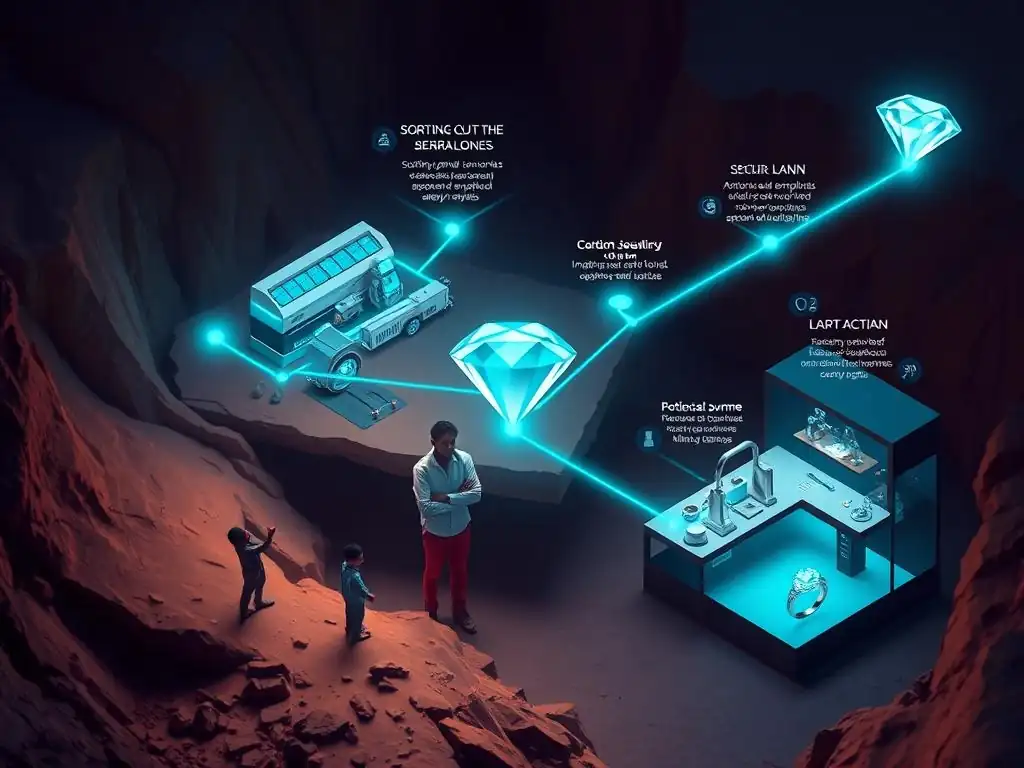
The Problem: Blood Diamonds and the Need for Responsible Diamond Sourcing
The diamond industry has historically faced challenges related to "blood diamonds" or "conflict diamonds" – diamonds mined in war zones and sold to finance insurgencies, often involving forced labor and human rights abuses. While the Kimberley Process Certification Scheme was introduced in 2003 to prevent conflict diamonds from entering the legitimate trade, its effectiveness has been questioned due to limitations in tracking rough diamonds and the difficulty in verifying their origin once cut and polished. Consumers often lack absolute assurance that the diamonds they purchase are ethically sourced and conflict-free.
Beyond conflict financing, the industry also grapples with issues like child labor, unsafe working conditions, and environmental damage in mining areas. The opaque nature of the diamond supply chain, involving numerous cutting centers, traders, and distributors globally, makes it challenging to provide end-to-end traceability and guarantee responsible practices at every step. This necessitates more robust solutions to provide verifiable blockchain supply chain ethics examples for diamonds.
The Solution: Blockchain-Based Diamond Tracking and Provenance Verification
Blockchain technology is being employed to create a digital, immutable ledger that tracks diamonds from their point of origin in the mine through cutting, polishing, certification, and retail sale. Companies like Everledger and Tracr (a De Beers initiative) assign a unique digital identity to each diamond, recording its characteristics (carat, cut, color, clarity) and linking it to its mine of origin.
As the diamond moves through the supply chain, details of each transaction, including ownership changes, cutting and polishing processes, and grading certifications, are recorded on the blockchain. This creates a permanent, verifiable history for each stone. Jewelers and consumers can access this record, often via a certificate or QR code, to trace the diamond's journey and verify its provenance and ethical sourcing claims, providing clear blockchain supply chain ethics examples.
Results: Enhanced Consumer Confidence and Support for Ethical Diamond Mining Practices
The implementation of blockchain in the diamond supply chain is restoring consumer confidence by providing unprecedented transparency and verifiable proof of origin. Consumers are increasingly demanding ethically sourced products, and blockchain allows jewelers to back up their claims with auditable data. This transparency helps differentiate responsibly sourced diamonds from those with questionable origins.
By making the provenance of diamonds transparent and verifiable, blockchain technology supports ethical mining practices and helps prevent conflict diamonds from entering the legitimate market. While comprehensive industry-wide adoption is still evolving, initiatives using blockchain have successfully tracked thousands, if not millions, of individual stones, demonstrating the technology's capability to create robust blockchain supply chain ethics examples and promote responsible sourcing in the diamond industry.
Case Study 4: Blockchain for Sustainable Seafood Supply Chains
The Problem: Illegal Fishing and Lack of Traceability in the Seafood Industry
The global seafood industry faces significant challenges related to illegal, unreported, and unregulated (IUU) fishing, which depletes fish stocks, damages marine ecosystems, and undermines the livelihoods of legitimate fishers. It is estimated that IUU fishing accounts for up to 26 million tons of fish caught annually, valued at $10-23 billion. The complex and often lengthy supply chains for seafood, involving multiple handlers, processors, and distributors across continents, make it extremely difficult to trace fish from the point of catch to the consumer's plate.
This lack of traceability facilitates seafood fraud, such as species substitution (selling a cheaper fish labeled as a more expensive one) and mislabeling of origin or sustainability claims. Consumers often have no way of knowing where their seafood came from, how it was caught, or if it was sourced sustainably and ethically, highlighting a critical need for effective blockchain supply chain ethics examples in this sector.
The Solution: Tracking Fish from Catch to Plate Using Blockchain Technology
Blockchain technology is being applied to create transparent and traceable seafood supply chains. Companies like Provenance and Fishcoin use blockchain platforms to record key data points about fish as they move through the supply chain. This data can include details about the fishing vessel, location and date of catch, species, weight, processing facility, and transportation routes.
Fishermen can use mobile apps to record catch data at sea, which is then added to the blockchain. Subsequent handlers – including processors, distributors, and retailers – record their activities, creating an immutable chain of custody. By scanning a QR code on the packaging, consumers can access this blockchain record to see the fish's journey, verify its species, check sustainability certifications, and even learn about the fishing community that caught it, providing concrete blockchain supply chain ethics examples.
Results: Improved Sustainability and Consumer Awareness of Seafood Origins
Implementing blockchain in seafood supply chains enhances sustainability efforts by making it easier to verify that fish was caught legally and according to responsible fishing practices. It helps combat IUU fishing and seafood fraud by providing a transparent and verifiable history of the product. This allows regulators and consumers to hold supply chain participants accountable for their sourcing and handling practices.
Pilot projects have demonstrated the ability to trace specific fish fillets back to the individual vessel and catch area, significantly improving traceability compared to traditional methods. This transparency empowers consumers to make informed choices, supporting sustainable fisheries and ethical practices. Increased consumer demand for traceable seafood, driven by blockchain transparency, can incentivize more players in the industry to adopt sustainable methods, offering compelling blockchain supply chain ethics examples.
Overcoming Challenges in Implementing Blockchain for Supply Chain Ethics
Scalability Issues and Potential Solutions
One significant challenge in implementing blockchain for supply chain ethics on a large scale is scalability. Public blockchains like Bitcoin or Ethereum, while decentralized, can process a limited number of transactions per second, which may not be sufficient for the high volume of transactions generated by vast, complex global supply chains. High transaction fees and latency can also be prohibitive for certain applications, especially those involving low-value goods or frequent, small updates.
Potential solutions to address scalability include using private or permissioned blockchains (like Hyperledger Fabric or R3 Corda), which can handle higher transaction throughput within a closed network of known participants. Layer 2 scaling solutions and newer blockchain architectures designed for enterprise use cases are also being developed to increase transaction speed and reduce costs. Combining blockchain with other technologies like IoT and AI can also help manage the volume and complexity of data being recorded.
Data Privacy Concerns and Mitigation Strategies
While transparency is a key benefit of blockchain, sensitive business data within a supply chain (e.g., pricing agreements, specific supplier identities, production volumes) needs to remain private between relevant parties. Recording all granular details on a public, fully transparent blockchain can expose competitive information, raising significant data privacy concerns for businesses involved.
Mitigation strategies include using permissioned blockchains where access to data is restricted to authorized participants based on their role. Techniques like zero-knowledge proofs allow parties to verify that certain conditions are met (e.g., a product is ethically sourced) without revealing the underlying sensitive data. Storing only hashes or metadata on the public blockchain while keeping sensitive details off-chain, accessible only to authorized parties through secure channels, is another common approach to balance transparency with privacy in blockchain supply chain ethics examples.
The Importance of Collaboration and Interoperability
Successful implementation of blockchain for supply chain ethics requires collaboration among numerous stakeholders across the value chain, including producers, manufacturers, logistics providers, distributors, retailers, and even regulators and consumers. Getting all these disparate parties to agree on a single platform, data standards, and participation rules can be challenging due to differing technical capabilities, business interests, and trust levels.
Furthermore, ensuring interoperability between different blockchain platforms or with legacy systems is crucial. Supply chains often involve multiple networks and technologies, and the inability for different systems to communicate seamlessly hinders end-to-end traceability. Industry consortia and standards bodies are working to develop common protocols and frameworks to facilitate collaboration and interoperability, recognizing that widespread adoption of blockchain supply chain ethics examples depends on these factors.
The Future of Blockchain and Supply Chain Ethics
Emerging Trends in Blockchain-Based Supply Chain Solutions
The field of blockchain for supply chain ethics is rapidly evolving, with several key trends emerging. One is the increasing focus on creating industry-specific blockchain consortia and platforms tailored to the unique needs and complexities of sectors like food, pharmaceuticals, fashion, and electronics. These specialized platforms often incorporate industry-specific data standards and compliance requirements.
Another trend is the development of more user-friendly interfaces and mobile applications that allow even small-scale producers or workers at the start of the supply chain to easily input data onto the blockchain using simple tools like smartphones. This democratizes access to the technology and improves data capture at the source. Furthermore, we are seeing the integration of digital identity solutions for individuals and businesses on the blockchain, enhancing accountability and verification within the supply chain, leading to more sophisticated blockchain supply chain ethics examples.
The Potential for AI and IoT Integration with Blockchain for Enhanced Traceability
The combination of blockchain with Artificial Intelligence (AI) and the Internet of Things (IoT) holds immense potential for creating highly automated and verifiable ethical supply chains. IoT devices, such as sensors tracking temperature, humidity, location, or even air quality, can automatically record real-time data about a product's condition and environment directly onto the blockchain. This provides objective, tamper-proof evidence of handling conditions throughout the journey.
AI can analyze the vast amount of data collected on the blockchain and from IoT sensors to identify patterns, predict potential risks (e.g., deviation from ethical standards, potential spoilage), and automate verification processes. For instance, AI could analyze sensor data to confirm that goods were stored within required temperature ranges, triggering a smart contract on the blockchain to release payment only upon verified compliance. This integration creates a powerful, automated system for monitoring and enforcing ethical standards, driving the next generation of blockchain supply chain ethics examples.
Predictions for the Widespread Adoption of Blockchain in Ethical Supply Chains
While challenges remain, the trajectory points towards increasing adoption of blockchain technology in ethical supply chains over the next decade. As regulatory pressure for corporate social responsibility grows and consumer demand for transparency strengthens, businesses will be compelled to adopt more robust traceability solutions. The proven benefits demonstrated by early blockchain supply chain ethics examples across diverse industries will further accelerate this trend.
It is predicted that initially, adoption will continue to be led by industries with high-value goods, significant risks of counterfeiting or ethical concerns (like diamonds, pharmaceuticals, luxury goods, and specific food items). As the technology matures, becomes more scalable and cost-effective, and as industry standards develop, its use will likely become more mainstream across a wider range of consumer goods. Ultimately, blockchain has the potential to become a standard component of supply chain management, fundamentally transforming how businesses ensure and demonstrate ethical practices.
Conclusion: Blockchain as a Catalyst for Ethical and Transparent Supply Chains
Blockchain technology is proving to be a powerful catalyst for transforming traditional, opaque supply chains into transparent, accountable, and ethical networks. By providing an immutable and decentralized ledger, it enables verifiable traceability from source to consumer, addressing critical issues like fair labor, sustainable sourcing, and product authenticity. The real-world blockchain supply chain ethics examples across coffee, pharmaceuticals, diamonds, and seafood industries demonstrate the tangible benefits in building trust, enhancing safety, supporting ethical practices, and empowering stakeholders.
While challenges related to scalability, privacy, and collaboration exist, ongoing technological advancements and increasing industry cooperation are paving the way for wider adoption. The integration of blockchain with technologies like AI and IoT promises even more sophisticated and automated systems for monitoring and ensuring ethical compliance. As businesses and consumers increasingly prioritize social responsibility, blockchain is poised to become an essential tool for creating the ethical and transparent supply chains of the future, fundamentally changing how we understand the origins and impact of the products we consume.
Frequently Asked Questions
What is the core benefit of using blockchain for supply chain ethics?
The core benefit is enhanced transparency and accountability. Blockchain provides an immutable record of each step in the supply chain, making it easier to verify the origin and authenticity of products. This leads to greater trust and combats unethical practices.
How does blockchain help ensure fair labor practices in supply chains?
Blockchain enables traceability of labor conditions at each stage. By recording information about worker wages, working hours, and safety standards, it allows companies and consumers to verify compliance with ethical labor practices and promote fair treatment.
Can blockchain prevent counterfeit goods from entering the supply chain?
Yes, blockchain significantly reduces counterfeiting. Each product can be assigned a unique digital identity on the blockchain, making it easy to verify its authenticity and trace its journey through the supply chain. This deters counterfeiters and protects consumers.
What are some industries that are seeing significant ethical improvements through blockchain adoption in their supply chains?
Industries like food and beverage, fashion, and electronics are seeing significant improvements. Blockchain helps ensure the origin and ethical production of goods, addressing concerns related to sustainability and fair trade.
What are some challenges to widespread adoption of blockchain for ethical supply chains?
One major challenge is the lack of standardization across different blockchain platforms. Another obstacle is data privacy concerns and ensuring compliance with regulations like GDPR. Finally, the cost of implementation can be a barrier for smaller businesses.
Final Reflection: Weaving Trust into the Supply Chain
The examples presented throughout this article demonstrate that ethical traceability is no longer a futuristic ideal, but a tangible reality being shaped by blockchain technology. The ability to transparently track goods from origin to consumer is revolutionizing supply chains, empowering stakeholders to demand and verify ethical practices in ways previously unimaginable. This shift is not just about efficiency; it's about accountability and building a more just and sustainable global economy.
The impact of blockchain on supply chain ethics extends far beyond simple tracking. It fosters a culture of transparency, forcing companies to confront their practices and consumers to become more conscious of their purchasing power. This transformation resonates deeply, reminding us that every transaction carries a moral weight, and that technology can be a powerful tool for positive change. The future of supply chains is not just about efficiency, it's about trust. Blockchain provides the foundation for that trust, ensuring that every product has a story worth telling.
- Supply Chain Insights Report.
As we move forward, let us all embrace the potential of blockchain to build more ethical and transparent supply chains. Consider the power you hold as a consumer to demand accountability, and the responsibility we all share to support businesses committed to ethical practices. Let us strive to create a world where every product tells a story of fairness, sustainability, and respect for human dignity.
Unlock the Power of Ethical Sourcing!
Thank you for exploring how blockchain is transforming supply chain ethics. We hope you've discovered new ways to build a more transparent and responsible future. Now, it's time to put that knowledge into practice!
Here's how you can promote ethical traceability:
- Explore different blockchain solutions and find one that fits your industry or interests. Learn about its practical uses and potential benefits.
- Share your insights with colleagues or peers about how blockchain can enhance ethical sourcing in your field. Spread awareness and inspire positive change!
- Think creatively about a product or supply chain you work with regularly. How could blockchain improve its traceability and ethical standards?
What small action can you take this week to support blockchain-based ethical supply chains? Share your ideas in the comments below!
Leave a Reply