
Web3 and the Internet of Things (IoT): Decentralizing Connected Devices


Welcome to Blockchain Trends, your guide to navigating the ever-evolving world of blockchain technology!
Beyond the headlines and hype, blockchain's true potential lies in transforming industries and redefining how we interact with the world. Dive deep with us as we explore decentralized finance (DeFi), enterprise applications, regulatory landscapes, and the future of decentralized systems. Curious about how blockchain can revolutionize the Internet of Things (IoT)? Our main article explores Decentralized IoT security solutions, revealing how Web3 technologies are forging a new era of secure, connected devices. Discover how this innovative approach is reshaping the future of data integrity and device management – are you ready to unlock the potential?
Web3 and the Internet of Things (IoT): Decentralizing Connected Devices
- Introduction: The Convergence of Web3 and IoT
- The Current Landscape of IoT Security Challenges
- Web3's Role in Revolutionizing IoT Security
- Decentralized IoT Security Solutions: A Deep Dive
- Benefits of Decentralizing IoT with Web3
- Use Cases: Web3 Empowering IoT Applications
- Overcoming Challenges in Web3 and IoT Integration
- The Future of Decentralized IoT Security Solutions
- Conclusion: Embracing the Decentralized Future of IoT
-
Frequently Asked Questions
- What is the core problem Web3 aims to solve for IoT security?
- How can blockchain enhance the security of IoT devices?
- What are some potential use cases for Decentralized IoT security solutions?
- What challenges exist in implementing Decentralized IoT security solutions?
- How might regulation impact the development of Decentralized IoT security solutions?
- Final Reflection: Embracing the Decentralized Future of Connectivity
- Unveil the Future: Your Role in the Decentralized IoT!
Introduction: The Convergence of Web3 and IoT
Understanding the Synergistic Potential of Blockchain and IoT
The Internet of Things (IoT) has revolutionized how we interact with the physical world, connecting billions of devices from smart thermostats to industrial sensors. However, this proliferation of connected devices has also exposed significant vulnerabilities, primarily due to their often centralized control and data architectures. Web3, the next evolutionary phase of the internet built on decentralized technologies like blockchain, offers a compelling paradigm shift.
By leveraging blockchain's inherent properties of immutability, transparency, and decentralization, Web3 can address many of the fundamental security, privacy, and scalability challenges plaguing traditional IoT deployments. This convergence paves the way for a more secure, resilient, and user-centric IoT ecosystem, fundamentally transforming how devices communicate, manage data, and execute operations.
The synergy between Web3 and IoT is rooted in their complementary strengths. IoT generates vast amounts of data from diverse sources, while Web3 provides a robust, trustless infrastructure for managing that data securely and transparently. Consider a smart city application where traffic sensors, public transport, and environmental monitors collect real-time information.
A centralized system processing this data is a single point of failure and a prime target for cyberattacks. Integrating Web3 means sensor data could be recorded on a decentralized ledger, ensuring its integrity and providing a verifiable audit trail. Decentralized IoT security solutions built on blockchain can authenticate devices, secure data streams, and enable automated, trustless interactions between disparate IoT systems via smart contracts, moving away from vulnerable centralized brokers.
Why Decentralization Matters for IoT Security and Scalability
Decentralization is not merely a technical choice but a fundamental requirement for building truly resilient and scalable IoT networks. In a centralized model, devices often connect to a single server or cloud platform. If this central hub is compromised or fails, the entire network can be incapacitated, leading to widespread disruption, potential data loss, and severe security breaches.
A major distributed denial-of-service (DDoS) attack targeting a single cloud provider, for example, could take millions of connected devices offline simultaneously. Decentralization distributes control and data storage across multiple nodes, eliminating single points of failure and significantly enhancing network resilience against such attacks.
Furthermore, the sheer scale of the predicted IoT market – estimated to reach tens of billions of devices in the coming years – presents immense scalability challenges for centralized infrastructure. Managing authentication, data flow, and updates for such a massive number of devices through central servers becomes increasingly complex and expensive. Decentralized architectures, utilizing peer-to-peer communication and distributed ledgers, can potentially handle this scale more effectively.
Each device or cluster of devices can interact directly or through local decentralized networks, reducing the load on any single point. This inherent scalability, coupled with enhanced security offered by decentralized IoT security solutions, makes Web3 a vital component for the future growth and stability of the IoT landscape.
The Current Landscape of IoT Security Challenges
Centralized Architectures and Single Points of Failure in IoT
A significant portion of existing IoT deployments relies on centralized architectures where devices connect to a central server or cloud platform for data processing, control, and management. While seemingly efficient for initial setup, this model creates critical single points of failure.
If the central server is breached, attackers can gain control over potentially thousands or millions of connected devices, access sensitive user data, or disrupt critical infrastructure. For example, a security vulnerability in a widely used cloud service for smart home devices could expose login credentials, control over door locks, or access to security camera feeds for a vast number of users simultaneously.
This reliance on central hubs also makes IoT networks susceptible to targeted attacks aimed at crippling the core infrastructure. Unlike distributed systems where an attack might only affect a subset of nodes, compromising a central server can bring down the entire network.
This vulnerability was starkly illustrated by the Mirai botnet in 2016, which leveraged insecure IoT devices to launch DDoS attacks against centralized targets, demonstrating the power of compromised devices when controlled from a central point. The inherent risk of a single point of failure in centralized designs underscores the urgent need for more robust, decentralized IoT security solutions.
Data Privacy Concerns in Traditional IoT Systems
Traditional IoT systems often collect vast amounts of personal and sensitive data, from location information and health metrics to behavioral patterns within a smart home or workplace. In centralized models, this data is typically aggregated and stored on central servers, often controlled by third-party service providers.
Users often have limited visibility or control over how their data is collected, stored, shared, or monetized. This lack of transparency and control raises significant privacy concerns, as demonstrated by numerous incidents involving data breaches, unauthorized data sharing, or the opaque use of user data for targeted advertising or other purposes without explicit consent.
Furthermore, the regulatory landscape surrounding IoT data privacy is still evolving, leaving many users vulnerable. Centralized data storage creates attractive targets for malicious actors seeking large datasets for identity theft, blackmail, or corporate espionage. Even with access controls, a single breach can expose millions of records. The architecture itself is the vulnerability. Decentralized IoT security solutions, conversely, can empower users by allowing data to be encrypted at the source, stored in a distributed manner, and accessed only with explicit cryptographic consent, giving individuals greater agency over their digital footprint generated by connected devices.
Vulnerabilities to Cyberattacks in Existing IoT Networks
The current IoT landscape is rife with security vulnerabilities, making connected devices prime targets for cyberattacks. Many devices are built with limited processing power and memory, restricting the implementation of robust security measures like strong encryption or frequent software updates. Default passwords, unpatched firmware, and insecure network protocols are common weaknesses that attackers exploit. For instance, security researchers routinely find critical vulnerabilities in widely used routers, cameras, and smart appliances, some of which have remained unpatched for years, leaving millions of devices exposed.
The consequences of successful IoT attacks range from simple annoyance, like a hacked smart speaker playing unwanted audio, to severe disruptions and physical harm, such as tampering with industrial control systems or medical devices. Botnets composed of compromised IoT devices continue to be a major threat vector for launching large-scale attacks. The economic impact is also substantial, with estimates suggesting that cyberattacks on businesses involving IoT devices can cost millions of dollars in recovery, reputational damage, and lost productivity. Developing effective, decentralized IoT security solutions is paramount to mitigating these widespread and escalating threats.
Web3's Role in Revolutionizing IoT Security
Decentralized Identity and Access Management for IoT Devices
Web3 introduces the concept of decentralized identity, where entities (including IoT devices) can have self-sovereign digital identities not tied to a central authority. Instead of relying on traditional username/password combinations or API keys managed by a single server, devices can be issued decentralized identifiers (DIDs) and verifiable credentials (VCs) stored on a blockchain or decentralized storage network.
This enables a more secure and flexible approach to device authentication and authorization. When a device needs to communicate or access a resource, it can cryptographically prove its identity and permissions using its private key, and this proof can be verified against the immutable ledger.
This decentralized approach significantly enhances security compared to traditional methods. There is no central database of credentials to compromise, eliminating a major attack surface. Access policies can be managed through smart contracts, allowing for granular control over device interactions based on predefined, transparent rules.
For example, a sensor might only be authorized to send data to a specific analytics platform if it presents a valid VC issued by the manufacturer and a smart contract confirms its subscription status. This cryptographic verification process, underpinning decentralized IoT security solutions, makes it much harder for unauthorized devices or attackers to spoof identities or gain illicit access.
Blockchain-Based Data Integrity and Provenance for IoT Data
Ensuring the integrity and provenance of data generated by IoT devices is critical for trust and reliability, particularly in applications like supply chain tracking, environmental monitoring, or industrial automation. Traditional systems often store data in centralized databases, where it can potentially be altered, deleted, or manipulated without detection. Blockchain technology provides an immutable and transparent ledger where data transactions are cryptographically linked and verified by a network of participants. Once IoT data is recorded on a blockchain, altering it becomes practically impossible without the consensus of the network, which is computationally infeasible for an attacker.
By timestamping and hashing IoT data before writing it to a blockchain, organizations can create an indisputable record of when and from which device specific data originated. This provides a robust mechanism for auditing and verifying the authenticity of information, crucial for compliance, dispute resolution, and building trust among multiple stakeholders sharing IoT data.
For instance, in a cold chain logistics scenario, temperature data from sensors in shipping containers can be immutably recorded on a blockchain, providing verifiable proof that goods were kept within required temperature ranges throughout their journey. This blockchain-based approach is a cornerstone of effective decentralized IoT security solutions focused on data trust.
Smart Contracts for Automated and Secure IoT Interactions
Smart contracts, self-executing agreements with the terms directly written into code, offer a powerful way to automate and secure interactions between IoT devices and systems. Instead of relying on centralized software applications to process data and trigger actions, smart contracts can automatically execute predefined logic based on verified inputs from IoT devices recorded on the blockchain. For example, a smart contract could be programmed to release payment to a logistics provider only after sensors verify that goods have arrived at their destination and meet specified conditions recorded on the ledger.
The use of smart contracts enhances security by removing the need for trusted intermediaries and reducing the potential for human error or malicious tampering in operational logic. The code is transparent and auditable (depending on the blockchain platform), and its execution is deterministic based on the on-chain data. This enables complex, multi-party interactions involving IoT devices to be automated in a trustless manner. Smart contracts are integral to building sophisticated decentralized IoT security solutions that govern device behavior, data access, and automated responses to sensor readings or events.
Decentralized IoT Security Solutions: A Deep Dive
One of the most fundamental decentralized IoT security solutions involves using blockchain for authenticating and authorizing IoT devices. Instead of relying on a central server to validate device credentials, each device can possess a unique cryptographic key pair. The public key is registered on a blockchain, associated with a decentralized identity (DID). When a device attempts to connect to a network or interact with another device/service, it signs a request using its private key. The receiving entity can then verify this signature using the device's public key stored on the blockchain, confirming its authenticity without needing a central directory.
Authorization can be managed through smart contracts or verifiable credentials linked to the device's DID. For example, a smart meter might have a VC stating its type, location, and permitted data access levels. When it interacts with a grid management system, it presents this VC, which is verified against its on-chain identity.
A smart contract then checks if the requested action (e.g., sending usage data) aligns with the permissions granted in the VC. This distributed verification process, powered by blockchain, makes it significantly harder for unauthorized devices to join the network or perform actions they are not entitled to, forming a robust layer of decentralized IoT security.
Immutable Data Storage for Enhanced IoT Data Security
Immutable data storage is a core component of many decentralized IoT security solutions. As IoT devices generate vast streams of data – from environmental readings and machine performance metrics to personal health data – ensuring this data cannot be tampered with after collection is paramount. By anchoring IoT data to a blockchain, organizations can achieve a high level of data integrity.
Typically, data isn't stored directly on the blockchain due to storage costs and limitations. Instead, the data is stored off-chain (perhaps in decentralized storage like IPFS) and its cryptographic hash is recorded on the blockchain along with a timestamp and device identifier.
This process creates a tamper-evident trail. If the off-chain data is altered, its hash will change, and this discrepancy can be immediately detected by comparing it to the immutable hash stored on the blockchain. This ensures the provenance and integrity of every data point.
For instance, in a manufacturing plant using IoT sensors for quality control, every sensor reading related to product specifications could be hashed and recorded. If a dispute arises about product quality, the immutable blockchain record provides verifiable evidence of the sensor data at a specific time, significantly enhancing trust and security in data-driven processes. This is a key aspect of effective decentralized IoT security solutions.
Secure Over-the-Air (OTA) Updates for IoT Devices Using Blockchain
Updating the firmware and software on IoT devices is crucial for patching security vulnerabilities and adding new features. However, traditional OTA update mechanisms can be vulnerable to attacks, where malicious actors might try to push counterfeit or compromised updates to devices, taking control or installing malware. Blockchain can significantly enhance the security of the OTA update process. Update files can be hashed, and their hashes recorded on a blockchain along with metadata like the intended device models and version numbers.
When a device checks for an update, it retrieves the update file and the corresponding hash from the blockchain. Before installing, the device calculates the hash of the downloaded file and compares it to the immutable hash on the ledger.
If the hashes match, the device can be confident that the update file is authentic and hasn't been tampered with since it was registered on the blockchain. This decentralized verification process, often managed through smart contracts that control the update distribution, provides a highly secure method for ensuring that IoT devices receive only legitimate and verified software updates, a critical element of building robust decentralized IoT security solutions.
Benefits of Decentralizing IoT with Web3
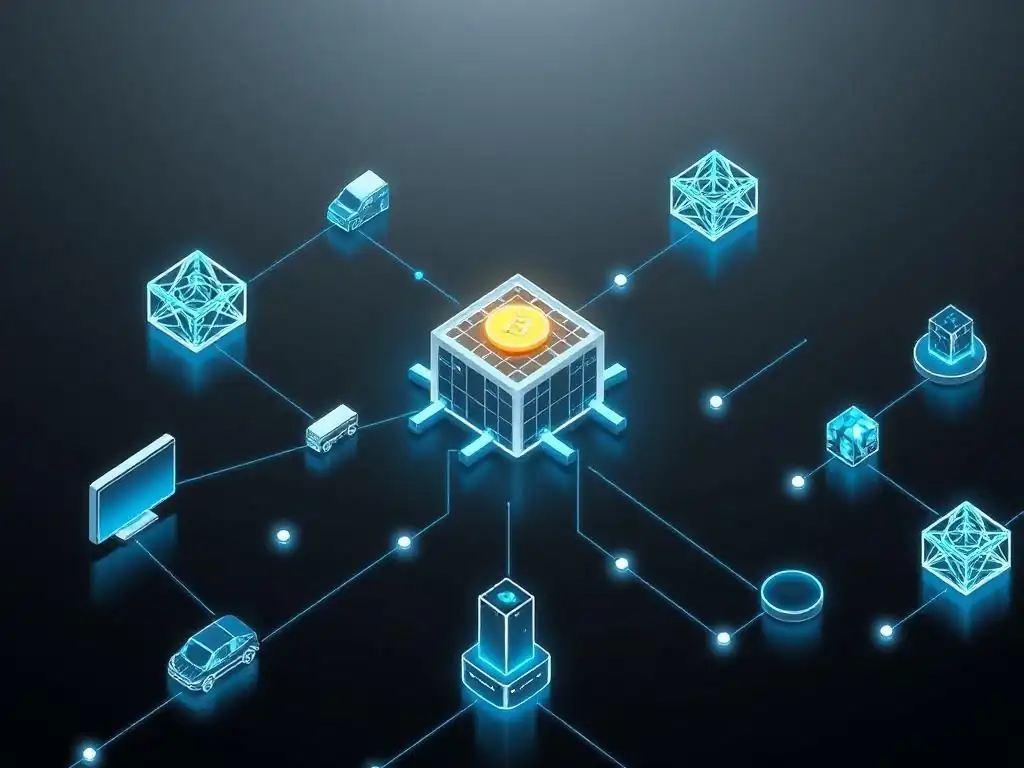
Enhanced Security and Resilience Against Cyber Threats
Decentralizing IoT architectures with Web3 provides significant enhancements in security and resilience compared to traditional centralized models. By eliminating single points of failure, distributing control and data storage across a network of nodes, the system becomes inherently more robust against targeted attacks like DDoS or server compromises. Cryptographic methods used for identity, authentication, and data integrity on the blockchain make it exceedingly difficult for attackers to impersonate devices, tamper with data, or disrupt operations undetected.
For example, in a decentralized energy grid using smart meters and distributed energy resources (like solar panels), decentralized identities and smart contracts could manage energy flow and transactions. A cyberattack attempting to manipulate meter readings or shut down parts of the grid would need to compromise a majority of network participants, rather than a single central control system, making such an attack vastly more complex and costly. This distributed trust model is the foundation of effective decentralized IoT security solutions.
Improved Data Privacy and User Control in IoT Ecosystems
Web3 technologies empower users with greater control over the data generated by their IoT devices, addressing critical privacy concerns. Instead of data being automatically siphoned to and stored by third-party service providers, users can potentially own and manage their device data using decentralized storage solutions and grant access permissions via cryptographic keys and smart contracts. This shifts the paradigm from data being a resource for companies to exploit, to data being an asset controlled by its generator.
Consider a smart health monitoring system. With a decentralized approach, a user's biometric data from a wearable device could be encrypted and stored decentrally. The user could then selectively grant access to their doctor, a researcher, or an insurance provider for a limited time or specific purpose via a smart contract, without the data passing through a central corporate server. This granular, user-controlled access model, facilitated by decentralized IoT security solutions, significantly improves data privacy and builds trust in IoT applications handling sensitive information.
Increased Interoperability and Scalability of IoT Networks
One major challenge in the current IoT landscape is the lack of interoperability between devices and platforms from different manufacturers. Devices often operate within walled gardens, making it difficult for them to communicate and share data seamlessly. Web3, with its focus on open standards, decentralized protocols, and shared ledgers, can foster greater interoperability. Devices and services can interact based on common blockchain records and smart contract interfaces, regardless of their underlying hardware or proprietary software.
Furthermore, decentralized networks are designed to scale horizontally by adding more nodes. While blockchain scalability remains an area of active research, advancements in layer-2 solutions, sharding, and alternative consensus mechanisms are continuously increasing transaction throughput and reducing latency. This inherent scalability of decentralized infrastructure is better suited to accommodate the projected exponential growth in the number of connected IoT devices compared to relying solely on scaling centralized server capacity. Increased interoperability and scalability are natural outcomes of implementing decentralized IoT security solutions.
Traditional IoT ecosystems often involve multiple centralized authorities and intermediaries, such as cloud providers, data brokers, and service operators. These entities can introduce points of vulnerability, increase costs, and create dependencies that limit innovation and user autonomy. Decentralizing IoT with Web3 minimizes the need for these trusted third parties. Devices can interact directly or through peer-to-peer networks, governed by transparent, immutable smart contracts on a shared ledger.
This reduction in reliance on centralized middlemen translates to lower operational costs, reduced latency in communication, and greater resilience to censorship or service interruptions caused by a single entity. For example, in a decentralized energy marketplace, smart meters could directly transact with distributed energy sources based on price signals encoded in smart contracts, without requiring a traditional utility company as a central intermediary for every transaction. This disintermediation is a powerful benefit enabled by decentralized IoT security solutions.
Use Cases: Web3 Empowering IoT Applications
Supply Chain Management: Tracking Pharmaceuticals with Decentralized Ledger Technology
Tracking sensitive goods like pharmaceuticals through complex supply chains is a prime use case for decentralized IoT security solutions. IoT sensors can monitor conditions such as temperature, humidity, and location within shipping containers or individual packages. This data is critical for ensuring product quality and safety. By recording sensor readings and key events (like handover points) on a decentralized ledger, stakeholders across the supply chain – manufacturers, distributors, logistics providers, and regulators – can access a shared, immutable record of the product's journey.
For example, sensors in a container of vaccines traveling from a factory to a distribution center can log temperature data every 15 minutes. Each data point's hash, along with its timestamp and the sensor's ID, is written to a blockchain. If the temperature exceeds a critical threshold, this event is also recorded. Upon arrival, the recipient can verify the entire temperature history against the immutable ledger, ensuring the vaccines were stored correctly. This provides transparency, accountability, and helps prevent the introduction of counterfeit goods, significantly enhancing trust and security in the supply chain.
Smart Homes: Secure and Private Control of Smart Lighting and Appliances
Smart homes offer convenience but also raise significant concerns about security and privacy. Centralized control hubs or cloud services can be vulnerable targets, potentially allowing attackers to control devices, access private data, or monitor activities within the home. Decentralized IoT security solutions can transform the smart home by giving users direct, secure control over their devices without relying on external servers. Devices within the home can authenticate each other using decentralized identities and communicate securely via peer-to-peer networks, governed by smart contracts owned by the homeowner.
Imagine controlling smart lights, locks, and appliances using a decentralized identity wallet on your phone. Instead of sending commands through a cloud server, your wallet signs commands that are verified by the devices locally using their decentralized identities registered on a ledger. Access permissions for guests or service providers can be managed via verifiable credentials issued by the homeowner and revoked instantly. This approach minimizes the attack surface, keeps sensitive control data within the home network, and provides users with greater privacy and autonomy over their connected living spaces.
Healthcare: Protecting Remote Patient Monitoring Data
Remote patient monitoring (RPM) devices, such as wearable sensors collecting vital signs, generate highly sensitive personal health information. Securing this data and ensuring its privacy is paramount. Traditional RPM systems often rely on centralized databases, which are attractive targets for cybercriminals and raise compliance challenges like HIPAA in the United States. Decentralized IoT security solutions offer a more secure and privacy-preserving model.
Patient data from RPM devices can be encrypted at the source and stored decentrally, perhaps on encrypted distributed file systems. Only cryptographic hashes or metadata are recorded on a blockchain to provide an audit trail. The patient, holding the private decryption key, can grant specific healthcare providers access to their data for a defined period using smart contracts and decentralized identity. This ensures that sensitive health data remains under the patient's control, is accessed only by authorized parties, and maintains its integrity through the immutable ledger, significantly improving the security and privacy posture of healthcare IoT applications.
Industrial IoT (IIoT): Enhancing Security and Efficiency in Predictive Maintenance
In Industrial IoT (IIoT) settings, sensors on machinery collect vast amounts of data for predictive maintenance, quality control, and operational efficiency. The security and integrity of this data are crucial, as compromised data could lead to faulty maintenance decisions, production downtime, or safety hazards. Decentralized IoT security solutions can enhance IIoT by providing secure device authentication, immutable data logging, and automated processes via smart contracts.
For instance, sensors on a critical piece of manufacturing equipment can generate performance data (vibration, temperature, pressure). This data's integrity can be verified by hashing it and recording the hash on a blockchain, creating a verifiable history for maintenance and compliance.
Smart contracts can be programmed to automatically trigger maintenance requests or order replacement parts when sensor data indicates a potential failure, based on predefined conditions verified on the ledger. This not only enhances the security of the data used for critical decisions but also streamlines maintenance workflows, potentially reducing downtime and costs by a significant margin, perhaps estimated at 10-15% in optimized operations.
Overcoming Challenges in Web3 and IoT Integration
Scalability Limitations of Blockchain for High-Volume IoT Data
One of the primary challenges in integrating Web3 with IoT, especially for high-frequency data streams, is the inherent scalability limitations of many current blockchain platforms. Public blockchains like Ethereum, in their base layer, have throughput constraints (e.g., around 15-30 transactions per second) and transaction costs (gas fees) that can be prohibitive for recording every single data point generated by millions or billions of IoT devices. A single industrial machine might generate thousands of data points per second, making it impractical to write all of this directly to a mainnet blockchain.
Solutions are emerging, however, to address this. Layer-2 scaling solutions (like rollups or state channels), sidechains, and purpose-built decentralized ledgers designed for high throughput (like IOTA or Hedera) are being developed and implemented.
These technologies aim to handle a much larger volume of transactions off-chain or on separate, faster chains while still leveraging the security and immutability properties by periodically anchoring data summaries or proofs back to a main chain. Hybrid architectures, where only critical data hashes or state changes are recorded on-chain, while raw data is stored off-chain in decentralized storage, are also common approaches for building scalable decentralized IoT security solutions.
Interoperability Issues Between Different Blockchain Platforms and IoT Devices
Just as there are interoperability challenges in the traditional IoT landscape, similar issues exist within the Web3 space with different blockchain protocols and standards. A device designed to interact with a supply chain application built on one blockchain platform might not easily communicate or share data with a smart home system built on another. Furthermore, integrating resource-constrained IoT devices with complex blockchain clients and protocols can be technically challenging.
Efforts are underway to address these interoperability gaps. Projects are developing cross-chain communication protocols (like IBC or Polkadot's XCMP) that allow different blockchains to securely exchange information. Standards bodies are working on universal specifications for decentralized identities (DIDs) and verifiable credentials (VCs) that can be used across different platforms. Additionally, lightweight client libraries and specialized hardware are being developed to enable even low-power IoT devices to securely interact with decentralized networks, facilitating the broader adoption of decentralized IoT security solutions.
Regulatory Uncertainty Surrounding Decentralized IoT Applications
The integration of Web3 and IoT raises complex legal and regulatory questions. The decentralized nature of these systems challenges traditional regulatory frameworks designed for centralized entities and jurisdictions. Issues such as data ownership, liability in case of smart contract failures causing harm via connected devices, compliance with data privacy regulations (like GDPR or CCPA) in a distributed environment, and the legal status of decentralized autonomous organizations (DAOs) potentially governing IoT networks are still largely undefined or subject to interpretation.
This regulatory uncertainty can create hesitation for businesses and developers looking to deploy large-scale decentralized IoT security solutions. For example, determining responsibility if a smart contract bug in a decentralized energy grid causes an outage, or ensuring compliance when sensitive data is distributed across nodes in multiple jurisdictions, requires clearer legal guidance. Industry consortia and regulatory bodies are beginning to explore these issues, but a comprehensive global framework for decentralized IoT applications is still years away. Navigating this evolving landscape requires careful legal consideration and engagement with relevant authorities.
The Future of Decentralized IoT Security Solutions
Emerging Trends in Blockchain and IoT Convergence
Several key trends are shaping the future of decentralized IoT security solutions. One is the increasing focus on edge computing combined with decentralized technologies. Processing data closer to the source on IoT devices or local gateways reduces latency and the amount of data sent over networks, while blockchain can secure the data streams and device interactions at the edge. Another trend is the development of specialized, lightweight blockchain protocols or distributed ledger technologies (DLTs) specifically designed for the constraints and scale of IoT, offering higher throughput and lower resource requirements than general-purpose blockchains.
Furthermore, the concept of 'Tokenized Things' is gaining traction, where IoT devices themselves or the data they produce are represented as non-fungible tokens (NFTs) or fungible tokens on a blockchain. This can facilitate new business models, enable secure device ownership transfer, and create marketplaces for IoT data. The integration of Decentralized Physical Infrastructure Networks (DePIN), which use blockchain to incentivize the deployment and operation of real-world infrastructure like wireless networks or sensor arrays, is also a significant trend that will underpin future decentralized IoT applications and their security.
The Role of AI and Machine Learning in Securing Decentralized IoT Networks
Artificial Intelligence (AI) and Machine Learning (ML) have a crucial role to play in enhancing decentralized IoT security solutions. While blockchain provides a robust foundation for trust and data integrity, AI/ML can add a layer of intelligent threat detection and response. ML models can analyze the vast amounts of data generated by decentralized IoT networks to identify unusual patterns indicative of cyberattacks, device compromises, or anomalies that decentralized ledger verification alone might not catch.
For example, an ML model could monitor the transaction patterns or data streams from a group of sensors on a decentralized network. If a sensor suddenly starts sending data at an abnormally high frequency or attempts unauthorized interactions with a smart contract, the AI can flag this behavior as potentially malicious, even if the device's identity is verified on-chain.
AI can also assist in optimizing the performance and security of decentralized protocols themselves, for instance, by helping nodes make smarter decisions about which transactions to validate or how to route data efficiently, further strengthening the overall security posture of decentralized IoT systems.
Predictions for the Growth of Web3-Enabled IoT Applications
The market for Web3-enabled IoT applications is poised for significant growth as the underlying technologies mature and the benefits of decentralization become more apparent. While specific market size predictions vary, reports from various research firms suggest the global blockchain IoT market could reach tens of billions of dollars within the next five to seven years, growing at a compound annual growth rate (CAGR) potentially exceeding 40-50%. Early adoption is expected to continue in sectors where trust, data integrity, and security are paramount, such as supply chain logistics, industrial automation, and potentially smart cities.
The increasing focus on decentralized IoT security solutions will be a key driver of this growth. As security breaches in centralized IoT systems become more frequent and costly, businesses and consumers will increasingly seek out decentralized alternatives that offer greater resilience and control. The development of more user-friendly interfaces and developer tools will also lower the barrier to entry for building and deploying decentralized IoT applications, accelerating their adoption across a wider range of industries, from agriculture to healthcare.
Conclusion: Embracing the Decentralized Future of IoT
Key Takeaways on the Benefits of Web3 for IoT Security
The convergence of Web3 and IoT holds immense potential to create a more secure, private, and scalable ecosystem for connected devices. By leveraging blockchain and decentralized technologies, we can move beyond the vulnerabilities inherent in centralized architectures. Key benefits include enhanced security through decentralized identity and immutable data records, improved data privacy and user control, increased interoperability between devices and platforms, and reduced reliance on centralized authorities.
Decentralized IoT security solutions offer a compelling alternative to traditional models, providing greater resilience against cyber threats and fostering a trustless environment for device interactions and data exchange. The ability to verify device authenticity, ensure data integrity, and automate processes via smart contracts fundamentally changes the security posture of IoT networks. While challenges related to scalability and interoperability remain, ongoing technological advancements are rapidly addressing these limitations.
Call to Action: Explore Decentralized IoT Security Solutions for Smart Agriculture
The future of IoT is undeniably moving towards greater decentralization, driven by the need for enhanced security, privacy, and control. Industries across the board stand to benefit from exploring and implementing decentralized IoT security solutions. Consider the potential in smart agriculture, where sensors monitor soil conditions, weather patterns, and crop health.
Implementing decentralized solutions can secure this critical data, ensure its integrity for precise farming decisions, and enable automated, trustless interactions between sensors, irrigation systems, and even supply chain partners based on verified conditions. Organizations should begin evaluating how Web3 technologies can be integrated into their IoT strategies to build more robust, secure, and future-proof connected systems.
Frequently Asked Questions
What is the core problem Web3 aims to solve for IoT security?
Web3 seeks to address the centralized vulnerabilities inherent in traditional IoT systems. By leveraging blockchain, it aims to create more secure and tamper-proof data management for connected devices. This tackles issues like single points of failure and data breaches.
How can blockchain enhance the security of IoT devices?
Blockchain provides a decentralized and immutable ledger for IoT data. This means data is distributed across a network, making it extremely difficult for hackers to alter or compromise information. Authentication is also enhanced through cryptographic keys.
What are some potential use cases for Decentralized IoT security solutions?
Applications include secure supply chain management, tamper-proof sensor data for critical infrastructure, and improved data privacy in smart homes. It allows for verifiable data provenance and increased trust in IoT ecosystems.
What challenges exist in implementing Decentralized IoT security solutions?
Scalability, interoperability, and energy consumption are significant hurdles. Blockchain networks often struggle to handle the high data throughput of IoT devices. Furthermore, standardization is lacking, hindering seamless integration.
How might regulation impact the development of Decentralized IoT security solutions?
Regulations around data privacy (like GDPR) and cybersecurity will significantly shape the landscape. Clear guidelines are needed to ensure compliance and foster responsible innovation in the emerging field of Web3-powered IoT security.
Final Reflection: Embracing the Decentralized Future of Connectivity
The exploration of Web3's potential to revolutionize the Internet of Things culminates in a crucial realization: Decentralized IoT security solutions are no longer a futuristic concept, but a pressing necessity. The vulnerabilities inherent in centralized systems, coupled with the exponential growth of connected devices, demand a paradigm shift towards more resilient and secure architectures. The promise of enhanced data privacy, increased transparency, and improved device autonomy offered by Web3 technologies is not just theoretical; it's a tangible path towards a safer and more equitable digital landscape.
The integration of Web3 and IoT is more than just a technological advancement; it's a fundamental shift in how we interact with the world around us. This transformation, driven by the need for greater control and security over our data and devices, resonates deeply with the growing desire for individual empowerment in the digital age. The potential to create truly user-centric IoT ecosystems, where individuals own and control their data, is incredibly powerful. The future of the Internet is not just about connecting devices, but about connecting people and empowering them with control over their digital lives.
This vision underscores the profound impact that decentralized IoT security solutions can have on shaping a more secure and trustworthy future.
As we stand on the cusp of this decentralized revolution, let us not simply be passive observers. Let us actively engage in shaping the future of connected devices, demanding greater transparency, security, and control. Consider the implications of centralized data collection and the potential benefits of decentralized alternatives. Embrace the power of Web3 to build a more secure, equitable, and user-centric Internet of Things, one connected device at a time. The future of connectivity is in our hands; let's build it responsibly and with purpose.
Unveil the Future: Your Role in the Decentralized IoT!
Thank you for exploring how Web3 is transforming the Internet of Things! You've gained valuable insights into the potential of decentralized connected devices and how blockchain technology can reshape various industries. Now, it's time to turn that knowledge into action and contribute to this exciting evolution.
Here's how you can get started:
- Secure your home network by using Web3-enabled DNS services. Experience the benefits of decentralization by exploring alternative DNS solutions and protecting your IoT devices from centralized control.
- Investigate current Web3-IoT projects to discover innovative use cases and learn how these applications are being implemented in areas like supply chain management, smart homes, and beyond.
- Share your thoughts! Discuss the advantages and challenges of integrating Web3 with IoT within your network and online communities to foster further innovation.
What is one immediate step you can take today to move toward a more secure and decentralized connected environment? Share your ideas in the comments below!
Leave a Reply