
Unlocking Efficiency: How Blockchain is Revolutionizing Property Management


Welcome to Blockchain Trends, your trusted source for unraveling the transformative power of blockchain technology beyond the hype. Dive in and discover how this revolutionary technology is reshaping industries. Are you ready to explore how blockchain can unlock unprecedented efficiency gains in property management? Uncover the secrets within and see how decentralized solutions are poised to redefine the future of real estate and beyond.
-
Unlocking Efficiency: How Blockchain is Revolutionizing Property Management with Blockchain Property Management Efficiency Gains
- Understanding Blockchain Technology in Property Management
- Current Challenges in Traditional Property Management
- How Blockchain Enhances Property Management Efficiency
- Practical Applications of Blockchain in Property Management
- Measuring Efficiency Gains from Blockchain Implementation in Property Management
- Overcoming Barriers to Blockchain Adoption in Property Management
- Future Trends: The Evolution of Blockchain in Real Estate and Property Management
- Conclusion: Realizing Blockchain Property Management Efficiency Gains for a Smarter Real Estate Future.
-
Frequently Asked Questions
- How can blockchain technology improve property management?
- What are some specific examples of blockchain's use in property management?
- How does blockchain enhance security in property management?
- What are the potential regulatory challenges for blockchain adoption in property management?
- What is the future outlook for blockchain in property management?
- Final Reflection: Embracing the Future of Property Management
- Reimagine Your Property Management Today!
Unlocking Efficiency: How Blockchain is Revolutionizing Property Management with Blockchain Property Management Efficiency Gains
Understanding Blockchain Technology in Property Management
What is Blockchain and Its Role in Real Estate Management
Blockchain technology, fundamentally a decentralized, distributed ledger, provides a secure and transparent way to record transactions. Unlike traditional databases controlled by a single entity, a blockchain ledger is shared across a network of computers, making it exceptionally difficult to alter past entries without the consensus of the network. In the realm of real estate and property management, this distributed nature offers a foundational shift from reliance on central authorities, paperwork, and fragmented systems.
It creates a single, verifiable source of truth for property-related information, from ownership records and lease agreements to maintenance histories and payment flows. This inherent structure is crucial for driving significant blockchain property management efficiency gains.
The application of blockchain in real estate management is poised to address long-standing issues of trust, speed, and cost. By providing an immutable record of all interactions and data points associated with a property, blockchain can streamline processes that are currently bogged down by manual verification, third-party intermediaries, and potential data discrepancies.
For instance, tracking ownership transfers, managing rental payments, or even handling service requests can all leverage the transparency and security of a blockchain. This digital transformation promises not just automation but a complete overhaul of how property assets are managed, leading directly to enhanced operational efficiency and reduced administrative burdens, key components of realizing blockchain property management efficiency gains.
Key Features of Blockchain Driving Property Management Efficiency Gains
Several core characteristics of blockchain technology are particularly impactful in generating blockchain property management efficiency gains. Immutability is paramount; once data is recorded on the blockchain, it cannot be retroactively changed or deleted, providing an unparalleled level of data integrity. This is vital for sensitive records like ownership titles, lease terms, and financial transactions, eliminating disputes arising from altered or lost documents. Transparency, another key feature, means that while specific details can be permissioned, the existence and sequence of transactions are visible to network participants, fostering trust among landlords, tenants, and service providers without needing a central arbiter.
Smart contracts represent perhaps the most transformative feature for property management efficiency. These are self-executing contracts with the terms of the agreement directly written into lines of code. When predefined conditions are met (e.g., rent is paid, a repair is completed), the smart contract automatically executes the next step, such as releasing funds or updating a record.
This automation reduces the need for manual intervention, minimizes delays, and lowers the risk of errors or disputes. For example, a smart contract could automatically release a security deposit back to a tenant upon verification of property condition after lease termination, significantly speeding up a process that traditionally takes weeks. These features collectively form the backbone for achieving substantial blockchain property management efficiency gains.
Current Challenges in Traditional Property Management
Inefficiencies in Documentation and Record-Keeping
Traditional property management is heavily reliant on paper-based documentation and disparate digital systems, leading to significant inefficiencies. Property records, lease agreements, maintenance logs, and financial statements are often stored in physical files or across various software platforms that don't seamlessly integrate. This fragmentation makes accessing, verifying, and updating information a time-consuming and error-prone process.
For instance, retrieving a specific clause from a lease agreement or tracking the history of repairs for an appliance can involve sifting through physical folders or searching multiple digital databases. Studies or reports on administrative overhead in real estate often cite document management as a major bottleneck, potentially consuming 15-20% of a property manager's time.
Furthermore, the lack of a single, unified record-keeping system creates potential for data inconsistencies and disputes. A tenant might claim a payment was made on a certain date, while the property manager's record shows it later or not at all, leading to time-consuming investigations to reconcile discrepancies. The process of transferring property ownership or assigning a lease can involve extensive paperwork and manual verification steps that can take weeks or even months to complete, incurring significant administrative costs. This manual, fragmented approach is a primary target for disruption by technologies promising blockchain property management efficiency gains.
Lack of Transparency and Trust Among Stakeholders
A significant challenge in traditional property management is the inherent lack of transparency and the resulting need for intermediaries to establish trust among stakeholders. Landlords, tenants, property managers, service providers, and potential buyers or investors often operate with limited visibility into the processes and data held by others.
For example, tenants may lack clear visibility into how their rent payments are processed or the status of maintenance requests, while landlords may have limited real-time insight into property performance or management activities. This opacity necessitates trust built through reputation and contractual agreements, often enforced by third parties like escrow agents or legal professionals.
This reliance on intermediaries adds layers of complexity, cost, and potential for delays. Each party holds their own set of records and requires verification against others, leading to a cumbersome and often adversarial process, particularly in cases of disputes. The absence of a neutral, universally verifiable record makes it difficult for parties to quickly and confidently agree on the state of affairs, whether it relates to payment history, property condition, or lease compliance. Overcoming this trust deficit and enhancing transparency are key areas where blockchain technology offers transformative potential for blockchain property management efficiency gains.
Payment Processing Delays and High Transaction Costs
Processing payments in traditional property management involves multiple steps and often incurs significant delays and costs. Rent payments, security deposits, service fees, and disbursements to owners typically flow through banks and payment processors, each potentially adding fees and processing time. While online payment portals have improved convenience, the underlying financial infrastructure still involves settlement periods that can take several business days. For example, receiving rent payments and disbursing funds to property owners can take 3-5 business days or longer, impacting cash flow.
Transaction fees, including credit card processing fees (often 2-3% of the transaction value), bank transfer fees, and fees charged by payment gateways, accumulate, especially for high-volume transactions like rent collection. These costs are ultimately borne by landlords, tenants, or the property management company, reducing net income or increasing expenses. Furthermore, managing late payments, bounced checks, or payment disputes adds administrative overhead and costs. The inefficiency and expense associated with traditional payment processing are prime areas where blockchain and related technologies like stablecoins can deliver substantial blockchain property management efficiency gains by enabling faster, cheaper, and more transparent transactions.
How Blockchain Enhances Property Management Efficiency
Streamlining Property Records and Title Management through Immutable Ledgers
Blockchain's core feature of an immutable, distributed ledger is a game-changer for managing property records and titles, leading to significant blockchain property management efficiency gains. Instead of relying on centralized, often paper-based land registries or fragmented internal databases, property ownership and associated documents (like deeds, liens, and surveys) can be recorded on a blockchain.
Each transaction, whether a sale, transfer, or encumbrance, is added as a new block to the chain, creating a permanent and verifiable history accessible to authorized parties. This eliminates the need for manual record searches and reduces the risk of errors or fraud associated with physical documents.
This streamlined approach drastically cuts down the time and effort required for title searches and transfers. Processes that traditionally take weeks or months involving multiple parties (attorneys, title companies, government offices) can be accelerated significantly. While widespread adoption is still developing, pilot programs and discussions suggest the potential to reduce transaction times for property transfers by as much as 50-70% by removing intermediaries and automating verification steps based on the immutable ledger. This inherent efficiency in managing foundational property data directly contributes to overall blockchain property management efficiency gains.
Enhancing Transparency and Trust with Decentralized Systems
The decentralized nature of blockchain inherently enhances transparency and trust among property management stakeholders, contributing significantly to blockchain property management efficiency gains. By providing a shared, tamper-proof ledger of all relevant transactions and data points – from lease agreements and payment histories to maintenance requests and inspections – blockchain creates a single source of truth that all authorized parties can access. Landlords can verify payment records in real-time, tenants can track the status of their service requests, and property managers can provide verifiable reports to owners without relying solely on internal, potentially opaque systems.
This increased transparency reduces the need for intermediaries whose primary role is to build trust or verify information. Disputes over facts (like payment dates or maintenance completion) become less frequent and easier to resolve when all parties can refer to the same immutable record. This fosters a more collaborative and less adversarial relationship between stakeholders.
For instance, a landlord can grant a potential investor permission to view a property's verified rental income history and maintenance log on the blockchain, providing a level of confidence and detail far beyond traditional methods and streamlining the due diligence process. This foundation of trust and transparency is a key driver of operational efficiency.
Accelerating Rental and Payment Processes via Smart Contracts
Smart contracts are pivotal in accelerating rental and payment processes, delivering tangible blockchain property management efficiency gains. Rental agreements can be codified into smart contracts, automatically executing actions based on predefined conditions. For example, a smart contract can be programmed to automatically transfer the monthly rent amount from a tenant's digital wallet to the landlord's wallet on a specific date, provided sufficient funds are available. If rent is late, the contract could automatically trigger a late fee or notification according to the lease terms embedded in the code.
This automation eliminates manual invoicing, payment tracking, and reconciliation, drastically reducing administrative workload and potential human error. Furthermore, using stablecoins or other cryptocurrencies for payments can significantly speed up transaction settlement times compared to traditional banking systems, potentially reducing settlement from days to minutes or hours, depending on the blockchain network.
While regulatory hurdles exist, the potential for near-instantaneous, automated rent collection and disbursement offers a substantial boost to cash flow management and operational efficiency, embodying the promise of blockchain property management efficiency gains. Beyond rent, smart contracts can manage security deposits, automating their release upon lease termination after predefined conditions (like property inspection results) are met, removing manual escrow processes that can take weeks.
Practical Applications of Blockchain in Property Management
Use Cases of Blockchain for Lease Agreement Automation
One of the most promising practical applications of blockchain in property management is the automation of lease agreements using smart contracts. Instead of static, paper-based or traditional digital documents, a lease can be represented as a smart contract on a blockchain. This contract contains the terms of the agreement, such as rent amount, payment date, lease duration, and clauses regarding late fees or maintenance responsibilities, directly written into the code. Once the conditions are met and the contract is signed (digitally, using cryptographic keys), it can automatically execute actions.
For example, a smart lease could automatically initiate monthly rent payments from the tenant's linked account or digital wallet on the due date. It could also trigger automated notifications or penalties if payment is missed.
Upon the scheduled end of the lease term, the smart contract could initiate the process for returning the security deposit based on predefined conditions (like a satisfactory property inspection recorded on the blockchain). This significantly reduces the administrative burden on property managers, minimizes payment delays, and provides clear, automated enforcement of lease terms, demonstrating clear blockchain property management efficiency gains by reducing manual intervention by an estimated 20-30% in payment and lease management tasks alone.
Tokenization of Real Estate Assets and Its Impact on Liquidity
Tokenization, the process of converting real-world assets like real estate into digital tokens on a blockchain, has profound implications for property management and ownership liquidity. By representing fractional ownership of a property as tokens, this technology makes real estate investment accessible to a wider range of investors who might not be able to afford purchasing an entire property outright. Each token represents a verifiable, immutable share of the asset, recorded on the blockchain ledger.
From a property management perspective, tokenization simplifies the management of co-owned properties. Instead of dealing with multiple individual owners through complex legal structures, the property manager interacts with the token holders via the blockchain network and potentially through governance mechanisms built into the token structure. Rental income can be automatically distributed to token holders based on their share via smart contracts.
This model increases liquidity for real estate assets, making it easier for owners (token holders) to buy or sell their shares without the lengthy and costly traditional transaction processes. While still nascent, several platforms are piloting tokenization, suggesting potential reductions in transaction times from months to days and lowering investment thresholds significantly, enhancing the addressable market and management models, contributing to blockchain property management efficiency gains.
Decentralized Property Maintenance and Service Management Platforms
Blockchain can also power decentralized platforms for managing property maintenance and services, further enhancing blockchain property management efficiency gains. Currently, coordinating repairs and services often involves phone calls, emails, and manual tracking between tenants, property managers, contractors, and owners. A decentralized platform built on blockchain could streamline this process. When a tenant reports an issue, it's recorded on the blockchain. Property managers can then use the platform to request bids from verified contractors, whose credentials and service history could also be recorded on the chain.
Smart contracts can facilitate payments to contractors automatically upon verification of service completion (perhaps via digital sign-off or IoT sensor data recorded on the blockchain). The entire history of maintenance requests, work orders, and payments for a property is immutably stored and accessible, providing transparency to all relevant parties.
This system reduces communication bottlenecks, speeds up service delivery, ensures fair pricing through transparent bidding, and automates payment processing, leading to faster repairs and improved tenant satisfaction. Pilot programs using similar concepts in supply chain management have shown significant reductions in processing times for service requests and payments, potentially offering a 25-40% improvement in efficiency for property maintenance workflows.
Measuring Efficiency Gains from Blockchain Implementation in Property Management
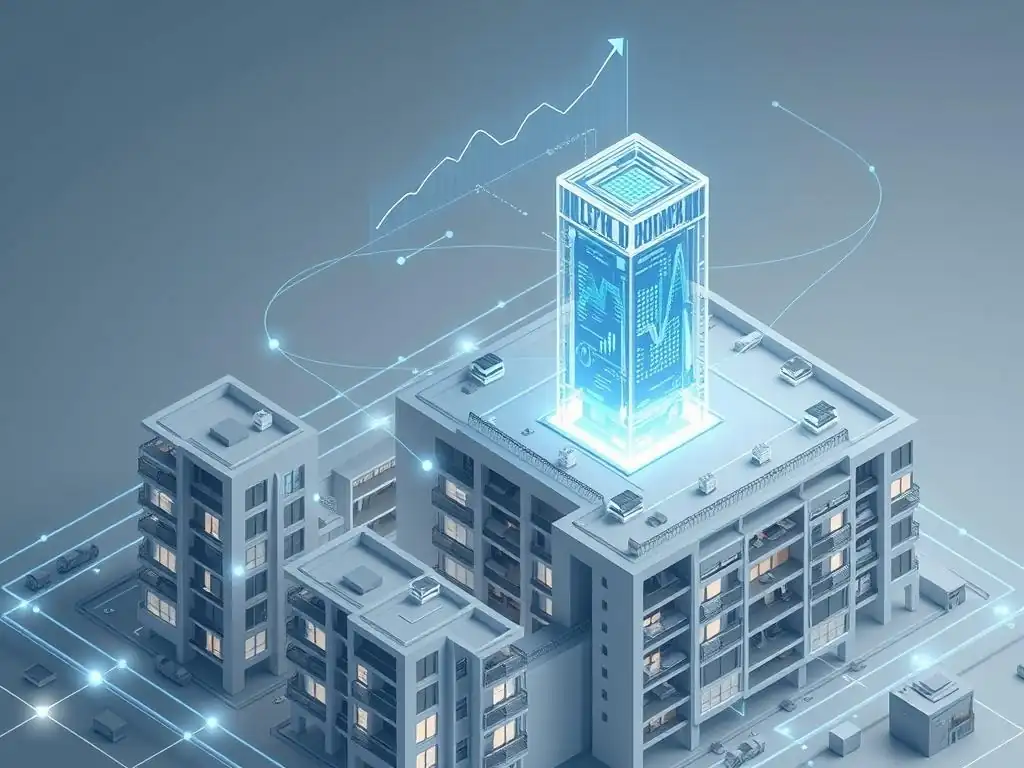
Quantifying Time Savings in Transaction Processing and Record Updates
One of the most direct ways to measure blockchain property management efficiency gains is by quantifying the time saved in processing transactions and updating records. Traditional property transactions, such as buying/selling a property or transferring a lease, involve extensive manual processes, verification steps, and reliance on intermediaries, often taking weeks or even months. By contrast, blockchain-based systems, leveraging immutable ledgers and smart contracts, can automate many of these steps. For example, title searches that might take 2-4 weeks could potentially be reduced to minutes or hours using a blockchain-based land registry system, as the entire history is instantly verifiable.
Similarly, updating property records, registering new tenants, or processing lease renewals traditionally involves manual data entry across different systems. A unified blockchain platform allows for near real-time updates that are instantly propagated across the network and immutably recorded.
Case studies or pilot projects in related fields like supply chain logistics and financial settlements have demonstrated time reductions of up to 80-90% for certain transaction types. While specific data for property management is still emerging, the potential for reducing processing times for key workflows like lease onboarding, payment reconciliation, and service request management by 30-60% is a tangible measure of blockchain property management efficiency gains.
Reducing Costs through Automated Contract Execution and Fewer Intermediaries
Blockchain implementation offers significant potential for cost reduction in property management, another key aspect of blockchain property management efficiency gains. Smart contracts automate the execution of agreements, eliminating the need for manual intervention in routine processes like rent collection, late fee application, and security deposit management. This automation reduces administrative overhead and the associated labor costs. For instance, automating rent collection via smart contracts could potentially reduce the need for dedicated staff hours spent on tracking payments, sending reminders, and reconciling accounts by a significant margin.
Furthermore, blockchain's ability to establish trust and transparency through a decentralized ledger reduces the reliance on expensive third-party intermediaries such as escrow agents, legal professionals for basic contract enforcement, or traditional payment processors with high transaction fees. While legal and regulatory frameworks are still evolving, the long-term vision involves reducing or eliminating fees associated with these services for routine transactions.
For example, using stablecoins for rent payments via smart contracts could potentially lower transaction costs from the typical 2-3% for credit card payments to a fraction of a percent or even near zero on certain networks, representing substantial savings, especially for large property portfolios. Overall, cost reductions from automation and disintermediation are a major contributor to blockchain property management efficiency gains.
Improving Stakeholder Satisfaction and Communication Flow
While not always directly quantifiable in monetary terms, improved stakeholder satisfaction and streamlined communication flow are significant efficiency gains enabled by blockchain in property management. The transparency offered by a shared, immutable ledger means that landlords, tenants, and property managers have access to the same verified information regarding payments, maintenance requests, lease terms, and property history. This reduces misunderstandings and disputes that often arise from fragmented information or lack of trust.
For tenants, having real-time, verifiable access to their payment history or the status of a maintenance request improves their experience and reduces the need for phone calls or emails seeking updates. For landlords, increased visibility into property performance, financial flows, and management activities provides greater peace of mind and reduces the need for frequent manual reporting from property managers.
Property managers benefit from fewer disputes, streamlined communication channels through the platform, and more time freed up from administrative tasks to focus on value-adding activities like property inspections and tenant relations. Reduced friction and enhanced communication contribute to smoother operations and a more efficient management process overall.
Overcoming Barriers to Blockchain Adoption in Property Management
Regulatory and Compliance Challenges in Blockchain-Based Property Systems
Implementing blockchain in property management faces significant hurdles related to existing regulations and compliance requirements. Real estate is a heavily regulated industry, with specific laws governing property ownership, transfers, leasing, and financial transactions that vary significantly by jurisdiction (state, country, etc.). Integrating blockchain-based systems, especially those involving tokenization of assets or automated smart contracts for leases and payments, requires navigating complex legal frameworks that were designed long before this technology existed. For instance, the legal status of a smart contract as a binding lease agreement or a property token as a legal representation of ownership is not universally defined.
Furthermore, regulations around data privacy (like GDPR or CCPA), anti-money laundering (AML), and know-your-customer (KYC) rules must be adhered to. While blockchain offers transparency, ensuring compliance with privacy laws requires careful design, potentially using permissioned ledgers or zero-knowledge proofs. The slow pace of regulatory adaptation compared to technological innovation poses a significant challenge, creating uncertainty for businesses looking to invest heavily in blockchain solutions for property management. Overcoming these barriers requires close collaboration with legal experts and regulatory bodies to establish clear guidelines and frameworks that accommodate blockchain technology while upholding necessary consumer protections and legal standards.
Integration with Existing Property Management Software and Infrastructure
Another substantial barrier to achieving widespread blockchain property management efficiency gains is the challenge of integrating new blockchain systems with the vast array of existing legacy software and infrastructure used in the industry. Property management companies, large and small, rely on established software platforms for accounting, tenant screening, work order management, and communication. These systems may be outdated or lack open APIs necessary for seamless data exchange with decentralized blockchain applications.
Implementing a blockchain solution often requires either replacing existing systems entirely, which is costly and disruptive, or building complex integration layers. Ensuring interoperability between a blockchain ledger holding property records and smart contracts, and traditional databases managing tenant details or financial reporting, is technically challenging.
A 2022 report on PropTech adoption indicated that integration with existing systems is a top concern for property managers evaluating new technologies, often cited as more complex than the technology itself. Successful blockchain adoption requires solutions that can either function as a foundational layer that complements existing tools or offer clear migration paths, minimizing disruption and maximizing the potential for blockchain property management efficiency gains.
Educating Property Managers and Tenants on Blockchain Benefits
A critical, often underestimated, barrier to adopting blockchain in property management is the need to educate property managers, tenants, and property owners about the technology and its benefits. Blockchain is still widely associated with cryptocurrencies and can be perceived as complex or risky by those unfamiliar with its underlying principles. Property managers, who are often focused on daily operations and tenant relations, may lack the technical expertise or understanding of how blockchain can solve their specific pain points and deliver blockchain property management efficiency gains.
Similarly, tenants and property owners need to understand how a blockchain-based system will affect their interactions, such as paying rent with digital assets or accessing property records on a distributed ledger. Lack of understanding can lead to resistance to change, mistrust in the new system, and hesitance to adopt new processes.
Overcoming this requires clear, accessible communication and training programs that highlight the practical benefits – increased speed, reduced costs, enhanced transparency, and improved security – in a way that resonates with their day-to-day experiences. Demonstrating tangible improvements through pilot programs and providing user-friendly interfaces are essential steps in building confidence and driving adoption across all stakeholders.
Future Trends: The Evolution of Blockchain in Real Estate and Property Management
Emerging Technologies Complementing Blockchain for Enhanced Efficiency
The future of blockchain in property management will likely involve its integration with other emerging technologies to further enhance efficiency and capabilities. Internet of Things (IoT) devices, such as smart locks, sensors monitoring property conditions (temperature, humidity, leak detection), and smart meters, can feed real-time, verifiable data directly onto a blockchain.
This allows for automated triggers via smart contracts – for example, a sensor detecting a leak could automatically generate a maintenance request on the blockchain platform and notify the property manager. This combination creates a verifiable audit trail of property conditions and maintenance needs, improving proactive management and reducing disputes, further contributing to blockchain property management efficiency gains.
Artificial Intelligence (AI) can also complement blockchain by analyzing the vast amount of immutable data stored on the ledger. AI algorithms could analyze rental payment histories and market data recorded on-chain to provide insights into rental trends, predict potential late payments, or optimize rental pricing. Furthermore, AI could be used to analyze property maintenance records on the blockchain to predict potential equipment failures or optimize maintenance schedules. This synergy between blockchain's data integrity and AI's analytical power promises deeper insights and more proactive, data-driven property management strategies, pushing the boundaries of blockchain property management efficiency gains.
The Role of Decentralized Finance (DeFi) in Property Management Ecosystems
Decentralized Finance (DeFi), built on blockchain technology, is set to play a significant role in evolving property management ecosystems. DeFi platforms offer financial services like lending, borrowing, and earning interest without traditional intermediaries like banks. This opens up possibilities for new financial models in property management. For instance, tenants could potentially use DeFi protocols to manage their security deposits, perhaps earning interest on them in a transparent and verifiable manner until the end of the lease.
More significantly, DeFi could revolutionize property financing and investment within a tokenized real estate market. Investors could use stablecoins or other digital assets on DeFi platforms to purchase fractional ownership tokens of properties, facilitating faster and more liquid transactions than traditional real estate financing.
Rental income collected via smart contracts could potentially be automatically channeled into DeFi protocols for investment or yield generation. While regulatory clarity is still needed, the integration of DeFi offers the potential for increased financial flexibility, liquidity, and potentially lower costs associated with property financing and income management, adding another layer to the overall blockchain property management efficiency gains.
Predictions for Widespread Blockchain Adoption and Its Long-Term Impact
Predicting the exact timeline for widespread blockchain adoption in property management is challenging, given the regulatory hurdles and the need for industry education and integration. However, based on current pilot programs, increasing investment in PropTech, and the clear benefits demonstrated in specific use cases, adoption is expected to grow steadily over the next 5-10 years. Initial adoption will likely focus on specific pain points with clear efficiency benefits, such as streamlining property record management, automating rental payments with stablecoins via smart contracts, and enhancing transparency in maintenance workflows.
The long-term impact of widespread blockchain adoption on property management will be transformative, leading to a more efficient, transparent, and accessible industry. Manual processes will be significantly reduced, lowering administrative costs and freeing up property managers to focus on strategic tasks and tenant relationships. The increased liquidity offered by tokenization will change how real estate is bought, sold, and financed.
Trust will be built into the system through verifiable, immutable records rather than solely relying on intermediaries. While challenges remain, the trajectory points towards a future where blockchain is a foundational technology enabling unprecedented blockchain property management efficiency gains and reshaping the real estate landscape.
Conclusion: Realizing Blockchain Property Management Efficiency Gains for a Smarter Real Estate Future.
Blockchain technology presents a compelling opportunity to fundamentally transform property management by addressing its deep-seated inefficiencies. From streamlining cumbersome documentation and record-keeping processes through immutable ledgers to enhancing transparency and trust among stakeholders via decentralized systems, blockchain offers solutions to long-standing challenges. The automation capabilities of smart contracts are particularly impactful, promising accelerated rental payments, automated lease management, and more efficient handling of maintenance requests, all contributing to significant blockchain property management efficiency gains.
While practical applications like smart leases, tokenization, and decentralized service platforms are still evolving, they demonstrate tangible potential for reducing costs, saving time, and improving the overall experience for landlords, tenants, and property managers. Measuring these benefits reveals the promise of substantial reductions in transaction times and administrative overhead.
Although overcoming regulatory barriers, integration challenges, and the need for education requires concerted effort, the future trajectory indicates increasing adoption. By embracing blockchain and its complementary technologies like IoT and AI, the real estate sector can move towards a smarter, more efficient, and more accessible future, truly realizing the potential of blockchain property management efficiency gains.
Frequently Asked Questions
How can blockchain technology improve property management?
Blockchain offers transparency and security in property transactions, automating processes like rent collection and lease agreements, and reducing paperwork. This leads to significant efficiency gains in various property management tasks.
What are some specific examples of blockchain's use in property management?
Blockchain can streamline property title transfers, create smart contracts for automated rent payments, and improve tenant screening processes through secure data sharing.
How does blockchain enhance security in property management?
Blockchain's decentralized and immutable ledger makes it difficult to tamper with property records, reducing the risk of fraud and disputes. This ensures data integrity and builds trust among stakeholders.
What are the potential regulatory challenges for blockchain adoption in property management?
Current regulations may not fully address the unique characteristics of blockchain technology, leading to legal uncertainties. Clear regulatory frameworks are needed to foster wider adoption and ensure compliance.
What is the future outlook for blockchain in property management?
The future looks promising, with blockchain poised to become a standard tool for managing properties. Expect increased automation, improved transparency, and greater operational efficiency across the industry.
Final Reflection: Embracing the Future of Property Management
The exploration of blockchain's impact on property management reveals a profound shift, highlighting unprecedented efficiency gains that are no longer a futuristic fantasy but a tangible reality. The potential for streamlined processes, enhanced transparency, and reduced costs within the property sector is undeniable, positioning blockchain as a key driver of innovation in an industry ripe for disruption.
The transformative power of blockchain extends beyond mere technological advancement; it's reshaping the very foundations of trust and security within property transactions. Witnessing this evolution, I'm reminded of the enduring human desire for secure and transparent systems, a desire that blockchain is uniquely positioned to fulfill. The future belongs to those who believe in the beauty of their dreams.
- Eleanor Roosevelt. This quote encapsulates the spirit of innovation and the potential for blockchain to realize a more efficient and equitable future for property management.
As we stand at the cusp of this technological revolution, I invite you to consider how you can embrace the principles of transparency, security, and efficiency that blockchain embodies. Reflect on how you can leverage these principles, not just in property management, but in all aspects of your life, to build a more trustworthy and efficient future for yourself and the world around you.
Okay, I understand. Here's a CTA designed for the end of a web article titled "Unlocking Efficiency: How Blockchain is Revolutionizing Property Management" on the website "Blockchain Trends" (blockchaintrends.org).
Reimagine Your Property Management Today!
Thanks for exploring the fascinating world of blockchain and its impact on property management. We hope you've gained valuable insights into how this technology can streamline processes and unlock new levels of efficiency. Ready to take the next step?
Here's how you can start applying these insights:
- Dive Deeper: Start by researching specific blockchain solutions tailored for property management companies like yours.: Look for platforms offering features like smart contracts for lease agreements or tokenization for fractional ownership.
- Explore: Browse through our other articles on Blockchain Trends to discover real-world case studies of blockchain implementation in real estate.
- Share: Discuss this article with your colleagues or on social media using #BlockchainProperty to spark conversations and gather diverse perspectives.
What's the first step you'll take towards implementing blockchain in your property management strategy? Share your thoughts in the comments below!
Leave a Reply