
The Impact of AI Smart Contracts on Traditional Contract Law and Enforcement


Welcome to Blockchain Trends, your gateway to understanding the revolutionary potential of blockchain technology! Beyond the hype of cryptocurrencies, we delve into the real-world applications transforming industries. This week, we're tackling a fascinating intersection: the challenges that arise when AI-powered smart contracts meet traditional legal frameworks. Intrigued by the implications of AI smart contract legal challenges? Uncover the complexities and potential pitfalls as we explore the future of decentralized agreements and their impact on contract law. Dive in and discover how these innovative technologies are reshaping the legal landscape.
The Impact of AI Smart Contracts on Traditional Contract Law and Enforcement
- Introduction: AI Smart Contracts - A New Paradigm for Agreements
- Understanding Traditional Contract Law and Its Limitations
- AI Smart Contracts: Revolutionizing Contractual Agreements
- AI Smart Contract Legal Challenges: Navigating the Uncharted Territory
- Key Legal and Ethical Considerations for AI Smart Contracts
- The Impact on Contract Enforcement Mechanisms
- Potential Solutions and Regulatory Frameworks
- Case Studies: Examining Real-World Applications and Legal Implications
- The Future of Contract Law: Adapting to the AI-Driven Landscape
- Conclusion: AI Smart Contracts - Transforming Contract Law and Enforcement
-
Frequently Asked Questions
- What are AI smart contracts, and how do they differ from traditional smart contracts?
- How might AI smart contracts impact the legal enforceability of agreements?
- What are the main legal challenges associated with using AI smart contracts in commercial transactions?
- How can regulators approach the regulation of AI smart contracts to foster innovation while mitigating risks?
- What role does blockchain technology play in addressing the legal challenges associated with AI smart contracts?
- Final Reflection: Navigating the Uncharted Waters of AI Contract Law
- Unveil the Future: Your Next Steps in the AI Smart Contract Revolution
Introduction: AI Smart Contracts - A New Paradigm for Agreements
Exploring the Convergence of AI and Blockchain in Smart Contracts
The intersection of Artificial Intelligence (AI) and blockchain technology is birthing a transformative force in the realm of contractual agreements: AI smart contracts. Blockchain provides the secure and transparent infrastructure for executing smart contracts – self-executing agreements with terms directly written into code – while AI injects intelligence and adaptability into these contracts. This convergence moves beyond basic automated actions to create contracts capable of learning, adapting, and making complex decisions.
Imagine smart contracts that can dynamically adjust terms based on real-time data analysis, or autonomously resolve disputes using machine learning algorithms. This synergy promises a new era of contractual efficiency and sophistication, pushing the boundaries of what's possible in automated agreements.
The Promise of Autonomous and Intelligent Contracts
AI-powered smart contracts hold the potential to revolutionize how agreements are formed, executed, and enforced. Traditional smart contracts, while automating execution, are often rigid and require precise upfront coding of all possible scenarios. AI overcomes this limitation by enabling contracts to interpret natural language, understand context, and even predict future events relevant to the agreement.
This intelligence allows for contracts that can autonomously adapt to changing circumstances, negotiate terms within predefined parameters, and proactively identify and address potential breaches. The promise is contracts that are not merely self-executing but also self-governing and intelligent, leading to greater efficiency, reduced human intervention, and enhanced contractual outcomes.
Understanding Traditional Contract Law and Its Limitations
Key Principles of Traditional Contract Law: Offer, Acceptance, and Consideration
Traditional contract law, the bedrock of commercial and personal agreements for centuries, is built upon fundamental principles. At its core lies the concept of mutual assent, requiring a clear offer from one party and unequivocal acceptance from the other. "Consideration," another pillar, mandates that each party must provide something of value to the other, forming the basis of a bargained-for exchange.
These principles, alongside the requirement of legal capacity and lawful purpose, ensure that contracts are voluntarily entered into, mutually beneficial, and legally enforceable. These established legal doctrines have shaped the framework for countless transactions, providing a predictable and reliable system for governing agreements.
Challenges of Traditional Contract Enforcement: Delays, Costs, and Subjectivity
Despite its established framework, traditional contract law faces inherent challenges in enforcement. Dispute resolution through litigation can be protracted, often taking months or even years to reach a conclusion. The costs associated with legal proceedings, including attorney fees, court costs, and expert witness expenses, can be substantial, particularly for complex commercial disputes.
Furthermore, the interpretation of contract terms in traditional settings often relies on subjective human judgment by judges or juries, potentially leading to inconsistent outcomes and uncertainties. These limitations highlight the need for more efficient, cost-effective, and objective mechanisms for contract enforcement, areas where AI smart contracts offer compelling alternatives.
AI Smart Contracts: Revolutionizing Contractual Agreements
How AI Enhances Smart Contract Functionality
AI significantly elevates the functionality of smart contracts beyond basic automation. While traditional smart contracts execute pre-programmed rules, AI empowers them with capabilities such as natural language processing, machine learning, and predictive analytics. Natural language processing allows AI smart contracts to understand and interpret human language used in contract drafting, bridging the gap between legal jargon and code. Machine learning algorithms enable contracts to learn from data, adapt to changing conditions, and optimize performance over time. Predictive analytics can forecast potential risks and opportunities related to contract execution, allowing for proactive adjustments and informed decision-making within the contractual framework.
Automated Contract Execution and Dispute Resolution with AI
AI streamlines both contract execution and dispute resolution processes within smart contract systems. For execution, AI can monitor real-world data feeds and trigger automated actions based on pre-defined conditions, eliminating manual intervention and reducing errors. For dispute resolution, AI can analyze contract terms, relevant data, and historical precedents to identify potential breaches and even suggest resolutions.
Imagine an AI-powered smart contract for supply chain management that automatically triggers penalty clauses and reroutes shipments based on real-time weather data and delivery delays, or an insurance contract that autonomously assesses damage claims using AI-powered image analysis and initiates payouts without human adjuster intervention. This automation drastically reduces delays and costs associated with traditional dispute resolution methods.
Benefits of AI-Driven Smart Contracts: Efficiency, Transparency, and Security
AI-driven smart contracts offer a trifecta of benefits: enhanced efficiency, improved transparency, and strengthened security. Efficiency gains stem from automation of tasks like contract execution, monitoring, and dispute resolution, reducing manual labor and processing times. Transparency is inherent in blockchain-based smart contracts, with all contract terms and transaction history immutably recorded on a distributed ledger, accessible to authorized parties.
AI further enhances transparency by providing audit trails of AI decision-making processes within the contract. Security is bolstered by blockchain's cryptographic protection and AI's ability to detect and prevent fraudulent activities, creating a robust and reliable contractual environment. These combined advantages position AI smart contracts as a superior alternative for many applications compared to traditional paper-based agreements.
Defining the Legal Status of AI Smart Contracts
One of the primary legal hurdles for AI smart contracts is establishing their legal status within existing legal frameworks. Traditional contract law is predicated on the notion of human intent and agreement. When AI algorithms play a significant role in contract drafting, negotiation, or execution, questions arise regarding the attribution of intent and the legal personhood of AI.
Are AI smart contracts legally binding agreements in the same way as traditional contracts signed by humans? Current legal systems are grappling with these questions, and the lack of clear legal definitions and precedents creates uncertainty and potential risks for businesses and individuals adopting AI smart contracts. Jurisdictions are beginning to explore legislative frameworks to address this gap, but a globally harmonized approach is still lacking.
Addressing Ambiguity and Interpretability Issues in AI-Generated Code
While smart contracts are written in code, AI-generated code can introduce new layers of ambiguity and interpretability challenges. Complex AI algorithms, particularly those based on deep learning, can produce code that is difficult for humans, including legal professionals and even AI developers, to fully understand and interpret. This "black box" nature of some AI systems raises concerns about the transparency and predictability of AI smart contract behavior.
If a dispute arises from an AI smart contract, deciphering the precise reasoning behind the AI's actions and interpreting the AI-generated code becomes a significant legal challenge. Ensuring that AI-generated code is auditable, understandable, and aligns with legal requirements is crucial for the widespread adoption of AI smart contracts.
The "Black Box" Problem: Understanding AI Decision-Making in Contracts
The "black box" problem, closely related to code interpretability, refers to the opacity of decision-making processes within certain AI systems. Many advanced AI algorithms, especially in deep learning, operate in ways that are not easily explainable or transparent to humans. When AI is used to make decisions within a smart contract, such as automated dispute resolution or dynamic term adjustments, understanding the rationale behind these decisions becomes critical for legal accountability and fairness.
If an AI algorithm rejects an insurance claim within a smart contract, for example, understanding why the AI made that decision is essential for ensuring due process and allowing for potential appeals. Overcoming this "black box" problem through explainable AI (XAI) techniques is vital for building trust and legal acceptance of AI smart contracts.
Key Legal and Ethical Considerations for AI Smart Contracts
Data Privacy and Security Concerns in AI-Powered Contracts
AI-powered smart contracts, by their nature, often involve processing and analyzing vast amounts of data to enhance their functionality. This data-driven approach raises significant data privacy and security concerns. AI algorithms may require access to sensitive personal or business data to make informed decisions within a smart contract, potentially increasing the risk of data breaches and privacy violations.
Compliance with data protection regulations like GDPR or CCPA becomes paramount. Furthermore, ensuring the security of AI algorithms themselves from adversarial attacks and data manipulation is crucial to maintain the integrity and trustworthiness of AI smart contracts. Robust data governance frameworks and security protocols are essential to mitigate these risks.
Bias and Discrimination in AI Algorithms: Ensuring Fairness
AI algorithms are trained on data, and if this training data reflects existing societal biases, the AI can inadvertently perpetuate or even amplify these biases in its decision-making within smart contracts. For example, an AI-powered loan application smart contract trained on historical data that reflects discriminatory lending practices could unfairly deny loans to certain demographic groups. This raises serious ethical and legal concerns about fairness and discrimination.
Mitigating bias in AI algorithms requires careful data selection, algorithm design, and ongoing monitoring and auditing to ensure that AI smart contracts operate in a non-discriminatory and equitable manner. Transparency in AI algorithm design and data sources is also crucial for identifying and addressing potential biases.
Accountability and Liability in Case of Contractual Breach
Determining accountability and liability in cases of contractual breach involving AI smart contracts presents complex legal challenges. If an AI smart contract malfunctions or makes an erroneous decision leading to a breach, who is liable? Is it the developer of the AI algorithm, the user who deployed the smart contract, or the blockchain platform itself?
Traditional contract law principles of fault and negligence may not neatly apply to AI systems. Establishing clear legal frameworks for assigning liability in AI smart contract breaches is crucial for fostering trust and providing remedies for aggrieved parties. This may involve developing new legal doctrines or adapting existing ones to address the unique characteristics of AI and smart contract technology.
The Impact on Contract Enforcement Mechanisms
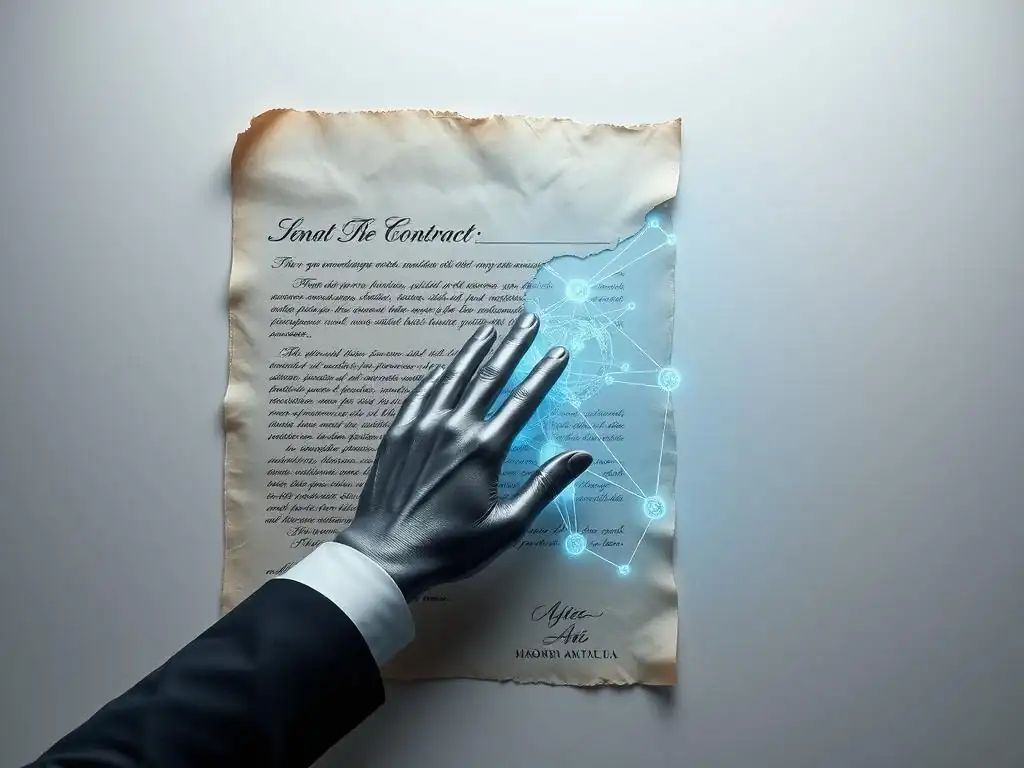
AI Smart Contracts and the Future of Dispute Resolution
AI smart contracts are poised to significantly reshape the landscape of dispute resolution. Their inherent automation and transparency reduce the likelihood of disputes arising in the first place. Furthermore, when disputes do occur, AI can play a central role in automated dispute resolution mechanisms.
AI algorithms can be designed to analyze contract terms, evidence, and relevant data to objectively assess the merits of a claim and even propose or enforce resolutions. This can range from simple automated payouts based on pre-defined conditions to more complex AI-mediated arbitration processes. The shift towards AI-driven dispute resolution promises faster, cheaper, and more consistent outcomes compared to traditional litigation or arbitration.
Despite the potential for AI-driven dispute resolution, courts will continue to play a vital role in addressing complex or novel AI-related contractual disputes. Cases involving fundamental legal questions about the validity, interpretation, or enforceability of AI smart contracts, particularly in the early stages of adoption, are likely to end up in court.
Courts will need to adapt their procedures and expertise to effectively handle disputes involving AI systems, including understanding AI technology, interpreting AI-generated code, and assessing the "black box" problem. Judges and legal professionals will require training and education in AI and blockchain technologies to navigate these new legal frontiers.
Smart Contract Auditing and Verification: Ensuring Compliance
To ensure the reliability and legal compliance of AI smart contracts, robust auditing and verification mechanisms are essential. Smart contract auditing involves a thorough review of the contract code to identify potential vulnerabilities, bugs, or unintended consequences. Verification processes aim to formally prove that the smart contract code behaves as intended and complies with relevant legal and regulatory requirements.
AI can itself be leveraged to enhance auditing and verification, automating code analysis, identifying anomalies, and even simulating contract behavior under various scenarios. Independent third-party audits and certifications can further enhance trust and demonstrate due diligence in the development and deployment of AI smart contracts.
Potential Solutions and Regulatory Frameworks
Developing Clear Legal Standards for AI Smart Contracts
Addressing the legal uncertainties surrounding AI smart contracts requires the development of clear and comprehensive legal standards. This includes defining the legal status of AI smart contracts, establishing rules for contract formation and interpretation in the AI context, and clarifying liability and accountability frameworks. These legal standards should be technology-neutral, adaptable to evolving AI capabilities, and harmonized across jurisdictions to facilitate cross-border transactions. Industry collaboration, legal scholarship, and governmental initiatives are crucial for developing these necessary legal frameworks.
Establishing Regulatory Sandboxes for Innovation and Testing
To foster innovation while mitigating risks, regulatory sandboxes can provide a valuable tool for AI smart contracts. Regulatory sandboxes are controlled environments where businesses can test and deploy innovative technologies, like AI smart contracts, under the supervision of regulatory authorities. These sandboxes allow for real-world experimentation and data collection, providing valuable insights for policymakers to develop evidence-based regulations. Sandboxes can also facilitate dialogue between regulators, innovators, and legal experts, fostering a collaborative approach to navigating the legal and ethical challenges of AI smart contracts.
Promoting Interdisciplinary Collaboration Between Legal Experts and AI Developers
The successful integration of AI smart contracts into the legal landscape requires close interdisciplinary collaboration. Legal experts, with their understanding of contract law principles and legal frameworks, need to work closely with AI developers, who possess the technical expertise to build and deploy AI systems. This collaboration is essential for ensuring that AI smart contracts are not only technologically sound but also legally compliant, ethically responsible, and aligned with societal values. Fostering communication and knowledge sharing between these disciplines is crucial for navigating the complex legal and technical challenges of AI smart contracts and realizing their full potential.
Case Studies: Examining Real-World Applications and Legal Implications
AI-Powered Insurance Claims Processing and Fraud Detection
The insurance industry is ripe for disruption by AI-powered smart contracts. Consider a scenario where insurance policies are encoded as AI smart contracts that automatically process claims based on real-time data and AI-driven analysis. For example, an AI smart contract for crop insurance could autonomously assess damage from weather events using satellite imagery and weather data, triggering payouts without manual claim adjustment.
Furthermore, AI can enhance fraud detection by analyzing claim patterns and identifying anomalies indicative of fraudulent activity. However, legal implications arise regarding data privacy when processing sensitive medical or personal information, and ensuring fairness and transparency in AI-driven claim decisions is paramount to avoid discriminatory outcomes and potential legal challenges related to algorithmic bias.
Smart Contracts in Decentralized Finance (DeFi) and Regulatory Scrutiny
Decentralized Finance (DeFi) platforms heavily rely on smart contracts to automate lending, borrowing, trading, and other financial services. AI can further enhance DeFi smart contracts by optimizing trading strategies, managing risk, and improving user experience. For instance, AI-powered smart contracts could dynamically adjust interest rates in DeFi lending platforms based on market conditions and risk assessments.
However, the rapid growth of DeFi and its reliance on smart contracts has attracted significant regulatory scrutiny. Regulators are grappling with how to apply existing financial regulations to decentralized and often anonymous DeFi platforms and the smart contracts that underpin them. Legal challenges in DeFi include jurisdictional issues, anti-money laundering (AML) compliance, and investor protection, particularly concerning the legal status and enforceability of DeFi smart contracts in various jurisdictions.
The Future of Contract Law: Adapting to the AI-Driven Landscape
Predictions for the Evolution of Contract Law in the Age of AI
The advent of AI smart contracts heralds a significant evolution in contract law. Traditional contract law principles will need to adapt to accommodate the unique characteristics of AI-driven agreements. We can anticipate the emergence of new legal doctrines and interpretations to address issues like AI agency, algorithmic bias, and the "black box" problem. Contract law may become more code-centric, with legal analysis increasingly involving the interpretation of smart contract code and AI algorithms. The focus may shift from ex-post dispute resolution to ex-ante prevention through robust smart contract auditing, verification, and AI-driven risk management tools.
The Need for Legal Education and Training in AI and Blockchain Technologies
To navigate this evolving legal landscape, legal education and training must incorporate AI and blockchain technologies. Law schools and continuing legal education programs need to equip lawyers and judges with the necessary technical literacy to understand AI smart contracts, blockchain infrastructure, and related legal and ethical challenges. This includes training in code interpretation, AI algorithm basics, data privacy regulations, and cybersecurity principles. A new generation of legal professionals proficient in both law and technology is essential for effectively addressing the legal complexities of AI smart contracts and guiding their responsible development and adoption.
Embracing Innovation While Mitigating Risks: A Balanced Approach
The future of contract law in the age of AI lies in striking a balance between embracing innovation and mitigating risks. AI smart contracts offer tremendous potential for efficiency, transparency, and automation, but they also pose new legal, ethical, and societal challenges.
A balanced approach requires fostering innovation through regulatory sandboxes and supportive legal frameworks while proactively addressing risks through clear legal standards, robust auditing mechanisms, and ethical guidelines for AI development. Collaboration between legal experts, technologists, policymakers, and the public is crucial for navigating this transformative period and ensuring that AI smart contracts are developed and deployed in a responsible and beneficial manner.
Conclusion: AI Smart Contracts - Transforming Contract Law and Enforcement
Summarizing the Key Impacts and Challenges
AI smart contracts are poised to revolutionize contract law and enforcement, offering significant advantages in efficiency, transparency, and automation. However, they also present novel legal challenges related to legal status, code interpretability, algorithmic bias, data privacy, and liability. These challenges necessitate a re-evaluation of traditional contract law principles and the development of new legal frameworks to accommodate the unique characteristics of AI-driven agreements. Overcoming the "black box" problem, ensuring fairness and accountability, and establishing clear legal standards are critical for the widespread adoption of AI smart contracts.
The Potential for a More Efficient and Equitable Contractual System
Despite the challenges, AI smart contracts hold immense potential to create a more efficient and equitable contractual system. Automation reduces transaction costs and delays, while enhanced transparency and objectivity can minimize disputes and promote fairer outcomes. AI-driven dispute resolution mechanisms offer the promise of faster, cheaper, and more consistent justice. By addressing the legal and ethical challenges proactively, we can harness the transformative power of AI smart contracts to build a more streamlined, accessible, and trustworthy contractual environment for businesses and individuals alike.
Call to Action: Fostering Responsible Development and Adoption of AI Smart Contracts
The responsible development and adoption of AI smart contracts require a concerted effort from legal professionals, technologists, policymakers, and the broader community. This includes fostering interdisciplinary collaboration, developing clear legal standards, promoting ethical AI development practices, and investing in education and training. By working together, we can navigate the uncharted territory of AI smart contracts, unlock their transformative potential, and shape a future where contractual agreements are more efficient, equitable, and aligned with the needs of a rapidly evolving digital world.
Frequently Asked Questions
What are AI smart contracts, and how do they differ from traditional smart contracts?
AI smart contracts are self-executing agreements that integrate artificial intelligence, allowing them to adapt and learn based on data. Traditional smart contracts are pre-programmed and execute based on strictly defined conditions.
How might AI smart contracts impact the legal enforceability of agreements?
The autonomous nature of AI smart contracts raises questions about liability and predictability. Determining responsibility when an AI makes an unforeseen decision presents a challenge.
What are the main legal challenges associated with using AI smart contracts in commercial transactions?
Key challenges include data privacy concerns, the difficulty in establishing clear legal frameworks, and issues related to interpretability and explainability of AI decisions.
How can regulators approach the regulation of AI smart contracts to foster innovation while mitigating risks?
Regulators need to balance promoting innovation with ensuring consumer protection and fairness. This may involve creating new legal standards or adapting existing ones.
What role does blockchain technology play in addressing the legal challenges associated with AI smart contracts?
Blockchain provides a secure and transparent platform for recording AI smart contract transactions. Its immutability can aid in auditing and dispute resolution, but doesn't solve the underlying legal ambiguities of AI decision-making.
Okay, here's a final reflection designed to close your article on AI Smart Contracts and their impact on traditional contract law, optimized for the keyword "AI smart contract legal challenges," and following the structure you provided:
The preceding analysis underscores a critical reality: the rise of AI smart contracts presents profound legal challenges that demand immediate attention. The theoretical benefits of efficiency and automation are undeniable, yet the complexities surrounding liability, enforceability, and ethical considerations threaten to undermine the very foundations of traditional contract law. Ignoring these challenges risks creating a legal landscape riddled with uncertainty and potential injustice.
The ongoing evolution of AI smart contracts is not merely a technological shift; it's a fundamental reshaping of how we understand and interact with agreements. This transformation necessitates a proactive and thoughtful approach from legal professionals, policymakers, and technologists alike. The law must be stable, and yet it cannot stand still.
- Roscoe Pound. This quote encapsulates the delicate balance we must strike between upholding established legal principles and adapting to the innovative, yet potentially disruptive, force of AI in contract law.
As we stand at the cusp of this new era, I urge you to consider the implications of AI smart contracts in your own field, whether you're a lawyer, a developer, or simply a citizen navigating an increasingly automated world. What role will you play in shaping the future of contract law? How can you contribute to ensuring that these powerful technologies are used responsibly and ethically? The answers to these questions will determine whether AI smart contracts become a force for progress or a source of unforeseen legal and societal complications.
Unveil the Future: Your Next Steps in the AI Smart Contract Revolution
Thank you for exploring the transformative impact of AI smart contracts on traditional contract law and enforcement with us. We hope this article has illuminated the potential and challenges of this exciting intersection. Now, let's turn that knowledge into action!
Here's how you can delve deeper into the world of AI-powered contracts:
- Dive into a Practical Project: Start building a basic AI smart contract prototype! Even a simple project will solidify your understanding and spark new ideas.
- Share your insights! Engage in discussions with legal professionals and AI experts to explore ethical considerations and potential regulatory frameworks.
- Subscribe to industry newsletters and follow leading researchers to stay on top of the latest advancements and emerging trends in this rapidly evolving field.
How will you leverage AI smart contracts to reshape the future of legal agreements? Share your thoughts in the comments below!
Leave a Reply