
What is SelfSovereign Identity and Why Blockchain is the Perfect Match?

Welcome to Blockchain Trends, your guide to understanding the revolutionary impact of blockchain technology beyond the headlines.
Dive into the fascinating world where blockchain meets governance, and discover how it's reshaping the future. Ever wondered how you can truly own and control your digital identity? Our latest exploration delves into the powerful synergy between blockchain and selfsovereign identity. Unlock the potential of secure, decentralized control and uncover the selfsovereign identity blockchain benefits that are transforming how we interact online. Intrigued? Read on to learn more about this game-changing application of blockchain!
What is Self-Sovereign Identity and Why Blockchain is the Perfect Match?
- Understanding Self-Sovereign Identity (SSI)
- The Role of Blockchain in Self-Sovereign Identity
- Self-Sovereign Identity Blockchain Benefits: A Deeper Dive
- Use Cases of Blockchain-Based Self-Sovereign Identity
- Challenges and Considerations for Blockchain SSI Adoption
- The Future of Digital Identity: Blockchain and Self-Sovereignty
-
Frequently Asked Questions
- What is Self-Sovereign Identity (SSI) and why is it important?
- How does blockchain technology enhance Self-Sovereign Identity?
- What are the key benefits of using blockchain for SSI?
- What are some real-world applications of Self-Sovereign Identity using blockchain?
- What are the regulatory considerations surrounding Self-Sovereign Identity and blockchain implementation?
- Final Reflection: Embracing the Future of Digital Autonomy
- Unleash Your Digital Freedom: Take Control of Your Identity!
Understanding Self-Sovereign Identity (SSI)
Defining Self-Sovereign Identity: A New Paradigm for Digital Identity
Self-Sovereign Identity (SSI) represents a revolutionary shift in how we think about and manage digital identity. In traditional identity models, control over personal data and identity information is often centralized with institutions, governments, or corporations. Users rely on these intermediaries to verify and manage their identities, leading to data silos, privacy concerns, and vulnerabilities to data breaches.
SSI, in contrast, flips this paradigm, placing individuals at the center of their digital identity ecosystem. It empowers users with complete control over their identity data, allowing them to manage, store, and share their information as they see fit, without dependence on central authorities.
This new paradigm envisions a world where individuals possess digital identities akin to physical wallets, holding verifiable credentials that they can selectively present when necessary. Think of it as owning your digital passport, driver's license, and professional certifications, all within your control. This user-centric approach not only enhances privacy and security but also fosters greater autonomy and trust in digital interactions. SSI is not just about technology; it's about fundamentally rethinking the relationship between individuals and their digital selves, moving towards a more equitable and empowering digital future.
Key Principles of Self-Sovereign Identity (SSI)
Several core principles underpin the concept of Self-Sovereign Identity, forming the foundation of this user-centric approach. User Control is paramount, meaning individuals have ultimate authority over their identity data and how it is used. Access ensures individuals can access and manage their identity information easily and conveniently. Transparency dictates that the systems and algorithms governing SSI should be open and understandable, fostering trust and accountability. Persistence ensures that identities are long-lasting and not easily revoked or lost, providing stability and reliability.
Furthermore, Portability is crucial, enabling individuals to use their identity across different platforms and contexts without vendor lock-in. Interoperability emphasizes the need for different SSI systems to work together seamlessly, creating a unified and globally recognized identity ecosystem. Finally, Privacy and Security by Design are integral, ensuring that SSI systems are built with robust security measures and prioritize user privacy through data minimization and selective disclosure. These principles collectively aim to create a digital identity framework that is secure, private, user-centric, and empowers individuals in the digital age.
Benefits of Self-Sovereign Identity for Individuals and Organizations
The adoption of Self-Sovereign Identity brings a multitude of benefits to both individuals and organizations, fundamentally reshaping digital interactions. For individuals, SSI translates to enhanced privacy by reducing data sharing with intermediaries and enabling selective disclosure of information. It offers greater security by minimizing reliance on centralized databases, which are prime targets for cyberattacks, and by empowering users to control access to their data. Moreover, SSI provides increased convenience by streamlining digital interactions and reducing the need for repetitive identity verification processes. Individuals gain autonomy over their digital lives, fostering trust and control.
Organizations also stand to gain significantly from SSI adoption. Businesses can reduce costs associated with identity management, data storage, and regulatory compliance. SSI enhances security for organizations by shifting the burden of data storage and security to individuals, reducing the risk of large-scale data breaches.
It can improve efficiency in onboarding processes, customer verification, and data sharing with trusted partners. SSI also fosters greater trust and transparency with customers, enhancing brand reputation and building stronger relationships in an increasingly privacy-conscious world. For instance, a study by the World Economic Forum estimates that SSI could unlock up to \$3 trillion in economic value by 2030 by reducing friction and enhancing trust in digital interactions.
The Role of Blockchain in Self-Sovereign Identity
Why Blockchain Technology is Ideal for SSI Implementation
Blockchain technology emerges as an exceptionally well-suited foundation for implementing Self-Sovereign Identity due to its inherent characteristics that align perfectly with SSI principles. Decentralization, a core tenet of blockchain, eliminates the need for central authorities to control and manage identities, directly empowering individuals as envisioned by SSI. Immutability, another key feature, ensures that identity data recorded on a blockchain is tamper-proof and auditable, building trust and security. Cryptography, integral to blockchain, provides the necessary tools for secure key management, data encryption, and verifiable credentials, all crucial components of a robust SSI system.
Furthermore, blockchain's transparency (in public blockchains) or verifiable audit trails (in permissioned blockchains) enhances accountability and trust in identity systems. The distributed nature of blockchain infrastructure also increases resilience and reduces single points of failure, making SSI systems built on blockchain more robust and reliable. The combination of these features – decentralization, immutability, cryptography, transparency, and resilience – makes blockchain a compelling technology to underpin the secure, private, and user-centric vision of Self-Sovereign Identity.
Blockchain's Immutable Ledger for Secure Identity Management
The immutable ledger provided by blockchain technology is a cornerstone of secure identity management within SSI frameworks. Once data is recorded on a blockchain, it becomes virtually impossible to alter or delete, creating a permanent and verifiable record of identity information and credentials.
This immutability is achieved through cryptographic hashing and distributed consensus mechanisms inherent in blockchain technology. For SSI, this means that when a verifiable credential is issued and recorded on a blockchain, its authenticity and integrity can be cryptographically proven and verified at any time in the future, without relying on a central issuing authority for continuous validation.
This characteristic is particularly vital for combating identity fraud and enhancing trust in digital interactions. In traditional systems, identity data stored in centralized databases is vulnerable to tampering, data breaches, and insider threats. Blockchain's immutable nature mitigates these risks significantly. For example, if a university issues a degree credential on a blockchain-based SSI system, employers can verify the authenticity of that degree directly on the blockchain, ensuring that it has not been forged or altered. This eliminates the need for intermediaries and drastically reduces the potential for fraudulent credentials, strengthening the security and reliability of digital identity management.
Decentralized Control and Enhanced Privacy with Blockchain SSI Solutions
Decentralized control is a fundamental aspect of both blockchain and Self-Sovereign Identity, and their synergy creates powerful SSI solutions that prioritize user privacy. Traditional identity systems often rely on centralized identity providers (IdPs) who control user data and authentication processes. In contrast, blockchain-based SSI solutions leverage decentralized identifiers (DIDs) and decentralized networks to distribute control among users and nodes in the network, eliminating single points of failure and control. This decentralization empowers individuals to manage their own DIDs and associated credentials without dependence on intermediaries.
This shift towards decentralized control directly translates to enhanced privacy. With blockchain SSI, users can interact with services and applications using their DIDs and selectively disclose only the necessary information required for each interaction, minimizing data sharing and reducing the risk of privacy violations.
Furthermore, decentralized storage solutions, often integrated with blockchain SSI systems, allow users to store their identity data in encrypted and distributed manners, further enhancing data privacy and control. This decentralized architecture ensures that no single entity has complete access to or control over an individual's identity data, fostering a more privacy-preserving and user-empowering digital identity ecosystem.
Self-Sovereign Identity Blockchain Benefits: A Deeper Dive
Enhanced Security and Reduced Identity Theft with Blockchain SSI
Selfsovereign identity blockchain benefits are significant when it comes to security and the fight against identity theft. By design, blockchain-based SSI enhances security in several key ways. Firstly, the cryptographic foundations of blockchain, including public-key cryptography, ensure that only the rightful owner of a digital identity can control and access it.
Private keys, held exclusively by the user, are required to authorize transactions and access identity data, making unauthorized access extremely difficult. Secondly, the decentralized nature of blockchain eliminates single points of failure and reduces the attractiveness of identity systems as targets for large-scale cyberattacks. Instead of targeting a central database, attackers would need to compromise a distributed network, which is exponentially more challenging.
Thirdly, the immutability of the blockchain ledger provides a tamper-proof record of identity transactions and credential issuance, preventing fraudulent alterations and ensuring data integrity. These combined security features significantly reduce the risk of identity theft, data breaches, and unauthorized access compared to traditional centralized identity systems. For example, a report by Javelin Strategy & Research found that identity fraud losses in the US reached \$56 billion in 2020, highlighting the urgent need for more secure identity solutions like blockchain SSI, which offers a robust defense against these prevalent threats.
Increased User Control and Data Ownership in Blockchain-Based SSI
One of the most compelling selfsovereign identity blockchain benefits is the unprecedented level of user control and data ownership it provides. In traditional identity models, individuals often have limited control over their personal data, which is typically collected, stored, and managed by various organizations. Blockchain-based SSI reverses this dynamic, placing individuals firmly in control of their identity data. Users are empowered to create and manage their own decentralized identifiers (DIDs), which serve as their digital identities. They control the private keys associated with these DIDs, giving them exclusive authority over their identity information.
Furthermore, SSI enables users to store their identity data in personal data stores, which can be locally hosted or managed by trusted providers chosen by the user. This contrasts sharply with centralized systems where data is often stored in organization-controlled databases. Users can selectively grant access to their data to trusted parties, revoking access at any time. This granular control over data sharing and access empowers individuals to decide who has access to their information and for what purpose, fundamentally shifting data ownership from organizations to individuals and fostering a more equitable and privacy-respecting digital environment.
Improved Privacy and Data Minimization Through Selective Disclosure
Selfsovereign identity blockchain benefits extend significantly to improved privacy and data minimization through selective disclosure. Traditional identity verification processes often require individuals to share excessive amounts of personal data, even when only a small portion is actually needed for verification. For example, proving you are over 21 to purchase alcohol might traditionally require showing your entire driver's license, revealing your address, date of birth, and other unnecessary details. Blockchain-based SSI enables selective disclosure, allowing users to share only the minimum necessary information required for a specific interaction.
Using verifiable credentials, individuals can cryptographically prove specific attributes about themselves without revealing all underlying data. In the alcohol purchase example, a verifiable credential could attest to the fact that the individual is "over 21" without disclosing their exact date of birth or address. This data minimization approach significantly enhances privacy by reducing the amount of personal data exposed and the potential for data misuse or breaches. SSI systems built on blockchain are designed to facilitate this selective disclosure, giving users fine-grained control over their data and promoting privacy by design in digital interactions.
Streamlined Verification Processes with Blockchain SSI
Streamlined verification processes are another key selfsovereign identity blockchain benefit, offering significant improvements over traditional, often cumbersome, identity verification methods. Traditional verification processes can be slow, inefficient, and require repeated sharing of personal information with different organizations. Blockchain-based SSI simplifies and accelerates verification using verifiable credentials and decentralized identifiers (DIDs). Once a verifiable credential is issued and anchored on a blockchain, it can be verified instantly and cryptographically by any relying party without needing to contact the issuer each time.
This eliminates the need for intermediaries in many verification scenarios and reduces the friction associated with identity checks. For example, consider professional certifications. With blockchain SSI, a professional certification issued as a verifiable credential can be instantly verified by potential employers or clients by simply checking the blockchain for the credential's validity. This streamlined process saves time, reduces administrative overhead, and enhances trust in the verification process itself. Organizations benefit from faster onboarding, reduced verification costs, and improved efficiency, while individuals experience a smoother and more convenient digital experience.
Use Cases of Blockchain-Based Self-Sovereign Identity
SSI for Digital Credentials and Verifiable Credentials
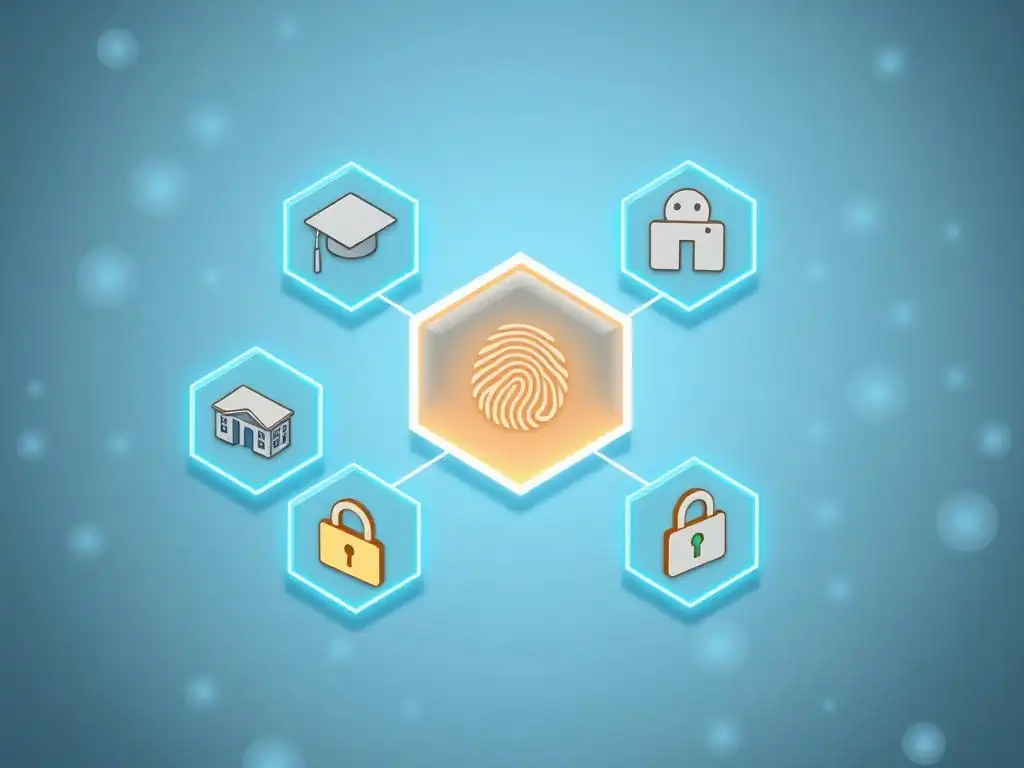
One of the most prominent use cases for blockchain-based SSI is in the realm of digital credentials and verifiable credentials. Traditional credentials, such as diplomas, licenses, and certifications, are often paper-based, easily forged, and difficult to verify efficiently. SSI, combined with blockchain technology, offers a robust solution for issuing, managing, and verifying digital credentials in a secure and tamper-proof manner. Verifiable credentials, issued as cryptographically signed digital documents, can be anchored on a blockchain, ensuring their authenticity and integrity.
Educational institutions can issue diplomas and transcripts as verifiable credentials, allowing students to easily share their academic achievements with employers or other institutions. Professional organizations can issue licenses and certifications that are instantly verifiable, reducing fraud and streamlining professional credentialing processes. Employees can hold digital credentials representing their skills and qualifications, making it easier to manage their professional identity and credentials.
The use of blockchain for verifiable credentials enhances trust, reduces administrative burden, and empowers individuals to control and share their credentials seamlessly across various contexts. For example, the government of Singapore is exploring the use of verifiable credentials for educational qualifications to enhance the efficiency and security of credential verification.
Blockchain SSI in Healthcare: Secure and Patient-Centric Data Management
Blockchain SSI has transformative potential in healthcare, offering a pathway towards secure and patient-centric data management. Healthcare data is highly sensitive, and traditional systems often struggle to balance data security, privacy, and interoperability. Blockchain-based SSI can empower patients with greater control over their health records, allowing them to manage access permissions and share their data securely with healthcare providers. Patients can hold verifiable credentials representing their medical history, allergies, and medications, enabling seamless and secure data sharing across different healthcare providers and institutions.
This patient-centric approach can improve care coordination, reduce medical errors, and enhance the overall patient experience. Healthcare providers can benefit from improved data access and interoperability, leading to more informed decision-making and efficient healthcare delivery. Blockchain's security features, including cryptography and immutability, enhance the security and privacy of sensitive health data, mitigating the risks of data breaches and unauthorized access. For instance, projects like MedRec are exploring the use of blockchain SSI to create patient-owned and controlled health record systems, aiming to revolutionize healthcare data management.
SSI in Supply Chain Management: Enhanced Transparency and Traceability
Supply chain management can greatly benefit from the enhanced transparency and traceability offered by blockchain SSI. In complex global supply chains, tracking the provenance and authenticity of goods can be challenging, leading to inefficiencies, fraud, and lack of trust. Blockchain-based SSI can be used to create digital identities for products, materials, and entities within the supply chain, enabling transparent and auditable tracking of goods from origin to consumer. Verifiable credentials can be used to represent certifications, quality checks, and other relevant information about products, enhancing transparency and building trust among stakeholders.
Manufacturers can issue verifiable credentials attesting to the authenticity and origin of their products. Logistics providers can use SSI to track shipments and verify the chain of custody. Consumers can verify the provenance and authenticity of products they purchase, combating counterfeiting and ensuring ethical sourcing. This enhanced transparency and traceability can improve efficiency, reduce fraud, and build more resilient and trustworthy supply chains. Companies like IBM and Walmart are exploring blockchain-based supply chain solutions that incorporate SSI principles to improve traceability and transparency across their supply networks.
Government Applications of Blockchain SSI: Citizen Empowerment and Efficiency
Governments worldwide are exploring the potential of blockchain SSI to enhance citizen empowerment and improve the efficiency of public services. Government-issued digital identities based on SSI principles can empower citizens with greater control over their personal data and interactions with government services. Digital IDs issued as verifiable credentials can be used for accessing online services, voting, and verifying identity for various government transactions, streamlining processes and reducing bureaucracy. Blockchain's security features can enhance the security and privacy of citizen data and government systems.
Governments can issue digital IDs and credentials to citizens, allowing them to prove their identity and access services securely online and offline. Voting systems can be made more secure and transparent using blockchain SSI. Social welfare programs can be delivered more efficiently and transparently using digital identities and verifiable credentials. Estonia, a digital leader, has been exploring blockchain technology for various government services, including digital identity, demonstrating the potential of SSI to transform government operations and enhance citizen engagement.
Challenges and Considerations for Blockchain SSI Adoption
Scalability and Performance of Blockchain SSI Systems
Despite the numerous benefits, the widespread adoption of blockchain SSI faces challenges, particularly regarding scalability and performance. Public blockchains, while highly decentralized and secure, often have limitations in transaction throughput and speed, which can be a bottleneck for large-scale identity systems requiring high transaction volumes. Processing millions of identity transactions efficiently on a public blockchain can be challenging with current technologies. Permissioned blockchains offer higher performance and scalability but may compromise on decentralization to some extent.
Optimizing blockchain infrastructure for SSI applications requires careful consideration of blockchain platform selection, consensus mechanisms, and network architecture. Layer-2 scaling solutions and other technological advancements are being explored to improve the scalability and performance of blockchain networks for SSI. Furthermore, efficient data management and storage strategies are crucial to ensure that SSI systems can handle the growing volume of identity data without compromising performance. Addressing these scalability and performance challenges is essential for enabling the widespread adoption of blockchain SSI for large populations and diverse use cases.
Interoperability and Standards for Widespread Adoption of SSI
Interoperability and standards are critical for the widespread adoption and success of Self-Sovereign Identity. For SSI to truly empower individuals and create a seamless digital identity ecosystem, different SSI systems and solutions need to be interoperable and able to communicate with each other. Lack of interoperability can lead to fragmented identity silos, hindering user experience and limiting the benefits of SSI. Standardization efforts are crucial to define common protocols, data formats, and frameworks for SSI systems to ensure seamless interoperability.
Organizations like the Decentralized Identity Foundation (DIF) and the W3C Verifiable Credentials Working Group are actively working on developing open standards and specifications for SSI and verifiable credentials. Adopting these standards is essential for fostering interoperability and avoiding vendor lock-in.
Furthermore, collaboration and coordination among different stakeholders, including technology providers, governments, and industry players, are necessary to promote the adoption of common standards and ensure that SSI systems can work together seamlessly across different platforms and domains. Achieving interoperability through open standards is key to unlocking the full potential of SSI and creating a truly user-centric and globally connected digital identity ecosystem.
Regulatory Landscape and Legal Frameworks for Self-Sovereign Identity
The regulatory landscape and legal frameworks surrounding Self-Sovereign Identity are still evolving and present both challenges and opportunities for adoption. As SSI empowers individuals with greater control over their data and identity, it raises questions about legal liability, data governance, and regulatory compliance. Existing regulations and legal frameworks may not fully address the unique characteristics of SSI, requiring adaptation and potentially new legislation to provide clarity and legal certainty. Understanding and navigating the evolving regulatory landscape is crucial for organizations and individuals adopting SSI solutions.
Governments and regulatory bodies need to develop clear legal frameworks that support and govern SSI, addressing issues such as data protection, cross-border recognition of digital identities, and legal validity of verifiable credentials. Balancing innovation with regulatory oversight is essential to foster the responsible development and adoption of SSI while protecting user rights and ensuring legal compliance. Industry stakeholders, legal experts, and policymakers need to collaborate to shape the regulatory landscape and create legal frameworks that enable the widespread and trusted adoption of Self-Sovereign Identity.
The Future of Digital Identity: Blockchain and Self-Sovereignty
Predictions for the Growth of Self-Sovereign Identity Market
The Self-Sovereign Identity market is poised for significant growth in the coming years, driven by increasing demand for user-centric digital identity solutions, growing awareness of privacy concerns, and the maturing of blockchain and related technologies. Market research reports predict substantial growth in the SSI market size, with estimates varying but consistently pointing towards a multi-billion dollar market within the next few years.
Factors contributing to this growth include increasing adoption of SSI in various sectors, including finance, healthcare, government, and supply chain management. The rise of decentralized applications (dApps) and the metaverse is also expected to fuel the demand for SSI as users seek greater control over their identities in these emerging digital environments.
Industry analysts anticipate a rapid increase in SSI deployments and adoption rates as organizations and individuals recognize the benefits of user empowerment, enhanced security, and improved privacy. The development of interoperable standards and supportive regulatory frameworks will further accelerate market growth. Early adopters in various industries are paving the way for wider adoption, and as success stories emerge and awareness spreads, the SSI market is expected to experience exponential growth, transforming the landscape of digital identity.
The Impact of SSI on Decentralized Applications (dApps) and the Metaverse
Self-Sovereign Identity is expected to have a profound impact on decentralized applications (dApps) and the emerging metaverse. In the current web landscape, users often rely on centralized identity providers and platforms to access dApps and metaverse experiences, creating dependencies and privacy risks. SSI offers a decentralized and user-centric alternative, enabling users to control their identities and data within these decentralized environments. With SSI, users can access dApps and metaverse platforms using their DIDs and selectively share verifiable credentials, enhancing privacy and reducing reliance on centralized intermediaries.
SSI can streamline user onboarding and authentication in dApps and metaverse environments, providing a more seamless and user-friendly experience. It can also enable new forms of decentralized governance and identity-based interactions within these platforms. As dApps and the metaverse evolve, SSI is likely to become a foundational technology, empowering users to navigate these decentralized digital worlds with greater control, privacy, and security. The integration of SSI with dApps and the metaverse is expected to foster a more user-centric and decentralized web, aligning with the core principles of Web3 and decentralized technologies.
Self-Sovereign Identity: Empowering Individuals in the Digital Age
Self-Sovereign Identity represents a paradigm shift in digital identity, empowering individuals in the digital age by placing them at the center of their identity ecosystem. By granting users control over their identity data, SSI fosters greater privacy, security, and autonomy in digital interactions. Blockchain technology provides a robust and decentralized foundation for implementing SSI, ensuring immutability, security, and transparency. The benefits of selfsovereign identity blockchain benefits are numerous, ranging from enhanced security and reduced identity theft to streamlined verification processes and improved privacy through selective disclosure.
As SSI adoption grows across various sectors and use cases, it has the potential to transform the way we interact online, creating a more user-centric, secure, and privacy-respecting digital world. From digital credentials and healthcare data management to supply chain transparency and government services, SSI offers innovative solutions to address critical challenges in digital identity. While challenges related to scalability, interoperability, and regulation need to be addressed, the future of digital identity is increasingly intertwined with the principles of self-sovereignty, promising a more empowering and equitable digital experience for individuals worldwide.
Frequently Asked Questions
What is Self-Sovereign Identity (SSI) and why is it important?
SSI empowers individuals to control their own digital identity without relying on centralized authorities. It's important because it offers greater privacy and security by eliminating the need to share excessive personal data with third parties.
How does blockchain technology enhance Self-Sovereign Identity?
Blockchain provides a decentralized and immutable ledger for verifying identity credentials. This ensures the authenticity and integrity of identity claims, making them more trustworthy and resistant to fraud.
What are the key benefits of using blockchain for SSI?
The main benefits include enhanced security, as blockchain is resistant to tampering. It also offers increased privacy by minimizing data sharing and greater control over personal information.
What are some real-world applications of Self-Sovereign Identity using blockchain?
SSI can be used in various sectors such as healthcare for managing medical records, finance for secure KYC (Know Your Customer) processes, and education for verifying academic credentials.
What are the regulatory considerations surrounding Self-Sovereign Identity and blockchain implementation?
Regulations are still evolving, but data privacy laws like GDPR are crucial. Ensuring compliance with KYC/AML requirements is also essential for blockchain-based SSI solutions.
Okay, here's a final reflection designed to close your article "What is Self-Sovereign Identity and Why Blockchain is the Perfect Match?" focusing on the keyword "Selfsovereign identity blockchain benefits," and following the structure you provided:
Final Reflection: Embracing the Future of Digital Autonomy
The journey through Self-Sovereign Identity (SSI) and its powerful synergy with blockchain technology reveals a future where individuals, not institutions, control their digital lives. The promise of reclaiming ownership over our personal data is no longer a distant dream, but a tangible possibility fueled by the inherent security and transparency of blockchain. This shift represents a fundamental change in how we interact with the digital world, moving away from centralized control towards a decentralized, user-centric model.
The ongoing impact of SSI, powered by blockchain, is already being felt across various sectors, from healthcare to finance. This movement towards digital autonomy is not just a technological advancement; it's a cultural shift, empowering individuals to participate more fully and securely in the digital economy. Identity is the new perimeter of security,
as Jeremy Grant, former Senior Executive Advisor at NIST, so aptly stated. This quote underscores the critical need for secure and user-controlled identity solutions, and SSI on blockchain offers a compelling answer.
As we conclude this exploration of Self-Sovereign Identity and its blockchain foundation, consider the profound implications for your own digital footprint. How can you embrace this technology to reclaim control over your personal data? What steps can you take to advocate for a future where digital identity is truly owned and managed by the individual? The power to shape this future lies within each of us. Let us strive to build a more secure, transparent, and equitable digital world, one where self-sovereignty is not just a concept, but a reality.
Unleash Your Digital Freedom: Take Control of Your Identity!
Thank you for exploring the concept of Self-Sovereign Identity and understanding how blockchain technology can empower individuals to take full control of their digital credentials. With this knowledge, you're now equipped to advocate for a more secure and user-centric digital environment.
Here are some steps you can take to support the SSI movement:
- Learn more: Research SSI wallets and discover how they can help you manage your digital identity securely and privately.
- Share this article with your network to promote awareness about the importance of data ownership and control.
- Think about practical ways SSI could benefit you—perhaps by streamlining the process of verifying your identity for online services or transforming how you share your qualifications with employers.
What is the first action you will take today to reclaim your digital identity and embrace the future of Self-Sovereign Identity? Share your ideas in the comments below!
Leave a Reply