
Seamless Metaverse Experience: The User Benefits of Blockchain Interoperability


Welcome to Blockchain Trends, your guide to understanding the revolutionary impact of blockchain technology.
Imagine a metaverse where digital assets flow seamlessly between platforms, creating a truly unified and immersive experience. Our latest article delves into the groundbreaking user benefits of blockchain interoperability in the metaverse. Curious about how this technology is shaping the future of digital interaction and unlocking unprecedented opportunities? Explore the possibilities and discover the potential of a truly interconnected metaverse!
Seamless Metaverse Experience: The User Benefits of Blockchain Interoperability
- Introduction: Unlocking a Unified Metaverse with Blockchain Interoperability
- Understanding Blockchain Interoperability in the Metaverse Context
-
Benefits of Blockchain Interoperability for Metaverse Users
- Enhanced Asset Portability: Seamlessly Transferring NFTs and Digital Assets Across Metaverses
- Unified Digital Identity: Creating a Consistent Avatar and Profile Across Different Worlds
- Improved User Experience: Fostering a More Immersive and Connected Metaverse
- Increased Liquidity and Economic Opportunities: Boosting the Metaverse Economy
- Security Considerations for Blockchain Interoperability in the Metaverse
- The Future of Blockchain Interoperability and the Metaverse
- Conclusion: Embracing Interoperability for a User-Centric Metaverse Future
-
Frequently Asked Questions
- What exactly is blockchain interoperability, and why is it important for the metaverse?
- How does blockchain interoperability enhance the metaverse experience for users?
- What are the key benefits of having a seamless metaverse experience enabled by blockchain interoperability?
- What are some potential challenges in achieving full blockchain interoperability in the metaverse?
- How might regulations impact the development and adoption of blockchain interoperability solutions for the metaverse?
- Final Reflection: Bridging Worlds, Building Futures
- Ignite Your Metaverse Adventure!
Introduction: Unlocking a Unified Metaverse with Blockchain Interoperability
The Current Fragmented Metaverse Landscape and its Limitations
The metaverse, envisioned as a network of interconnected virtual worlds, currently resembles a collection of isolated islands. Each platform operates within its own walled garden, characterized by proprietary assets, identities, and experiences. Users are often forced to create separate avatars, accumulate digital assets that are locked within specific ecosystems, and navigate disparate interfaces.
This fragmentation hinders the seamless flow of users, assets, and data, preventing the metaverse from reaching its full potential as a unified and immersive digital realm. Imagine owning a valuable piece of digital art in one metaverse platform but being unable to display it or trade it in another – this lack of interoperability significantly diminishes the value proposition for users and creators alike.
This siloed approach creates significant limitations for users seeking a truly interconnected metaverse experience. For instance, a gamer might spend countless hours earning in-game currency and acquiring unique items in one metaverse game, only to find that these digital assets are worthless or unusable in another game, even if both games are conceptually similar. Similarly, social interactions are confined to individual platforms, preventing users from seamlessly connecting with friends or communities across different virtual worlds. This fragmented landscape not only restricts user freedom and flexibility but also stifles innovation and the overall growth of the metaverse ecosystem.
The Promise of Blockchain Interoperability for a Seamless User Experience
Blockchain interoperability offers a transformative solution to the current fragmentation of the metaverse. By enabling different blockchain networks to communicate and share information securely and efficiently, interoperability paves the way for a unified and seamless metaverse experience. This means users could potentially use a single digital identity across multiple platforms, seamlessly transfer digital assets between different virtual worlds, and engage in cross-metaverse interactions without friction. Blockchain interoperability promises to break down the walls between existing metaverse platforms, creating a more open, accessible, and user-centric digital landscape.
The benefits of blockchain interoperability for metaverse users are profound and far-reaching. Imagine a future where your digital avatar, built on a blockchain-based identity system, can seamlessly travel between different metaverse platforms, carrying your digital assets and reputation with you. This vision of a truly interoperable metaverse empowers users with greater control over their digital lives, unlocks new economic opportunities, and fosters a more immersive and connected digital experience. By addressing the limitations of the current fragmented landscape, blockchain interoperability is crucial for realizing the full potential of the metaverse as a truly unified and user-centric digital frontier.
Understanding Blockchain Interoperability in the Metaverse Context
What is Blockchain Interoperability? A Definition for Metaverse Applications
Blockchain interoperability, in the context of metaverse applications, refers to the ability of different blockchain networks that underpin various metaverse platforms to communicate, interact, and share data with each other. Essentially, it's about creating bridges between these independent blockchain ecosystems, allowing for the seamless transfer of information and assets across them. This concept is crucial because many metaverse platforms are being built on different blockchains, each with its own set of rules, protocols, and functionalities. Without interoperability, these platforms remain isolated, hindering the creation of a truly interconnected metaverse.
In simpler terms, blockchain interoperability in the metaverse can be likened to the internet's ability to connect different computer networks globally. Just as the internet allows seamless communication and data exchange between different websites and servers, blockchain interoperability aims to achieve the same level of connectivity between different metaverse platforms built on disparate blockchains. This includes enabling the transfer of digital assets like NFTs (Non-Fungible Tokens) representing virtual land, avatars, or in-game items, as well as allowing for the sharing of user identities and data across different metaverse environments, fostering a more unified and user-friendly metaverse experience.
Key Technologies Enabling Metaverse Interoperability: Cross-Chain Bridges, Sidechains, and Interoperability Protocols
Several key technologies are emerging to facilitate blockchain interoperability in the metaverse. Cross-chain bridges are a prominent solution, acting as conduits that allow the transfer of assets and data between two distinct blockchains. For example, a bridge might enable a user to move an NFT from an Ethereum-based metaverse platform to a platform built on Solana.
While bridges offer a direct pathway for asset transfer, it's crucial to note that their security and efficiency are paramount for ensuring seamless and trustworthy interoperability. Different types of bridges exist, each with varying levels of security and decentralization, impacting the overall user experience and security of cross-metaverse interactions.
Sidechains represent another approach, functioning as separate blockchains that are linked to a main blockchain (like Ethereum). Sidechains can process transactions more efficiently and offer customized functionalities, while still benefiting from the security of the main chain. In the metaverse context, sidechains could host specific metaverse platforms or applications, allowing for faster and cheaper transactions within those environments, while maintaining interoperability with the broader ecosystem through the main chain.
Furthermore, interoperability protocols are being developed to establish standardized communication languages and frameworks for different blockchains. These protocols aim to create a more universal and seamless way for blockchains to interact, moving beyond point-to-point bridges and fostering a more organically interconnected metaverse fabric. Examples include protocols focused on message passing and data sharing across diverse blockchain networks.
How Interoperability Solves the Problem of Isolated Metaverse Platforms
Interoperability directly addresses the core issue of isolated metaverse platforms by creating pathways for communication and asset transfer between them. Currently, the lack of interoperability forces users to operate within walled gardens, limiting their ability to leverage their digital assets and identities across different virtual worlds. Imagine owning a virtual plot of land in one metaverse game and wanting to develop a business that spans multiple metaverse platforms. Without interoperability, this becomes incredibly complex, requiring users to duplicate efforts and fragment their digital presence. Interoperability effectively dismantles these walls, allowing for a more fluid and interconnected user experience.
By enabling the seamless movement of assets, identities, and data, interoperability fosters a more unified and user-centric metaverse. Users are no longer confined to single platforms but can explore a diverse range of virtual worlds, bringing their digital assets and established reputations with them. This interconnectedness unlocks new possibilities for social interaction, economic activity, and creative expression within the metaverse.
For instance, a user could participate in a virtual concert in one metaverse, then seamlessly transfer their avatar and digital merchandise to a different metaverse platform to attend a virtual art exhibition, all without creating new accounts or losing access to their digital possessions. This seamless transition and unified experience are the core benefits that blockchain interoperability brings to the metaverse.
Benefits of Blockchain Interoperability for Metaverse Users
Enhanced Asset Portability: Seamlessly Transferring NFTs and Digital Assets Across Metaverses
Reducing Friction in Moving Virtual Goods
The current metaverse landscape often traps digital assets within specific platforms, creating significant friction for users who wish to move their virtual goods. Imagine purchasing a unique digital fashion item as an NFT for your avatar in one metaverse. Without interoperability, this valuable asset is essentially locked within that platform, unusable in other virtual worlds. This limitation reduces the utility and desirability of digital assets, hindering the growth of a robust metaverse economy. Blockchain interoperability directly addresses this friction by enabling the seamless transfer of NFTs and other digital assets across different metaverse platforms.
With interoperability, users can expect a significantly smoother experience when moving their virtual possessions. Using cross-chain bridges or interoperability protocols, users could, for example, transfer a digital artwork NFT from a gaming metaverse to a social metaverse, displaying it in their virtual home or using it as a profile picture. This ease of transferability increases the perceived value and utility of digital assets, making them more attractive to users and fostering a more vibrant and dynamic metaverse economy. Reducing this friction is crucial for driving wider adoption and creating a truly user-centric metaverse experience.
Empowering Users with True Ownership and Control
Blockchain interoperability is fundamental to empowering metaverse users with true ownership and control over their digital assets. In a fragmented metaverse, users are often at the mercy of individual platform providers, who dictate the terms of use and control the fate of digital assets within their ecosystems. If a platform shuts down or changes its policies, users could potentially lose access to their valuable digital possessions. Blockchain technology, in general, aims to address this by providing users with verifiable ownership of their digital assets through NFTs, stored on decentralized ledgers.
However, true ownership is only fully realized when users can freely move and utilize their assets across different platforms. Blockchain interoperability extends the promise of ownership beyond individual platforms, giving users the freedom to choose where and how they use their digital assets. This control is a core tenet of decentralization and is crucial for building a metaverse where users are not just participants but also empowered stakeholders. By enabling asset portability, interoperability reinforces the principles of true digital ownership and control, shifting power back into the hands of users.
Unified Digital Identity: Creating a Consistent Avatar and Profile Across Different Worlds
Eliminating Redundant Account Creation and Management
Navigating the current fragmented metaverse often requires users to create and manage multiple accounts, each tied to a specific platform. This process is cumbersome and inefficient, creating a fragmented and inconsistent user experience. Imagine having to remember different usernames and passwords for each metaverse platform you wish to explore, and having to recreate your avatar and profile each time. This redundant account creation and management adds unnecessary complexity and frustration for users, hindering seamless exploration and interaction across the metaverse.
Blockchain interoperability offers the potential for a unified digital identity system that eliminates this redundancy. By leveraging blockchain-based identity solutions, users could create a single, portable digital identity that can be used across multiple metaverse platforms. This unified identity could encompass not only avatar representation but also user profiles, preferences, and even reputation data. This streamlined approach simplifies user onboarding and management, making it easier for users to seamlessly navigate and participate in the broader metaverse ecosystem without the hassle of managing multiple accounts.
Building a Reputation System Valid Across Multiple Platforms
Beyond simplifying account management, a unified digital identity system enabled by blockchain interoperability can facilitate the development of a portable reputation system across the metaverse. Currently, reputation is often confined to individual platforms, meaning that a user's positive standing in one metaverse environment does not necessarily translate to another. This lack of portable reputation hinders trust-building and can create inefficiencies in various metaverse interactions, particularly in economic and social contexts.
With a unified digital identity, user reputation could be built and maintained across multiple platforms. Positive interactions, achievements, and contributions in one metaverse could contribute to a user's overall reputation score, which would be recognized and valued across other interoperable platforms. This portable reputation system can foster trust and accountability within the metaverse, enabling more efficient and meaningful interactions.
For example, a user with a strong positive reputation could gain preferential access to certain metaverse experiences or services, or be more readily trusted in peer-to-peer transactions across different virtual worlds. This cross-platform reputation system is a significant benefit of blockchain interoperability for creating a more cohesive and trustworthy metaverse environment.
Improved User Experience: Fostering a More Immersive and Connected Metaverse
Enabling Cross-Metaverse Social Interactions
The current fragmented metaverse landscape limits social interactions, confining them within the boundaries of individual platforms. Users who wish to connect with friends or communities across different virtual worlds face significant barriers, hindering the development of a truly interconnected social metaverse. Imagine your friend is exploring a different metaverse platform, but due to the lack of interoperability, you cannot easily join them with your existing avatar and social connections. This isolation limits the potential for rich and diverse social experiences within the metaverse.
Blockchain interoperability can break down these social silos by enabling cross-metaverse social interactions. With interoperable platforms, users could potentially connect with friends and communities regardless of the specific metaverse platform they are currently using. This could involve features like cross-platform friend lists, shared social spaces accessible from different metaverses, and the ability to participate in social events and activities that span multiple virtual worlds. This enhanced social connectivity would foster a more immersive and engaging metaverse experience, allowing users to build and maintain social relationships across the entire digital landscape, rather than being limited to isolated pockets of interaction.
Facilitating Interoperable Gaming and Entertainment Experiences
Interoperability is crucial for unlocking the full potential of gaming and entertainment within the metaverse. Currently, games and entertainment experiences are largely confined to individual platforms, limiting cross-game interactions and the portability of in-game assets. Imagine playing a metaverse game and earning unique in-game items, but these items are unusable in other games, even if they are conceptually similar or part of the same broader metaverse ecosystem. This lack of interoperability restricts creativity and limits the potential for truly immersive and interconnected gaming and entertainment experiences.
Blockchain interoperability can revolutionize metaverse gaming and entertainment by facilitating interoperable experiences. This could involve games that allow players to bring their avatars and assets from other metaverse platforms, or entertainment events that span multiple virtual worlds, creating larger and more engaging experiences. For example, a user could participate in a cross-metaverse treasure hunt, with clues and rewards distributed across different interoperable gaming platforms. Interoperability can also enable the creation of persistent game worlds that evolve and expand across multiple interconnected metaverse environments, fostering a more dynamic and engaging gaming and entertainment landscape for users.
Increased Liquidity and Economic Opportunities: Boosting the Metaverse Economy
Creating a Larger Market for Digital Assets
The fragmentation of the metaverse currently limits the liquidity and overall market size for digital assets. When digital assets are confined to individual platforms, their potential market is restricted to the user base of that specific platform. This limited market can impact the value and trading volume of these assets, hindering the growth of a robust metaverse economy. Imagine trying to sell a valuable NFT within a metaverse platform with a small user base – finding buyers and achieving a fair price might be challenging due to the limited market reach.
Blockchain interoperability can significantly expand the market for digital assets by creating a more interconnected and unified metaverse economy. By enabling the seamless transfer of assets across different platforms, interoperability creates a larger and more liquid market for NFTs and other digital goods. This increased liquidity can lead to more efficient price discovery, higher trading volumes, and greater overall value for digital assets. A larger and more liquid market attracts more participants, both buyers and sellers, further boosting the metaverse economy and creating new opportunities for creators, developers, and users alike.
Enabling New Revenue Streams for Creators and Developers
Interoperability unlocks new revenue streams and economic opportunities for creators and developers within the metaverse. In a fragmented environment, creators and developers are often limited to the economic ecosystems of individual platforms, restricting their reach and earning potential. Imagine a digital artist creating stunning virtual artworks but being limited to selling them only within a single metaverse platform – their potential audience and revenue are constrained by the platform's user base.
Blockchain interoperability can empower creators and developers by enabling them to reach a wider audience and generate revenue from multiple sources across the metaverse. Creators could distribute their digital assets across different interoperable platforms, tapping into larger user bases and diversifying their revenue streams. Developers could build applications and experiences that span multiple metaverses, attracting a broader audience and creating new business models based on cross-platform interactions and asset portability. This expanded economic landscape fosters innovation and creativity, incentivizing the development of richer and more diverse metaverse experiences, ultimately benefiting both creators and users.
Security Considerations for Blockchain Interoperability in the Metaverse
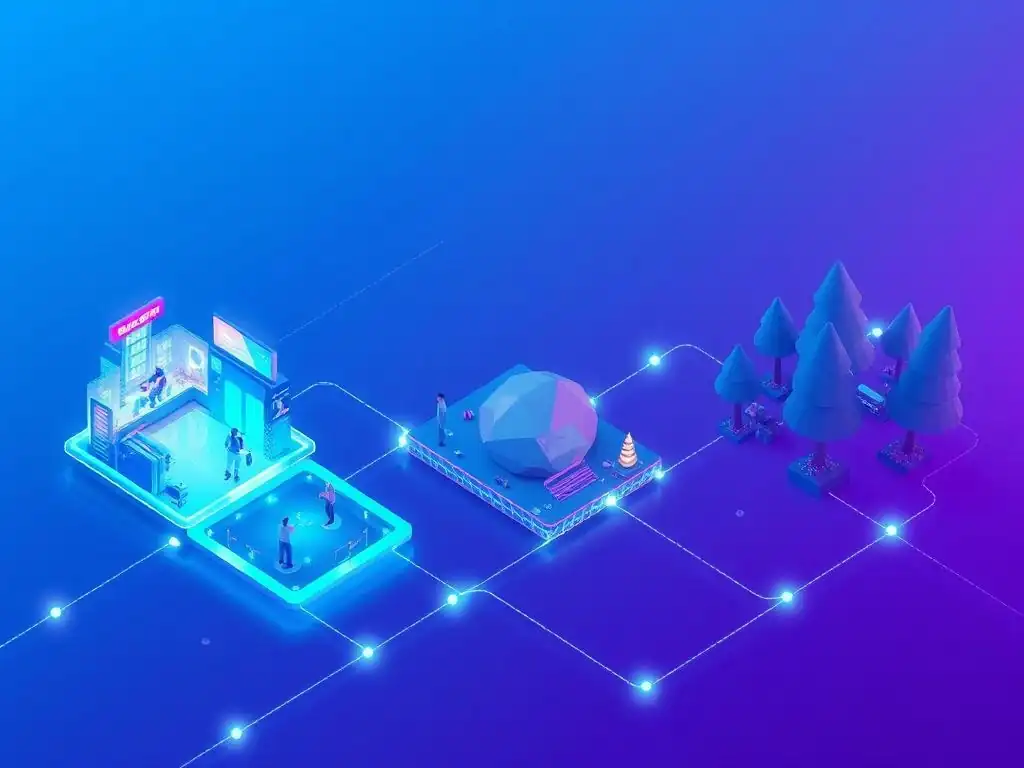
Addressing Potential Security Risks in Cross-Chain Communication
While blockchain interoperability offers numerous benefits, it also introduces new security considerations, particularly in cross-chain communication. Cross-chain bridges, for instance, act as crucial intermediaries for asset and data transfer between blockchains, but they can also become potential points of vulnerability. If a bridge is compromised, it could lead to the theft of assets or the manipulation of data being transferred across chains. The complexity of cross-chain protocols and the nascent nature of interoperability technologies mean that security risks are a significant concern that must be addressed carefully.
One key security risk involves smart contract vulnerabilities within bridges and interoperability protocols. If the smart contracts governing cross-chain communication contain flaws, they can be exploited by malicious actors to drain funds or disrupt operations. Another risk stems from the potential for attacks targeting the consensus mechanisms of bridges or the underlying blockchains themselves. Ensuring the security of cross-chain communication requires rigorous security audits, robust cryptographic protocols, and ongoing monitoring to detect and mitigate potential threats. Addressing these security risks is paramount for building trustworthy and reliable interoperable metaverse experiences.
Best Practices for Secure Interoperability Protocols
To mitigate security risks associated with blockchain interoperability in the metaverse, several best practices are crucial for developing and deploying secure interoperability protocols. Rigorous security audits are essential to identify and address potential vulnerabilities in smart contracts and cross-chain communication mechanisms. These audits should be conducted by reputable third-party security firms with expertise in blockchain and smart contract security. Formal verification methods can also be employed to mathematically prove the correctness and security of interoperability protocols, reducing the reliance on traditional testing methods.
Decentralization is another key principle for enhancing the security of interoperability. Minimizing reliance on centralized intermediaries in cross-chain communication reduces single points of failure and potential attack vectors. Utilizing robust cryptographic protocols and secure multi-party computation (MPC) techniques can further enhance the security of cross-chain bridges and interoperability protocols. Furthermore, ongoing monitoring and incident response mechanisms are crucial for detecting and responding to security threats in real-time, ensuring the continuous security and reliability of interoperable metaverse systems. Adhering to these best practices is vital for building secure and trustworthy blockchain interoperability solutions for the metaverse.
The Role of Audits and Smart Contract Security in Ensuring Interoperable Metaverse Safety
Audits and robust smart contract security play a critical role in ensuring the safety and reliability of interoperable metaverse environments. Given the complexity of cross-chain interactions and the value of digital assets being transferred, thorough security audits are not just recommended but essential. These audits should focus on identifying potential vulnerabilities in smart contracts, cross-chain bridges, and interoperability protocols, ensuring that they are resistant to attacks and operate as intended. The scope of audits should encompass code reviews, penetration testing, and vulnerability assessments, conducted by experienced security professionals.
Smart contract security is paramount because smart contracts often govern the logic and execution of cross-chain transactions and asset transfers. Any vulnerabilities in these smart contracts can be exploited to compromise the integrity of the interoperable metaverse ecosystem. Employing secure coding practices, formal verification methods, and rigorous testing procedures are crucial for developing robust and secure smart contracts for interoperability. Furthermore, ongoing monitoring and vulnerability management are necessary to proactively identify and address any newly discovered security threats or vulnerabilities in interoperable metaverse systems, ensuring a safe and secure user experience.
The Future of Blockchain Interoperability and the Metaverse
Emerging Trends in Metaverse Interoperability Solutions
The field of metaverse interoperability is rapidly evolving, with several emerging trends shaping the future landscape. Layer-0 interoperability protocols are gaining traction, aiming to provide a foundational layer for cross-chain communication that is blockchain-agnostic and highly scalable. These protocols seek to create a more unified and interconnected internet of blockchains, facilitating seamless interoperability across diverse metaverse platforms. Zero-knowledge proofs (ZKPs) are also emerging as a promising technology for enhancing privacy and security in interoperable metaverse environments. ZKPs can enable cross-chain interactions without revealing sensitive information, improving user privacy and security in cross-metaverse transactions and data sharing.
Another trend is the development of more user-friendly and abstracted interoperability solutions. Early interoperability technologies often required users to have a high degree of technical understanding. However, future solutions are focused on simplifying the user experience, making cross-chain interactions more intuitive and accessible to mainstream metaverse users. This includes the development of user-friendly wallets and interfaces that abstract away the complexities of cross-chain technology, enabling seamless asset transfers and cross-metaverse interactions with minimal technical expertise required. These emerging trends point towards a future where metaverse interoperability becomes more seamless, secure, and user-friendly.
The Impact of Interoperability on Metaverse Adoption and Growth
Blockchain interoperability is poised to be a major catalyst for metaverse adoption and growth. By addressing the current fragmentation and limitations of the metaverse, interoperability removes significant barriers to entry and enhances the user experience, making the metaverse more appealing and accessible to a wider audience. A seamless and interconnected metaverse, enabled by interoperability, will attract more users, creators, and developers, fostering a vibrant and thriving digital ecosystem. Imagine the increased user engagement and economic activity that will be unlocked when users can seamlessly move between different metaverse platforms, bringing their assets and identities with them.
Interoperability will also drive innovation and competition within the metaverse space. By breaking down walled gardens and fostering a more open and interconnected environment, interoperability encourages the development of more diverse and innovative metaverse experiences. Developers will be incentivized to create interoperable applications and platforms that can leverage the broader metaverse ecosystem, leading to a richer and more dynamic digital landscape.
Furthermore, interoperability can unlock new economic opportunities and business models within the metaverse, attracting further investment and driving sustainable growth. The impact of interoperability on metaverse adoption and growth is expected to be transformative, paving the way for a more mainstream and widely adopted metaverse future.
The Role of Standards and Governance in Shaping the Interoperable Metaverse
Standards and governance are crucial for shaping the development and long-term success of the interoperable metaverse. Standardized protocols and interfaces are needed to ensure seamless communication and interoperability between different blockchain networks and metaverse platforms. These standards should address various aspects of interoperability, including asset transfer protocols, identity management systems, and cross-chain communication frameworks. Industry-wide collaboration and standardization efforts are essential to prevent fragmentation and ensure a cohesive and interoperable metaverse ecosystem.
Governance frameworks are also critical for establishing rules, guidelines, and decision-making processes for the interoperable metaverse. These frameworks should address issues such as cross-chain security protocols, dispute resolution mechanisms, and the evolution of interoperability standards. A decentralized and community-driven governance approach can help ensure that the interoperable metaverse is developed and managed in a fair, transparent, and user-centric manner. Collaboration between industry stakeholders, including blockchain developers, metaverse platform providers, and user communities, is essential for establishing effective standards and governance frameworks that will shape the future of the interoperable metaverse.
Conclusion: Embracing Interoperability for a User-Centric Metaverse Future
The Transformative Potential of Blockchain Interoperability
Blockchain interoperability holds transformative potential for the metaverse, moving it from a collection of isolated platforms to a truly interconnected and seamless digital realm. By enabling the free flow of assets, identities, and data across different virtual worlds, interoperability unlocks a more user-centric metaverse experience, empowering users with greater control, flexibility, and opportunity. This transformative potential extends beyond individual user benefits, impacting the entire metaverse ecosystem by fostering innovation, driving adoption, and creating a more robust and vibrant digital economy.
The shift towards an interoperable metaverse represents a fundamental evolution in the way we interact with and experience digital spaces. It moves away from siloed, platform-centric models towards a more open, decentralized, and user-driven paradigm. This transformation promises to unlock the full potential of the metaverse as a powerful platform for social interaction, economic activity, entertainment, and creative expression, creating a more immersive and interconnected digital future for all users.
Key Takeaways: Blockchain Interoperability Metaverse Experience Benefits
Blockchain interoperability is not just a technical necessity but a fundamental requirement for realizing the full potential of the metaverse and enhancing the user experience. The key benefits of blockchain interoperability for metaverse users are clear:
- Enhanced Asset Portability: Seamlessly transfer NFTs and digital assets across metaverses, reducing friction and empowering true ownership.
- Unified Digital Identity: Create a consistent avatar and profile across different worlds, eliminating redundant account management and building portable reputation.
- Improved User Experience: Foster a more immersive and connected metaverse with cross-metaverse social interactions and interoperable gaming experiences.
- Increased Liquidity and Economic Opportunities: Boost the metaverse economy by creating a larger market for digital assets and enabling new revenue streams for creators and developers.
Embracing blockchain interoperability is crucial for building a user-centric metaverse future that is open, accessible, and truly interconnected, unlocking a new era of digital experiences and opportunities for users worldwide.
Frequently Asked Questions
What exactly is blockchain interoperability, and why is it important for the metaverse?
Blockchain interoperability refers to the ability of different blockchain networks to communicate and share data with each other. It's crucial for the metaverse because it allows for the seamless transfer of assets and identities across different virtual worlds.
How does blockchain interoperability enhance the metaverse experience for users?
It enhances the metaverse experience by allowing users to move assets like avatars and virtual land between different metaverse platforms. This creates a more unified and engaging experience, breaking down silos and promoting collaboration.
What are the key benefits of having a seamless metaverse experience enabled by blockchain interoperability?
The benefits include increased user engagement, greater control over digital assets, and enhanced opportunities for monetization. Users can also experience more diverse and interconnected virtual worlds.
What are some potential challenges in achieving full blockchain interoperability in the metaverse?
Challenges include technical complexities in connecting different blockchain protocols, ensuring security and scalability, and addressing regulatory hurdles. Standards development is also key.
How might regulations impact the development and adoption of blockchain interoperability solutions for the metaverse?
Regulations could either foster or hinder the development of these solutions. Clear and consistent regulations around data privacy and asset ownership are needed to promote trust and adoption.
Final Reflection: Bridging Worlds, Building Futures
The journey through the potential of blockchain interoperability within the metaverse reveals a landscape ripe with opportunity, but also challenges that demand innovative solutions. The promise of a truly seamless metaverse experience hinges directly on our ability to connect disparate blockchain ecosystems, allowing users to move freely between virtual worlds, carrying their assets and identities with them. This isn't just about technological advancement; it's about unlocking a new era of digital ownership and creative expression.
The impact of this interoperability extends far beyond the realm of gaming and entertainment. It promises to reshape how we interact with digital assets, conduct business, and even define our identities in the virtual sphere. The potential for a more equitable and accessible digital future, where users are truly empowered, is immense, and it's a future I believe we have a responsibility to cultivate. The metaverse is the next evolution of social connection. It's a 3D space where you can share immersive experiences with people, even when you can't be together in person – and blockchain interoperability is the key to unlocking its full potential.
- Mark Zuckerberg (adapted).
As we stand on the cusp of this new digital frontier, I invite you to consider the role you can play in shaping its future. How can you contribute to building a more interconnected and user-centric metaverse? What steps can you take to advocate for the principles of interoperability, decentralization, and user empowerment? The future of the metaverse is not predetermined; it is being built, brick by digital brick, by each and every one of us. Let us strive to create a virtual world that is truly open, accessible, and beneficial for all.
Ignite Your Metaverse Adventure!
Thank you for exploring the possibilities of seamless Metaverse experiences and blockchain interoperability. We hope this has given you a clearer understanding of how these technologies can open up new opportunities. Are you ready to take the next step and help shape the future of virtual worlds?
Here’s how to get started:
- Explore a blockchain-enabled Metaverse platform. Don’t just read about it—try it out! Discover platforms that leverage interoperability to enhance user experiences and connect different virtual environments.
- Join the conversation: Share this article with your network and discuss how blockchain interoperability can benefit the development of the metaverse with fellow enthusiasts.
- Experiment with cross-chain assets: If you're feeling adventurous, try transferring a digital asset, such as an NFT, between two blockchain networks to experience the true potential of interoperability.
Which Metaverse platform are you most excited to explore, and how do you think blockchain interoperability will improve your experience there?
Leave a Reply