
Automating Insurance Claims: Smart Contracts for Faster and Fairer Payouts


Welcome to Blockchain Trends, your guide to navigating the revolutionary world of decentralized technology! Curious about how blockchain is moving beyond cryptocurrencies and reshaping industries? Dive in to explore the exciting potential of DeFi, enterprise solutions, and the ever-evolving regulatory landscape.
Today, we're focusing on a game-changing application: blockchain insurance claims automation. Discover how smart contracts are poised to deliver faster, fairer, and more transparent payouts, and what this means for the future of the insurance industry. Intrigued? Let's unlock the potential!
- Blockchain Insurance Claims Automation: Smart Contracts for Faster and Fairer Payouts
- Understanding Smart Contracts for Automated Insurance
- Benefits of Blockchain-Based Insurance Claims Automation
- Use Cases: Applying Smart Contracts to Insurance Claims
- Implementing Smart Contracts for Insurance Claims: Key Considerations
- The Future of Insurance: Decentralized and Automated
- Conclusion: Embracing Blockchain for Fairer and More Efficient Insurance Claims
-
Frequently Asked Questions
- How can blockchain technology specifically improve the insurance claims process?
- What role do smart contracts play in automating insurance claims?
- What are the potential benefits of using blockchain for insurance claims automation for insurance companies?
- What challenges might hinder the widespread adoption of blockchain insurance claims automation?
- How does blockchain insurance claims automation impact the policyholder experience?
- Final Reflection: Embracing Trust Through Code
- Dive Deeper: Revolutionize Your Insurance Experience!
Blockchain Insurance Claims Automation: Smart Contracts for Faster and Fairer Payouts
The Inefficiencies of Traditional Insurance Claims Processing
The traditional insurance claims process is notoriously complex, often involving extensive paperwork, manual verification steps, and multiple intermediaries. This inherent complexity frequently leads to significant delays, leaving policyholders waiting weeks, sometimes even months, for their claims to be resolved and payouts to be issued. A study by McKinsey in 2020 highlighted that processing a single claim can cost insurers between $200 and $300, with a substantial portion of this cost attributed to manual administrative tasks and the overheads associated with verifying claim validity and preventing fraud.
Furthermore, the lack of transparency in the conventional system can erode trust between insurers and their customers. Policyholders often have limited visibility into the status of their claim, the criteria used for assessment, or the reasons for potential delays or denials. This opacity, combined with subjective human assessment, can sometimes lead to disputes and dissatisfaction, further burdening the system with appeals and legal challenges. The potential for errors in manual data entry and the difficulty in verifying external data sources also contribute to inefficiencies and increased operational costs for insurance providers.
How Blockchain Technology Addresses These Challenges
Blockchain technology offers a compelling solution to many of the inefficiencies plaguing the insurance industry, particularly in the realm of claims processing. By providing a decentralized, immutable, and transparent ledger, blockchain creates a single source of truth for policy data, claim information, and transaction history that is accessible to all authorized parties. This shared, tamper-proof record drastically reduces the potential for data manipulation and disputes over facts related to a claim.
Crucially, blockchain enables the deployment of smart contracts – self-executing agreements where the terms are directly written into code. These smart contracts can automate the claims process by triggering actions, such as verifying data or initiating payouts, based on predefined conditions being met. This automation removes manual bottlenecks, speeds up verification, and ensures that claims are processed according to objective rules, paving the way for efficient blockchain insurance claims automation and enhancing trust through verifiable execution.
Understanding Smart Contracts for Automated Insurance
What are Smart Contracts and How Do They Work?
Smart contracts are digital agreements stored on a blockchain that automatically execute when predetermined terms and conditions are met. Unlike traditional contracts, which rely on legal frameworks and human enforcement, smart contracts enforce the agreement directly through code. Think of them as "if-then" statements written in programming language and deployed onto a decentralized network. If condition 'X' is met, then action 'Y' is automatically performed.
These contracts operate on a blockchain, benefiting from its inherent security, transparency, and immutability. Once deployed, the code is visible (though complex) and the execution is verifiable by network participants. The logic within the smart contract dictates how assets (like cryptocurrency or tokens representing value) are transferred or how data is recorded or verified based on inputs. This self-executing nature eliminates the need for intermediaries to interpret or enforce the contract, reducing costs and potential for human error or bias.
The Role of Smart Contracts in Insurance Claim Management
In the context of insurance, smart contracts are the engine driving blockchain insurance claims automation. They can be programmed to monitor specific external data points or events and, upon verification that a covered event has occurred and policy conditions are met, automatically initiate the next steps in the claims process, including payout.
For instance, a smart contract for flight delay insurance could be programmed to query a reliable data feed (an "oracle") for flight status information. If the flight is confirmed to be delayed by more than the policy's threshold (e.g., two hours), the smart contract automatically verifies the policyholder's eligibility and triggers a payout directly to their digital wallet.
This automation extends beyond simple payouts. Smart contracts can manage policy terms, verify identity, assess claim validity against policy rules, and even coordinate actions between different parties involved in the claims process, such as data providers or loss adjusters (in more complex scenarios). By embedding the claims logic directly into secure, transparent code, smart contracts ensure that claims are handled consistently, fairly, and without manual intervention for qualifying events, fundamentally transforming the speed and reliability of blockchain insurance claims automation.
Benefits of Blockchain-Based Insurance Claims Automation
Faster Claims Processing with Smart Contracts
One of the most significant advantages of blockchain insurance claims automation powered by smart contracts is the dramatic reduction in processing time. Traditional claims often involve numerous manual steps, including form submission, data verification, assessment by adjusters, and approval workflows, which can collectively take days or weeks. With smart contracts, many of these steps can be automated.
For simple, parametric insurance products (where payout depends on a specific, verifiable event like rainfall amount or flight delay), smart contracts can trigger payouts almost instantaneously once the external data confirming the event is received and verified by an oracle. Even for more complex claims, smart contracts can automate initial verification steps, route information efficiently, and manage milestones, potentially reducing overall processing time by 70% or more compared to fully manual processes, leading to quicker resolution and payout for policyholders.
Increased Transparency and Reduced Fraud in Insurance
Blockchain's inherent transparency and immutability are powerful tools against fraud in the insurance sector. Every transaction and data entry on the blockchain ledger is time-stamped, verifiable, and cannot be altered once recorded. This creates a transparent history of the policy and claim process that is accessible to authorized parties, making it extremely difficult to submit fraudulent claims or manipulate claim data without detection.
Smart contracts further enhance security by executing claims logic based on predefined, objective rules embedded in the code. This reduces the potential for subjective assessment or human intervention that could be susceptible to fraudulent influence. By automating verification against verifiable external data, smart contracts minimize opportunities for false claims related to events or conditions. This robust, transparent, and automated system significantly bolsters the integrity of blockchain insurance claims automation.
Lower Administrative Costs through Automation
Automating the claims process with smart contracts leads to substantial cost savings for insurance companies. The manual handling of claims involves considerable administrative overhead, including labor costs for processing, verifying, and managing paperwork, as well as the costs associated with investigating potentially fraudulent claims. A report by Accenture estimated that blockchain could help insurers save billions annually through reduced operational costs and fraud prevention.
By automating routine tasks such as data verification, eligibility checks, and payout initiation, smart contracts significantly reduce the need for human intervention in straightforward cases. This allows insurers to reallocate resources, streamline operations, and lower the per-claim processing cost. The efficiency gains provided by blockchain insurance claims automation directly contribute to a healthier bottom line for insurers and potentially lower premiums for policyholders in the long run.
Enhanced Customer Experience with Instant Payouts
Ultimately, blockchain insurance claims automation delivers a superior experience for the policyholder. The lengthy wait times and opaque processes of traditional insurance can be frustrating and stressful, especially during times of need following a covered event. Smart contracts offer the potential for near-instantaneous payouts for qualifying claims, drastically improving customer satisfaction.
Imagine a travel insurance policy where a smart contract automatically detects a flight cancellation and immediately sends the compensation directly to the policyholder's digital wallet, often before they even leave the airport. This level of efficiency and promptness builds trust and demonstrates the insurer's commitment to fulfilling its promise quickly and without hassle. The transparency of the blockchain also allows customers to potentially track the automated process, providing peace of mind and a clear understanding of how their claim is being handled.
Use Cases: Applying Smart Contracts to Insurance Claims
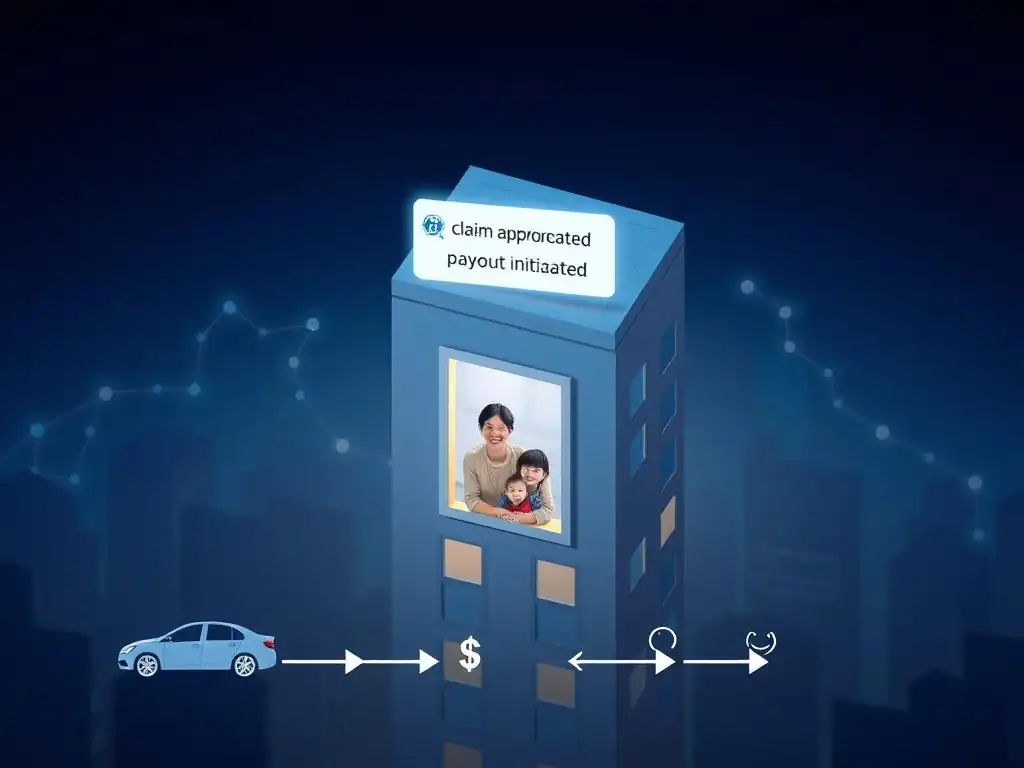
Automating Travel Insurance Claims: Flight Delays and Cancellations
One of the most widely cited and practical applications of blockchain insurance claims automation involves travel insurance, specifically for flight delays or cancellations. Policies covering these events are often based on clear, verifiable data points. A smart contract can be designed to monitor official flight databases (like those from airlines or air traffic control) via secure oracles.
The smart contract is programmed with the policy terms, such as a payout threshold for delays exceeding two hours or a full refund for cancellations. When the oracle provides data confirming that a specific flight number associated with a policy has met or exceeded the defined delay or cancellation condition, the smart contract automatically verifies the policy's active status and triggers a payout directly to the policyholder's digital wallet.
This eliminates the need for manual claim submission, verification, and processing, turning a potentially frustrating experience into a swift, automated resolution. For example, early proof-of-concepts demonstrated processing times reduced from days or weeks to minutes.
Streamlining Property Insurance Claims: Damage Assessment and Payouts
While more complex than travel insurance, smart contracts can also streamline aspects of property insurance claims, particularly for well-defined events or parametric triggers. For instance, policies covering damage from specific weather events like hurricanes or floods could integrate with weather data or satellite imagery oracles. A smart contract could automatically trigger an initial claim notification or even a predefined payout amount if data confirms a catastrophic event occurred in the policyholder's location above a certain severity threshold.
Furthermore, smart contracts could manage the workflow for damage assessment. While full automation of complex damage evaluation is still a challenge, smart contracts can verify that required steps (e.g., initial report filed, photos uploaded) have been completed before moving the claim forward. In the future, integration with IoT sensors in homes or AI-powered damage assessment tools could allow smart contracts to automate verification of damage extent for simpler claims or trigger specific actions based on sensor data (e.g., detecting burst pipes).
Enhancing Healthcare Insurance Claims: Medical Data Verification
Applying blockchain and smart contracts to healthcare insurance claims presents unique challenges, primarily around data privacy and regulatory hurdles (like HIPAA in the US). However, the technology holds significant potential for enhancing efficiency and accuracy. Blockchain can provide a secure, patient-controlled system for managing medical records, allowing patients to grant insurers access to specific, verifiable data relevant to a claim.
Smart contracts could then be used to verify aspects of a healthcare claim against policy terms and authorized medical data. For example, a smart contract could automatically check if a specific procedure code is covered under the policy or verify that a treatment occurred on a specific date based on verifiable, consented patient data on the blockchain. This could significantly speed up the initial verification steps of a claim, reducing administrative costs and accelerating the approval process for eligible treatments, while maintaining a transparent and auditable trail of data access and verification.
Improving Crop Insurance Claims: Weather Data Integration
Crop insurance is another area where smart contracts and blockchain insurance claims automation offer a powerful solution, especially for parametric policies tied to weather conditions. Farmers purchase insurance to protect against losses due to drought, excessive rain, or other weather-related events that impact crop yield. Traditionally, verifying such claims requires field inspections, which can be time-consuming and costly.
With a smart contract-based system, the policy terms are coded to specific weather parameters (e.g., total rainfall in a growing season falling below a certain threshold, or temperatures exceeding a limit for a number of days). Reliable weather data is fed into the smart contract via oracles.
If the oracle data confirms that the weather conditions specified in the policy have occurred in the insured location, the smart contract automatically validates the claim and triggers a payout to the farmer. This significantly reduces the time from event occurrence to payout, providing much-needed liquidity to farmers affected by adverse weather, and demonstrating the efficiency of blockchain insurance claims automation in a critical sector.
Implementing Smart Contracts for Insurance Claims: Key Considerations
Data Integration and Oracles: Connecting Smart Contracts to Real-World Data
A fundamental challenge in implementing blockchain insurance claims automation is connecting the smart contract, which lives on the blockchain, to real-world data required to trigger its execution. Smart contracts cannot inherently access external information like flight statuses, weather patterns, or official records. This is where oracles come in. Oracles are third-party services that provide smart contracts with verified external data feeds.
The reliability and security of these oracles are paramount. If an oracle provides inaccurate or manipulated data, the smart contract will execute incorrectly, leading to unfair payouts or denials. Implementing robust, decentralized oracle networks that source data from multiple reliable sources and employ mechanisms to verify data integrity is crucial for the trustworthiness of any blockchain insurance claims automation solution. Ensuring the data fed to the contract is accurate and tamper-proof is a primary technical hurdle.
Regulatory Compliance and Legal Frameworks for Blockchain Insurance
The insurance industry is highly regulated to protect consumers and ensure the solvency of insurers. Implementing blockchain insurance claims automation requires navigating complex existing regulations and often necessitates the development of new legal frameworks. Questions arise regarding the legal status of smart contracts – are they legally binding contracts? How are disputes resolved if a smart contract malfunctions or executes based on faulty oracle data?
Insurers must work closely with regulators to ensure that blockchain-based solutions comply with consumer protection laws, data privacy regulations (like GDPR), solvency requirements, and anti-money laundering (AML) rules. The immutability of blockchain can also pose challenges if errors occur and need to be corrected. Establishing clear legal precedents and regulatory guidelines is essential for the widespread adoption and trust in blockchain insurance claims automation.
Security and Scalability Challenges in Blockchain Insurance Solutions
While blockchain offers enhanced security through decentralization and cryptography, smart contracts themselves can be vulnerable to coding errors or exploits. Bugs in smart contract code can lead to unintended execution, loss of funds, or denial of service, as demonstrated by past incidents in the broader blockchain space. Rigorous auditing and testing of smart contract code are non-negotiable requirements before deployment.
Scalability is another significant consideration. Public blockchains, while decentralized, can sometimes face limitations in processing a high volume of transactions quickly and cheaply, especially during peak network usage. Enterprise blockchain solutions or Layer 2 scaling solutions might be necessary to handle the transaction throughput required for processing potentially millions of insurance claims efficiently. Designing for scalability and ensuring the security of the smart contract code are critical technical challenges for successful blockchain insurance claims automation.
Choosing the Right Blockchain Platform for Insurance Applications
Selecting the appropriate blockchain platform is a key decision when building blockchain insurance claims automation solutions. Different blockchain platforms offer varying features in terms of consensus mechanisms (Proof-of-Work, Proof-of-Stake, etc. ), transaction speed, cost (gas fees), smart contract capabilities, security models, and suitability for private vs. public deployments.
For enterprise-level insurance applications requiring high transaction throughput, privacy, and predictable costs, permissioned blockchains like Hyperledger Fabric or R3 Corda might be considered. For public-facing, decentralized insurance protocols (DeFi insurance), platforms like Ethereum (especially with its transition to Proof-of-Stake and Layer 2 scaling) or other smart contract-enabled public chains might be more suitable. The choice depends heavily on the specific use case, required level of decentralization, performance needs, and regulatory environment.
The Future of Insurance: Decentralized and Automated
The Rise of Decentralized Insurance (DeFi Insurance)
Blockchain technology, particularly smart contracts, is not only improving traditional insurance but also enabling entirely new models of risk pooling and management known as Decentralized Finance (DeFi) insurance. These protocols operate on public blockchains, allowing individuals to pool capital in smart contracts to cover specific risks (e.g., smart contract code exploits, stablecoin depegging).
In DeFi insurance, the entire process, from policy issuance (often represented as a token) to claims assessment and payout, is managed by smart contracts and governed by the community or token holders. Claims assessment often relies on decentralized oracles or voting mechanisms involving token holders. This model offers transparency, accessibility, and potentially lower costs by removing traditional intermediaries, representing a significant shift towards fully automated and community-driven blockchain insurance claims automation.
The Impact of AI and Machine Learning on Smart Contract Insurance
The integration of Artificial Intelligence (AI) and Machine Learning (ML) with smart contracts holds promise for further enhancing blockchain insurance claims automation. While smart contracts excel at executing predefined rules based on verifiable data, AI/ML can introduce more sophisticated capabilities, such as advanced risk assessment, predictive analytics for potential fraud detection, or even automating aspects of complex claim adjustments that require pattern recognition or data analysis beyond simple 'if-then' logic.
For example, AI could analyze vast datasets (with appropriate privacy safeguards) to identify suspicious claim patterns before a smart contract triggers a payout, or ML algorithms could help assess the severity of damage in property claims based on image analysis, feeding a verified outcome to the smart contract. This synergy could lead to more intelligent, efficient, and accurate blockchain insurance claims automation processes, handling a wider range of claim types autonomously.
Blockchain's Potential to Transform the Entire Insurance Industry
The impact of blockchain technology extends far beyond just automating claims. Its core properties – immutability, transparency, and decentralization – have the potential to transform almost every facet of the insurance value chain. This includes policy administration, where blockchain can provide a single, shared, tamper-proof record of policies; underwriting, by enabling access to more verifiable data and potentially new risk assessment models; and even reinsurance, by streamlining complex contracts and payments between insurers.
By creating a more efficient, transparent, and trustworthy infrastructure, blockchain can reduce operational costs across the board, enable the creation of innovative parametric and microinsurance products, and ultimately make insurance more accessible and affordable for a wider population. The move towards blockchain insurance claims automation is a significant step, but it is part of a broader, industry-wide transformation driven by this foundational technology.
Conclusion: Embracing Blockchain for Fairer and More Efficient Insurance Claims
Key Takeaways: The Power of Smart Contracts in Insurance
Blockchain insurance claims automation, powered by smart contracts, represents a significant evolution in how insurance operates. The core benefits are clear: dramatically faster claims processing, moving from weeks to potentially minutes for certain claim types. This speed is achieved by automating manual steps and verifying data against reliable external sources via oracles. The transparency and immutability of the blockchain ledger, combined with the objective execution of smart contract code, significantly reduce opportunities for fraud and increase trust between insurers and policyholders.
Furthermore, by reducing the administrative overhead associated with manual processing and fraud investigation, blockchain insurance claims automation promises substantial cost savings for insurers. Most importantly, this efficiency translates into a significantly enhanced customer experience, with quicker resolutions and payouts providing peace of mind during challenging times. Smart contracts are not just automating existing processes; they are enabling new models of insurance and making the system fairer and more reliable.
The Future of Blockchain Insurance Claims Automation: Opportunities and Challenges
The trajectory for blockchain insurance claims automation is one of immense opportunity, but also notable challenges. The successful implementation requires overcoming hurdles related to integrating reliable external data through robust oracles, navigating complex and evolving regulatory landscapes, and ensuring the security and scalability of blockchain platforms and smart contract code. The legal recognition and enforceability of smart contracts remain areas requiring further development.
Despite these challenges, the potential benefits are too significant to ignore. As technology matures, regulatory clarity increases, and industry adoption grows, blockchain insurance claims automation is poised to become a standard practice, particularly for parametric and high-volume, low-value claims. The ongoing innovation in DeFi insurance and the potential integration of AI/ML further underscore the transformative impact blockchain and smart contracts will have on creating a more efficient, transparent, and customer-centric insurance industry in the future.
Frequently Asked Questions
How can blockchain technology specifically improve the insurance claims process?
Blockchain enables immutable records and automated execution via smart contracts, leading to faster processing and reduced fraud. This significantly improves transparency and efficiency in claims management.
What role do smart contracts play in automating insurance claims?
Smart contracts are self-executing agreements written into code. They automatically trigger payouts when pre-defined conditions are met, eliminating manual intervention and speeding up the claims process.
What are the potential benefits of using blockchain for insurance claims automation for insurance companies?
Insurance companies can benefit from reduced operational costs through automation, decreased fraud rates due to enhanced transparency, and improved customer satisfaction with faster payouts.
What challenges might hinder the widespread adoption of blockchain insurance claims automation?
Challenges include regulatory uncertainty, the need for industry-wide standardization, and concerns surrounding data privacy and security.
How does blockchain insurance claims automation impact the policyholder experience?
Policyholders benefit from faster claims processing, increased transparency in the claims process, and potentially lower premiums due to reduced operational costs for insurers.
Final Reflection: Embracing Trust Through Code
The journey we've explored, from the complexities of traditional insurance claims to the streamlined efficiency of blockchain insurance claims automation, highlights a fundamental shift in how we perceive trust and fairness. No longer are we solely reliant on opaque processes; instead, we're witnessing the rise of transparent, immutable code as a guarantor of equitable outcomes. This isn't just about speed; it's about rebuilding confidence in a system often perceived as adversarial.
The impact of this technological evolution extends far beyond mere efficiency gains. The potential for blockchain to democratize access to insurance, particularly in underserved communities, is profoundly significant. It offers a pathway to reduce fraud, lower administrative costs, and ultimately, provide a more reliable safety net for individuals and businesses alike. The future of insurance is not just about managing risk, but about building trust and empowering individuals.
This quote encapsulates the transformative power of blockchain in reshaping the insurance landscape.
As we stand on the cusp of this new era, let us not simply be passive observers. Consider how you can champion the adoption of blockchain insurance claims automation, whether through advocating for policy changes, supporting innovative startups, or simply educating yourself and others about its potential. The future of insurance is being written now, line by line, in the code that promises a more just and equitable world. Let us all contribute to ensuring that future is one of transparency, efficiency, and ultimately, trust.
Okay, here's a Call to Action (CTA) for the end of a web article titled "Automating Insurance Claims: Smart Contracts for Faster and Fairer Payouts" on the website "Blockchain Trends" (blockchaintrends.org), following your specifications:
Dive Deeper: Revolutionize Your Insurance Experience!
Thanks for exploring how smart contracts can transform insurance claims, bringing unprecedented speed and fairness to payouts. Now, let's translate this knowledge into action and become part of the blockchain revolution!
Here are a few ways to get started:
- Begin researching existing blockchain-based insurance platforms! Understand how they operate and identify potential applications for your own needs or industry. This is the primary step.
- Explore open-source smart contract templates designed for insurance applications. Experiment with adapting these templates to build a proof-of-concept.
- Share this article with insurance professionals or blockchain enthusiasts you know. Let's spark a conversation about the future of claims processing.
What immediate, practical steps will you take to explore smart contract applications in insurance? Share your plans below!
Leave a Reply