
The Role of APIs in Decentralized Real Estate Marketplaces: Connecting Systems and Data


Welcome to Blockchain Trends, your source for in-depth analysis of blockchain's transformative power.
Ever wondered how blockchain can revolutionize industries beyond cryptocurrency? Dive in as we explore the fascinating world of decentralized systems, focusing today on a game-changing intersection: Blockchain APIs real estate. Discover how these powerful tools are connecting systems and data, paving the way for transparent and efficient real estate marketplaces. Intrigued? Let's unlock the future of property ownership, one API call at a time.
The Role of APIs in Decentralized Real Estate Marketplaces: Connecting Systems and Data
- Introduction: Decentralized Real Estate and the Need for Blockchain APIs
- What are Blockchain APIs for Real Estate?
- Benefits of Using APIs in Decentralized Real Estate Marketplaces
-
Use Cases: Blockchain APIs in Action for Real Estate
- Property Listing Aggregation and Management
- Secure and Transparent Property Title Verification using Blockchain APIs
- Automated Escrow Services and Smart Contract Integration for Real Estate
- Fractional Ownership and Tokenization of Real Estate Assets via APIs
- Real Estate Investment Platforms Powered by Blockchain Data Feeds
- Implementing Blockchain APIs in a Real Estate Marketplace: Key Considerations
- Challenges and Future Trends in Blockchain API Adoption for Real Estate
- Conclusion: The Transformative Power of APIs in Decentralizing Real Estate
-
Frequently Asked Questions
- How do Blockchain APIs facilitate the creation of decentralized real estate marketplaces?
- What are some key benefits of using Blockchain APIs in the real estate sector?
- How can Blockchain APIs improve the accessibility of real estate investment opportunities?
- What are the regulatory considerations when using Blockchain APIs for real estate transactions?
- What is the future outlook for Blockchain APIs in the real estate market?
- Final Reflection: Bridging the Future of Real Estate
- Unlock the Future: Build Your Decentralized Real Estate Vision
Introduction: Decentralized Real Estate and the Need for Blockchain APIs
Understanding Decentralized Real Estate Marketplaces
Decentralized real estate marketplaces represent a paradigm shift from traditional property transaction models. Instead of relying solely on centralized intermediaries like brokers, banks, and title companies, these platforms leverage blockchain technology to facilitate peer-to-peer interactions, enhance transparency, and reduce friction.
Properties or fractional ownership stakes can be tokenized on a blockchain, creating digital assets that are easier to transfer, manage, and verify. This approach aims to democratize access to real estate investment and streamline processes, potentially lowering costs associated with traditional real estate transactions, which can often amount to 6-10% or more of the property value in fees and closing costs.
These marketplaces operate on distributed ledgers, ensuring that ownership records and transaction histories are immutable and publicly verifiable (depending on the blockchain's design). This inherent transparency contrasts sharply with opaque traditional systems. By tokenizing assets, even illiquid real estate can become divisible and more accessible to a wider range of investors, potentially allowing individuals to invest in high-value properties with significantly smaller capital outlays, perhaps starting with just a few hundred or thousand dollars compared to the large sums typically required for direct property ownership.
The Challenge of Connecting Traditional Systems to Blockchain Real Estate Platforms
Integrating the nascent world of blockchain-based real estate with the deeply entrenched traditional real estate ecosystem presents significant technical and logistical challenges. Traditional systems, such as multiple listing services (MLS), county property databases, title insurance company records, and financial institutions, operate on legacy infrastructure that is often siloed, proprietary, and not designed for direct interaction with decentralized networks. Extracting, verifying, and inputting data from these disparate sources into a blockchain platform, or vice versa, requires overcoming incompatibility issues, data format differences, and security concerns related to handling sensitive property and personal information across different technological stacks.
Furthermore, traditional real estate processes involve numerous manual steps and reliance on paper documentation or non-standardized digital formats. Bridging this gap to enable automated, smart-contract-driven workflows on a blockchain platform necessitates a reliable and secure method for traditional data inputs to trigger blockchain actions and for blockchain outputs (like proof of ownership transfer) to be recognized by traditional systems. Without a robust connection layer, the potential for efficiency and transparency offered by decentralized real estate remains limited by the cumbersome nature of interacting with the existing real estate infrastructure.
How Blockchain APIs Bridge the Gap
Blockchain APIs (Application Programming Interfaces) serve as the crucial connective tissue between traditional real estate systems and decentralized blockchain platforms. They act as intermediaries, allowing different software applications to communicate and exchange data seamlessly. For decentralized real estate marketplaces, these APIs enable the flow of information from external sources—like property databases, identity verification services, or financial systems—into the blockchain environment and facilitate the interaction of external applications with smart contracts and blockchain data.
Essentially, Blockchain APIs real estate solutions translate requests and data between the world of centralized databases and the decentralized ledger. This allows a real estate application to, for example, query property details from an MLS database via an API, verify buyer identity using a KYC/AML service via another API, and then initiate a tokenized property transaction on a blockchain by calling a smart contract function via a blockchain API.
This interoperability is fundamental to building functional and user-friendly decentralized real estate platforms that can leverage the benefits of blockchain while still interacting with the necessary components of the existing real estate market.
What are Blockchain APIs for Real Estate?
Defining Blockchain APIs and Their Functionality
Blockchain APIs for real estate are sets of protocols, routines, and tools that allow developers to build applications that interact with a blockchain network specifically for real estate use cases. They abstract away the complexities of direct blockchain node communication, cryptographic functions, and transaction management, providing developers with simplified methods to perform actions like querying blockchain data (e.g., token ownership history, transaction logs), submitting transactions (e.g., transferring property tokens), deploying or interacting with smart contracts (e.g., automating escrow or fractional dividend payouts), and subscribing to blockchain events (e.g., being notified when a property token changes hands).
The core functionality revolves around enabling external systems or user interfaces to read data from and write data to the blockchain in a structured and secure manner. For instance, a real estate platform might use a Blockchain API to fetch the current verified owner of a tokenized property, check the history of its transfers, or execute a smart contract that facilitates a sale upon meeting predefined conditions. These APIs are essential for making the underlying blockchain technology accessible and usable within practical real estate applications, transforming raw blockchain capabilities into features within a marketplace or management system.
Key Features of Real Estate Focused Blockchain APIs
Real estate-focused Blockchain APIs possess specific features tailored to the unique demands of the property market. One crucial feature is secure identity verification integration, allowing platforms to connect with Know Your Customer (KYC) and Anti-Money Laundering (AML) service providers via APIs to ensure participants meet regulatory requirements before engaging in transactions on the blockchain. Another key feature is robust data querying, enabling platforms to retrieve detailed information stored on-chain, such as the immutable record of a property's ownership changes, liens, or even maintenance history if that data is recorded on the ledger.
Furthermore, these APIs often include capabilities for interacting directly with real estate-specific smart contracts. This could involve functions to initiate a token transfer for a property sale, trigger the release of funds from a digital escrow held in a smart contract, or manage the distribution of rental income or sale proceeds to fractional owners.
APIs may also provide features for token management, allowing platforms to mint, burn, or manage security tokens representing property ownership interests. The ability to handle complex multi-party transactions and integrate with external data feeds (like property valuation data or market indices) through API calls is also increasingly important for sophisticated decentralized real estate applications.
Types of APIs Used in Decentralized Real Estate: Property Data APIs, Transaction APIs, Smart Contract APIs
Several types of APIs are critical for the operation of decentralized real estate marketplaces, each serving a distinct purpose. Property Data APIs are used to access and integrate information about real-world properties. These APIs might connect to traditional databases like MLS systems to pull property descriptions, photos, and listing statuses, or they might access data stored on the blockchain itself, such as verified property identifiers or token metadata linked to a specific asset. Integrating external property data via APIs is essential for populating marketplace listings and providing comprehensive information to potential buyers.
Transaction APIs are fundamental for interacting with the blockchain ledger to execute operations. These APIs allow platforms to initiate and manage blockchain transactions, such as transferring ownership tokens from a seller to a buyer, sending cryptocurrency or stablecoins as payment, or recording changes to property-related data on the chain. They handle the complexities of wallet interaction, private key management (often through secure intermediaries), and transaction broadcasting to the network.
Smart Contract APIs provide the interface for interacting with the self-executing code deployed on the blockchain. These are used to call specific functions within smart contracts designed for real estate logic, such as those governing escrow, fractional ownership rights, automated payouts, or the terms and conditions of a property sale agreement encoded on the blockchain. Effective use of these Blockchain APIs real estate solutions is key to automating processes and enforcing deal terms transparently.
Benefits of Using APIs in Decentralized Real Estate Marketplaces
Enhanced Data Accessibility and Transparency in Real Estate Transactions
The strategic use of Blockchain APIs real estate platforms significantly enhances data accessibility and transparency. By connecting to blockchain networks via APIs, marketplaces can easily query and display immutable transaction histories, verified ownership records, and the status of smart contracts in real-time.
This contrasts with traditional systems where accessing comprehensive, verified data often involves manual requests, lengthy processes, and reliance on multiple intermediaries. For instance, a buyer on a decentralized platform could use an API-fed interface to instantly view the entire verifiable transfer history of a tokenized property, confirming its chain of title directly from the blockchain ledger, which is far more efficient than waiting days or weeks for a traditional title search.
Furthermore, APIs can pull data from external sources like property tax records or building permits and link them to the blockchain token, creating a richer, more transparent profile for each asset. While the sensitive details might not be stored directly on a public chain, hashes or verified links can be, with APIs providing the gateway to view associated public records or permissions data. This level of accessible, verifiable data builds trust among participants and aligns with the core promise of blockchain technology—to provide a single, tamper-evident source of truth for transactions and ownership.
Streamlined Processes: Automating Real Estate Workflows with APIs
Blockchain APIs real estate integration is a powerful driver for streamlining and automating complex real estate workflows. Many steps in a traditional property transaction—from listing to closing—involve manual data entry, document exchange, and human verification. APIs enable the automation of these steps by allowing different systems to communicate programmatically. For example, once a buyer's identity is verified via a KYC API, this information can trigger a smart contract via a Blockchain API to grant them access to view sensitive property documents or participate in a token sale.
Consider the escrow process: traditionally, this involves a third party holding funds until all conditions are met. With smart contracts and APIs, the process can be automated.
A transaction API can be used to deposit funds into a smart contract address, and APIs connecting to external data sources (like a verification service confirming property token transfer) can trigger the smart contract to automatically release funds to the seller and transfer the token to the buyer simultaneously upon condition fulfillment. This not only speeds up transactions but also reduces the potential for human error and reduces reliance on costly intermediaries, potentially cutting transaction times from weeks or months down to days or even hours for certain steps.
Improved Efficiency and Reduced Costs in Real Estate Management
The efficiency gains facilitated by Blockchain APIs real estate applications directly translate into reduced operational costs. Automation of tasks like identity verification, payment processing, data verification, and document handling minimizes the need for manual labor and bureaucratic overhead. For example, property management tasks for tokenized rental properties can be significantly streamlined; smart contracts can automatically distribute rental income to fractional owners based on predefined rules, triggered by payment confirmation via a transaction API. This eliminates the need for manual calculations and individual transfers to dozens or hundreds of investors.
Beyond transaction costs, ongoing property management can also benefit. APIs can connect management platforms to blockchain data to track maintenance expenses recorded on-chain, manage voting rights for property decisions among token holders, or even integrate with IoT devices for property access management linked to token ownership. By reducing the reliance on traditional, often expensive, service providers for tasks that can be automated or made more efficient through blockchain interaction via APIs, decentralized real estate platforms can offer lower fees to users, making investment and ownership more accessible and cost-effective.
Fostering Innovation and New Business Models in Decentralized Real Estate
Blockchain APIs are foundational to fostering innovation and enabling entirely new business models within the decentralized real estate sector. By providing flexible and programmatic access to blockchain capabilities and data, developers can build novel applications and services that were previously impractical or impossible. Fractional ownership, for instance, is greatly facilitated by APIs that manage the minting, transfer, and management of security tokens representing shares in a property, allowing platforms to onboard and manage potentially thousands of co-owners for a single asset.
New models like tokenized real estate investment funds, peer-to-peer property lending against tokenized assets, or even decentralized autonomous organizations (DAOs) that collectively own and manage properties become viable when robust Blockchain APIs real estate infrastructure is in place. These APIs allow innovators to focus on building user-facing features and complex business logic without needing to build direct, low-level blockchain integrations from scratch. This lowers the barrier to entry for developers and encourages experimentation, accelerating the evolution of how real estate is bought, sold, managed, and invested in the digital age.
Use Cases: Blockchain APIs in Action for Real Estate
Property Listing Aggregation and Management
Blockchain APIs play a vital role in aggregating and managing property listings on decentralized marketplaces. While the core ownership token resides on the blockchain, descriptive listing information—photos, property details, location data—often originates from traditional sources like Multiple Listing Services (MLS) or is managed within the platform's own database. Property Data APIs are used to pull this information from external data feeds, ensuring listings are up-to-date and comprehensive. A decentralized marketplace might use an API connection to an MLS database to automatically import new listings that meet certain criteria, reducing manual data entry.
Conversely, these APIs can also be used to push data from the blockchain to external systems or user interfaces. For example, an API could fetch the current status of a tokenized property (e.g., listed for sale, under contract via smart contract) directly from the blockchain and display this status accurately on the marketplace website. This integration ensures that the information presented to potential buyers or investors is consistent with the immutable record on the blockchain, preventing discrepancies and enhancing trust in the listing data.
Secure and Transparent Property Title Verification using Blockchain APIs
One of the most compelling use cases for Blockchain APIs real estate involves property title verification. Traditionally, this is a complex process involving title search companies examining historical records. On a decentralized platform, a property's ownership history and current status can be recorded on the blockchain. APIs allow platforms to query this immutable on-chain data to instantly verify the legitimate owner of a tokenized property and review the complete, tamper-evident history of its transfer.
While sensitive personal identifying information might not be stored directly on a public blockchain, a cryptographic hash or a verified link to off-chain legal documentation can be. Blockchain APIs can interact with smart contracts that manage these verified links or hashes, allowing authorized parties to access or verify the associated legal title documents via secure off-chain connections triggered by API calls. This significantly speeds up the verification process, reduces the risk of title fraud (as the on-chain history is immutable), and provides a transparent audit trail accessible via the API.
Automated Escrow Services and Smart Contract Integration for Real Estate
Automated escrow services powered by smart contracts and accessed via APIs are transforming real estate transactions. Instead of relying on a traditional escrow company to hold funds and documents, a smart contract can be programmed to automatically execute the transfer of property tokens and funds simultaneously once predefined conditions are met. Blockchain APIs real estate platforms use transaction APIs to facilitate the deposit of funds (often stablecoins representing the property value) into the smart contract and Smart Contract APIs to interact with the contract's functions.
For example, an API might be used to call a function on the escrow smart contract that verifies if the full payment amount has been received on-chain. Another API call, potentially triggered by an external data feed confirming the transfer of the property token to the buyer's wallet, can instruct the smart contract to release the held funds to the seller's wallet and finalize the token transfer. This removes the need for manual coordination between parties and intermediaries, reducing delays and potential points of failure, all orchestrated through secure API interactions.
Fractional Ownership and Tokenization of Real Estate Assets via APIs
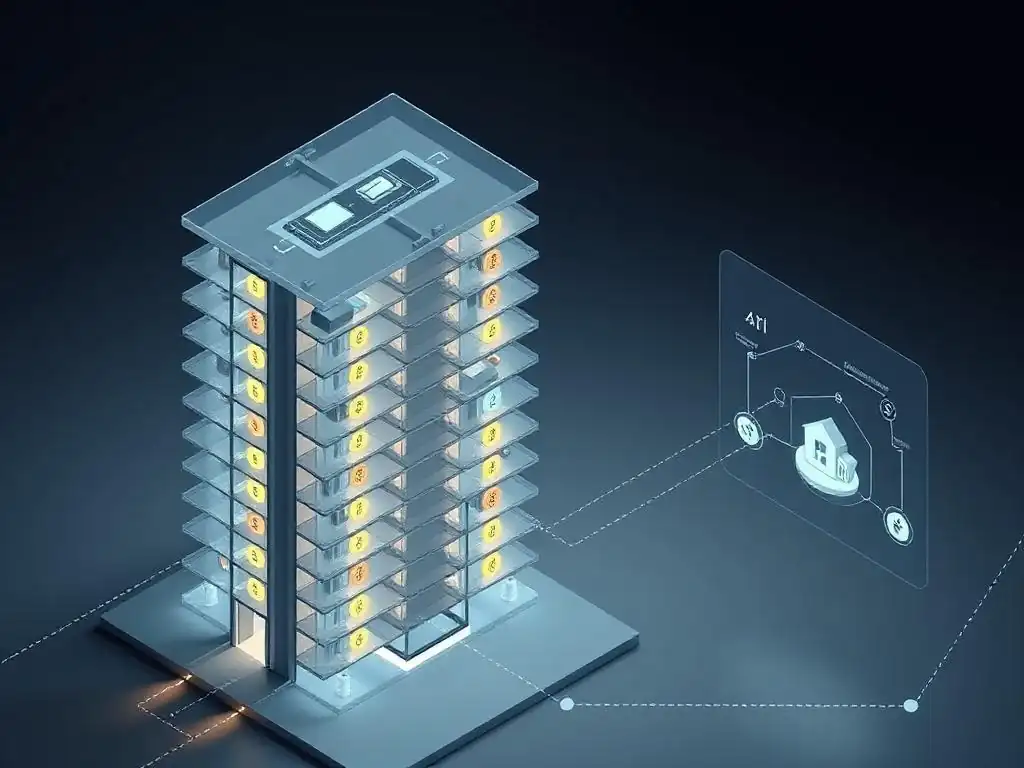
Fractional ownership, enabled by tokenizing real estate assets on a blockchain, is heavily reliant on robust API infrastructure. When a property is tokenized, it is divided into a specific number of digital tokens, each representing a fraction of ownership.
Blockchain APIs for real estate are essential for managing the lifecycle of these tokens. This includes using APIs to initiate the minting process for the property's tokens on a chosen blockchain standard (like ERC-20 or ERC-721/1155 on Ethereum or similar standards on other chains), associating metadata (like property address, token rights) with the tokens via APIs, and managing the distribution of these tokens to investors.
Furthermore, APIs are used for facilitating the trading of these fractional tokens on secondary markets integrated with the platform. Investors can buy or sell their fractional shares, with the ownership transfer recorded instantly and transparently on the blockchain via API calls. APIs also enable the distribution of income (like rental yields) or sale proceeds to token holders proportionally, often triggered automatically by smart contracts that receive funds via transaction APIs and distribute them to token holders whose addresses are read from the blockchain via querying APIs. This makes real estate investment more liquid and accessible.
Real Estate Investment Platforms Powered by Blockchain Data Feeds
Real estate investment platforms that leverage blockchain technology rely heavily on Blockchain APIs real estate data feeds to provide users with accurate, real-time information. These platforms might offer tokenized property investments, allowing users to buy and sell fractional shares. APIs are used to pull critical investment data directly from the blockchain, such as the current number of tokens outstanding for a property, the history of dividend payouts recorded on-chain, the volume and price of recent token trades on integrated secondary markets, and the total number of token holders.
Beyond on-chain data, APIs can integrate external real estate market data, such as property valuations from appraisal APIs, local market trends from data providers, or even rental income collected off-chain but verified and recorded on-chain periodically. By aggregating and presenting this diverse data via user-friendly interfaces, powered by seamless API calls to both blockchain and traditional data sources, these platforms empower investors with greater transparency and access to information, enabling more informed investment decisions in the decentralized real estate market.
Implementing Blockchain APIs in a Real Estate Marketplace: Key Considerations
Security Best Practices for API Integration
Implementing Blockchain APIs real estate solutions demands rigorous adherence to security best practices to protect sensitive data and assets. APIs act as gateways, and if compromised, can expose user information, facilitate unauthorized transactions, or disrupt platform operations. A primary concern is authentication and authorization; APIs should use secure methods like OAuth 2.0 or API keys combined with strict access controls to ensure only legitimate applications and users can interact with specific endpoints or perform certain actions. Rate limiting should also be implemented to prevent denial-of-service attacks.
Furthermore, data transmission between the API consumer (the marketplace platform) and the API provider (the blockchain node or service) must be encrypted using TLS/SSL protocols. API keys and secrets should be stored securely, ideally using hardware security modules (HSMs) or secure vaults, and never hardcoded into applications.
Regular security audits, vulnerability testing (including penetration testing), and monitoring of API traffic for suspicious patterns are essential ongoing practices. Smart contracts that the APIs interact with must also undergo thorough auditing by reputable third parties to identify and mitigate potential vulnerabilities before deployment, as flaws in the contract can be exploited via API calls.
Choosing the Right API Providers for Real Estate
Selecting the appropriate Blockchain API providers is a critical decision for a decentralized real estate marketplace's success. Providers vary significantly in terms of the blockchain networks they support (e.g., Ethereum, Polygon, Solana), the types of APIs offered (e.g., data querying, transaction submission, smart contract interaction), reliability, scalability, and cost. For real estate, it's crucial to choose providers that offer robust support for the specific features required, such as token standards used for property tokenization (like ERC-721 or ERC-1155) and potentially integrations with identity verification services or oracles for external data feeds.
Factors to consider include the provider's uptime history and service level agreements (SLAs), which are vital for ensuring the marketplace remains operational. The latency of API responses can impact user experience, so choosing providers with low latency is important. Pricing models (e.g., per request, tiered plans) should be evaluated based on anticipated usage. Developer support and documentation are also key—good resources can significantly reduce integration time and effort. Platforms might choose a single comprehensive provider or use multiple specialized providers for different API needs (e.g., one for blockchain data, another for identity verification).
Scalability and Performance Considerations for API Infrastructure
As a decentralized real estate marketplace grows, the volume of API requests will increase significantly, necessitating a scalable and performant API infrastructure. The underlying blockchain network's scalability is a factor, but the API layer itself must also handle increased load. This involves designing the API architecture to be horizontally scalable, allowing for the addition of more servers or instances to handle traffic spikes. Load balancers are essential to distribute incoming requests efficiently across available resources.
Caching strategies should be implemented for frequently accessed but less volatile data to reduce the number of direct blockchain queries, which can be slow and costly. Optimizing API queries to retrieve only necessary data also improves performance. Monitoring API performance metrics, such as response times, error rates, and request volume, is crucial for identifying bottlenecks and proactively scaling resources. For high-throughput operations like managing thousands of fractional owners or processing numerous transactions, the performance and scalability of the Blockchain APIs real estate platform utilizes directly impact its ability to function reliably under load.
Compliance and Regulatory Aspects of Using Blockchain APIs in Real Estate
Navigating the complex landscape of compliance and regulation is paramount when using Blockchain APIs in real estate. Real estate and financial transactions are heavily regulated, and blockchain technology introduces new considerations. APIs must be designed and used in a manner that facilitates compliance with relevant laws, including KYC/AML regulations, securities laws (especially for tokenized fractional ownership, which often constitutes a security), data privacy regulations (like GDPR or CCPA), and property transaction laws.
For KYC/AML, APIs are used to connect with regulated identity verification services. The platform must ensure these services are compliant and that data is handled securely via the API connection. For securities regulations, the platform must ensure its tokenization and offering processes comply with applicable laws, and APIs involved in token issuance or trading must reflect these requirements (e.g., restricting trading to accredited investors if necessary).
Data privacy requires careful consideration of what data is put on-chain (if anything sensitive), what data is accessed via APIs, and how consent is managed. Working with legal counsel knowledgeable in both real estate and blockchain law is essential to ensure that the use of Blockchain APIs real estate operations remains compliant across all relevant jurisdictions.
Challenges and Future Trends in Blockchain API Adoption for Real Estate
Overcoming Interoperability Issues Between Different Blockchain Platforms
A significant challenge in the broader adoption of Blockchain APIs real estate is interoperability. The blockchain ecosystem is diverse, with multiple protocols (e.g., Ethereum, Polygon, Flow, Algorand) offering different features, consensus mechanisms, and token standards. Real estate assets might be tokenized on one chain, while related services (like decentralized identity or financing) exist on others. APIs designed for one blockchain typically cannot directly interact with another without specialized solutions.
Overcoming this requires the development and adoption of cross-chain interoperability protocols and APIs. Initiatives like Polkadot, Cosmos, or LayerZero aim to enable communication and asset transfer between different blockchains. Future Blockchain APIs real estate solutions will likely incorporate these interoperability layers, allowing platforms to interact with assets and services across multiple chains. This would enable scenarios like a property token on one chain being used as collateral for a loan on a DeFi protocol running on a different chain, significantly expanding the potential use cases and liquidity in the decentralized real estate market.
Addressing Data Privacy Concerns in Decentralized Real Estate Systems
While transparency is a core benefit of blockchain, data privacy remains a key concern, particularly in real estate where sensitive personal and financial information is involved. Putting all property details or transaction parties' identities on a public, immutable ledger is often undesirable or legally prohibited. Blockchain APIs need to facilitate methods that balance transparency with privacy. This involves using APIs to interact with privacy-preserving technologies like zero-knowledge proofs (ZKPs), which can verify the truth of a statement (e.g., "this person is an accredited investor") without revealing the underlying data.
APIs are also crucial for managing access to off-chain data that is linked to on-chain assets. Platforms can use APIs to connect to decentralized identity solutions where users control their personal data and grant permission for specific information to be shared when necessary, rather than storing it on a public chain. The design of Blockchain APIs real estate should incorporate privacy-by-design principles, ensuring that data accessed or written via the API aligns with privacy regulations and user expectations, perhaps utilizing techniques like data encryption for off-chain storage or selective data disclosure via authenticated API calls.
The Evolving Landscape of Blockchain Regulations for Real Estate
The regulatory landscape for blockchain technology, and specifically for its application in real estate, is still evolving globally. This uncertainty poses a challenge for platforms relying on Blockchain APIs real estate functionality. Regulations around tokenized securities, property ownership registration on blockchain, and the legal recognition of smart contracts vary significantly by jurisdiction and are subject to change. This requires platforms to design their API integrations with flexibility to adapt to new rules.
APIs might need to incorporate features that enforce regulatory compliance, such as restricting token transfers based on geographic location or investor status, as dictated by smart contract logic that is triggered or queried via API. Staying informed about regulatory developments and being prepared to update API usage or underlying smart contracts is essential. Collaboration between regulators, legal experts, and blockchain developers will be necessary to establish clear guidelines, which in turn will inform the standardization and design of future Blockchain APIs real estate solutions that are both innovative and legally compliant.
Future Trends: AI Integration with Blockchain APIs for Smarter Real Estate Solutions
A significant future trend for Blockchain APIs real estate is integration with Artificial Intelligence (AI). Combining AI's analytical capabilities with the secure, transparent data provided by blockchain via APIs can lead to smarter, more efficient real estate solutions. AI algorithms could analyze on-chain transaction data, off-chain market data accessed via APIs, and even property characteristics to provide sophisticated property valuations, predict market trends, or optimize investment portfolios of tokenized assets.
For example, an AI model could continuously monitor transaction volumes and prices of fractional property tokens via Blockchain APIs and combine this with external real estate market data pulled via other APIs to provide dynamic, data-driven recommendations to investors. AI could also be used to enhance due diligence processes by analyzing large datasets linked via APIs to assess risks associated with a property or a transaction participant. The synergy between AI and Blockchain APIs holds the potential to create highly intelligent, automated, and data-driven decentralized real estate ecosystems.
Conclusion: The Transformative Power of APIs in Decentralizing Real Estate
Blockchain APIs as a Catalyst for Growth in Decentralized Real Estate Marketplaces
Blockchain APIs are not merely technical connectors; they are fundamental catalysts driving the growth and adoption of decentralized real estate marketplaces. By providing a standardized, secure, and efficient way for traditional systems, external services, and user applications to interact with blockchain networks, these APIs unlock the true potential of blockchain technology for the property sector. They enable the seamless flow of data and value, facilitating the automation of complex processes that have historically been manual and inefficient.
Without robust Blockchain APIs real estate platforms would struggle to bridge the gap between the innovative capabilities of blockchain and the practical requirements of the real estate market. They facilitate everything from listing aggregation and title verification to automated escrow and fractional ownership management. As the infrastructure matures and more comprehensive APIs become available, the friction in real estate transactions will continue to decrease, making investment and ownership more accessible, transparent, and efficient for a global audience.
The Future of Real Estate Transactions Powered by Seamless API Integration
The future of real estate transactions is increasingly likely to be powered by seamless API integration connecting diverse systems to blockchain ledgers. Imagine a future where buying or selling a property token is as straightforward as a few clicks on a platform, with APIs handling all the complex steps in the background: verifying identity, pulling property data, executing smart contracts for title and fund transfer, and recording everything immutably on the blockchain.
This vision relies entirely on the ability of Blockchain APIs real estate solutions to communicate effectively with a multitude of data sources and protocols. As API standards evolve and interoperability solutions improve, these transactions will become faster, cheaper, and more secure. The role of intermediaries may shift from being gatekeepers of information and process to providers of specialized services that integrate via APIs into decentralized workflows, ultimately benefiting consumers and investors through increased efficiency and transparency.
Key Takeaways: Embracing Blockchain APIs for a More Efficient and Transparent Real Estate Ecosystem
The journey towards a fully decentralized real estate ecosystem is ongoing, but the critical role of Blockchain APIs real estate cannot be overstated. Key takeaways include recognizing that APIs are essential for connecting legacy systems with blockchain. They are the enablers of enhanced data accessibility, process automation, and cost reduction. Furthermore, robust APIs are fostering innovation, making new models like fractional ownership and tokenization practical.
While challenges like interoperability and regulatory clarity remain, the continued development and adoption of secure, scalable, and compliant Blockchain APIs are paving the way for a more efficient, transparent, and accessible real estate market. Embracing these API technologies is crucial for any platform or participant looking to thrive in the evolving landscape of decentralized real estate.
Frequently Asked Questions
How do Blockchain APIs facilitate the creation of decentralized real estate marketplaces?
Blockchain APIs act as bridges between traditional real estate databases and the blockchain, enabling seamless data transfer and secure transaction processing.
What are some key benefits of using Blockchain APIs in the real estate sector?
Using Blockchain APIs offers enhanced transparency, improved data security via immutability, and streamlined transactional efficiency, reducing costs and delays.
How can Blockchain APIs improve the accessibility of real estate investment opportunities?
By connecting different platforms and data sources, Blockchain APIs allow for fractional ownership and global investment, making real estate more accessible to a wider range of investors.
What are the regulatory considerations when using Blockchain APIs for real estate transactions?
Compliance with data privacy laws (like GDPR) and adhering to real estate regulations are crucial. Blockchain APIs must be designed to ensure regulatory compliance and data security.
What is the future outlook for Blockchain APIs in the real estate market?
Blockchain APIs are poised to expand their role, facilitating smart contracts, automating processes, and creating more efficient and secure real estate ecosystems.
Final Reflection: Bridging the Future of Real Estate
The exploration of APIs within decentralized real estate marketplaces reveals a powerful truth: interoperability is the key to unlocking innovation. As we've seen, Blockchain APIs are not just technical tools; they are the bridges that connect disparate systems and data, fostering transparency, efficiency, and ultimately, a more accessible and equitable real estate landscape. The potential for these technologies to reshape how we buy, sell, and manage property is immense, and their current relevance is undeniable.
This journey into the world of Blockchain APIs in real estate highlights the profound impact of technology on traditional industries. The ability to seamlessly integrate data and processes across decentralized platforms promises to democratize access to real estate investment and management, empowering individuals and communities in unprecedented ways. As the saying goes, The future is already here – it's just not evenly distributed.
This sentiment underscores the urgency of understanding and implementing these technologies to ensure a more inclusive and prosperous future for all.
Now, consider the implications of this exploration for your own perspective on the future of real estate. How can you leverage the power of interoperability and decentralized technologies to create positive change in your community or professional sphere? Embrace the potential of Blockchain APIs to build a more transparent, efficient, and accessible real estate market for everyone. The future of real estate is being written now, and your contribution can help shape a more equitable and innovative landscape for generations to come.
Okay, I'm ready to craft a Call to Action (CTA) based on the article title "The Role of APIs in Decentralized Real Estate Marketplaces: Connecting Systems and Data" for Blockchain Trends (blockchaintrends.org). Here's the CTA:
Unlock the Future: Build Your Decentralized Real Estate Vision
Thank you for diving into the exciting world of APIs and decentralized real estate. We hope you now understand the power these technologies hold in transforming property markets. Ready to move from knowledge to action?
Here are a few steps to propel you forward:
- Immediately begin researching available APIs specifically designed for real estate data aggregation and smart contract integration. This is your first crucial step toward building or participating in a decentralized marketplace.
- Explore blockchain-based real estate platforms and identify opportunities for API integration to enhance user experience and data accessibility.
- Share this article with your network and start a conversation about how APIs can revolutionize the real estate industry. What innovative solutions can we build together?
What challenges or opportunities do you foresee in using APIs to build decentralized real estate marketplaces, and what specific APIs are you most interested in exploring further?
Leave a Reply