
Comparing Traditional vs. Decentralized Real Estate Marketplaces: Key Differences

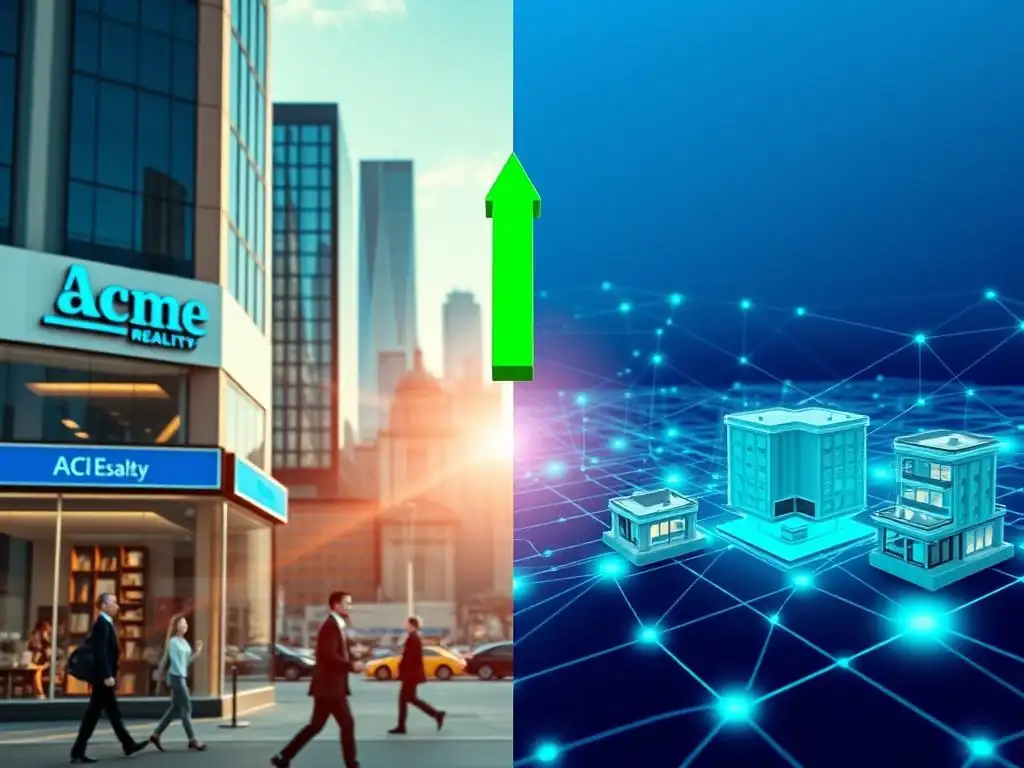
Welcome to Blockchain Trends, where we delve into the transformative potential of blockchain technology that extends far beyond cryptocurrencies. Today, we invite you to explore the fascinating world of real estate investment through our latest article, “Comparing Traditional vs. Decentralized Real Estate Marketplaces: Key Differences.” Discover how blockchain is reshaping the landscape of property investment, revealing intriguing distinctions that could redefine your approach to real estate. Are you ready to uncover the innovative possibilities that await in the realm of decentralized systems? Let’s dive in!
- Blockchain Real Estate Investment: Traditional vs. Tokenized Marketplaces
- Key Differences: Traditional vs. Tokenized Real Estate Platforms
- Deep Dive: Blockchain's Impact on Real Estate
- Case Studies: Examples of Tokenized Real Estate Platforms
- The Future of Blockchain Real Estate: Trends and Predictions
- Conclusion: Harnessing the Potential of Blockchain in Real Estate Investment
-
Frequently Asked Questions
- How does blockchain technology impact the real estate investment process compared to traditional methods?
- What are the main blockchain real estate investment differences in terms of fractional ownership?
- How does decentralization affect the accessibility of real estate investments for international investors?
- What are the potential risks associated with blockchain-based real estate investments that differ from traditional risks?
- How does blockchain technology address the issue of trust and security in real estate transactions compared to traditional methods?
- Final Reflection: Embracing the Future of Real Estate
- Unlock the Future: Start Your Decentralized Real Estate Journey!
Blockchain Real Estate Investment: Traditional vs. Tokenized Marketplaces
Real estate has long been considered a cornerstone of wealth building, offering tangible assets and potential for appreciation. However, traditional real estate investment comes with significant barriers to entry, complexity, and friction. These challenges limit participation and transparency, creating a landscape ripe for disruption.
Enter blockchain technology, a distributed ledger system known primarily for cryptocurrencies but possessing capabilities far beyond digital cash. By enabling secure, transparent, and immutable record-keeping, blockchain is poised to fundamentally alter how we buy, sell, and invest in property. This transformation gives rise to tokenized real estate marketplaces, presenting distinct blockchain real estate investment differences compared to their traditional counterparts. Understanding these differences is crucial for investors navigating the evolving landscape.
Challenges of Traditional Real Estate Investment
Traditional real estate investment is characterized by high costs, illiquidity, and significant administrative overhead. The process typically involves numerous intermediaries, including real estate agents, lawyers, title companies, and escrow services, each adding layers of complexity and expense.
A significant challenge is the substantial capital required upfront. Purchasing even a modest property often demands a large down payment, typically ranging from 10% to 20% of the property value, alongside closing costs that can add another 2% to 5%. This high entry barrier excludes a vast segment of potential investors. Furthermore, the transaction process is notoriously slow, often taking 30 to 60 days or even longer to complete, involving extensive paperwork and due diligence.
Tokenized Real Estate Marketplaces: Empowered by Blockchain
Tokenized real estate marketplaces leverage blockchain technology to represent property ownership as digital tokens. These security tokens, often built on established blockchain protocols like Ethereum or Polygon, represent a fractional share or full ownership of a specific real estate asset.
This approach transforms real estate into a more liquid and accessible asset class. By tokenizing properties, platforms can offer fractional ownership, allowing investors to purchase small portions of high-value assets, such as commercial buildings or luxury properties, for relatively low amounts. This dramatically lowers the barrier to entry. The use of blockchain also brings enhanced transparency and efficiency, as ownership records and transaction histories are immutably stored on a public or permissioned ledger, offering clear blockchain real estate investment differences in operation.
Key Differences: Traditional vs. Tokenized Real Estate Platforms
Comparing traditional and tokenized real estate platforms reveals fundamental blockchain real estate investment differences across several key areas. These distinctions impact accessibility, cost, transparency, and liquidity, reshaping the investment experience for individuals and institutions alike.
1. Ownership and Transparency: A Paradigm Shift
Traditional Real Estate: Opaque and Complex Ownership
In traditional real estate, ownership records are typically maintained in centralized, often paper-based or disparate digital databases managed by local government entities like county recorders' offices. While intended to provide clarity, these systems can be fragmented, difficult to access across jurisdictions, and susceptible to errors or even fraud.
Verifying the full history of a property's ownership and any associated liens or encumbrances often requires extensive title searches conducted by specialized companies. This process is time-consuming and costly, and the resulting documentation can still be complex and difficult for the average person to fully understand, creating a degree of opacity in the ownership chain.
Tokenized Real Estate: Transparent and Verifiable Ownership via Blockchain
Tokenized real estate platforms utilize blockchain to record property ownership and transaction history. When a property is tokenized, the legal ownership structure is tied to digital tokens on a blockchain ledger. This ledger is distributed, immutable, and publicly verifiable (depending on the blockchain type), offering an unprecedented level of transparency.
Every transfer of tokens, representing a change in fractional or full ownership, is recorded on the blockchain, creating a permanent and easily auditable history. While the underlying legal frameworks still need to connect the physical asset to the digital token, the blockchain provides a transparent, tamper-proof record of who owns which tokens, significantly enhancing trust and clarity regarding the digital representation of ownership and highlighting key blockchain real estate investment differences in record-keeping.
2. Transaction Costs: Streamlining Property Investment
High Transaction Costs in Traditional Real Estate Markets
Traditional real estate transactions are burdened by a multitude of fees that significantly increase the overall cost for both buyers and sellers. Broker commissions are often the largest expense, typically ranging from 5% to 6% of the property sale price, split between buyer and seller agents.
Beyond commissions, buyers and sellers face closing costs that can accumulate to several percentage points of the transaction value. These include legal fees, title insurance premiums (often 0.5% to 1% of property value), escrow fees, appraisal fees, recording fees, and various taxes or transfer fees imposed by local governments. For a $500,000 property, these costs can easily exceed $30,000-$50,000.
Reduced Transaction Fees with Blockchain-Based Marketplaces
Blockchain-based real estate marketplaces have the potential to dramatically reduce transaction costs by minimizing or eliminating the need for several intermediaries. While legal and regulatory costs related to tokenizing the asset initially exist, the subsequent peer-to-peer trading of tokens on a marketplace can be significantly cheaper.
Platforms facilitating token trading can operate with lower overheads than traditional brokerages. Transaction fees on tokenized platforms might range from a small percentage (e.g., 0.1% to 1%) or a fixed fee per trade, depending on the platform's model and underlying blockchain network fees (gas fees). This reduction in costs is a major draw, presenting clear blockchain real estate investment differences in the financial outlay required for transactions.
3. Liquidity and Accessibility: Democratizing Real Estate Investment
Illiquidity in Traditional Real Estate Assets
Traditional real estate is widely considered an illiquid asset. Selling a property is a lengthy process that involves listing, marketing, negotiating, inspections, appraisals, and closing procedures. The time it takes to convert a property into cash can range from a few months to over a year, depending on market conditions and the specific property.
Furthermore, the indivisible nature of traditional property means an owner must sell the entire asset, even if they only need to access a portion of its value. This lack of divisibility and the slow transaction speed make it difficult for investors to quickly enter or exit positions or to diversify their real estate holdings across multiple properties without substantial capital and effort.
Tokenization and Enhanced Liquidity in Decentralized Real Estate
Tokenization directly addresses the illiquidity of real estate by breaking down property ownership into smaller, tradable units (tokens). These tokens can be bought and sold on secondary marketplaces, similar to trading stocks or other securities. This fractionalization means investors can sell just a portion of their ownership stake if needed, rather than the entire property.
While the liquidity of tokenized real estate marketplaces is still developing compared to global stock markets, the ability to trade fractional shares 24/7 on a digital platform offers significantly improved liquidity compared to traditional property sales. This increased liquidity and the lower investment minimums inherent in fractional ownership are key blockchain real estate investment differences that democratize access to the asset class.
4. Investment Opportunities: Expanding Access to Real Estate
Limited Investment Opportunities in Traditional Real Estate
Accessing diverse real estate investment opportunities in the traditional market is often challenging, especially for smaller investors. Investing directly in commercial properties, large-scale developments, or properties in desirable international markets typically requires substantial capital, often millions of dollars.
While options like Real Estate Investment Trusts (REITs) offer indirect access and some diversification, they represent shares in a fund that owns properties, not direct fractional ownership of specific assets. Direct investment in a varied portfolio of individual properties remains largely limited to wealthy individuals or institutional investors due to the capital requirements and management complexities.
Fractional Ownership and Diverse Investment Options via Blockchain
Tokenized real estate platforms unlock a wider range of investment opportunities for a broader audience through fractional ownership. Investors can buy tokens representing shares in diverse property types, from residential homes and apartment buildings to commercial spaces, hotels, or even land, located globally.
This allows investors to build a diversified portfolio with smaller amounts of capital, potentially investing $100 or $1,000 across multiple properties rather than needing hundreds of thousands for a single traditional investment. Some platforms specialize in specific niches, like tokenizing income-producing rental properties, offering passive income streams. This expansion of accessible investment types and locations represents significant blockchain real estate investment differences.
Traditional Real Estate: Established Legal and Regulatory Frameworks
Traditional real estate operates within long-established legal and regulatory frameworks that have evolved over centuries. These include property laws, contract laws, land registration systems, zoning regulations, and consumer protection laws enforced by various government bodies at local, regional, and national levels.
While navigating these regulations can be complex and vary significantly between jurisdictions, the legal principles and processes are generally well-defined and understood by legal professionals and market participants. This established structure provides a degree of legal certainty for traditional transactions and ownership.
Tokenized Real Estate: Adapting to Emerging Regulatory Environments
The regulatory landscape for tokenized real estate is still developing and presents significant challenges. Security tokens representing fractional ownership of property are often considered securities by financial regulators (like the SEC in the United States), subjecting platforms and issuers to strict securities laws regarding issuance, trading, and investor eligibility.
Jurisdictions are still grappling with how to apply existing property laws and financial regulations to assets represented by digital tokens on a blockchain. Issues like legal enforceability of smart contracts related to property, compliance with anti-money laundering (AML) and know-your-customer (KYC) regulations, and international legal recognition of tokenized ownership are actively being addressed by regulators worldwide. Navigating this evolving legal space is a key challenge and a defining blockchain real estate investment difference.
Deep Dive: Blockchain's Impact on Real Estate

Blockchain technology offers several core functionalities that are particularly impactful for the real estate sector, moving beyond just investment differences to foundational changes in process and structure.
Smart Contracts: Automating and Securing Real Estate Transactions
Smart contracts are self-executing contracts with the terms of the agreement directly written into lines of code. They run on a blockchain, meaning they are immutable, transparent, and execute automatically when predefined conditions are met, without the need for intermediaries.
In real estate, smart contracts can automate various stages of a transaction. For example, a smart contract could hold funds in escrow (acting like a digital escrow agent) and automatically release payment to the seller and transfer the property token to the buyer once all conditions (like successful verification of identity and title token) are met. This automation reduces reliance on third parties, minimizes potential for disputes over fulfillment, and speeds up the transaction process, offering efficiency improvements over traditional methods.
Tokenization: Representing Real Estate Assets as Digital Tokens
Tokenization is the process of converting rights to an asset, such as real estate ownership, into a digital token on a blockchain. Each token represents a fractional share or full ownership of the underlying asset.
This process involves legal structuring to link the physical property to the digital tokens, typically through a Special Purpose Vehicle (SPV) that legally owns the property, with tokens representing shares in the SPV. These tokens carry the economic rights associated with property ownership, such as rental income or appreciation. Tokenization makes real estate divisible, programmable, and easily transferable on a blockchain, enabling fractional ownership and improving liquidity compared to the traditional, indivisible nature of property ownership.
Decentralized Autonomous Organizations (DAOs) in Real Estate: A New Governance Model
Decentralized Autonomous Organizations (DAOs) are organizations whose rules are encoded as a computer program, making them transparent and controlled by organization members rather than a central authority. In real estate, DAOs can offer a novel governance model for pooled property investments.
A real estate DAO could collectively own and manage a portfolio of tokenized properties. Token holders in the DAO could vote on decisions related to property management, renovations, sale of assets, or distribution of rental income. This model offers a more democratic and transparent way for groups of investors to manage shared real estate assets compared to traditional partnership structures or REITs governed by a central management team, presenting potential blockchain real estate investment differences in governance.
Case Studies: Examples of Tokenized Real Estate Platforms
Several platforms are actively demonstrating the potential of tokenized real estate, showcasing the practical application of blockchain technology in this sector.
RealT: Fractional Ownership of Income-Producing Properties
RealT is a platform that specializes in offering fractional, tokenized ownership of income-producing U.S. residential properties. They acquire properties, renovate them, find tenants, and then tokenize the ownership through U.S. legal entities (typically LLCs), with tokens representing shares in these entities.
Investors can purchase tokens for individual properties, often for as little as $50-$100 per token, representing a fraction of the property's value. Token holders receive weekly rental income distributed automatically based on their token holdings. RealT has tokenized dozens of properties across cities like Detroit and Cleveland, demonstrating a model for passive income generation through blockchain real estate investment differences.
Propy: Streamlining International Real Estate Transactions
Propy is a real estate transaction platform that utilizes blockchain technology to streamline the process of buying and selling properties, particularly focusing on international transactions. While they have experimented with fully tokenizing properties, their primary focus has been on using blockchain for recording transaction steps and automating parts of the closing process via smart contracts.
Propy facilitates the digital signing and recording of deeds on the blockchain, aiming to provide a transparent and secure audit trail for property transfers. They have successfully completed several pilot transactions, including the first-ever blockchain-based property sale in the U.S. in 2017 and subsequent transactions in other countries, showcasing blockchain's potential to reduce paperwork, increase speed, and lower costs in cross-border real estate deals.
The Future of Blockchain Real Estate: Trends and Predictions
The blockchain real estate sector is still in its nascent stages, but several trends suggest its growing influence and potential for mass adoption.
Growing Adoption of Blockchain in Real Estate Transactions
While fully tokenized property ownership is not yet mainstream, the adoption of blockchain technology for specific aspects of real estate transactions is increasing. This includes using blockchain for secure record-keeping of property titles, automating escrow or payment processes with smart contracts, and enhancing transparency in land registries.
Pilot programs and governmental initiatives in countries like Sweden and Georgia have explored using blockchain for land registration, aiming to reduce fraud and increase efficiency. As legal frameworks mature and technology becomes more accessible, we can expect broader integration of blockchain solutions into the traditional real estate workflow, highlighting evolving blockchain real estate investment differences.
The Integration of DeFi in Real Estate Financing
The intersection of Decentralized Finance (DeFi) and tokenized real estate is a significant trend. DeFi protocols operating on blockchains allow for peer-to-peer lending and borrowing without traditional financial institutions.
Tokenized real estate assets could potentially be used as collateral within DeFi lending protocols, allowing property owners to access liquidity without selling their assets. Conversely, DeFi could provide new avenues for financing real estate purchases or developments through tokenized debt or equity offerings, bypassing traditional banks and potentially lowering borrowing costs.
Challenges and Opportunities for Tokenized Real Estate Marketplaces
Despite the promising potential, tokenized real estate marketplaces face significant challenges, including regulatory uncertainty, the need for clear legal frameworks linking digital tokens to physical property rights, and achieving sufficient liquidity on secondary trading platforms. Investor education is also crucial, as the concept of owning a fractional digital representation of a physical asset is new to many.
However, the opportunities are substantial: democratizing access to real estate investment, increasing liquidity, reducing transaction costs, and improving transparency. As technology matures and regulatory clarity emerges, tokenized real estate has the potential to become a mainstream investment class, fundamentally altering blockchain real estate investment differences and access.
Conclusion: Harnessing the Potential of Blockchain in Real Estate Investment
The Transformative Impact of Blockchain on Real Estate
Blockchain technology is not merely an incremental upgrade for the real estate sector; it represents a potential paradigm shift. By enabling tokenization, smart contracts, and transparent, immutable ledgers, blockchain addresses many of the long-standing inefficiencies, high costs, and accessibility barriers inherent in traditional real estate investment.
The ability to break down properties into fractional tokens, automate processes, and provide clear ownership trails creates a foundation for a more efficient, liquid, and inclusive real estate market. This transformation benefits investors by offering lower entry points, reduced transaction friction, and enhanced transparency regarding their holdings and the underlying asset.
The Future of Real Estate: Tokenization and Key Considerations
The future of real estate investment is increasingly likely to involve tokenization and blockchain technology. While challenges related to regulation, legal integration, and market liquidity persist, the benefits offered by tokenized real estate marketplaces are compelling.
For investors considering this new frontier, it is essential to understand the blockchain real estate investment differences. Due diligence on platforms, understanding the legal structure linking tokens to physical assets, and being aware of the evolving regulatory environment are crucial steps. As the ecosystem matures, tokenized real estate is poised to unlock significant value and reshape how individuals and institutions participate in the property market.
Frequently Asked Questions
How does blockchain technology impact the real estate investment process compared to traditional methods?
Blockchain introduces increased transparency and reduced intermediaries, streamlining processes like property verification and title transfers. This contrasts with traditional methods that often involve lengthy paperwork and complex legal procedures.
What are the main blockchain real estate investment differences in terms of fractional ownership?
Traditional real estate investment often requires substantial capital. Blockchain enables fractional ownership through tokenization, allowing investors to own a portion of a property with lower initial investments.
How does decentralization affect the accessibility of real estate investments for international investors?
Decentralized platforms can bypass geographical limitations and regulatory hurdles, making real estate investments more accessible to a global audience. This is a significant advantage over traditional, localized markets.
What are the potential risks associated with blockchain-based real estate investments that differ from traditional risks?
Beyond market fluctuations, blockchain investments face smart contract vulnerabilities and regulatory uncertainty. These are unique risks not typically encountered in traditional real estate markets.
How does blockchain technology address the issue of trust and security in real estate transactions compared to traditional methods?
Blockchain utilizes immutable ledgers and cryptographic security to enhance trust and reduce fraud risks. Traditional methods rely more heavily on intermediaries and legal frameworks for security.
Final Reflection: Embracing the Future of Real Estate
The exploration of traditional versus decentralized real estate marketplaces reveals more than just technological advancements; it highlights a fundamental shift in power dynamics and access to opportunity. The promise of blockchain real estate investment lies in its potential to democratize the market, offering greater transparency, efficiency, and inclusivity for investors worldwide. This isn't just about buying and selling property; it's about reshaping the very foundations of wealth creation and ownership.
The impact of this shift is already being felt, albeit in its nascent stages. The move towards decentralized real estate, while still facing challenges, represents a powerful force for change, potentially leveling the playing field for smaller investors and fostering greater trust in transactions. The future of real estate is not about owning property, but about owning access to property.
This quote encapsulates the potential of blockchain to unlock new forms of fractional ownership and investment, making real estate more accessible than ever before.
As we stand on the cusp of this transformation, I invite you to consider the implications of these changes. How can you leverage the power of blockchain to participate in the future of real estate? What steps can you take to educate yourself and others about the potential benefits and risks of decentralized marketplaces? The future of real estate is being written now, and your voice and participation are essential to shaping a more equitable and accessible market for all.
Unlock the Future: Start Your Decentralized Real Estate Journey!
Thank you for exploring the key differences between traditional and decentralized real estate marketplaces. We hope you've gained valuable insights into how blockchain technology can transform the industry. Now, it's time to take action and be part of this exciting evolution!
Ready to dive deeper? Here's how you can get started:
- Visit a decentralized real estate platform and browse available properties to experience the transparency and efficiency blockchain provides.
- Explore blockchain-based fractional ownership opportunities and consider investing in a tokenized property to diversify your investment portfolio.
- Share this article with a friend or colleague interested in real estate or blockchain technology to spark a conversation about the future of property investment.
What innovative applications of blockchain in real estate have you thought about, and how might they reshape the market in the coming years?
Leave a Reply