
Enhancing Telemedicine Efficiency: Streamlining Processes with Blockchain


Welcome to Blockchain Trends, your compass in the ever-evolving world of decentralized innovation. Prepare to delve beyond the hype and uncover the real transformative power of blockchain. Ever wondered how this revolutionary technology can revolutionize healthcare? Our in-depth analysis begins with a crucial look at blockchain telemedicine efficiency streamlining processes – a game-changer you won't want to miss. Curious to see how it's reshaping patient care and data management? Let's explore the future, together.
Enhancing Telemedicine Efficiency: Streamlining Processes with Blockchain
- Introduction: The Promise of Blockchain in Telemedicine
- Understanding Blockchain Technology for Telemedicine
- Blockchain Telemedicine Efficiency: Streamlining Processes
- Use Cases: Blockchain Applications for Telemedicine Efficiency
- Implementing Blockchain for Telemedicine: Key Considerations
- The Future of Blockchain in Telemedicine: Opportunities and Challenges
- Conclusion: Maximizing Telemedicine Efficiency with Blockchain
-
Frequently Asked Questions
- How can blockchain technology improve the efficiency of telemedicine?
- What role does blockchain play in protecting patient data within telemedicine platforms?
- How does blockchain facilitate interoperability between different telemedicine systems?
- What are some potential regulatory hurdles for implementing blockchain in telemedicine?
- Beyond data security, how else can blockchain streamline processes in telemedicine?
- Final Reflection: Embracing the Blockchain Revolution in Telemedicine
- Reimagine Healthcare: Embrace Blockchain Solutions!
Introduction: The Promise of Blockchain in Telemedicine
Telemedicine has rapidly evolved from a niche service into a critical component of modern healthcare delivery, especially following global health crises. It offers unparalleled convenience, expands access to care, and can potentially reduce healthcare costs. However, its widespread adoption and effectiveness are significantly hampered by persistent challenges related to data security, patient privacy, and the seamless exchange of health information between disparate systems. The promise of truly efficient telemedicine hinges on finding robust solutions to these fundamental issues.
Addressing Data Security and Interoperability Challenges in Telemedicine
Healthcare data breaches are a significant and growing threat. Reports indicate that the healthcare sector consistently faces a high volume of cyberattacks, with millions of patient records potentially compromised annually. For instance, a single major healthcare breach can expose the sensitive Protected Health Information (PHI) of hundreds of thousands or even millions of individuals, leading to identity theft, fraud, and erosion of patient trust.
The average cost of a healthcare data breach is also considerably higher than in other industries, estimated to be in the millions of dollars per incident. This vulnerability directly impacts the viability and trustworthiness of telemedicine platforms, which rely on secure data transmission and storage.
Beyond security, the lack of interoperability between Electronic Health Record (EHR) systems poses another major hurdle. Healthcare providers often use different EHR platforms that struggle to communicate with each other, creating data silos. This fragmentation makes it difficult for telemedicine practitioners to access a patient's complete medical history quickly and efficiently during a remote consultation. Studies have suggested that poor interoperability costs the US healthcare system billions of dollars annually in administrative inefficiencies, duplicated tests, and suboptimal care coordination. Streamlining telemedicine processes requires overcoming these data exchange barriers.
Blockchain's Potential to Revolutionize Remote Healthcare Delivery
Blockchain technology, initially popularized by cryptocurrencies, offers a decentralized and secure ledger system that holds significant potential for transforming various industries, including healthcare and specifically telemedicine. Its core features — immutability, transparency (in a controlled manner), and cryptographic security — align well with the critical needs of managing sensitive patient data and facilitating secure transactions in remote healthcare settings.
By providing a tamper-proof record of transactions and data exchanges, blockchain can enhance trust and accountability within the telemedicine ecosystem. It can act as an underlying layer to ensure that patient data shared during a teleconsultation, prescriptions issued remotely, or payments processed are recorded accurately and securely. Exploring the use of blockchain for telemedicine efficiency streamlining processes is becoming increasingly relevant as the industry seeks more robust and secure digital foundations.
Understanding Blockchain Technology for Telemedicine
What is Blockchain and How Does it Work?
At its core, a blockchain is a distributed, immutable ledger that records transactions across many computers. Instead of a single central database, copies of the ledger are maintained by multiple participants (nodes) in the network. Transactions are grouped into "blocks," which are then cryptographically linked together in a chain, forming a chronological and permanent record.
When a new transaction occurs (e.g., a patient's lab result is added, a teleconsultation record is created), it is broadcast to the network. Nodes validate the transaction based on predefined rules, and once validated, it is added to a new block. This new block is then appended to the existing chain through a consensus mechanism (like Proof-of-Work or Proof-of-Stake), making it extremely difficult and computationally expensive to alter past records without the consensus of the majority of the network. This distributed and cryptographically secured nature makes blockchain inherently resistant to tampering.
Key Features: Security, Transparency, and Immutability in Healthcare Contexts
The key features of blockchain technology offer direct benefits when applied to healthcare data and processes. Security is paramount; cryptographic hashing and digital signatures ensure that data within blocks is protected and the identity of participants can be verified. The distributed nature also removes single points of failure that are common in centralized systems, making the network more resilient to cyberattacks.
Immutability means that once data is recorded on the blockchain, it cannot be changed or deleted. While this might seem challenging for healthcare data which requires updates and corrections, the immutability applies to the record of the transaction or data entry, not necessarily the data itself being unchangeable in other systems. For instance, a new version of a patient's record can be added, but the history of all previous versions remains permanently recorded on the chain, providing an auditable trail.
Transparency, in the context of a permissioned blockchain suitable for healthcare, means that authorized parties can view specific transactions relevant to them, enhancing accountability without compromising patient privacy. These features contribute significantly to enhancing blockchain telemedicine efficiency streamlining processes related to data handling.
Exploring Permissioned and Public Blockchain Options for Telemedicine
When considering blockchain for telemedicine, the choice between a public (like Ethereum or Bitcoin) and a permissioned (like Hyperledger Fabric or R3 Corda) blockchain is critical. Public blockchains are open to anyone, with transactions typically visible to all participants, which is unsuitable for sensitive patient data due to privacy concerns.
Permissioned blockchains, in contrast, require participants to be vetted and authorized to join the network. Data visibility can be restricted to specific participants based on their role (e.g., a doctor can see a patient's record, but an administrator might only see transaction hashes). This model aligns much better with healthcare's strict privacy regulations like HIPAA. While public blockchains offer greater decentralization, permissioned ledgers provide the necessary control and privacy features required for healthcare applications, making them the more likely choice for deployments focused on blockchain telemedicine efficiency streamlining processes involving patient data.
Blockchain Telemedicine Efficiency: Streamlining Processes
Implementing blockchain technology can significantly enhance the operational efficiency of telemedicine platforms by addressing core process bottlenecks related to data management, exchange, and administration. The inherent properties of blockchain provide a foundation for more secure, transparent, and automated workflows.
Enhanced Data Security and Privacy: Protecting Patient Health Information (PHI)
Protecting patient health information (PHI) is non-negotiable in telemedicine. Blockchain enhances data security by providing a cryptographically secured, distributed ledger for recording data access and exchange events. Instead of storing the sensitive PHI directly on the blockchain (which is generally not advisable due to immutability and privacy concerns), the blockchain can store encrypted hashes of the data or pointers to where the encrypted data is stored off-chain, along with a secure, immutable log of who accessed it and when.
This approach creates an unalterable audit trail of all interactions with patient data. If a breach occurs in an off-chain storage system, the blockchain record can immediately show what data was accessed and by whom, aiding in forensic analysis and accountability. This significantly reduces the risk of undetected data tampering and unauthorized access compared to traditional centralized databases, thereby enhancing the security aspect of blockchain telemedicine efficiency streamlining processes.
Improving Interoperability: Seamless Data Exchange Between EHR Systems
The current lack of interoperability between disparate EHR systems is a major impediment to efficient telemedicine. Blockchain can act as a secure layer facilitating the exchange of patient data across different platforms without requiring them to migrate to a single, unified system. A patient's health record could be fragmented across multiple providers, each using a different EHR.
Using blockchain, a patient could grant specific telemedicine providers permission to access portions of their health history recorded on the distributed ledger. The blockchain wouldn't store the full records but rather pointers or verified metadata, along with the access permissions granted by the patient. This creates a patient-centric model where individuals control access to their data, and authorized providers can securely retrieve relevant information from various sources, overcoming traditional interoperability barriers and contributing directly to blockchain telemedicine efficiency streamlining processes for data access.
Reducing Administrative Overhead: Automating Claims Processing with Smart Contracts
Healthcare administration, particularly billing and claims processing, is notoriously complex and costly. It involves multiple intermediaries, manual checks, and significant delays. Blockchain, combined with smart contracts, offers a powerful tool to automate and streamline these administrative tasks.
Smart contracts are self-executing contracts with the terms of the agreement directly written into code. In telemedicine billing, a smart contract could automatically trigger payment to a provider once a teleconsultation is verified as completed and authorized by the patient or insurer, based on predefined conditions coded into the contract.
This eliminates manual verification steps, reduces the potential for errors or fraud, and significantly speeds up the payment cycle. Estimates suggest that administrative costs can account for a substantial percentage of healthcare expenditure; automating processes like claims could lead to considerable cost savings, highlighting the potential for blockchain telemedicine efficiency streamlining processes in this area.
Use Cases: Blockchain Applications for Telemedicine Efficiency
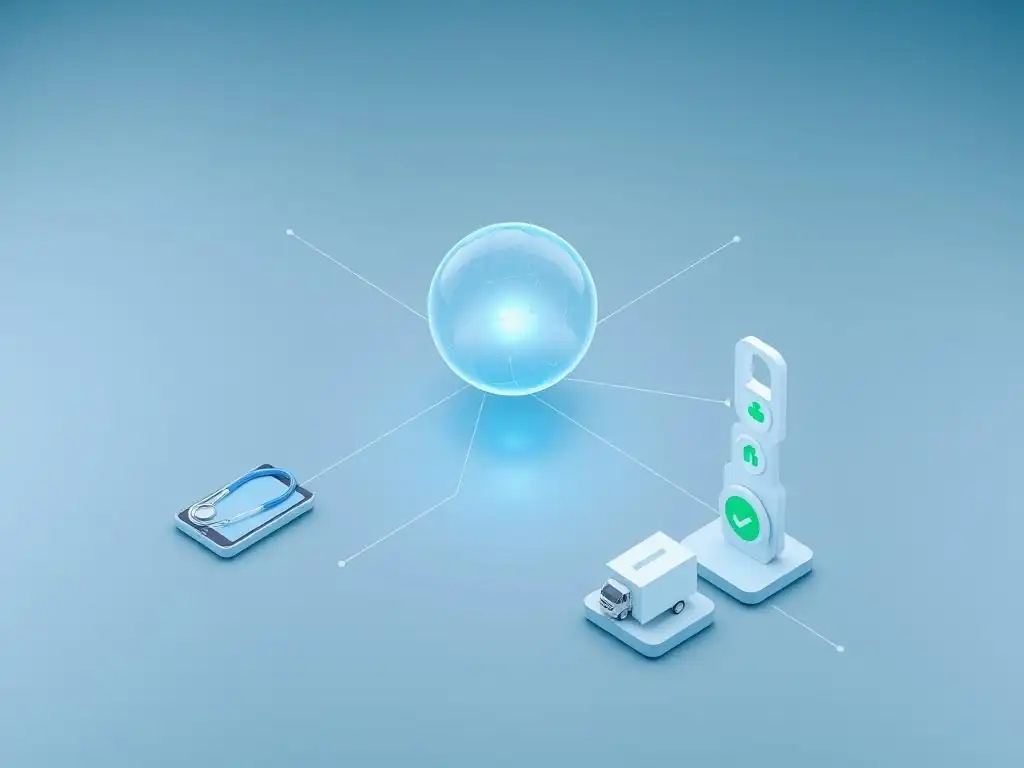
The application of blockchain technology spans various facets of telemedicine, offering concrete solutions to enhance security, privacy, and operational efficiency across the remote healthcare spectrum. Several specific use cases demonstrate how blockchain can be practically applied today.
Secure Patient Identity Management: Decentralized Identity Verification
Ensuring the identity of both the patient and the provider in a remote telemedicine setting is critical for security and accountability. Traditional identity verification often relies on centralized databases which are vulnerable to breaches. Blockchain enables the creation of decentralized digital identities.
A patient could have a unique digital identity stored on a blockchain, linked to verified credentials (like government ID, insurance details, medical history summaries). When accessing a telemedicine service, the patient uses their private key to authenticate their identity without needing to share sensitive underlying documents every time. The telemedicine platform can verify the patient's identity against the blockchain record.
Similarly, providers can use decentralized identities to prove their credentials and licenses. This reduces the risk of medical identity theft, which can lead to fraudulent billing and incorrect treatments, thus improving the security and efficiency of patient onboarding in telemedicine.
Streamlined Prescription Management: Preventing Opioid Abuse and Fraud
Managing prescriptions remotely introduces risks of fraud, duplicate prescriptions, and potential for abuse, particularly with controlled substances. Blockchain provides an immutable ledger that can track the lifecycle of a prescription from issuance by the provider to dispensing by the pharmacy.
When a telemedicine provider issues an electronic prescription, it can be recorded on a blockchain. The pharmacy accesses this record to verify the prescription's authenticity and logs its dispensing on the same chain. This creates a transparent and tamper-proof history for each prescription, making it difficult to forge or fill the same prescription multiple times at different pharmacies. This system can be particularly valuable in combating the opioid crisis by providing regulatory bodies and healthcare providers with a clear, auditable trail of prescriptions for controlled substances, thereby enhancing the safety and efficiency of remote prescribing.
Remote Patient Monitoring: Secure Data Transmission from Wearable Devices
Remote patient monitoring (RPM) involves collecting health data from patients using wearable devices or sensors and transmitting it to healthcare providers. The integrity and security of this data are paramount, as it is used for diagnosis and treatment decisions. Data transmitted from devices can be vulnerable to interception or tampering.
By using blockchain, data from RPM devices can be encrypted and securely transmitted. The blockchain can record the origin, timestamp, and hash of the data packets, ensuring that the data received by the provider is exactly what was sent from the device and has not been altered in transit. This provides a high level of assurance regarding data integrity.
Furthermore, patient consent for sharing specific types of RPM data with certain providers can be managed via smart contracts on the blockchain, giving patients greater control over their personal health information while ensuring secure and reliable data flow for effective remote care. This is a key area for blockchain telemedicine efficiency streamlining processes related to data collection and trust.
Teleconsultation Platforms: Secure Video Conferencing and Data Sharing
The core of telemedicine is the teleconsultation itself, often involving video conferencing and the sharing of patient data, test results, and treatment plans. Ensuring the privacy and security of these interactions is crucial. While the video stream itself may not be directly on a blockchain, the metadata, records of the consultation, and shared documents can be secured using blockchain.
A record of the teleconsultation session, including participants, duration, and a hash of the session's summary or shared documents, can be logged on the blockchain. Patient consent for recording or sharing specific information discussed during the call can be managed and recorded immutably.
Documents shared during the session (like lab results or imaging reports) can be hashed and the hash stored on the blockchain, allowing both patient and provider to verify the document's integrity later. This creates a secure, auditable history of the consultation, enhancing patient trust and providing a layer of security over the sensitive interactions that define telemedicine.
Implementing Blockchain for Telemedicine: Key Considerations
Implementing blockchain technology in the complex and highly regulated healthcare environment presents unique challenges that require careful planning and execution. Simply adopting the technology is not enough; successful integration depends on navigating regulatory landscapes, ensuring data governance, and achieving interoperability with existing systems.
HIPAA Compliance and Data Security Regulations
In the United States, the Health Insurance Portability and Accountability Act (HIPAA) sets stringent standards for protecting sensitive patient health information. Any blockchain solution for telemedicine must be designed and implemented in full compliance with HIPAA regulations. While blockchain's security features are beneficial, the immutable nature of public blockchains conflicts with the "right to be forgotten" or the ability to amend records required by some regulations.
Permissioned blockchains, with restricted access and the ability to manage data off-chain while using the blockchain for integrity checks and audit trails, are better suited for HIPAA compliance. The design must ensure that PHI is not stored directly on the ledger in an accessible format and that access controls meet regulatory requirements. Furthermore, solutions must consider state-level privacy laws and international regulations like GDPR, which may have different or additional requirements regarding data storage, processing, and patient rights. Ensuring regulatory compliance is paramount for any initiative aiming at blockchain telemedicine efficiency streamlining processes involving patient data.
Data Governance and Patient Consent Management
Effective data governance is critical when implementing blockchain in healthcare. This involves defining clear policies and procedures for data ownership, access rights, data quality, and record retention. While blockchain provides an immutable ledger of transactions, the governance framework dictates what is recorded, who can record it, and who can access the records or the underlying data.
Patient consent management is a vital component of data governance in telemedicine. Blockchain and smart contracts can provide a robust system for managing patient consent in a granular and auditable manner. Patients can use a decentralized identity to grant and revoke specific permissions for different providers or applications to access their health data recorded or referenced on the blockchain. This puts the patient in control of their data, fulfilling regulatory requirements and building trust, which is essential for the adoption and success of blockchain telemedicine efficiency streamlining processes related to patient data access.
Scalability and Interoperability with Legacy Systems
Healthcare systems generate vast amounts of data, and telemedicine is only increasing this volume. Any blockchain solution must be scalable to handle millions of transactions and data entries generated by patient interactions, RPM devices, and administrative processes. Many early blockchain platforms faced scalability limitations (e.g., low transaction throughput per second). Choosing a blockchain platform designed for enterprise use with high transaction capacity is essential.
Moreover, healthcare relies heavily on existing legacy systems, particularly EHR platforms that have been in use for years. A blockchain solution cannot exist in isolation; it must be able to integrate seamlessly with these established systems. This often requires building integration layers or APIs that translate data between the legacy system formats and the blockchain structure. Achieving this interoperability is crucial for realizing the benefits of blockchain telemedicine efficiency streamlining processes across the entire healthcare workflow, not just isolated parts.
Integration with Existing EHR and Telemedicine Platforms
Direct integration with existing Electronic Health Record (EHR) systems and established telemedicine platforms is a significant technical challenge but essential for successful deployment. Healthcare providers have invested heavily in their current EHR infrastructure, and expecting them to abandon it for a new blockchain-based system is unrealistic.
The blockchain layer should ideally function with or alongside existing platforms, rather than replacing them entirely. This involves creating connectors or middleware that allow EHR systems to write relevant, non-PHI data (like transaction hashes, access logs, or verified metadata) to the blockchain and retrieve necessary information or verify records from it. Similarly, telemedicine platforms need APIs to interact with the blockchain layer for identity verification, consent management, or secure document sharing. Successful integration minimizes disruption to current workflows and facilitates adoption, contributing directly to the overall goal of blockchain telemedicine efficiency streamlining processes within existing healthcare IT environments.
The Future of Blockchain in Telemedicine: Opportunities and Challenges
The journey of blockchain in telemedicine is still in its early stages, but the potential applications extend beyond current use cases. As the technology matures and regulatory clarity increases, blockchain is poised to play a more significant role in transforming remote healthcare delivery.
Emerging Trends: Decentralized Clinical Trials and Supply Chain Management
Beyond patient care, blockchain is showing promise in related healthcare areas that impact telemedicine. Decentralized clinical trials (DCTs) are an emerging trend, allowing patients to participate remotely. Blockchain can secure the data collected from remote participants (e.g., via wearables, patient-reported outcomes), ensuring data integrity and providing an immutable audit trail for regulatory submissions. This can make trials more efficient and accessible.
Furthermore, the healthcare supply chain, from pharmaceuticals to medical devices used in remote care settings, can benefit from blockchain's transparency and traceability. Tracking medications via blockchain from manufacturer to patient can help combat counterfeit drugs, ensure proper handling, and verify the authenticity of medical equipment used in telemedicine, adding a layer of trust and efficiency to the logistical aspects supporting remote care. These applications further underscore the potential for blockchain telemedicine efficiency streamlining processes across the broader healthcare ecosystem.
Overcoming Barriers: Regulatory Uncertainty and Technical Complexity
Despite the promising opportunities, significant barriers remain for widespread blockchain adoption in telemedicine. Regulatory uncertainty is a major challenge; while some guidance exists, specific regulations addressing blockchain's use with sensitive health data are still evolving in many jurisdictions. The lack of clear legal frameworks can make organizations hesitant to invest heavily in blockchain solutions.
Technical complexity is another hurdle. Implementing and maintaining a blockchain network requires specialized expertise that is often scarce within traditional healthcare IT departments. Integrating blockchain with diverse legacy systems adds further complexity. Overcoming these barriers requires continued collaboration between technology providers, healthcare organizations, and regulators to develop clear standards, user-friendly solutions, and necessary expertise.
Blockchain Telemedicine: A Vision for Patient-Centric Healthcare
Ultimately, the vision for blockchain in telemedicine is centered around empowering patients and creating a more efficient, secure, and transparent healthcare experience. By giving patients greater control over their health data through decentralized identity and consent management, blockchain fosters a patient-centric model.
The technology facilitates secure and seamless data exchange between providers, regardless of their location or the EHR systems they use, leading to better-coordinated remote care. Automation through smart contracts can reduce administrative burdens, allowing healthcare professionals to focus more on patient care rather than paperwork. This shift towards greater efficiency, security, and patient empowerment represents the core promise of blockchain telemedicine efficiency streamlining processes for the benefit of all stakeholders.
Conclusion: Maximizing Telemedicine Efficiency with Blockchain
Telemedicine has transformed healthcare access, but its full potential is unlocked by addressing critical challenges in data security, privacy, and interoperability. Blockchain technology offers a powerful set of features – security, immutability, and controlled transparency – that are uniquely suited to tackle these issues within the remote healthcare landscape.
Recap of Blockchain's Benefits: Security, Interoperability, and Efficiency
As explored, blockchain provides enhanced data security through immutable audit trails and cryptographic protection, significantly reducing the risk of tampering and unauthorized access to sensitive PHI. It improves interoperability by enabling secure, patient-controlled data exchange across disparate EHR systems, breaking down data silos. Furthermore, blockchain, particularly through smart contracts, offers the potential to reduce administrative overhead by automating complex processes like claims management. These benefits collectively contribute to significantly enhancing blockchain telemedicine efficiency streamlining processes across the entire remote care workflow.
Call to Action: Evaluating Blockchain Solutions for Enhanced Telemedicine Services
For healthcare organizations and telemedicine providers looking to improve their services, evaluating blockchain solutions is becoming increasingly important. Consider pilot programs focusing on specific use cases like secure patient identity management, streamlined prescription tracking, or enhancing the security of remote patient monitoring data. Engage with technology providers specializing in healthcare blockchain applications and ensure any proposed solution prioritizes HIPAA compliance, robust data governance, and seamless integration with existing infrastructure. Embracing blockchain is a strategic step towards building a more secure, efficient, and patient-centric future for telemedicine.
Frequently Asked Questions
How can blockchain technology improve the efficiency of telemedicine?
Blockchain can enhance telemedicine efficiency by providing a secure and immutable way to store and share patient data. This leads to streamlined processes and reduces administrative overhead.
What role does blockchain play in protecting patient data within telemedicine platforms?
Blockchain's cryptographic security features enable secure data storage and access control, safeguarding sensitive patient information. This helps maintain data integrity and build patient trust in telemedicine services.
How does blockchain facilitate interoperability between different telemedicine systems?
Blockchain can create a shared, distributed ledger that allows different telemedicine systems to exchange data seamlessly. This improves data accessibility and coordination of care across providers.
What are some potential regulatory hurdles for implementing blockchain in telemedicine?
Regulatory concerns surrounding data privacy (e.g., HIPAA) and the legal validity of blockchain records are significant challenges. Addressing these issues is crucial for widespread adoption.
Beyond data security, how else can blockchain streamline processes in telemedicine?
Blockchain can automate processes like insurance claims processing and prescription verification, eliminating intermediaries and reducing fraud. This leads to faster and more cost-effective telemedicine services.
Final Reflection: Embracing the Blockchain Revolution in Telemedicine
The exploration of blockchain's potential to revolutionize telemedicine efficiency culminates in a crucial realization: the future of healthcare is inextricably linked to secure, transparent, and streamlined data management. The challenges of data silos, security breaches, and interoperability issues that plague current telemedicine systems demand innovative solutions, and blockchain offers a compelling path forward. Its ability to ensure data integrity and facilitate seamless information exchange positions it as a cornerstone for building a more efficient and patient-centric healthcare ecosystem.
This journey into blockchain's application in telemedicine has profoundly underscored the importance of trust and security in healthcare. The potential for patients to own and control their medical data, facilitated by blockchain, is not just a technological advancement; it's a fundamental shift in power dynamics. It empowers individuals to actively participate in their own care, fostering a stronger sense of ownership and responsibility. The best way to predict the future is to create it.
- Peter Drucker. This quote resonates deeply as we consider the transformative potential of blockchain in shaping a future where healthcare is more accessible, secure, and personalized.
As we conclude this exploration, I invite you to consider the implications of blockchain technology in your own life and community. How can we, as individuals and as a society, advocate for the responsible implementation of this technology to improve healthcare access and efficiency for all? Let us embrace the potential of blockchain to build a future where telemedicine is not just a convenient alternative, but a secure, equitable, and empowering cornerstone of modern healthcare.
Reimagine Healthcare: Embrace Blockchain Solutions!
Thank you for exploring how blockchain is revolutionizing telemedicine efficiency. We hope you now have a clearer understanding of the potential benefits for patients and providers alike. Ready to take the next step in shaping the future of healthcare?
Here are a few ways you can get involved:
- Champion blockchain adoption: Share this article with healthcare professionals and technology innovators to spark conversations about blockchain's transformative power.
- Research pilot programs: Explore existing blockchain telemedicine projects to identify best practices and potential partnerships.
- Dive deeper into decentralized solutions: Investigate open-source blockchain platforms to understand how they can be customized for specific telemedicine needs.
What specific blockchain application could most drastically improve your own experience with telemedicine, either as a patient or a provider? Share your thoughts in the comments below!
Leave a Reply