
Decentralized Identity and the Future of Online Communities and Social Networks

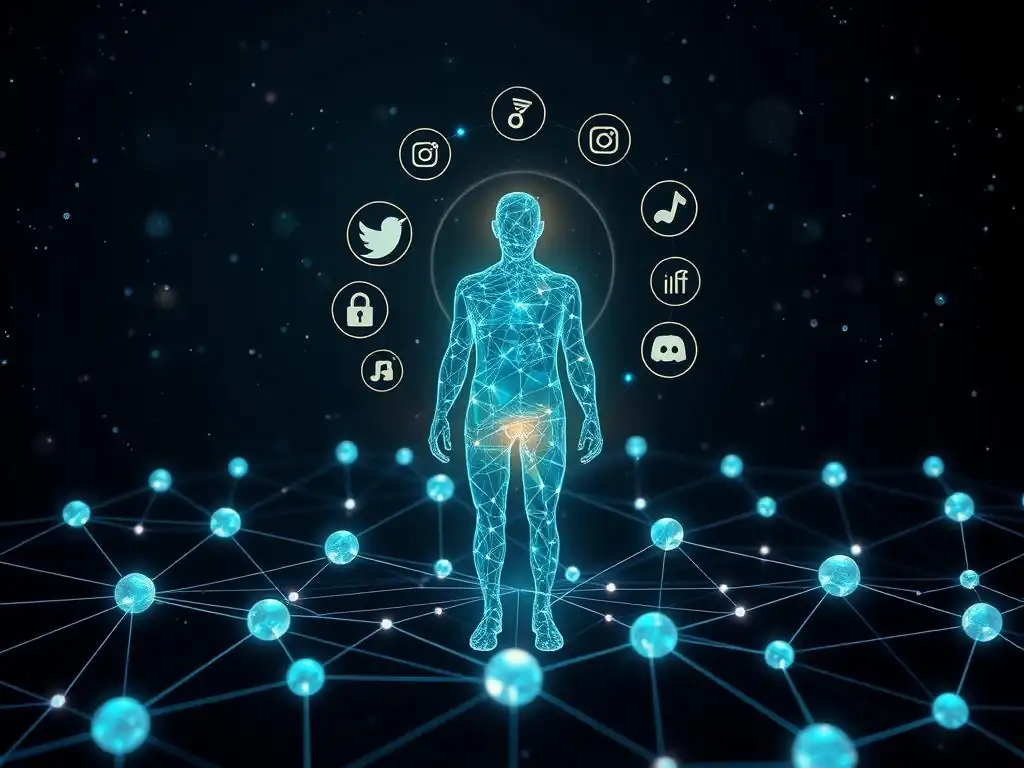
Welcome to Blockchain Trends, your gateway to understanding the revolutionary impact of blockchain technology!
Are you ready to unlock the potential of blockchain beyond cryptocurrencies? Delve into our latest exploration of Blockchain identity management solutions future and discover how decentralized identity is poised to reshape online communities and social networks. This article dives deep into the transformative possibilities. Intrigued? Let's explore the future together...
Decentralized Identity and the Future of Online Communities and Social Networks
- Introduction: The Evolution of Identity in the Digital Age
- Understanding Decentralized Identity: Core Concepts
- The Impact of Decentralized Identity on Online Communities
- Revolutionizing Social Networks with Blockchain Identity Management Solutions
- Use Cases: Blockchain Identity in Action
- Benefits of Blockchain-Based Identity for Online Platforms
- Challenges and Considerations for Widespread Adoption
- The Future of Blockchain Identity Management Solutions and Social Networks
- Conclusion: Empowering Users and Building a More Secure and Trustworthy Digital Future
-
Frequently Asked Questions
- What are the primary benefits of decentralized identity management solutions in the context of online communities?
- How does blockchain technology enhance identity management compared to traditional methods?
- What are some potential challenges in the widespread adoption of blockchain-based identity solutions for social networks?
- What regulatory considerations are impacting the development and implementation of blockchain identity management solutions?
- What is the predicted future impact of decentralized identity on the overall structure and functionality of online social networks?
- Final Reflection: Embracing a Sovereign Digital Self
- Embark on Your Decentralized Identity Journey Now!
Introduction: The Evolution of Identity in the Digital Age
The Centralized Identity Problem: Challenges and Limitations
For decades, our digital lives have been anchored by centralized identity systems. Whether it's logging into a social network, an online store, or a government portal, we typically rely on a single entity – a platform provider, a corporation, or a government agency – to verify and manage our identity. This model is intuitive and has facilitated the rapid growth of the internet, but it comes with significant drawbacks, primarily centered around security and user control. When a single database holds millions or even billions of user identities and associated data, it becomes an incredibly attractive target for cybercriminals.
Major data breaches are a stark reality of this centralized approach. Reports consistently show that millions of records are compromised annually, ranging from login credentials and personal information to financial details. For example, a single breach at a prominent social media platform in 2019 reportedly exposed data belonging to over 540 million users.
This highlights the inherent vulnerability when sensitive identity data is concentrated in one place. Furthermore, users have limited control over how their data is used, shared, or even if it is accurate, leading to concerns about privacy, surveillance, and the potential for misuse of personal information by the very entities entrusted to protect it. This necessitates a fundamental shift in how digital identity is managed.
Decentralized Identity (DID) as a Solution: A New Paradigm
Decentralized Identity (DID) emerges as a transformative solution to the challenges posed by centralized systems. At its core, DID empowers individuals with ownership and control over their digital identity, moving away from reliance on single, vulnerable authorities. Instead of a user's identity being managed by Facebook, Google, or a specific government, the user becomes the central point of control for their identity information.
This paradigm shift is often underpinned by blockchain technology, which provides a secure, immutable, and transparent ledger for anchoring identity components without centralizing the sensitive data itself. By leveraging blockchain identity management solutions future possibilities for digital interactions open up significantly. Users can selectively disclose verified attributes about themselves (like age, residency, or professional credentials) without revealing their full identity, thus enhancing privacy. This model promises greater security by distributing risk and reducing the honeypot effect of centralized databases, while simultaneously giving individuals unprecedented control over their digital presence and interactions.
Understanding Decentralized Identity: Core Concepts
What is Decentralized Identity (DID)? Definition and Key Features
Decentralized Identity, or DID, refers to a system where users manage their own digital identities without relying on a single point of authority. Unlike traditional models where identity is issued and controlled by entities like governments, corporations, or social networks, DID puts the individual in charge. The core principle is self-sovereignty, meaning users have the ultimate control over their identity data and how it is shared.
Key features of DID include user control, data minimization, and verifiable credentials. Users decide which pieces of their identity to share, with whom, and for how long. Instead of handing over a full identity profile, they can present specific, verified claims (e.g., "I am over 18," "I am a certified professional," "I live in this city") without revealing the underlying personal data. This is facilitated by a system of identifiers, credentials, and decentralized ledgers, often leveraging the strengths of blockchain identity management solutions future development.
How Blockchain Powers Decentralized Identity Management Solutions
Blockchain technology serves as a crucial backbone for many decentralized identity systems. While a user's sensitive personal data is typically not stored directly on the blockchain (for privacy and scalability reasons), the blockchain provides a secure, tamper-proof, and decentralized infrastructure for anchoring DID components. Specifically, blockchains are used to register Decentralized Identifiers (DIDs) and to record the existence and validity of Verifiable Credentials.
When a user creates a DID, a unique identifier is generated and often linked to a public key stored on a blockchain or a similar decentralized ledger. This allows anyone to cryptographically verify the authenticity of the DID. Verifiable Credentials, which are digital proofs of claims issued by trusted entities (like a university issuing a degree credential), can have their hashes or pointers recorded on the blockchain.
This provides an immutable public record that the credential was issued, allowing verifiers to trust its legitimacy without needing to directly query the issuer every time. This infrastructure is vital for the functionality and trust inherent in blockchain identity management solutions future applications.
The Role of Self-Sovereign Identity (SSI) in Decentralized Systems
Self-Sovereign Identity (SSI) is the philosophical and technical framework that underpins many decentralized identity systems. It represents the highest level of identity control, where the individual is the ultimate arbiter of their own identity. SSI goes beyond simply decentralized storage; it emphasizes the user's right to own and control their data, choose who to share it with, and revoke access at any time.
In an SSI model, identity is built upon a foundation of verifiable credentials. These are digital claims issued by trusted sources (issuers) to the user (holder). The user stores these credentials securely, typically in a digital wallet on their device.
When proof is required, the user presents the relevant credentials or derivatives of them to a verifier. The verifier can then use the underlying blockchain infrastructure to cryptographically verify the authenticity and integrity of the credential and the identity associated with it, all without needing to go through a centralized intermediary. SSI is a core driver for the development and adoption of blockchain identity management solutions future potential.
The Impact of Decentralized Identity on Online Communities
Enhanced Privacy and Data Control for Community Members
Decentralized identity fundamentally shifts the power dynamic in online communities by giving members unprecedented control over their personal data. Instead of platforms holding vast databases of user information, users retain their data in their own digital wallets. When joining a community or interacting within it, users can selectively share only the minimum amount of information required, often in the form of verifiable claims. For instance, they might prove they are a verified member of a specific professional group or are over a certain age without revealing their full name or date of birth.
This granular control significantly reduces the privacy risks associated with centralized systems. Users are no longer passive subjects whose data is collected, analyzed, and potentially monetized or exposed without their explicit, informed consent. They become active participants, deciding exactly what information flows out and to whom. This not only protects against data breaches but also fosters a sense of trust and safety within the community, as members know they are not unknowingly surrendering their personal information to a third party. The future of blockchain identity management solutions hinges on delivering this level of user empowerment.
Improved Security and Reduced Risk of Identity Theft
By distributing identity data and reducing reliance on central honeypots, decentralized identity significantly enhances security and mitigates the risk of large-scale identity theft. In a centralized system, a single successful attack can compromise millions of user accounts. With DID, even if a user's personal device is compromised, the attacker only gains access to that individual's credentials, not a vast database of identities belonging to everyone in the community.
Furthermore, the use of cryptographic proofs and blockchain's immutability makes it much harder to forge identities or credentials. Verifiers can cryptographically confirm that a credential was issued by a legitimate source and has not been tampered with. This makes phishing attacks that rely on impersonation or gaining access to centralized login credentials much less effective. The security improvements offered by blockchain identity management solutions future iterations are expected to dramatically reduce the financial and personal costs associated with online fraud and identity theft within digital communities.
Fostering Trust and Transparency in Online Interactions
Trust is a cornerstone of healthy online communities, and decentralized identity can help build it through verifiable interactions and transparency. Instead of relying on flimsy profiles or usernames that can be easily changed or faked, DID allows for the verification of specific attributes or credentials relevant to the community's purpose. For example, in a professional forum, users could prove their certifications; in a gaming community, they could verify their in-game achievements without revealing their real-world identity.
This verifiable layer adds a significant degree of authenticity to interactions. Community members can have greater confidence in the legitimacy of others they interact with, reducing the prevalence of scams, misinformation, and malicious behavior often perpetrated by anonymous or fake accounts. The transparency comes from the public verifiability of credentials via the underlying ledger, allowing anyone to confirm the legitimacy of a claim without needing to trust a central platform. This fosters a more genuine and trustworthy environment, critical for the long-term health and engagement of online communities utilizing blockchain identity management solutions future capabilities.
Traditional social networks operate on a model where user profiles are built and owned by the platform provider. Users contribute content and data, which the platform then leverages for advertising and other purposes. Blockchain identity management solutions future implementations promise to fundamentally alter this dynamic by giving users true ownership of their profile data and digital footprint.
Instead of a profile being a database entry controlled by the platform, a decentralized profile could be composed of verifiable credentials and attributes stored and managed by the user. The social network would become a layer that allows users to display and interact based on these self-managed credentials.
For example, a user could prove their affiliation with certain groups, display verified skills, or share demographic information selectively, all while retaining control. This shift means users could potentially port their identity and reputation to different platforms, reducing vendor lock-in and enabling new models for data monetization where the user, not the platform, benefits.
Combating Fake Accounts and Bots with Decentralized Verification
The proliferation of fake accounts, bots, and malicious actors is a significant challenge plaguing current social networks, impacting everything from political discourse to genuine human connection. Estimates of bot accounts on major platforms can range from 5% to over 15% of the total user base, representing millions of inauthentic profiles used for spam, manipulation, and fraud. Decentralized identity offers a powerful tool to combat this.
By requiring users to anchor their identity to a decentralized identifier and potentially attach verifiable credentials (even minimal ones proving liveness or uniqueness without revealing personal details), platforms can create a higher barrier to entry for malicious actors. While full anonymity could still be preserved for many interactions, specific actions or roles within the network could require verifiable proof of certain attributes.
For instance, voting on a proposal might require proof of being a unique human user or a member of a specific group, preventing bot farms from swaying outcomes. This enhanced verification capability is a key benefit of blockchain identity management solutions future adoption on social platforms.
Enabling New Forms of Community Governance and Participation
Decentralized identity, combined with blockchain technology, can pave the way for novel and more democratic forms of governance within online communities and social networks. Current platforms are typically governed by centralized corporations. DID enables a shift towards models like Decentralized Autonomous Organizations (DAOs) where users can have a direct say in platform rules, content moderation policies, and future development.
Using verifiable credentials tied to a decentralized identity, participation in governance can be weighted based on factors like verified contributions, reputation scores, or ownership of specific community tokens, rather than simply one-user-one-vote which is susceptible to Sybil attacks (creating many fake identities). For example, a user's vote might carry more weight if they hold a verified credential proving long-term, positive engagement in the community.
This allows for more nuanced and secure participation, ensuring that governance reflects the will of genuine, invested members. The integration of DID is crucial for realizing the full potential of decentralized governance models within blockchain identity management solutions future social networks.
Use Cases: Blockchain Identity in Action
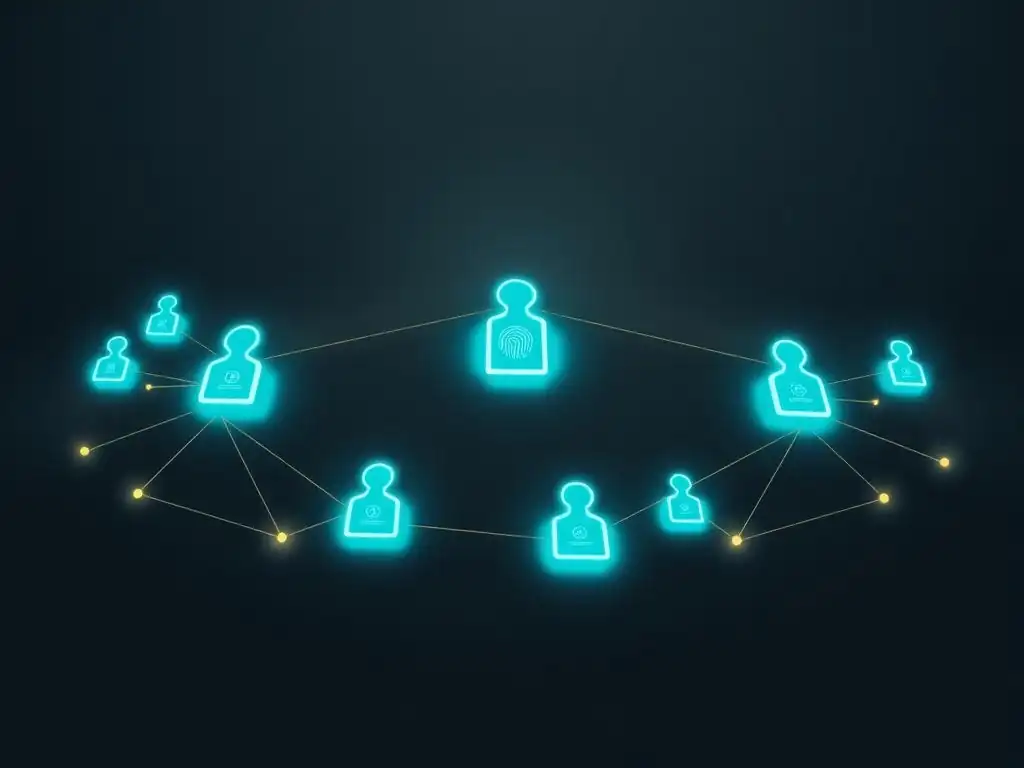
Decentralized Identity for Content Creators: Copyright Protection and Monetization
Content creators face ongoing challenges with copyright infringement and ensuring fair compensation for their work online. Centralized platforms often dictate terms and distribution. Decentralized identity offers creators greater control and new avenues for monetization. By linking their digital identity to their creations via decentralized identifiers and blockchain, creators can establish verifiable proof of ownership and authorship timestamped on an immutable ledger.
For example, a digital artist could register a unique DID associated with their identity and use it to cryptographically sign their artwork. This signature, verifiable on a blockchain, provides strong evidence of provenance. Furthermore, smart contracts linked to the creator's DID could automate royalty payments whenever their work is licensed or sold, ensuring they receive a fair share directly, without needing intermediaries. This empowers creators, giving them more control over their intellectual property and revenue streams through blockchain identity management solutions future applications.
DID-Based Reputation Systems: Verifiable Credentials for Skill Endorsements
Online reputation is often siloed within specific platforms or easily faked. Decentralized identity enables the creation of portable, verifiable reputation systems based on credentials issued by trusted entities. Instead of a LinkedIn endorsement that only matters on LinkedIn, a user could receive a verifiable credential for a skill endorsement from a former employer or colleague, issued via a DID system.
This credential, stored in the user's wallet, could then be presented to various platforms – a job application site, a freelancing platform, a professional community – to instantly and cryptographically prove their skill or experience. This moves beyond relying on potentially biased or easily manipulated reviews within a single platform. For instance, a developer could collect verifiable credentials from clients for completed projects, building a robust, portable reputation profile that is truly owned and controlled by them. This enhances trust and efficiency in online professional interactions, showcasing the practical benefits of blockchain identity management solutions future implementations.
Secure Voting and Governance in Online Communities: DAO Participation and Proposals
Secure and transparent voting is critical for effective governance in decentralized online communities, such as DAOs. Traditional online voting systems are susceptible to manipulation, Sybil attacks (where one entity creates multiple fake identities to vote), and lack transparency. Decentralized identity provides a robust framework to address these issues.
Using DID, participants in a DAO can be verified without revealing their full real-world identity, preserving privacy while ensuring that each vote corresponds to a unique, legitimate participant (or is weighted based on verified credentials like token holdings or reputation). Verifiable credentials can be used to prove eligibility to vote on specific proposals (e.g., "member of the core contributor group").
The voting process itself can be recorded on a blockchain, providing an immutable and publicly auditable record of the outcome, ensuring transparency and preventing tampering. This application is fundamental to the operational integrity of decentralized governance models leveraging blockchain identity management solutions future capabilities.
Benefits of Blockchain-Based Identity for Online Platforms
Streamlined Onboarding and Authentication Processes
For online platforms, integrating blockchain-based identity solutions can significantly streamline user onboarding and authentication. Instead of requiring users to create a new username and password for every service, fill out extensive profile information, and undergo repetitive verification processes, users can leverage their existing decentralized identity.
A user with a self-sovereign identity can present verifiable credentials to a new platform that instantly prove the necessary attributes for access – for example, proof of age, country of residence, or membership in a specific organization. This eliminates the need for the platform to collect and store sensitive personal data themselves, reducing their liability and compliance burden.
Authentication can also be simplified, potentially using cryptographic signatures from the user's wallet rather than traditional username/password combinations which are prone to phishing and brute-force attacks. This makes joining and using platforms faster, safer, and more user-friendly, highlighting a key advantage of blockchain identity management solutions future implementations.
Reduced Reliance on Centralized Identity Providers
Current online services often rely heavily on centralized identity providers, such as social media giants or email providers, for login functionality ("Login with Facebook/Google"). While convenient, this creates dependencies, vendor lock-in, and subjects platforms to the policies and potential outages of these third-party providers. Blockchain identity management solutions future adoption offers a path towards breaking this reliance.
By adopting a decentralized identity framework, platforms can allow users to authenticate using their self-sovereign identity, independent of any single corporation. The platform interacts directly with the user's DID and verifiable credentials, verifying them against the underlying decentralized ledger. This reduces the platform's dependence on intermediaries, giving them more control over their user base and technical infrastructure. It also aligns with the decentralized ethos of many emerging online communities and services.
Increased User Engagement and Loyalty
Offering users greater control over their identity and data can lead to increased trust, engagement, and loyalty on online platforms. Users are becoming increasingly aware of the value of their personal information and the risks associated with sharing it. Platforms that respect user privacy and empower them with control are likely to attract and retain users.
When users know they can interact within a community or service without unnecessarily exposing sensitive data, or that their verified reputation can be portable to other platforms, they are more likely to invest time and effort into building their presence and contributing meaningfully. This sense of ownership and security fosters a stronger connection between the user and the platform, moving beyond a transactional relationship to one based on mutual respect for data sovereignty. This user-centric approach is a significant factor driving interest in blockchain identity management solutions future integration into digital services.
Challenges and Considerations for Widespread Adoption
Scalability and Performance of Blockchain Identity Solutions
While blockchain provides a robust foundation, the scalability and performance of the underlying ledger can be a significant challenge for widespread adoption of decentralized identity, particularly in high-transaction environments like large social networks. Public blockchains, while decentralized and secure, can sometimes suffer from slow transaction speeds and high costs (gas fees), especially during periods of high network congestion.
DID systems often interact with the blockchain to register DIDs, anchor credential proofs, or update revocation registries. If the chosen blockchain cannot handle the volume of these operations efficiently and affordably, it could hinder user experience and platform viability. Solutions are being developed, including using Layer 2 scaling solutions, permissioned blockchains for specific use cases, or designing DID methods that minimize on-chain transactions, perhaps only using the blockchain for crucial anchoring or revocation events. Overcoming these technical hurdles is essential for the successful deployment of blockchain identity management solutions future at scale.
Interoperability Between Different DID Systems
The decentralized identity ecosystem is still evolving, with various standards, protocols (like DIDComm for secure messaging), and underlying blockchain or distributed ledger technologies being explored. This fragmentation raises concerns about interoperability. Will a verifiable credential issued using one DID method on one blockchain be recognized and verifiable by a platform using a different DID method or ledger?
Lack of interoperability could create silos, defeating the purpose of a portable, user-controlled identity. Standards bodies like the W3C (World Wide Web Consortium) are working on universal specifications for DIDs and Verifiable Credentials, which is a crucial step. However, ensuring that different implementations adhere to these standards and can seamlessly interact is a complex undertaking. Achieving true interoperability is vital for users to manage a single, consistent identity across diverse online services and for the widespread success of blockchain identity management solutions future applications.
Regulatory Landscape and Compliance Issues
The regulatory landscape surrounding digital identity, data privacy, and blockchain technology is still developing and varies significantly across jurisdictions. This uncertainty poses challenges for the widespread adoption of decentralized identity solutions. Issues like data residency requirements, "right to be forgotten" principles (which can conflict with blockchain's immutability), and the legal recognition of decentralized identifiers and verifiable credentials need to be addressed.
Platforms and organizations implementing DID solutions must navigate these complex legal frameworks. For instance, how does a company comply with GDPR or CCPA when user data is primarily held by the user, not the company? What are the legal liabilities if a verifiable credential is found to be fraudulent, even if the technology itself is secure? Clearer regulations and legal precedents are needed to provide certainty for businesses and users. Collaboration between technology developers, policymakers, and legal experts is necessary to create a supportive environment for blockchain identity management solutions future growth while protecting individuals' rights.
Emerging Trends in Decentralized Identity Technology
The field of decentralized identity is rapidly advancing, driven by ongoing innovation in blockchain and cryptography. One key trend is the development of more sophisticated privacy-preserving technologies, such as Zero-Knowledge Proofs (ZKPs). ZKPs allow a user to prove that a statement is true (e.g., "I am over 21") without revealing any additional information that could identify them or the underlying data used in the proof. This moves beyond simply minimizing data sharing to eliminating it entirely in certain verification scenarios.
Another trend is the focus on user-friendly interfaces and wallet technologies. For DID to become mainstream, managing decentralized identifiers and verifiable credentials needs to be as simple, if not simpler, than using traditional login methods. Mobile-first DID wallets are becoming more sophisticated, offering secure storage and intuitive ways to present credentials. Furthermore, research into more scalable and energy-efficient distributed ledgers is crucial for underpinning the high-transaction volume required by widespread blockchain identity management solutions future deployments.
The Potential for Personalized and Context-Aware Experiences
Contrary to the misconception that decentralized identity means complete anonymity, it actually holds significant potential for enabling highly personalized and context-aware online experiences, but on the user's terms. By selectively sharing specific verifiable attributes, users can tailor their interactions and the information they receive.
Imagine a social network where, instead of the platform guessing your interests based on surveillance, you explicitly share verifiable credentials about your hobbies, professional affiliations, or past group memberships. The platform can then use this explicitly shared, verified information to curate content, connect you with relevant communities, or offer personalized services, all while respecting your overall privacy. This moves from implicit, often intrusive personalization based on data mining to explicit, user-controlled personalization based on verifiable claims, representing a significant shift facilitated by blockchain identity management solutions future capabilities.
Predictions for the Long-Term Impact on Online Communities
The long-term impact of blockchain identity management solutions future integration into online communities and social networks is poised to be profound. We can anticipate a future where users are no longer tethered to single platforms but can move their identity, reputation, and even content across different decentralized services. This portability will foster a more competitive landscape among platforms, forcing them to compete on features, user experience, and privacy rather than relying on identity lock-in.
Online communities may become more authentic and trustworthy as verifiable identities and credentials become more common, reducing the influence of bots and fake accounts. New business models could emerge, centered around providing identity services, issuing valuable credentials, or building decentralized applications that interact with user-owned identities. Ultimately, the widespread adoption of decentralized identity could lead to a more secure, private, and user-centric digital world, fundamentally changing how we interact and build communities online.
Conclusion: Empowering Users and Building a More Secure and Trustworthy Digital Future
Frequently Asked Questions
What are the primary benefits of decentralized identity management solutions in the context of online communities?
Decentralized identity offers users greater control over their personal data and reduces reliance on centralized authorities, enhancing privacy and security. This can foster trust and engagement within online communities.
How does blockchain technology enhance identity management compared to traditional methods?
Blockchain provides a verifiable and immutable record of identity attributes, reducing the risk of fraud and identity theft. It also facilitates self-sovereign identity, where users own and manage their credentials.
Challenges include scalability issues, the need for user education and awareness, and the complexities of interoperability between different blockchain platforms.
What regulatory considerations are impacting the development and implementation of blockchain identity management solutions?
Regulations related to data privacy (e.g., GDPR), KYC/AML requirements, and cross-border data transfers are significantly influencing the design and deployment of these solutions.
Decentralized identity is expected to lead to more user-centric and transparent social networks, promoting greater data ownership and potentially fostering new forms of community governance.
Final Reflection: Embracing a Sovereign Digital Self
The exploration of decentralized identity within online communities and social networks reveals a profound shift in power dynamics. The promise of user-controlled data and enhanced privacy is no longer a futuristic fantasy, but a tangible possibility reshaping the very fabric of our digital interactions. As centralized platforms grapple with data breaches and eroding trust, the need for robust blockchain identity management solutions becomes increasingly urgent.
This movement towards self-sovereign identity isn't just about technological advancement; it's about reclaiming our digital autonomy. It's about empowering individuals to curate their online presence and engage in communities with greater security and control. Identity is the new perimeter of security, and it's time we started treating it that way.
This quote underscores the fundamental shift required: from relying on centralized gatekeepers to embracing a model where individuals are the custodians of their own digital identities.
As we stand on the cusp of this decentralized future, I invite you to consider the role you can play in shaping it. Explore the possibilities of blockchain identity management solutions, advocate for user-centric design, and demand greater transparency from the platforms you use. The future of online communities and social networks hinges on our collective commitment to building a more equitable and empowering digital landscape. Let us embrace the power of decentralized identity and forge a future where our online selves truly belong to us.
Embark on Your Decentralized Identity Journey Now!
Thank you for exploring the potential of decentralized identity and its impact on the future of online communities. We hope this article has highlighted the transformative role of self-sovereign identity in creating a more user-centric web. Now, it's time to take action!
Here are some ways to get started:
- Create your first decentralized identifier today! Explore available providers and begin taking control of your online identity.
- Dive deeper into decentralized social networks. Research emerging platforms built on decentralized identity principles.
- Share this article with your network to spark conversations about the importance of user-owned identity in shaping the future internet.
What’s the first step you plan to take to harness the power of decentralized identity? Share your thoughts in the comments below!
Leave a Reply