
Are Decentralized Real Estate Marketplaces More Secure Than Traditional Systems?


Welcome to Blockchain Trends, your go-to source for understanding the revolutionary impact of blockchain beyond the hype. Ever wondered if your next real estate transaction could be safer and more transparent? Dive into our latest exploration of Blockchain real estate security benefits and discover how decentralized marketplaces are poised to reshape the industry. Could blockchain be the key to unlocking a more secure future for property ownership? Let's explore the possibilities...
Are Decentralized Real Estate Marketplaces More Secure Than Traditional Systems?
- Introduction: Decentralized Real Estate and Enhanced Security
- How Decentralized Real Estate Marketplaces Leverage Blockchain for Enhanced Security
- Security Vulnerabilities of Traditional Real Estate Systems
- Decentralized Real Estate Security: Addressing Key Vulnerabilities
- Comparison: Security Features of Decentralized vs. Traditional Real Estate Marketplaces
- Real-World Examples of Blockchain Real Estate Security
- Potential Challenges and Future of Blockchain Real Estate Security
- Conclusion: Embracing Blockchain for Secure Real Estate Transactions
-
Frequently Asked Questions
- How does blockchain technology enhance security in real estate transactions?
- What are the key "Blockchain real estate security benefits" addressed in the article?
- Can smart contracts guarantee secure real estate transactions on a blockchain?
- What are the potential security vulnerabilities in decentralized real estate marketplaces?
- How does regulation impact the security of blockchain-based real estate platforms?
- Final Reflection: Embracing Trust Through Decentralization
- Unveil the Future: Step into Secure Real Estate!
Introduction: Decentralized Real Estate and Enhanced Security
The Rise of Blockchain in Real Estate Transactions
The global real estate market represents an enormous store of wealth, estimated to be worth hundreds of trillions of dollars. Despite its scale, transactions within this market are often characterized by inefficiency, opacity, and significant reliance on intermediaries. This environment has made the sector ripe for technological disruption, and blockchain technology has emerged as a leading candidate to address these long-standing issues. Initially known primarily for powering cryptocurrencies, blockchain's core attributes of decentralization, immutability, and transparency offer compelling solutions for property transactions and ownership management.
Interest in applying blockchain beyond digital currencies to tangible assets like real estate has grown significantly. This is driven by the potential to streamline complex processes, reduce costs associated with third parties, and, critically, enhance security. By creating a shared, tamper-proof ledger of property records and transaction history, blockchain platforms aim to build a more trustworthy and efficient ecosystem for buying, selling, and managing real estate assets, promising considerable blockchain real estate security benefits.
Understanding Security Challenges in Traditional Real Estate
Traditional real estate transactions are fraught with security vulnerabilities at multiple stages. The process typically involves numerous manual steps, paper documents, and a variety of intermediaries, from brokers and lawyers to title companies and government recording offices. This complexity creates ample opportunity for errors, fraud, and security breaches. Issues such as forged deeds, fraudulent property transfers based on stolen identities, and manipulation of property records are well-documented risks.
Furthermore, the reliance on centralized databases for recording property ownership and liens presents a single point of failure. These databases can be susceptible to cyberattacks, data breaches, or internal corruption, putting sensitive ownership information at risk. The lack of real-time, universally verifiable information across disparate systems means that discrepancies can exist, which malicious actors can exploit. The inherent inefficiencies and lack of transparency in these traditional systems contribute significantly to their security weaknesses.
How Decentralized Real Estate Marketplaces Leverage Blockchain for Enhanced Security
Immutability and Transparency: Core Blockchain Real Estate Security Benefits
One of the most significant blockchain real estate security benefits stems from its inherent immutability. Once a transaction or record, such as a property title transfer or the recording of a lien, is added to the blockchain, it is cryptographically linked to the previous records, forming a chain that is virtually impossible to alter or delete without the consensus of the network. This creates a permanent, tamper-proof audit trail of a property's history, drastically reducing the risk of document forgery or fraudulent changes to ownership records.
Coupled with immutability is transparency. While participant identities on a public blockchain might be pseudonymous, the transactions themselves and the state of the ledger are typically publicly viewable or viewable by authorized network participants. This means that the history of a property, including all past owners and transactions, can be easily verified by anyone with access to the network. This level of transparency contrasts sharply with the often opaque and fragmented nature of traditional land registries and title records, providing a clear and verifiable source of truth that enhances security and reduces disputes.
Smart Contracts: Automating Secure Real Estate Transactions
Smart contracts are self-executing contracts with the terms of the agreement directly written into code. Deployed on a blockchain, these contracts automatically execute predefined actions when specific conditions are met, without the need for intermediaries. In real estate, smart contracts can automate various steps of a transaction, such as the transfer of funds from an escrow account to the seller simultaneously with the transfer of the digital property title to the buyer, only after all conditions (e.g., identity verification, fund availability) are met.
This automation significantly enhances security by removing the reliance on human intermediaries for critical steps like fund dispersal or document exchange, which are susceptible to error, delay, or malicious intervention. The logic of the smart contract is transparent and verifiable on the blockchain, ensuring that all parties agree on the execution terms beforehand. This reduces counterparty risk and provides a secure, automated mechanism for enforcing the terms of the real estate agreement, contributing substantially to blockchain real estate security benefits.
Tokenization of Real Estate Assets: Fractional Ownership and Increased Security
Tokenization involves representing ownership or rights in a real estate asset as digital tokens on a blockchain. Each token can represent a fraction of the property's value or specific rights associated with it. This process makes illiquid real estate assets more divisible and transferable, opening up possibilities for fractional ownership and broader investment access. Beyond facilitating new investment models, tokenization also brings significant security advantages.
When real estate is tokenized, the ownership of these digital tokens is recorded on a blockchain ledger. This provides an immutable and transparent record of who owns which portion of the asset. Transferring tokenized ownership is done via secure blockchain transactions, which are cryptographically protected and recorded permanently. This eliminates the need for manual updates of shareholder registers or complex legal processes for transferring fractional interests, providing a clear, verifiable, and secure method for managing shared ownership, which is a key blockchain real estate security benefit.
Security Vulnerabilities of Traditional Real Estate Systems
Risks of Fraud and Forgery in Traditional Property Transactions
Traditional real estate transactions are highly susceptible to various forms of fraud and forgery. A common risk is deed forgery, where criminals attempt to impersonate property owners or forge signatures on transfer documents to sell a property they do not own. Identity theft is also a significant concern, enabling fraudsters to apply for mortgages or sell properties using stolen personal information. Because traditional systems often rely on physical documents or easily alterable digital files and require manual verification processes that can be bypassed, they present numerous vulnerabilities.
The consequences of such fraud can be devastating for legitimate property owners, buyers, and lenders, leading to significant financial losses and lengthy, costly legal battles to resolve ownership disputes. The manual nature of verifying identities and document authenticity across disparate systems creates windows of opportunity for malicious actors to insert fraudulent elements into the transaction process before they are detected, if they are detected at all.
Centralized Databases: A Single Point of Failure for Security
Traditional real estate systems typically rely on centralized databases, such as government land registries or private title company records, to store critical information about property ownership, boundaries, liens, and transaction history. While these databases serve as official records, their centralized nature makes them a single point of failure from a security perspective. A successful cyberattack on such a database could lead to widespread data breaches, loss of sensitive information, or even malicious alteration of official records.
Moreover, internal threats or administrative errors within the controlling entity could also compromise the integrity and security of the data. Unlike distributed systems, where data is replicated across many independent nodes, a centralized database means that compromising one system can potentially affect the entire dataset, disrupting operations and eroding trust in the accuracy of property records.
Inefficiencies and Delays: Security Loopholes in Traditional Processes
The multi-stage, often lengthy process of traditional real estate transactions inherently introduces security vulnerabilities. The involvement of numerous parties – buyers, sellers, agents, lawyers, escrow companies, title insurers, surveyors, appraisers, and government offices – requires the exchange of sensitive information and documents across many hands. Manual processing and verification steps are prone to human error and can cause significant delays.
These inefficiencies and delays create windows during which information can become outdated, documents can be misplaced or intercepted, or the status of the property or parties can change without being immediately or accurately reflected in the records. For example, a lien might be placed on a property after the initial title search but before closing, and if not caught due to process delays or communication gaps, it creates a significant security issue for the buyer and lender. The lack of a single, real-time, secure source of truth across all participants exacerbates these risks.
Decentralized Real Estate Security: Addressing Key Vulnerabilities
Mitigating Fraud with Blockchain's Immutable Ledger
Blockchain's immutable ledger directly confronts the risk of fraud and forgery prevalent in traditional real estate. By recording property ownership, transaction history, and any associated encumbrances (like liens or mortgages) on a blockchain, a permanent, unchangeable record is created. Each transaction is cryptographically signed and linked to the previous one, making it computationally infeasible for malicious actors to alter past records or insert fraudulent transactions without invalidating the entire chain.
This tamper-proof history provides a robust defense against deed forgery and fraudulent transfers. Any attempt to alter the recorded ownership or create a fake transaction would be immediately detectable by comparing the proposed change against the distributed copies of the ledger. This inherent security feature provides a transparent and verifiable audit trail that significantly enhances the integrity of property records, standing out as a major blockchain real estate security benefit.
Eliminating Single Points of Failure with Distributed Systems
Unlike centralized databases which present a single, vulnerable target, blockchain operates as a distributed ledger system. Copies of the ledger are maintained and updated across a network of independent computers or nodes. To compromise the data on the blockchain, an attacker would need to gain control of a significant portion (often a majority) of the network's computing power or nodes simultaneously, which is extraordinarily difficult and expensive, especially on large public blockchains.
This distributed architecture eliminates the single point of failure inherent in centralized systems. If one node is attacked or goes offline, the network continues to function using the data from other nodes. This resilience ensures high availability and robust data integrity, protecting critical property records from localized attacks, system failures, or internal compromises that could cripple a traditional centralized database.
Streamlining Processes and Reducing Security Risks Through Automation
Decentralized real estate platforms leverage smart contracts to automate and streamline many of the complex, manual steps in traditional transactions. By encoding transaction logic directly into self-executing code on the blockchain, processes like identity verification, escrow management, document exchange, and fund transfers can be executed automatically and securely based on predefined conditions being met. This reduces the reliance on human intervention at critical junctures.
Automating these processes minimizes opportunities for human error, delays, and malicious interception or manipulation of documents and funds that occur during manual handoffs between multiple parties. A streamlined, automated workflow reduces the overall transaction time and complexity, closing potential security loopholes that exist in the lengthy, multi-step traditional process. This efficiency is not just about speed; it's a fundamental blockchain real estate security benefit derived from reducing the points of vulnerability in the transaction lifecycle.
Comparison: Security Features of Decentralized vs. Traditional Real Estate Marketplaces
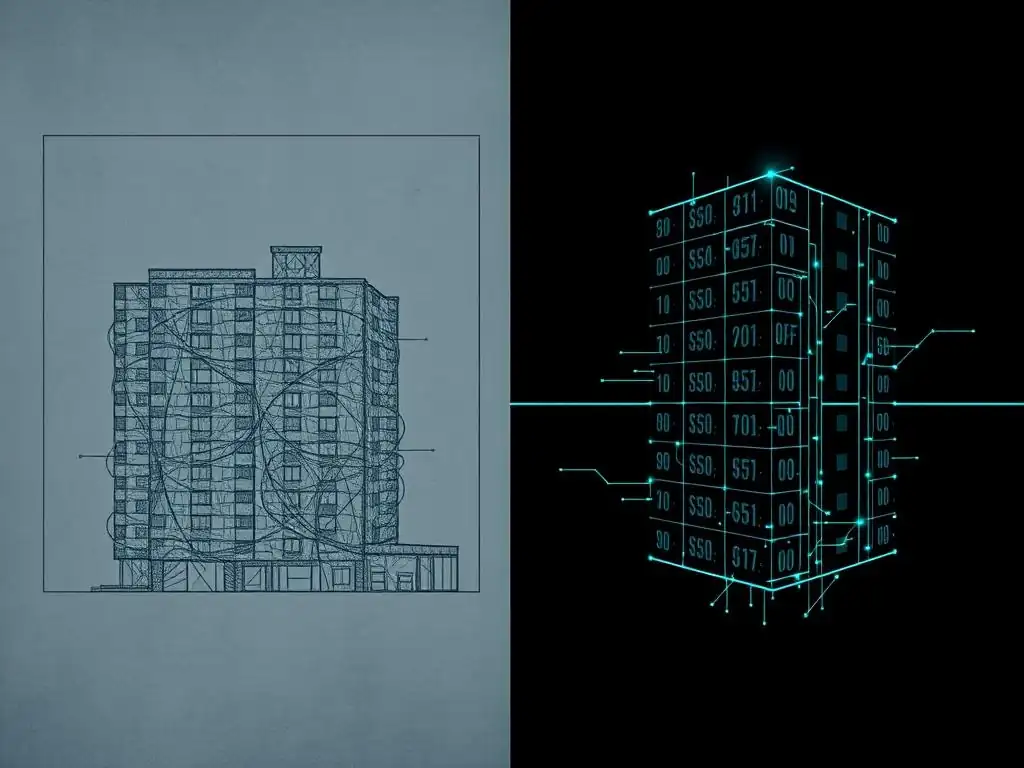
Decentralized Security Advantages: Key Features
Decentralized real estate marketplaces built on blockchain technology offer several key security advantages over their traditional counterparts. The core features contributing to these blockchain real estate security benefits include:
- Immutability: Records, once added, cannot be altered, preventing forgery and ensuring data integrity.
- Transparency: Transaction and ownership history is verifiable on the distributed ledger, reducing opacity and potential disputes.
- Distribution: Data is replicated across multiple nodes, eliminating single points of failure and increasing resilience against attacks or system failures.
- Automation via Smart Contracts: Transaction steps are automatically executed based on coded logic, reducing reliance on fallible intermediaries and minimizing human error/malice.
- Enhanced Auditability: A complete, tamper-proof history of all changes and transactions is readily available for verification.
These features collectively create a system where trust is placed in the verifiable code and distributed network rather than solely on individual intermediaries or centralized authorities.
Traditional Systems Security Limitations: Vulnerabilities
Traditional real estate systems, while established, suffer from inherent security limitations due to their architecture and processes:
- Susceptibility to Fraud: Reliance on physical documents and manual verification makes them vulnerable to forgery, identity theft, and fraudulent transactions.
- Single Points of Failure: Centralized databases for property records are vulnerable to cyberattacks, data breaches, and internal corruption.
- Process Inefficiencies: Lengthy, complex, multi-party processes with manual handoffs create opportunities for errors, delays, and interception of sensitive information.
- Lack of Real-time Transparency: Information can be fragmented across different systems, leading to inconsistencies and making real-time verification difficult.
- Reliance on Intermediary Trust: Security often relies on the integrity of numerous third parties, each introducing potential points of failure.
These limitations highlight the fundamental security challenges that blockchain-based systems aim to overcome by offering a more robust, transparent, and automated approach.
Table: Security Feature Comparison (Blockchain vs. Traditional)
| Security Feature | Traditional Systems | Decentralized (Blockchain) Systems |
|---|---|---|
| Data Integrity | Susceptible to alteration, forgery, and errors. | Immutable ledger prevents tampering. |
| Fraud Prevention | Relies on manual verification; vulnerable to forgery. | Tamper-proof records & audit trail; automated checks. |
| Single Point of Failure | High (Centralized databases). | Low (Distributed network). |
| Process Automation | Minimal; heavily manual and paper-based. | High (Smart contracts automate key steps). |
| Transparency | Often opaque; records fragmented across entities. | High; verifiable history on the ledger. |
| Auditability | Can be difficult; records may be incomplete/scattered. | Complete, permanent, and easily accessible history. |
| Reliance on Trust | High reliance on trusted intermediaries. | Trust in code and network consensus. |
Real-World Examples of Blockchain Real Estate Security
Case Study 1: Propy's Blockchain-Based Real Estate Platform
Propy is a real estate transaction platform that has successfully utilized blockchain technology to facilitate actual property sales. One notable example involved the sale of a $1.6 million apartment in Kyiv, Ukraine, in 2017, which was one of the first known blockchain-based real estate transactions. Propy leverages blockchain to record the transaction details and change of ownership, aiming to streamline the process and ensure a secure, transparent record.
Propy's approach enhances security by providing a digital, verifiable audit trail for every step of the transaction. By using smart contracts, the platform automates the secure exchange of digital deeds and funds. They also integrate identity verification tools to ensure participants are legitimate. The recording of the transaction on a blockchain like Ethereum provides an immutable proof of the sale and ownership transfer, significantly boosting the blockchain real estate security benefits for both buyers and sellers by reducing reliance on traditional, potentially less secure methods.
Case Study 2: Tokenization of the St. Regis Aspen Resort
In 2018, a portion of the St. Regis Aspen Resort equity, valued at approximately $18 million, was tokenized on the Ethereum blockchain by Elevated Returns via the Aspen Digital Inc. platform. This was a landmark case showcasing the potential of tokenizing large, valuable real estate assets. Investors purchased security tokens representing fractional ownership in the resort.
The security advantages here are significant. The ownership of each fractional share is represented by a unique token recorded on the blockchain. This creates an immutable, transparent, and verifiable record of who owns which part of the resort's equity. Transferring ownership of these fractional shares is done through secure, cryptographically protected token transactions on the blockchain, eliminating the need for complex, manual updates of ownership registers. This process provides clear, verifiable proof of fractional ownership, offering a compelling blockchain real estate security benefit for investors and simplifying due diligence.
Analyzing the Impact of Blockchain on Real Estate Security
These real-world examples demonstrate that blockchain technology is moving beyond theoretical discussions to practical applications in real estate. Platforms like Propy show how blockchain can secure and streamline the transaction process itself, providing immutable records and automating exchanges. The St. Regis Aspen tokenization highlights how blockchain can securely manage complex ownership structures, providing clear, verifiable proof of fractional stakes in an asset.
The impact on security is tangible: reduced potential for document forgery, enhanced transparency in ownership history, elimination of single points of failure for record-keeping, and automated processes that minimize human risk. While these are early examples, they underscore the significant blockchain real estate security benefits that can be realized, paving the way for broader adoption and further innovation in securing real estate assets and transactions.
Potential Challenges and Future of Blockchain Real Estate Security
Scalability Issues in Decentralized Real Estate Platforms
While offering robust security features, current blockchain technology, particularly large public networks, can face scalability challenges. Processing a high volume of real estate transactions globally requires significant transaction throughput and speed. Some blockchain networks have limitations in the number of transactions they can process per second compared to traditional centralized databases or payment systems. This could potentially lead to delays and higher transaction costs if not adequately addressed.
Ongoing research and development are focused on improving blockchain scalability through various methods, including Layer 2 solutions (like state channels or rollups), sharding, and the development of purpose-built enterprise blockchains with different consensus mechanisms optimized for higher transaction volumes. Overcoming these scalability hurdles is crucial for decentralized real estate platforms to handle mainstream adoption while maintaining performance, which is indirectly related to security as system reliability and speed are important for preventing transaction processing backlogs that could introduce new risks.
Regulatory Uncertainty and Its Impact on Security
The legal and regulatory landscape surrounding blockchain-based real estate transactions and tokenized property is still evolving in many jurisdictions worldwide. Lack of clear regulations can create uncertainty regarding the legal recognition of blockchain-based property titles, smart contracts as legally binding agreements, and the classification of real estate tokens (e.g., as securities). This legal ambiguity poses a significant challenge to the widespread adoption of decentralized real estate.
From a security perspective, regulatory uncertainty can undermine the core blockchain real estate security benefits. If a court does not recognize the blockchain record as the definitive proof of ownership or the smart contract as legally enforceable, it could create legal loopholes and disputes that erode the security and finality that blockchain aims to provide. Clear legal frameworks are necessary to ensure that blockchain-based property records have the same, or greater, legal standing as traditional records.
The Future of Blockchain-Based Security in Real Estate
Despite the challenges, the future of blockchain-based security in real estate appears promising. As the technology matures, we are likely to see increased collaboration between blockchain platforms and traditional real estate stakeholders, including government land registries, title insurance companies, and financial institutions. This collaboration could lead to the development of hybrid systems that leverage blockchain's security features while integrating with existing legal and financial infrastructures.
Furthermore, advancements in areas like digital identity verification on the blockchain (Decentralized Identity or DID) will further strengthen security by ensuring that only verified parties can participate in transactions. The development of industry standards and best practices for tokenization and blockchain-based property management will also contribute to building trust and facilitating adoption. Ultimately, blockchain is poised to become a foundational layer for enhancing the security, efficiency, and transparency of real estate transactions globally, solidifying its blockchain real estate security benefits.
Conclusion: Embracing Blockchain for Secure Real Estate Transactions
The Potential of Blockchain to Revolutionize Real Estate Security
Blockchain technology holds immense potential to revolutionize the security landscape of real estate transactions. By offering features like immutability, transparency, and decentralization, it addresses fundamental vulnerabilities present in traditional systems, such as fraud, forgery, single points of failure in record-keeping, and inefficiencies in manual processes. The shift towards verifiable, automated, and distributed systems represents a significant upgrade in how property ownership and transactions can be secured and managed.
Real-world examples, though still early, demonstrate the practical application of these security enhancements, from securing individual property sales to managing complex fractional ownership through tokenization. As the technology evolves and regulatory clarity increases, blockchain is positioned to become an indispensable tool for ensuring the integrity and security of real estate assets and transactions worldwide.
Key Takeaways: Blockchain Real Estate Security Benefits
Here are some key blockchain real estate security benefits offered by decentralized marketplaces:
- [ ] Immutable Records: Prevents forgery and tampering with property titles and transaction history.
- [ ] Enhanced Transparency: Provides a clear, verifiable audit trail of ownership and transactions.
- [ ] Reduced Fraud Risk: Makes it significantly harder to commit deed fraud or identity theft for property transfer.
- [ ] Elimination of Single Points of Failure: Distributed ledger architecture is more resilient to attacks than centralized databases.
- [ ] Secure Automation: Smart contracts minimize human error and malicious intervention in transaction processes.
- [ ] Verifiable Ownership: Provides a cryptographically secure and verifiable proof of ownership, including for fractional assets.
- [ ] Streamlined Processes: Reduces security risks associated with delays and manual handoffs in traditional transactions.
Frequently Asked Questions
How does blockchain technology enhance security in real estate transactions?
Blockchain offers enhanced security through its immutable ledger, making records tamper-proof and providing a transparent audit trail. This reduces the risk of fraud and manipulation compared to traditional systems.
What are the key "Blockchain real estate security benefits" addressed in the article?
The article focuses on benefits like reduced fraud, enhanced transparency, and elimination of intermediaries through smart contracts. This leads to a more secure and efficient real estate transaction process.
Can smart contracts guarantee secure real estate transactions on a blockchain?
Smart contracts automate and enforce the terms of a real estate agreement, ensuring that transactions are executed only when predefined conditions are met. This minimizes the risk of disputes and ensures security.
What are the potential security vulnerabilities in decentralized real estate marketplaces?
Despite the benefits, vulnerabilities can arise from smart contract bugs, private key security risks, and potential 51% attacks on smaller blockchains. Careful auditing and security protocols are crucial.
How does regulation impact the security of blockchain-based real estate platforms?
Clear and consistent regulations are essential to establish legal frameworks and consumer protection measures. These regulations help to mitigate risks and ensure the long-term security and viability of blockchain real estate platforms.
Final Reflection: Embracing Trust Through Decentralization
The exploration of decentralized real estate marketplaces reveals a compelling narrative: the potential for enhanced security and transparency in an industry traditionally plagued by opacity and centralized control. While challenges remain in widespread adoption, the inherent benefits of blockchain technology, particularly in mitigating fraud and streamlining transactions, are undeniable and increasingly relevant in today's digital age.
The shift towards decentralized systems is not merely a technological upgrade; it represents a fundamental reimagining of trust. This transition resonates deeply, as it empowers individuals with greater control over their assets and fosters a more equitable landscape for all stakeholders. The future of real estate is not just about bricks and mortar; it's about building trust and transparency through innovative technologies like blockchain.
This quote encapsulates the essence of the movement, highlighting the importance of embracing solutions that prioritize security and accessibility.
As we conclude this exploration, consider the implications of decentralized technologies in your own life. How can you leverage the principles of transparency and security to safeguard your assets and participate in a more equitable future? The power to shape a more secure and trustworthy world lies within our collective embrace of innovation. Let us strive to build a future where trust is not a privilege, but a fundamental right, secured by the immutable power of the blockchain.
Unveil the Future: Step into Secure Real Estate!
Thank you for exploring the potential of decentralized real estate with us! We hope you now have a clearer understanding of how blockchain technology can enhance security in property transactions. Now, let's turn that knowledge into action.
Here’s how you can further explore this exciting field:
- Dive into the world of tokenized real estate by researching platforms that specialize in fractional ownership. Learn how these platforms operate and the benefits they offer.
- Follow our social media channels for real-time updates, emerging trends, and in-depth discussions at the intersection of blockchain and real estate.
- Start a conversation! Share this article with someone interested in the future of real estate investment and ask for their thoughts on security implications.
Are you ready to consider your first blockchain-based real estate investment, or are you still weighing your options? Share your thoughts in the comments below!
Leave a Reply