
Securing Sensitive Data in Supply Chains: Leveraging Blockchain for Data Privacy and Protection


Welcome to Blockchain Trends, your compass in the rapidly evolving world of decentralized technology! Are you ready to unlock the potential of blockchain beyond the hype of cryptocurrencies? Dive into our latest article and explore the critical intersection of blockchain supply chain data privacy. Discover how innovative strategies and cutting-edge technologies are revolutionizing data protection in complex supply chains, and why securing sensitive information is paramount for the future of enterprise blockchain solutions. Intrigued? Let's delve in and uncover the answers you've been searching for...
- Securing Sensitive Data in Supply Chains: Leveraging Blockchain for Data Privacy and Protection
- Blockchain: A Solution for Enhanced Supply Chain Data Privacy
-
Implementing Blockchain for Data Privacy in Supply Chains: A Step-by-Step Guide
- Step 1: Identifying Sensitive Data in Your Supply Chain
- Step 2: Choosing the Right Blockchain Platform for Data Privacy
- Step 3: Designing a Permissioned Blockchain Network for Controlled Access
- Step 4: Implementing Encryption and Data Masking on the Blockchain
- Step 5: Establishing Data Governance Policies for Blockchain Supply Chain
- Benefits of Blockchain-Based Data Privacy in Supply Chains
- Use Cases: Blockchain Enhancing Data Privacy Across Industries
- Overcoming Challenges in Blockchain Implementation for Data Privacy
- The Future of Blockchain and Data Privacy in Supply Chain Management
- Conclusion: Blockchain's Transformative Potential for Supply Chain Data Privacy
-
Frequently Asked Questions
- How does blockchain enhance supply chain data privacy?
- What are the key benefits of using blockchain for blockchain supply chain data privacy?
- What are some common challenges in implementing blockchain supply chain data privacy solutions?
- How can blockchain supply chain data privacy help businesses comply with data protection regulations like GDPR?
- Beyond data privacy, what other benefits does blockchain offer to supply chain management?
- Final Reflection: Embracing Trust in the Blockchain Supply Chain
- Empower Your Supply Chain: Implement Blockchain Security Today!
Securing Sensitive Data in Supply Chains: Leveraging Blockchain for Data Privacy and Protection
Understanding the Risks to Data Security in Modern Supply Chains
Modern supply chains are complex networks involving numerous participants, from raw material suppliers and manufacturers to distributors, logistics providers, and end customers. This interconnectedness, while enabling global trade and efficiency, also creates a vast attack surface for cyber threats. Data flows between entities often through disparate systems, many of which may lack robust security protocols.
Sensitive information, including proprietary manufacturing processes, supplier agreements, customer data, logistics details, and financial records, is constantly exchanged, making it vulnerable to interception, alteration, or theft. The sheer volume and velocity of data generated within a typical supply chain exacerbate these risks, making traditional perimeter-based security models increasingly insufficient.
Compounding the issue is the third-party risk inherent in collaborative supply chains. Each partner introduces potential vulnerabilities. A data breach at a single, less secure node in the network can compromise the integrity and privacy of data across the entire chain.
Estimates suggest that a significant percentage of data breaches originate from third-party vendors. For instance, a report from 2021 indicated that over 50% of organizations had experienced a data breach caused by a third party. This highlights the critical need for a distributed security model that doesn't solely rely on the weakest link, emphasizing the need for enhanced blockchain supply chain data privacy measures.
The Growing Importance of Data Privacy in Supply Chain Management
Data privacy has evolved from a compliance checkbox to a fundamental business imperative in supply chain management. Global regulations like GDPR, CCPA, and numerous others mandate strict requirements for handling personal and sensitive data, imposing significant penalties for non-compliance. Beyond legal obligations, protecting data privacy is crucial for maintaining trust with customers, partners, and regulators. A data breach involving sensitive customer information or proprietary business data can severely damage a company's reputation, lead to substantial financial losses through fines and remediation costs, and disrupt operations.
Furthermore, competitive pressures and the increasing reliance on data analytics within supply chains – from demand forecasting to predictive maintenance – mean that access to accurate, untampered data is vital. Ensuring data privacy protects the integrity of this data, preventing malicious actors from corrupting information used for critical business decisions. The focus on blockchain supply chain data privacy is directly linked to preserving this integrity and trust, providing a framework where data can be shared securely and selectively among authorized parties while remaining tamper-proof.
Blockchain: A Solution for Enhanced Supply Chain Data Privacy
How Blockchain Technology Addresses Data Security Gaps
Blockchain technology offers a fundamentally different approach to data management compared to traditional centralized databases. Instead of storing data in a single location vulnerable to attack, blockchain distributes data across a network of computers (nodes). Each transaction or data entry is grouped into a block, which is then cryptographically linked to the previous block, forming an immutable chain.
This distributed ledger technology inherently enhances security by removing single points of failure. To alter data on a blockchain, an attacker would need to gain control of a majority of the network's nodes simultaneously, a feat that becomes exponentially harder as the network grows.
Specifically addressing supply chain security gaps, blockchain provides a secure, shared ledger where participants can record transactions and data points related to goods movement, ownership changes, quality checks, and compliance documentation. While the transaction records themselves are transparent, the details within them can be encrypted or hashed, offering a layer of privacy. Furthermore, the use of cryptographic signatures ensures that data entries are authenticated and linked to specific participants, providing non-repudiation. This architectural design significantly bolsters blockchain supply chain data privacy by making unauthorized modifications virtually impossible and providing a clear, auditable trail of all data interactions.
Immutability and Transparency: Key Blockchain Features for Data Protection
Two core features of blockchain technology are particularly relevant for data privacy and protection in supply chains: immutability and transparency. Immutability means that once data is recorded on the blockchain and a block is added to the chain, it cannot be retrospectively altered or deleted without invalidating subsequent blocks and requiring the consensus of the network. This creates a verifiable and tamper-proof history of all transactions and data entries. In a supply chain context, this ensures that records of origin, handling, and ownership cannot be fraudulently changed, providing a high degree of data integrity.
Transparency, often cited as a key blockchain benefit, refers to the ability for authorized participants to view the transaction history on the ledger. While this might seem counterintuitive to privacy, in permissioned blockchain networks commonly used in enterprise supply chains, transparency is controlled. Participants only see the data and transactions relevant to their role and permissions.
This selective transparency allows for necessary visibility among partners (e.g., a regulator verifying compliance data, or a distributor verifying product authenticity) while maintaining the privacy of sensitive commercial data not relevant to those parties. This controlled transparency, combined with immutability, forms the bedrock of enhanced blockchain supply chain data privacy.
Implementing Blockchain for Data Privacy in Supply Chains: A Step-by-Step Guide
Step 1: Identifying Sensitive Data in Your Supply Chain
The first critical step in leveraging blockchain for data privacy is to conduct a comprehensive audit of all data generated, exchanged, and stored within your supply chain ecosystem. This involves mapping data flows across all participants – from upstream suppliers to downstream customers and third-party service providers. Categorize the data based on its sensitivity level and regulatory requirements. This includes, but is not limited to, personally identifiable information (PII) of customers or employees, proprietary manufacturing processes, intellectual property (e.g., design files), financial transaction details, pricing agreements, quality control records, and logistics data that could reveal trade secrets or vulnerabilities.
Understanding what sensitive data exists and where it resides is fundamental. This exercise often reveals hidden data repositories or insecure data transfer methods.
For example, a manufacturing company might discover that detailed component specifications are being sent via unencrypted email to a supplier, or that customer shipping addresses are stored in a shared spreadsheet accessible to multiple logistics partners without granular access controls. Accurately identifying these sensitive data points is the necessary foundation upon which a blockchain solution for blockchain supply chain data privacy will be built, determining which data elements need protection, encryption, or restricted access on the ledger.
Step 2: Choosing the Right Blockchain Platform for Data Privacy
Selecting the appropriate blockchain platform is crucial for successful implementation of blockchain supply chain data privacy. For enterprise supply chains dealing with sensitive commercial data, public, permissionless blockchains (like Bitcoin or Ethereum mainnet) are typically not suitable due to their inherent public transparency and variable transaction costs/speeds. Instead, permissioned or private blockchains are preferred. Platforms like Hyperledger Fabric, R3 Corda, and Quorum are designed for enterprise use, offering features like identity management, granular access controls, and private channels or data partitioning capabilities.
When evaluating platforms, consider factors such as the platform's consensus mechanism (Proof-of-Work is energy-intensive and slow; Proof-of-Authority or Proof-of-Stake variants are often better for permissioned networks), scalability to handle transaction volume, ease of integration with existing enterprise systems (ERPs, WMSs), smart contract capabilities for automating processes securely, and the strength of its privacy features (e.g., support for zero-knowledge proofs or data encryption). The chosen platform must align with the specific data privacy requirements identified in Step 1 and support the necessary access controls to implement effective blockchain supply chain data privacy.
Step 3: Designing a Permissioned Blockchain Network for Controlled Access
A permissioned blockchain network is essential for maintaining data privacy in a supply chain context. Unlike public blockchains where anyone can join and participate, a permissioned network requires participants to be vetted and granted specific permissions. Designing this network involves defining the roles and responsibilities of each participant (e.g., manufacturer, supplier, carrier, regulator) and specifying exactly what data they are allowed to see, add, or verify on the ledger. This is typically managed through identity management systems and access control lists (ACLs) defined within the blockchain platform's architecture.
The network design must also consider the governance model – how participants agree on network rules, updates, and dispute resolution. For data privacy, this governance structure is vital for managing access permissions and responding to incidents. For instance, a participant might only have permission to add quality control data for products they handle, while a regulator might have read-only access to specific compliance documents associated with a product's journey. This granular control over who sees what data is a cornerstone of achieving effective blockchain supply chain data privacy within a collaborative network.
Step 4: Implementing Encryption and Data Masking on the Blockchain
While blockchain provides immutability for transaction records, sensitive data within those transactions often requires an additional layer of privacy. Simply storing sensitive data directly on the ledger, even a permissioned one, might expose it to unauthorized participants if access controls are misconfigured or if the data is not relevant to all permitted parties. Therefore, implementing encryption and data masking is a critical step.
Sensitive data can be encrypted off-chain and only the hash of the encrypted data stored on the blockchain for verification purposes. Alternatively, data can be encrypted and stored on the blockchain, accessible only to parties holding the decryption key, which can be managed through secure key management systems.
Data masking involves obscuring or redacting sensitive information while keeping other relevant data points visible. For example, a shipment record might show the product type, quantity, and route on the blockchain, but mask the specific customer's name or the exact final delivery address, storing that highly sensitive PII separately and securely with restricted access.
Advanced cryptographic techniques like zero-knowledge proofs (ZKPs) can also be employed, allowing one party to prove they know a value (e.g., a shipment meets regulatory criteria) without revealing the value itself (e.g., the specific contents or origin). These techniques significantly enhance blockchain supply chain data privacy by allowing data verification without full disclosure.
Step 5: Establishing Data Governance Policies for Blockchain Supply Chain
Implementing blockchain for data privacy is not purely a technical exercise; it requires robust data governance policies agreed upon by all network participants. These policies dictate how data is collected, validated, stored, accessed, and managed on the blockchain. They should clearly define data ownership (even though data is shared on the ledger, who is accountable for its accuracy and privacy? ), roles and responsibilities for data entry and verification, procedures for handling data errors or disputes, and protocols for managing participant access rights.
Furthermore, governance policies must address compliance with relevant data privacy regulations (like GDPR or CCPA). This includes defining procedures for data subject access requests (if PII is involved, even off-chain with hashes on-chain), data retention policies, and incident response plans in the event of a data breach or suspected data tampering. A strong governance framework ensures that the technical controls implemented for blockchain supply chain data privacy are supported by clear, agreed-upon operational procedures, fostering trust and accountability among all network members.
Benefits of Blockchain-Based Data Privacy in Supply Chains
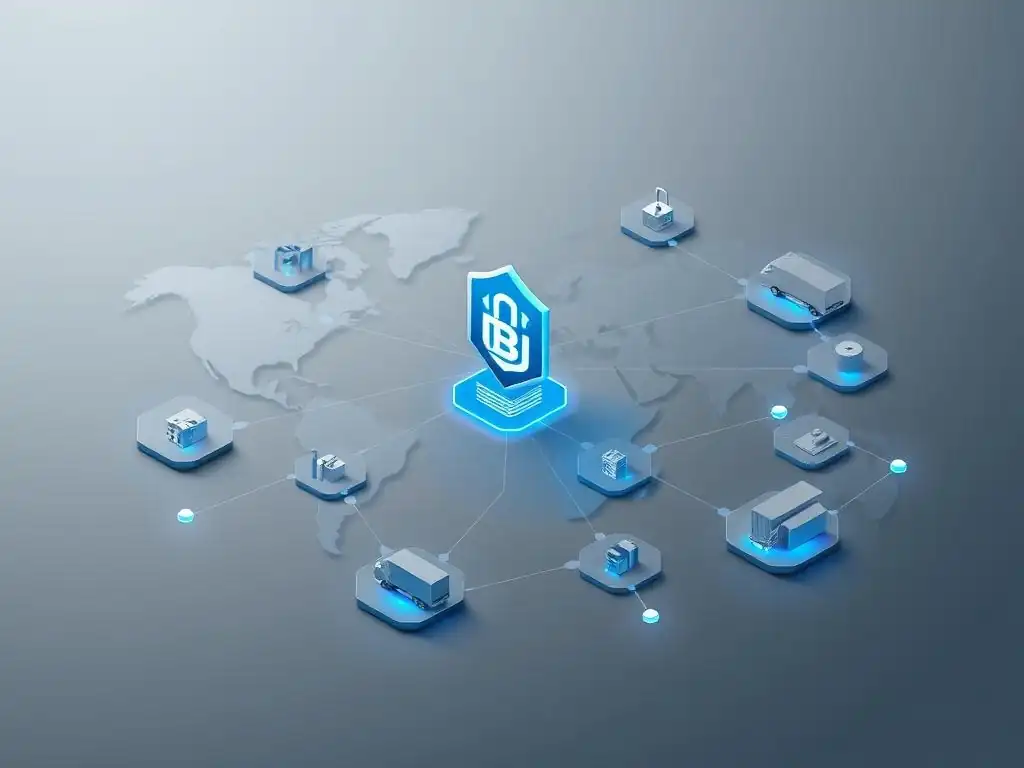
Enhanced Data Security and Reduced Risk of Data Breaches
Implementing blockchain significantly enhances data security in supply chains by moving away from centralized, vulnerable databases to a distributed, immutable ledger. The cryptographic nature of the blockchain makes it extremely difficult for unauthorized parties to alter or delete records without detection. Each block is linked to the previous one via a cryptographic hash, and any attempt to tamper with a block would change its hash, breaking the chain and alerting the network. This distributed security model drastically reduces the risk of single-point-of-failure data breaches that plague traditional systems.
Consider the pharmaceutical supply chain, where counterfeit drugs are a significant threat. A blockchain can record the origin, handling, and temperature data for each batch. If this data were stored in a traditional database, a malicious actor could potentially alter records to hide counterfeit products or improper storage conditions.
On a blockchain, such alterations would be immediately evident. Reports suggest that the cost of supply chain cyberattacks is rising, with some estimates placing the average cost of a breach involving third parties significantly higher than standard breaches. By providing a tamper-evident record, blockchain helps mitigate these risks, bolstering overall blockchain supply chain data privacy and integrity.
Improved Transparency and Traceability for Regulatory Compliance
Blockchain's ability to provide a transparent, immutable record of transactions and data points is invaluable for regulatory compliance, particularly in highly regulated industries like food, pharmaceuticals, and aerospace. Regulators often require detailed provenance and handling data for products. Traditionally, gathering this information involves sifting through disparate databases, paper records, and emails across multiple organizations, a process that is time-consuming, prone to errors, and difficult to verify.
With a blockchain, the journey of a product – from raw material to consumer – can be recorded step-by-step on the distributed ledger. Participants can add relevant compliance data, such as certifications, inspection results, or temperature logs, associated with specific product batches or shipments. This creates a single, verifiable source of truth accessible to authorized regulators.
For example, during a food safety recall, tracing affected products back to their origin and identifying all points they touched in the supply chain can be done in minutes on a blockchain, compared to days or weeks with traditional methods. This enhanced traceability, while maintaining data privacy for sensitive commercial details through permissioning, streamlines compliance audits and responses, strengthening blockchain supply chain data privacy efforts while meeting regulatory demands.
Increased Trust and Collaboration Among Supply Chain Partners
Trust is paramount in complex supply chains, but it is often hindered by information silos and a lack of visibility into partners' operations. Each participant typically maintains their own separate records, making it difficult to verify data provided by others without time-consuming reconciliation processes or audits. This lack of shared truth can lead to disputes, delays, and inefficiencies. Blockchain establishes a shared, immutable ledger that all authorized participants can access, creating a single version of truth regarding transactions and shared data.
By providing a tamper-evident record of interactions, blockchain reduces the need for intermediaries solely focused on verification and reconciliation. Partners can trust the data on the ledger because its integrity is cryptographically enforced and agreed upon by network consensus. This increased trust fosters better collaboration, allowing partners to share relevant data more freely and automate processes using smart contracts based on verified data.
For instance, payment terms could be automatically released via a smart contract once the blockchain confirms goods have been received and verified by the destination party. This foundation of trust, underpinned by secure and private data sharing, is a significant benefit of implementing blockchain supply chain data privacy solutions.
Streamlined Data Management and Reduced Administrative Costs
Traditional supply chain data management involves significant administrative overhead. Data is often duplicated across different systems, requiring manual data entry, reconciliation, and error correction. Discrepancies between records held by different partners are common, leading to delays and disputes. Managing data privacy across these disparate systems adds further complexity, requiring separate security measures and access controls for each database.
Blockchain offers a path to streamline data management by providing a shared, single source of truth. While not all data needs to reside on the chain (sensitive data can be hashed or referenced), the critical transaction and verification data recorded on the blockchain reduces the need for extensive data duplication and reconciliation efforts among partners.
Smart contracts can automate data entry and verification processes based on predefined rules, reducing manual work. By providing a more efficient and secure way to manage shared data, blockchain implementations can lead to reduced administrative costs associated with data handling, verification, and dispute resolution, contributing to the overall value proposition of blockchain supply chain data privacy.
Use Cases: Blockchain Enhancing Data Privacy Across Industries
Blockchain for Pharmaceutical Supply Chain Data Integrity
The pharmaceutical supply chain is highly regulated and faces significant challenges related to counterfeiting, diversion, and ensuring product integrity (e.g., maintaining cold chain requirements). Protecting sensitive data, such as patient information involved in clinical trials, proprietary drug formulations, and detailed batch records, is paramount. Traditional systems often struggle to provide the necessary end-to-end visibility and tamper-proof record-keeping required for compliance and safety.
A blockchain solution can track pharmaceutical products from manufacturing through distribution to the pharmacy or patient. Each step – manufacturing, packaging, serialization, shipping, temperature monitoring, and dispensing – can be recorded on the ledger. Sensitive data like specific patient names or exact pharmacy locations might be kept off-chain with hashes on the blockchain, while crucial data like batch numbers, expiry dates, and temperature logs are recorded immutably on a permissioned network accessible to manufacturers, distributors, and regulators.
This enhances data privacy by limiting access to sensitive details while providing an auditable, verifiable history of the product, making it harder to introduce counterfeits and easier to trace issues quickly. This focus on blockchain supply chain data privacy helps meet stringent regulatory requirements like the US Drug Supply Chain Security Act (DSCSA) or Europe's Falsified Medicines Directive (FMD).
Protecting Consumer Data in the Food Supply Chain with Blockchain
Consumer trust in the food supply chain relies heavily on transparency regarding product origin, ingredients, and safety standards. Simultaneously, protecting sensitive consumer data, such as purchase history, dietary restrictions (if linked to loyalty programs), and delivery addresses, is a critical privacy concern. Traditional food traceability systems can be slow and incomplete, often failing to provide rapid, verifiable information during outbreaks or recalls, and leaving consumer data scattered across various databases.
Blockchain can provide a transparent, yet privacy-preserving, view of the food journey. Data about farming practices, processing, transportation (including temperature and location), and retail can be recorded. For instance, a consumer scanning a QR code on a product could access a limited, public view of its journey (e.g., farm location, processing date) derived from the blockchain, without accessing sensitive commercial or personal data.
Within the permissioned network, participants like retailers and logistics providers might have access to more detailed, yet still permissioned, data. Highly sensitive consumer PII related to specific orders can be managed off-chain, with only transaction hashes recorded on the blockchain for integrity verification.
This approach improves traceability for safety and recalls while implementing strong blockchain supply chain data privacy measures for consumer information. Companies like Walmart have piloted blockchain for food traceability, demonstrating the ability to trace produce from store back to farm in seconds, significantly faster than traditional methods.
Securing Intellectual Property in the Manufacturing Supply Chain Using Blockchain
In the manufacturing sector, protecting intellectual property (IP), such as design blueprints, proprietary processes, and material specifications, is paramount, especially when collaborating with multiple suppliers and contract manufacturers. Sharing sensitive design data or manufacturing parameters via traditional channels increases the risk of IP theft or unauthorized reproduction. Ensuring that only authorized parties access specific versions of design files or process instructions while maintaining a verifiable record of access and usage is challenging.
Blockchain can be used to create a secure, permissioned repository or record of IP-related transactions and access. Instead of sharing original design files directly, manufacturers can store hashes of the files on a blockchain. When a supplier needs access, they are granted permission via the blockchain network, and their access or download event (or simply verification that they received the correct version based on the hash) is recorded immutably on the ledger.
The actual sensitive files can be stored in secure, encrypted off-chain databases, with access keys managed through the blockchain network's smart contracts and identity management system. This ensures that only approved entities can access sensitive IP, and every interaction is logged, significantly enhancing security and providing a verifiable audit trail. This application of blockchain supply chain data privacy helps manufacturers protect their most valuable assets while collaborating efficiently.
Overcoming Challenges in Blockchain Implementation for Data Privacy
Addressing Scalability Issues in Blockchain Supply Chain Solutions
Scalability remains a significant challenge for many blockchain implementations, particularly as the volume of transactions and data points in a large supply chain can be immense. Public blockchains, while secure, can suffer from low transaction throughput (e.g., Bitcoin processes ~7 transactions per second; Ethereum ~15-30), leading to delays and high costs, which are unsuitable for fast-paced supply chain operations. While permissioned blockchains generally offer higher performance, they can still face bottlenecks as the number of participants and transactions grows.
Solutions to address scalability for blockchain supply chain data privacy include using optimized consensus mechanisms (like Proof-of-Authority or Delegated Proof-of-Stake variants common in enterprise platforms), sharding the network to process transactions in parallel, or utilizing off-chain transactions for high-volume, low-value data, with only periodic summaries or hashes recorded on the main chain. Layer 2 scaling solutions are also being developed that process transactions off-chain but rely on the blockchain for security and finality. Careful design and selection of a platform with proven enterprise-level scalability features are essential.
Implementing blockchain for data privacy must be done in careful consideration of existing and evolving data privacy regulations like GDPR, CCPA, and others. While blockchain offers immutability, this can conflict with "right to erasure" provisions found in some laws, which grant individuals the right to have their personal data deleted. Storing PII directly on an immutable ledger is generally not advisable for this reason.
To navigate this, supply chain blockchain solutions often employ strategies where sensitive PII is not stored on the blockchain itself. Instead, the blockchain records transaction hashes or references to data stored securely off-chain in compliance with privacy regulations. If an individual exercises their right to erasure, the off-chain data can be deleted, rendering the hash on the blockchain meaningless without the original data.
The governance framework for the blockchain network must include clear policies and procedures for handling data subject requests and ensuring compliance with all applicable data privacy laws across different jurisdictions where the supply chain operates. Legal expertise is crucial during the design and implementation phases to ensure the blockchain supply chain data privacy solution is legally compliant.
Ensuring Interoperability with Existing Supply Chain Systems
Supply chains rely on a complex ecosystem of legacy and modern IT systems, including Enterprise Resource Planning (ERP), Warehouse Management Systems (WMS), Transportation Management Systems (TMS), and various partner-specific applications. A significant challenge in implementing blockchain is ensuring seamless interoperability between the new blockchain platform and these existing systems. Data needs to flow accurately and efficiently between the blockchain and the systems participants already use daily.
Addressing interoperability requires well-defined APIs (Application Programming Interfaces) and integration layers that allow existing systems to interact with the blockchain. This might involve building middleware that translates data formats and protocols between the different platforms. Standardizing data formats across the network participants is also critical, often leveraging industry standards where available. Pilot programs and phased rollouts can help identify and resolve integration challenges before a full-scale deployment. Successful blockchain supply chain data privacy implementation depends heavily on its ability to integrate smoothly into the existing operational landscape without causing disruption.
The Future of Blockchain and Data Privacy in Supply Chain Management
Emerging Trends in Blockchain-Based Data Security
The field of blockchain-based data security in supply chains is continuously evolving. One significant trend is the increasing adoption of advanced cryptographic techniques beyond standard hashing and encryption. Zero-knowledge proofs (ZKPs), for example, are gaining traction as they allow parties to verify the validity of information (e.g., a product meets quality standards) without revealing the underlying sensitive data itself, offering a powerful tool for enhancing blockchain supply chain data privacy. Homomorphic encryption, which allows computations to be performed on encrypted data without decrypting it first, also holds promise for privacy-preserving data analysis within supply chain networks.
Another trend is the development of more sophisticated identity management and access control mechanisms native to blockchain platforms, moving towards decentralized identity solutions that give entities more control over their credentials and how their data is shared. Furthermore, confidential computing environments, which secure data while it's being processed, are being explored in conjunction with blockchain to provide end-to-end data protection, even during computation. These emerging technologies promise to make blockchain supply chain data privacy solutions even more robust and versatile in the future.
The Role of AI and IoT in Enhancing Blockchain Supply Chain Privacy
Artificial Intelligence (AI) and the Internet of Things (IoT) are becoming increasingly integrated into supply chains, generating vast amounts of data. IoT sensors track location, temperature, humidity, and other conditions, while AI is used for predictive analytics, demand forecasting, and optimizing logistics. Combining these technologies with blockchain can create powerful, intelligent, and privacy-enhanced supply chains. IoT devices can automatically record data points onto the blockchain (or a related system with hashes on-chain), ensuring the immutability and veracity of sensor data. AI can then analyze this verified data from the blockchain to make predictions or automate decisions via smart contracts.
The privacy challenge arises when AI needs to process sensitive data from multiple parties. Here, blockchain, combined with techniques like federated learning (where AI models are trained locally on different parties' data without the data leaving their premises) or privacy-preserving AI techniques, can play a crucial role. The blockchain can manage access to aggregated or anonymized data sets used for training, or record the provenance and integrity of AI model updates. This synergy between AI, IoT, and blockchain holds significant potential for creating highly efficient and secure supply chains while simultaneously enhancing blockchain supply chain data privacy.
Predictions for Blockchain Adoption in Supply Chain Data Protection
Predictions suggest a continued and accelerating adoption of blockchain technology specifically for data protection and privacy use cases in supply chains. As regulatory pressures around data privacy intensify globally and the financial and reputational costs of data breaches continue to rise, companies are actively seeking more robust security solutions. Blockchain's unique properties of immutability, transparency (controlled), and cryptographic security directly address many of these challenges.
While full, multi-party blockchain networks require significant collaboration and investment, we are likely to see increased adoption of permissioned blockchain pilots and production deployments in specific high-value or highly regulated supply chain segments (like pharmaceuticals, luxury goods, aerospace parts, and food). Industry consortia are forming to build shared blockchain platforms, pooling resources and standardizing approaches. Over the next 5-10 years, it is reasonable to predict that blockchain will become a standard component of data infrastructure for companies serious about ensuring blockchain supply chain data privacy and integrity, moving from experimental pilots to essential operational tools.
Conclusion: Blockchain's Transformative Potential for Supply Chain Data Privacy
The digital transformation of supply chains has brought unprecedented efficiency but also significant data security and privacy challenges. Traditional centralized systems are increasingly vulnerable to breaches and fail to provide the necessary trust and transparency among multiple participants while respecting data privacy. Blockchain technology offers a compelling solution by providing a distributed, immutable ledger that can record transactions and data points securely and verifiably.
By leveraging blockchain's core features – immutability, controlled transparency in permissioned networks, and cryptographic security – businesses can significantly enhance data security, reduce the risk of breaches, and improve compliance with stringent data privacy regulations. Implementing blockchain supply chain data privacy requires careful planning, including identifying sensitive data, selecting the right platform, designing permissioned networks, employing encryption, and establishing robust governance policies.
Despite implementation challenges like scalability and interoperability, the benefits in terms of enhanced trust, improved traceability, and streamlined data management are clear. As the technology matures and integrates with other innovations like AI and IoT, blockchain is poised to play a transformative role in securing sensitive data and ensuring data privacy across the complex global supply chain landscape.
Frequently Asked Questions
How does blockchain enhance supply chain data privacy?
Blockchain offers immutable records and decentralized control, which can significantly improve data privacy. This ensures that data alterations are traceable and access is restricted, providing a higher level of security for sensitive information.
What are the key benefits of using blockchain for blockchain supply chain data privacy?
The primary advantages include increased transparency, improved security, and enhanced data integrity. This leads to better tracking of goods, reduced fraud, and improved regulatory compliance in the supply chain.
What are some common challenges in implementing blockchain supply chain data privacy solutions?
Scalability, interoperability between different blockchain systems, and the complexity of data governance are significant hurdles. Addressing these challenges requires careful planning and strategic partnerships.
How can blockchain supply chain data privacy help businesses comply with data protection regulations like GDPR?
By providing a secure and transparent audit trail, blockchain enables companies to demonstrate compliance with regulations. It allows for better control over data access and helps meet the requirements for data minimization and purpose limitation.
Beyond data privacy, what other benefits does blockchain offer to supply chain management?
Blockchain facilitates greater efficiency, reduced costs, and improved traceability throughout the supply chain. This can lead to better inventory management, faster delivery times, and enhanced customer satisfaction.
Final Reflection: Embracing Trust in the Blockchain Supply Chain
The intricate web of modern supply chains presents a formidable challenge to data privacy, but the potential of blockchain technology offers a beacon of hope. The ability to create immutable, transparent, and secure records is no longer a futuristic fantasy, but a tangible solution to safeguarding sensitive information as it traverses complex networks. This technology empowers organizations to build trust and accountability, ensuring that data privacy is not just a compliance requirement, but a core value embedded within their operations.
The impact of blockchain on supply chain data privacy extends far beyond mere technological advancement. It represents a fundamental shift in how we perceive and manage trust in global commerce. The promise of verifiable provenance and controlled access to information resonates deeply with a growing demand for ethical and transparent business practices. This shift is beautifully captured in the words of Don Tapscott: The blockchain is not only disrupting old industries, it's also creating new ones. It's a platform for innovation, and it's going to change the world.
As we move forward, let us embrace the transformative power of blockchain to build more secure, transparent, and ethical supply chains. Consider how you can champion data privacy within your own sphere of influence, whether it's advocating for blockchain adoption in your organization, supporting companies committed to ethical data practices, or simply becoming a more informed consumer. The future of supply chain data privacy rests on our collective commitment to building a world where trust and transparency are not just aspirations, but realities.
Empower Your Supply Chain: Implement Blockchain Security Today!
Thank you for exploring how blockchain can enhance data security in supply chains. We hope you’ve gained valuable insights into how this technology can transform data privacy and protection. Now, it’s time to take action and apply these insights to your organization.
Here’s how you can get started:
- Assess Your Current Vulnerabilities: Begin by evaluating the weaknesses in your supply chain data systems and identifying where blockchain technology can provide stronger security measures. This analysis will set the foundation for effective implementation.
- Share the Knowledge: Promote awareness of the importance of blockchain in securing supply chains by sharing this information with colleagues, your professional network, or on social media. Spreading awareness can help drive broader adoption across the industry.
- Explore Consortium Opportunities: Look into joining blockchain alliances dedicated to supply chain solutions. Collaborating with industry peers can accelerate your learning process and lead to shared benefits.
What specific data vulnerability are you most eager to address with blockchain in your supply chain? Share your challenges and insights in the comments below!
Leave a Reply