
Beginner's Guide to DeFi Aggregators: Maximizing Yield Across Platforms


Welcome to Blockchain Trends, your guide to understanding the evolving landscape of decentralized technology.
Are you ready to unlock the power of DeFi and navigate the complexities of yield farming? Discover how to maximize your returns with our comprehensive guide to DeFi yield aggregation strategies. Learn how to optimize your investments and uncover hidden opportunities in the world of decentralized finance. Intrigued? Let's dive in and explore the future of finance, together.
- Beginner's Guide to DeFi Aggregators: Maximizing Yield Across Platforms
-
Frequently Asked Questions
- What are DeFi yield aggregators, and how do they work?
- What are the primary benefits of using DeFi yield aggregators?
- What are the risks associated with using DeFi yield aggregators?
- How do DeFi yield aggregators differ from traditional yield farming?
- What are some popular examples of DeFi yield aggregator platforms?
- Final Reflection: Embracing the Future of Automated Finance
- Unlock Your DeFi Potential Now!
Beginner's Guide to DeFi Aggregators: Maximizing Yield Across Platforms
Introduction to DeFi Yield Aggregation Strategies
DeFi, or Decentralized Finance, has revolutionized the financial landscape by offering open, permissionless access to financial services directly on blockchain networks, primarily Ethereum, but increasingly across multiple chains. Unlike traditional finance, DeFi protocols operate through self-executing smart contracts, enabling activities like lending, borrowing, trading, and yield farming without intermediaries. A core attraction of DeFi for many participants is the potential to earn passive income through various strategies, often referred to as yield farming or yield generation.
These strategies involve providing liquidity to protocols, staking tokens, or engaging in complex structured products. However, navigating the myriad of protocols and identifying the most profitable opportunities manually can be daunting, time-consuming, and require significant technical knowledge and constant monitoring.
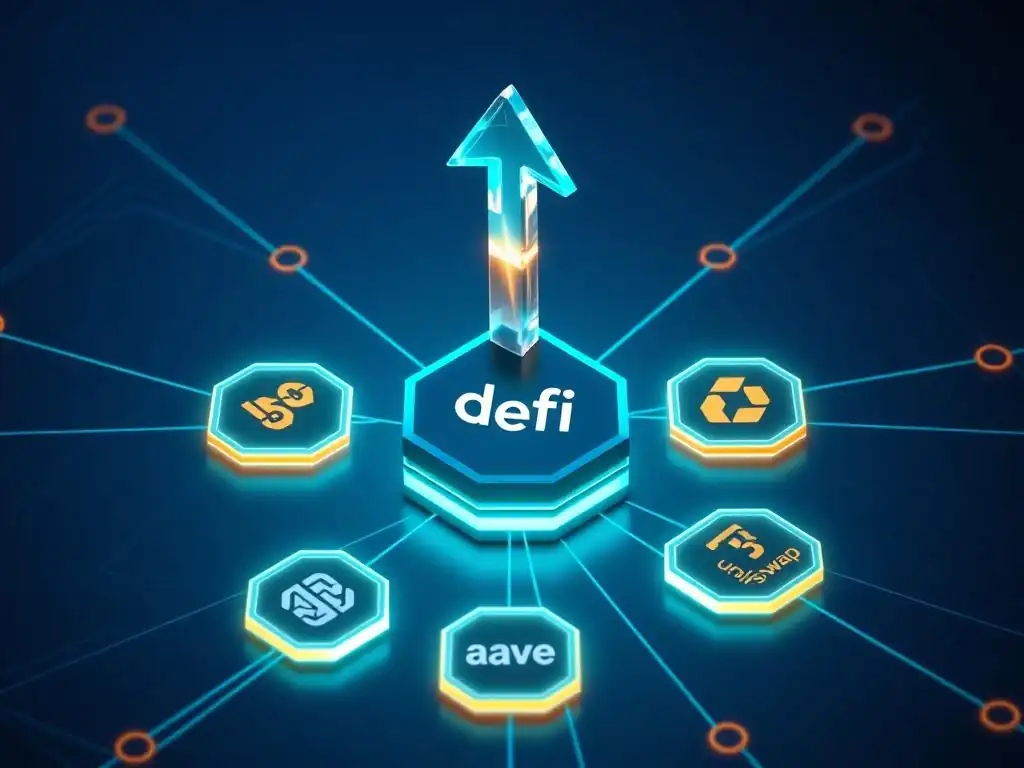
This complexity gives rise to the crucial role of DeFi yield aggregators. These platforms are designed to automate the process of finding and executing the most lucrative yield aggregation strategies available across numerous DeFi protocols. By pooling users' funds and deploying them strategically, aggregators aim to maximize returns while abstracting away the technical complexities and gas costs associated with interacting directly with multiple protocols.
They constantly scan the DeFi landscape, identify optimal yield-generating opportunities—such as lending rates, liquidity mining programs, and staking rewards—and automatically shift capital between protocols to capture the highest available APYs (Annual Percentage Yields), net of fees. Understanding how these platforms function and the various DeFi yield aggregation strategies they employ is essential for anyone looking to optimize their returns in the decentralized ecosystem.
Understanding DeFi Yield Aggregators
What Are DeFi Yield Aggregators?
DeFi yield aggregators are automated platforms built on smart contracts that pool users' digital assets and deploy them across various DeFi protocols to earn the highest possible yield. Think of them as automated investment managers specifically for decentralized finance.
Their primary function is to simplify yield farming by automating complex strategies, minimizing gas fees through batching transactions, and constantly optimizing asset allocation to chase the best returns across the decentralized web. Users simply deposit their assets into a specific vault or strategy managed by the aggregator, and the protocol handles the rest, automatically moving funds between different lending platforms, liquidity pools, or staking protocols based on predefined or dynamically adjusted strategies.
The core mechanism behind how they work involves sophisticated smart contracts that interact with other DeFi protocols. These contracts execute specific yield aggregation strategies programmed to monitor APYs across integrated platforms like Aave, Compound, Uniswap, Curve, and others. When a more profitable opportunity arises (e.g., a higher lending rate for a specific asset on a different protocol), the smart contract automatically rebalances the pooled funds to capitalize on that rate.
This process, often referred to as "auto-compounding," also involves automatically reinvesting earned yield back into the strategy, further boosting returns over time. The automation provided by these smart contracts is key to executing effective DeFi yield aggregation strategies efficiently and maximizing the compounding effect.
Key Benefits of Using DeFi Yield Aggregators
One of the most significant advantages of using DeFi yield aggregators is their ability to maximize yield. By constantly scanning the market and automatically shifting funds to the protocols offering the highest returns for a specific asset, aggregators can often achieve higher APYs than an individual user manually managing their positions across multiple platforms.
For instance, while lending USDT on one platform might yield 5%, an aggregator might simultaneously leverage liquidity mining incentives on another platform or utilize a complex strategy involving multiple steps (like lending, borrowing, and providing liquidity) to achieve a combined APY of 15% or more on the same asset. The automation and optimization are designed to capture these ephemeral high-yield opportunities more effectively than manual intervention allows, significantly enhancing potential returns from DeFi yield aggregation strategies.
Another crucial benefit is the diversification of investments across multiple platforms. Relying on a single DeFi protocol, no matter how reputable, exposes users to the specific risks of that protocol, such as smart contract bugs or economic exploits. By distributing funds across a range of vetted protocols and strategies, yield aggregators inherently reduce the concentration risk associated with single-protocol exposure.
If one protocol experiences an issue or its yield drops significantly, the aggregator can automatically move funds to more stable or profitable avenues on other platforms, thereby mitigating potential losses and maintaining yield generation. This multi-protocol approach is a cornerstone of robust DeFi yield aggregation strategies, helping to safeguard user capital while pursuing optimal returns.
Top DeFi Yield Aggregators in 2024
1. Yearn.finance: The Pioneer in Yield Aggregation
Yearn.finance, often simply called Yearn (YFI), is widely regarded as one of the original and most influential DeFi yield aggregators. Launched by Andre Cronje, it quickly gained prominence for its innovative approach to automating yield generation through its "vaults." Yearn vaults are pools of user-deposited assets (like stablecoins, ETH, or other tokens) that execute specific, automated yield aggregation strategies.
These strategies are managed by the Yearn community and contributors, who propose and vote on the most effective ways to earn yield from various underlying protocols such as Compound, Aave, Curve, and Convex Finance. Yearn's unique selling points include its early mover advantage, a strong community-driven development model, and a focus on security and audited strategies. The YFI token also plays a role in governance and value accrual within the ecosystem.
The platform supports a wide array of assets and integrates with numerous underlying DeFi protocols across the Ethereum network, and increasingly, other chains via partnerships or bridging solutions. For example, a user depositing DAI into a Yearn DAI vault might see their funds automatically move between lending on Aave, providing liquidity on Curve, or staking LP tokens on Convex, depending on which combination of strategies offers the highest current yield, net of gas costs and Yearn fees.
A hypothetical case study illustrates this: imagine a user depositing 10,000 DAI into a Yearn vault. Over a month, the vault's strategy might shift funds three times between different protocols.
Initially, it might lend on Compound at 6% APY, then move to a Curve liquidity pool offering 8% APY plus liquidity mining rewards equivalent to another 5% APY, and finally stake LP tokens on Convex for a combined 18% APY. While fees apply, the automated optimization aims to consistently capture higher average returns than a static deposit or manual strategy, showcasing the power of dynamic DeFi yield aggregation strategies.
2. Harvest Finance: Simplifying Yield Farming
Harvest Finance (FARM) is another prominent DeFi yield aggregator focused on simplifying yield farming and maximizing returns for users. It operates similarly to Yearn, using vaults (called 'Farms' or 'Vaults') where users deposit assets to earn optimized yields. Harvest differentiates itself through its user-friendly interface and its focus on providing access to a broad range of yield farming opportunities, including those on newer or less common protocols, in addition to established ones.
The platform automatically compounds yields, harvesting rewards from underlying protocols and reinvesting them to boost returns. Harvest aims to abstract away the complexities of gas costs and manual rebalancing, making advanced DeFi yield aggregation strategies accessible to a wider audience.
Harvest Finance supports yield farming across multiple blockchain networks, including Ethereum, Polygon, Binance Smart Chain (now BNB Chain), and others, offering strategies for a diverse set of assets from stablecoins to volatile tokens and LP tokens. An example of a real user experience might involve someone depositing USDC into a Harvest vault on the Polygon network.
Instead of manually finding the best lending rate on Aave Polygon or the best liquidity pool on QuickSwap, the user deposits into Harvest's USDC vault. Harvest's strategy for that vault automatically finds the highest yielding opportunity among integrated Polygon protocols, perhaps moving funds between lending protocols or different liquidity pools.
A user might observe their deposited USDC balance and the accumulated yield (often paid out in the deposited asset or a different token like FARM) increase automatically over time, reflecting the automated harvesting and compounding process. While specific yield outcomes fluctuate based on market conditions, users often report higher net APYs compared to simple lending or staking due to the automated optimization and compounding facilitated by Harvest's DeFi yield aggregation strategies.
3. Beefy Finance: Multi-Chain Yield Optimization
Beefy Finance (BIFI) stands out as a multi-chain yield optimizer, supporting a vast number of blockchain networks beyond just Ethereum, including BNB Chain, Polygon, Avalanche, Fantom, Arbitrum, Optimism, and many others. This broad compatibility allows users to access optimized yield farming opportunities across a decentralized landscape that is increasingly fragmented across different chains. Beefy's core offering consists of 'Vaults' that automatically compound yield from various sources, including lending protocols, liquidity pools, and other yield-generating strategies on integrated chains.
Beefy's key features include its extensive multi-chain support, a focus on security with audited strategies, and competitive performance across a wide range of assets. It aims to be the go-to platform for users seeking optimized DeFi yield aggregation strategies regardless of their preferred blockchain network.
Beefy Finance supports hundreds of vaults across its integrated networks, covering a wide variety of assets and LP token combinations from decentralized exchanges and lending protocols specific to each chain. For instance, a user on the Avalanche network could deposit AVAX-WETH LP tokens from Trader Joe into a Beefy vault.
Beefy's strategy for that vault would automatically harvest the trading fees and liquidity mining rewards earned on Trader Joe, swap them for more AVAX-WETH LP tokens, and redeposit them into the liquidity pool, effectively auto-compounding the yield. An analysis comparing Beefy's yield performance to competitors often highlights its ability to offer competitive APYs on a wider range of assets and chains.
While specific APYs vary wildly depending on the asset, network, and strategy, Beefy vaults frequently show APYs significantly higher than basic lending or single-asset staking on those same chains, primarily due to the efficiency of its automated compounding and strategy optimization, which are central to its DeFi yield aggregation strategies.
How to Get Started with DeFi Yield Aggregation
Setting Up Your Wallet for DeFi Investments
To begin engaging with DeFi yield aggregation strategies, the first step is to set up a compatible cryptocurrency wallet that can interact with decentralized applications (dApps) on the relevant blockchain networks. The most widely recommended and used wallets for DeFi on Ethereum and many other EVM-compatible chains (like Polygon, BNB Chain, Avalanche, Arbitrum) are MetaMask and Trust Wallet.
These wallets function as browser extensions (MetaMask) or mobile apps (Trust Wallet), allowing users to securely store their private keys and interact with dApps directly from their browser or phone. Other popular options include WalletConnect-compatible wallets, Ledger (with MetaMask integration), and various mobile-first wallets.
Setting up a wallet is a straightforward process. For MetaMask, you typically download the browser extension, create a new wallet, and securely store your seed phrase (a list of words used for recovery) in a safe, offline location. You then set up a password.
To connect your wallet to a DeFi yield aggregator platform, you simply visit the aggregator's website (e.g., yearn.finance, harvest.finance, beefy.finance) in your browser with the wallet extension installed. The website will usually have a "Connect Wallet" button, which you click. Your wallet extension will pop up, asking for permission to connect to the site.
You review the requested permissions (usually just viewing your wallet address and balance) and approve the connection. Once connected, the aggregator platform can read your wallet balance and allow you to initiate transactions (like depositing assets into a vault), which you will need to confirm and sign within your wallet interface. This process is fundamental for executing any DeFi yield aggregation strategies.
Choosing the Right DeFi Yield Aggregator
Selecting the appropriate DeFi yield aggregator depends on several key factors tailored to your investment goals and risk tolerance. One of the primary considerations is the potential APY offered by the different platforms and their specific vaults. While high APYs are attractive, it's crucial to look beyond the headline number and understand how it's calculated (e.g., does it include volatile token rewards?) and compare net APYs after fees.
Aggregators typically charge withdrawal fees, performance fees (a percentage of the yield earned), or management fees. For example, Yearn might charge a 2% management fee and a 20% performance fee, while Beefy might charge a smaller performance fee but vary it by vault. Comparing these fee structures is vital when evaluating different DeFi yield aggregation strategies.
Security is paramount in DeFi. You should research the aggregator's track record, whether its smart contracts have been audited by reputable firms (like ConsenSys Diligence, Trail of Bits, CertiK), and the protocols it interacts with. Factors like the Total Value Locked (TVL) in the aggregator can indicate its adoption and perceived reliability, though high TVL doesn't guarantee safety.
Consider which blockchain networks the aggregator supports and if they align with where you hold assets or prefer to operate due to gas costs (e.g., using an aggregator on Polygon or BNB Chain might be cheaper than on Ethereum mainnet). Finally, look at the specific assets supported and the variety of yield aggregation strategies offered for those assets.
Some aggregators specialize in stablecoins, while others offer strategies for more volatile assets or LP tokens. For beginners, starting with well-established aggregators and lower-risk stablecoin strategies is often recommended when exploring DeFi yield aggregation strategies.
Strategies for Maximizing Yield in DeFi
Understanding Risks Associated with DeFi Yield Aggregation
While DeFi yield aggregation strategies promise high returns, they are not without significant risks. One prominent risk, particularly when dealing with liquidity pools, is impermanent loss. This occurs when the price of pooled assets changes relative to each other.
If you deposit ETH and DAI into a liquidity pool, and the price of ETH increases significantly, your share of the pool will contain less ETH and more DAI than if you had simply held the assets outside the pool. While aggregators often try to mitigate this through specific strategies or by focusing on stablecoin pools, it remains a risk for volatile asset pairs. For example, providing liquidity for an ETH/USDC pair via an aggregator's strategy could result in impermanent loss if ETH's price fluctuates wildly.
Another critical risk is smart contract vulnerability. DeFi aggregators and the underlying protocols they interact with are built on smart contracts, which can contain bugs or be susceptible to exploits. If a smart contract is compromised, deposited funds could be lost. While aggregators undergo audits, audits are not foolproof.
For instance, a vulnerability in an underlying lending protocol used by an aggregator's vault could lead to losses for the aggregator's users. Mitigation strategies include choosing aggregators with strong security track records, opting for strategies that interact with widely used and heavily audited protocols, and diversifying your investments across different aggregators and strategies. Researching the specific risks of each vault and protocol involved in the DeFi yield aggregation strategies you use is crucial.
Best Practices for Yield Farming with DeFi Aggregators
Effective yield farming with DeFi aggregators involves more than just chasing the highest APY. Timing your investments can be important. Yields in DeFi are highly dynamic, influenced by market demand, protocol incentives (like liquidity mining programs that offer extra token rewards), and overall market sentiment. Understanding market trends and how they impact specific yield opportunities can help you decide when to enter or exit certain strategies.
For example, yields on stablecoin lending might increase during periods of high market volatility as traders borrow stablecoins to short volatile assets. Conversely, yields from liquidity mining programs might drop as more participants join, diluting the rewards. Staying informed about protocol updates and incentive programs is key to optimizing your DeFi yield aggregation strategies.
Utilizing appropriate tools can significantly enhance your ability to manage and monitor your DeFi yield aggregation activities. Portfolio trackers like Zapper, DeBank, and Ape Board allow you to see all your deposited assets across various aggregators and protocols in one dashboard. These tools often provide insights into your current yield, impermanent loss status (for LP positions), and overall portfolio value.
Analytics platforms and websites like DeFi Pulse, DeFi Llama, and specific aggregator dashboards provide data on TVL, historical APYs, and risk scores for different protocols and vaults. Leveraging these resources helps you make informed decisions, track performance accurately, and identify potential issues or better opportunities, refining your approach to DeFi yield aggregation strategies.
Conclusion: The Future of DeFi Yield Aggregation
DeFi yield aggregators have emerged as powerful tools for individuals seeking to maximize returns and simplify participation in the complex world of decentralized finance. By automating sophisticated yield aggregation strategies, they lower the barrier to entry for yield farming, offering potential for higher returns than manual approaches and providing a degree of diversification across protocols. As the DeFi landscape continues to evolve, becoming more multi-chain and introducing new types of yield-generating opportunities, the role of aggregators is likely to become even more critical in helping users navigate this complexity efficiently.
The future of DeFi yield aggregation is poised for further innovation, potentially including more personalized strategies, enhanced risk management features, and deeper integration across an even wider array of protocols and layer-2 solutions. While the potential rewards are significant, it is crucial for users to approach DeFi yield aggregation strategies with a clear understanding of the inherent risks, including smart contract vulnerabilities, impermanent loss, and market volatility.
Continuous learning, thorough research into specific platforms and strategies, and adopting best practices for risk management are essential for successfully leveraging DeFi aggregators to optimize yield in this dynamic and rapidly evolving financial frontier.
Additional Resources for DeFi Beginners
- Recommended Reading on DeFi and Yield Aggregation:
- Explore introductory articles on major crypto news sites explaining the basics of DeFi, yield farming, and common strategies.
- Read documentation provided by reputable DeFi protocols (like Aave, Compound, Curve) to understand how lending, borrowing, and liquidity provision work.
- Consult educational guides and blogs from major DeFi yield aggregators like Yearn, Harvest, and Beefy for insights into their specific strategies and risk considerations.
- Tools and Platforms for Monitoring Yield Performance:
- Portfolio Trackers: Zapper, DeBank, Ape Board for viewing assets across multiple platforms.
- Analytics Platforms: DeFi Pulse, DeFi Llama for TVL, market trends, and protocol comparisons.
- Aggregator Dashboards: Utilize the native dashboards provided by Yearn, Harvest, Beefy, etc., to monitor the performance and specifics of the vaults you are invested in.
Frequently Asked Questions
What are DeFi yield aggregators, and how do they work?
DeFi yield aggregators are platforms that automatically optimize yield farming strategies across multiple decentralized finance (DeFi) protocols. They work by reallocating funds to the most profitable opportunities, saving users time and effort.
What are the primary benefits of using DeFi yield aggregators?
The main advantages include automated yield optimization, which leads to higher returns, reduced gas fees through pooled transactions, and simplified participation in complex DeFi strategies.
What are the risks associated with using DeFi yield aggregators?
Potential risks include smart contract vulnerabilities, impermanent loss if liquidity pools are involved, and the possibility of rug pulls or platform failure. Due diligence is crucial.
How do DeFi yield aggregators differ from traditional yield farming?
While traditional yield farming requires manual monitoring and adjustment, DeFi aggregators automate this process. They provide a more hands-off approach to yield optimization, saving time and effort.
What are some popular examples of DeFi yield aggregator platforms?
Examples include platforms like Yearn Finance, Beefy Finance, and Autofarm, which offer various automated yield strategies across multiple blockchain networks and DeFi protocols.
Final Reflection: Embracing the Future of Automated Finance
The journey through the world of DeFi yield aggregation reveals a landscape ripe with opportunity, but also demanding of careful navigation. The power of automated yield optimization, once a distant dream, is now a tangible reality, offering users unprecedented control over their digital assets. This shift signifies a fundamental change in how we approach finance, moving away from traditional intermediaries and embracing the transparency and efficiency of decentralized systems.
The impact of DeFi yield aggregation extends far beyond mere profit maximization; it's reshaping the very fabric of financial inclusion. By democratizing access to sophisticated investment strategies, these platforms empower individuals to participate in the global economy on their own terms. The future of finance is decentralized, and DeFi aggregators are playing a crucial role in making that future accessible to everyone.
This quote encapsulates the transformative potential of these tools, highlighting their ability to level the playing field and foster a more equitable financial ecosystem.
As you step forward, armed with the knowledge of DeFi yield aggregation strategies, I urge you to approach this evolving landscape with both enthusiasm and caution. Embrace the innovation, explore the possibilities, but always prioritize due diligence and risk management. The future of finance is in your hands; use this knowledge wisely to build a more secure and prosperous future for yourself and the wider community.
Unlock Your DeFi Potential Now!
Thank you for diving into the world of DeFi aggregators with Blockchain Trends! We hope you now have a clearer understanding of how these powerful tools can help you maximize your yield. Ready to take control of your DeFi investments?
Here's how you can get started:
- Dive into a DeFi Aggregator: Explore platforms like 1inch, Paraswap, or Matcha using a small amount of crypto to get hands-on experience with yield aggregation. This is the best way to truly understand the benefits!
- Compare Strategies: Simulate different investment scenarios across aggregators using their built-in tools or external calculators to identify the most profitable strategies for your specific crypto assets.
- Share this article with your fellow crypto enthusiasts and let's discuss our favorite yield farming strategies in the comments below!
What innovative DeFi aggregator strategy are you most excited to test out first?
Leave a Reply