
Salt and Hashing in Blockchain: Enhancing Password Security


Welcome to Blockchain Trends, where we delve into the fascinating world of decentralized innovation! Prepare to explore the transformative power of blockchain beyond the hype, from revolutionary DeFi solutions to groundbreaking enterprise applications. But before we dive into the future, let's secure the present. Are your passwords truly safe in the blockchain era? Discover essential Blockchain password security best practices in our in-depth analysis below, and unlock the secrets to fortifying your digital defenses. Read on to learn how salt and hashing are your first line of defense.
Salt and Hashing in Blockchain: Enhancing Password Security
- Introduction: Why Blockchain Password Security Matters
- Understanding Hashing and its Role in Blockchain
- The Role of Salt in Blockchain Password Security
- Salt and Hashing Implementation in Blockchain
- Comparing Different Salting Techniques in Blockchain
- Blockchain Password Security Best Practices: A Comprehensive Guide
- Real-World Examples of Salt and Hashing in Blockchain
- Future Trends in Blockchain Password Security
- Conclusion: Securing the Future of Blockchain with Robust Password Security Measures
-
Frequently Asked Questions
- What is the role of salt in blockchain password security?
- How does hashing contribute to blockchain password security?
- Why are salt and hashing considered best practices in blockchain password security?
- How do DeFi applications utilize salt and hashing for user authentication?
- Are there regulatory standards requiring the use of salt and hashing in blockchain applications?
- Final Reflection: Fortifying the Digital Frontier
- Unlock Deeper Security: Start Your Journey Now!
Introduction: Why Blockchain Password Security Matters
The Vulnerability of Stored Passwords in Blockchain Systems
Blockchain technology, renowned for its security and decentralization, is not immune to traditional cybersecurity threats, especially concerning password management. While blockchain itself offers cryptographic security for transactions and data integrity, the systems built upon it, particularly those requiring user authentication, often rely on password-based mechanisms. These passwords, if not handled with robust security measures, become a critical point of vulnerability.
A compromised password in a blockchain application can lead to unauthorized access to user accounts, potential theft of digital assets, and manipulation of smart contracts, undermining the very principles of security that blockchain aims to uphold. Therefore, ensuring robust blockchain password security is paramount to maintaining the integrity and trustworthiness of the entire ecosystem.
The risks associated with weak password security in blockchain are amplified by the high value often associated with digital assets managed within these systems. Consider decentralized exchanges (DEXs), cryptocurrency wallets, or platforms managing sensitive data on a blockchain. A successful password breach in these contexts can result in significant financial losses and reputational damage.
Unlike traditional web applications where password breaches might lead to compromised personal information, in blockchain, the stakes are often higher, involving direct control over valuable cryptocurrencies or irreversible actions on the blockchain. This necessitates a heightened awareness and implementation of advanced password security measures tailored to the unique challenges and opportunities within the blockchain environment.
The Importance of Strong Hashing Algorithms in Blockchain
Strong hashing algorithms are foundational to blockchain password security. In essence, hashing transforms passwords into fixed-size strings of characters, known as hash values, making it computationally infeasible to reverse the process and recover the original password. This one-way function is critical for securely storing password representations instead of the passwords themselves. If a database containing password hashes is compromised, attackers should ideally only gain access to these irreversible hashes, not the actual passwords. The strength of the hashing algorithm directly determines the resilience against various password cracking techniques, including dictionary attacks and brute-force attempts.
Choosing and correctly implementing strong hashing algorithms is not merely a technical detail but a core security imperative in blockchain systems. Algorithms like SHA-256 and Keccak-256, commonly used for data integrity and transaction verification within blockchains, also play a vital role in password hashing when appropriately applied. However, for password security specifically, algorithms need to be slow and computationally intensive to hinder rapid cracking attempts.
Modern best practices often recommend algorithms specifically designed for password hashing, such as Argon2, bcrypt, and scrypt, which incorporate features like salting and key stretching to further enhance security beyond basic hashing. The selection and proper configuration of these algorithms are crucial steps in establishing robust blockchain password security.
Understanding Hashing and its Role in Blockchain
What is Hashing? A Fundamental Overview
Hashing is a cryptographic process that takes an input of any size, called the "pre-image," and produces a fixed-size output, known as the "hash value" or "digest." This process is deterministic, meaning that the same input will always produce the same output. However, even a slight change in the input will result in a drastically different hash value.
This characteristic, known as the avalanche effect, is crucial for the security and integrity applications of hashing. A good hash function is designed to be one-way, making it computationally infeasible to reverse the process and retrieve the original input from the hash value.
In essence, hashing can be thought of as a digital fingerprint for data. It allows for efficient verification of data integrity. If you hash a piece of data and store the hash value, you can later re-hash the data and compare the new hash with the stored one.
If they match, you can be confident that the data has not been altered. This property is fundamental in blockchain technology for ensuring the immutability of transaction records and blocks. While hashing is not encryption – as encryption is reversible – it serves a different but equally important purpose in security, particularly in areas like password storage and data integrity verification.
How Hashing Works in Blockchain
In blockchain, hashing is a core cryptographic primitive used extensively throughout the technology's architecture. It plays a critical role in creating the chain-like structure of blocks, ensuring data integrity, and in consensus mechanisms like Proof-of-Work. Each block in a blockchain contains the hash of the previous block. This linking of blocks through hashes creates a chronological and tamper-evident record of transactions. If any data within a block is altered, the hash of that block will change, consequently invalidating the hash link to the subsequent blocks, thereby breaking the chain and making tampering easily detectable.
Beyond block chaining, hashing is used in Merkle Trees to efficiently summarize and verify large sets of transactions within a block. The root hash of a Merkle Tree, also included in the block header, provides a cryptographic summary of all transactions in the block. This allows for efficient verification of transaction inclusion without needing to download the entire block.
Furthermore, in Proof-of-Work consensus mechanisms, miners repeatedly hash block headers, trying to find a hash value that meets a certain difficulty target. This computationally intensive process secures the blockchain and prevents double-spending attacks. Therefore, hashing is not just a security feature in blockchain; it is an integral component that underpins its fundamental operations and security guarantees.
Common Hashing Algorithms Used in Blockchain (SHA-256, Keccak-256, etc.)
Several hashing algorithms are prevalent in blockchain technology, each with its own strengths and characteristics. SHA-256 (Secure Hash Algorithm 256-bit) is arguably the most widely recognized, being the algorithm used in Bitcoin. It produces a 256-bit hash value, offering a high level of security and collision resistance. SHA-256 is known for its robustness and has been extensively analyzed and tested over time. Its widespread adoption in Bitcoin has contributed to its reputation as a reliable and secure hashing algorithm.
Keccak-256, the hashing algorithm chosen for Ethereum, is another prominent algorithm in the blockchain space. While often compared to SHA-3, Keccak-256 is technically a predecessor and a submission to the SHA-3 competition. It also produces a 256-bit hash value and is known for its efficiency and security properties.
Ethereum's adoption of Keccak-256 highlights its suitability for smart contract platforms and decentralized applications. Other hashing algorithms like RIPEMD-160 are used in cryptocurrencies like Bitcoin Cash and Blake2b is gaining traction for its speed and security, being considered for various blockchain applications. The choice of hashing algorithm often depends on specific performance requirements, security considerations, and the overall design philosophy of the blockchain project.
Limitations of Basic Hashing for Password Protection
While basic hashing algorithms like SHA-256 and Keccak-256 are essential for blockchain operations, they have limitations when used directly for password protection without additional security measures. The primary limitation stems from their speed. These algorithms are designed to be computationally efficient, which is beneficial for blockchain processes but detrimental for password hashing. Fast hashing algorithms make it easier for attackers to perform brute-force attacks or dictionary attacks to guess passwords. Attackers can pre-calculate hashes of common passwords and compare them to the stored password hashes, a technique known as a rainbow table attack.
Furthermore, basic hashing algorithms alone do not inherently protect against attacks targeting multiple accounts with the same password. If users reuse passwords across different platforms, including blockchain applications, and an attacker compromises the password database of one such application, they can potentially gain access to other accounts using the same password. This highlights the need for additional techniques beyond basic hashing for robust blockchain password security. Techniques like salting and key stretching are crucial to mitigate these limitations and significantly enhance the security of password storage in blockchain systems.
The Role of Salt in Blockchain Password Security
What is Salt? Definition and Purpose
In the context of password security, a "salt" is a randomly generated string of characters that is added to each password before it is hashed. The salt is unique for each user and is stored alongside the password hash in the database. The primary purpose of salting is to mitigate the vulnerabilities of basic hashing, particularly against rainbow table attacks and dictionary attacks.
By adding a unique salt to each password, even if two users choose the same password, their resulting password hashes will be different. This makes pre-computed rainbow tables ineffective, as they would need to be recalculated for each unique salt.
The use of salt fundamentally changes the landscape of password cracking. Instead of attackers being able to use pre-computed tables or lists of common password hashes, they must now perform brute-force or dictionary attacks on each individual user's password hash, considering their unique salt. This significantly increases the computational cost and time required to crack passwords, making password attacks much more difficult and resource-intensive. Therefore, salt is a crucial element in enhancing blockchain password security and is considered a fundamental best practice in password management.
How Salt Enhances Password Hashing
Salt enhances password hashing primarily by introducing randomness and uniqueness into the hashing process. Without salt, if multiple users choose the same password, their password hashes will be identical. This predictability is a significant vulnerability that attackers can exploit. By appending a unique salt to each password before hashing, the resulting hash becomes specific to that user and that password combination. Even if two users have the same password, their salted hashes will be distinct because of their different salts.
This uniqueness dramatically increases the security level. For an attacker to crack a password using a brute-force or dictionary attack on a salted hash, they must not only guess the password but also the salt. Since the salt is randomly generated and ideally of sufficient length (e.g., 16 bytes or more), the search space for cracking the password becomes exponentially larger.
This makes successful password cracking computationally infeasible in practical scenarios, especially when combined with strong and slow hashing algorithms and sufficiently complex passwords. Salt essentially transforms a system vulnerable to pre-computed attacks into one that requires attackers to perform individual, resource-intensive attacks for each user.
Preventing Rainbow Table Attacks with Salted Hashes
Rainbow table attacks are a pre-computation technique used to reverse hash functions and recover passwords quickly. They work by pre-calculating hashes for a vast number of potential passwords and storing them in a table for rapid lookup. Without salt, rainbow tables can be very effective in cracking passwords, especially if users choose common or weak passwords. However, salting effectively renders rainbow tables useless. Because each password is combined with a unique salt before hashing, the rainbow table would need to be pre-computed not just for passwords, but for every possible password and salt combination.
The sheer scale of generating and storing rainbow tables for every conceivable salt is computationally prohibitive. For example, if salts are 16 bytes (128 bits) long, the number of possible salts is astronomically large (2 128 ). Creating and storing rainbow tables for each of these salts would require an impractical amount of storage and processing power. Therefore, salted hashes effectively eliminate the threat of rainbow table attacks, forcing attackers to resort to computationally expensive per-user brute-force or dictionary attacks, which are significantly less efficient and time-consuming. This is why salting is a fundamental countermeasure against rainbow table attacks in password security.
Increasing Resistance to Brute-Force Attacks
While salt primarily targets rainbow table attacks, it also indirectly increases resistance to brute-force attacks. Brute-force attacks involve systematically trying every possible password combination until the correct password is found. While salt doesn't directly increase the time it takes to hash a single password attempt, it does increase the overall effort required for a brute-force attack in several ways.
First, as mentioned earlier, attackers now need to consider the salt in their brute-force attempts, effectively expanding the search space. Second, when combined with slow password hashing algorithms like bcrypt or Argon2, the computational cost of each password attempt becomes significantly higher. These algorithms are designed to be computationally intensive and time-consuming, even for legitimate password verification.
When attackers attempt to brute-force salted hashes using these slow algorithms, the time required to test each password guess increases dramatically. This makes large-scale brute-force attacks impractical and costly, significantly enhancing the overall security against password cracking efforts. Therefore, the combination of salt and slow hashing algorithms is a powerful defense mechanism against both rainbow table and brute-force attacks in blockchain password security.
Salt and Hashing Implementation in Blockchain
Best Practices for Salt Generation in Blockchain Applications
Generating strong and unpredictable salts is crucial for effective blockchain password security. Salts should be cryptographically random and generated using a cryptographically secure random number generator (CSPRNG). CSPRNGs are designed to produce random numbers that are statistically unpredictable, which is essential for security-sensitive applications like password salting. Using predictable or weak random number generators can undermine the security benefits of salting.
Salts should also be unique for each user and each password. Reusing salts across multiple users or passwords weakens the security. Ideally, a new salt should be generated every time a user creates or changes their password. The length of the salt is also important. A salt should be long enough to provide sufficient randomness and prevent attackers from easily guessing or brute-forcing it.
A minimum length of 16 bytes (128 bits) is generally recommended. Furthermore, salts should be stored securely alongside the password hashes. Compromising the salts would negate the security benefits of salting. Adhering to these best practices for salt generation is paramount for ensuring the effectiveness of salted hashing in blockchain applications.
Securely Storing Salt Values in Blockchain Systems
Securely storing salt values is as critical as generating strong salts in blockchain password security. Salts should be stored in the same database as the corresponding password hashes. However, it is crucial to protect this database from unauthorized access. If attackers gain access to the database containing both password hashes and salts, they can still potentially launch offline brute-force attacks. Therefore, robust access control measures, encryption at rest, and regular security audits are essential to protect the database.
While storing salts and hashes in the same database is common practice, it is important to ensure that the database itself is well-secured. Techniques like database encryption, access control lists, and intrusion detection systems should be implemented to protect the confidentiality and integrity of the stored data. Furthermore, consider using a separate, more secure storage mechanism for salts if extremely high security is required.
However, for most blockchain applications, securing the database containing both salts and hashes with industry-standard security practices provides a practical and effective approach to salt storage. Regularly reviewing and updating security measures is crucial to adapt to evolving threats and maintain the integrity of password security in blockchain systems.
Integrating Salted Hashing into Blockchain Authentication Processes
Integrating salted hashing into blockchain authentication processes involves several key steps. When a user registers or changes their password, the application should first generate a unique, cryptographically secure salt for that user. This salt is then combined with the user's password, and the resulting combined string is passed through a strong password hashing algorithm, such as Argon2, bcrypt, or scrypt. The resulting hash value and the generated salt are then securely stored in the database associated with the user's account. It's crucial to store the salt alongside the hash, as the salt is needed for password verification during login.
During the login process, when a user enters their password, the application retrieves the stored salt associated with that user from the database. The entered password is then combined with the retrieved salt, and the same hashing algorithm is applied. The resulting hash is then compared to the stored password hash in the database.
If the two hashes match, the user is authenticated successfully. This process ensures that the actual password is never stored in plain text and that password verification is performed using salted hashes. Proper implementation of this process is essential for maintaining robust blockchain password security and protecting user credentials from unauthorized access.
Comparing Different Salting Techniques in Blockchain
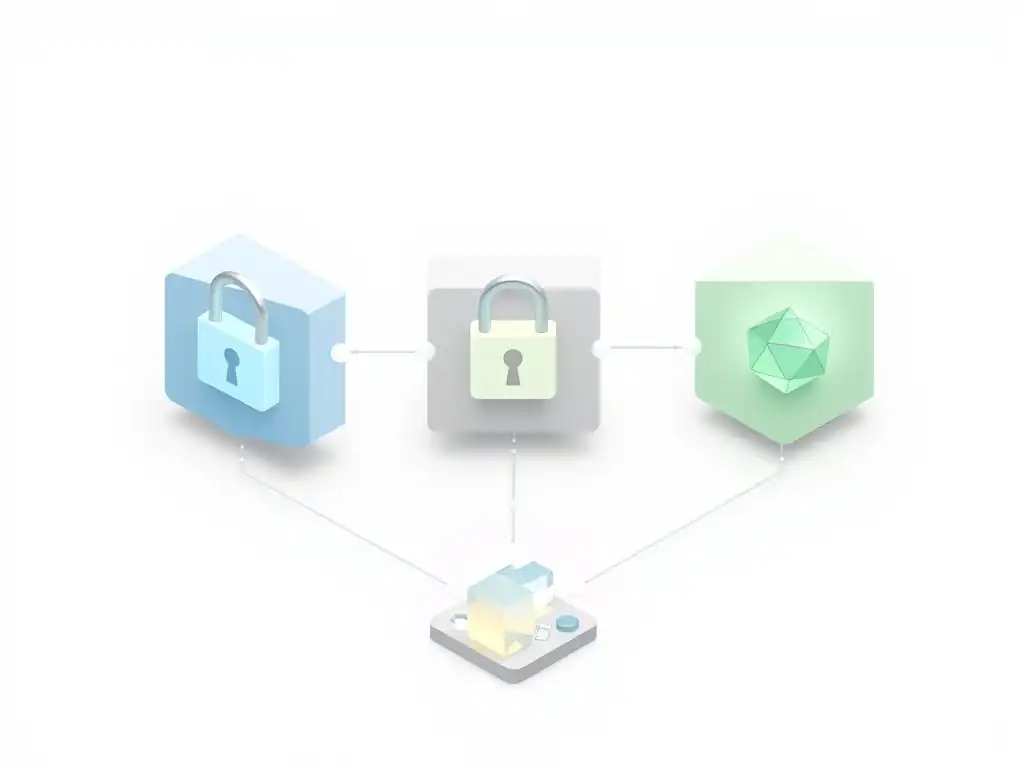
Per-User Salt vs. Global Salt
Per-User Salt: This technique involves generating a unique salt for each user. This is the generally recommended and most secure approach. As discussed previously, per-user salts effectively prevent rainbow table attacks and significantly increase the effort required for brute-force attacks.
Even if two users choose the same password, their salted hashes will be different due to the unique salts. This isolates the security risk, meaning that compromising the password of one user does not directly compromise others who may have used the same password. Per-user salting offers a robust level of password security and is considered a best practice in most security contexts, including blockchain applications.
Global Salt: In contrast, a global salt involves using the same salt for all users. This approach is significantly less secure than per-user salting and is generally discouraged. While a global salt might offer some marginal improvement over unsalted hashing by making pre-computed rainbow tables slightly less effective, it still leaves the system vulnerable to rainbow table attacks and dictionary attacks. Once the global salt is compromised, attackers can pre-compute rainbow tables or dictionary attacks using that known salt, effectively negating much of the intended security benefit.
Furthermore, a global salt does not prevent password reuse vulnerabilities. If multiple users have the same password, their salted hashes will still be identical, making them equally vulnerable if the global salt is known. Therefore, global salting is not a recommended practice for blockchain password security.
Dynamic Salting vs. Static Salting
Static Salting: Static salting refers to the practice of generating a salt once when a user creates their account and using the same salt for all subsequent password changes for that user. While static salting is better than no salting or global salting, it is less secure than dynamic salting. If an attacker compromises the salt at any point, all passwords hashed with that salt for that user become potentially vulnerable until the salt is changed. Although changing salts periodically is possible, it adds complexity to password management and may not always be implemented consistently.
Dynamic Salting: Dynamic salting, also known as password-based key derivation function 2 (PBKDF2) in some contexts, involves generating a new, random salt every time a user changes their password. This approach provides a higher level of security than static salting. If an attacker were to compromise a salt used for a previous password, it would not compromise the security of the current password, as a new salt would have been generated for the password change.
Dynamic salting reduces the window of vulnerability associated with compromised salts and ensures that each password is protected with a unique and fresh salt. While slightly more complex to implement, dynamic salting is a more secure approach and is recommended for blockchain applications where enhanced password security is a priority.
Blockchain Password Security Best Practices: A Comprehensive Guide
Combining Salt, Hashing, and Key Stretching for Optimal Security
For optimal blockchain password security, it is essential to combine salt, hashing, and key stretching techniques. Salting, as discussed, adds randomness and uniqueness to the hashing process, mitigating rainbow table attacks. Hashing uses strong, one-way functions to transform passwords into irreversible hashes. Key Stretching is a technique that further enhances security by intentionally slowing down the hashing process. This is achieved by repeatedly hashing the salted password multiple times (iterations). Algorithms like bcrypt, scrypt, and Argon2 inherently incorporate key stretching.
Key stretching significantly increases the computational cost of brute-force attacks. For example, if a key stretching algorithm iterates 10,000 times, an attacker attempting to brute-force a password must perform 10,000 hashing operations for each password guess. This dramatically increases the time and resources required for cracking passwords, even with powerful hardware. Combining salting with a strong, slow hashing algorithm that implements key stretching, such as Argon2id, provides a robust defense against a wide range of password cracking attacks and is a cornerstone of blockchain password security best practices.
Implementing Password Complexity Requirements in Blockchain
While technical measures like salting and hashing are crucial, enforcing password complexity requirements is also an important aspect of blockchain password security. Password complexity policies encourage users to create strong passwords that are difficult to guess. These policies typically include requirements such as minimum password length, the use of uppercase and lowercase letters, numbers, and special characters. For example, a strong password policy might require passwords to be at least 12 characters long and include characters from all four categories.
Implementing password complexity requirements reduces the likelihood of users choosing weak or easily guessable passwords, such as common dictionary words or predictable patterns. While password complexity alone is not sufficient and should always be combined with strong hashing and salting, it adds an important layer of defense. Blockchain applications should enforce password complexity requirements during user registration and password changes. Providing users with feedback on password strength and guidance on creating strong passwords can further enhance the effectiveness of these policies and improve overall blockchain password security.
Multi-Factor Authentication (MFA) as an Additional Security Layer
Multi-Factor Authentication (MFA) adds a significant layer of security beyond passwords alone. MFA requires users to provide multiple verification factors to authenticate their identity. These factors typically fall into three categories: something you know (password), something you have (e.g., a mobile device or hardware token), and something you are (biometrics). In the context of blockchain, MFA can greatly reduce the risk of unauthorized access even if a password is compromised.
For example, a common MFA implementation involves requiring users to enter their password (something they know) and then verify their login using a one-time code sent to their mobile device (something they have). Even if an attacker manages to obtain a user's password, they would still need access to the user's mobile device to complete the authentication process.
MFA significantly increases the difficulty for attackers to gain unauthorized access and is particularly valuable for blockchain applications that manage high-value digital assets or sensitive information. Implementing MFA is a highly recommended blockchain password security best practice, especially for applications dealing with financial transactions or critical blockchain operations.
Regular Security Audits and Penetration Testing for Blockchain Password Systems
Regular security audits and penetration testing are essential for maintaining robust blockchain password systems. Security audits involve a systematic review of the system's security policies, procedures, and implementations to identify potential vulnerabilities and weaknesses. This includes reviewing password storage mechanisms, authentication processes, and access control measures. Penetration testing goes a step further by simulating real-world attacks to actively test the security defenses of the system. Ethical hackers attempt to exploit vulnerabilities, including password-related weaknesses, to assess the system's resilience and identify areas for improvement.
Regular security audits and penetration testing help to proactively identify and address security vulnerabilities before they can be exploited by malicious actors. These activities should be conducted by independent security experts who can provide an unbiased assessment of the system's security posture. The findings from audits and penetration tests should be used to implement necessary security improvements and strengthen the blockchain password system. Periodic security assessments are crucial for adapting to evolving threats and ensuring the ongoing effectiveness of blockchain password security measures.
Real-World Examples of Salt and Hashing in Blockchain
Case Study 1: Analysis of Password Security in the Monero Blockchain
Monero, a privacy-focused cryptocurrency, places a strong emphasis on security, including password security for its wallets and user accounts. While Monero itself is a blockchain protocol, the security of user wallets often relies on password-based encryption for private key protection. Monero wallets typically employ robust password hashing algorithms, often variations of bcrypt or scrypt, combined with salting to secure user passwords. These algorithms are chosen for their resistance to brute-force attacks and their inherent key stretching properties.
Although specific implementation details can vary depending on the Monero wallet software, best practices dictate the use of per-user salts generated using cryptographically secure random number generators. These salts are stored alongside the encrypted private keys, usually within the wallet file itself. The password entered by the user is then used, in conjunction with the stored salt, to derive a decryption key to access the private keys.
While public audits of specific wallet implementations are not always readily available, the general security principles adopted by privacy-centric projects like Monero underscore the importance of salted hashing for protecting user credentials within the blockchain ecosystem. The focus on privacy also implies a heightened awareness of user data security, which extends to password management.
Ethereum, being a platform for decentralized applications (dApps), presents a more diverse landscape for password security. While the Ethereum blockchain itself does not directly manage user passwords, dApps built on Ethereum often require user authentication, and password security becomes relevant at the application level. Many Ethereum wallets and dApps utilize browser-based extensions or standalone applications, and the responsibility for password security largely falls on the developers of these applications.
Popular Ethereum wallets like MetaMask, for instance, employ password-based encryption to protect user private keys stored locally. While specific hashing algorithms and salting techniques used in MetaMask and other wallets are subject to updates and version changes, they generally incorporate salted hashing using algorithms like bcrypt or Argon2.
Open-source nature of many Ethereum projects allows for community scrutiny and code audits, which contribute to identifying and addressing potential security vulnerabilities, including those related to password handling. However, the decentralized nature of the Ethereum ecosystem also means that password security practices can vary significantly across different dApps and wallets, highlighting the importance of user awareness and choosing reputable and security-conscious applications.
Future Trends in Blockchain Password Security
The Rise of Passwordless Authentication in Blockchain
Passwordless authentication is gaining traction as a potential future trend in blockchain security, aiming to move away from traditional password-based systems. Passwordless authentication methods eliminate the need for users to create and remember complex passwords, reducing the risk of password-related vulnerabilities. Techniques like magic links, biometric authentication, and device-based authentication are being explored for blockchain applications. Magic links, for example, send a unique, time-sensitive link to a user's email or phone, which they can click to authenticate without entering a password.
Biometric authentication, such as fingerprint or facial recognition, offers a convenient and secure alternative to passwords. Device-based authentication leverages cryptographic keys stored on trusted devices to authenticate users. These passwordless methods have the potential to enhance user experience and improve security by eliminating the weaknesses associated with passwords, such as password reuse, weak passwords, and phishing attacks. While passwordless authentication is still evolving in the blockchain space, its adoption is likely to increase as blockchain technology matures and user experience becomes a greater focus.
Biometric Authentication and Blockchain Integration
Biometric authentication offers a compelling avenue for enhancing blockchain password security and user experience. Integrating biometric methods, such as fingerprint scanning, facial recognition, or voice recognition, with blockchain authentication systems can provide a more secure and user-friendly alternative to traditional passwords. Biometrics leverage unique biological traits of individuals for authentication, making them inherently more difficult to forge or steal compared to passwords.
In blockchain applications, biometric authentication can be used as a primary authentication factor or as part of a multi-factor authentication scheme. For instance, users could authenticate transactions or access their wallets using fingerprint recognition, eliminating the need to type in passwords repeatedly. Furthermore, blockchain technology itself can potentially enhance the security and privacy of biometric authentication systems.
Decentralized identity solutions built on blockchain can allow users to control and manage their biometric data securely, without relying on centralized databases, addressing privacy concerns associated with biometric data storage. The integration of biometrics and blockchain holds promise for creating more secure and user-centric authentication experiences in the future.
Quantum-Resistant Hashing Algorithms for Blockchain Security
The advent of quantum computing poses a potential long-term threat to many current cryptographic algorithms, including some hashing algorithms used in blockchain. Quantum computers, if they become sufficiently powerful, could potentially break certain cryptographic algorithms much faster than classical computers. This includes the potential to compromise the security of hashing algorithms like SHA-256 and Keccak-256 in the future. Therefore, research and development of quantum-resistant hashing algorithms are becoming increasingly important for ensuring the long-term security of blockchain technology, including blockchain password security.
Quantum-resistant hashing algorithms are designed to be resistant to attacks from both classical and quantum computers. NIST (National Institute of Standards and Technology) is actively working on standardizing quantum-resistant cryptographic algorithms, including hashing algorithms.
Blockchain projects are beginning to explore and consider the adoption of these quantum-resistant algorithms to future-proof their security. While quantum computers are not yet a practical threat to current blockchain security in the near term, proactive adoption of quantum-resistant hashing algorithms is a prudent step for ensuring the long-term resilience and security of blockchain systems against potential future quantum computing threats, including the security of password hashing within blockchain applications.
Conclusion: Securing the Future of Blockchain with Robust Password Security Measures
Emphasizing the Importance of Blockchain Password Security Best Practices
Blockchain password security best practices are not merely optional recommendations; they are essential imperatives for maintaining the integrity, trustworthiness, and security of the entire blockchain ecosystem. As blockchain technology expands beyond cryptocurrencies into various applications managing sensitive data and valuable assets, robust password security becomes even more critical. Weak password security can undermine the inherent security advantages of blockchain and create vulnerabilities that attackers can exploit, leading to financial losses, data breaches, and reputational damage.
Implementing best practices like salted hashing, key stretching, password complexity requirements, and multi-factor authentication is crucial for protecting user credentials and securing blockchain applications. Regular security audits and penetration testing are equally important for proactively identifying and addressing potential vulnerabilities. By prioritizing and implementing robust blockchain password security measures, we can ensure that blockchain technology fulfills its promise of providing secure and trustworthy decentralized systems.
The Ongoing Evolution of Hashing and Salting Techniques
The landscape of hashing and salting techniques is not static; it is constantly evolving in response to emerging threats and advancements in technology. As computational power increases and new attack vectors are discovered, cryptographic researchers and security experts continuously work to develop and refine password hashing algorithms and salting methodologies. The shift towards slower, more computationally intensive algorithms like Argon2, bcrypt, and scrypt reflects this evolution, aiming to make password cracking increasingly difficult and costly for attackers.
Furthermore, the ongoing research into quantum-resistant cryptography is driving the development of new hashing algorithms that can withstand potential attacks from future quantum computers. Staying informed about the latest advancements in hashing and salting techniques and adapting blockchain password security practices accordingly is crucial for maintaining a strong security posture. The continuous evolution of these techniques underscores the dynamic nature of cybersecurity and the ongoing need for vigilance and proactive security measures in the blockchain space and beyond.
Frequently Asked Questions
What is the role of salt in blockchain password security?
Salt is a random string of data added to each password before hashing. This prevents attackers from using pre-computed tables (rainbow tables) to crack passwords, even if they compromise the database.
How does hashing contribute to blockchain password security?
Hashing transforms passwords into unreadable, fixed-length strings. Even if a database is breached, the actual passwords remain hidden, as hashing is a one-way function making it difficult to reverse.
Why are salt and hashing considered best practices in blockchain password security?
These techniques significantly enhance security by making it computationally expensive for attackers to crack passwords. They add layers of protection that simple password storage methods lack, reducing the risk of unauthorized access.
How do DeFi applications utilize salt and hashing for user authentication?
DeFi platforms often implement salt and hashing to protect user accounts. This ensures that even if the platform's database is compromised, user passwords remain secure, safeguarding their digital assets and identities.
Are there regulatory standards requiring the use of salt and hashing in blockchain applications?
While specific regulations may vary, many guidelines emphasize the importance of robust security measures like salt and hashing. Compliance with these best practices is becoming increasingly crucial for blockchain projects to maintain user trust and avoid legal repercussions.
Final Reflection: Fortifying the Digital Frontier
The exploration of salt and hashing within blockchain password security underscores a critical truth: vigilance is paramount in safeguarding digital assets. The vulnerabilities inherent in simple password storage methods are starkly contrasted with the robust defenses offered by these cryptographic techniques, highlighting the ongoing need for continuous improvement in security protocols. This isn't just about protecting data; it's about preserving trust in the very foundations of decentralized systems.
The impact of robust password security extends far beyond individual accounts. It shapes the entire blockchain ecosystem, influencing user adoption and the overall perception of security. The peace of mind that comes from knowing your digital identity is well-protected is invaluable, and it's a responsibility we all share. Security is always excessive until it's not enough.
This quote perfectly encapsulates the proactive mindset necessary to stay ahead of evolving threats and ensure the long-term viability of blockchain technology.
As we navigate an increasingly digital world, let us not underestimate the power of seemingly small steps, like implementing salt and hashing, to create a more secure future. Consider the passwords you use, the systems you trust, and the role you play in promoting Blockchain password security best practices. Let this knowledge empower you to advocate for stronger security measures and contribute to a more resilient and trustworthy digital landscape for all.
Unlock Deeper Security: Start Your Journey Now!
Thanks for exploring the crucial role of salting and hashing in bolstering blockchain security. Now that you understand how these techniques safeguard your passwords, let's put that knowledge into action. Ready to take the next step?
- Evaluate the password security of your existing blockchain wallets and accounts – this is your primary action to reinforce your understanding.
- Explore different hashing algorithms and their strengths and weaknesses to further your knowledge of data protection methods.
- Share this article with your network to help others understand the importance of robust password security in the blockchain space.
What steps will you take today to enhance your password security practices in the blockchain world?
Leave a Reply