
The Future of Remittances: Lowering Costs and Increasing Efficiency with Digital Currencies


Welcome to Blockchain Trends, your guide to understanding the revolutionary power of blockchain technology! Are you ready to discover how blockchain is reshaping industries far beyond cryptocurrency? Dive into our latest article and explore how blockchain remittances cost reduction is poised to transform the way money moves across borders, offering faster, cheaper, and more secure solutions. Curious to learn how this technology is impacting global finance? Read on to uncover the future of decentralized remittances.
The Future of International Payments: Streamlining Transfers with Digital Solutions
- Introduction: Transforming Global Payments with Technology
- Understanding the Challenges of Traditional International Payment Systems
- Digital Payment Solutions: A Faster, More Efficient Alternative
- Digital Currencies and Stablecoins: Accelerating Cross-Border Transactions
- Increasing Efficiency in International Payments with Technology
- Digital Payment Solutions Cost Reduction: Case Studies and Real-World Examples
- Challenges and Obstacles to Widespread Adoption
- Overcoming the Challenges: Paving the Way for Seamless Global Payments
- The Future of International Payments: A Connected and Efficient Ecosystem
- Conclusion: Technology's Transformative Potential for the International Payment Industry
-
Frequently Asked Questions
- How does blockchain technology contribute to blockchain remittances cost reduction?
- What are some specific benefits of using digital currencies for remittances compared to traditional methods?
- What are some regulatory challenges hindering the widespread adoption of blockchain remittances cost reduction globally?
- Beyond cost savings, what other efficiencies does blockchain introduce to the remittance process?
- What is the future outlook for blockchain remittances cost reduction and its impact on the global economy?
- Final Reflection: Embracing the Digital Remittance Revolution
- Embrace the Future: Start Saving on Remittances Today!
Introduction: Transforming Global Payments with Technology
The Current State of International Payments: Delays and Complexities
International payments, despite being a cornerstone of global commerce and personal remittances, are often plagued by inefficiencies and complexities. Traditional systems rely on a patchwork of correspondent banks and outdated technologies, resulting in slow transaction speeds and high costs. For individuals sending money home to families or businesses engaging in cross-border trade, these inefficiencies translate to significant delays, added expenses, and operational friction. This antiquated infrastructure struggles to keep pace with the demands of an increasingly interconnected and fast-paced global economy, hindering financial inclusion and economic growth, especially in developing regions heavily reliant on remittances.
The current system is characterized by a lack of transparency, making it difficult for senders and recipients to track funds in real-time and understand the various fees involved. Hidden charges and fluctuating exchange rates further complicate matters, eroding the value of transactions. Moreover, the reliance on multiple intermediaries in the correspondent banking network introduces potential points of failure and delays, making the process cumbersome and unpredictable. These issues disproportionately affect individuals and small businesses, who often bear the brunt of these inefficiencies and lack the resources to navigate the complexities of international money transfers.
Technology's Promise: A New Era of Cross-Border Transactions
Emerging technologies, particularly blockchain and digital currencies, offer a compelling vision for a new era of cross-border transactions. These innovations promise to dismantle the inefficiencies of traditional systems, paving the way for faster, cheaper, and more transparent international payments. By leveraging the power of decentralization, cryptography, and automation, digital solutions are poised to revolutionize how money moves across borders, benefiting individuals, businesses, and the global economy as a whole. This technological shift has the potential to significantly reduce the cost of remittances, a critical factor for many developing economies.
The adoption of digital platforms and currencies can streamline processes, eliminate intermediaries, and enhance security, addressing many of the pain points associated with current international payment methods. This transformation is not just about incremental improvements; it represents a fundamental shift towards a more efficient and inclusive global financial system. The promise of near-instantaneous settlements, reduced transaction fees, and enhanced transparency is driving significant interest and investment in digital payment solutions, signaling a move towards a future where international money transfers are as seamless and cost-effective as domestic transactions.
Understanding the Challenges of Traditional International Payment Systems
Correspondent Banking Networks and Their Limitations
The backbone of traditional international payments is the correspondent banking network, a system where banks maintain accounts at other banks in different countries to facilitate cross-border transactions. While this system has served global finance for decades, it is inherently complex and inefficient. Each transaction often passes through multiple correspondent banks, each adding fees and processing time.
This layered structure leads to increased costs, delays, and a lack of transparency in the overall process. Furthermore, the geographical reach of correspondent banking is not uniform, with some regions, particularly in developing countries, facing limited access or even de-risking, where correspondent banks withdraw services due to perceived risks.
The limitations of correspondent banking are further exacerbated by its reliance on legacy systems and manual processes. Information exchange between banks can be slow and error-prone, contributing to settlement delays and reconciliation issues. The network is also vulnerable to disruptions, as the failure of a single correspondent bank can impact payments across multiple institutions and geographies. These inherent limitations highlight the need for alternative solutions that can bypass the complexities and inefficiencies of the traditional correspondent banking model, especially when considering the high cost of remittances for individuals and families relying on these funds.
Regulatory Compliance and Anti-Money Laundering (AML) Requirements
Navigating the complex web of international regulations and Anti-Money Laundering (AML) requirements adds another layer of friction to traditional international payments. Each country has its own set of rules and compliance standards, requiring financial institutions to implement robust KYC (Know Your Customer) and AML procedures. This regulatory landscape is not only fragmented but also constantly evolving, demanding significant resources and expertise from banks to ensure compliance. The cost of maintaining these compliance frameworks is substantial and is often passed on to consumers in the form of higher transaction fees.
The stringent regulatory environment, while essential for combating financial crime, can inadvertently slow down payment processing and increase costs, particularly for smaller transactions and remittances. Traditional systems struggle to adapt to the dynamic nature of global regulations, leading to delays and potential bottlenecks. Moreover, the lack of harmonization across different jurisdictions creates further complexities and uncertainties for businesses and individuals engaged in cross-border transactions. This regulatory burden underscores the need for innovative solutions that can streamline compliance processes while maintaining robust security and adhering to international standards, particularly for reducing blockchain remittances cost.
Impact of Inefficient Payments on Businesses and Individuals
The inefficiencies of traditional international payment systems have a tangible and often detrimental impact on both businesses and individuals. For businesses, slow payment cycles can disrupt supply chains, delay revenue recognition, and increase working capital requirements. High transaction fees erode profit margins, especially for small and medium-sized enterprises (SMEs) engaged in international trade. The lack of transparency makes it difficult to manage cash flow effectively and can lead to unexpected costs and delays. These factors can hinder business growth and competitiveness in the global marketplace.
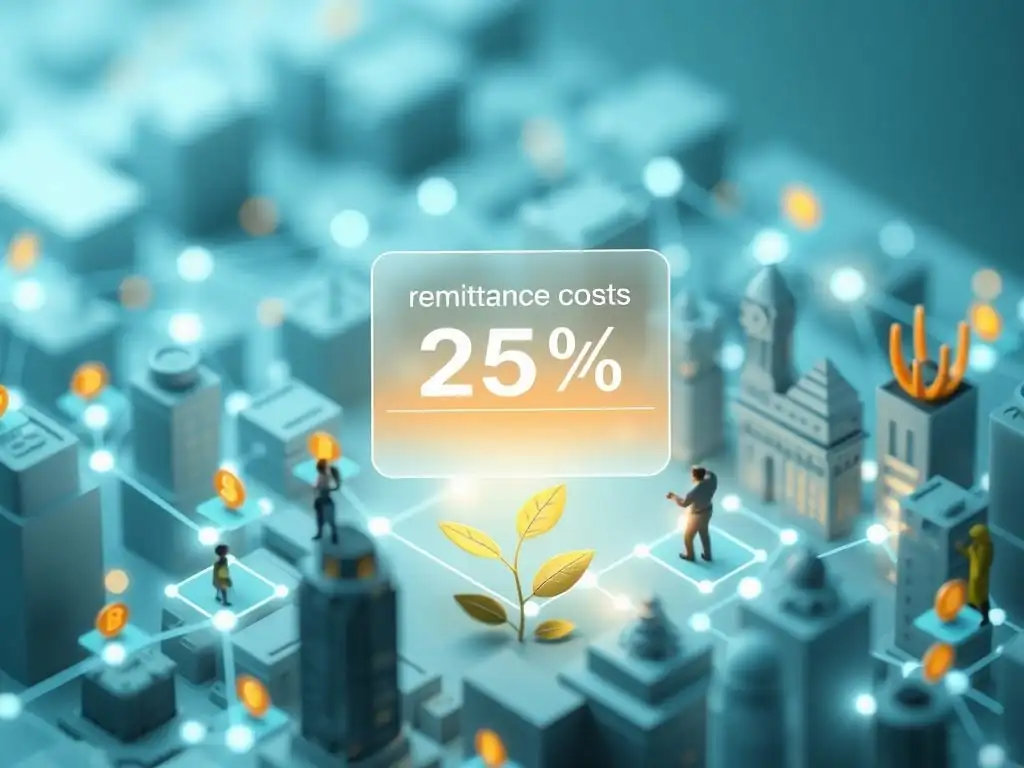
For individuals, particularly those relying on remittances, the impact is even more profound. High fees and slow transfer times reduce the amount of money that reaches recipients, impacting their livelihoods and well-being. According to the World Bank, the global average cost of sending remittances remains significant, eating into crucial funds intended for families in developing countries.
Delays in receiving funds can create financial hardship and instability, especially for those living paycheck to paycheck. The inefficiencies of traditional systems disproportionately burden vulnerable populations and hinder economic development in remittance-dependent economies, highlighting the urgent need for more efficient and affordable solutions, such as blockchain based remittances, to reduce cost and improve speed.
Digital Payment Solutions: A Faster, More Efficient Alternative
How Digital Platforms Streamline International Payments
Digital payment platforms are emerging as a powerful alternative to traditional systems, offering a streamlined and more efficient approach to international money transfers. These platforms leverage technology to automate processes, reduce manual interventions, and bypass intermediaries, resulting in faster transaction speeds and lower costs. By utilizing digital infrastructure and innovative technologies, they are able to overcome many of the limitations inherent in the correspondent banking network. These platforms often operate on a global scale, providing access to a wider range of currencies and destinations, and simplifying the complexities of cross-border payments.
The core of their efficiency lies in the use of technology to optimize every step of the payment process. From initiating a transaction online or through a mobile app to automated compliance checks and direct routing of funds, digital platforms minimize manual handling and reduce the potential for errors and delays.
They also offer enhanced transparency, providing users with real-time tracking of their payments and clear visibility of fees and exchange rates. This technological advantage translates to a significantly improved user experience and lower overall costs compared to traditional methods, making them particularly attractive for individuals and businesses seeking efficient and cost-effective international payment solutions.
Direct Transfers and Reduced Reliance on Intermediaries
A key feature of digital payment solutions is their ability to facilitate direct transfers, significantly reducing or even eliminating the reliance on multiple intermediaries. Instead of routing payments through a chain of correspondent banks, these platforms often establish direct relationships with banks or payment providers in different countries. This direct connectivity streamlines the payment path, minimizing the number of parties involved in each transaction and thereby reducing both processing time and associated fees. This disintermediation is a fundamental shift from the traditional model and is a major driver of the cost savings and efficiency gains offered by digital platforms.
By bypassing the complex correspondent banking network, digital platforms can offer faster settlement times, often completing transactions within minutes or hours, compared to the days it can take with traditional methods. This speed is particularly crucial for time-sensitive payments and businesses operating in fast-paced global markets. Furthermore, reducing the number of intermediaries also enhances transparency, as there are fewer points where fees can be added or delays can occur. This move towards direct transfers represents a significant improvement in the efficiency and cost-effectiveness of international payments, making them more accessible and user-friendly.
Automated Compliance and Enhanced Security Measures
Digital payment platforms are leveraging technology to automate compliance processes and enhance security measures, addressing key concerns associated with international money transfers. By utilizing sophisticated algorithms and data analytics, these platforms can automate KYC and AML checks, ensuring regulatory compliance while minimizing manual effort and potential delays. This automation not only speeds up onboarding and transaction processing but also reduces the risk of human error and enhances the overall efficiency of compliance operations.
Furthermore, digital platforms often employ advanced security protocols, such as encryption and multi-factor authentication, to protect user data and prevent fraud. The use of blockchain technology in some platforms further enhances security and transparency, providing an immutable record of transactions and reducing the risk of tampering or fraud. These robust security measures are crucial for building user trust and ensuring the integrity of the international payment ecosystem. By automating compliance and implementing advanced security features, digital payment solutions offer a more secure and efficient alternative to traditional systems, addressing key challenges and fostering greater confidence in cross-border transactions.
Digital Currencies and Stablecoins: Accelerating Cross-Border Transactions
The Role of Stablecoins in Minimizing Volatility and Enabling Real-Time Settlements
Digital currencies, particularly stablecoins, are emerging as powerful tools for accelerating cross-border transactions and mitigating the volatility associated with other cryptocurrencies. Stablecoins are digital currencies designed to maintain a stable value, typically pegged to a fiat currency like the US dollar. This stability makes them ideal for international payments, as it eliminates the price fluctuations that can occur with more volatile cryptocurrencies, making them impractical for everyday transactions and remittances. By providing a stable store of value and a medium of exchange, stablecoins facilitate faster and more predictable cross-border payments.
The use of stablecoins enables near real-time settlements, as transactions can be processed and verified on blockchain networks much faster than traditional bank transfers. This speed is a significant advantage for international payments, where delays can be costly and inconvenient. Furthermore, stablecoins can be transferred globally with minimal fees, especially compared to the high charges associated with traditional wire transfers and correspondent banking. This combination of stability, speed, and low cost makes stablecoins a compelling solution for streamlining cross-border transactions and reducing the cost of international remittances.
USDC: Facilitating Faster and Cheaper International Transfers
USD Coin (USDC) is a prominent example of a stablecoin that is actively being used to facilitate faster and cheaper international transfers. As a fully collateralized stablecoin pegged 1:1 to the US dollar, USDC offers a stable and reliable digital currency for cross-border transactions. Its widespread adoption and availability on numerous cryptocurrency exchanges and platforms make it easily accessible for businesses and individuals globally. Companies like Circle, the issuer of USDC, are actively promoting its use for international payments, highlighting its potential to reduce costs and improve efficiency.
The use of USDC for remittances, for example, can significantly lower transaction fees compared to traditional money transfer operators. Senders can purchase USDC in their local currency, transfer it across borders almost instantly, and recipients can then redeem it for their local currency. This process bypasses the traditional correspondent banking system, eliminating intermediary fees and reducing settlement times. Real-world examples are emerging where businesses and individuals are leveraging USDC to send and receive international payments more efficiently and cost-effectively, demonstrating its practical application in streamlining global financial transactions and driving blockchain remittances cost reduction.
Central Bank Digital Currencies (CBDCs) and Their Potential to Reshape Global Payments
Central Bank Digital Currencies (CBDCs), digital forms of fiat currency issued and regulated by a nation's central bank, hold significant potential to reshape the landscape of global payments. While still in early stages of development and implementation in many countries, CBDCs promise to combine the stability and trust of traditional fiat currencies with the efficiency and innovation of digital technologies. If widely adopted, CBDCs could revolutionize cross-border payments by providing a direct, secure, and potentially low-cost alternative to the existing correspondent banking system.
CBDCs could enable central banks to directly participate in cross-border payment systems, potentially reducing reliance on commercial banks and intermediaries. This could lead to faster settlement times, lower transaction fees, and increased transparency in international payments.
Furthermore, CBDCs could facilitate greater financial inclusion by providing access to digital payment services for unbanked and underbanked populations, particularly in developing countries. While challenges remain in terms of interoperability and cross-border regulatory coordination, the potential of CBDCs to transform global payments and foster a more efficient and inclusive financial system is substantial, offering long-term solutions for reducing blockchain remittances cost on a global scale.
Increasing Efficiency in International Payments with Technology
Faster Transaction Times: Instant or Near-Instant Settlements
Technology is driving a significant acceleration in transaction times for international payments, moving away from the days-long settlement periods of traditional systems towards instant or near-instant settlements. Digital payment platforms and blockchain-based solutions are leveraging automation and streamlined processes to dramatically reduce processing times. This speed is a critical advantage for businesses and individuals who require timely access to funds for operational needs or personal emergencies. The shift towards faster settlements is transforming the user experience and enhancing the efficiency of global commerce.
Real-time gross settlement (RTGS) systems, while not entirely new, are becoming more accessible and efficient with technological advancements. Coupled with digital currencies and blockchain, the potential for truly instant cross-border payments is becoming a reality. For instance, some blockchain-based remittance solutions are already offering near-instant transfers to certain corridors, demonstrating the feasibility of this technology. This acceleration in transaction times not only improves efficiency but also reduces counterparty risk and enhances cash flow management for businesses, making international payments more seamless and user-friendly.
Improved Transparency and Tracking of Funds
Enhanced transparency and improved tracking of funds are key benefits offered by technology-driven international payment solutions. Traditional systems often lack transparency, making it difficult for senders and recipients to track the progress of their payments and understand the various fees involved. Digital platforms, on the other hand, provide users with real-time visibility into the status of their transactions, from initiation to settlement. This transparency builds trust and reduces uncertainty, improving the overall user experience.
Blockchain technology, in particular, offers a high degree of transparency due to its immutable and auditable ledger. Transactions recorded on a blockchain can be easily tracked and verified, providing a clear and transparent record of the payment flow. This enhanced transparency is not only beneficial for users but also for regulatory compliance and fraud prevention. By providing a clear audit trail and real-time tracking capabilities, technology is making international payments more accountable and trustworthy, addressing a major pain point of traditional systems and contributing to blockchain remittances cost reduction by minimizing operational overheads related to dispute resolution and reconciliation.
Enhanced Security and Reduced Risk of Fraud
Technology is playing a crucial role in enhancing the security of international payments and reducing the risk of fraud. Digital payment platforms and blockchain-based solutions are implementing advanced security measures, such as encryption, multi-factor authentication, and fraud detection algorithms, to protect user data and prevent unauthorized transactions. These robust security protocols are essential for building user confidence and ensuring the integrity of the global payment system.
Blockchain technology's inherent security features, such as cryptography and decentralization, further enhance the security of transactions. The distributed nature of blockchain makes it highly resistant to tampering and single points of failure, reducing the risk of cyberattacks and fraud. Smart contracts, self-executing contracts coded on a blockchain, can automate payment processes and reduce the risk of human error and manipulation. By leveraging these technological advancements, digital payment solutions are offering a more secure and resilient alternative to traditional systems, mitigating the risks associated with international money transfers and fostering greater trust in digital payment methods.
Digital Payment Solutions Cost Reduction: Case Studies and Real-World Examples
Wise (formerly TransferWise): Streamlining International Money Transfers
Wise, formerly known as TransferWise, is a prominent example of a digital payment platform that has successfully streamlined international money transfers and significantly reduced costs for users. By leveraging technology and a peer-to-peer matching system, Wise bypasses the traditional correspondent banking network and offers transparent, low-fee international transfers. Their innovative approach focuses on matching send and receive orders in different currencies, minimizing the need for actual cross-border movement of funds and thereby reducing costs.
Wise has disrupted the traditional remittance market by offering significantly lower fees and more transparent exchange rates compared to banks and traditional money transfer operators. Their fee structure is clear and upfront, with no hidden charges or inflated exchange rates.
For example, sending money from the UK to India through Wise can be significantly cheaper and faster than using traditional bank transfers. Wise’s success demonstrates the potential of digital platforms to revolutionize international payments and drive down costs for consumers and businesses alike, showcasing a real-world example of blockchain remittances cost reduction principles in action, even without directly using blockchain itself but embodying similar efficiency gains through technology.
Ripple: Enabling Real-Time Gross Settlement System, Currency Exchange and Remittance Network
Ripple is a technology company that provides a real-time gross settlement system (RTGS), currency exchange, and remittance network. Their solutions, built on blockchain technology, are designed to facilitate faster, cheaper, and more transparent international payments for financial institutions. Ripple's network, RippleNet, connects banks and payment providers globally, enabling them to process cross-border transactions more efficiently and cost-effectively. Ripple's technology aims to address the inefficiencies of the traditional correspondent banking system and revolutionize how financial institutions move money across borders.
Ripple's XRP cryptocurrency is designed to act as a bridge currency for cross-border payments, facilitating faster and cheaper currency exchange. While the use of XRP has faced regulatory scrutiny in some jurisdictions, RippleNet itself has been adopted by numerous financial institutions worldwide to improve their international payment capabilities.
For example, companies like MoneyGram have partnered with Ripple to leverage their technology for faster and more efficient remittance services. Ripple’s case illustrates the application of blockchain technology in transforming international payments and reducing costs for financial institutions and their customers, exemplifying how blockchain remittances cost reduction can be achieved through enterprise-level solutions.
Analyzing the Efficiency Gains Achieved Through Digital Payment Implementation
The implementation of digital payment solutions, as exemplified by Wise and Ripple, demonstrates significant efficiency gains in international money transfers. These platforms and technologies have successfully reduced transaction costs, accelerated settlement times, and enhanced transparency compared to traditional methods. Analyzing the impact of these solutions reveals a clear trend towards a more efficient and user-friendly global payment ecosystem. The efficiency gains are achieved through a combination of factors, including disintermediation, automation, and the use of innovative technologies like blockchain.
Quantitatively, studies have shown that digital remittance platforms can reduce transaction costs by a significant percentage compared to traditional money transfer operators. For instance, the World Bank estimates that the average cost of sending remittances is around 6% globally, but digital platforms often offer fees that are significantly lower, sometimes below 1%.
In terms of speed, digital platforms can often complete transactions within minutes or hours, whereas traditional bank transfers can take several days. These efficiency gains translate to real economic benefits for individuals and businesses, highlighting the transformative potential of digital payment solutions in driving down costs and improving the speed and accessibility of international money transfers, directly contributing to blockchain remittances cost reduction and broader financial inclusion.
Challenges and Obstacles to Widespread Adoption
Regulatory Fragmentation and Cross-Border Compliance
Despite the numerous benefits, widespread adoption of digital payment solutions for international transfers faces significant challenges, particularly regulatory fragmentation and cross-border compliance. The global regulatory landscape for digital currencies and payment platforms is still evolving and remains highly fragmented. Different countries have adopted varying approaches to regulating these technologies, creating a complex and often inconsistent regulatory environment for businesses operating across borders. This fragmentation makes it challenging for digital payment providers to navigate the legal and compliance requirements in different jurisdictions, hindering their ability to scale and expand their services globally.
Cross-border compliance adds another layer of complexity. Digital payment platforms operating internationally must comply with the AML, KYC, and data privacy regulations of each country they operate in. This requires significant resources and expertise to ensure adherence to diverse and often conflicting regulatory frameworks. The lack of harmonized international regulations creates uncertainty and increases compliance costs, potentially slowing down the adoption of digital payment solutions and limiting their ability to fully realize their potential for reducing blockchain remittances cost and improving efficiency on a global scale.
Interoperability Issues Between Different Payment Systems
Interoperability issues between different payment systems pose another significant obstacle to the seamless flow of international payments. Many digital payment platforms and traditional systems operate in silos, with limited or no connectivity between them. This lack of interoperability hinders the ability to seamlessly transfer funds between different platforms and networks, creating friction and inefficiencies in the overall payment ecosystem. For example, transferring funds from a mobile money wallet in one country to a bank account in another country through different payment systems can be cumbersome and time-consuming due to interoperability limitations.
Addressing interoperability requires collaboration and standardization across different payment systems and technologies. Efforts are needed to develop open standards and protocols that enable seamless communication and data exchange between various payment platforms. Without interoperability, the full potential of digital payment solutions to streamline international transfers and reduce costs cannot be realized. Overcoming these challenges is crucial for creating a truly interconnected and efficient global payment ecosystem that benefits all users, and for fully capitalizing on blockchain remittances cost reduction opportunities across different platforms and systems.
User Trust and Cybersecurity Concerns
Building user trust and addressing cybersecurity concerns are paramount for the widespread adoption of digital payment solutions. While digital platforms offer numerous advantages, some users remain hesitant to adopt them due to concerns about security, privacy, and the reliability of these new technologies. Cybersecurity threats, such as hacking and data breaches, are a real concern in the digital space, and incidents of security breaches can erode user trust and hinder adoption. Building and maintaining robust security protocols and effectively communicating these measures to users are essential for fostering trust and confidence in digital payment solutions.
Educating users about the security features and benefits of digital payment platforms is also crucial. Many users may be unfamiliar with digital currencies and blockchain technology, leading to misconceptions and anxieties.
Addressing these concerns through clear and accessible information, user-friendly interfaces, and reliable customer support is essential for building trust and encouraging wider adoption. Furthermore, ensuring regulatory oversight and consumer protection measures are in place can help build confidence in the safety and reliability of digital payment solutions, paving the way for their broader acceptance and realizing the full potential of blockchain remittances cost reduction and efficiency gains for a wider user base.
Overcoming the Challenges: Paving the Way for Seamless Global Payments
Harmonized Regulatory Frameworks and International Cooperation
Overcoming the challenges to widespread adoption of digital payment solutions requires a concerted effort towards harmonized regulatory frameworks and enhanced international cooperation. Greater coordination among regulatory bodies across different jurisdictions is crucial for creating a more consistent and predictable regulatory environment for digital payment providers. Harmonizing regulations related to AML, KYC, and data privacy can reduce compliance costs and facilitate cross-border operations, encouraging innovation and growth in the digital payments sector.
International cooperation is also essential for addressing cross-border payment challenges effectively. Collaboration between governments, central banks, and international organizations can help develop common standards, protocols, and regulatory frameworks for digital payments. Initiatives such as the Financial Stability Board's (FSB) work on cross-border payments and the G20's efforts to enhance global payment systems are crucial steps in this direction. By working together, countries can create a more conducive regulatory environment for digital payments, fostering innovation and enabling the realization of blockchain remittances cost reduction and efficiency benefits on a global scale.
Open Standards and Interoperable Payment Platforms
Promoting open standards and fostering interoperable payment platforms are critical for creating a seamless and efficient global payment ecosystem. Developing and adopting open standards for digital payments can enable different platforms and systems to communicate and interact with each other seamlessly. This interoperability is essential for facilitating frictionless cross-border transfers and ensuring that users can easily send and receive payments across different networks and platforms.
Encouraging the development of interoperable payment platforms can break down silos and create a more connected global payment infrastructure. This can involve establishing common APIs (Application Programming Interfaces) and protocols that allow different systems to integrate and exchange data. Interoperability not only enhances efficiency and reduces costs but also promotes competition and innovation in the digital payments sector. By prioritizing open standards and interoperability, the industry can pave the way for a truly seamless and efficient global payment ecosystem, maximizing the benefits of blockchain remittances cost reduction and broader digital payment adoption.
Robust Security Protocols and Consumer Protection Measures
Ensuring robust security protocols and implementing strong consumer protection measures are fundamental for building trust and driving the widespread adoption of digital payment solutions. Digital payment platforms must prioritize security and implement state-of-the-art security measures to protect user data and prevent fraud. This includes employing encryption, multi-factor authentication, and advanced fraud detection systems. Regular security audits and penetration testing are also essential for identifying and mitigating vulnerabilities.
Strong consumer protection measures are equally important for building user confidence and ensuring fair and transparent practices in the digital payments sector. This includes clear and transparent fee disclosures, dispute resolution mechanisms, and data privacy protections. Regulatory frameworks should also include provisions for consumer redress in case of fraud or errors. By prioritizing security and consumer protection, the industry can build trust and confidence in digital payment solutions, paving the way for their widespread adoption and realizing the full potential of blockchain remittances cost reduction and enhanced efficiency for all users.
The Future of International Payments: A Connected and Efficient Ecosystem
The Convergence of Digital Currencies, Mobile Payments, and Real-Time Settlement Systems
The future of international payments points towards a convergence of digital currencies, mobile payments, and real-time settlement systems, creating a more connected and efficient ecosystem. Digital currencies, including stablecoins and CBDCs, are providing the foundation for faster and cheaper cross-border transfers. Mobile payment technologies are enhancing accessibility and user convenience, particularly in developing countries where mobile phone penetration is high. Real-time settlement systems are eliminating delays and enabling near-instantaneous transactions, transforming the speed and efficiency of global payments.
This convergence is creating a synergistic effect, where the combined strengths of these technologies amplify their individual benefits. For example, mobile wallets can be used to access and transact with digital currencies, enabling seamless and low-cost international remittances directly from mobile devices. Real-time settlement systems ensure that these transactions are processed quickly and efficiently, minimizing delays and maximizing usability. This interconnected ecosystem promises to revolutionize international payments, making them more accessible, affordable, and efficient for individuals and businesses worldwide, further driving blockchain remittances cost reduction and broader financial inclusion.
Potential for New Financial Products and Services for Global Businesses
The evolution of international payments is also opening up opportunities for new financial products and services tailored for global businesses. Faster, cheaper, and more transparent payment systems can facilitate the development of innovative solutions for cross-border trade finance, supply chain management, and international e-commerce. For example, businesses can leverage real-time payment systems to optimize their cash flow management, reduce working capital requirements, and improve their operational efficiency in international markets.
Digital payment platforms can also offer value-added services, such as automated currency exchange, invoice management, and international tax compliance tools, streamlining cross-border business operations. The increased efficiency and reduced costs associated with digital payments can make international trade more accessible to SMEs, fostering global economic growth and creating new opportunities for businesses of all sizes. The future of international payments is not just about faster transfers; it's about creating a more robust and versatile financial infrastructure that supports the evolving needs of global businesses and drives innovation in international commerce.
The Long-Term Impact on Global Trade and Economic Growth
The long-term impact of a more efficient and cost-effective international payment system extends far beyond individual transactions, potentially driving significant global trade and economic growth. Reduced transaction costs and faster settlement times can lower the barriers to international trade, making it more accessible and affordable for businesses, especially SMEs in developing countries. This can lead to increased cross-border trade flows, fostering economic integration and driving global economic expansion.
Improved access to efficient and affordable remittance services can also have a profound impact on developing economies that rely heavily on remittances. Lower remittance costs mean that more money reaches recipients, boosting household incomes and supporting economic development in these regions.
Furthermore, a more efficient global payment system can enhance financial inclusion by providing access to digital financial services for unbanked and underbanked populations, contributing to poverty reduction and promoting sustainable economic growth worldwide. The transformation of international payments is not just a technological evolution; it is a catalyst for global economic progress and a driver of inclusive and sustainable development.
Conclusion: Technology's Transformative Potential for the International Payment Industry
Digital Solutions as a Catalyst for Lower Costs, Increased Efficiency, and Greater Global Commerce
Digital solutions are proving to be a powerful catalyst for transforming the international payment industry. By leveraging technologies like blockchain, digital currencies, and mobile payment platforms, these solutions are addressing the long-standing inefficiencies of traditional systems, paving the way for lower costs, increased efficiency, and greater global commerce. The shift towards digital payments is not merely an incremental improvement; it represents a fundamental shift towards a more streamlined, accessible, and user-friendly global financial ecosystem.
The promise of blockchain remittances cost reduction is becoming a tangible reality as digital platforms and currencies disrupt the traditional correspondent banking model. Faster transaction times, enhanced transparency, and robust security measures are further solidifying the value proposition of digital payment solutions. While challenges remain in terms of regulatory harmonization, interoperability, and user trust, the momentum towards digital transformation in the international payment industry is undeniable. As technology continues to evolve and adoption expands, the future of international payments is poised to be more connected, efficient, and inclusive, fostering greater global commerce and driving economic growth for all.
Frequently Asked Questions
How does blockchain technology contribute to blockchain remittances cost reduction?
Blockchain enables peer-to-peer transactions, eliminating intermediaries like banks and money transfer services, drastically reducing fees. This decentralized approach minimizes overhead and speeds up the transfer process.
What are some specific benefits of using digital currencies for remittances compared to traditional methods?
Digital currencies offer faster transaction speeds and lower transaction fees compared to traditional remittance services. They also increase transparency and security, reducing the risk of fraud.
What are some regulatory challenges hindering the widespread adoption of blockchain remittances cost reduction globally?
Regulatory uncertainty surrounding cryptocurrencies and blockchain technology can create barriers to adoption. Different countries have varying regulations, making global compliance complex.
Beyond cost savings, what other efficiencies does blockchain introduce to the remittance process?
Blockchain provides enhanced transaction traceability and improved security, reducing the risk of fraud and errors. It also allows for real-time tracking of remittance payments.
What is the future outlook for blockchain remittances cost reduction and its impact on the global economy?
The future looks promising as blockchain adoption increases, potentially revolutionizing the remittance industry. This will lead to increased financial inclusion and a more efficient global economy.
Final Reflection: Embracing the Digital Remittance Revolution
The journey through the landscape of digital remittances reveals a powerful truth: technology is poised to fundamentally reshape how money moves across borders. The potential for blockchain technology to drastically reduce costs and increase efficiency is not just a theoretical possibility; it's a tangible solution ready to address the challenges faced by millions who rely on remittances for their livelihoods. The shift towards digital currencies offers a pathway to a more equitable and accessible financial system for all.
This transformation is not merely about technological advancement; it's about empowering individuals and families. The ability to send and receive money quickly, securely, and affordably has a profound impact on lives, fostering economic growth and stability in communities around the world. The best way to predict the future is to create it.
- Peter Drucker. This quote resonates deeply as we consider the potential of blockchain to build a future where remittances are no longer burdened by exorbitant fees and cumbersome processes.
Now, consider the implications of this shift for yourself. How can you support the adoption of these innovative technologies? Are you willing to explore the potential of digital currencies to improve financial inclusion? The future of remittances is not predetermined; it's being shaped by the choices we make today. Let us embrace the digital revolution and work towards a world where sending money home is a seamless and empowering experience for everyone.
Embrace the Future: Start Saving on Remittances Today!
Thank you for exploring how digital currencies are revolutionizing remittances! Now that you understand the potential for lower costs and increased efficiency, it's time to put that knowledge into action. Here’s how you can be part of the future of global finance:
- Dive into the world of digital remittances by trying a small, cross-border transfer using a reputable platform. Experience the speed and reduced fees firsthand!
- Explore the options: Research different digital currencies, focusing on their security, transaction fees, and accessibility in your region.
- Share this article with family and friends who regularly send money abroad – empower them to save too!
What digital currency are you most excited to explore for your next remittance? Let us know in the comments below!
Leave a Reply