
Democratizing Digital Identity: The Promise of SelfSovereign Solutions for All

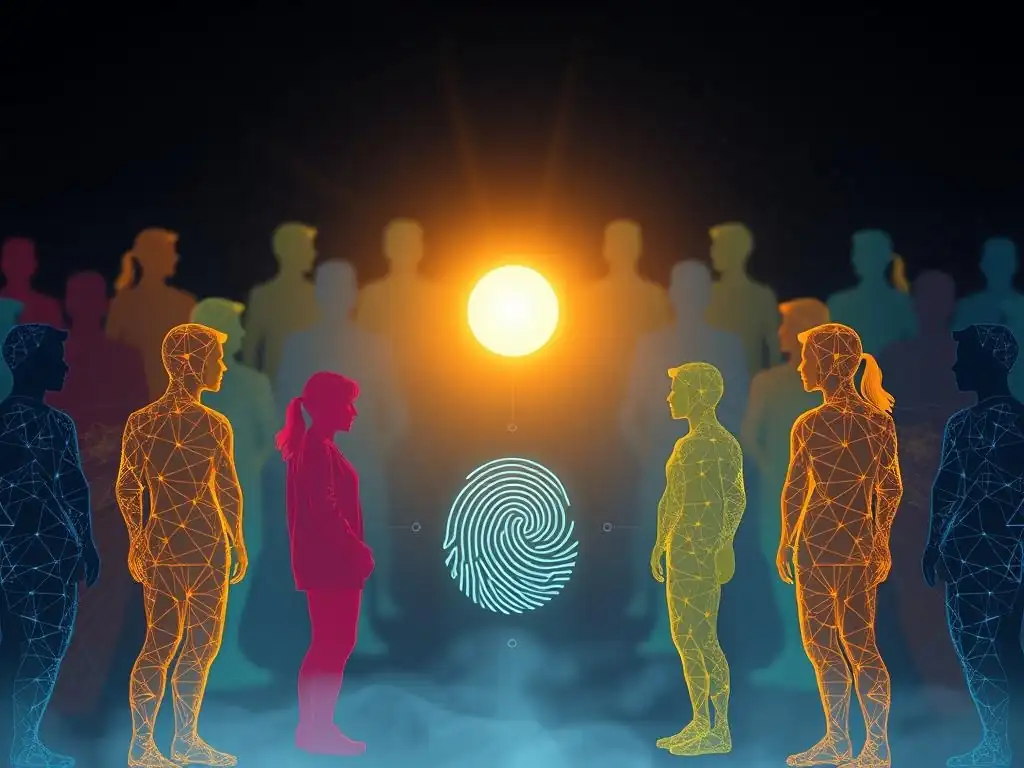
Welcome to Blockchain Trends, your guide to understanding the revolutionary impact of blockchain technology! Dive into the world beyond cryptocurrencies and discover how this powerful technology is reshaping industries.
Are you ready to unlock the future of digital ownership? This week, we delve into self-sovereign digital identity solutions, exploring how they're empowering individuals and challenging traditional power structures. Discover how you can reclaim control over your personal data – and why it matters. Intrigued? Read on to learn more about the groundbreaking applications and potential pitfalls of this vital area of blockchain innovation!
Democratizing Digital Identity: The Promise of Self-Sovereign Solutions for All
- Introduction: The Current State of Digital Identity and its Limitations
- Understanding Self-Sovereign Identity (SSI)
- The Benefits of Self-Sovereign Identity Solutions
- Self-Sovereign Identity Use Cases Across Industries
- Overcoming the Challenges of Implementing SSI
- The Future of Digital Identity: A World Powered by SSI
- Conclusion: Embracing the Democratization of Digital Identity
-
Frequently Asked Questions
- What exactly are self-sovereign digital identity solutions, and how do they differ from traditional digital identity systems?
- How can self-sovereign digital identity solutions empower individuals in areas like finance and healthcare?
- What are some of the key challenges hindering the widespread adoption of self-sovereign digital identity solutions?
- How does blockchain technology contribute to the implementation and security of self-sovereign digital identity solutions?
- What is the future outlook for self-sovereign digital identity solutions, and what impact could they have on the digital landscape?
- Final Reflection: Embracing Digital Autonomy
- Claim Your Digital Freedom: Embark on the Self-Sovereign Journey!
Introduction: The Current State of Digital Identity and its Limitations
The Challenges of Centralized Identity Systems
Current digital identity systems largely rely on centralized authorities and databases. This model creates significant vulnerabilities and challenges for both individuals and organizations. When a single entity holds vast amounts of sensitive personal data, it becomes a prime target for cyberattacks.
Data breaches affecting millions or even billions of user records are reported frequently, exposing individuals to identity theft, financial fraud, and a loss of privacy. For instance, a major breach in 2017 exposed sensitive data of approximately 147 million consumers, highlighting the immense risk associated with centralized data honeypots. Furthermore, individuals have minimal control over how their data is collected, stored, and shared by these numerous centralized entities, leading to a fragmented and insecure digital footprint.
Beyond security risks, centralized identity management fosters digital silos. Each online service or platform requires users to create and manage a separate identity, leading to password fatigue and inconsistent data profiles. This fragmentation makes it difficult for users to assert their identity consistently across different services and inhibits the seamless transfer of verified information.
Businesses also face substantial costs and inefficiencies in repeatedly verifying user identities across various platforms, often relying on outdated or cumbersome processes. The lack of a universally accepted, user-controlled digital identity framework limits innovation and creates friction in the digital economy, impacting everything from online commerce to accessing essential services.
Why Traditional Identity Management Fails to Serve Everyone
Traditional identity management systems, often based on physical documents like passports or driver's licenses and their digital equivalents, inherently exclude a significant portion of the global population. An estimated one billion people worldwide lack legally recognized proof of identity, hindering their access to critical services such as healthcare, education, financial services, and even political participation.
These systems often require physical presence and specific documentation that may be inaccessible to marginalized communities, refugees, or those in remote areas. The reliance on centralized issuance authorities also creates potential points of failure and can be susceptible to corruption or political influence, further limiting accessibility and trust.
Even for those with traditional identification, the current digital landscape fails to provide equitable access and control. Users are forced to share excessive personal data for basic online interactions, far beyond what is necessary. This oversharing increases privacy risks and fuels intrusive surveillance and targeted advertising practices.
The digital identities created within these systems are not portable; a verified identity on one platform cannot easily be used elsewhere without re-verification. This lack of portability and user control perpetuates a system where identity is rented from service providers rather than owned by the individual. Selfsovereign digital identity solutions aim to rectify these fundamental failings by placing the individual back at the center of their digital presence.
Understanding Self-Sovereign Identity (SSI)
Defining Self-Sovereign Digital Identity Solutions
Self-Sovereign Identity (SSI) represents a paradigm shift in how digital identity is managed, empowering individuals with control over their digital identifiers and data. At its core, SSI is a framework where an individual is the primary controller of their identity, rather than governments, corporations, or other third parties.
It leverages decentralized technologies to enable users to create, own, and manage their digital identity, deciding precisely what information to share, with whom, and when. Unlike traditional systems where identity attributes are stored in centralized databases controlled by various entities, in SSI, the user holds their verifiable credentials securely, often on a personal device.
In a self-sovereign digital identity solution, the individual uses a decentralized identifier (DID), a persistent and globally unique identifier that does not require a centralized registration authority. This DID is typically linked to a DID Document, which contains public keys and service endpoints necessary to establish secure interactions. The user then receives verifiable credentials (VCs) from trusted issuers (like a university issuing a degree credential or a bank issuing a proof of account credential).
These VCs are cryptographically signed by the issuer and held by the individual (the holder). When proof of an attribute is needed, the holder presents the VC to a verifier, who can cryptographically verify its authenticity against the issuer's public key and potentially check the status of the VC on a decentralized ledger without needing to contact the issuer directly or access a centralized database of credentials.
The Core Principles of SSI: Control, Portability, and Transparency
The foundation of SSI rests on several core principles designed to shift power from institutions to individuals. Foremost is Control: the individual owns and manages their digital identity, deciding which data to share and revoking access at any time. They are not dependent on a third party to exist or function online. This contrasts sharply with existing models where companies like social media platforms or email providers effectively act as identity providers, controlling access and data usage. With SSI, the individual is the identity provider.
Another key principle is Portability. An SSI identity is not tied to a specific platform or service. The decentralized identifiers and verifiable credentials can be used across any compatible service or application, allowing individuals to carry their verified identity attributes with them. This eliminates the need for redundant identity creation and verification processes.
Finally, Transparency is crucial. While sensitive data remains private and under user control, the underlying infrastructure and the verification process itself are open and verifiable. The methods for creating DIDs, issuing VCs, and verifying proofs are based on open standards (like those developed by the W3C), allowing anyone to understand how the system works and verify the integrity of a credential presentation without accessing private data. This transparency builds trust in the system itself.
How Distributed Ledger Technology Enables Self-Sovereign Identity
Distributed Ledger Technology (DLT), commonly known as blockchain, provides a crucial enabling layer for self-sovereign digital identity solutions. While it's a common misconception that sensitive personal data is stored on the blockchain in SSI, the DLT is primarily used for anchoring immutable, tamper-evident records related to the management of identities and credentials, not the credentials or data themselves. Specifically, DLT can be used to:
- Register Decentralized Identifiers (DIDs): A DLT can serve as a public, decentralized registry for DIDs and their associated DID Documents. When a user creates a DID, a hash or reference to their DID Document (which might be stored off-ledger) is recorded on the ledger. This provides a secure, decentralized anchor that proves the existence and control of the DID without relying on a central authority. The immutability of the ledger ensures that once registered, the DID's history and associated public keys are verifiable and resistant to censorship or tampering.
- Publish Credential Schemas and Revocation Registries: DLT can store public schemas that define the structure and type of verifiable credentials. This allows verifiers to understand and trust the format of a credential presented to them. More importantly, DLT can host revocation registries. If an issuer needs to revoke a credential (e.g., an employee leaves a company, invalidating their employment credential), they can record the revocation status on the ledger. Verifiers can then check this public registry to ensure the credential is still valid without needing to query the issuer directly or access private information about the credential holder. This decentralized revocation check is a vital component for the trustworthiness of verifiable credentials within self-sovereign identity solutions.
The Benefits of Self-Sovereign Identity Solutions
Enhanced User Privacy and Data Control with SSI
One of the most significant advantages of self-sovereign digital identity solutions is the dramatic improvement in user privacy and data control. In traditional systems, users are forced to share excessive personal information with numerous service providers. When creating an online account, for instance, a user might provide their full name, date of birth, address, and email, even if only proof of age or residency is required.
With SSI, the user receives verifiable credentials containing specific attributes (e.g., "over 18," "resident of California," "has a valid driver's license"). When interacting with a service, the user can selectively disclose only the necessary attribute or proof, without revealing the underlying data. This is often achieved using zero-knowledge proofs, where the verifier can confirm the truth of a statement (e.g., "this person is over 18") without learning any specific details (like the exact date of birth).
This granular control means individuals minimize their data footprint across the digital landscape. Instead of having their full identity profile replicated in dozens or hundreds of centralized databases, they hold their credentials securely on their own device (like a digital wallet). When proof is required, they initiate the sharing process and approve exactly what is shared.
For example, accessing an age-restricted website might only require presenting a "proof of age > 18" credential, not a full identity document. This significantly reduces the risk of mass data breaches exposing sensitive personal information, as the data is distributed and controlled by the individuals themselves, rather than concentrated in vulnerable central repositories.
Improved Security and Reduced Identity Theft Risks
Self-sovereign identity solutions inherently enhance security and mitigate the risks of identity theft compared to current systems. By decentralizing the storage of sensitive identity attributes and giving control to the individual, SSI eliminates the large, centralized honey pots of data that are attractive targets for cybercriminals. If a user's device is compromised, the attacker only gains access to that individual's credentials, not a database containing millions of identities.
Furthermore, SSI leverages strong cryptography. Verifiable credentials are cryptographically signed by the issuer, making them extremely difficult to forge. Verifiers can cryptographically confirm the authenticity and integrity of a presented credential using the issuer's public key, often anchored on a public ledger.
The use of decentralized identifiers (DIDs) also improves security. DIDs are designed to be persistent and globally unique, reducing ambiguity. Unlike usernames or email addresses tied to specific services, DIDs are controlled by the user.
If a credential is compromised or needs to be invalidated, the issuer can update its status on a decentralized revocation registry, which verifiers can check in real-time. This process is far more efficient and secure than relying on individuals to report stolen credentials or hoping centralized databases are updated promptly. Estimates suggest that global losses from identity fraud total billions of dollars annually; widespread adoption of SSI, with its focus on cryptographically secure, user-controlled credentials, has the potential to significantly reduce these figures by making it much harder for fraudsters to impersonate individuals using stolen or fabricated identities.
Greater Efficiency and Reduced Costs in Identity Verification
Implementing self-sovereign digital identity solutions can lead to substantial improvements in efficiency and reductions in costs for both individuals and organizations involved in identity verification processes. For individuals, SSI streamlines interactions by allowing them to reuse verified credentials across multiple services. Instead of repeatedly filling out forms and undergoing separate verification checks for banking, healthcare, employment, and government services, they can present existing verifiable credentials. This saves time and reduces the friction associated with onboarding to new platforms or accessing services.
For businesses and institutions, the benefits are even more pronounced. The cost of traditional Know Your Customer (KYC) and Anti-Money Laundering (AML) processes can be significant, involving manual document checks, third-party verification services, and ongoing monitoring. By accepting verifiable credentials issued by trusted third parties (like government agencies or accredited verification services), businesses can potentially reduce the time and cost associated with onboarding new customers.
Some pilot programs using self-sovereign identity solutions for KYC have reported potential reductions in onboarding time from days to minutes and cost savings estimated at 20-40% per verification. This efficiency gain allows businesses to scale more effectively and redirect resources currently spent on cumbersome verification processes towards core activities.
Empowering Individuals with True Digital Ownership
Perhaps the most profound benefit of self-sovereign digital identity solutions is the empowerment of individuals through true digital ownership. In the current digital paradigm, users are tenants of online platforms; their data, and effectively their digital identity within those platforms, are controlled by the service providers. SSI flips this model, making the individual the sovereign owner of their digital identity and its associated data attributes. This means individuals are no longer locked into specific platforms or dependent on intermediaries to manage their online presence.
This ownership extends beyond simple access. It includes the right to control how identity data is used, the ability to share it selectively, and the power to revoke access. For individuals in marginalized communities or those lacking traditional identification, SSI offers a pathway to establishing a verifiable digital identity, potentially unlocking access to essential services and economic opportunities previously unavailable.
A refugee, for example, might receive verifiable credentials for their skills or educational history from an aid organization, enabling them to seek employment or education in a new country, even without traditional documents. By providing a framework for universally verifiable, user-controlled identity, SSI fosters digital inclusion and grants individuals agency over their digital lives, moving towards a more equitable and democratic digital society.
Self-Sovereign Identity Use Cases Across Industries
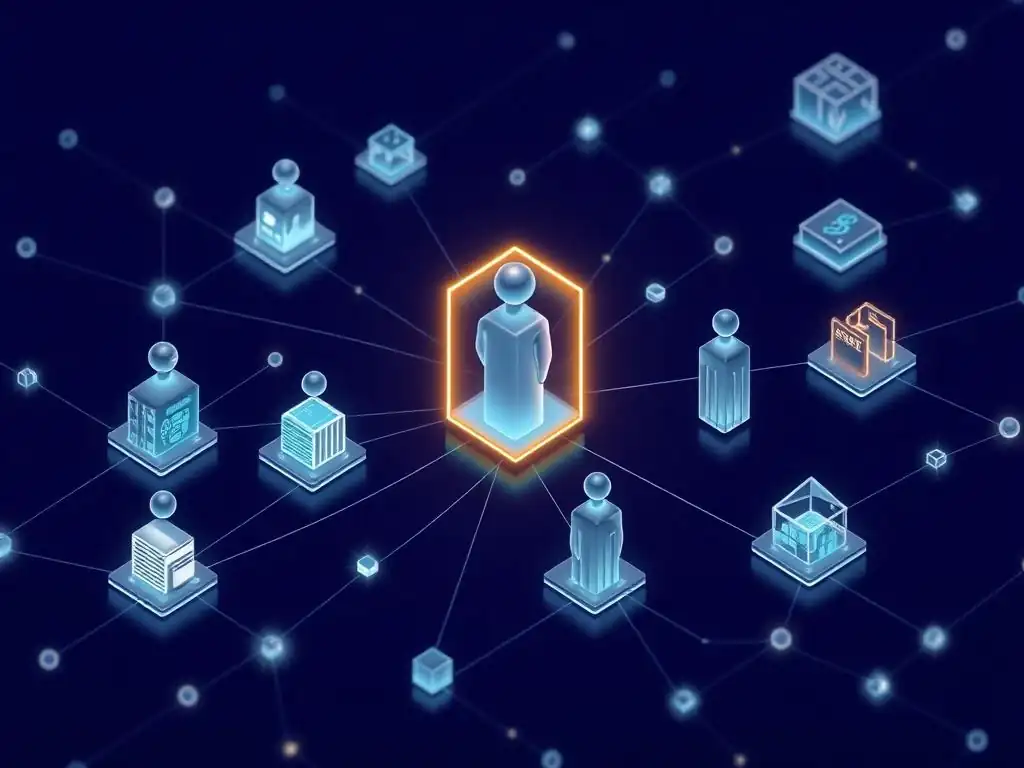
SSI in Healthcare: Secure and Patient-Controlled Medical Records
Self-sovereign identity solutions hold immense potential to revolutionize healthcare by placing patients in control of their medical data. Currently, patient records are fragmented across various healthcare providers, clinics, and hospitals, often stored in disparate, incompatible systems. This makes it difficult for patients to access their complete medical history and challenging for healthcare providers to get a full picture of a patient's health, especially in emergencies or when changing providers.
SSI enables patients to receive verifiable credentials for specific health events, diagnoses, treatments, and lab results from their healthcare providers. These credentials are then stored securely in the patient's SSI wallet.
With an SSI-based system, a patient could grant temporary, granular access to specific medical credentials (e.g., recent lab results, allergy information, vaccination records) to a new doctor, a specialist, or an emergency room physician, without sharing their entire medical history. The doctor could instantly verify the authenticity of these credentials using the issuer's (the previous provider's) public key.
This not only enhances patient privacy but also improves care coordination, reduces redundant tests, and potentially saves lives by ensuring critical information is available when needed. Pilot projects exploring SSI for health data sharing demonstrate the technical feasibility and the strong preference among patients for this level of control over their sensitive health information.
SSI in Finance: Streamlining KYC and AML Processes
The financial sector is heavily regulated, requiring robust Know Your Customer (KYC) and Anti-Money Laundering (AML) procedures. These processes are often manual, time-consuming, and costly, involving collecting and verifying numerous documents. Self-sovereign digital identity solutions offer a way to significantly streamline these operations while enhancing security and compliance. Financial institutions can issue verifiable credentials to customers after initial verification (e.g., "Verified Identity," "Proof of Address," "Accredited Investor Status"). These credentials are then held by the customer.
When a customer needs to open a new account or access a different financial service, they can present the relevant verifiable credentials from their SSI wallet. The new financial institution can cryptographically verify these credentials against the issuer's (the initial verifying institution's) public key. This eliminates the need for the customer to resubmit documents and for the institution to repeat the full verification process, potentially reducing onboarding time from several days to just minutes.
Furthermore, SSI can facilitate ongoing compliance by enabling institutions to request updated proofs or check revocation registries for credentials like proof of address or status. The adoption of SSI in finance could lead to substantial cost savings, estimated to be potentially billions globally, by increasing efficiency and reducing fraud vectors associated with traditional identity verification methods.
SSI in Government: Secure and Transparent Citizen Services
Governments are major issuers and verifiers of identity, from national IDs and passports to birth certificates and professional licenses. Self-sovereign identity solutions can transform the delivery of citizen services, making them more secure, efficient, and accessible. A government could issue verifiable credentials for a citizen's identity, driver's license, professional certifications, or eligibility for social services. These credentials would be held by the citizen in their SSI wallet.
Citizens could then use these credentials to interact with various government agencies or even private sector services (like opening a bank account or applying for a job) without presenting physical documents or sharing their full identity profile. For example, applying for a specific permit might only require presenting a "Proof of Residency" and "Proof of Professional License" credential, verified instantly. This reduces administrative burden, minimizes the risk of identity fraud in government interactions, and improves the user experience.
Furthermore, SSI can enhance transparency; while personal data remains private, the processes for issuing and verifying credentials can be built on open standards, fostering public trust in digital government services. Estonia, a leader in digital governance, is actively exploring SSI concepts to further enhance its e-residency and digital identity infrastructure, demonstrating the potential for nationwide adoption.
SSI in Supply Chain: Enhancing Traceability and Trust
In complex global supply chains, verifying the origin, authenticity, and chain of custody of goods is a significant challenge. Counterfeiting, fraud, and lack of transparency plague many industries. Self-sovereign identity solutions can bring unprecedented traceability and trust to supply chains by providing verifiable identities for entities (companies, vehicles, containers) and verifiable credentials for events and attributes within the chain.
Each participant in the supply chain – the raw material supplier, manufacturer, logistics provider, distributor, and retailer – could have a decentralized identifier (DID). As a product moves through the chain, each participant could issue verifiable credentials about their interaction with the product (e.g., "Received Batch X on Date Y," "Manufactured Product Z," "Shipped from Location A to B"). These credentials, held by the product itself (or a digital twin), create an immutable, verifiable history.
A consumer could scan a QR code on a product and, using SSI, verify the credentials issued by each party in the supply chain, confirming its authenticity and origin. This combats counterfeiting, ensures ethical sourcing, and builds consumer trust. For example, in the luxury goods market, SSI could provide verifiable proof of authenticity, combating a market estimated to cost the global economy billions annually due to fakes.
Overcoming the Challenges of Implementing SSI
Addressing Scalability and Interoperability Issues in SSI
While the promise of self-sovereign digital identity solutions is significant, widespread implementation faces technical hurdles, particularly concerning scalability and interoperability. SSI systems rely on decentralized identifiers (DIDs) and verifiable credentials (VCs), standards being developed by the W3C. For SSI to achieve global adoption, the underlying DLT or decentralized network used for anchoring DIDs and managing revocation must be capable of handling potentially billions of DIDs and trillions of credential status updates. While some DLTs offer high transaction throughput, ensuring the network remains decentralized and cost-effective at massive scale is an ongoing area of research and development.
Interoperability is equally critical. For SSI to be truly self-sovereign, an individual's DID and VCs must be usable across different networks, wallets, issuers, and verifiers, regardless of the specific SSI platform or technology stack they use. This requires strict adherence to open standards like the W3C DID and VC specifications.
While these standards are maturing, ensuring consistent implementation across diverse ecosystems and preventing vendor lock-in is essential. Efforts are underway by various foundations and consortia to promote interoperability through testing frameworks and collaboration, but achieving seamless interaction across all potential SSI implementations remains a complex challenge that requires continued focus from the global technical community.
Ensuring User Education and Adoption of Self-Sovereign Identity
A major non-technical challenge for self-sovereign digital identity solutions is user education and fostering widespread adoption. The concepts of DIDs, VCs, and decentralized control are fundamentally different from how most people currently manage their digital lives. Explaining these concepts in an accessible way and demonstrating the tangible benefits – enhanced privacy, security, and control – is crucial for encouraging users to switch from familiar, albeit flawed, centralized systems. The interface and user experience of SSI wallets and applications must be intuitive and as easy, if not easier, to use than existing login methods.
Mass adoption will also depend on a critical mass of trusted issuers and verifiers participating in the ecosystem. Individuals will only adopt SSI if they can receive useful verifiable credentials (like government IDs, employment records, or health data) and use them to access the services they need. This requires buy-in from governments, businesses, and institutions across various sectors.
Building this ecosystem is a 'chicken and egg' problem: users won't adopt without services, and services won't adopt without users. Targeted pilot programs and public-private partnerships demonstrating the value proposition of self-sovereign identity solutions in specific high-impact use cases (like accessing social services or simplifying healthcare interactions) are vital steps in driving initial adoption and building momentum.
The implementation of self-sovereign identity solutions must navigate complex and often outdated regulatory and legal frameworks designed for centralized identity systems. Laws governing data privacy (like GDPR or CCPA), electronic signatures, and identity verification (like KYC/AML regulations) need to be re-evaluated and potentially adapted to accommodate the decentralized nature of SSI. Questions arise regarding legal liability when a credential is misused, the legal standing of decentralized identifiers, and the requirements for verifiable credentials to be accepted as legal proof of identity or attributes in various jurisdictions.
Regulators need to understand how SSI works, particularly how data privacy is maintained while enabling verification. Clear guidelines are needed on how issuers should verify the initial identity of a credential holder, how verifiers should handle presented credentials, and how revocation should be managed in a legally compliant manner. International cooperation is also necessary to ensure that SSI credentials can be recognized and trusted across borders.
While organizations like the Decentralized Identity Foundation (DIF) and the Trust Over IP Foundation (ToIP) are working on governance frameworks and trust registries, legal clarity and regulatory acceptance are paramount for self-sovereign identity solutions to move from pilots to mainstream adoption. Engaging with policymakers early and often is essential to shape a regulatory environment that supports, rather than hinders, the growth of this transformative technology.
The Future of Digital Identity: A World Powered by SSI
The Role of Decentralized Technologies in the Evolution of Self-Sovereign Solutions
Decentralized technologies, particularly DLT but also decentralized file storage systems and peer-to-peer communication protocols, will continue to play a foundational role in the evolution and widespread adoption of self-sovereign digital identity solutions. As DLT platforms mature, offering greater scalability, lower transaction costs, and improved energy efficiency, they will become more suitable for anchoring the vast number of DIDs and credential status updates required for a global SSI system. Innovations in consensus mechanisms, layer-2 scaling solutions, and interoperability protocols between different ledgers will be critical.
Beyond DLT, technologies enabling secure, private, peer-to-peer communication are essential for the direct interaction between credential holders, issuers, and verifiers. Rather than routing interactions through centralized servers, SSI relies on secure channels where individuals can receive credentials and present proofs directly. Decentralized storage solutions could also play a role in securely storing DID Documents or large verifiable credentials off-ledger while maintaining data integrity and availability. The ongoing development and integration of these various decentralized technologies will strengthen the underlying infrastructure for SSI, making self-sovereign identity solutions more robust, scalable, and resilient against censorship and single points of failure.
The Impact of Verifiable Credentials on Self-Sovereign Identity Adoption
Verifiable Credentials (VCs) are not just a component of SSI; they are arguably the most critical element driving its practical application and potential for mass adoption. The ability to receive cryptographically secure, tamper-evident proofs of specific attributes (like age, employment status, educational degree, or professional license) from trusted issuers transforms the concept of digital identity from a monolithic profile into a collection of reusable, granular assertions. This shift enables selective disclosure, which is fundamental to enhancing privacy and user control – core value propositions of self-sovereign identity solutions.
As more institutions (governments, universities, employers, banks) begin issuing VCs for various attributes, the utility of SSI wallets for individuals will dramatically increase. A student could receive a VC for their degree, an employee for their work history, and a citizen for their proof of address. These VCs replace physical documents or cumbersome online verification processes.
The ease with which VCs can be shared and verified instantly and securely makes them highly attractive to verifiers, speeding up processes like job applications, loan applications, or accessing services. The growth of open standards for VCs (W3C Verifiable Credentials Data Model) and the development of interoperable VC wallets are accelerating the creation of a global ecosystem where verifiable credentials are the standard way to prove identity attributes in the digital world, paving the way for widespread self-sovereign identity adoption.
The Impact of SSI on the Broader Digital Economy
The widespread adoption of self-sovereign digital identity solutions has the potential to fundamentally reshape the broader digital economy. By providing a trusted, secure, and efficient layer for identity and verifiable attributes, SSI can unlock new business models and reduce friction in existing ones. The costs associated with identity verification and fraud are significant burdens for online businesses.
SSI can drastically reduce these costs, enabling businesses to onboard customers faster and more securely, potentially leading to increased conversion rates and reduced operational expenses. This is particularly impactful for industries like e-commerce, online gaming, and the sharing economy, where identity verification is crucial.
Furthermore, SSI fosters trust in digital interactions. Consumers are more likely to engage with online services if they feel their privacy is protected and their identity is secure. The ability for individuals to control and selectively share their data builds a stronger foundation of trust between users and service providers.
SSI also enables the development of truly personalized services based on user-consented data sharing, rather than intrusive data collection. As verifiable credentials become commonplace, new marketplaces for verified attributes could emerge, creating economic opportunities. Ultimately, by empowering individuals with control over their digital identity, self-sovereign identity solutions can create a more equitable, efficient, and trustworthy digital economy beneficial to both individuals and businesses.
Conclusion: Embracing the Democratization of Digital Identity
The Potential of Self-Sovereign Identity to Transform Society
Self-sovereign digital identity solutions represent a profound opportunity to democratize digital identity, shifting power from centralized institutions back to the individual. By leveraging decentralized technologies and open standards like Decentralized Identifiers and Verifiable Credentials, SSI enables a future where individuals own and control their digital presence, deciding precisely how, when, and with whom they share their personal information. This shift has the potential to address many of the critical failings of current identity systems, including pervasive data breaches, lack of privacy, digital exclusion, and inefficient verification processes.
The implications of widespread SSI adoption are transformative across multiple sectors. In healthcare, it promises patient-controlled, portable medical records. In finance, it offers streamlined, secure KYC processes. For governments, it enables efficient and transparent citizen services.
Across industries, from supply chain to social media, self-sovereign identity solutions can build a new layer of trust, security, and efficiency. While challenges related to scalability, interoperability, user adoption, and regulation remain, the foundational principles and technological building blocks are in place. Embracing SSI is not merely a technical upgrade; it is a step towards a more equitable, privacy-preserving, and user-centric digital society, empowering individuals with true ownership and control over their most valuable digital asset: their identity.
Frequently Asked Questions
What exactly are self-sovereign digital identity solutions, and how do they differ from traditional digital identity systems?
Self-sovereign identity (SSI) puts individuals in control of their own digital identities, unlike traditional systems where identity is managed by centralized authorities. This allows users to manage their data and share it selectively, granting them greater privacy and control.
How can self-sovereign digital identity solutions empower individuals in areas like finance and healthcare?
SSI allows individuals to securely share verified credentials, such as proof of age or medical records, directly with service providers. This reduces reliance on third-party intermediaries, streamlines processes like KYC/AML (Know Your Customer/Anti-Money Laundering), and improves data privacy.
What are some of the key challenges hindering the widespread adoption of self-sovereign digital identity solutions?
Key challenges include the need for user education, the development of interoperable standards across different platforms, and addressing concerns about data security and privacy in a decentralized environment.
How does blockchain technology contribute to the implementation and security of self-sovereign digital identity solutions?
Blockchain provides a decentralized and immutable ledger for storing and verifying identity credentials, enhancing security and transparency. This allows for tamper-proof records and verifiable claims, crucial for establishing trust.
What is the future outlook for self-sovereign digital identity solutions, and what impact could they have on the digital landscape?
SSI has the potential to revolutionize how we interact online, fostering greater trust, privacy, and control. Its adoption could lead to more secure and efficient digital interactions across various sectors, ultimately democratizing digital identity for everyone.
Final Reflection: Embracing Digital Autonomy
The exploration of self-sovereign digital identity solutions reveals a profound shift in power dynamics, moving from centralized control to individual ownership. This transition is not merely a technological upgrade, but a fundamental reimagining of how we interact with the digital world, offering the potential to empower individuals and foster a more equitable and secure online environment. The promise of verifiable credentials and decentralized identifiers heralds a future where individuals control their data, mitigating the risks of data breaches and identity theft that plague our current systems.
The journey towards self-sovereign identity is not without its challenges, requiring collaboration across industries and a commitment to user education. However, the potential benefits – increased privacy, enhanced security, and greater individual autonomy – are too significant to ignore. The ability to control our digital footprint is not just a convenience, but a fundamental right in an increasingly digital world. Identity is not just a collection of attributes; it's the essence of who we are. Self-sovereign identity empowers individuals to own and control that essence in the digital realm.
This quote encapsulates the core principle driving the movement, highlighting the importance of empowering individuals to manage their digital identities with agency and control.
As we stand at the cusp of this digital revolution, let us embrace the potential of self-sovereign identity solutions. Consider how you can take control of your digital footprint, explore the available tools and technologies, and advocate for policies that promote individual autonomy in the digital age. The future of digital identity is not predetermined; it is being shaped by our choices and actions today. Let us strive to create a future where everyone has the power to own and control their digital identity, fostering a more inclusive, secure, and equitable digital world for all.
Claim Your Digital Freedom: Embark on the Self-Sovereign Journey!
Thank you for exploring the potential of self-sovereign identity and its power to democratize digital identity with us. You’ve gained valuable insights into how blockchain can empower individuals to take control of their data. Are you ready to take the next step toward a more empowering digital future?
Here’s how you can get started right now:
- Explore self-sovereign identity solutions by finding a pilot program or platform that fits your needs and actively testing the technology. Hands-on experience is invaluable.
- Join the conversation by participating in online forums, conferences, or local groups dedicated to SSI and blockchain identity solutions. Share your knowledge and connect with other digital identity pioneers.
- Think about how SSI can be applied in your community or industry. What problems could it solve? What opportunities could it unlock? Document your thoughts and share them with us!
How will you leverage the power of self-sovereign identity to shape a more equitable and empowering digital landscape? Share your ideas below!
Leave a Reply