
The Future of Healthcare Interoperability: Blockchain as the Unifying Layer


Welcome to Blockchain Trends, your guide to understanding the revolutionary impact of blockchain beyond the hype.
Imagine a world where patient data flows seamlessly and securely between healthcare providers, empowering better care and outcomes. Our deep dive into blockchain healthcare interoperability solutions benefits unveils how this technology is paving the way for a truly connected and efficient healthcare ecosystem. Prepare to explore the transformative potential – the possibilities may surprise you! Intrigued? Keep reading to discover how blockchain is reshaping the future of healthcare.
Revolutionizing Healthcare Interoperability: Blockchain as the Unifying Layer
- Introduction: Addressing Healthcare Interoperability Challenges with Blockchain
- Understanding Healthcare Interoperability Issues
- Blockchain Technology: A Solution for Healthcare Data Integration
- Blockchain Healthcare Interoperability Solutions: Benefits and Applications
- Real-World Examples of Blockchain Implementation in Healthcare
- Challenges and Considerations for Blockchain Adoption in Healthcare
- The Future of Blockchain in Healthcare: Trends and Predictions
- Conclusion: The Transformative Potential of Blockchain for Healthcare Interoperability
-
Frequently Asked Questions
- How can blockchain improve healthcare interoperability?
- What are the key benefits of blockchain healthcare interoperability solutions?
- What role does blockchain play in DeFi (Decentralized Finance) within the healthcare sector?
- What are some of the regulatory challenges surrounding blockchain adoption in healthcare?
- Beyond data sharing, what other potential applications of blockchain exist in healthcare?
- Final Reflection: Embracing the Interconnected Future of Healthcare
- Unlock Healthcare's Future: Embrace Interoperability!
Introduction: Addressing Healthcare Interoperability Challenges with Blockchain
Healthcare interoperability, the seamless and secure exchange of electronic health information (EHI) between different systems and providers, remains a significant challenge globally. Despite advancements in electronic health records (EHRs), patient data is often fragmented across disparate systems, hindering effective care coordination, increasing administrative burdens, and potentially compromising patient safety. This lack of interconnectedness leads to inefficiencies, redundant tests, and delays in diagnosis and treatment.
The complexity of the healthcare ecosystem, involving hospitals, clinics, laboratories, pharmacies, payers, and patients, necessitates a robust and secure framework for data sharing. Traditional methods have struggled to build trust and ensure data integrity across these varied stakeholders. Exploring innovative approaches is crucial to unlock the full potential of digital health, and blockchain technology is emerging as a promising candidate to address these deep-seated interoperability issues, offering a path toward a more connected, efficient, and patient-centric healthcare future.
Understanding Healthcare Interoperability Issues
Healthcare data is notoriously difficult to share across different organizations. This fundamental problem stems from a combination of technical, semantic, and organizational barriers that have persisted for decades, despite significant investment in health IT. These issues directly impact the quality and cost of care, creating a pressing need for effective blockchain healthcare interoperability solutions benefits.
The inability of disparate systems to communicate effectively results in delayed access to critical patient information, leading to suboptimal clinical decision-making and potentially adverse events. Addressing these underlying problems is the first step towards realizing the transformative potential of blockchain in healthcare data exchange.
Data Silos and Fragmented Information in Healthcare
One of the most pervasive issues in healthcare interoperability is the existence of data silos. Patient information is frequently locked within the specific EHR system of a hospital, clinic, or lab, often based on proprietary software that does not easily communicate with other systems. This means a patient's medical history, test results, and treatment plans may be scattered across multiple providers they have visited.
This fragmentation leads to a fragmented view of the patient's health journey. Clinicians may lack access to essential historical data, forcing them to rely on patient recall or order duplicate tests, which increases costs and can be inconvenient or even harmful to the patient. A study cited by the ONC in 2020 noted that information blocking, a practice contributing to data silos, remained a significant challenge, impacting patient care and the ability to share EHI effectively.
Lack of Standardized Data Exchange Protocols
Even when healthcare systems are willing to share data, they often struggle due to a lack of universally adopted and strictly enforced data exchange protocols. While standards like HL7 (Health Level Seven) exist, their implementation varies widely, and older versions or custom modifications can create significant compatibility issues. This "semantic" interoperability challenge means that even if data is technically transferred, the receiving system may not be able to correctly interpret or use the information.
The absence of seamless, standardized communication channels necessitates complex and costly integration efforts. Healthcare organizations often rely on point-to-point connections or data aggregation services, which are expensive to maintain and scale. This technical and semantic disconnect is a major hurdle that blockchain healthcare interoperability solutions benefits aim to overcome by providing a neutral, secure, and verifiable layer for data exchange.
Security and Privacy Concerns in Traditional Healthcare Systems
Protecting sensitive patient health information (PHI) is paramount, and traditional healthcare systems face significant security and privacy challenges. Centralized databases are attractive targets for cyberattacks, and data breaches in healthcare are increasingly common and costly. According to IBM's 2023 Cost of a Data Breach Report, the healthcare industry had the highest average cost of a data breach for the 13th consecutive year, reaching \$10.93 million.
Ensuring data privacy and complying with regulations like HIPAA in the United States or GDPR in Europe adds further complexity to data sharing. Healthcare organizations are often hesitant to share data due to fears of breaches or non-compliance penalties. This creates a dilemma: the need to share data for better care versus the imperative to protect it, a tension that blockchain's inherent security features are designed to alleviate.
Blockchain Technology: A Solution for Healthcare Data Integration
Blockchain, a distributed, immutable ledger technology, offers a fundamentally different approach to managing and sharing data. Its core principles of decentralization, transparency (of transactions, not necessarily data content), immutability, and cryptographic security make it uniquely suited to address many of the long-standing issues plaguing healthcare interoperability. By creating a shared, tamper-evident record of data transactions, blockchain can foster trust and enable secure, efficient data exchange across the fragmented healthcare ecosystem.
The application of blockchain in healthcare goes beyond simple data storage; it provides a framework for managing access, verifying identities, and tracking the provenance of information. This foundational layer can support various blockchain healthcare interoperability solutions benefits, from improving data security to enabling new models of patient-centric data control.
How Blockchain Enhances Healthcare Data Security
Blockchain enhances data security through several mechanisms. Firstly, data stored or referenced on a blockchain is typically encrypted, protecting it from unauthorized access. Secondly, the decentralized nature means there is no single point of failure or central database to target, making it significantly harder for malicious actors to compromise the entire system. Data is distributed across multiple nodes, and compromising one node does not affect the integrity of the ledger as a whole.
Furthermore, the immutable nature of the blockchain ensures that once a transaction (like recording a data access event or a data hash) is added to the ledger, it cannot be altered or deleted without consensus from the network participants. This provides a robust audit trail, making it easy to track who accessed what data and when, significantly improving accountability and deterring unauthorized activity. Cryptographic hashes are used to link blocks together, ensuring the integrity of the chain.
Blockchain for Secure and Efficient Healthcare Data Exchange
Blockchain facilitates secure and efficient data exchange by acting as a secure index or pointer to patient data stored off-chain, or by storing metadata and access permissions directly on the chain. Instead of sending large, sensitive files back and forth, healthcare providers can share encrypted data or hashes of data, recorded on the blockchain. Only authorized parties with the correct private keys can decrypt and access the actual information.
This approach reduces the risk associated with transmitting sensitive data across networks. The blockchain acts as a trusted layer for verifying identities and managing permissions, ensuring that only authorized entities can request access to specific patient records. This streamlines the process compared to traditional methods that might involve manual requests, faxes, or insecure electronic transfers, paving the way for more effective blockchain healthcare interoperability solutions benefits.
Decentralized Identity Management in Healthcare Using Blockchain
Managing patient and provider identities securely across different healthcare systems is a complex task. Blockchain enables decentralized identity management, giving individuals more control over their own digital identities and health records. Instead of relying on each provider to maintain a separate record of identity and permissions, a patient could have a unique, verifiable digital identity linked to their health data access rights on a blockchain.
This allows patients to grant or revoke access to their health information to specific providers or researchers directly through their digital identity wallet. This patient-centric approach not only enhances privacy and control but also simplifies the process for providers needing to verify a patient's identity and access permissions across different organizations. It shifts the paradigm from institution-centric data control to individual control, a key component of future blockchain healthcare interoperability solutions.
Blockchain Healthcare Interoperability Solutions: Benefits and Applications
The implementation of blockchain in healthcare interoperability offers a multitude of tangible benefits for patients, providers, payers, and researchers. By addressing the fundamental challenges of data silos, security, and trust, blockchain enables a more connected, efficient, and patient-empowered healthcare ecosystem. These blockchain healthcare interoperability solutions benefits are poised to transform how health information is managed and utilized.
From improving the accuracy of patient records to streamlining complex administrative processes like claims, the applications of blockchain technology in this domain are broad and impactful. Realizing these benefits requires careful planning, collaboration, and a focus on specific use cases where blockchain's unique properties add significant value.
Enhanced Data Accuracy and Reliability
Blockchain's immutable ledger ensures that once data (or a reference to data) is recorded, it cannot be changed without detection. This inherent property significantly enhances the accuracy and reliability of healthcare data. When a provider accesses a patient's record via a blockchain-based system, they can be confident that they are viewing the most up-to-date and untampered version of the information that has been authorized for sharing.
This reduces errors caused by fragmented or outdated records, which can lead to misdiagnoses or inappropriate treatments. The clear audit trail also increases accountability among data contributors. For example, if a lab uploads a test result, that transaction is recorded and verifiable, minimizing the risk of data being altered or lost before it reaches the clinician. This foundational benefit underpins many other blockchain healthcare interoperability solutions benefits.
Improved Patient Care Coordination
Effective patient care coordination, especially for individuals with chronic conditions or those seeing multiple specialists, relies heavily on timely access to comprehensive patient data. Blockchain enables different providers involved in a patient's care journey – from primary care physicians to specialists, hospitals, and rehabilitation centers – to securely access and share relevant information.
By providing a unified, albeit distributed, view of the patient's health history, medications, allergies, and treatment plans, blockchain facilitates better-informed decision-making and seamless transitions between care settings. This reduces redundant procedures, minimizes potential drug interactions, and ensures that all members of the care team are working with the same information, ultimately leading to improved patient outcomes. This is a core benefit of blockchain healthcare interoperability solutions.
Streamlined Claims Processing and Reimbursement
Healthcare claims processing is notoriously complex, costly, and prone to errors and fraud. In 2020, administrative costs, including billing and insurance-related activities, accounted for a significant portion of healthcare expenditure in the US, estimated to be hundreds of billions of dollars annually. Discrepancies in patient data, lack of transparency, and manual processes contribute to delays and denials.
Blockchain can streamline this process by providing a shared, transparent, and immutable record of patient visits, treatments, and services rendered. Smart contracts can automate verification steps, such as checking patient eligibility or pre-authorization status, based on verifiable data recorded on the blockchain. This reduces administrative overhead, accelerates reimbursement cycles, minimizes disputes, and combats fraud, representing a significant administrative benefit of blockchain healthcare interoperability solutions.
Supply Chain Management for Pharmaceuticals
Managing the pharmaceutical supply chain from manufacturer to patient is critical for ensuring drug authenticity, preventing counterfeiting, and tracking recalls. Blockchain's ability to create a transparent, tamper-evident ledger makes it ideal for tracking the provenance of drugs. Each movement and handling of a pharmaceutical product can be recorded on the blockchain, creating an immutable history.
This provides stakeholders – including manufacturers, distributors, pharmacies, and regulators – with verifiable information about a drug's origin, handling conditions, and ownership transfer. This enhances patient safety by ensuring they receive legitimate and properly handled medications. It also aids in quickly identifying and isolating counterfeit drugs or managing product recalls more efficiently, a crucial application among blockchain healthcare interoperability solutions benefits.
Real-World Examples of Blockchain Implementation in Healthcare
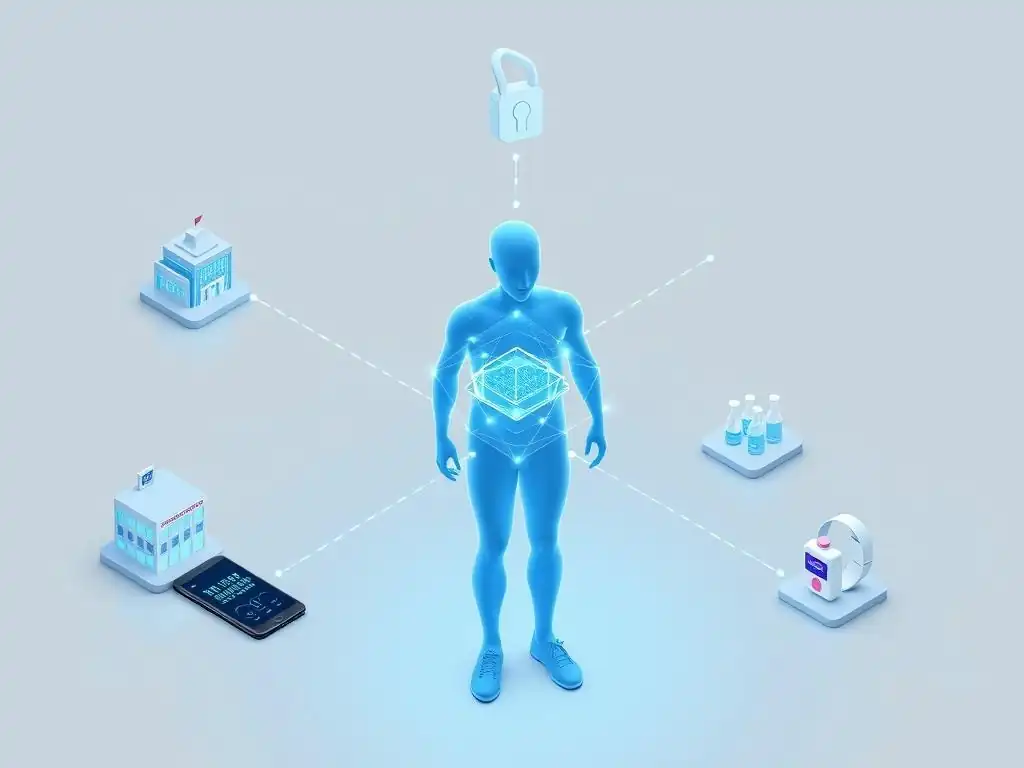
While still in relatively early stages compared to other industries, several organizations and initiatives are exploring and implementing blockchain technology to address specific challenges within healthcare, particularly around data sharing and interoperability. These real-world examples provide insight into the practical application and potential of blockchain healthcare interoperability solutions benefits.
These projects demonstrate that blockchain is moving beyond theoretical discussions and proof-of-concepts into tangible deployments aimed at solving concrete problems within the complex healthcare landscape. They highlight the potential for the technology to create more connected and trustworthy healthcare systems.
Case Study 1: MedChain - Secure Patient Data Sharing
MedChain (now part of Aimedis) was an early project focused on leveraging blockchain to create a secure and patient-controlled platform for sharing medical data. The concept centered around giving patients ownership of their health records, stored off-chain but indexed and managed through a blockchain. Patients could grant granular access permissions to healthcare providers, researchers, or family members via a secure interface.
The blockchain recorded all access requests and grants, creating a transparent and immutable audit trail. This aimed to empower patients while ensuring that providers could access necessary information securely and efficiently, addressing the data silo problem and enhancing privacy control. While specific adoption metrics are still evolving, the project showcased a viable model for patient-centric blockchain healthcare interoperability solutions.
Case Study 2: Change Healthcare - Claims Processing Efficiency
Change Healthcare, a major player in healthcare technology and analytics, has been actively exploring blockchain for streamlining healthcare administrative processes, particularly claims management. Their blockchain-based network aimed to improve the accuracy and transparency of claims processing by providing a shared, auditable ledger for tracking the status and history of transactions between payers and providers.
By recording key steps like eligibility checks, prior authorizations, and claim submissions on a blockchain, the network sought to reduce manual reconciliation, decrease denials due to data discrepancies, and accelerate payment cycles. While precise figures on efficiency gains are proprietary, the initiative demonstrated how blockchain could tackle the costly inefficiencies inherent in traditional claims processing, highlighting another area where blockchain healthcare interoperability solutions benefits are being pursued.
Challenges and Considerations for Blockchain Adoption in Healthcare
Despite the significant potential and the compelling blockchain healthcare interoperability solutions benefits, the widespread adoption of blockchain in healthcare faces several substantial challenges. These hurdles are not unique to healthcare but are particularly complex given the industry's stringent regulatory environment, reliance on legacy systems, and the critical nature of the data involved.
Overcoming these challenges requires careful planning, collaboration between stakeholders, investment in infrastructure, and a phased approach to implementation. Addressing these considerations is crucial for successful and scalable blockchain deployments in healthcare.
Regulatory Compliance and Legal Framework
Navigating the complex landscape of healthcare regulations, such as HIPAA in the US or GDPR in Europe, is a major challenge for blockchain implementers. While blockchain can enhance security and privacy, ensuring that a specific implementation meets all legal requirements regarding data storage, access, and patient rights (like the right to be forgotten, which clashes with blockchain's immutability) requires careful design.
The legal framework around blockchain and digital assets is still evolving, creating uncertainty for healthcare organizations. Determining who is responsible for data governance, how consent is managed on a distributed ledger, and how to handle regulatory audits in a blockchain environment are critical questions that need clear answers and potentially new legal interpretations or guidelines.
Scalability and Performance Limitations
Current blockchain technologies, particularly public blockchains, can face scalability and performance limitations when dealing with the immense volume and velocity of data generated in healthcare. Processing millions of transactions (e.g., patient visits, lab results, prescriptions) in real-time across a large network can be challenging for some blockchain architectures.
While enterprise-focused or private/consortium blockchains offer better performance and scalability than public ones like Bitcoin or Ethereum (before recent upgrades), they may still require significant infrastructure investment and careful design to handle the demands of a large healthcare system. Finding the right balance between decentralization, security, and performance is crucial for practical blockchain healthcare interoperability solutions.
Interoperability with Existing Healthcare Systems
Ironically, one of the challenges for blockchain in healthcare is its own interoperability with existing, often legacy, healthcare IT systems. Hospitals and clinics have invested heavily in their current EHRs and other software, and integrating a new blockchain layer on top of or alongside these systems is complex and costly.
Data needs to flow seamlessly between the legacy systems where it originates and resides, and the blockchain layer that manages access and provides an audit trail. This requires robust integration strategies, APIs, and middleware to bridge the gap between traditional databases and blockchain networks. Ensuring smooth coexistence and data flow is essential for the practical implementation of blockchain healthcare interoperability solutions.
The Future of Blockchain in Healthcare: Trends and Predictions
The trajectory of blockchain adoption in healthcare suggests a future where the technology plays an increasingly vital role in enhancing interoperability, security, and efficiency. Several trends indicate how blockchain will evolve and integrate within the healthcare ecosystem, moving beyond initial proofs-of-concept to become a foundational element of digital health infrastructure.
These trends point towards a future where data is more accessible (with proper authorization), processes are more transparent, and patients have greater control over their health information. The convergence with other emerging technologies will further amplify the potential of blockchain healthcare interoperability solutions benefits.
The Rise of Decentralized Healthcare Applications (dApps)
The future will likely see a rise in decentralized applications (dApps) built on blockchain platforms specifically for healthcare use cases. These dApps could range from platforms for secure health data exchange and telemedicine services to applications for managing clinical trial data or tracking personal wellness information.
Because dApps run on a decentralized network, they can offer enhanced security, transparency, and resilience compared to traditional centralized applications. They also have the potential to disintermediate third parties, putting more control and value directly in the hands of patients and providers. This trend is closely linked to the development of robust blockchain healthcare interoperability solutions.
Increased Adoption of Blockchain-as-a-Service (BaaS) Platforms
For many healthcare organizations, building and maintaining their own blockchain infrastructure from scratch is prohibitively complex and expensive. This is driving the trend towards increased adoption of Blockchain-as-a-Service (BaaS) platforms offered by major cloud providers and specialized blockchain companies.
BaaS platforms provide managed blockchain networks and tools, making it easier for healthcare organizations to develop, deploy, and scale blockchain applications without needing deep expertise in underlying blockchain technology. This lowers the barrier to entry and accelerates the implementation of blockchain healthcare interoperability solutions, allowing organizations to focus on the specific healthcare use case rather than the infrastructure.
The Convergence of Blockchain, AI, and IoT in Healthcare
The most transformative potential lies in the convergence of blockchain with other cutting-edge technologies like Artificial Intelligence (AI) and the Internet of Things (IoT). IoT devices (wearables, remote monitoring sensors) generate vast amounts of health data; blockchain can provide a secure, immutable ledger for managing and verifying the integrity of this data.
AI algorithms require large, clean, and reliable datasets to provide accurate insights for diagnostics, drug discovery, or personalized medicine. Blockchain can ensure the provenance and trustworthiness of the data used by AI, and potentially manage consent for data usage in a privacy-preserving manner. This synergy between blockchain, AI, and IoT promises to unlock unprecedented capabilities in healthcare, further solidifying the importance of robust blockchain healthcare interoperability solutions.
Conclusion: The Transformative Potential of Blockchain for Healthcare Interoperability
The persistent challenges of data silos, security risks, and lack of standardization have long plagued healthcare interoperability. These issues impede efficient care delivery, increase costs, and limit the potential of digital health innovations. Blockchain technology, with its inherent properties of decentralization, immutability, and cryptographic security, offers a powerful new paradigm for addressing these fundamental problems.
By providing a trusted, transparent, and secure layer for managing and exchanging health information, blockchain can unlock significant blockchain healthcare interoperability solutions benefits. From enhancing data accuracy and improving patient care coordination to streamlining administrative processes and securing the pharmaceutical supply chain, the potential applications are vast and impactful.
While challenges related to regulation, scalability, and integration with legacy systems remain, ongoing developments and real-world implementations demonstrate that blockchain is poised to become a foundational technology for a more connected, efficient, and patient-centric future in healthcare. The journey towards truly seamless healthcare interoperability is complex, but blockchain provides a promising path forward.
Frequently Asked Questions
How can blockchain improve healthcare interoperability?
Blockchain offers a secure and transparent way to share patient data across different healthcare providers, creating a single source of truth. This reduces data silos and improves data accuracy.
What are the key benefits of blockchain healthcare interoperability solutions?
The primary benefits include enhanced data security, improved patient data management, and reduced administrative costs through automation and streamlined processes.
What role does blockchain play in DeFi (Decentralized Finance) within the healthcare sector?
While still developing, blockchain enables DeFi applications in healthcare by facilitating secure and transparent payment systems, potentially streamlining insurance claims and reducing fraud.
What are some of the regulatory challenges surrounding blockchain adoption in healthcare?
Concerns around data privacy, compliance with regulations like HIPAA, and the lack of clear regulatory frameworks are significant hurdles hindering widespread adoption.
Beyond data sharing, what other potential applications of blockchain exist in healthcare?
Beyond interoperability, blockchain could improve supply chain management for pharmaceuticals, enhance clinical trial data management, and provide a secure platform for patient identity verification.
Final Reflection: Embracing the Interconnected Future of Healthcare
The promise of seamless data exchange in healthcare is no longer a distant dream, but a tangible possibility fueled by innovations like blockchain. As we've explored the potential of blockchain healthcare interoperability solutions benefits, it's clear that the true value lies not just in technological advancement, but in the improved patient outcomes and enhanced efficiency that these solutions can unlock. The current fragmented state of healthcare data demands a unifying force, and blockchain offers a compelling pathway towards achieving that goal.
The journey towards a truly interoperable healthcare system is far from over, but the potential impact on individual lives is profound. Witnessing the growing momentum behind blockchain adoption in healthcare inspires hope for a future where patients have greater control over their health data, and providers can make more informed decisions. The best way to predict the future is to create it.
- Peter Drucker. This quote resonates deeply as we consider the proactive role we must all play in shaping the future of healthcare interoperability.
Now, as you reflect on the potential of blockchain to revolutionize healthcare, consider your own role in this transformation. How can you advocate for greater data security and patient empowerment? How can you support the development and implementation of interoperable solutions that prioritize patient well-being? The future of healthcare is being written today, and your contribution, no matter how small, can help shape a healthier, more connected world for all.
Unlock Healthcare's Future: Embrace Interoperability!
Thank you for exploring how blockchain technology can transform healthcare interoperability. You've gained insights into creating a more connected and efficient healthcare system. Ready to take the next step?
Here's how you can lead the way:
- Support a pilot project at your organization. Identify a specific use case where blockchain can enhance data sharing and improve patient outcomes.
- Explore practical applications by researching local startups leveraging blockchain in healthcare and sharing your discoveries.
- Join the discussion! Share this article with your network and inspire conversations about how blockchain can address current interoperability challenges.
What interoperability challenge are you most eager to see blockchain solve? Share your thoughts in the comments below!
Leave a Reply