
The Virtual Real Estate Market in Decentralized Metaverses: Trends and Predictions


Welcome to Blockchain Trends, your go-to source for unraveling the transformative power of blockchain. Beyond the hype of cryptocurrencies, we delve into the real-world applications reshaping industries.
Are you ready to explore the next frontier of digital ownership? In this article, we dive deep into the fascinating world of decentralized metaverse real estate trends, uncovering emerging patterns and future predictions. Discover how blockchain is revolutionizing virtual land ownership and what it means for the future of the metaverse. Intrigued? Let's explore this groundbreaking intersection of blockchain and virtual reality.
The Virtual Real Estate Market in Decentralized Metaverses: Trends and Predictions
- Introduction: Understanding the Rise of Decentralized Metaverse Real Estate
- Current Trends Shaping the Decentralized Metaverse Real Estate Market
- Decentralized Metaverse Platforms: A Comparative Analysis of Real Estate Opportunities
- Factors Influencing Decentralized Metaverse Real Estate Value
- Predictions for the Future of Decentralized Metaverse Real Estate
- Risks and Challenges in the Decentralized Metaverse Real Estate Market
- Investing in Decentralized Metaverse Real Estate: A Guide for Beginners
- Conclusion: The Future of Virtual Property in Decentralized Worlds
-
Frequently Asked Questions
- What are the key drivers fueling the growth of the decentralized metaverse real estate market?
- How does owning real estate in a decentralized metaverse differ from owning traditional real estate?
- What are some of the emerging decentralized metaverse real estate trends that investors should be aware of?
- What are the potential risks and challenges associated with investing in decentralized metaverse real estate?
- How might regulations impact the future of decentralized metaverse real estate transactions and ownership?
- Final Reflection: Navigating the Untamed Frontier of Digital Land
- Unveil Your Metaverse Real Estate Empire!
Introduction: Understanding the Rise of Decentralized Metaverse Real Estate
The Convergence of Blockchain, Metaverse, and Virtual Land Ownership
The burgeoning decentralized metaverse real estate market represents a fascinating intersection of cutting-edge technologies. At its core lies blockchain, the distributed ledger technology that enables secure, transparent, and immutable ownership of digital assets. This technology provides the foundation for virtual land ownership within persistent, shared digital worlds – the metaverse. Unlike traditional online environments where digital assets are often owned by a central entity, blockchain allows users to truly own virtual parcels of land, represented as non-fungible tokens (NFTs). These NFTs verify unique ownership, making virtual land a tradeable and potentially valuable asset.
This convergence has fueled a significant shift in how we perceive digital space. Early metaverse platforms like Second Life offered virtual property, but ownership was ultimately controlled by the platform operator. Decentralized metaverses, such as Decentraland and The Sandbox, leverage blockchain to empower users with genuine ownership rights over their virtual property.
This paradigm shift is critical to understanding the current decentralized metaverse real estate trends, as it unlocks new economic models, investment opportunities, and creative possibilities for users and developers alike. The ability to buy, sell, rent, and build on virtual land without needing permission from a central authority is a key differentiator driving interest in this emerging market.
Why Decentralized Metaverses are Driving Virtual Real Estate Investment
Decentralized metaverses are attracting substantial investment in virtual real estate for several compelling reasons. Firstly, they offer the promise of true digital ownership and scarcity, mirroring aspects of the physical world property market. The total supply of land in platforms like Decentraland (90,601 parcels) and The Sandbox (166,464 parcels) is fixed, creating artificial scarcity that can drive value as demand increases. Investors are drawn to this limited supply, speculating on future price appreciation just as they would in physical real estate. This scarcity model is fundamental to understanding the decentralized metaverse real estate trends observed today.
Secondly, the potential for utility and economic activity within these virtual worlds is a major draw. Virtual land is not just a static image; it can be developed to host events, build stores, create games, display art, or even provide services. As user adoption grows and more experiences are built, the value of well-located or functionally rich virtual land parcels can increase significantly.
Furthermore, the decentralized nature means that users and landowners can directly participate in the governance and future development of the platform through Decentralized Autonomous Organizations (DAOs), giving them a stake in the ecosystem's success. This combination of verifiable ownership, limited supply, potential utility, and community participation positions decentralized metaverse real estate as a unique and intriguing investment class.
Current Trends Shaping the Decentralized Metaverse Real Estate Market
Trend 1: Increasing Demand for Virtual Land in Key Metaverses
The most prominent trend in the decentralized metaverse real estate market is the sustained, albeit sometimes volatile, increase in demand for virtual land, particularly within established platforms. Despite market fluctuations, interest from individuals and large entities remains high, driving sales volume and, at times, pushing up floor prices for land parcels. This demand is concentrated in specific, popular metaverses that have gained traction and built active communities. The narrative of digital scarcity combined with future potential utility continues to attract buyers looking to secure a foothold in what they perceive as the next frontier of digital interaction and commerce.
Specific platforms like The Sandbox, Decentraland, and Otherside have become focal points for this demand. The Sandbox, with its focus on user-generated content and partnerships with major brands (like Adidas, Snoop Dogg), has seen significant land sales as creators and companies seek space to build experiences. Decentraland, one of the earliest and most prominent decentralized metaverses, benefits from its established community and regular events, making prime locations highly sought after.
Otherside, linked to the popular Bored Ape Yacht Club NFT collection, generated immense early interest and high land sale prices, demonstrating the power of strong branding and community in driving demand for virtual property. These platforms exemplify the current decentralized metaverse real estate trends related to concentrated demand.
Factors Driving the Demand: The Sandbox, Decentraland, Otherside
Several key factors underpin the high demand for virtual land in these leading decentralized metaverses. In The Sandbox, brand partnerships and a robust creator economy are major drivers. Companies acquire land to build branded experiences, virtual stores, and activations, leveraging the platform's user base for marketing and engagement. Individual creators and studios buy land to develop games and interactive content, hoping to monetize their creations. This focus on utility and content generation fuels continuous demand.
Decentraland's demand is driven by its status as a pioneer, its active DAO governance, and a calendar packed with virtual events, concerts, and conferences. Land parcels near popular plazas or event venues consistently command higher prices due to increased foot traffic (avatar traffic).
The platform's open structure allows for diverse use cases, from art galleries and casinos to virtual offices and social hubs, attracting a wide range of buyers. Otherside's demand was initially propelled by its association with Yuga Labs and the Bored Ape ecosystem, creating a strong sense of community and exclusivity among early investors, leading to rapid and high-value land sales based on speculative future utility within the Otherside world.
Trend 2: The Evolution of Virtual Real Estate Use Cases
Beyond simple ownership, a significant trend is the rapid evolution and diversification of how virtual real estate is being used within decentralized metaverses. Initially, land was often held speculatively or used for basic structures. Now, landowners and developers are exploring increasingly sophisticated and commercially viable applications, transforming virtual parcels into dynamic digital spaces. This expansion of utility is crucial for the long-term value proposition of decentralized metaverse real estate.
The use cases have expanded dramatically, moving from static displays to complex, interactive experiences. Virtual events, such as concerts (like Snoop Dogg in The Sandbox), art exhibitions, and conferences, are becoming common, turning virtual land into digital venues. Digital commerce is also taking root, with brands and creators setting up virtual stores to sell both digital goods (NFTs, wearables) and physical merchandise.
Furthermore, land is being used for gaming experiences, educational hubs, virtual offices, social clubs, and even decentralized finance (DeFi) applications integrated directly into the virtual environment. This increasing utility is a core driver of the current decentralized metaverse real estate trends.
From Virtual Events to Digital Commerce: Expanding Applications
Virtual events have become a staple use case, leveraging the accessibility of the metaverse to host global audiences without physical constraints. Landowners can build concert halls, galleries, or presentation spaces, monetizing them through ticket sales, sponsorships, or increased traffic to adjacent experiences. For example, major music labels and artists have acquired land in The Sandbox and Decentraland to host virtual performances, drawing tens of thousands of attendees.
Digital commerce represents another burgeoning application. Brands from fashion (Gucci, Adidas) to consumer goods are establishing virtual storefronts within metaverses. These stores allow users to browse digital twins of products, purchase NFTs, or even link to physical e-commerce sites. This creates new revenue streams and marketing channels, turning virtual land into valuable retail space. Other applications include virtual offices for remote work, educational facilities offering courses, and entertainment venues like casinos or theme parks, all built upon owned virtual real estate, showcasing the diverse and expanding applications driving decentralized metaverse real estate trends.
Trend 3: Growing Institutional Investment in Metaverse Land
A notable trend indicating the maturation of the decentralized metaverse real estate market is the increasing entry and investment from institutional players, including venture capital firms, real estate investment trusts (REITs) focused on digital assets, and large corporations. While individual "crypto natives" were the early adopters, the involvement of larger, more traditional investment entities signals a growing belief in the long-term potential of virtual land as an asset class.
This institutional interest manifests in various ways. Some firms are directly acquiring large portfolios of virtual land parcels across multiple platforms, often targeting prime locations or specific themes. Others are investing in companies that build infrastructure, develop experiences, or provide services within the metaverse real estate ecosystem (e.g., virtual architecture firms, event organizers).
For instance, reports surfaced in late 2021 and early 2022 of companies like Republic Realm and the Metaverse Group (a subsidiary of Tokens.com) spending millions of dollars on virtual property in platforms like Decentraland and The Sandbox, aiming to develop and lease these properties, much like traditional real estate developers. This influx of capital and strategic planning from experienced investors is a significant factor shaping decentralized metaverse real estate trends.
Analyzing the Entry of Venture Capital and Corporate Entities
The entry of venture capital and corporate entities is driven by a strategic outlook focused on future growth and potential revenue streams. VC firms see the metaverse as a nascent market with high growth potential, investing in land as foundational infrastructure or in companies poised to capitalize on metaverse activity. Their involvement brings not only capital but also expertise and networks, potentially accelerating the development and adoption of these virtual worlds.
Corporations, on the other hand, are often motivated by brand building, marketing, and exploring new commercial channels. Owning virtual land allows them to establish a persistent presence, launch immersive campaigns, host virtual events, and potentially generate revenue through digital sales or advertising within their owned space. For example, PwC Hong Kong reportedly purchased land in The Sandbox to build a Web 3.0 advisory hub, demonstrating how corporations are viewing virtual land as a new frontier for business operations and client engagement. This strategic corporate adoption further validates the market and contributes to the evolving decentralized metaverse real estate trends.
Decentralized Metaverse Platforms: A Comparative Analysis of Real Estate Opportunities
Comparing The Sandbox, Decentraland, and Somnium Space Real Estate
Analyzing the real estate opportunities across different decentralized metaverse platforms reveals distinct characteristics that influence value and investment strategies. The Sandbox, Decentraland, and Somnium Space are three prominent examples, each with a unique approach to virtual land. The Sandbox is heavily focused on a voxel-based, game-centric experience with strong emphasis on user-generated content and brand partnerships. Its land parcels (LAND) are finite and integrated into a grid system, with value often tied to proximity to popular areas or celebrity/brand-owned estates. The primary utility is building interactive experiences using the platform's game maker tools.
Decentraland, while also having finite land parcels (LAND), offers a more open, browser-based experience less focused on gaming mechanics and more on social interaction, events, and diverse applications like art galleries, casinos, and virtual businesses. Its land value is heavily influenced by location within districts or near popular community-created areas. Somnium Space distinguishes itself with a focus on virtual reality (VR) immersion and customization, offering different parcel sizes (Small, Medium, Large) and a more detailed visual style.
Its land is designed to be highly customizable, allowing for intricate builds and personalized avatars, appealing to users prioritizing realistic interaction and visual fidelity. Comparing these platforms is essential for understanding the nuances within decentralized metaverse real estate trends.
Land Scarcity, Utility, and Community Governance Models
Each platform employs a fixed supply model for land, creating scarcity, but the amount of land differs. Decentraland has 90,601 parcels, The Sandbox has 166,464, and Somnium Space has a much smaller total of around 5,000 parcels available initially, plus some estates. This varying level of scarcity impacts price dynamics. Utility also differs: The Sandbox emphasizes game creation ( GAMEs), Decentraland focuses on diverse social and commercial experiences, and Somnium Space prioritizes VR immersion and customizable building. The tools and possibilities for developing land vary significantly between them.
Community governance, typically through a DAO, plays a crucial role in shaping the future of these platforms and, consequently, the value of their real estate. Decentraland's DAO governs key decisions regarding the platform's smart contracts, server upgrades, and content moderation, directly impacting the environment landowners operate within. The Sandbox also has a DAO structure allowing token holders (including LAND owners) to vote on proposals.
Somnium Space is also moving towards increased decentralization and community governance. The level of active community participation and the effectiveness of the DAO in guiding platform development are important factors for investors considering decentralized metaverse real estate trends.
Emerging Metaverse Platforms and Their Real Estate Potential: Wilder World, Voxels
Beyond the established players, several emerging decentralized metaverse platforms are entering the space, each presenting unique real estate opportunities and investment considerations. Wilder World and Voxels (formerly CryptoVoxels) are two examples illustrating the diversity of these newer or smaller platforms. Wilder World is building a photorealistic, immersive metaverse centered around artists, creators, and players, focusing on high-fidelity graphics and a strong narrative. Its virtual land, known as "Zero," is part of a 5D metaverse and is designed to be a foundational element for building experiences and owning virtual property within this visually rich environment.
Voxels, while having been around for some time, operates on a smaller scale than Decentraland or The Sandbox and maintains a distinct voxel-based aesthetic with a strong emphasis on art galleries and community-driven events. Its land parcels are located on islands within the virtual world, with value often tied to location on popular islands or near prominent community builds. These emerging platforms offer potentially higher risk but also higher reward opportunities compared to more mature metaverses. Evaluating their unique features and development roadmaps is key for investors exploring the full spectrum of decentralized metaverse real estate trends.
Unique Features and Investment Considerations
Wilder World's unique selling proposition is its focus on photorealism and artistic expression, aiming for a visually stunning and deeply immersive experience powered by Unreal Engine 5. Its land ("Zero") is integrated into a complex virtual economy and is intended to be a space for creators to build and monetize high-quality content. Investment considerations here include the platform's ambitious technical goals, the strength of its artistic community, and the execution risk associated with building such a complex world. Early investment might offer lower entry points but carries greater uncertainty regarding future adoption and development success.
Voxels, on the other hand, offers a more accessible, browser-based experience with a strong focus on digital art and a tight-knit community. Its land is relatively more affordable compared to prime parcels in Decentraland or The Sandbox, making it potentially attractive for artists, small businesses, and individuals looking for a lower entry point into decentralized metaverse real estate.
Investment in Voxels land might be driven more by community participation, the platform's niche in the digital art world, and the potential for organic growth within its specific aesthetic and user base, representing a different facet of decentralized metaverse real estate trends.
Factors Influencing Decentralized Metaverse Real Estate Value
The Impact of Location and Accessibility on Virtual Land Prices
Just as in the physical world, location is a critical factor influencing the value of virtual land within decentralized metaverses. Parcels situated in high-traffic areas, near popular landmarks, or within desirable districts consistently command higher prices. This is driven by the increased visibility and potential for user engagement that a prime location offers. A virtual store or experience built on a busy virtual street is more likely to attract visitors than one hidden away in a remote corner of the map.
The concept of "accessibility" in the metaverse translates to how easily users can find and reach a specific location. Platforms often have central plazas, popular districts (like the Vegas City district in Decentraland), or areas designated for specific activities (gaming, art). Land parcels adjacent to these hubs or along major virtual thoroughfares benefit from natural user flow, making them more valuable for commercial ventures, event hosting, or simply attracting visitors to a personal build. Analyzing virtual maps and understanding user navigation patterns is crucial for assessing the location-based value of decentralized metaverse real estate.
Proximity to Popular Events and High-Traffic Areas
Proximity to popular events significantly boosts the temporary, and sometimes permanent, value of virtual land. When a major concert, conference, or festival is announced for a specific area within a metaverse, nearby land parcels often see a surge in demand and price. Landowners can capitalize on this by hosting complementary events, setting up pop-up shops, or simply benefiting from the increased avatar traffic passing by their property. This dynamic mirrors the impact of major events on physical real estate in cities.
High-traffic areas, independent of specific events, are consistently desirable. These include spawning points, central plazas, popular gaming zones, or districts known for their concentration of galleries or businesses. Land in these areas offers persistent visibility, making it ideal for establishing a brand presence, running a virtual store, or showcasing content to a broad audience. Investors and users looking to maximize engagement and potential monetization prioritize land in these high-traffic zones, reinforcing their premium status within the decentralized metaverse real estate market.
Scarcity and Utility as Key Value Drivers in the Metaverse
Beyond location, the fundamental principles of scarcity and utility are paramount in determining the value of decentralized metaverse real estate. As discussed earlier, the fixed and limited supply of land parcels within platforms creates inherent scarcity. This digital scarcity, verifiably enforced by the blockchain and NFT ownership, forms the supply side of the value equation. With finite supply, increasing demand directly translates to upward price pressure, assuming other factors remain constant.
Utility, the potential uses and functions of the virtual land, represents the demand side driven by practical application rather than pure speculation. Land that can be developed into engaging experiences, profitable businesses, or valuable social spaces is inherently more valuable than land that offers limited functionality.
The tools provided by the platform for building and scripting, the ease of integrating external applications or assets, and the potential to monetize activities on the land all contribute to its utility value. Land that combines a desirable location with high potential utility is typically the most sought-after and valuable in the decentralized metaverse real estate market.
Limited Land Supply and Functionality Enhancements
The strictly limited supply of land in major decentralized metaverses is a foundational element of their economic model and a primary driver of value. Platforms like Decentraland and The Sandbox were designed with a hard cap on the number of parcels that will ever exist. This contrasts sharply with traditional digital content, which can often be infinitely copied. This artificial scarcity creates a competitive market for desirable locations and ensures that as user adoption grows, the supply of land relative to the number of potential users or businesses shrinks, theoretically increasing its value.
Furthermore, functionality enhancements provided by the platform or third-party developers can significantly boost a parcel's utility and, consequently, its value. This includes the ability to upload custom 3D models, deploy smart contracts on the land, integrate external data feeds, host high-fidelity media, or run complex interactive games. As platforms evolve and offer more sophisticated development tools and features, the potential utility of existing land parcels increases, making them more attractive to creators and businesses looking to build advanced experiences. This ongoing development is a key aspect of decentralized metaverse real estate trends.
Community Engagement and Governance in Decentralized Metaverse Real Estate
The strength and engagement of a decentralized metaverse's community, alongside its governance model, are significant, albeit often underestimated, factors influencing real estate value. A vibrant, active community drives user adoption, creates social gravity, and fosters a sense of place, all of which increase the desirability and traffic to virtual land. Conversely, a stagnant or fragmented community can lead to decreased activity and potentially depress land values.
Decentralized governance, typically through a DAO where land and token holders vote on key proposals, gives landowners a direct say in the platform's future development, economic policies (like marketplace fees), and content guidelines. This participation can build confidence among investors and users, ensuring the platform evolves in a way that benefits its stakeholders. A well-functioning DAO that makes transparent and effective decisions can increase trust and stability, positively impacting the perceived long-term value of the decentralized metaverse real estate within that platform.
The Role of DAOs in Shaping Virtual Land Development
Decentralized Autonomous Organizations (DAOs) play a pivotal role in shaping the environment and rules governing virtual land development. In platforms like Decentraland, the DAO controls the smart contracts that define the metaverse, including decisions about upgrades, feature implementations, and the allocation of funds from marketplace fees. Landowners, as token holders (MANA in Decentraland), can propose and vote on initiatives that directly affect the utility and potential of their virtual property.
For example, the Decentraland DAO might vote on whether to implement new features like improved rendering, enhanced scripting capabilities, or integrations with other protocols. Decisions related to moderation or content policies can also impact what can be built on land. A DAO's ability to effectively manage these aspects, respond to community needs, and steer the platform towards growth and innovation directly influences the perceived health and future potential of the virtual real estate market within that metaverse. Active and competent governance through a DAO is therefore a critical consideration for anyone investing in decentralized metaverse real estate.
Predictions for the Future of Decentralized Metaverse Real Estate
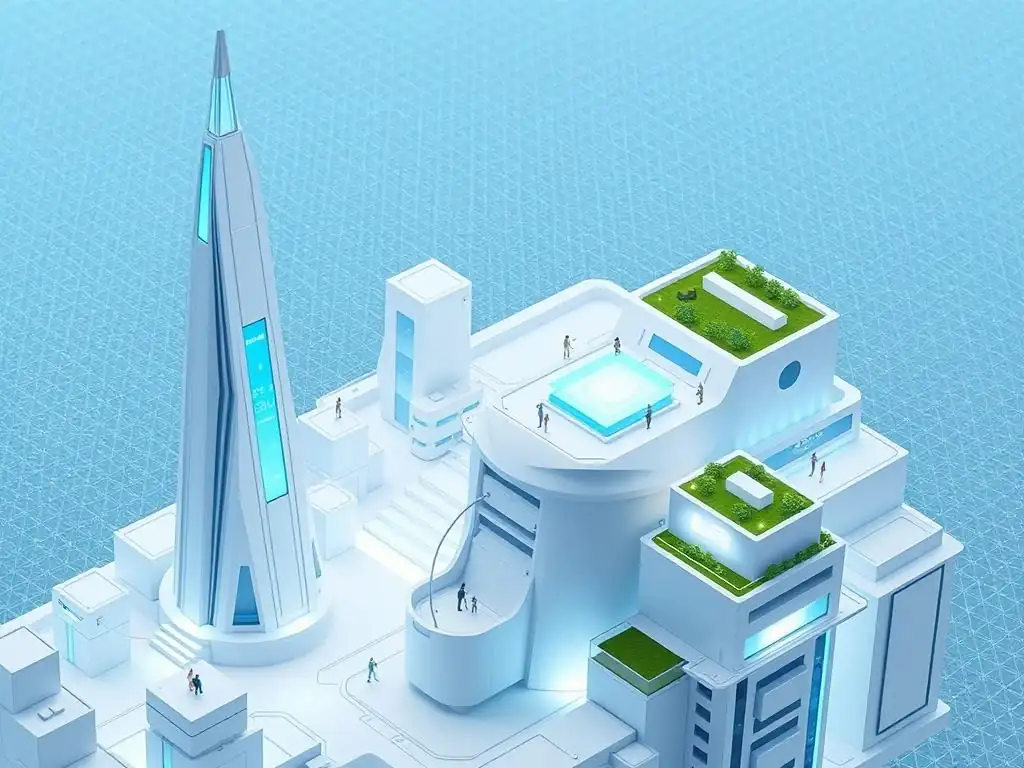
Prediction 1: Increased Integration of DeFi and Metaverse Real Estate
A significant future trend is the deeper integration of decentralized finance (DeFi) protocols with decentralized metaverse real estate. As virtual land becomes a more established digital asset class, the financial tools common in the DeFi space will increasingly be applied to it. This integration will unlock new ways for landowners to leverage their virtual property beyond simple buying and selling.
Expect to see the emergence of protocols enabling yield farming where users can stake virtual land NFTs to earn rewards or platform tokens. Lending and borrowing protocols could allow landowners to use their virtual property as collateral to borrow cryptocurrency, or for potential buyers to take out loans to acquire land. Fractional ownership platforms, which already exist to some extent, will likely become more sophisticated, allowing multiple investors to collectively own a single valuable parcel. This fusion of DeFi and virtual property will create more complex financial ecosystems within metaverses, adding new layers to decentralized metaverse real estate trends.
Yield Farming, Lending, and Borrowing on Virtual Land
The application of yield farming to virtual land could involve staking land NFTs in liquidity pools or specific protocols to earn interest in the form of tokens. This would provide passive income opportunities for landowners, adding another dimension to the financial utility of their assets. While still nascent, experimental projects exploring this concept are already emerging.
Lending and borrowing protocols are particularly promising. A landowner might need liquidity but not want to sell their prime virtual property. Using it as collateral in a DeFi lending protocol would allow them to borrow funds against its value. Conversely, prospective buyers who cannot afford a parcel outright might be able to obtain a peer-to-peer or protocol-based loan collateralized by other crypto assets or even the purchased land itself. These financial innovations will make investing in and leveraging decentralized metaverse real estate more flexible and potentially more capital-efficient.
Prediction 2: The Rise of Virtual Real Estate Development and Architecture
As metaverses mature and the demand for high-quality virtual experiences grows, a specialized industry for virtual real estate development and architecture will flourish. Owning virtual land is one thing; building something engaging and functional on it requires specific skills in 3D design, game development, programming (especially for smart contracts and interactive elements), and user experience design tailored for virtual environments.
This will lead to the formalization of roles like "metaverse architect," "virtual urban planner," and "metaverse construction firm." These professionals and companies will specialize in designing, building, and optimizing structures and experiences on virtual land parcels for clients ranging from individual landowners to large corporations. They will offer services from simple building design to complex interactive installations, virtual event venues, and fully functional digital storefronts. The emergence of these specialized services highlights a key future decentralized metaverse real estate trend towards professionalization.
Specialized Metaverse Architects and Construction Firms
Specialized metaverse architects will focus on the aesthetic and functional design of virtual buildings and spaces, considering factors unique to the metaverse like avatar navigation, loading times, interactivity, and integration with platform features. They will work with clients to translate concepts for virtual stores, galleries, homes, or event spaces into tangible 3D builds.
Metaverse construction firms will take these designs and bring them to life, utilizing platform-specific building tools, integrating custom assets, scripting interactive elements, and ensuring the final build is optimized for performance within the metaverse environment. These firms may operate like digital general contractors, managing the entire build process from design to deployment. The development of such specialized industries is crucial for realizing the full potential of virtual land and is a strong indicator of future decentralized metaverse real estate trends.
Prediction 3: Enhanced User Experiences and Realistic Metaverse Environments
The future of decentralized metaverse real estate will be characterized by increasingly sophisticated and realistic user experiences. Current metaverses, while functional, often have graphics and interactions that are relatively basic compared to modern video games or simulations. Advancements in rendering technology, avatar systems, and spatial computing will lead to more immersive, visually appealing, and interactive virtual worlds.
This will involve significant improvements in graphics, moving towards higher fidelity and potentially photorealism in some platforms (as seen with projects like Wilder World). Avatar systems will become more customizable and expressive, allowing for more realistic social interactions. Interactivity will deepen, enabling more complex actions, physics simulations, and seamless integration of various digital assets and services within the environment.
These enhancements will make virtual land more attractive for a wider range of activities, from social gatherings and entertainment to complex simulations and professional collaborations, thereby increasing its inherent value. Improved user experience is a core driver of future decentralized metaverse real estate trends.
Improved Graphics, Avatars, and Interactivity
Future metaverses will leverage advancements in game engines and rendering technologies to create visually stunning environments. This means more detailed textures, realistic lighting, dynamic weather systems, and complex environmental effects, making virtual land parcels feel more like tangible places. This graphical fidelity will enhance the appeal of virtual property, particularly for use cases like art galleries, architectural showcases, and entertainment venues.
Avatar technology will evolve to allow for greater personalization, realistic movement, and nuanced emotional expression. This will facilitate more natural and engaging social interactions within metaverses, making virtual spaces more appealing places to spend time and connect with others. Enhanced interactivity will enable more complex actions within the environment, from manipulating objects with realistic physics to seamless integration of external data streams or AI agents. These technological improvements will make virtual land more versatile and valuable as a platform for rich, immersive experiences, fundamentally shaping future decentralized metaverse real estate trends.
Risks and Challenges in the Decentralized Metaverse Real Estate Market
Regulatory Uncertainty and Legal Considerations for Virtual Land Ownership
Investing in decentralized metaverse real estate is not without risks, and regulatory uncertainty is a significant challenge. The legal status of virtual land is still largely undefined in most jurisdictions worldwide. It is unclear how virtual property rights will be treated under existing laws, whether they will be considered real property, digital assets, securities, or a new category entirely. This lack of clarity creates legal ambiguity regarding ownership, transfer, taxation, and dispute resolution.
Governments and regulatory bodies are still grappling with how to classify and regulate blockchain-based assets and the metaverse itself. Future regulations could impact the ability to buy, sell, or transfer virtual land, its tax treatment (e.g., property taxes, capital gains), and potential liabilities associated with activities conducted on owned virtual property. Navigating this evolving legal landscape is a key challenge for investors and developers in decentralized metaverse real estate.
Security Vulnerabilities and Smart Contract Risks in Metaverse Transactions
Another significant risk involves security vulnerabilities inherent in blockchain technology and smart contracts. Virtual land ownership and transactions rely on smart contracts deployed on blockchain networks (commonly Ethereum, Polygon, or others). While blockchains are generally secure, the smart contracts themselves can contain bugs or vulnerabilities that could be exploited by malicious actors.
Exploits of smart contracts have historically led to significant losses of digital assets. If a vulnerability exists in the smart contract governing virtual land ownership or marketplace transactions, it could potentially lead to the loss of land parcels, theft of funds used in sales, or manipulation of ownership records. Furthermore, the security of user wallets holding the private keys to their land NFTs is paramount; phishing attacks or compromised seed phrases can result in irreversible loss of virtual property. Understanding and mitigating these technical risks is crucial for participants in the decentralized metaverse real estate market.
Market Volatility and the Potential for Land Value Depreciation
The decentralized metaverse real estate market is highly speculative and subject to significant volatility. Like other nascent asset classes tied to emerging technology and hype cycles, virtual land prices can experience rapid fluctuations, including sharp declines. Values are often influenced by broader cryptocurrency market movements, platform-specific news, hype, and investor sentiment, rather than traditional real estate fundamentals.
There is a risk that the initial high valuations seen in some land sales were driven primarily by speculation and hype, rather than sustainable utility or adoption. If a metaverse platform fails to gain significant users, attract developers, or deliver on its promises, the demand for its virtual land could plummet, leading to substantial depreciation in value. Investors must be prepared for the possibility that their virtual land investment may lose value, potentially significantly, especially if the underlying platform does not achieve long-term viability. This market volatility is a primary challenge within decentralized metaverse real estate trends.
Investing in Decentralized Metaverse Real Estate: A Guide for Beginners
Due Diligence and Research: Evaluating Metaverse Projects and Land Parcels
For beginners considering investing in decentralized metaverse real estate, thorough due diligence and research are paramount. Do not treat virtual land as a guaranteed path to riches; approach it with the same caution as any speculative investment. Start by researching different metaverse platforms. Understand their vision, development roadmap, technology stack (e.g., which blockchain they use), tokenomics, and the size and activity level of their community. Look for platforms with clear utility for land, a dedicated development team, and active user engagement.
Once you've identified a platform of interest, research the specific land parcels available. Factors to consider include location (proximity to popular areas, roads, or landmarks), size, any pre-assigned traits or utility (like special building permissions), and historical sales data if available. Use platform maps and marketplaces to understand pricing relative to location and other characteristics. Join community forums (like Discord or Twitter) to gauge sentiment and gather information from existing users and landowners. Diversifying across platforms or locations can also help mitigate risk. This research forms the bedrock of navigating decentralized metaverse real estate trends as an investor.
Understanding Smart Contracts and Blockchain Technology
A basic understanding of smart contracts and blockchain technology is essential for anyone engaging with decentralized metaverse real estate. Virtual land is owned as an NFT, a type of token on a blockchain. Transactions, ownership records, and platform rules are often governed by smart contracts. Knowing how these technologies work can help investors understand the security implications, verify ownership, and interact safely with marketplaces and platform features.
Familiarize yourself with the blockchain network the metaverse uses (e.g., Ethereum, Polygon, Flow). Understand how gas fees work for transactions. Learn about NFTs – what they are, how they verify unique ownership, and how they are transferred. Crucially, understand the concept of smart contracts as self-executing code on the blockchain. While you don't need to be a developer, knowing that these contracts govern your digital property and transactions is vital. Be cautious of interacting with unknown smart contracts or marketplaces, as this is a common vector for scams and security breaches in the decentralized metaverse real estate space.
Secure Storage and Management of Virtual Land Assets
Securely storing and managing your virtual land NFTs is critical to protecting your investment. Virtual land, as an NFT, is held in a cryptocurrency wallet that supports the specific blockchain network the metaverse is built on (e.g., MetaMask for Ethereum/Polygon, Flow Wallet for Flow). Losing access to your wallet or having it compromised means losing your virtual property.
Use reputable and secure wallet providers. For significant investments, consider using a hardware wallet (like Ledger or Trezor), which offers the highest level of security by storing your private keys offline. Be extremely careful with your seed phrase (recovery phrase) – never share it, store it offline, and make multiple secure backups. Be vigilant against phishing attempts and scams that try to trick you into revealing your private keys or seed phrase. Understanding how to securely manage your digital assets is non-negotiable when participating in the decentralized metaverse real estate market.
Conclusion: The Future of Virtual Property in Decentralized Worlds
The decentralized metaverse real estate market is a dynamic and rapidly evolving space driven by the convergence of blockchain, NFTs, and immersive virtual worlds. Key takeaways for navigating this landscape include recognizing the importance of true digital ownership enabled by blockchain, understanding that scarcity and utility are primary value drivers, and acknowledging the growing influence of institutional investment and specialized development services. Location within popular platforms remains crucial, akin to physical real estate, but the potential for digital utility offers unique value propositions.
Investors and participants must also be acutely aware of the significant risks involved, including regulatory uncertainty, smart contract vulnerabilities, and high market volatility. Success in this market requires thorough research into specific platforms and parcels, a basic understanding of the underlying technology, and rigorous security practices for managing digital assets. The decentralized metaverse real estate trends point towards increasing sophistication, financial integration, and professionalization, but the market is still in its early, speculative stages.
The Long-Term Potential of Decentralized Virtual Land as an Asset Class
Despite the risks and current speculative nature, decentralized virtual land holds intriguing long-term potential as a novel asset class. Its value is tied not just to digital scarcity but increasingly to the economic activity, social interaction, and creative expression it can host. As metaverse platforms mature, gain wider adoption, and integrate more seamlessly with the broader digital economy, the utility and demand for well-located and well-developed virtual property could grow substantially.
The ability to own, build upon, and monetize digital space without central permission unlocks new economic models and entrepreneurial opportunities. While it may not replace physical real estate, decentralized virtual land could become a significant component of digital wealth and identity. Its long-term success hinges on the continued development of robust, engaging, and truly decentralized metaverse environments that attract persistent user activity and foster thriving digital economies. The journey of decentralized metaverse real estate trends is far from over, and its future trajectory will be shaped by ongoing technological innovation, community development, and regulatory clarity.
Frequently Asked Questions
What are the key drivers fueling the growth of the decentralized metaverse real estate market?
The growth is primarily driven by the increasing popularity of virtual experiences, the potential for digital asset ownership, and the promise of new revenue streams within these virtual worlds.
How does owning real estate in a decentralized metaverse differ from owning traditional real estate?
Unlike traditional real estate, metaverse land ownership often relies on NFTs recorded on a blockchain, offering verifiable scarcity and potential for unique digital experiences.
What are some of the emerging decentralized metaverse real estate trends that investors should be aware of?
Trends include the rise of virtual architects and developers, the integration of DeFi elements into land ownership, and the growing demand for prime virtual locations.
What are the potential risks and challenges associated with investing in decentralized metaverse real estate?
Risks include market volatility, regulatory uncertainty surrounding digital assets, and the potential for the metaverse platform itself to become obsolete.
How might regulations impact the future of decentralized metaverse real estate transactions and ownership?
Regulations could address issues like property rights, taxation of virtual assets, and the prevention of fraudulent activities within these emerging digital economies.
The insights we've explored regarding decentralized metaverse real estate trends are not merely academic exercises; they represent a fundamental shift in how we perceive ownership, community, and value in the digital age. The burgeoning virtual land market, fueled by blockchain technology and the promise of immersive experiences, is rapidly transforming from a niche interest to a significant economic force, demanding our attention and understanding.
This exploration of decentralized metaverse real estate has profoundly impacted my own perspective on the future of digital interaction. Witnessing the creative and economic potential unlocked by these platforms underscores the importance of embracing innovation while remaining mindful of the ethical considerations that accompany such rapid technological advancement. The metaverse is coming, and it will affect every product, company, and person that we touch.
- Matthew Ball. This quote encapsulates the pervasive influence these virtual worlds will have, making understanding their real estate dynamics crucial for navigating the future.
As we stand at the precipice of this new era, I urge you to consider the implications of decentralized metaverse real estate in your own life. How might these virtual spaces reshape your interactions, your investments, and your understanding of community? Embrace the opportunity to learn, explore, and contribute to the evolution of this digital frontier, ensuring that its development reflects our shared values and aspirations. The future of digital land is being written now – let us write it together with intention and foresight.
Unveil Your Metaverse Real Estate Empire!
Thank you for exploring the exciting world of virtual real estate and decentralized metaverses with us. We hope this discussion has sparked your interest and inspired you to deepen your understanding. Now, it's time to take action and start your journey!
Here are some steps to get started today:
- Explore a leading metaverse platform: Dive into environments like Decentraland or The Sandbox to observe how the virtual real estate market operates.
- Join the community: Engage with other enthusiasts to share insights and learn from their experiences.
- Make an initial investment: Begin with a small amount to familiarize yourself with the trading and ownership processes.
Which virtual world interests you the most, and what kind of space would you like to create? Share your ideas in the comments below!
Leave a Reply