
The Problem of Metaverse Fragmentation: Blockchain Interoperability as the Solution


Welcome to Blockchain Trends, your compass in the rapidly evolving world of decentralized innovation!
Ever wondered how to bridge the disparate worlds forming within the metaverse? Dive into our latest exploration of Blockchain interoperability, the key to unlocking a truly unified and seamless metaverse experience. Discover how this crucial technology solves the growing problem of metaverse fragmentation and paves the way for a more connected digital future. Read on to unravel the potential!
The Problem of Metaverse Fragmentation: Blockchain Interoperability as the Solution
- Understanding Metaverse Fragmentation and its Challenges
- Blockchain Interoperability: A Key to Unifying the Metaverse
- Solutions for Achieving Blockchain Interoperability in the Metaverse
- Examples of Blockchain Interoperability Projects in the Metaverse
- Overcoming Technical Hurdles to Achieve Seamless Metaverse Interoperability
- The Future of the Metaverse: Driven by Blockchain Interoperability
- Conclusion: Blockchain Interoperability Solves Metaverse Fragmentation
-
Frequently Asked Questions
- What is metaverse fragmentation, and why is it a problem?
- How does blockchain interoperability help solve metaverse fragmentation?
- What are some examples of blockchain interoperability solutions being used in the metaverse?
- What are the key benefits of achieving blockchain interoperability in the metaverse?
- What are the potential challenges to implementing blockchain interoperability for the metaverse?
- Final Reflection: Bridging Worlds, Building Futures
- Unlock the Unified Metaverse: Start Building Today!
Understanding Metaverse Fragmentation and its Challenges
What is Metaverse Fragmentation? Defining the Problem
Metaverse fragmentation refers to the current state of the metaverse as a collection of isolated and disconnected virtual worlds. Instead of a unified, interconnected digital realm, we observe a proliferation of distinct platforms, each operating independently with its own rules, assets, and user base. Imagine the internet if websites couldn't link to each other, or if email providers were incompatible.
This siloed approach characterizes the early metaverse landscape, where users, assets, and data are largely confined to specific platforms. This lack of cohesion creates significant limitations, hindering the metaverse from reaching its full potential as a seamless and expansive digital universe.
This fragmentation stems from various factors, including the diverse technological foundations upon which different metaverses are built. Some platforms rely on proprietary technologies, while others leverage different blockchain networks. This technological diversity, while fostering innovation, also results in walled gardens, where assets and identities are not portable across platforms. Furthermore, the competitive landscape of the metaverse market, with numerous companies vying for dominance, exacerbates fragmentation as each entity prioritizes its own ecosystem and user retention. This results in a fractured user experience, limiting the potential for network effects and hindering the emergence of a truly unified metaverse.
The Impact of Fragmented Metaverses on User Experience
The fragmentation of metaverses directly and negatively impacts user experience. Currently, users are forced to create separate avatars, accumulate digital assets within each platform, and rebuild their social networks across different virtual worlds. For example, a user might own a valuable piece of digital art in one metaverse game but be unable to display or utilize it in another virtual social platform. This lack of interoperability creates friction and diminishes the perceived value of digital assets. Users are essentially locked into specific ecosystems, limiting their freedom and flexibility to navigate the broader metaverse landscape.
Moreover, fragmented metaverses hinder social interaction and community building. Imagine having different social media accounts that cannot connect or share information. Similarly, in a fragmented metaverse, friends might be active in different virtual worlds, making it difficult to interact and participate in shared experiences. This isolation limits the potential for large-scale social gatherings, collaborative projects, and the formation of vibrant, cross-platform communities. The inability to seamlessly move between metaverses with one's identity and assets significantly diminishes the immersive and interconnected experience that the metaverse promises.
Economic Consequences of Metaverse Silos
The existence of metaverse silos has significant economic repercussions, hindering the growth and maturity of the metaverse economy. The lack of interoperability restricts the flow of digital assets and value across different platforms, creating inefficient and isolated markets. For instance, digital real estate purchased in one metaverse cannot be resold or utilized in another, limiting its liquidity and potential appreciation. This fragmentation prevents the emergence of a unified metaverse economy where assets can be freely traded and utilized across different virtual worlds.
Furthermore, metaverse fragmentation discourages investment and innovation. Developers face challenges in creating applications and experiences that can reach a wider audience across multiple platforms. The need to adapt and rebuild functionalities for each separate metaverse increases development costs and complexity, potentially stifling innovation. Similarly, users may be hesitant to invest heavily in digital assets if their utility and portability are limited to a single platform. This uncertainty and lack of a unified market can slow down the overall growth and economic potential of the metaverse, hindering its evolution into a robust and thriving digital economy.
Blockchain Interoperability: A Key to Unifying the Metaverse
Blockchain Interoperability Explained: Connecting Virtual Worlds
Blockchain interoperability refers to the ability of different blockchain networks to communicate, share data, and transact with each other seamlessly. In essence, it's about creating bridges between isolated blockchain ecosystems, allowing for the transfer of assets and information across various networks. Think of it as creating a common language or set of protocols that enables different blockchains to understand and interact with each other, much like the internet protocols that allow different computer networks to communicate globally.
In the context of the metaverse, blockchain interoperability becomes crucial for connecting fragmented virtual worlds. By enabling different metaverse platforms built on separate blockchains to interact, interoperability can break down silos and create a more unified and connected metaverse experience. This means users could potentially move their avatars, digital assets, and even their identities between different virtual worlds, regardless of the underlying blockchain technology powering each platform. Blockchain interoperability is therefore a foundational element for realizing the vision of a truly interconnected metaverse.
How Blockchain Technology Enables Metaverse Interoperability
Blockchain technology provides inherent features that can be leveraged to achieve metaverse interoperability. The decentralized and transparent nature of blockchains allows for secure and verifiable cross-chain communication. Smart contracts, self-executing agreements coded on the blockchain, can automate and govern the transfer of assets and data between different networks in a trustless manner. This eliminates the need for centralized intermediaries, reducing friction and enhancing security in cross-chain interactions.
Specifically, mechanisms like cross-chain bridges and layer-0 protocols, which are built upon blockchain technology, are designed to facilitate interoperability. These solutions leverage cryptographic techniques and consensus mechanisms to ensure the secure and reliable transfer of information and assets between different blockchains. By utilizing these blockchain-based tools, metaverse platforms can overcome the limitations of isolated ecosystems and pave the way for a more interconnected and user-centric metaverse experience.
Benefits of Blockchain-Based Interoperability for the Metaverse
Blockchain-based interoperability offers numerous benefits for the metaverse, primarily fostering a more unified, user-centric, and economically vibrant digital landscape. Firstly, it enhances user experience by enabling seamless portability of avatars, assets, and identities across different virtual worlds. Users gain true ownership and control over their digital possessions, allowing them to utilize their assets freely across the metaverse, regardless of platform boundaries. This freedom and flexibility significantly improve the overall metaverse experience, making it more engaging and rewarding.
Secondly, interoperability unlocks new economic opportunities within the metaverse. By facilitating the free flow of assets and value, it creates a more efficient and liquid metaverse economy. Digital assets become more valuable as their utility expands across multiple platforms. Interoperability also fosters innovation by making it easier for developers to create cross-platform applications and experiences, reaching a wider audience and unlocking new possibilities for metaverse development. Ultimately, blockchain interoperability is essential for realizing the full economic and social potential of the metaverse.
Solutions for Achieving Blockchain Interoperability in the Metaverse
Cross-Chain Bridges: Connecting Different Blockchain Networks for Metaverse Assets
Cross-chain bridges are a fundamental solution for achieving blockchain interoperability in the metaverse, specifically designed to enable the transfer of assets between different blockchain networks. These bridges act as conduits, allowing users to move tokens and NFTs representing metaverse assets from one blockchain to another. For example, a user might own a digital collectible on an Ethereum-based metaverse and want to use it in a Solana-based virtual world. A cross-chain bridge would facilitate this transfer, effectively unlocking the asset's utility across different platforms.
Several types of cross-chain bridges exist, each with varying mechanisms and security trade-offs. Some rely on centralized or federated custodians to manage asset transfers, while others utilize more decentralized approaches like atomic swaps or hash-locking. For instance, the Multichain bridge (formerly Anyswap) has facilitated billions of dollars in cross-chain asset transfers, supporting interoperability between networks like Ethereum, Binance Smart Chain, and Polygon. While bridges offer a practical solution for asset transfer, considerations around security and potential vulnerabilities are crucial for ensuring the integrity of cross-chain transactions in the metaverse.
Layer-0 Protocols: Facilitating Seamless Communication Between Metaverses
Layer-0 protocols represent another powerful approach to achieving metaverse interoperability, focusing on building a foundational layer that enables seamless communication and data exchange between different blockchains and, consequently, metaverses built upon them. Instead of directly bridging assets between specific chains, layer-0 protocols create a network of networks, allowing different blockchains to plug in and interact with each other more natively. This approach can potentially offer greater scalability and flexibility compared to individual cross-chain bridges.
Polkadot is a prominent example of a layer-0 protocol designed to facilitate interoperability. It acts as a relay chain that connects multiple parachains (parallel blockchains), enabling them to communicate and share data. In the context of the metaverse, different metaverse platforms could be built as parachains on Polkadot, leveraging its layer-0 infrastructure for seamless communication and asset transfer. Similarly, Cosmos is another layer-0 protocol utilizing the Inter-Blockchain Communication (IBC) protocol to enable interoperability between independent blockchains. Layer-0 solutions offer a more comprehensive and potentially scalable approach to metaverse interoperability by addressing the underlying communication infrastructure.
Interoperable Smart Contracts: Enabling Universal Application Development in the Metaverse
Interoperable smart contracts represent a more advanced and forward-looking solution for metaverse interoperability, aiming to enable the development of applications that can function seamlessly across different metaverse platforms. Instead of just transferring assets, interoperable smart contracts allow for the creation of universal applications that can interact with multiple blockchains and metaverses simultaneously. This could lead to a future where developers can build metaverse experiences that are not confined to a single platform but can operate across the entire interconnected metaverse.
Chainlink's Cross-Chain Interoperability Protocol (CCIP) is an example of a technology aiming to enable interoperable smart contracts. CCIP provides a standardized and secure way for smart contracts on different blockchains to communicate and exchange data. In the metaverse context, this could mean developing applications, such as decentralized marketplaces or social platforms, that can access and utilize data and assets from various metaverse platforms. Interoperable smart contracts represent a paradigm shift towards a truly unified metaverse, where applications are not platform-specific but rather operate across the entire ecosystem, unlocking vast potential for innovation and user experience.
Examples of Blockchain Interoperability Projects in the Metaverse
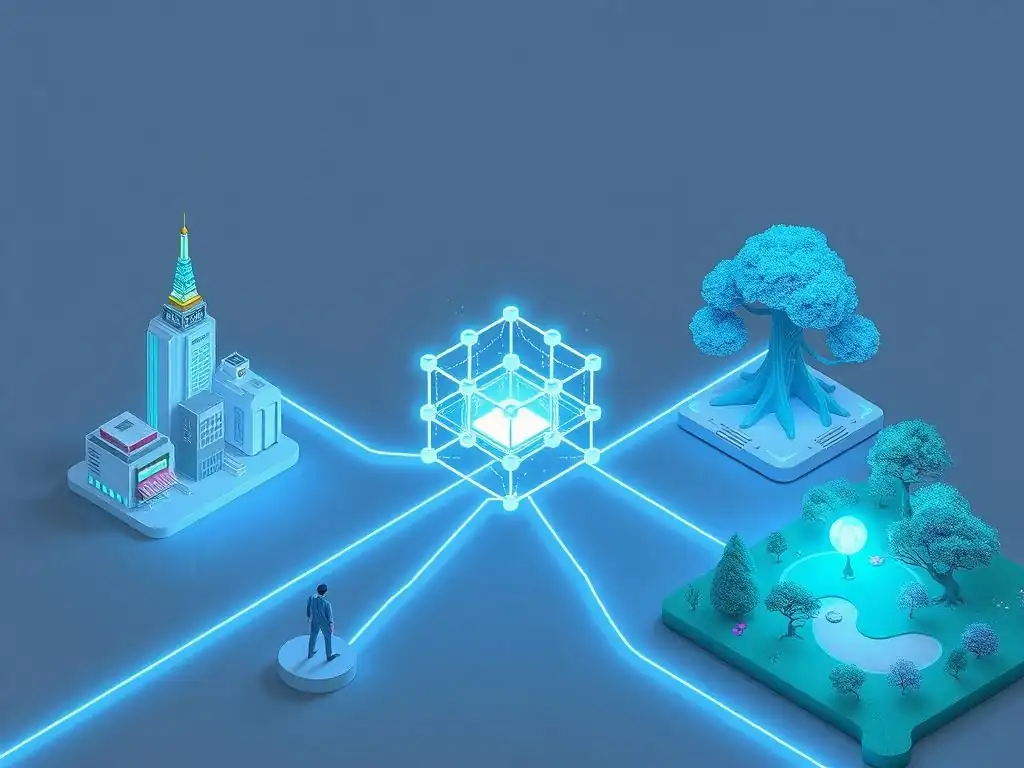
Axelar Network: A Case Study in Cross-Chain Asset Transfer
Axelar Network is a prime example of a project actively working to solve blockchain interoperability challenges, particularly in the context of cross-chain asset transfer, which is crucial for a connected metaverse. Axelar provides a decentralized network that connects various blockchains, enabling secure and reliable cross-chain communication and asset transfers. Its technology allows for the bridging of tokens and NFTs between different ecosystems, facilitating the movement of metaverse assets across platforms.
For instance, Axelar has partnered with projects like Pangolin Exchange and Frax Finance to enable cross-chain swaps and asset transfers. Imagine a metaverse user wanting to trade assets acquired in a game built on Avalanche with assets from a virtual world on Ethereum. Axelar's network could facilitate this transaction seamlessly, allowing users to manage their metaverse assets across different blockchain ecosystems. Axelar's focus on secure and generalized cross-chain communication makes it a significant contributor to building a more interoperable and user-friendly metaverse.
Polkadot: Leveraging Layer-0 for Metaverse Interoperability
Polkadot stands out as a layer-0 protocol that is actively being leveraged for metaverse interoperability, offering a robust infrastructure for connecting different metaverse platforms. Its parachain architecture allows for the creation of specialized blockchains that can connect to the Polkadot relay chain and communicate with each other. This framework is particularly well-suited for building interoperable metaverses, where different virtual worlds can operate as parachains and leverage Polkadot's layer-0 for seamless communication and asset sharing.
Projects like Acala and Moonbeam, built as parachains on Polkadot, are actively exploring metaverse applications and interoperability. Acala focuses on decentralized finance (DeFi) and could enable cross-chain DeFi functionalities within the metaverse, while Moonbeam provides Ethereum compatibility, allowing Ethereum-based metaverse projects to easily integrate with the Polkadot ecosystem. Polkadot's layer-0 approach offers a scalable and flexible foundation for building a network of interconnected metaverses, moving beyond isolated virtual worlds towards a more unified digital realm.
Chainlink CCIP: Building Interoperable Applications with Smart Contracts
Chainlink's Cross-Chain Interoperability Protocol (CCIP) is a groundbreaking technology that is paving the way for truly interoperable applications within the metaverse, going beyond simple asset transfers to enable more complex cross-chain functionalities. CCIP provides a secure and reliable messaging layer that allows smart contracts on different blockchains to communicate and exchange data. This capability is essential for building metaverse applications that can access and utilize information and functionalities across multiple platforms.
For example, imagine a decentralized metaverse marketplace built using CCIP. This marketplace could aggregate listings and assets from various metaverse platforms built on different blockchains, providing users with a unified platform to discover and trade digital goods across the entire metaverse ecosystem. Similarly, CCIP could enable the development of interoperable social platforms or metaverse games that can leverage functionalities and assets from multiple virtual worlds. Chainlink CCIP's focus on enabling interoperable smart contracts represents a significant step towards a more unified and functional metaverse, where applications can seamlessly operate across different platform boundaries.
Overcoming Technical Hurdles to Achieve Seamless Metaverse Interoperability
Addressing Scalability Challenges in Cross-Chain Communication
Scalability presents a significant technical hurdle in achieving seamless metaverse interoperability. As the metaverse grows and user adoption increases, the volume of cross-chain transactions and data exchange will surge dramatically. Current cross-chain solutions, like bridges and layer-0 protocols, need to be able to handle this increased load efficiently without compromising speed or security. Scalability challenges can manifest as slower transaction times, higher gas fees, or even network congestion, hindering the user experience in an interoperable metaverse.
To address these challenges, ongoing research and development are focused on improving the scalability of cross-chain communication mechanisms. This includes exploring techniques like optimistic rollups for cross-chain transactions, which can significantly increase transaction throughput. Furthermore, advancements in layer-0 protocols, such as sharding and parallel processing, are aimed at enhancing the overall scalability of interoperable blockchain networks. Overcoming scalability limitations is crucial for ensuring that metaverse interoperability can support a massive user base and a thriving metaverse economy.
Ensuring Security in Interoperable Metaverse Environments
Security is paramount in interoperable metaverse environments, as cross-chain communication introduces new attack vectors and potential vulnerabilities. Bridges and layer-0 protocols, while enabling interoperability, also become potential targets for exploits, as demonstrated by several high-profile bridge hacks in the cryptocurrency space. Compromising a bridge could lead to significant financial losses and damage the trust in interoperable metaverse systems. Ensuring robust security measures is therefore critical for the widespread adoption of metaverse interoperability solutions.
To mitigate security risks, ongoing efforts are focused on developing more secure cross-chain communication protocols and implementing rigorous security audits for interoperability solutions. This includes exploring advanced cryptographic techniques, such as zero-knowledge proofs, to enhance the security of cross-chain transactions. Furthermore, decentralized and trustless bridge designs are being prioritized to reduce reliance on centralized custodians and minimize single points of failure. Maintaining a strong security posture is essential for building a trustworthy and resilient interoperable metaverse.
Standardizing Data Formats for Universal Metaverse Asset Recognition
Standardizing data formats is a less visible but equally critical technical challenge for achieving seamless metaverse interoperability. For digital assets to be truly interoperable across different metaverse platforms, there needs to be a common understanding of how these assets are represented and described. Currently, different metaverses may use proprietary data formats for NFTs, avatars, and other digital objects, making it difficult for platforms to recognize and interpret assets from other ecosystems. Lack of standardization can hinder the seamless transfer and utilization of assets across metaverses.
To address this challenge, standardization efforts are underway within the blockchain and metaverse communities. This includes initiatives to develop open standards for NFT metadata, avatar representations, and virtual world descriptions. Organizations like the Metaverse Standards Forum are working to promote interoperability and standardization across the metaverse landscape. Adopting common data formats will enable metaverse platforms to universally recognize and interpret digital assets, facilitating seamless interoperability and unlocking the full potential of a connected metaverse.
The Future of the Metaverse: Driven by Blockchain Interoperability
Predicting the Evolution of Interconnected Virtual Worlds
The future of the metaverse is inextricably linked to blockchain interoperability. As interoperability solutions mature and become more widely adopted, we can predict a shift from the current fragmented landscape towards a more interconnected and unified metaverse. This evolution will likely involve the gradual merging of isolated virtual worlds, creating a vast and seamless digital universe where users can navigate freely and interact with diverse experiences and communities.
This interconnected metaverse will likely resemble a network of interconnected platforms, rather than a single monolithic entity. Different metaverses may retain their unique identities and functionalities, but they will be able to communicate and share data seamlessly, creating a richer and more expansive user experience. Imagine a future where you can seamlessly transition from a virtual concert in one metaverse to a collaborative workspace in another, all while using the same avatar and digital assets. This vision of an interconnected metaverse is being driven by the progress in blockchain interoperability.
The Role of Decentralized Identity in an Interoperable Metaverse
Decentralized Identity (DID) will play a crucial role in enabling a seamless and user-centric experience in an interoperable metaverse. DID allows users to own and control their digital identities, independent of any single platform or centralized authority. In an interoperable metaverse, DID will empower users to carry their identities, reputations, and credentials across different virtual worlds, eliminating the need to create separate profiles for each platform.
Blockchain technology provides the foundation for DID, offering secure and tamper-proof mechanisms for managing digital identities. Solutions like self-sovereign identity frameworks and verifiable credentials are being developed to enable users to control their personal data and selectively share it with different metaverse platforms. DID will not only enhance user experience by simplifying identity management but also contribute to greater privacy and security in the interoperable metaverse, giving users more control over their digital presence.
Blockchain Interoperability: Paving the Way for a Unified Metaverse Economy
Blockchain interoperability is the cornerstone for building a unified and thriving metaverse economy. By enabling the free flow of digital assets and value across different platforms, interoperability will unlock the full economic potential of the metaverse. A unified metaverse economy will be characterized by increased liquidity, efficiency, and opportunities for creators, users, and businesses. Digital assets will gain greater utility and value as they become usable across a wider range of virtual worlds and applications.
Interoperability will also foster innovation and competition in the metaverse economy. Developers will be incentivized to create cross-platform applications and experiences, reaching a larger audience and unlocking new economic models. Users will benefit from a more diverse and competitive metaverse ecosystem, with greater choices and opportunities. Blockchain interoperability is therefore not just a technical solution but a fundamental enabler of a robust and prosperous unified metaverse economy, paving the way for a future where digital economies are seamlessly integrated and globally accessible.
Conclusion: Blockchain Interoperability Solves Metaverse Fragmentation
Metaverse fragmentation poses significant challenges to user experience, economic growth, and the overall vision of a connected digital future. However, blockchain interoperability emerges as a powerful solution to bridge these divides and unify the metaverse landscape. By enabling seamless communication, asset transfer, and data exchange between different virtual worlds, blockchain interoperability addresses the core issues of fragmentation and unlocks the true potential of the metaverse. Solutions like cross-chain bridges, layer-0 protocols, and interoperable smart contracts are actively being developed and implemented, paving the way for a more connected and user-centric metaverse experience. While technical hurdles related to scalability, security, and standardization remain, ongoing innovation and collaboration within the blockchain and metaverse communities are steadily overcoming these challenges. Ultimately, blockchain interoperability is not just a technical necessity but the key to unlocking a unified, vibrant, and economically prosperous metaverse, fulfilling the promise of a truly interconnected digital world. Blockchain interoperability solves metaverse fragmentation, ushering in a new era of seamless virtual experiences and opportunities.
Frequently Asked Questions
What is metaverse fragmentation, and why is it a problem?
Metaverse fragmentation refers to the lack of seamless connection and data sharing between different virtual worlds. This is a problem because it hinders user experience and limits the potential for a unified metaverse.
How does blockchain interoperability help solve metaverse fragmentation?
Blockchain interoperability allows for the transfer of assets and data between different blockchain networks. This enables seamless movement of avatars, items, and identities across various metaverse platforms, creating a more integrated experience.
What are some examples of blockchain interoperability solutions being used in the metaverse?
Examples include cross-chain bridges that facilitate asset transfers and standardized protocols for data exchange. These solutions are being developed to allow users to use their NFTs and digital identities across multiple metaverse platforms.
What are the key benefits of achieving blockchain interoperability in the metaverse?
The key benefits include a more immersive and engaging user experience, increased economic opportunities through cross-platform transactions, and the creation of a more unified and interconnected metaverse.
What are the potential challenges to implementing blockchain interoperability for the metaverse?
Challenges include security risks associated with cross-chain transfers, the need for standardized protocols across different blockchains, and the regulatory landscape surrounding decentralized technologies.
Final Reflection: Bridging Worlds, Building Futures
The promise of a unified metaverse, once a distant dream, is now within reach, but its realization hinges on overcoming the challenge of fragmentation. Blockchain interoperability is not just a technical solution; it's the key to unlocking the metaverse's true potential as a seamless and interconnected digital realm. Without it, we risk creating isolated digital islands, hindering innovation and limiting user experience.
The impact of achieving true interoperability extends far beyond gaming and entertainment. It promises a future where digital assets can flow freely between different metaverse platforms, fostering economic growth and empowering creators in unprecedented ways. This is not just about technology; it's about shaping the future of digital interaction and ownership. The metaverse is not a place, but a moment in time when our digital lives are worth more to us than our physical lives.
- Kevin Kelly
As we stand on the cusp of this digital revolution, let us not be passive observers. Embrace the potential of blockchain interoperability to build a metaverse that is truly open, accessible, and inclusive. Consider how you can contribute to this future, whether through supporting interoperable platforms, advocating for open standards, or simply exploring the possibilities that a unified metaverse offers. The future of the metaverse is not predetermined; it is being built, brick by digital brick, and your participation is crucial.
Unlock the Unified Metaverse: Start Building Today!
Thank you for exploring the critical issue of metaverse fragmentation and discovering how blockchain interoperability can pave the way for a seamless, interconnected digital future. Now it's time to take action and shape this exciting landscape.
Here are a few ways you can contribute to building a truly unified metaverse:
- Dive deep and begin researching existing interoperability protocols to understand their potential and limitations.
- Share this article with fellow developers, blockchain enthusiasts, and metaverse creators to spark conversations and foster collaboration on interoperability solutions.
- Brainstorm and document innovative approaches to bridging different metaverse platforms, even if they seem unconventional or technically challenging at first!
What creative interoperability solutions do you envision that can truly connect today's fragmented metaverses? Share your thoughts in the comments below!
Leave a Reply