
Beyond Smart Contracts: Exploring Advanced Applications of Blockchain and AI


Welcome to Blockchain Trends, your guide to the evolving landscape of decentralized technology.
Dive into the transformative potential of blockchain, moving beyond cryptocurrencies to explore its groundbreaking applications. Are you ready to unlock the synergies between seemingly disparate technologies? This week, we're demystifying Blockchain AI integration strategies, revealing how these powerful forces are converging to reshape industries. Discover the innovative approaches and practical considerations that will define the future of decentralized intelligence, and begin to explore the profound implications for businesses and beyond. The convergence has begun...
Beyond Smart Contracts: Exploring Advanced Applications of Blockchain and AI
- Introduction: The Synergistic Power of Blockchain and AI
- Understanding the Foundations: Blockchain and AI Explained
-
Advanced Blockchain AI Integration Strategies: Key Applications
- Decentralized Machine Learning (DeML): Combining AI and Blockchain for Enhanced Data Privacy
- AI-Powered Blockchain Analytics: Enhancing Transparency and Security
- Autonomous Agents and Decentralized Autonomous Organizations (DAOs) Powered by AI
- Supply Chain Optimization with Blockchain and AI
- Healthcare Applications: Secure and Intelligent Data Sharing
- Identity Management and Verification with Blockchain and AI
- Addressing the Challenges of Blockchain and AI Integration
- The Future of Blockchain and AI Synergy: Trends and Predictions
- Conclusion: Embracing the Transformative Potential of Blockchain and AI
-
Frequently Asked Questions
- How can Blockchain and AI be integrated to enhance data security?
- What are some practical applications of Blockchain AI integration in supply chain management?
- How does the integration of Blockchain and AI impact the financial sector, particularly in DeFi?
- What are the key regulatory challenges associated with Blockchain AI integration?
- What is the future outlook for Blockchain AI integration strategies?
- Final Reflection: Embracing the Synergistic Future
- Reimagine Your Future with Blockchain & AI!
Introduction: The Synergistic Power of Blockchain and AI
Unveiling the Next Frontier: Moving Beyond Basic Smart Contracts
Blockchain technology, initially famed for its role in cryptocurrencies, has matured significantly. While smart contracts represent a foundational application, the true transformative potential lies in its integration with other cutting-edge technologies, particularly Artificial Intelligence (AI). This synergy unlocks a new realm of possibilities, extending blockchain's reach far beyond automated agreements. We are now witnessing the emergence of sophisticated systems that leverage the strengths of both blockchain and AI to address complex challenges across diverse industries, from healthcare and finance to supply chain management and digital identity. This evolution signals a move towards more intelligent, secure, and decentralized solutions.
The initial excitement around blockchain often centered on disintermediation and transactional efficiency through smart contracts. However, the limitations of basic smart contracts, primarily their deterministic nature and lack of real-world data integration, became apparent. To overcome these constraints and unlock blockchain's full potential, developers and researchers began exploring its convergence with AI. AI's ability to process vast datasets, learn from patterns, and make intelligent predictions perfectly complements blockchain's security, transparency, and immutability. This combination is not merely an incremental improvement but a paradigm shift, paving the way for truly intelligent and autonomous decentralized systems.
The Growing Importance of Blockchain and AI Integration Strategies
In today's data-driven world, businesses are constantly seeking innovative solutions to enhance efficiency, security, and decision-making. Blockchain and AI, when integrated strategically, offer a powerful toolkit to achieve these objectives. The integration of AI into blockchain networks allows for the creation of intelligent, self-improving systems capable of adapting to dynamic environments and making data-driven decisions autonomously. This is not just about automating tasks; it's about building intelligent infrastructure that can learn, optimize, and evolve over time, offering a significant competitive advantage.
The increasing recognition of the potential of blockchain and AI integration is reflected in market trends. According to a report by Gartner, the combined market for AI and blockchain is projected to experience substantial growth in the coming years, highlighting the increasing adoption of blockchain AI integration strategies across various sectors. Companies are realizing that by combining these technologies, they can unlock new levels of efficiency, transparency, and security that are simply not achievable with either technology in isolation. This growing awareness is driving investment and innovation in this exciting field.
Understanding the Foundations: Blockchain and AI Explained
Blockchain Technology: A Decentralized Ledger System
At its core, blockchain is a decentralized, distributed, and immutable ledger. Imagine a digital record book shared across a network of computers. Each "block" in the chain contains a set of transactions, and these blocks are linked together cryptographically, forming a chronological and tamper-proof chain. This structure ensures transparency, as every participant in the network can view the ledger, and security, as any attempt to alter past records is computationally infeasible due to the cryptographic hashing and consensus mechanisms employed.
The decentralized nature of blockchain eliminates the need for a central authority, fostering trust and reducing single points of failure. Transactions are validated by multiple nodes in the network through consensus algorithms like Proof-of-Work or Proof-of-Stake, ensuring data integrity and preventing fraudulent activities. This inherent security and transparency make blockchain ideal for applications requiring trust and accountability, laying the foundation for secure data sharing and process automation. Examples of blockchain platforms include Ethereum, known for its smart contract capabilities, and Hyperledger Fabric, popular for enterprise blockchain solutions.
Artificial Intelligence: Enabling Intelligent Automation and Prediction
Artificial Intelligence (AI) encompasses a broad range of technologies that enable computers to perform tasks that typically require human intelligence. This includes machine learning (ML), natural language processing (NLP), computer vision, and robotics. Machine learning, a subset of AI, focuses on algorithms that allow systems to learn from data without explicit programming, enabling them to identify patterns, make predictions, and improve their performance over time. AI's power lies in its ability to process and analyze vast amounts of data, extracting valuable insights and automating complex decision-making processes.
AI algorithms are trained on large datasets to identify patterns and relationships, allowing them to make predictions or classifications on new, unseen data. For instance, in image recognition, AI models are trained on millions of images to identify objects within pictures. Similarly, in fraud detection, AI can analyze transaction patterns to flag suspicious activities. The ability of AI to learn and adapt makes it a powerful tool for automation, optimization, and enhancing human capabilities across numerous domains. Popular AI frameworks include TensorFlow and PyTorch, widely used for developing and deploying machine learning models.
Advanced Blockchain AI Integration Strategies: Key Applications
Decentralized Machine Learning (DeML): Combining AI and Blockchain for Enhanced Data Privacy
Decentralized Machine Learning (DeML) represents a paradigm shift in how AI models are trained and deployed, leveraging blockchain to address critical data privacy concerns. Traditional machine learning often requires centralizing vast amounts of data, raising significant risks of data breaches and privacy violations. DeML, on the other hand, enables collaborative model training across distributed datasets without requiring data to be pooled in a central location. This is achieved by combining blockchain's security and decentralized nature with AI's learning capabilities, leading to more privacy-preserving and secure AI systems.
DeML architectures typically involve training machine learning models on local datasets held by individual participants, while blockchain is used to manage the model updates, incentivize participation, and ensure the integrity of the overall learning process. This approach is particularly relevant in sensitive domains like healthcare and finance, where data privacy is paramount. By utilizing DeML, organizations can unlock the power of AI while adhering to stringent data protection regulations and fostering greater trust among data contributors. This innovative approach is gaining traction as businesses seek to leverage AI responsibly in an increasingly privacy-conscious world.
Federated Learning on Blockchain: Protecting Data Sovereignty
Federated Learning (FL) is a key technique within DeML that allows for training machine learning models across decentralized devices or servers holding local data samples. In a blockchain-based federated learning system, each participant trains a local model on their own data, and only model updates, rather than raw data, are shared with a central aggregator. Blockchain can be used to secure and audit this aggregation process, ensuring that model updates are tamper-proof and traceable, enhancing the overall security and transparency of the federated learning framework.
The use of blockchain in federated learning provides several key advantages. Firstly, it enhances data sovereignty by ensuring that participants retain control over their data, as it never leaves their premises. Secondly, blockchain's immutability provides an audit trail of model updates, increasing transparency and accountability in the training process. Finally, blockchain-based incentive mechanisms can be implemented to reward participants for contributing their computational resources and data to the federated learning process. This combination of federated learning and blockchain is particularly valuable in applications requiring collaboration across multiple organizations or devices while preserving data privacy and security.
Secure Multi-Party Computation (SMPC) for AI Model Training
Secure Multi-Party Computation (SMPC) is another cryptographic technique that complements blockchain and enhances data privacy in AI. SMPC allows multiple parties to jointly compute a function on their private inputs without revealing those inputs to each other. In the context of AI, SMPC can be used to train machine learning models on encrypted data, ensuring that sensitive information remains confidential throughout the training process. When combined with blockchain, SMPC can provide an additional layer of security and trust in decentralized AI systems.
Integrating SMPC with blockchain can create highly secure and privacy-preserving AI solutions. Blockchain can be used to manage the SMPC computation, verify the integrity of the process, and record the results in a transparent and auditable manner. This combination is particularly relevant for applications dealing with highly sensitive data, such as financial transactions, medical records, or personal identification information. By leveraging SMPC and blockchain, organizations can unlock the potential of AI for sensitive data analysis while maintaining strict privacy and security guarantees, opening up new possibilities for data-driven innovation in regulated industries.
AI-Powered Blockchain Analytics: Enhancing Transparency and Security
While blockchain provides inherent transparency through its distributed ledger, analyzing the vast amount of data stored on a blockchain can be challenging. AI-powered blockchain analytics leverages AI techniques, particularly machine learning, to extract meaningful insights from blockchain data, enhancing both transparency and security. AI algorithms can analyze transaction patterns, identify anomalies, and predict potential risks within blockchain networks, providing valuable intelligence for network operators, regulators, and users.
By applying AI to blockchain data, organizations can gain a deeper understanding of network activity, identify fraudulent transactions, and optimize network performance. AI-powered analytics can also be used to monitor compliance with regulations, track asset provenance, and improve risk management in blockchain-based systems. This synergy between AI and blockchain analytics transforms raw blockchain data into actionable intelligence, making blockchain networks more secure, efficient, and user-friendly.
Detecting Anomalies and Fraud with AI in Blockchain Transactions
The immutability of blockchain makes it an excellent source of data for fraud detection. AI algorithms can be trained to analyze historical blockchain transaction data to identify patterns indicative of fraudulent activities, such as money laundering, Ponzi schemes, or illicit transactions. By monitoring real-time transaction flows on a blockchain, AI-powered systems can flag suspicious transactions for further investigation, enhancing the security and integrity of blockchain-based financial systems and applications.
Machine learning techniques like anomaly detection and classification are particularly effective in identifying fraudulent activities within blockchain networks. For instance, AI can detect unusual transaction volumes, velocity, or patterns of addresses interacting with each other that deviate from normal behavior. These systems can be trained on labeled datasets of known fraudulent and legitimate transactions, allowing them to learn and adapt to evolving fraud tactics. The integration of AI-powered fraud detection into blockchain platforms provides a proactive and efficient way to combat illicit activities and maintain the integrity of the network.
Predictive Analytics for Blockchain Network Optimization
Beyond security, AI can also be used to optimize the performance and efficiency of blockchain networks. Predictive analytics, powered by AI, can forecast network congestion, transaction processing times, and resource utilization, allowing network operators to proactively adjust parameters and allocate resources to maintain optimal performance. This is particularly important for large-scale blockchain networks handling high transaction volumes, where efficient resource management is crucial for scalability and user experience.
AI models can analyze historical network performance data, including transaction throughput, latency, and node resource consumption, to predict future network behavior under different conditions. This predictive capability allows for dynamic resource allocation, load balancing, and proactive adjustments to network parameters to prevent congestion and ensure smooth operation. For example, AI can predict periods of high transaction volume and automatically scale up network resources or adjust transaction prioritization mechanisms to maintain performance. This proactive approach to network optimization enhances the scalability and reliability of blockchain infrastructure.
Autonomous Agents and Decentralized Autonomous Organizations (DAOs) Powered by AI
The convergence of AI and blockchain is paving the way for the development of autonomous agents and Decentralized Autonomous Organizations (DAOs) that can operate with a high degree of independence and intelligence. Autonomous agents are AI-powered software entities that can perceive their environment, make decisions, and take actions to achieve specific goals without direct human intervention. DAOs, on the other hand, are organizations governed by smart contracts on a blockchain, enabling decentralized and transparent decision-making. When AI agents are integrated into DAOs, they can enhance the intelligence and automation capabilities of these decentralized entities.
The combination of AI agents and DAOs has the potential to revolutionize organizational structures and decision-making processes. AI agents can automate tasks within a DAO, such as resource allocation, proposal evaluation, and community management, freeing up human members to focus on strategic initiatives and creative endeavors. Furthermore, AI can enhance the decision-making capabilities of DAOs by providing data-driven insights and recommendations, leading to more informed and efficient governance. This synergy creates a new paradigm for decentralized and intelligent organizations.
AI-Driven Decision-Making in DAOs
Traditional DAOs often rely on human voting for decision-making, which can be slow, inefficient, and susceptible to manipulation. Integrating AI into DAOs can introduce AI-driven decision-making mechanisms, augmenting or even automating certain aspects of governance. For instance, AI agents can analyze proposals submitted to a DAO, evaluate their potential impact based on historical data and predefined criteria, and provide recommendations to human voters. In some cases, for routine decisions or tasks, AI agents could even be authorized to make autonomous decisions within predefined parameters, increasing the efficiency and responsiveness of the DAO.
AI-driven decision-making in DAOs can enhance objectivity and reduce bias in governance processes. AI algorithms can be trained on historical data to identify patterns of successful and unsuccessful proposals, allowing them to provide data-driven insights and recommendations that are less susceptible to human emotions or biases. However, it is crucial to ensure the transparency and explainability of AI decision-making processes within DAOs to maintain trust and accountability. Hybrid models, combining AI recommendations with human oversight and voting, are likely to emerge as the most practical and effective approach to AI-enhanced DAO governance.
Smart Contract Automation with AI Agents
Smart contracts, while automating the execution of agreements, are inherently deterministic and lack the ability to adapt to changing circumstances or incorporate real-world data beyond predefined parameters. AI agents can bridge this gap by acting as intelligent oracles, providing smart contracts with access to external data, interpreting complex information, and triggering actions based on AI-driven analysis. This integration allows for more sophisticated and dynamic smart contracts that can respond intelligently to real-world events and data inputs.
For example, in decentralized finance (DeFi), AI agents can monitor market conditions, analyze risk factors, and automatically adjust parameters of smart contracts based on real-time data. In supply chain management, AI agents can track the location and condition of goods, trigger payments upon delivery confirmation, and proactively address potential disruptions based on predictive analytics. By integrating AI agents with smart contracts, developers can create more flexible, adaptive, and intelligent decentralized applications that go beyond the limitations of basic smart contract automation.
Supply Chain Optimization with Blockchain and AI
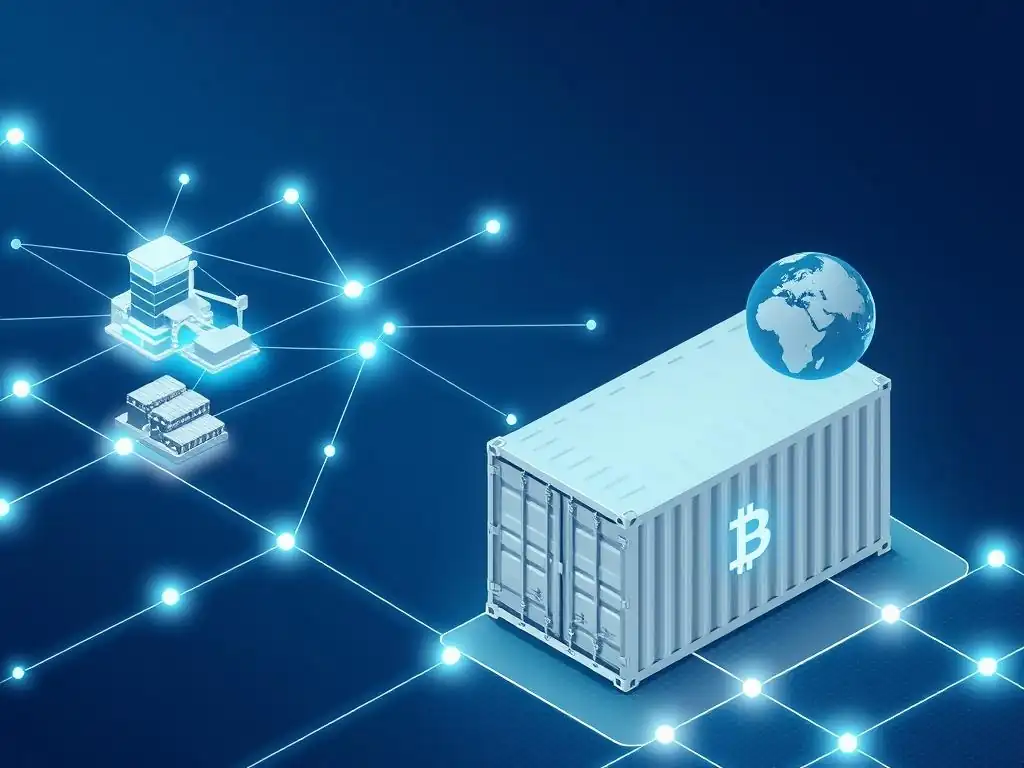
Supply chain management is a complex domain involving numerous stakeholders, processes, and data points. Blockchain and AI, when combined, offer powerful tools to optimize supply chain operations, enhancing transparency, efficiency, and resilience. Blockchain provides a shared, immutable ledger for tracking goods and transactions across the supply chain, while AI can analyze this data to optimize logistics, predict demand, and improve decision-making. The synergy of these technologies creates intelligent and transparent supply chains.
By integrating blockchain and AI, organizations can achieve end-to-end visibility across their supply chains, from raw materials to finished products. Blockchain ensures the authenticity and provenance of goods, while AI analyzes supply chain data to identify bottlenecks, optimize routes, predict delays, and improve inventory management. This integrated approach leads to reduced costs, improved efficiency, enhanced traceability, and increased resilience to disruptions, making supply chains more agile and responsive to changing market conditions.
Tracking and Tracing Goods with AI-Enhanced Blockchain
Blockchain's ability to track and trace goods throughout the supply chain is significantly enhanced by AI. While blockchain provides a secure and transparent record of product movements, AI can analyze this tracking data to provide real-time insights into the location, condition, and estimated time of arrival of goods. AI-powered systems can also predict potential delays or disruptions based on historical data, weather patterns, and traffic conditions, enabling proactive intervention and mitigation strategies.
For instance, AI can analyze sensor data from IoT devices attached to shipments, combined with blockchain-recorded location updates, to monitor temperature, humidity, and other environmental factors critical for sensitive goods like pharmaceuticals or food products. AI algorithms can then identify deviations from optimal conditions and trigger alerts, ensuring product quality and preventing spoilage. This AI-enhanced tracking and tracing capability provides unprecedented visibility and control over supply chain operations, reducing risks and improving efficiency.
Predictive Maintenance and Quality Control
AI and blockchain can also be applied to predictive maintenance and quality control within supply chains. By integrating sensor data from manufacturing equipment and quality control checkpoints into a blockchain, organizations can create a transparent and immutable record of production processes and product quality. AI algorithms can then analyze this data to predict equipment failures, optimize maintenance schedules, and identify potential quality issues early in the production process, reducing downtime and improving product quality.
For example, AI can analyze sensor data from machinery on a production line to detect anomalies indicative of impending failures, allowing for proactive maintenance interventions. Similarly, AI can analyze quality control data recorded on the blockchain to identify patterns of defects and pinpoint root causes, enabling process improvements and preventing future quality issues. This proactive and data-driven approach to maintenance and quality control, enabled by blockchain and AI, significantly enhances operational efficiency and product quality throughout the supply chain.
Healthcare Applications: Secure and Intelligent Data Sharing
The healthcare industry generates vast amounts of sensitive data, making data security and privacy paramount. Blockchain and AI offer a powerful combination to address these challenges while unlocking new possibilities for data-driven healthcare innovation. Blockchain provides a secure and transparent platform for sharing and managing patient data, while AI can analyze this data to improve diagnostics, personalize treatments, and accelerate medical research. This synergy has the potential to transform healthcare delivery and research.
By leveraging blockchain for secure data sharing and AI for intelligent data analysis, healthcare organizations can improve patient outcomes, reduce costs, and accelerate medical breakthroughs. Blockchain ensures data integrity and patient privacy, while AI can extract valuable insights from anonymized or pseudonymized patient data to develop new diagnostic tools, predict disease outbreaks, and personalize treatment plans. This integrated approach fosters collaboration, accelerates innovation, and improves the overall efficiency and effectiveness of the healthcare system.
AI-Powered Diagnostics on Blockchain-Secured Patient Data
AI-powered diagnostic tools are rapidly advancing, offering the potential to improve the accuracy and speed of disease detection. However, the sensitive nature of patient data requires robust security and privacy measures. Blockchain can provide a secure and auditable platform for storing and sharing anonymized or pseudonymized patient data for AI-driven diagnostics. By combining blockchain and AI, healthcare providers can leverage the power of AI for diagnostics while ensuring patient data privacy and security.
For example, medical images, genomic data, and electronic health records can be securely stored on a blockchain, with access controlled through cryptographic keys and smart contracts. AI algorithms can then be trained on this anonymized data to develop diagnostic models for various diseases, such as cancer, Alzheimer's, or heart disease. The results of AI-powered diagnostics can be securely shared with authorized healthcare professionals through the blockchain, improving diagnostic accuracy and enabling faster and more personalized treatment decisions, all while maintaining patient privacy and data security.
Decentralized Clinical Trials and Research
Clinical trials are essential for developing new medical treatments and therapies, but they are often costly, time-consuming, and face challenges related to data integrity and patient recruitment. Blockchain and AI can streamline and improve the efficiency of clinical trials by enabling decentralized data management, automated data collection, and AI-powered patient recruitment and data analysis. This can accelerate the pace of medical research and reduce the costs associated with clinical trials.
Blockchain can provide a secure and transparent platform for managing clinical trial data, ensuring data integrity and auditability. AI can be used to optimize patient recruitment by identifying eligible participants based on predefined criteria and analyzing patient data to monitor treatment efficacy and safety. Decentralized clinical trials, powered by blockchain and AI, can reduce reliance on central intermediaries, improve data quality, and accelerate the development of new medical treatments, ultimately benefiting patients and advancing medical knowledge.
Identity Management and Verification with Blockchain and AI
Digital identity management is becoming increasingly critical in the digital age, with growing concerns about data privacy, security, and control over personal information. Blockchain and AI offer innovative solutions for decentralized identity (DID) and secure identity verification. Blockchain provides a secure and tamper-proof platform for storing and managing digital identities, while AI can enhance identity verification processes through biometric authentication and fraud detection. This synergy can lead to more secure, private, and user-centric identity management systems.
By combining blockchain and AI, individuals can gain greater control over their digital identities, reducing reliance on centralized identity providers and mitigating the risks of data breaches and identity theft. Blockchain-based DIDs allow individuals to own and control their identity data, while AI-powered biometric authentication and fraud detection mechanisms enhance the security and reliability of identity verification processes. This approach empowers individuals and organizations to manage digital identities more securely and efficiently.
Biometric Authentication and Decentralized Identity (DID)
Biometric authentication, using unique biological characteristics like fingerprints, facial recognition, or iris scans, provides a strong and convenient method for identity verification. When combined with blockchain-based DIDs, biometric authentication can be integrated into decentralized identity systems, enhancing security and user experience. Blockchain can store verifiable credentials related to biometric authentication, allowing individuals to prove their identity securely and privately without relying on centralized authorities.
For example, a user's biometric data can be used to generate a cryptographic key pair, with the public key associated with their DID on a blockchain. When a user needs to authenticate, they can use their biometrics to sign a transaction verifying their identity. This approach combines the security of biometrics with the decentralization and privacy of blockchain-based DIDs, creating a robust and user-friendly identity management solution. This integration is particularly relevant for applications requiring strong authentication and data privacy, such as digital wallets, secure access control, and online voting systems.
Fraud Prevention and Anti-Money Laundering (AML)
Identity fraud and money laundering are significant challenges in the digital economy. Blockchain and AI can be combined to enhance fraud prevention and Anti-Money Laundering (AML) efforts. Blockchain provides a transparent and auditable record of transactions, while AI can analyze transaction patterns and identity data to detect suspicious activities and identify potential fraud or money laundering attempts. This synergy can strengthen AML compliance and reduce identity fraud risks.
AI algorithms can be trained to analyze blockchain transaction data, identity information, and behavioral patterns to identify red flags indicative of fraud or money laundering. For example, AI can detect unusual transaction volumes, patterns of transactions involving suspicious addresses, or inconsistencies in identity data. By integrating AI-powered AML and fraud detection systems with blockchain platforms, financial institutions and other organizations can enhance their compliance efforts, reduce operational risks, and protect themselves and their customers from illicit activities.
Addressing the Challenges of Blockchain and AI Integration
Data Privacy and Security Concerns
While blockchain and AI individually offer security and privacy enhancements, their integration also presents new challenges. Combining large datasets required for AI training with the transparent nature of blockchain requires careful consideration of data privacy. Ensuring that sensitive data used in blockchain AI integration strategies remains protected and compliant with regulations like GDPR or CCPA is crucial. Techniques like homomorphic encryption and zero-knowledge proofs, alongside secure multi-party computation, are being explored to address these concerns and enable privacy-preserving AI on blockchain.
The immutability of blockchain, while a strength for data integrity, can also pose challenges for data privacy. Once data is recorded on a blockchain, it is difficult to erase or modify, which can conflict with data minimization principles and the "right to be forgotten" under GDPR. Furthermore, vulnerabilities in smart contracts or consensus mechanisms could potentially expose sensitive data. Therefore, robust security audits, privacy-enhancing technologies, and careful design considerations are essential to mitigate these risks and ensure responsible blockchain AI integration.
Scalability and Performance Limitations
Both blockchain and AI systems can face scalability and performance limitations when dealing with large datasets and complex computations. Traditional blockchain networks can experience transaction throughput bottlenecks, while training large AI models can be computationally intensive and time-consuming. Integrating these technologies can exacerbate these challenges if not addressed carefully. Developing efficient blockchain AI integration strategies requires optimizing both blockchain infrastructure and AI algorithms for scalability and performance.
Solutions like sharding, layer-2 scaling solutions for blockchain, and distributed training techniques for AI are being explored to overcome these limitations. Furthermore, specialized hardware and optimized algorithms can improve the performance of both blockchain and AI computations. Finding the right balance between decentralization, security, privacy, scalability, and performance is a key challenge in designing practical and efficient blockchain AI integration systems for real-world applications.
Regulatory and Ethical Considerations
The intersection of blockchain and AI raises complex regulatory and ethical considerations. The decentralized and autonomous nature of these technologies can challenge existing regulatory frameworks and raise questions about accountability and governance. Ensuring that blockchain AI integration strategies are aligned with ethical principles and comply with relevant regulations is crucial for responsible innovation and widespread adoption. Issues such as bias in AI algorithms, transparency of AI decision-making in decentralized systems, and the potential for misuse of these technologies need careful consideration.
Regulators are actively exploring the implications of blockchain and AI, and new regulations are likely to emerge to address these challenges. Industry standards, best practices, and ethical guidelines are also being developed to promote responsible innovation in this space. Collaboration between technologists, policymakers, and ethicists is essential to navigate these complex regulatory and ethical landscapes and ensure that blockchain AI integration benefits society as a whole.
The Skills Gap: Finding Experts in Both Blockchain and AI
Successfully implementing blockchain AI integration strategies requires expertise in both blockchain and AI technologies, which are often seen as separate and specialized domains. Finding professionals with deep knowledge and practical experience in both areas can be challenging, creating a skills gap that can hinder the adoption and development of these integrated solutions. Addressing this skills gap is crucial for fostering innovation and realizing the full potential of blockchain and AI synergy.
Educational institutions and industry training programs are increasingly recognizing the need for interdisciplinary skills in blockchain and AI. Developing curricula and training programs that bridge these disciplines is essential to equip the workforce with the necessary skills to design, develop, and deploy blockchain AI integration solutions. Furthermore, fostering collaboration between blockchain and AI experts from different backgrounds and organizations can help cross-pollinate knowledge and accelerate innovation in this rapidly evolving field.
The Future of Blockchain and AI Synergy: Trends and Predictions
The Rise of Explainable AI (XAI) in Blockchain Applications
As AI becomes increasingly integrated into blockchain applications, particularly in areas like decentralized finance and autonomous organizations, the need for Explainable AI (XAI) will become paramount. XAI aims to make AI decision-making processes more transparent and understandable to humans. In the context of blockchain AI integration strategies, XAI can enhance trust and accountability by providing insights into how AI algorithms arrive at their conclusions, especially when these decisions impact decentralized systems or financial transactions.
The demand for XAI in blockchain applications is driven by several factors, including regulatory requirements, ethical considerations, and the need for user trust. Regulators are increasingly emphasizing the importance of transparency and explainability in AI systems, particularly in regulated industries. Ethically, it is crucial to understand and address potential biases or unintended consequences of AI decision-making in decentralized systems.
Furthermore, users are more likely to trust and adopt blockchain AI solutions if they can understand how they work and why they make certain decisions. Therefore, XAI will be a critical enabler for the widespread adoption of blockchain AI integration strategies.
Increased Adoption of Blockchain AI Integration Strategies in Enterprise Settings
While early applications of blockchain and AI synergy were primarily in the cryptocurrency and decentralized finance space, we are now seeing growing interest and adoption of blockchain AI integration strategies in enterprise settings across various industries. Businesses are recognizing the potential of these integrated technologies to solve real-world problems and gain a competitive advantage. This trend is expected to accelerate in the coming years, driving significant growth in the market for blockchain and AI solutions.
Industries such as supply chain management, healthcare, finance, and manufacturing are exploring and implementing blockchain AI integration strategies to improve efficiency, security, transparency, and decision-making. For example, in supply chains, companies are using blockchain and AI to enhance traceability, optimize logistics, and predict disruptions. In healthcare, these technologies are being applied to secure patient data sharing, AI-powered diagnostics, and decentralized clinical trials. This increasing adoption in diverse enterprise settings signals a maturing market and a growing recognition of the practical value of blockchain and AI synergy.
The Convergence of Web3 and AI
Web3, the vision of a decentralized and user-centric internet, is increasingly converging with AI. Blockchain, the foundational technology of Web3, provides the infrastructure for decentralized data ownership, digital identity, and tokenized economies. AI, with its ability to process data, automate tasks, and make intelligent decisions, is becoming a crucial component of Web3 applications. The convergence of Web3 and AI is creating a powerful ecosystem for building intelligent and decentralized applications that empower users and reshape the internet landscape.
In this Web3 and AI convergence, blockchain provides the decentralized infrastructure for data ownership, security, and transparency, while AI provides the intelligence and automation capabilities to build sophisticated decentralized applications. Examples include AI-powered decentralized search engines, personalized Web3 experiences, and AI-driven decentralized autonomous organizations. This convergence is expected to drive significant innovation and create new opportunities for developers, entrepreneurs, and users in the evolving Web3 ecosystem.
Prediction: Blockchain-based AI Marketplaces Will Emerge to Facilitate Decentralized Model Training and Deployment
Looking ahead, a significant trend in the blockchain and AI space will be the emergence of blockchain-based AI marketplaces. These marketplaces will leverage blockchain to create decentralized platforms for trading AI models, datasets, and computational resources. They will facilitate decentralized model training and deployment, enabling AI developers and businesses to collaborate more efficiently and securely, while also promoting data privacy and fair compensation for data contributors and model providers.
These blockchain-based AI marketplaces will address several key challenges in the current AI landscape, including data silos, centralized model training, and lack of transparency in AI model ownership and usage. By leveraging blockchain, these marketplaces will enable secure and transparent data sharing, decentralized model training through federated learning or SMPC, and tokenized incentives for data contributors and model developers. This will foster a more open, collaborative, and equitable AI ecosystem, accelerating innovation and democratizing access to AI technologies. We predict that these marketplaces will become a crucial infrastructure component for the future of blockchain AI integration.
Conclusion: Embracing the Transformative Potential of Blockchain and AI
Recap of Key Benefits and Applications
The synergistic power of blockchain and AI offers a transformative potential across numerous industries. By combining blockchain's security, transparency, and decentralization with AI's intelligence and automation capabilities, we can unlock a new era of innovation. Key benefits include enhanced data privacy through Decentralized Machine Learning, improved security and efficiency through AI-powered blockchain analytics, and the creation of intelligent and autonomous decentralized systems like AI-driven DAOs. Applications span diverse sectors, from supply chain optimization and healthcare to identity management and beyond, demonstrating the broad applicability of blockchain AI integration strategies.
From secure data sharing in healthcare to transparent supply chain tracking and intelligent decentralized organizations, the applications of blockchain and AI synergy are vast and rapidly expanding. These technologies are not just incremental improvements but represent a fundamental shift towards more intelligent, secure, and decentralized systems. By embracing blockchain AI integration strategies, organizations can unlock new levels of efficiency, transparency, and innovation, gaining a competitive edge in an increasingly data-driven and interconnected world.
The Path Forward for Blockchain AI Integration
The path forward for blockchain AI integration involves continued research, development, and collaboration across various disciplines. Addressing the challenges related to data privacy, scalability, regulation, and the skills gap is crucial for realizing the full potential of this synergy. Investing in education and training programs to bridge the blockchain and AI skills gap, developing robust security and privacy-preserving technologies, and fostering open dialogue between technologists, policymakers, and ethicists are essential steps towards responsible innovation in this field.
As the technologies mature and adoption increases, we can expect to see more sophisticated and impactful applications of blockchain AI integration strategies emerge. Continued innovation in areas like Explainable AI, decentralized AI marketplaces, and the convergence of Web3 and AI will further shape the future of this exciting field. The path forward requires a collaborative and interdisciplinary approach, focusing on ethical considerations, responsible innovation, and addressing the challenges to unlock the transformative potential of blockchain and AI synergy.
Call to Action: Explore and Implement Blockchain and AI Technologies to Drive Innovation
The convergence of blockchain and AI represents a powerful opportunity for organizations and individuals to drive innovation and create transformative solutions. We encourage businesses, researchers, and developers to actively explore and implement blockchain AI integration strategies in their respective domains. By embracing these technologies, we can build more secure, transparent, efficient, and intelligent systems that address real-world challenges and create a more equitable and prosperous future.
The time to explore and implement blockchain and AI is now. Start by identifying areas within your organization or industry where the synergy of these technologies can create value. Invest in learning and development to build internal expertise in both blockchain and AI. Experiment with pilot projects and collaborate with partners to explore innovative blockchain AI integration strategies. By taking action and embracing the transformative potential of blockchain and AI, you can position yourself at the forefront of innovation and contribute to shaping the future of technology and society.
Frequently Asked Questions
How can Blockchain and AI be integrated to enhance data security?
Blockchain provides an immutable ledger to track data provenance, while AI can be used for anomaly detection and access control. This combination enhances security by making data tampering extremely difficult and identifying potential threats effectively.
What are some practical applications of Blockchain AI integration in supply chain management?
Integrating blockchain and AI allows for real-time tracking of goods, automated quality control, and predictive demand forecasting. This leads to increased efficiency, transparency, and reduced costs throughout the supply chain.
How does the integration of Blockchain and AI impact the financial sector, particularly in DeFi?
Blockchain facilitates decentralized finance (DeFi), while AI can provide algorithmic trading strategies and risk assessment. This integration can automate complex financial operations and improve decision-making processes.
What are the key regulatory challenges associated with Blockchain AI integration?
Regulatory challenges include data privacy concerns, algorithmic bias, and the need for clear legal frameworks. Governments must address these issues to foster innovation while mitigating potential risks.
What is the future outlook for Blockchain AI integration strategies?
The future involves more sophisticated AI models running on blockchain, leading to autonomous decentralized systems. Expect to see wider adoption across various industries and the development of new, innovative applications.
Final Reflection: Embracing the Synergistic Future
The exploration of Blockchain AI integration strategies reveals not just technological advancements, but a fundamental shift in how we approach trust, efficiency, and innovation. The convergence of these two powerful technologies promises a future where data is not only secure and transparent but also intelligent and actionable. This is no longer a theoretical concept; it's a rapidly evolving reality shaping industries from finance to healthcare.
The potential of Blockchain AI integration extends far beyond mere automation; it's about creating truly intelligent and decentralized systems. Witnessing the nascent stages of this synergy has been profoundly inspiring, highlighting the boundless possibilities when human ingenuity and technological prowess converge. The best way to predict the future is to create it.
- Peter Drucker. This quote resonates deeply as we stand at the cusp of a new era, where the fusion of Blockchain and AI empowers us to build a more equitable and efficient world.
As we conclude this exploration, I invite you to consider the implications of Blockchain AI integration in your own sphere of influence. How can these technologies be leveraged to solve pressing challenges, foster innovation, and create a more trustworthy future? The journey has just begun, and your contribution, your vision, is vital in shaping the landscape ahead. Let us embrace the synergistic future and build a world where technology empowers us all.
Reimagine Your Future with Blockchain & AI!
Thank you for exploring the innovative intersection of blockchain and AI with us. You've gained a deeper understanding of how these technologies are transforming industries. Now, it's time to turn that knowledge into action!
Here's how you can further engage with this exciting field:
- Propose a Novel Blockchain & AI Solution: Think about a real-world challenge in your industry and consider how these technologies could work together to address it. Share your ideas!
- Explore open-source projects that combine AI and blockchain. Experiment with the code to understand how they function.
- Share this article with a colleague or friend interested in technology. Start a conversation about the potential applications of these powerful tools.
What innovative blockchain and AI application will you advocate for in your industry? Share your thoughts in the comments below!
Leave a Reply