
Humanitarian DAOs: Blockchain for Rapid Disaster Relief and Effective Crisis Response

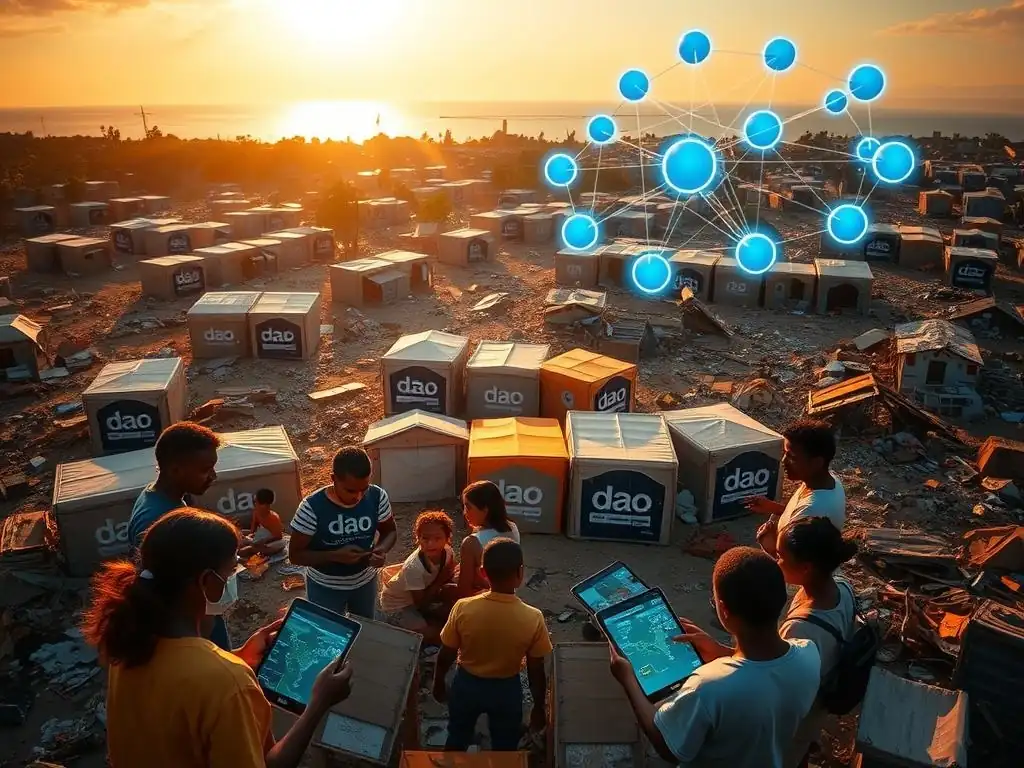
Welcome to Blockchain Trends, your guide to the revolutionary world of blockchain technology.
Imagine a world where aid reaches disaster victims instantly, transparently, and without bureaucratic hurdles. Our in-depth exploration into Blockchain Disaster Relief Organizations unveils the potential of decentralized autonomous organizations (DAOs) to revolutionize humanitarian efforts. Discover how these innovative systems are poised to transform crisis response and build a more resilient future. Are you ready to see how blockchain is becoming a force for good?
Humanitarian DAOs: Blockchain for Rapid Disaster Relief and Effective Crisis Response
- Introduction: The Power of Blockchain in Disaster Relief
- Understanding Humanitarian DAOs: Decentralized Aid in Action
-
The Benefits of Using Blockchain Disaster Relief Organizations
- Faster Aid Distribution: Streamlining Emergency Assistance with Blockchain
- Enhanced Transparency and Accountability in Humanitarian Aid
- Reduced Corruption and Increased Trust in Aid Organizations
- Empowering Local Communities Through Decentralized Governance
- Improved Coordination Among Aid Agencies and Stakeholders
- Real-World Examples of Humanitarian DAOs in Action
- Addressing the Challenges of Implementing Blockchain in Disaster Relief
- The Future of Blockchain and Humanitarian Aid
- Conclusion: Blockchain Revolutionizing Disaster Response through DAOs
-
Frequently Asked Questions
- How can blockchain technology enhance disaster relief efforts?
- What are Humanitarian DAOs and how do they function in crisis situations?
- What are the potential benefits of using blockchain for tracking donations in disaster relief?
- What are some of the challenges in implementing blockchain solutions for disaster relief organizations?
- How can blockchain disaster relief organizations improve coordination and communication during emergencies?
- Final Reflection: Empowering Humanity Through Decentralized Aid
- Ignite Change: Join the Humanitarian DAO Revolution!
Introduction: The Power of Blockchain in Disaster Relief
Disasters, whether natural or man-made, strike with increasing frequency and intensity, leaving devastation in their wake. The immediate aftermath often requires swift and coordinated humanitarian aid, a complex undertaking fraught with logistical challenges. Traditional systems for delivering aid, while benefiting from decades of experience, often face significant hurdles that can slow down response times and reduce overall effectiveness. Exploring innovative approaches to improve this critical function is paramount.
The emergence of blockchain technology, initially popularized by cryptocurrencies, presents a compelling new paradigm for humanitarian efforts. Its core principles of transparency, immutability, and decentralization offer potential solutions to long-standing issues in disaster response. By leveraging blockchain, humanitarian organizations are beginning to explore how aid can be delivered more efficiently, equitably, and accountably, fundamentally changing how we think about emergency assistance in a crisis. This is where the concept of blockchain disaster relief organizations comes into play, aiming to revolutionize traditional methods.
The Limitations of Traditional Disaster Response Systems
Traditional disaster response systems, while essential, often struggle with inherent inefficiencies. Coordination among multiple international and local aid agencies can be fragmented, leading to duplication of efforts or critical gaps in assistance. Bureaucratic processes, necessary for governance and oversight, can unfortunately introduce delays in fund disbursement and resource allocation when speed is of the essence. For instance, accessing and distributing funds can take weeks or even months through traditional banking channels, a significant impediment when immediate needs like food, water, shelter, and medical supplies are critical.
Furthermore, tracking the flow of aid from donors to beneficiaries remains a persistent challenge. Lack of granular visibility can lead to concerns about how funds are used, potential diversion of resources, and difficulty in verifying impact on the ground. The complex web of intermediaries involved in logistics and distribution can increase costs and points of failure. Reports often highlight that a significant percentage of donated funds may be consumed by administrative overhead or lost to inefficiencies before reaching those who need it most. This opacity can erode public trust in humanitarian aid organizations.
Introducing Humanitarian DAOs: A Blockchain Solution for Crisis Management
Humanitarian Decentralized Autonomous Organizations (DAOs) represent a novel application of blockchain technology specifically tailored for crisis management and disaster relief. At their core, DAOs are organizations governed by code, where rules and processes are transparently recorded on a blockchain. In a humanitarian context, this translates to aid distribution mechanisms, funding decisions, and coordination efforts being managed in a decentralized, transparent, and often automated manner, reducing reliance on centralized authorities or intermediaries.
By operating on a blockchain, humanitarian DAOs aim to address the inefficiencies and trust issues inherent in traditional systems. They can facilitate direct, peer-to-peer aid flows, potentially accelerating the delivery of funds or resources. The transparent ledger allows anyone to verify transactions, enhancing accountability. Decision-making processes within the DAO, such as allocating funds to specific projects or regions, can be governed by token holders (stakeholders), providing a more distributed and potentially more equitable approach. These emerging blockchain disaster relief organizations leverage the unique properties of distributed ledgers to build more resilient and responsive aid networks.
Understanding Humanitarian DAOs: Decentralized Aid in Action
Humanitarian DAOs leverage the foundational principles of decentralized autonomous organizations but apply them specifically to the complex and urgent domain of disaster relief and humanitarian aid. This fusion creates a new model for organizing, funding, and distributing resources in times of crisis, aiming for greater speed, transparency, and community involvement. Understanding the core mechanics of DAOs is key to appreciating their potential in this vital sector.
At its heart, a humanitarian DAO is an organization whose operational rules are encoded as smart contracts on a blockchain. These smart contracts automatically execute agreed-upon actions when certain conditions are met, removing the need for manual intervention or centralized decision-makers for every step.
Members or stakeholders, often holding governance tokens, can propose and vote on initiatives, such as funding specific relief projects, deploying resources to a particular disaster zone, or modifying the DAO's operating procedures. This decentralized governance structure aims to make the organization more resilient to single points of failure and more responsive to the needs identified by its community.
What is a DAO? Decentralized Autonomous Organizations Explained
A Decentralized Autonomous Organization, or DAO, is an organizational structure where control is distributed rather than hierarchical. Unlike traditional companies or non-profits with boards of directors and executives, DAOs are governed by a set of rules programmed into smart contracts on a blockchain. These rules are transparent, immutable (once deployed, difficult to change without consensus), and automatically enforced by the code. Participation and voting rights are typically managed through the ownership of specific governance tokens.
The core idea behind a DAO is to create an organization that can operate autonomously based on pre-defined rules, with major decisions made collectively by its token holders through a transparent voting process. This structure aims to mitigate issues like corruption, mismanagement, and inefficiency often found in centralized entities. Examples range from investment DAOs pooling capital to fund projects, to protocol DAOs governing decentralized finance applications, and increasingly, to social impact and blockchain disaster relief organizations focused on humanitarian goals.
Key Features of Humanitarian DAOs: Transparency, Efficiency, and Trust
Humanitarian DAOs possess several key features that make them particularly promising for the disaster relief sector. Transparency is perhaps the most cited benefit; every transaction, funding allocation, and governance decision is recorded on the public blockchain, visible for anyone to audit. This creates an unprecedented level of accountability, allowing donors, beneficiaries, and the public to track the flow of aid funds from source to destination, significantly reducing opportunities for fraud or misuse.
Efficiency is another major advantage. By leveraging smart contracts, processes like fund distribution can be automated based on pre-defined triggers (e.g., verified need, completion of a project milestone). This can dramatically speed up the delivery of aid compared to traditional bureaucratic channels.
Furthermore, the decentralized nature can potentially reduce administrative overhead, ensuring a larger percentage of donations reaches the actual beneficiaries. The inherent trust provided by the blockchain's immutability and transparency helps build confidence among donors and recipients alike, addressing the trust deficit that sometimes plagues traditional aid efforts. These features are fundamental to the value proposition of blockchain disaster relief organizations.
How Blockchain Technology Enhances Disaster Relief Efforts
Blockchain technology enhances disaster relief efforts in multiple critical ways beyond just the DAO structure. Its ability to create an immutable and transparent ledger is invaluable for tracking supply chains, ensuring that goods like food, medicine, and shelter materials reach their intended destinations without diversion. This can be particularly useful in complex logistics environments following a major disaster.
Moreover, blockchain can facilitate direct cash assistance through stablecoins or cryptocurrencies, bypassing potentially collapsed banking infrastructure or unstable local currencies. This allows beneficiaries to receive funds instantly on a digital wallet, giving them the autonomy to purchase exactly what they need from local markets, which also helps stimulate the local economy. Identity management on the blockchain can also help register beneficiaries securely and prevent duplicate aid distribution. The technical backbone provided by blockchain enables more resilient, traceable, and direct forms of aid delivery, which is the driving force behind effective blockchain disaster relief organizations.
The Benefits of Using Blockchain Disaster Relief Organizations
The application of blockchain technology through the structure of Humanitarian DAOs offers a suite of distinct advantages over traditional aid delivery methods. These benefits collectively contribute to a more effective, accountable, and potentially more equitable response to global crises. From speeding up the flow of resources to empowering local communities, the potential impact is significant and warrants serious consideration by the international aid community.
One of the most compelling benefits is the potential to dramatically reduce the time it takes for aid to move from donors to those in need. Traditional systems often involve multiple layers of intermediaries, currency conversions, and bureaucratic approvals, each step adding delays. Blockchain disaster relief organizations can streamline this process. Furthermore, the transparency offered by the public ledger helps build and maintain trust with donors, potentially encouraging more contributions. Knowing exactly where funds are going and seeing the impact can be a powerful motivator for continued support.
Faster Aid Distribution: Streamlining Emergency Assistance with Blockchain
In the immediate aftermath of a disaster, speed is paramount. Access to funds and essential supplies can mean the difference between life and death. Traditional methods of transferring funds internationally can take days or even weeks, involving correspondent banks and complex verification processes. Blockchain disaster relief organizations can utilize cryptocurrencies, particularly stablecoins pegged to fiat currencies like the US dollar, to enable near-instantaneous transfer of value across borders.
For instance, within minutes of a disaster striking, funds could theoretically be transferred from a global donor pool managed by a humanitarian DAO directly to digital wallets held by local aid workers or even registered beneficiaries in the affected region. This bypasses traditional banking infrastructure that might be damaged or non-operational. A pilot program might show that while traditional transfers take 5-7 business days, a blockchain transfer settles in under an hour, dramatically accelerating the ability to procure local supplies or provide cash assistance when it's needed most.
Enhanced Transparency and Accountability in Humanitarian Aid
A persistent challenge in humanitarian aid is ensuring that funds and resources are used effectively and reach the intended recipients. The opaque nature of traditional financial flows makes it difficult to track aid precisely. Blockchain disaster relief organizations inherently solve this through the use of a public, immutable ledger. Every transaction, from a donation received to funds disbursed to a local partner or beneficiary, is recorded on the blockchain.
This level of transparency allows anyone, from a small individual donor to a large institutional contributor or even the general public, to audit the flow of funds. Donors can see exactly how their contributions are being spent, tracing them through the system. This enhanced visibility fosters greater accountability among aid providers, as their actions are open to public scrutiny. A report might show that X amount was sent to Y region for Z purpose, and that transaction is verifiable on the blockchain explorer, building trust and confidence in the aid process.
Reduced Corruption and Increased Trust in Aid Organizations
Corruption is a significant drain on humanitarian aid, diverting resources away from those in desperate need. The complex, multi-layered systems of traditional aid delivery provide numerous opportunities for funds or goods to be siphoned off or misused. The transparency and immutability of blockchain technology offer a powerful deterrent against such practices.
By recording all transactions on an unalterable ledger, blockchain disaster relief organizations make it incredibly difficult to hide fraudulent activity. Any attempt to divert funds would be visible on the public record.
Smart contracts can also be programmed to release funds only upon verification of certain conditions (e.g., delivery confirmation, verification by multiple parties), further reducing the potential for misuse. A study might indicate that in regions where aid tracking was implemented on a blockchain, reported instances of corruption decreased by a certain percentage compared to traditional methods, leading to greater donor confidence and potentially increased funding for humanitarian efforts.
Empowering Local Communities Through Decentralized Governance
Traditional aid models are often top-down, with decisions about resource allocation and project implementation made by international headquarters or large NGOs. While necessary for coordination, this can sometimes overlook the specific needs and priorities of the affected local communities themselves. Humanitarian DAOs, with their decentralized governance structures, offer a pathway to empower local voices.
Through the DAO's governance token system, representatives or members from affected communities could potentially hold tokens and participate directly in the decision-making process. They could propose projects, vote on funding allocations based on their intimate knowledge of the local situation, and hold aid implementers accountable. This shift towards a more decentralized and inclusive governance model ensures that aid is not only delivered efficiently but is also aligned with the actual needs and priorities identified by those on the ground, fostering greater ownership and sustainability of relief efforts by the beneficiaries themselves.
Improved Coordination Among Aid Agencies and Stakeholders
Coordination among the multitude of aid agencies, NGOs, government bodies, and local groups operating in a disaster zone is notoriously challenging. Information silos, incompatible systems, and differing priorities can hinder effective collaboration, leading to inefficiencies and gaps in service delivery. While not a magic bullet, blockchain technology and DAO structures can potentially improve coordination.
A shared, transparent ledger can provide a single source of truth regarding who is doing what, where, and with what resources. Different aid agencies could potentially register their activities and resource deployments on a common blockchain platform managed by a humanitarian DAO, allowing for better visibility and coordination. Smart contracts could facilitate automated resource sharing or joint project execution based on pre-agreed protocols. This shared infrastructure could help reduce duplication of efforts, ensure critical areas are not overlooked, and facilitate more seamless collaboration among the diverse network of blockchain disaster relief organizations and traditional actors working together.
Real-World Examples of Humanitarian DAOs in Action

While the concept of Humanitarian DAOs is relatively nascent, several initiatives have begun to leverage blockchain technology and decentralized structures for humanitarian purposes, particularly in response to recent crises. These examples, though perhaps not always fitting the strict definition of a fully autonomous DAO, demonstrate the practical application of blockchain principles – like transparency, decentralized funding, and community coordination – in real-world disaster and crisis response scenarios. They provide valuable insights into the potential and challenges of this approach.
These pioneering efforts highlight how digital assets and decentralized coordination mechanisms can mobilize resources quickly and directly for humanitarian causes. They serve as compelling case studies for the potential of blockchain disaster relief organizations to complement or even eventually transform traditional aid delivery frameworks. Examining these examples helps move the discussion from theoretical potential to tangible impact.
Case Study 1: UkraineDAO - Providing Aid During the Russo-Ukrainian War
UkraineDAO emerged shortly after the full-scale Russian invasion began in February 2022, leveraging the power of decentralized coordination and cryptocurrency fundraising. Its primary goal was to raise funds rapidly to support Ukrainians affected by the conflict. The DAO quickly gained prominence for its innovative approach to fundraising, particularly through the sale of a non-fungible token (NFT) of the Ukrainian flag.
The DAO successfully auctioned the NFT for a staggering 2,250 ETH, equivalent to approximately $6.7 million at the time of the sale. These funds, raised within days through global participation facilitated by blockchain technology, were then directed to reputable NGOs providing aid on the ground, such as Come Back Alive. While perhaps not a fully autonomous DAO in its distribution phase, it demonstrated the immense power of decentralized online communities and crypto assets to mobilize significant financial resources swiftly for a humanitarian cause, setting a precedent for future blockchain disaster relief organizations.
Case Study 2: Aid For Ukraine - Supporting Humanitarian Efforts in Ukraine
Aid For Ukraine is another significant initiative that utilized cryptocurrency and blockchain technology to support humanitarian efforts following the invasion. Launched as a collaboration between the Ministry of Digital Transformation of Ukraine, FTX (at the time, a major crypto exchange), Everstake (a staking provider), and other blockchain companies, it created a platform for receiving crypto donations directly to government-controlled wallets.
This initiative facilitated the collection of over $60 million in various cryptocurrencies within the first few months, demonstrating the efficiency of crypto donations. The funds were then converted to fiat currency through partner exchanges and used to purchase essential supplies, medical equipment, and humanitarian aid distributed by the Ukrainian government and verified partners. While not a DAO in the governance sense, it represents a large-scale, government-backed adoption of blockchain for transparent and rapid humanitarian fundraising, illustrating a critical component often integrated into blockchain disaster relief organizations.
Case Study 3: Gitcoin Grants - Funding Open-Source Projects and Disaster Relief
Gitcoin is a platform focused on funding public goods, primarily in the open-source software space, using mechanisms like quadratic funding which are aligned with decentralized principles. While its core mission isn't solely disaster relief, Gitcoin's infrastructure and community have been utilized to fund humanitarian initiatives and projects related to crisis response, effectively operating as a decentralized funding mechanism for various causes, including aid.
Through its grant rounds, Gitcoin has facilitated donations to numerous projects focused on social impact, including those providing aid or developing tools for disaster response. For example, specific grants might be set up after a natural disaster to fund local relief efforts, with contributions pooled and distributed through the Gitcoin platform. This demonstrates how decentralized funding protocols can be flexibly applied to humanitarian needs, serving as an underlying infrastructure component for potential blockchain disaster relief organizations or supporting their operations.
Addressing the Challenges of Implementing Blockchain in Disaster Relief
Despite the significant potential, the implementation of blockchain technology and Humanitarian DAOs in disaster relief is not without its challenges. The humanitarian sector operates in complex, often volatile environments with unique constraints. Integrating a nascent and rapidly evolving technology like blockchain requires careful consideration of regulatory landscapes, technical limitations, user accessibility, and data security in sensitive contexts.
Overcoming these hurdles is crucial for the widespread adoption and success of blockchain disaster relief organizations. It requires collaboration between blockchain developers, humanitarian experts, local communities, governments, and international bodies. Acknowledging and proactively addressing these challenges is essential to building robust and effective decentralized aid systems that can truly make a difference on the ground.
Regulatory Hurdles and Legal Considerations for Humanitarian DAOs
The regulatory landscape surrounding blockchain and cryptocurrencies is still evolving globally, creating uncertainty for organizations operating in this space. Humanitarian DAOs, by their decentralized nature, can pose particular challenges regarding legal entity status, liability, and compliance with financial regulations (like Anti-Money Laundering and Counter-Terrorist Financing laws) in the numerous jurisdictions where they might operate or receive donations.
Different countries have vastly different approaches to crypto regulation, ranging from outright bans to full integration. This patchwork of rules makes it difficult for a global DAO to ensure compliance everywhere. Furthermore, determining legal responsibility when a DAO is governed by code and distributed token holders is complex. For instance, who is liable if a smart contract error leads to misallocated funds, or if aid distribution inadvertently violates local laws? Navigating this legal ambiguity requires significant effort and potentially new legal frameworks tailored to decentralized entities involved in humanitarian work.
Technical Challenges: Scalability, Interoperability, and Security
Blockchain technology, while powerful, still faces technical limitations that must be addressed for large-scale humanitarian deployment. Scalability is a major concern; public blockchains like Ethereum, while offering decentralization, can experience high transaction fees (gas costs) and slow processing times during periods of high network congestion, which could be exacerbated during a widespread disaster requiring millions of rapid micro-transactions.
Interoperability between different blockchain networks and with existing traditional aid systems is also critical. Humanitarian DAOs may need to interact with various payment systems, identity verification services, and supply chain tracking platforms, requiring seamless data exchange. Security risks, while generally low for the core blockchain ledger, exist at the application layer (smart contract vulnerabilities) and user level (wallet security). A bug in a smart contract governing aid distribution could lead to frozen or lost funds. Ensuring robust security audits and user-friendly, secure wallet solutions is paramount for blockchain disaster relief organizations.
The Importance of User Education and Accessibility in Disaster Zones
Implementing blockchain-based aid systems requires that beneficiaries and local aid workers can access and use the technology. In disaster zones, infrastructure like internet connectivity and electricity may be unreliable or non-existent. Furthermore, digital literacy levels can vary widely, particularly among vulnerable populations who may have limited or no prior experience with smartphones, digital wallets, or blockchain concepts.
Providing cash assistance via crypto wallets, for example, requires beneficiaries to have a compatible device, connectivity to receive funds, and the knowledge to secure their wallet and convert crypto to usable local currency or goods. Extensive user education programs, simplified interfaces, and offline or low-connectivity solutions are essential to ensure that blockchain aid systems are truly accessible and do not inadvertently exclude the most marginalized populations. Blockchain disaster relief organizations must prioritize user-centric design and robust on-the-ground support.
Ensuring Data Privacy and Security in Blockchain-Based Aid Systems
While blockchain offers transparency for transactions, humanitarian work often involves handling sensitive personal data of beneficiaries, such as identity information, medical conditions, or vulnerability status. While transaction data on a public blockchain is transparent, personal identifying information must be protected to ensure privacy and prevent potential harm or discrimination.
Storing sensitive personal data directly on a public, immutable ledger is generally not advisable due to privacy concerns. Solutions involve using permissioned blockchains for sensitive data, storing data off-chain with cryptographic references on-chain, or employing privacy-enhancing technologies like zero-knowledge proofs. Blockchain disaster relief organizations must implement robust data protection policies and technical safeguards that comply with data privacy regulations (like GDPR, where applicable) and uphold the ethical principles of humanitarian aid, ensuring that the pursuit of transparency does not come at the cost of beneficiary privacy and security.
The Future of Blockchain and Humanitarian Aid
Looking ahead, the integration of blockchain technology and decentralized autonomous organizations into the humanitarian sector holds transformative potential. As the technology matures and understanding grows, blockchain disaster relief organizations are poised to play an increasingly significant role in how the world responds to crises. The future likely involves deeper integration with other emerging technologies, greater scale, and closer collaboration with traditional actors.
The vision is one where aid flows are faster, more transparent, and more accountable, reaching those in need with minimal friction and maximum impact. It also involves empowering local communities and building more resilient systems that can withstand future shocks. The path forward requires continued innovation, careful implementation, and a commitment to addressing the unique challenges of the humanitarian context.
The Potential for AI and Blockchain Integration in Disaster Prediction
The future of disaster response could see the powerful combination of Artificial Intelligence (AI) and blockchain technology. AI can analyze vast datasets from weather patterns, seismic activity, social media, and historical disaster data to improve the accuracy and speed of disaster prediction and risk assessment. This predictive capability is crucial for enabling proactive, rather than just reactive, humanitarian efforts.
Once a potential disaster is predicted or imminent, blockchain and humanitarian DAOs can be leveraged to trigger pre-approved smart contracts for immediate fund release to at-risk regions, based on the AI's assessment. This could involve setting up automated funding mechanisms that release stablecoins to pre-registered wallets in a community once certain environmental or social triggers (identified by AI) are met. This integration promises a future where aid is not only efficiently delivered after a disaster but is also rapidly deployed before the full impact is felt, potentially saving more lives and reducing damage.
Scaling Humanitarian DAOs for Global Impact
Currently, most humanitarian DAO initiatives operate at a relatively small scale or focus on specific crises. For blockchain to truly revolutionize global disaster relief, these models need to scale to handle large-scale, multi-national emergencies involving millions of affected people and billions of dollars in aid. Scaling involves addressing the technical limitations of blockchains (scalability of transactions) as well as organizational challenges.
Achieving global impact requires developing robust, user-friendly platforms that can support a high volume of transactions and users, potentially utilizing layer-2 scaling solutions or more performant blockchain protocols. It also involves building the organizational capacity within Humanitarian DAOs to manage complex logistics, coordinate diverse stakeholders across different cultures and languages, and navigate varied legal environments. Successful scaling will likely involve developing modular DAO structures that can be rapidly deployed or adapted to specific disaster contexts while adhering to core principles.
The Role of Governments and NGOs in Supporting Blockchain Disaster Relief
The widespread adoption of blockchain in disaster relief cannot happen in isolation. It requires buy-in and collaboration from traditional humanitarian actors, including national governments, major international NGOs (like the Red Cross, Oxfam, etc. ), and UN agencies. These entities possess invaluable on-the-ground infrastructure, logistical expertise, and relationships with affected communities and local authorities that blockchain disaster relief organizations currently lack.
Governments can play a crucial role by providing regulatory clarity, endorsing the use of digital currencies or blockchain platforms for aid distribution, and potentially integrating blockchain tracking into national disaster management systems. Major NGOs can lend their expertise in needs assessment, program implementation, and beneficiary registration, potentially piloting blockchain solutions within their existing frameworks. Collaboration is key; the most effective future likely involves hybrid models where traditional organizations leverage blockchain tools and partner with Humanitarian DAOs to enhance their operations, combining the strengths of both approaches.
The Long-Term Vision: Building Resilient and Decentralized Communities
The long-term vision for blockchain and humanitarian aid extends beyond immediate disaster response. It encompasses building more resilient and decentralized communities that are better prepared to face future crises. By establishing transparent and decentralized funding mechanisms, communities can potentially access resources more directly for preparedness initiatives, infrastructure projects, or local support networks before a disaster strikes.
Blockchain-based identity and reputation systems could empower individuals and local groups, creating verifiable records of participation in relief efforts or successful project implementations. This could facilitate trust and coordination within communities and with external aid providers. Ultimately, the goal is to shift power and resources closer to the affected populations, enabling them to play a more active role in their own recovery and future resilience, fostering a global network of empowered, decentralized, and resilient communities supported by blockchain disaster relief organizations and technology.
Conclusion: Blockchain Revolutionizing Disaster Response through DAOs
The scale and frequency of global disasters demand innovative solutions to improve the speed, efficiency, and accountability of humanitarian aid. Traditional systems, while vital, face inherent limitations that can hinder effective response. Blockchain technology, particularly when applied through the framework of Humanitarian DAOs, offers a compelling new paradigm with the potential to address many of these challenges head-on.
By leveraging the core properties of blockchain – transparency, immutability, and decentralization – blockchain disaster relief organizations can streamline funding, enhance accountability, reduce corruption risks, and potentially empower local communities. Real-world examples, though still in early stages, demonstrate the practical viability of using crypto assets and decentralized coordination for rapid resource mobilization in times of crisis.
The Promise of Humanitarian DAOs for a More Effective and Equitable Future
The promise of Humanitarian DAOs lies in their ability to create more direct, transparent, and participant-driven aid systems. They offer a path towards ensuring that a higher percentage of donated funds reaches beneficiaries, that aid flows are traceable and accountable, and that affected communities have a greater say in the relief and recovery process. Imagine a future where, hours after a major earthquake, pre-approved emergency funds are automatically released via smart contracts to digital wallets in the affected region, enabling immediate purchase of essential goods from local vendors.
This shift towards decentralized, blockchain-powered aid is not without its complexities and challenges, including regulatory hurdles, technical limitations, and the need for widespread user education. However, the potential benefits in terms of speed, transparency, and trust are significant enough to warrant continued exploration, investment, and collaboration between the blockchain sector and the traditional humanitarian community. The development of robust and ethical blockchain disaster relief organizations is a critical step towards a more effective and equitable global response to humanitarian crises.
Call to Action: Supporting Blockchain-Based Initiatives for Disaster Preparedness
The future of disaster relief will likely involve a blend of traditional expertise and innovative technological approaches. Supporting the development and implementation of blockchain-based initiatives for disaster preparedness and response is crucial. This support can take many forms:
- Donating to existing blockchain disaster relief organizations and projects.
- Encouraging traditional aid organizations to explore and pilot blockchain solutions.
- Participating in governance or community discussions of relevant Humanitarian DAOs.
- Advocating for clear and enabling regulatory frameworks for blockchain in humanitarian contexts.
- Developing user-friendly tools and educational resources for blockchain adoption in vulnerable regions.
By engaging with and supporting these pioneering efforts, individuals and institutions can contribute to building a more resilient, transparent, and responsive global system for humanitarian aid, ultimately improving the lives of those affected by disasters worldwide.
Frequently Asked Questions
How can blockchain technology enhance disaster relief efforts?
Blockchain offers enhanced transparency and traceability in aid distribution, ensuring funds reach intended recipients directly and reducing corruption. It also provides a secure and immutable record of transactions, crucial for accountability.
What are Humanitarian DAOs and how do they function in crisis situations?
Humanitarian DAOs are decentralized autonomous organizations that leverage blockchain to automate and streamline disaster relief. They enable faster and more efficient resource allocation and coordination among stakeholders.
What are the potential benefits of using blockchain for tracking donations in disaster relief?
Blockchain provides a transparent and auditable record of every donation, from origin to delivery, building trust and accountability. This helps ensure donations are used effectively and efficiently, minimizing waste.
What are some of the challenges in implementing blockchain solutions for disaster relief organizations?
Challenges include lack of infrastructure in affected areas, the digital divide hindering access for vulnerable populations, and regulatory uncertainties surrounding blockchain technology.
How can blockchain disaster relief organizations improve coordination and communication during emergencies?
Blockchain can facilitate secure and instant communication among responders, aid workers, and affected communities. It enables the shared access to critical information, such as resource availability and needs assessments, improving coordination.
Final Reflection: Empowering Humanity Through Decentralized Aid
The potential of blockchain technology to revolutionize disaster relief is no longer a theoretical concept; it's a tangible solution poised to reshape how we respond to global crises. By leveraging the transparency, efficiency, and security of decentralized autonomous organizations (DAOs), we can circumvent traditional bureaucratic bottlenecks and deliver aid directly to those who need it most, fostering greater accountability and trust in the humanitarian sector.
This exploration into Humanitarian DAOs has profoundly impacted my understanding of the evolving landscape of aid. Witnessing the ingenuity and dedication of individuals building these systems underscores the power of technology to amplify human compassion. The best way to predict the future is to create it.
This quote, often attributed to Peter Drucker, resonates deeply with the spirit of innovation driving the development of blockchain disaster relief organizations, urging us to actively shape a more resilient and equitable future.
As we look ahead, let us not be passive observers but active participants in building a more compassionate and effective world. Consider how you can contribute, whether through supporting existing Humanitarian DAOs, advocating for their adoption, or simply spreading awareness about their transformative potential. The future of disaster relief is decentralized, and it's up to each of us to help build it.
Ignite Change: Join the Humanitarian DAO Revolution!
Thank you for exploring how blockchain can revolutionize disaster relief and crisis response. You've learned about the potential of Humanitarian DAOs to bring unprecedented speed and efficiency to aid distribution. Now, let's turn that knowledge into action!
- Explore Further: Discover existing Humanitarian DAOs to understand their structure and impact.
- Contribute: Find ways you can support Humanitarian DAO projects, whether by offering your skills in coding, marketing, or design, or by making a donation.
- Share the Message: Spread this article within your network and start a conversation about how blockchain can transform humanitarian aid. Together, we can build a more resilient and responsive future.
What skills or resources can you bring to a Humanitarian DAO to make a meaningful difference during crises? Share your thoughts in the comments below!
Leave a Reply